ATOC 4720 class 33 1 The geostrophic wind
- Slides: 14
ATOC 4720 class 33 1. The geostrophic wind: scale analysis 2. Effects of friction 3. The gradient wind
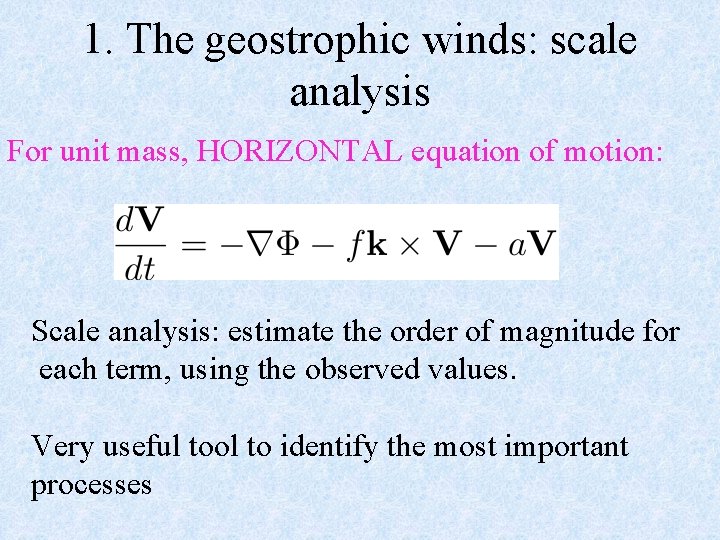
1. The geostrophic winds: scale analysis For unit mass, HORIZONTAL equation of motion: Scale analysis: estimate the order of magnitude for each term, using the observed values. Very useful tool to identify the most important processes
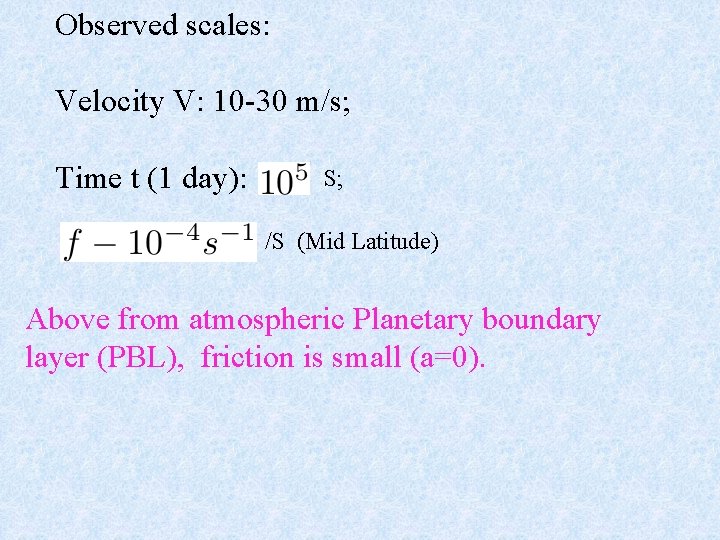
Observed scales: Velocity V: 10 -30 m/s; Time t (1 day): S; /S (Mid Latitude) Above from atmospheric Planetary boundary layer (PBL), friction is small (a=0).
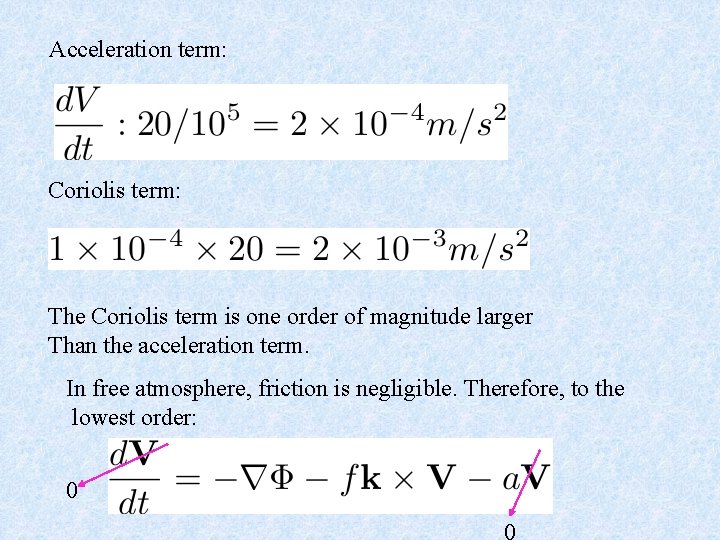
Acceleration term: Coriolis term: The Coriolis term is one order of magnitude larger Than the acceleration term. In free atmosphere, friction is negligible. Therefore, to the lowest order: 0
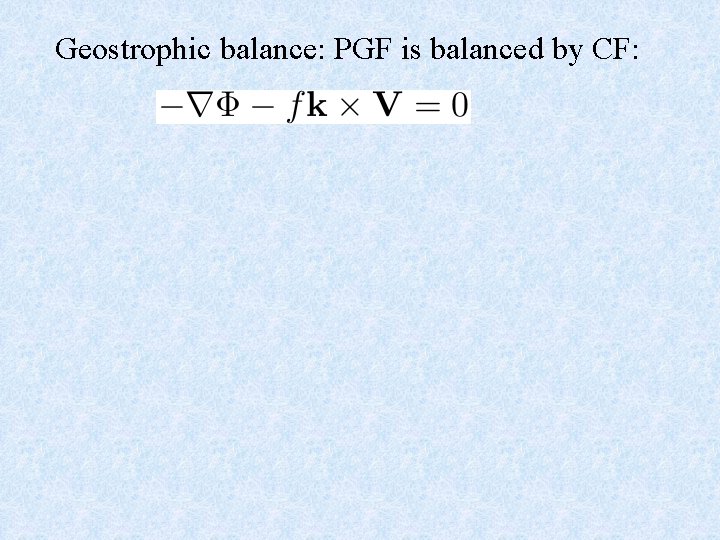
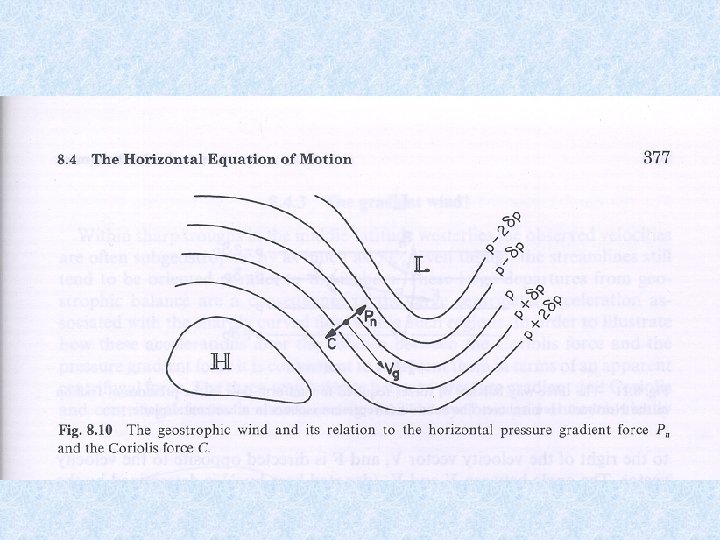
Geostrophic balance: PGF is balanced by CF:
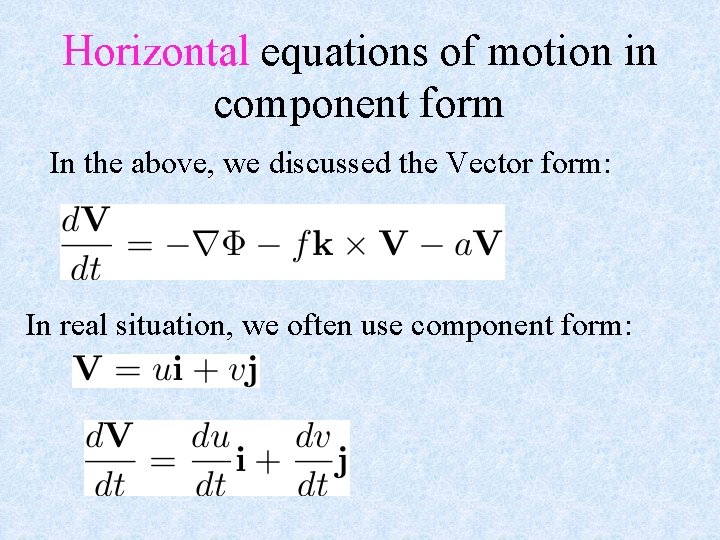
Horizontal equations of motion in component form In the above, we discussed the Vector form: In real situation, we often use component form:
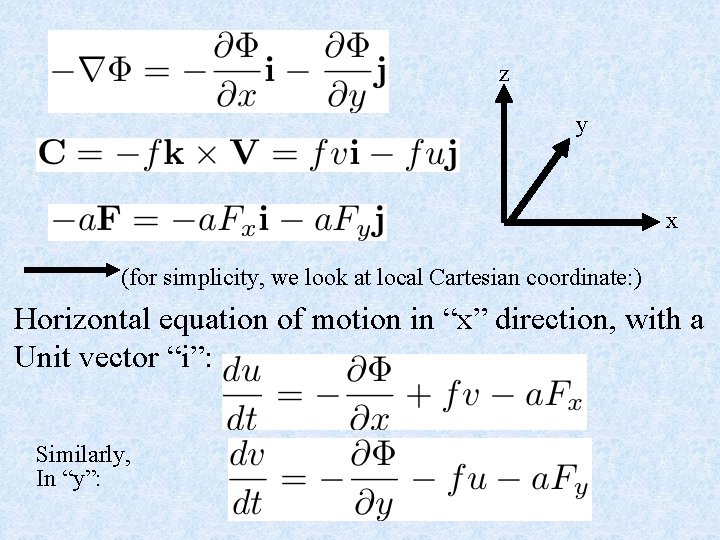
z y x (for simplicity, we look at local Cartesian coordinate: ) Horizontal equation of motion in “x” direction, with a Unit vector “i”: Similarly, In “y”:
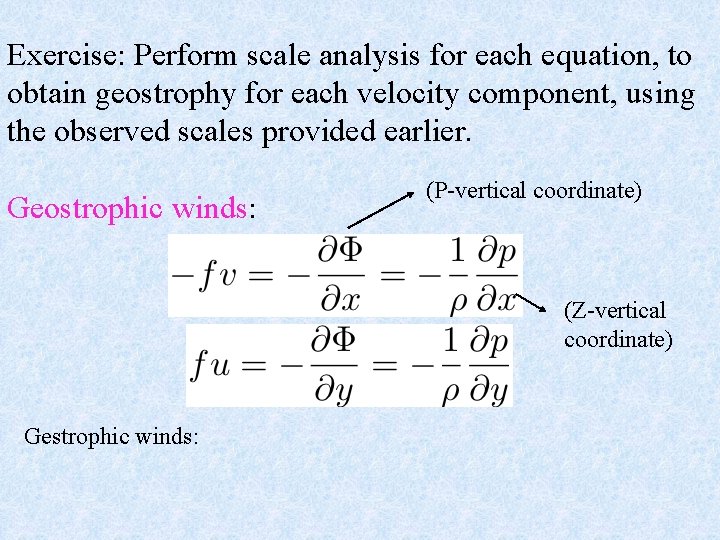
Exercise: Perform scale analysis for each equation, to obtain geostrophy for each velocity component, using the observed scales provided earlier. Geostrophic winds: (P-vertical coordinate) (Z-vertical coordinate) Gestrophic winds:
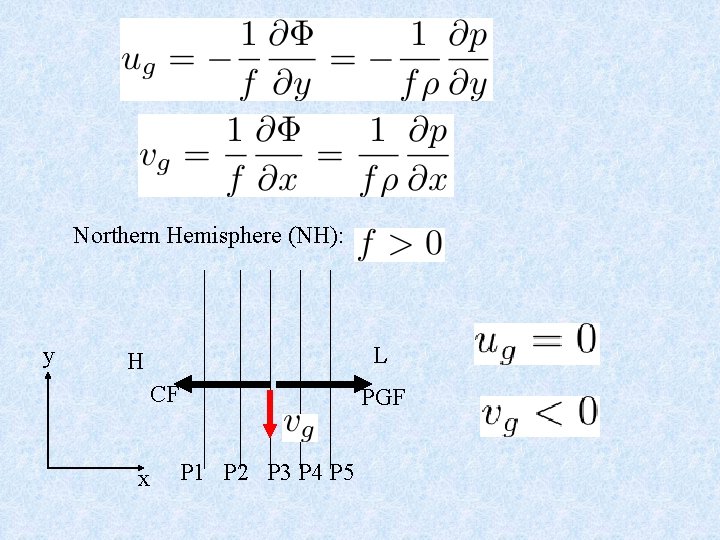
Northern Hemisphere (NH): y L H CF x PGF P 1 P 2 P 3 P 4 P 5
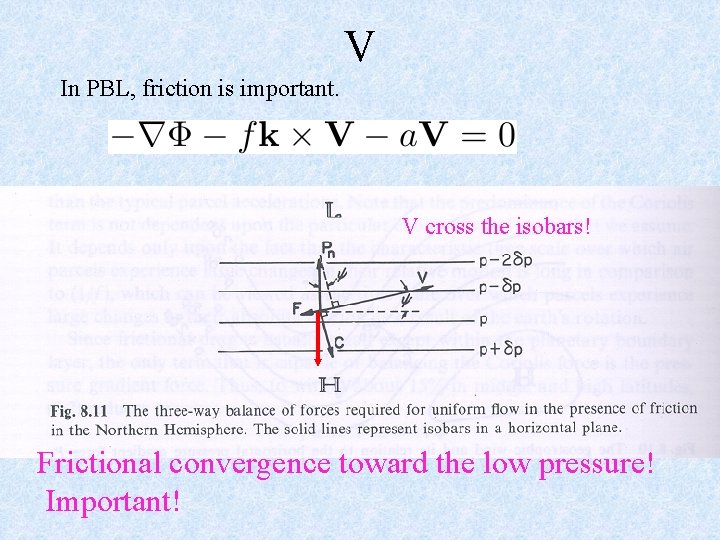
V In PBL, friction is important. V cross the isobars! Frictional convergence toward the low pressure! Important!
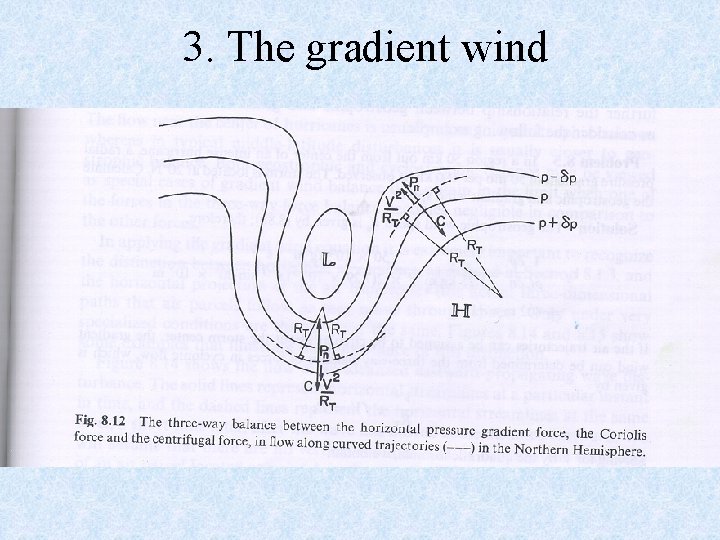
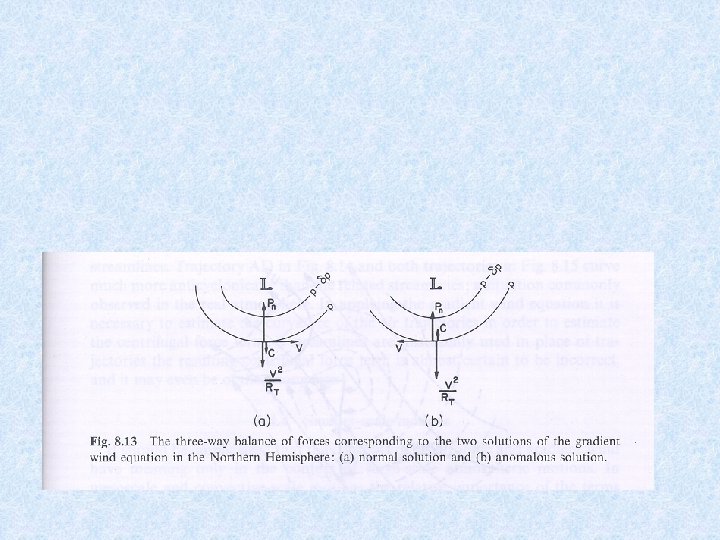
3. The gradient wind