Asymmetric Synthesis Introduction Outline n n n n

- Slides: 25
Asymmetric Synthesis Introduction
Outline n n n n n Introduction Principles Addition to carbonyl compounds α-Substitution using chiral enolates Asymmetric aldol reactions Additions to C=C bonds Reduction and oxidation Rearrangements Hydrolysis and esterification
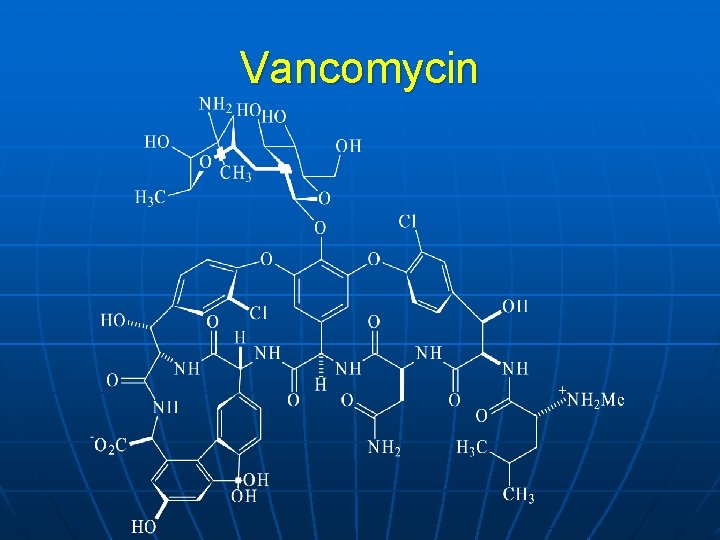
Vancomycin
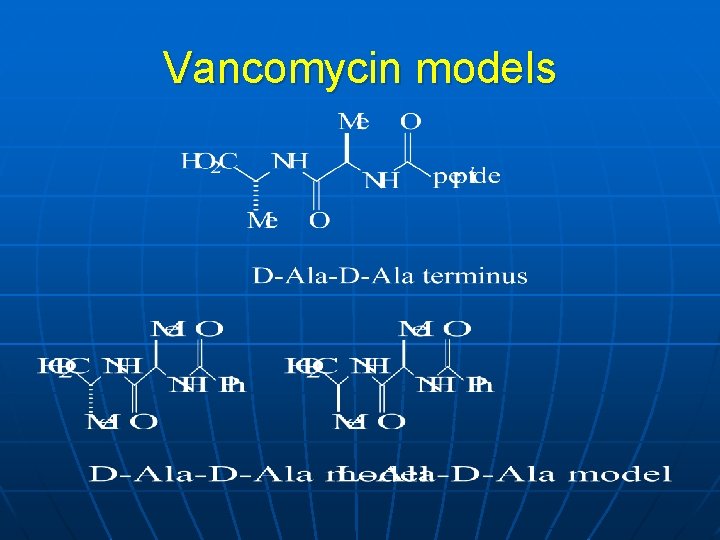
Vancomycin models
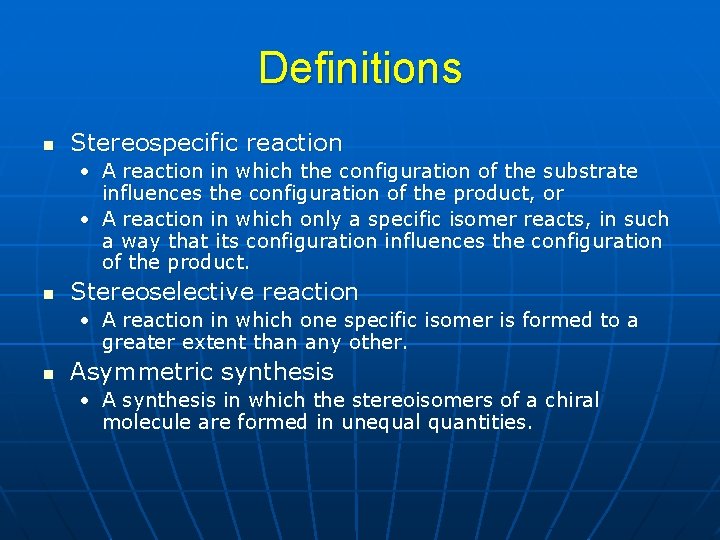
Definitions n Stereospecific reaction • A reaction in which the configuration of the substrate influences the configuration of the product, or • A reaction in which only a specific isomer reacts, in such a way that its configuration influences the configuration of the product. n Stereoselective reaction • A reaction in which one specific isomer is formed to a greater extent than any other. n Asymmetric synthesis • A synthesis in which the stereoisomers of a chiral molecule are formed in unequal quantities.
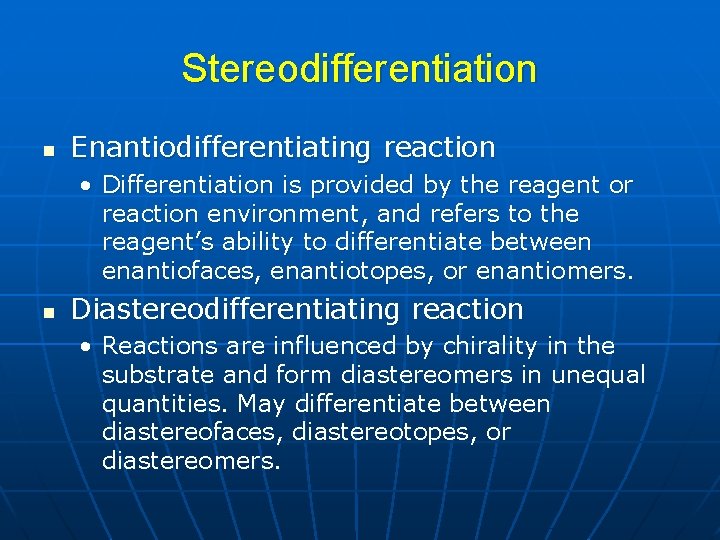
Stereodifferentiation n Enantiodifferentiating reaction • Differentiation is provided by the reagent or reaction environment, and refers to the reagent’s ability to differentiate between enantiofaces, enantiotopes, or enantiomers. n Diastereodifferentiating reaction • Reactions are influenced by chirality in the substrate and form diastereomers in unequal quantities. May differentiate between diastereofaces, diastereotopes, or diastereomers.
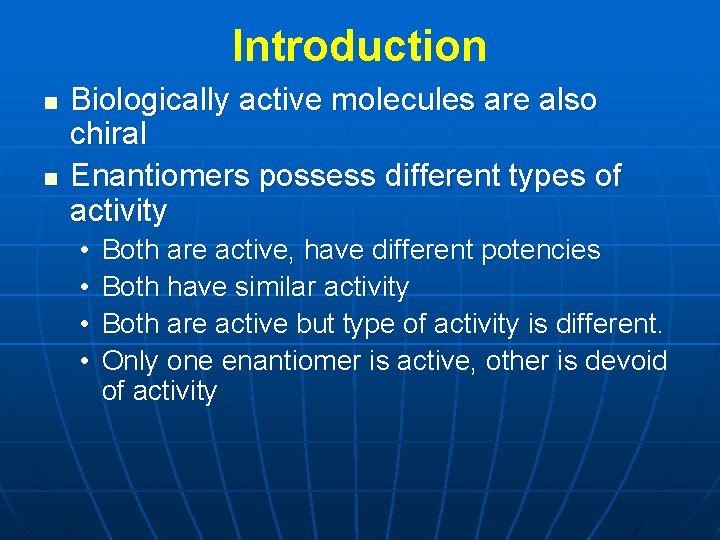
Introduction n n Biologically active molecules are also chiral Enantiomers possess different types of activity • • Both are active, have different potencies Both have similar activity Both are active but type of activity is different. Only one enantiomer is active, other is devoid of activity
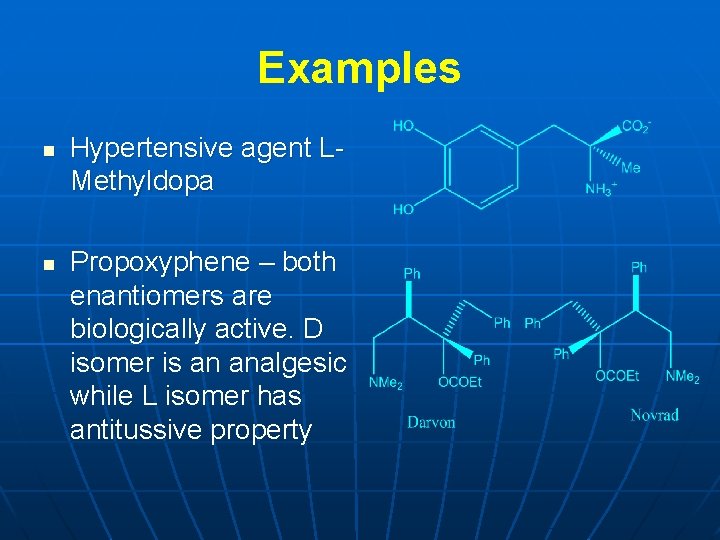
Examples n n Hypertensive agent LMethyldopa Propoxyphene – both enantiomers are biologically active. D isomer is an analgesic while L isomer has antitussive property
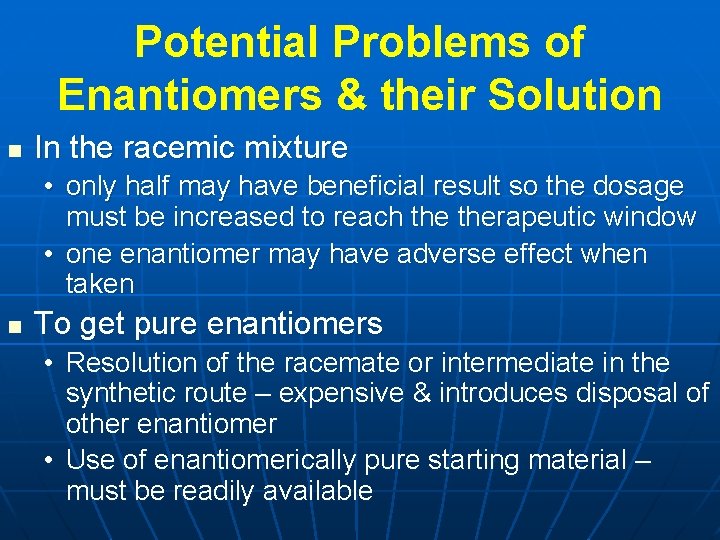
Potential Problems of Enantiomers & their Solution n In the racemic mixture • only half may have beneficial result so the dosage must be increased to reach therapeutic window • one enantiomer may have adverse effect when taken n To get pure enantiomers • Resolution of the racemate or intermediate in the synthetic route – expensive & introduces disposal of other enantiomer • Use of enantiomerically pure starting material – must be readily available
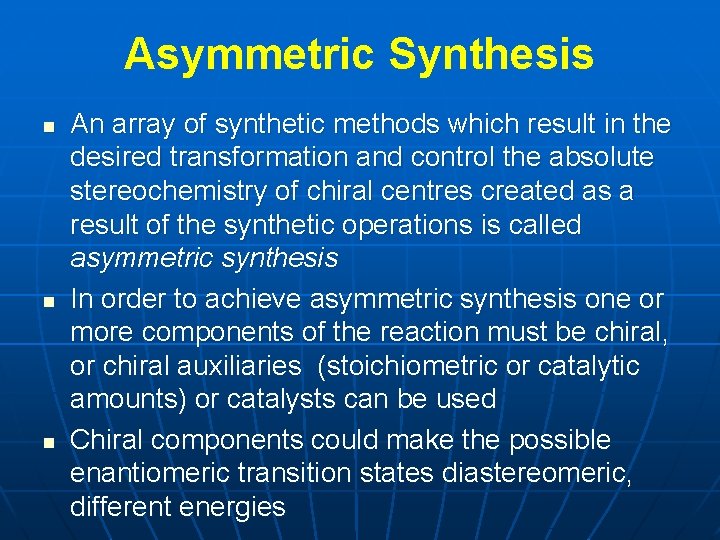
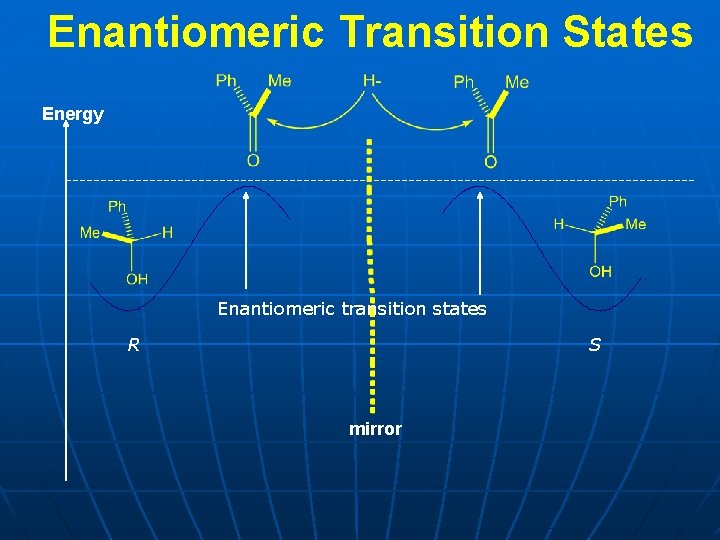
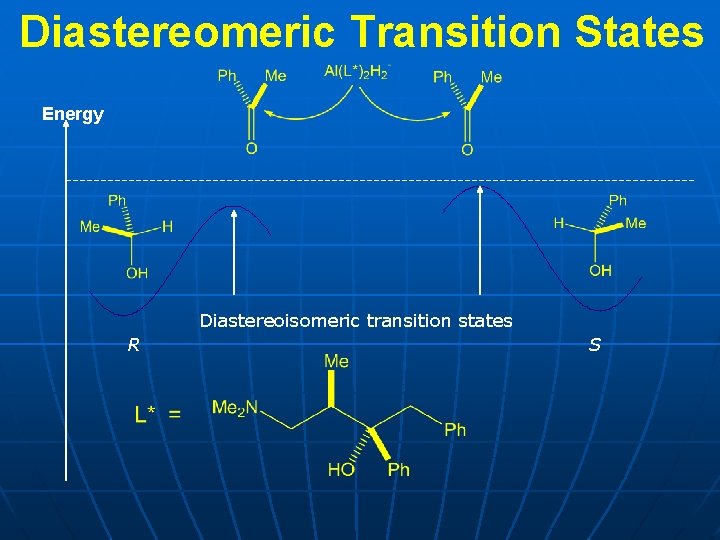
Asymmetric Synthesis n n n An array of synthetic methods which result in the desired transformation and control the absolute stereochemistry of chiral centres created as a result of the synthetic operations is called asymmetric synthesis In order to achieve asymmetric synthesis one or more components of the reaction must be chiral, or chiral auxiliaries (stoichiometric or catalytic amounts) or catalysts can be used Chiral components could make the possible enantiomeric transition states diastereomeric, different energies
Enantiomeric Transition States Energy Enantiomeric transition states R S mirror
Diastereomeric Transition States Energy Diastereoisomeric transition states R S
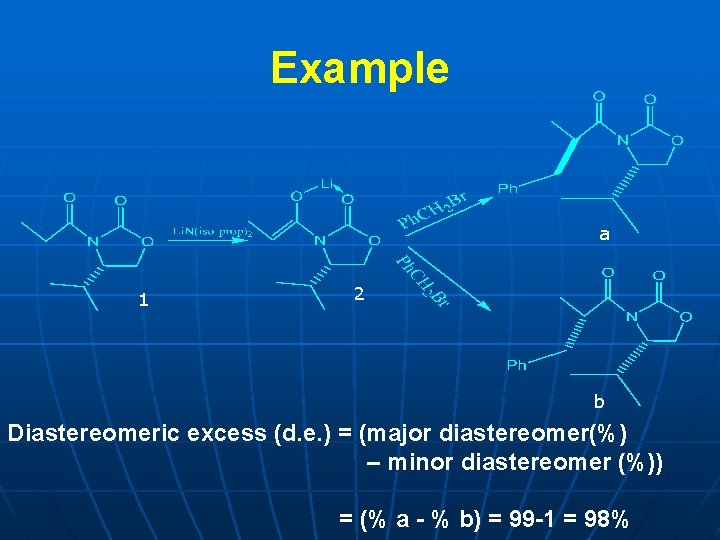
Example a 1 2 b Diastereomeric excess (d. e. ) = (major diastereomer(%) – minor diastereomer (%)) = (% a - % b) = 99 -1 = 98%
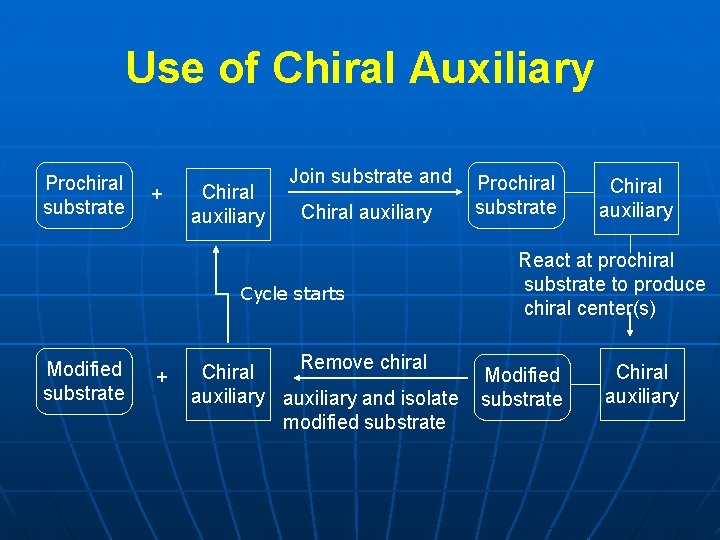
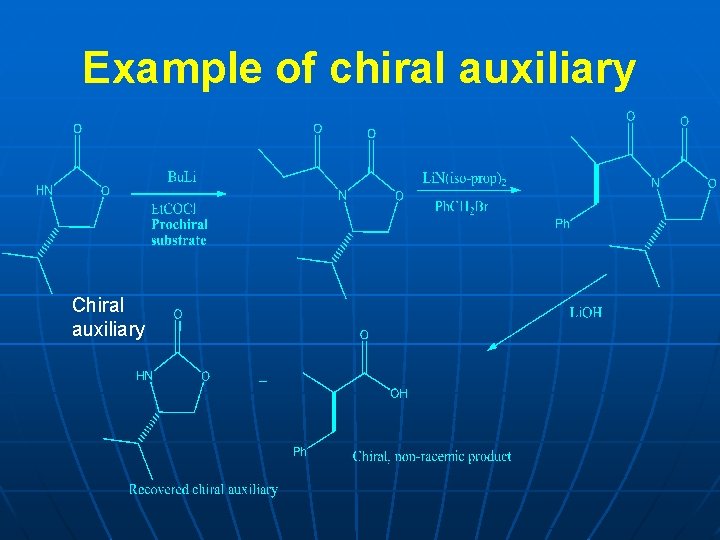
Use of Chiral Auxiliary Prochiral substrate + Chiral auxiliary Join substrate and Chiral auxiliary Cycle starts Modified substrate + Remove chiral Chiral auxiliary and isolate modified substrate Prochiral substrate Chiral auxiliary React at prochiral substrate to produce chiral center(s) Modified substrate Chiral auxiliary
Example of chiral auxiliary Chiral auxiliary
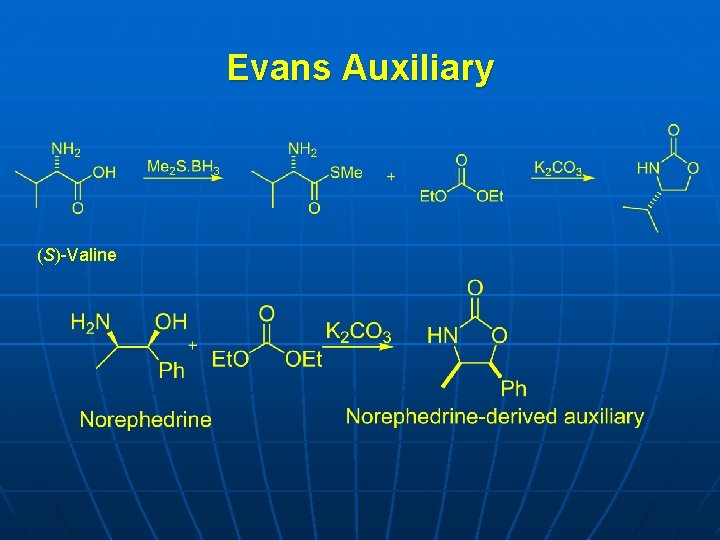
Evans Auxiliary (S)-Valine
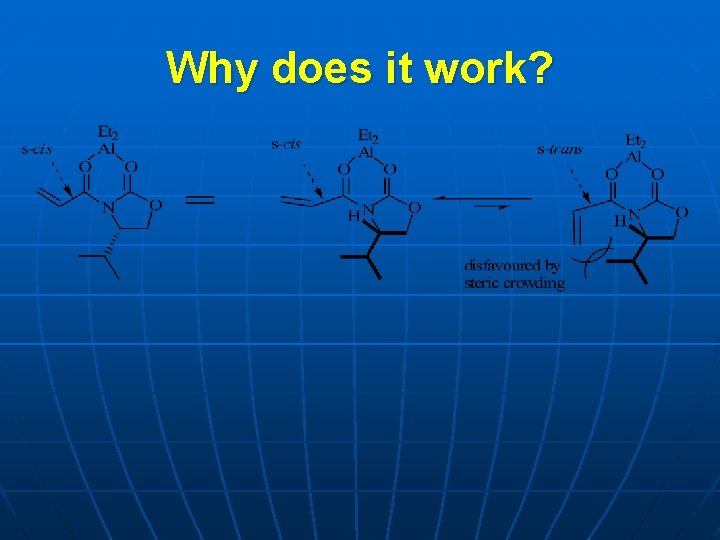
Why does it work?
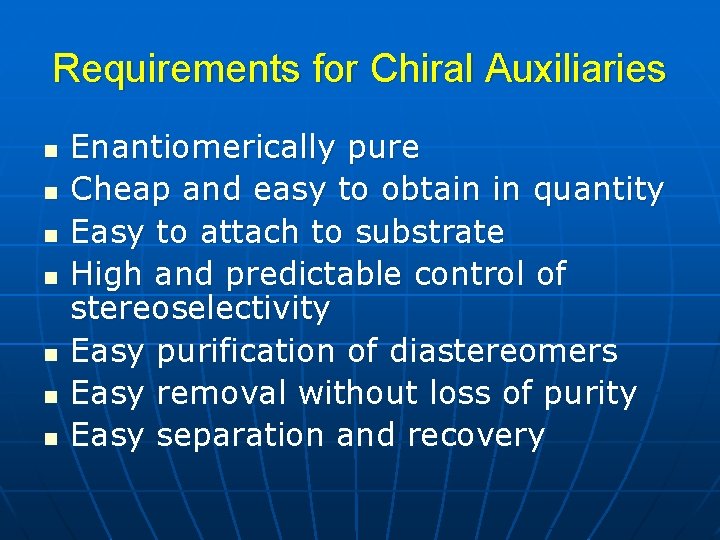
Requirements for Chiral Auxiliaries n n n n Enantiomerically pure Cheap and easy to obtain in quantity Easy to attach to substrate High and predictable control of stereoselectivity Easy purification of diastereomers Easy removal without loss of purity Easy separation and recovery
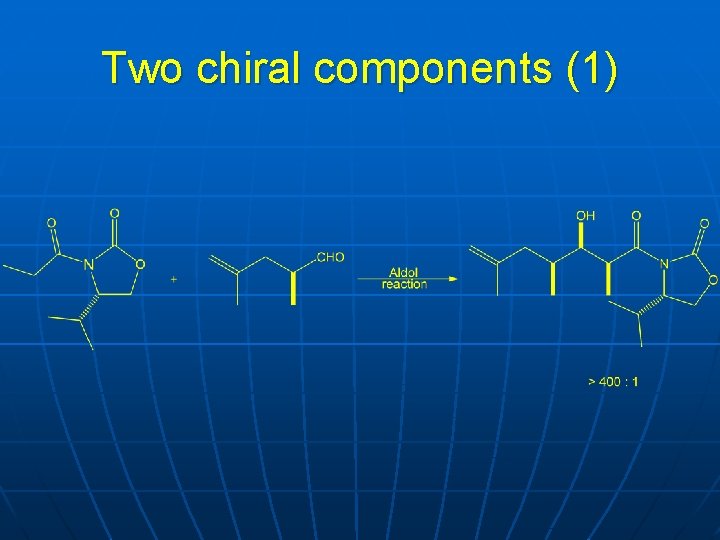
Two chiral components (1)
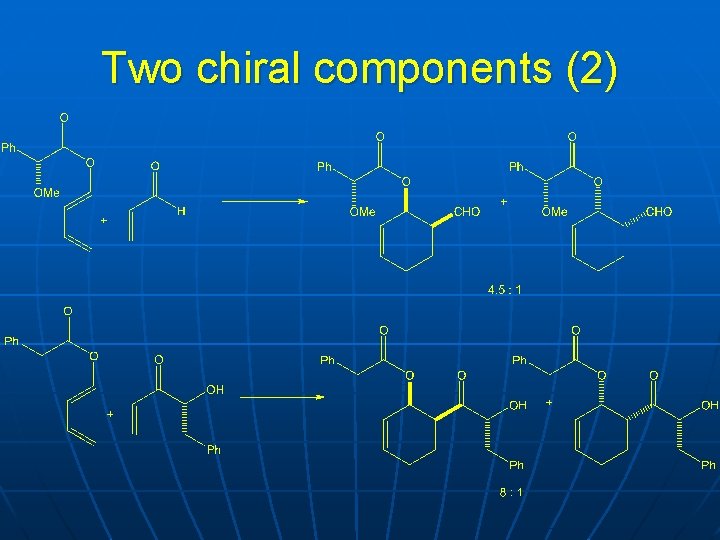
Two chiral components (2)
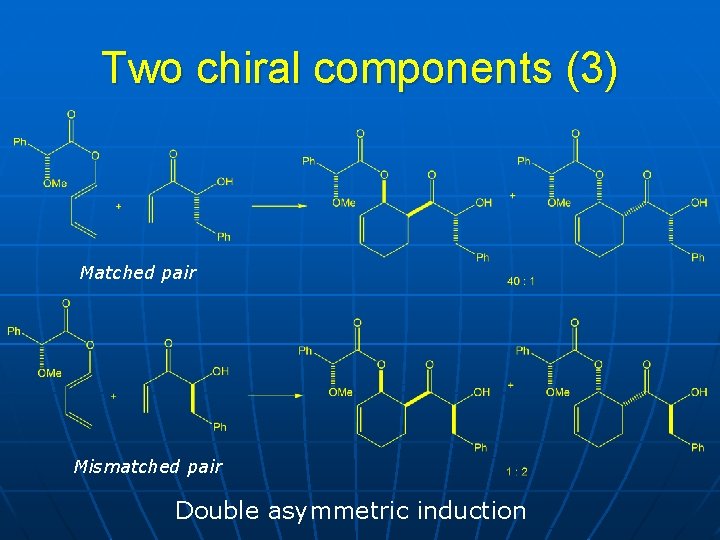
Two chiral components (3) Matched pair Mismatched pair Double asymmetric induction
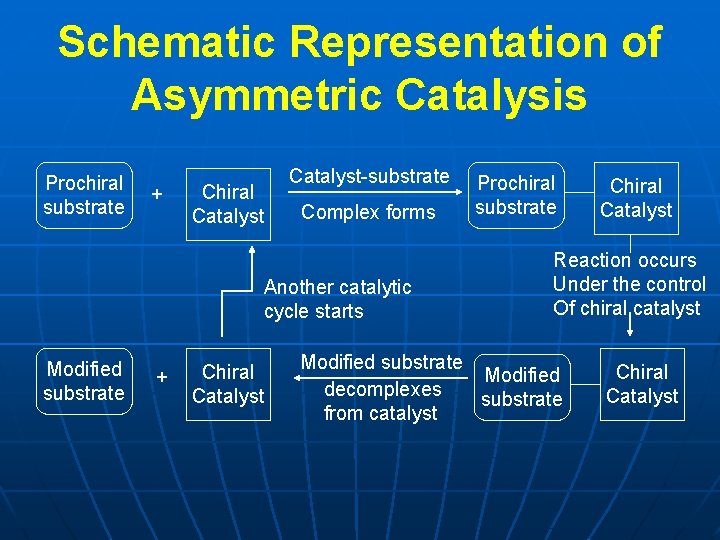
Schematic Representation of Asymmetric Catalysis Prochiral substrate + Chiral Catalyst-substrate Complex forms Another catalytic cycle starts Modified substrate + Chiral Catalyst Prochiral substrate Chiral Catalyst Reaction occurs Under the control Of chiral catalyst Modified substrate Modified decomplexes substrate from catalyst Chiral Catalyst
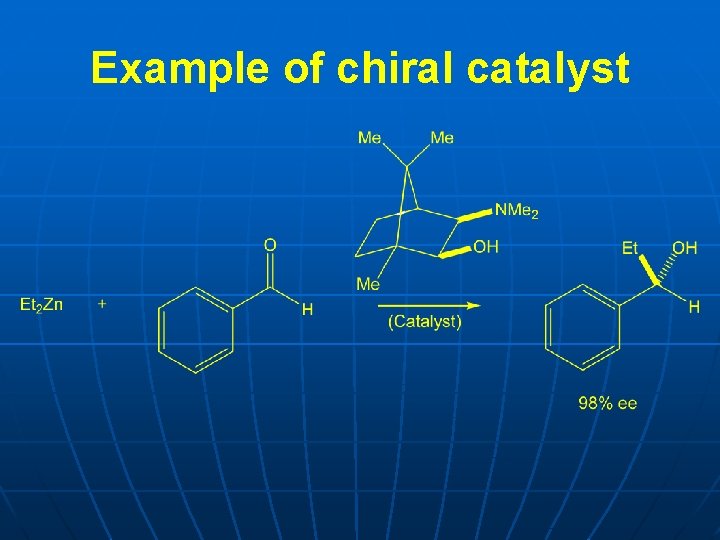
Example of chiral catalyst
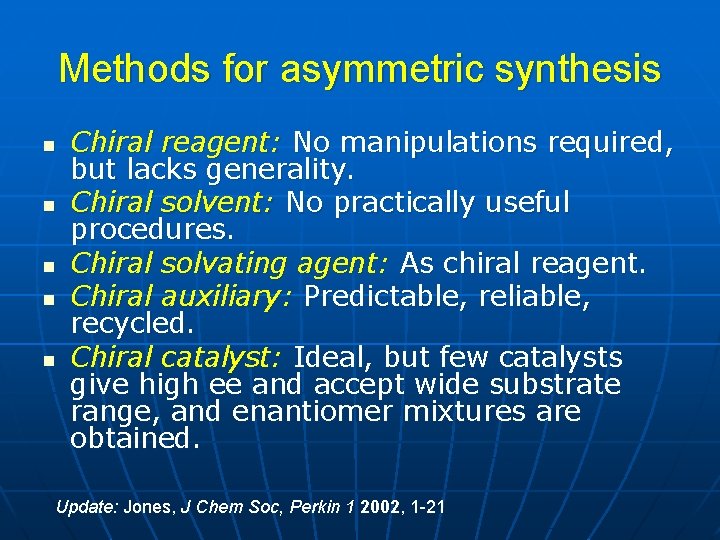
Methods for asymmetric synthesis n n n Chiral reagent: No manipulations required, but lacks generality. Chiral solvent: No practically useful procedures. Chiral solvating agent: As chiral reagent. Chiral auxiliary: Predictable, reliable, recycled. Chiral catalyst: Ideal, but few catalysts give high ee and accept wide substrate range, and enantiomer mixtures are obtained. Update: Jones, J Chem Soc, Perkin 1 2002, 1 -21
Questions ?