Aristotle University of Thessaloniki Soil Salinity and Land
- Slides: 17
Aristotle University of Thessaloniki Soil Salinity and Land Management Integrated Management of Salt Affected Soils Prof. Konstantinos Mattas Assoc. Prof. Anastasios Michailides Dr. George Bilas, Laboratory and Teaching Staff
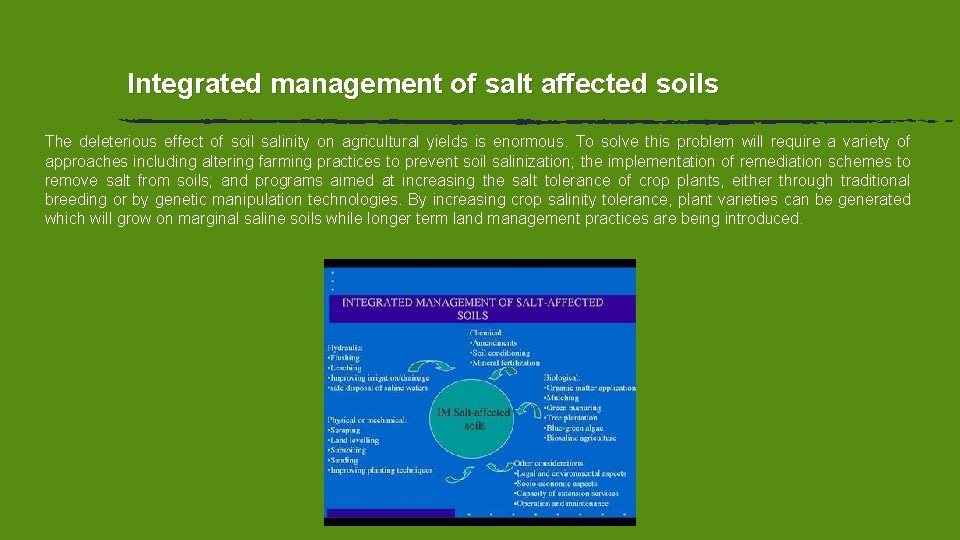
Integrated management of salt affected soils The deleterious effect of soil salinity on agricultural yields is enormous. To solve this problem will require a variety of approaches including altering farming practices to prevent soil salinization; the implementation of remediation schemes to remove salt from soils; and programs aimed at increasing the salt tolerance of crop plants, either through traditional breeding or by genetic manipulation technologies. By increasing crop salinity tolerance, plant varieties can be generated which will grow on marginal saline soils while longer term land management practices are being introduced.
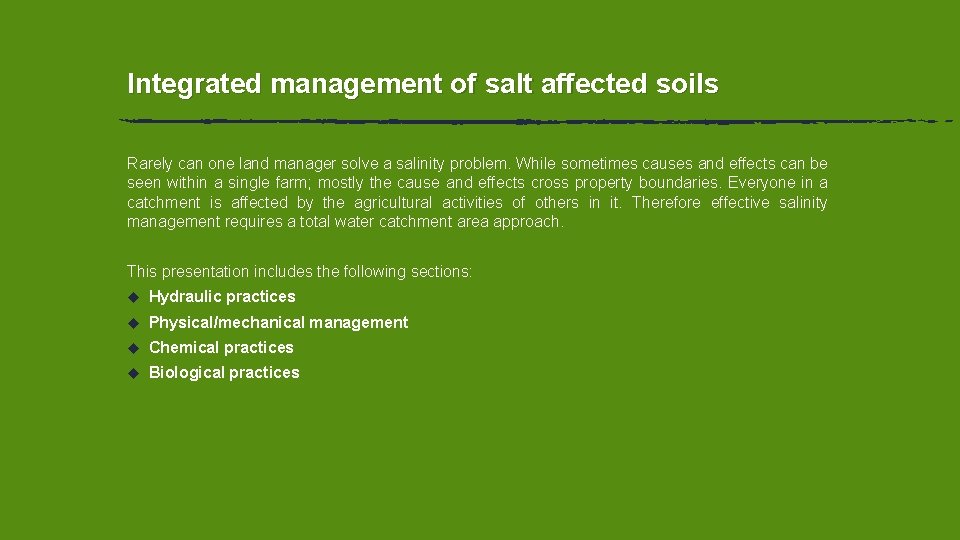
Integrated management of salt affected soils Rarely can one land manager solve a salinity problem. While sometimes causes and effects can be seen within a single farm; mostly the cause and effects cross property boundaries. Everyone in a catchment is affected by the agricultural activities of others in it. Therefore effective salinity management requires a total water catchment area approach. This presentation includes the following sections: u Hydraulic practices u Physical/mechanical management u Chemical practices u Biological practices
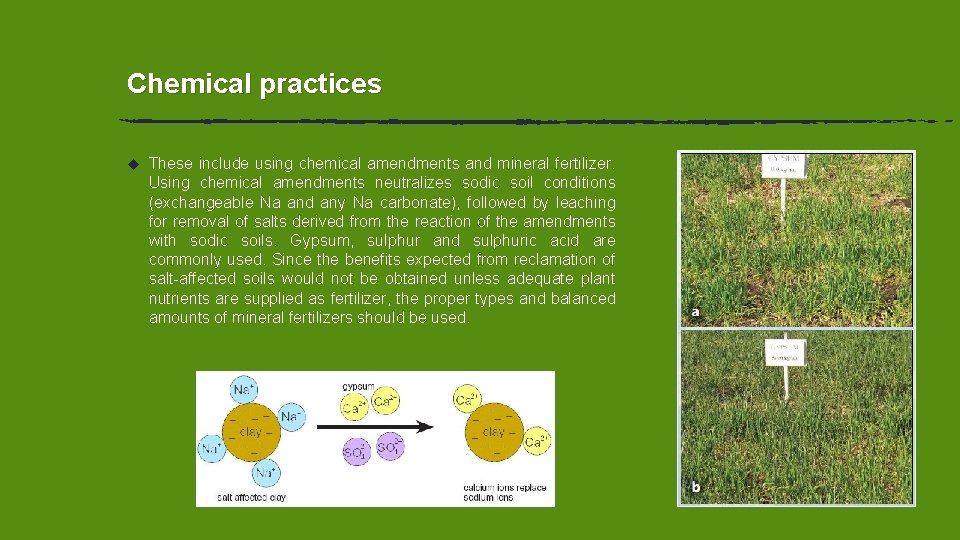
Chemical practices u These include using chemical amendments and mineral fertilizer. Using chemical amendments neutralizes sodic soil conditions (exchangeable Na and any Na carbonate), followed by leaching for removal of salts derived from the reaction of the amendments with sodic soils. Gypsum, sulphur and sulphuric acid are commonly used. Since the benefits expected from reclamation of salt-affected soils would not be obtained unless adequate plant nutrients are supplied as fertilizer, the proper types and balanced amounts of mineral fertilizers should be used.
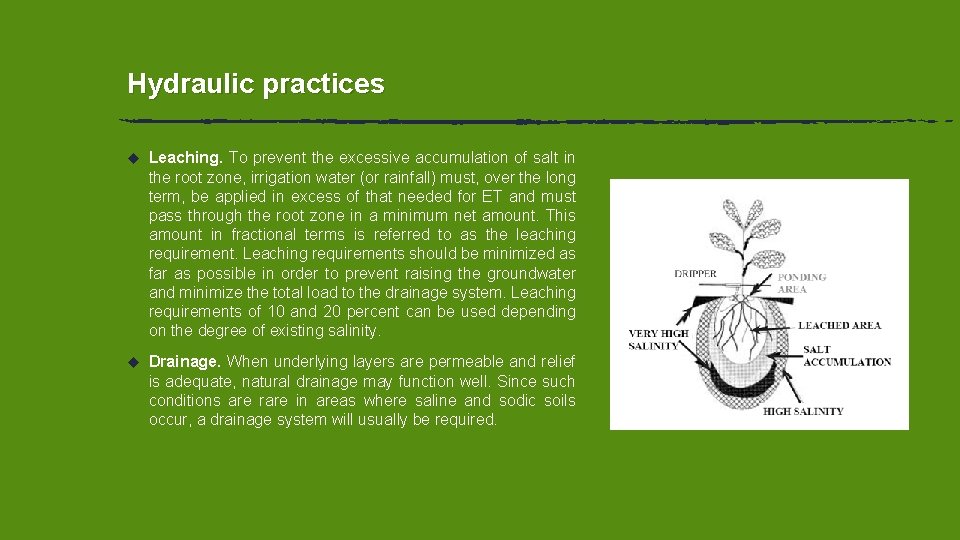
Hydraulic practices u Leaching. To prevent the excessive accumulation of salt in the root zone, irrigation water (or rainfall) must, over the long term, be applied in excess of that needed for ET and must pass through the root zone in a minimum net amount. This amount in fractional terms is referred to as the leaching requirement. Leaching requirements should be minimized as far as possible in order to prevent raising the groundwater and minimize the total load to the drainage system. Leaching requirements of 10 and 20 percent can be used depending on the degree of existing salinity. u Drainage. When underlying layers are permeable and relief is adequate, natural drainage may function well. Since such conditions are rare in areas where saline and sodic soils occur, a drainage system will usually be required.
Physical/mechanical management u Land levelling to achieve a more uniform application of water for better leaching and salinity control. u Tillage for seedbed preparation and soil permeability improvement. u Deep ploughing is most beneficial on stratified soils having an impermeable layer. It loosens the soil aggregates, improves the physical condition of this layer and increases air space and hydraulic conductivity. u Planting procedures. Special planting procedures that minimize salt accumulation around the seed such as planting on sloping beds or raised furrows in single or double rows are helpful in getting better stands under saline conditions.
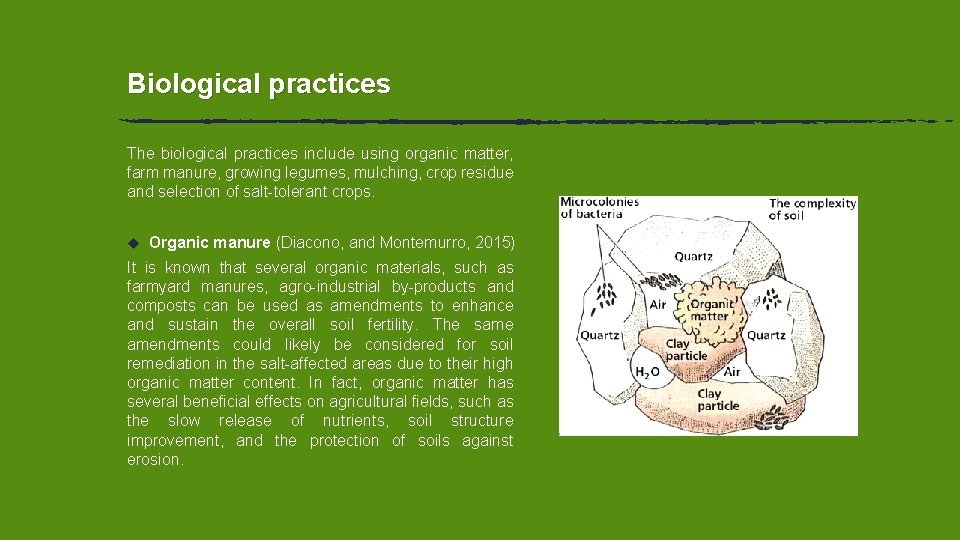
Biological practices The biological practices include using organic matter, farm manure, growing legumes, mulching, crop residue and selection of salt-tolerant crops. u Organic manure (Diacono, and Montemurro, 2015) It is known that several organic materials, such as farmyard manures, agro-industrial by-products and composts can be used as amendments to enhance and sustain the overall soil fertility. The same amendments could likely be considered for soil remediation in the salt-affected areas due to their high organic matter content. In fact, organic matter has several beneficial effects on agricultural fields, such as the slow release of nutrients, soil structure improvement, and the protection of soils against erosion.
Biological practices Effects of Organic Materials on Soil Chemical Properties The uptake of phosphorous (P) by crops is reduced in dry-soil conditions and the availability of this macronutrient can be reduced in saline soils. Conversely, during the mineralization process, organic matter releases humic substances, which may convert soil phosphates into available forms, improving release from hardly soluble rock minerals due to high total acidity. Additionally, under saline soils the available fraction of potassium (K) can increase through the increase of CEC linked to organic matter content. In particular, the application of poultry manure and compost to soil can increase both the CEC and the soluble and exchangeable-K+, which is a competitor of Na+ under sodicity conditions, thus, limiting the entry of Na+ into the exchange complex. Moreover, K+ is likewise important to maintain the turgor pressure of plant under drought and salinity stress. In a recent study, a mixture of green waste compost, sedge peat, and furfural residue (1: 1: 1 by volume) significantly reduced Na+ + K+ content and improved CEC and the contents of available N, P, and K.
Biological practices The soluble ions and the adsorption ratios of Na+ and K+ increased with 25 years of high rates of cattle manure application, particularly under non-irrigated conditions. Another study suggested that, even in a region with abundant rainfall, there was potential risk for secondary soil salinization by successive applications of chicken and pigeon manure. Therefore, proper selection of organic fertilizers as nutrient sources, timing, as well as method of their application to soil, can be considered equally important. As regards to method of application, the effect of interaction between salt and soil humus application was statistically significant showing that, under salt stress, both soil and foliar application of humic substances in corn field increased the uptake of nutrients. In particular, soil application of humus increased the N uptake, whereas foliar application increased the uptake of other macro- and micronutrients. The authors indicated to not exceed 2 g of well-humified organic matter/kg in the soil to obtain benefit from humic substances under salt conditions.
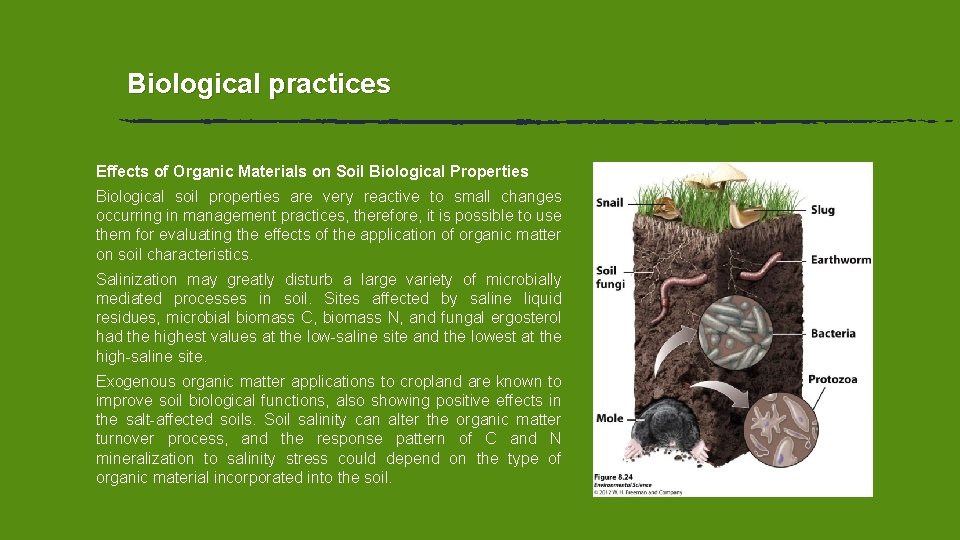
Biological practices Effects of Organic Materials on Soil Biological Properties Biological soil properties are very reactive to small changes occurring in management practices, therefore, it is possible to use them for evaluating the effects of the application of organic matter on soil characteristics. Salinization may greatly disturb a large variety of microbially mediated processes in soil. Sites affected by saline liquid residues, microbial biomass C, biomass N, and fungal ergosterol had the highest values at the low-saline site and the lowest at the high-saline site. Exogenous organic matter applications to cropland are known to improve soil biological functions, also showing positive effects in the salt-affected soils. Soil salinity can alter the organic matter turnover process, and the response pattern of C and N mineralization to salinity stress could depend on the type of organic material incorporated into the soil.
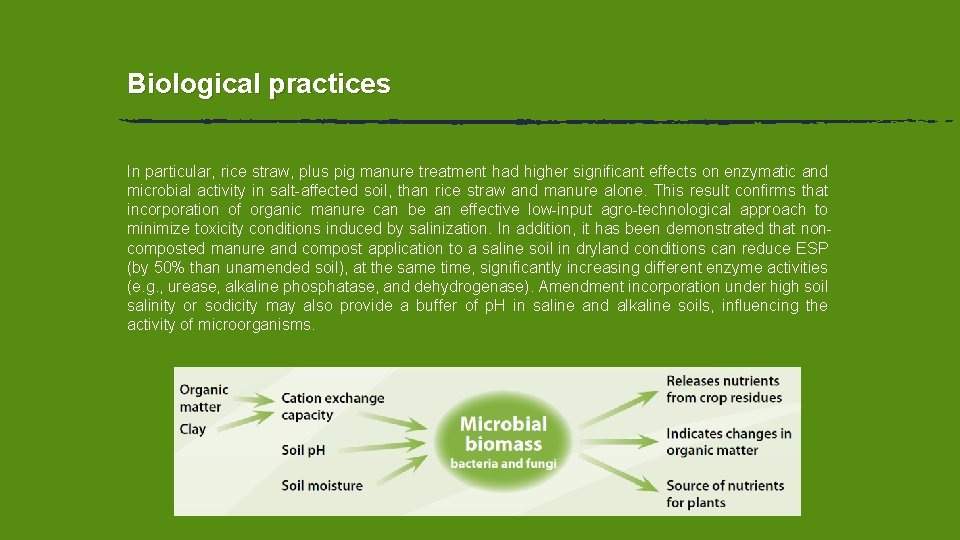
Biological practices In particular, rice straw, plus pig manure treatment had higher significant effects on enzymatic and microbial activity in salt-affected soil, than rice straw and manure alone. This result confirms that incorporation of organic manure can be an effective low-input agro-technological approach to minimize toxicity conditions induced by salinization. In addition, it has been demonstrated that noncomposted manure and compost application to a saline soil in dryland conditions can reduce ESP (by 50% than unamended soil), at the same time, significantly increasing different enzyme activities (e. g. , urease, alkaline phosphatase, and dehydrogenase). Amendment incorporation under high soil salinity or sodicity may also provide a buffer of p. H in saline and alkaline soils, influencing the activity of microorganisms.
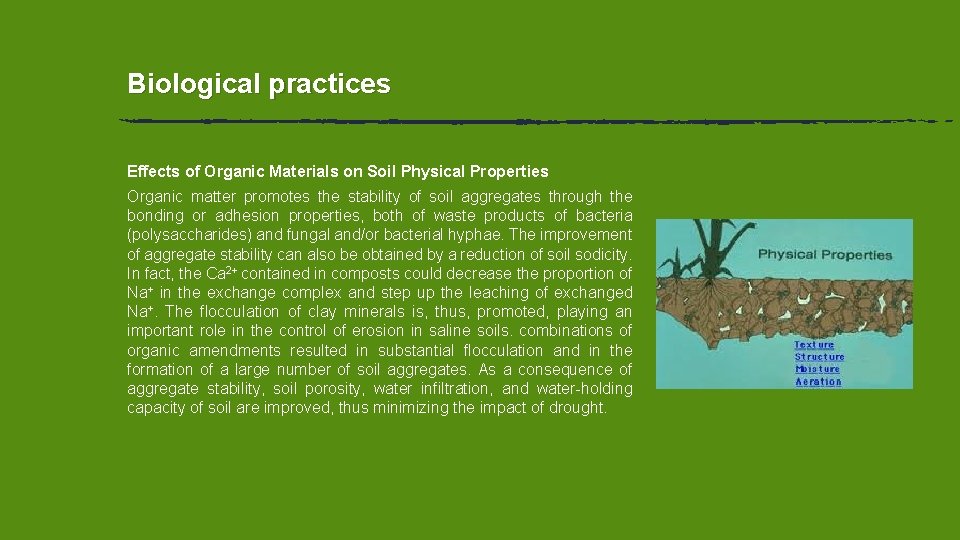
Biological practices Effects of Organic Materials on Soil Physical Properties Organic matter promotes the stability of soil aggregates through the bonding or adhesion properties, both of waste products of bacteria (polysaccharides) and fungal and/or bacterial hyphae. The improvement of aggregate stability can also be obtained by a reduction of soil sodicity. In fact, the Ca 2+ contained in composts could decrease the proportion of Na+ in the exchange complex and step up the leaching of exchanged Na+. The flocculation of clay minerals is, thus, promoted, playing an important role in the control of erosion in saline soils. combinations of organic amendments resulted in substantial flocculation and in the formation of a large number of soil aggregates. As a consequence of aggregate stability, soil porosity, water infiltration, and water-holding capacity of soil are improved, thus minimizing the impact of drought.
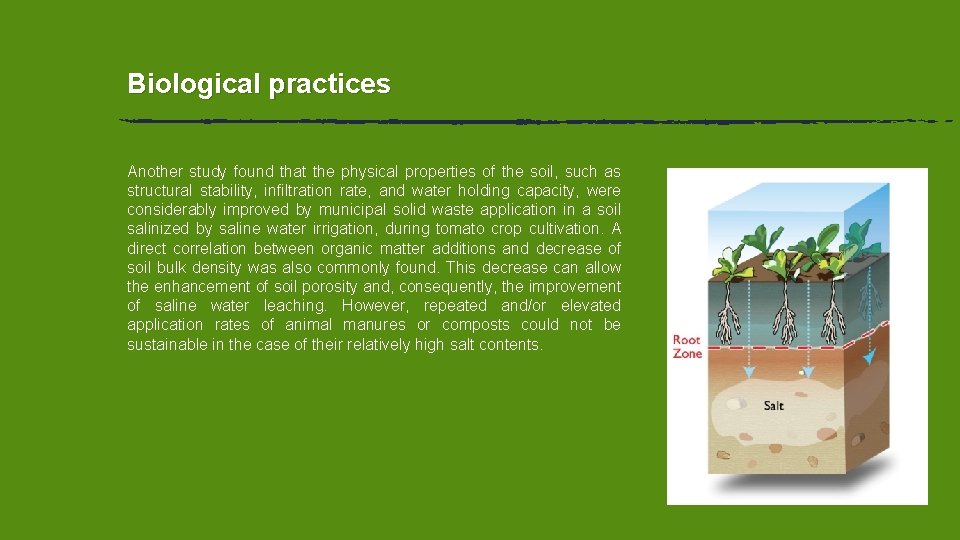
Biological practices Another study found that the physical properties of the soil, such as structural stability, infiltration rate, and water holding capacity, were considerably improved by municipal solid waste application in a soil salinized by saline water irrigation, during tomato crop cultivation. A direct correlation between organic matter additions and decrease of soil bulk density was also commonly found. This decrease can allow the enhancement of soil porosity and, consequently, the improvement of saline water leaching. However, repeated and/or elevated application rates of animal manures or composts could not be sustainable in the case of their relatively high salt contents.
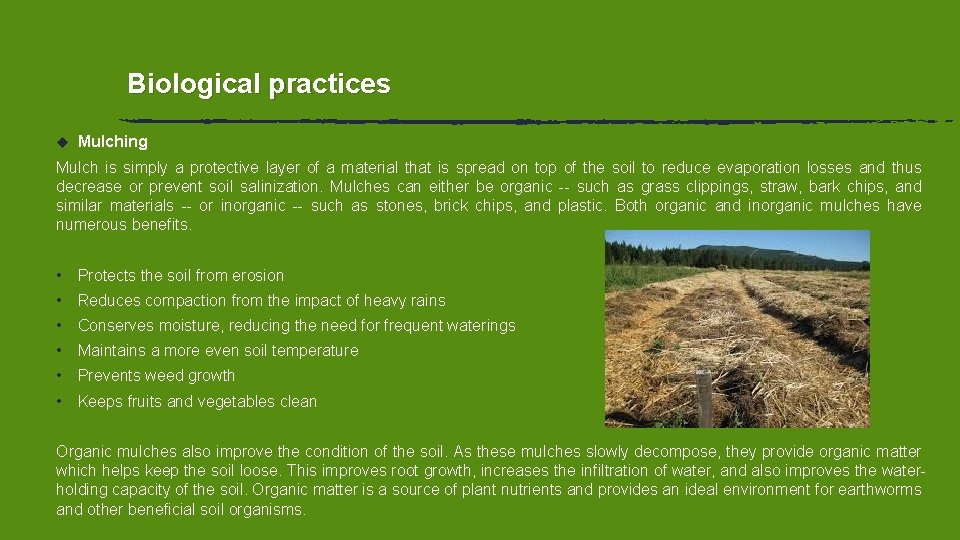
Biological practices u Mulching Mulch is simply a protective layer of a material that is spread on top of the soil to reduce evaporation losses and thus decrease or prevent soil salinization. Mulches can either be organic -- such as grass clippings, straw, bark chips, and similar materials -- or inorganic -- such as stones, brick chips, and plastic. Both organic and inorganic mulches have numerous benefits. • Protects the soil from erosion • Reduces compaction from the impact of heavy rains • Conserves moisture, reducing the need for frequent waterings • Maintains a more even soil temperature • Prevents weed growth • Keeps fruits and vegetables clean Organic mulches also improve the condition of the soil. As these mulches slowly decompose, they provide organic matter which helps keep the soil loose. This improves root growth, increases the infiltration of water, and also improves the waterholding capacity of the soil. Organic matter is a source of plant nutrients and provides an ideal environment for earthworms and other beneficial soil organisms.
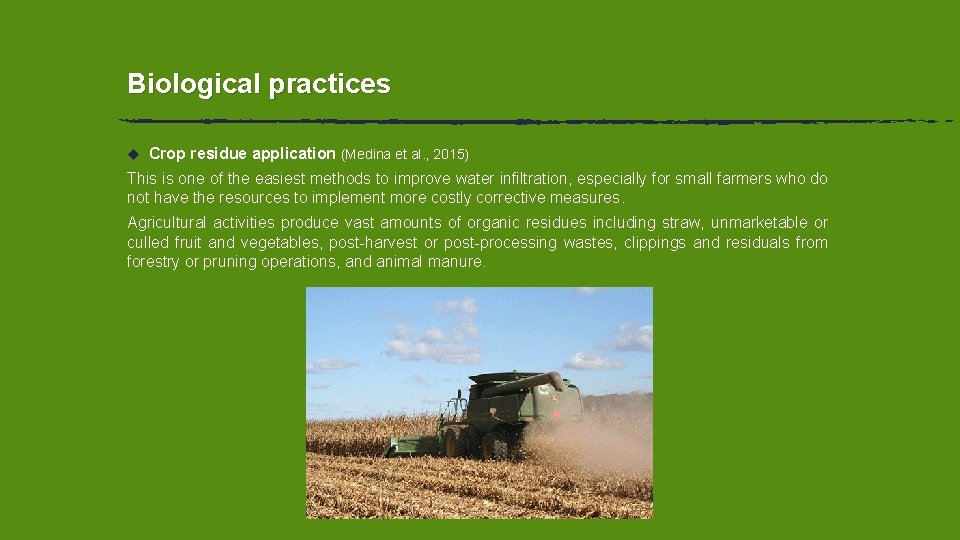
Biological practices u Crop residue application (Medina et al. , 2015) This is one of the easiest methods to improve water infiltration, especially for small farmers who do not have the resources to implement more costly corrective measures. Agricultural activities produce vast amounts of organic residues including straw, unmarketable or culled fruit and vegetables, post-harvest or post-processing wastes, clippings and residuals from forestry or pruning operations, and animal manure.
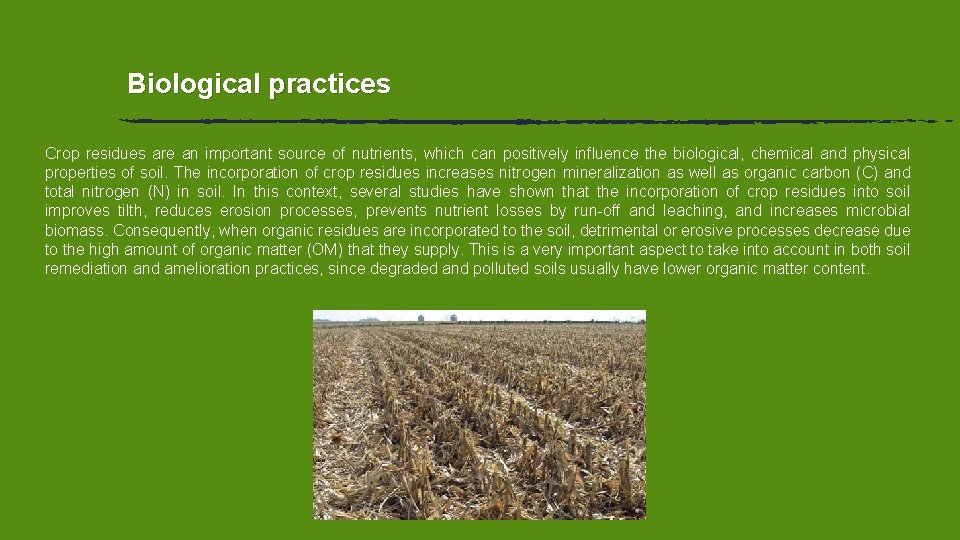
Biological practices Crop residues are an important source of nutrients, which can positively influence the biological, chemical and physical properties of soil. The incorporation of crop residues increases nitrogen mineralization as well as organic carbon (C) and total nitrogen (N) in soil. In this context, several studies have shown that the incorporation of crop residues into soil improves tilth, reduces erosion processes, prevents nutrient losses by run-off and leaching, and increases microbial biomass. Consequently, when organic residues are incorporated to the soil, detrimental or erosive processes decrease due to the high amount of organic matter (OM) that they supply. This is a very important aspect to take into account in both soil remediation and amelioration practices, since degraded and polluted soils usually have lower organic matter content.
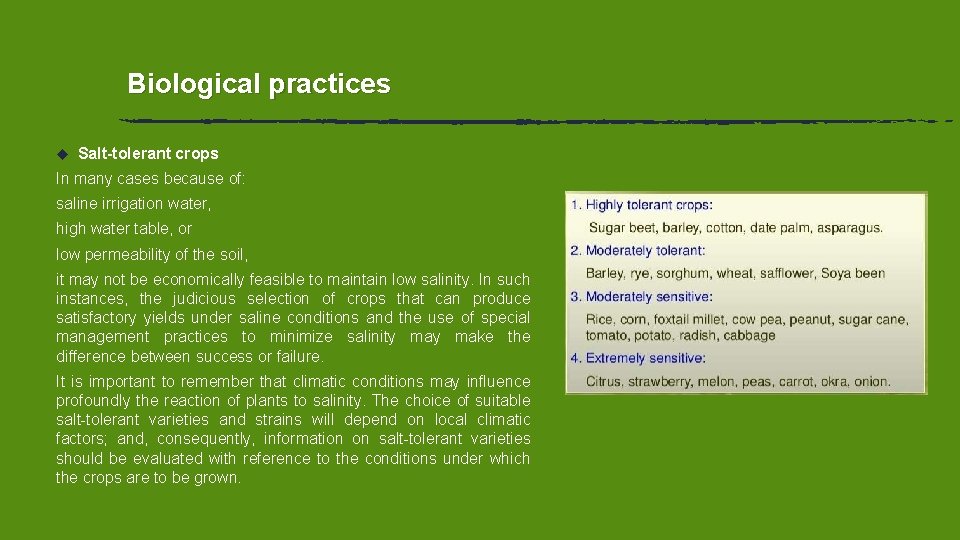
Biological practices u Salt-tolerant crops In many cases because of: saline irrigation water, high water table, or low permeability of the soil, it may not be economically feasible to maintain low salinity. In such instances, the judicious selection of crops that can produce satisfactory yields under saline conditions and the use of special management practices to minimize salinity make the difference between success or failure. It is important to remember that climatic conditions may influence profoundly the reaction of plants to salinity. The choice of suitable salt-tolerant varieties and strains will depend on local climatic factors; and, consequently, information on salt-tolerant varieties should be evaluated with reference to the conditions under which the crops are to be grown.