Ancient Greek art Late Geometric Corinthian orientalising jug
- Slides: 37
Ancient Greek art
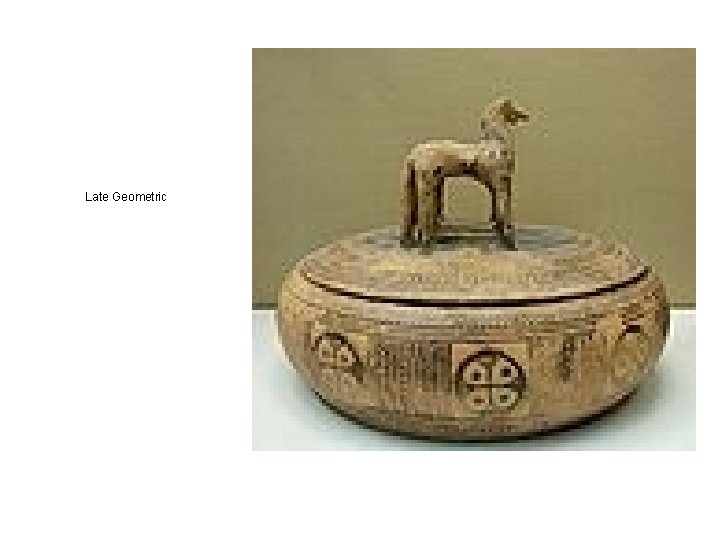
Late Geometric
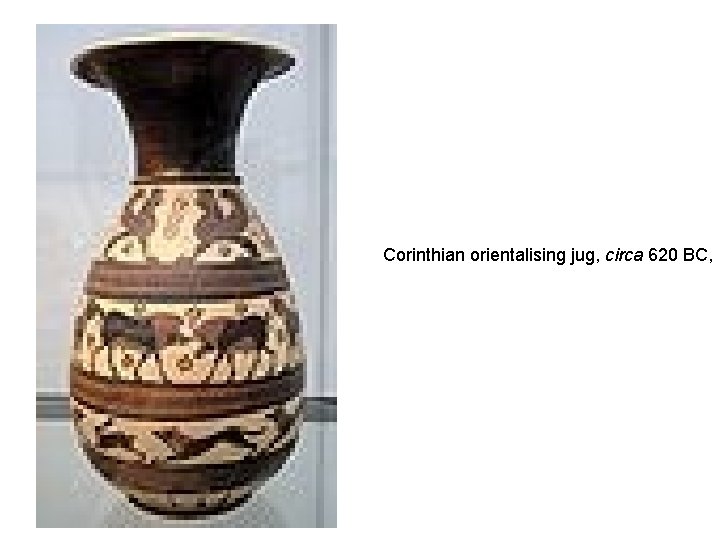
Corinthian orientalising jug, circa 620 BC,
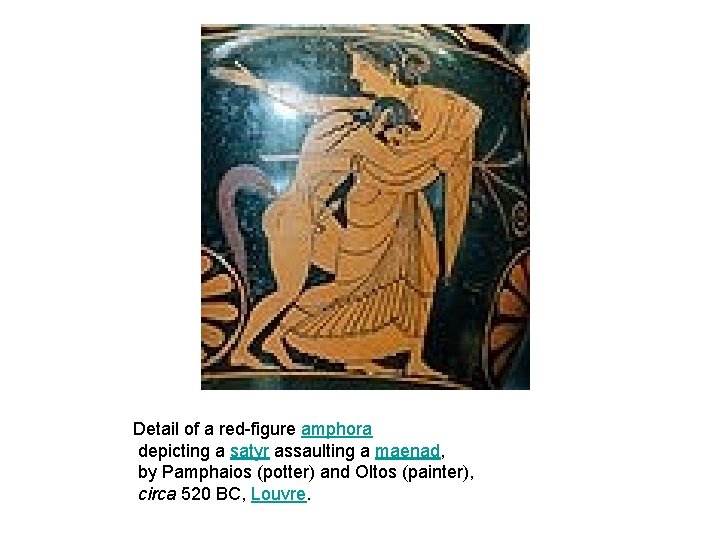
Detail of a red-figure amphora depicting a satyr assaulting a maenad, by Pamphaios (potter) and Oltos (painter), circa 520 BC, Louvre.
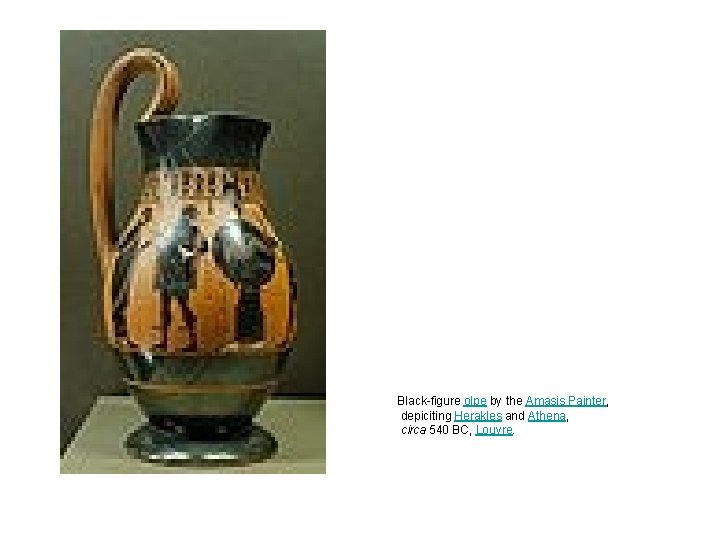
Black-figure olpe by the Amasis Painter, depiciting Herakles and Athena, circa 540 BC, Louvre.
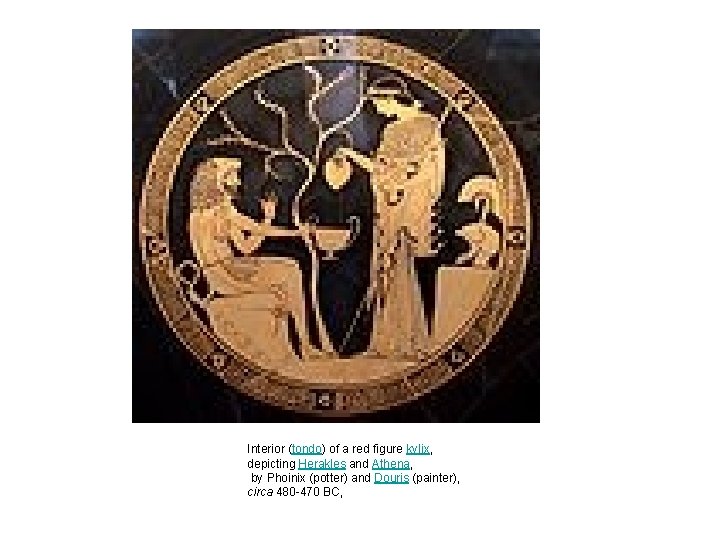
Interior (tondo) of a red figure kylix, depicting Herakles and Athena, by Phoinix (potter) and Douris (painter), circa 480 -470 BC,
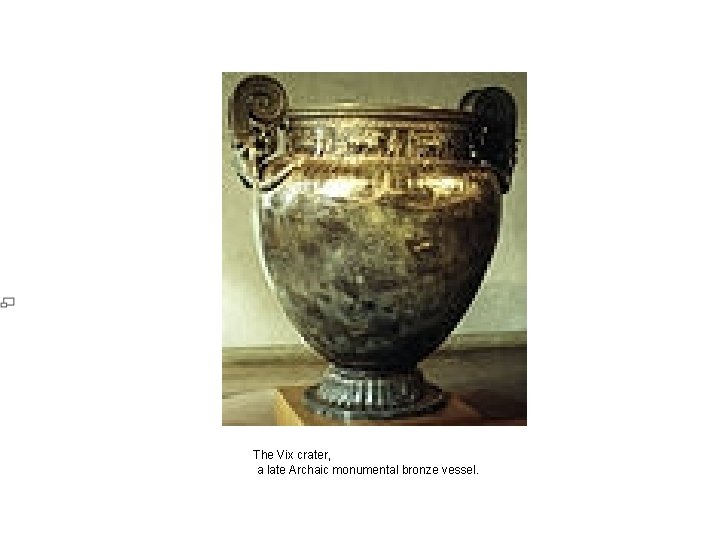
The Vix crater, a late Archaic monumental bronze vessel.
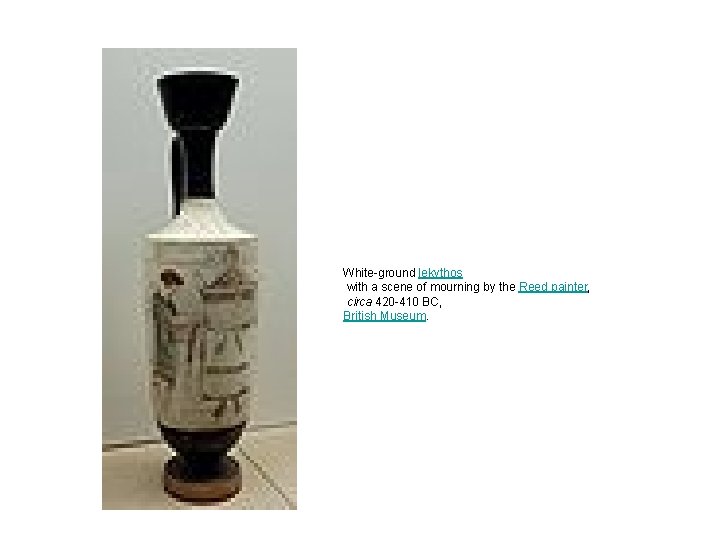
White-ground lekythos with a scene of mourning by the Reed painter, circa 420 -410 BC, British Museum.
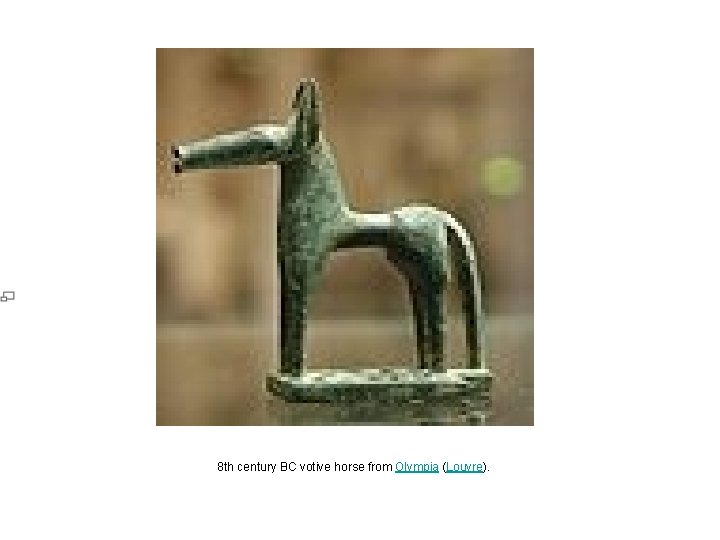
8 th century BC votive horse from Olympia (Louvre).
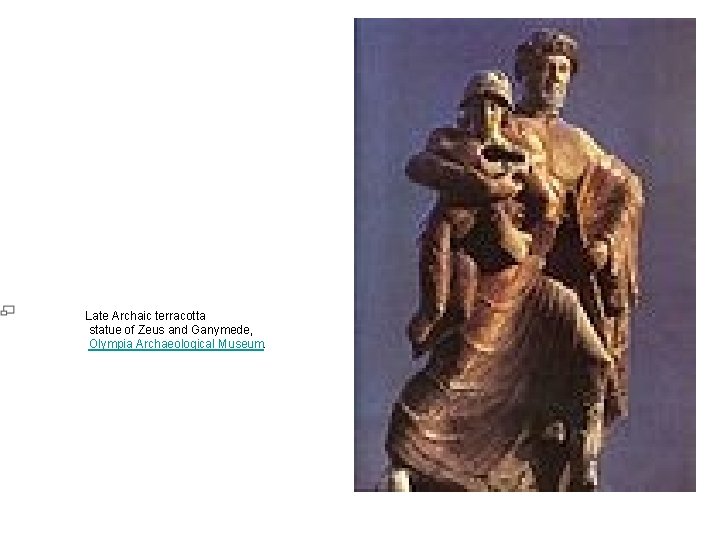
Late Archaic terracotta statue of Zeus and Ganymede, Olympia Archaeological Museum.
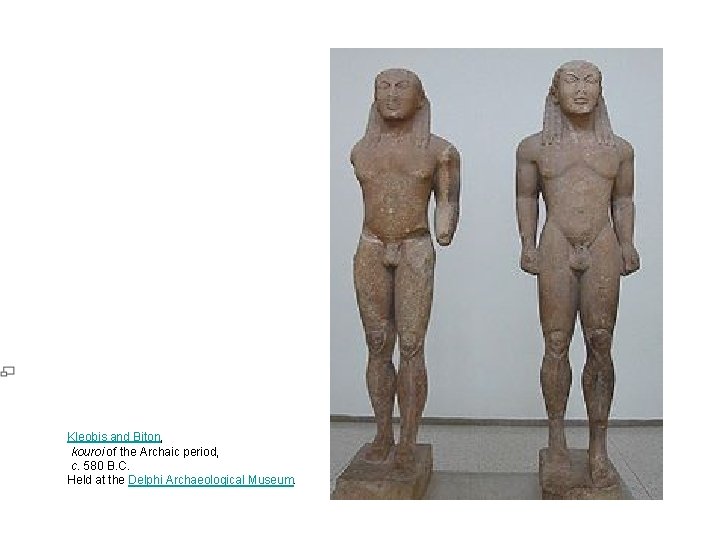
Kleobis and Biton, kouroi of the Archaic period, c. 580 B. C. Held at the Delphi Archaeological Museum.
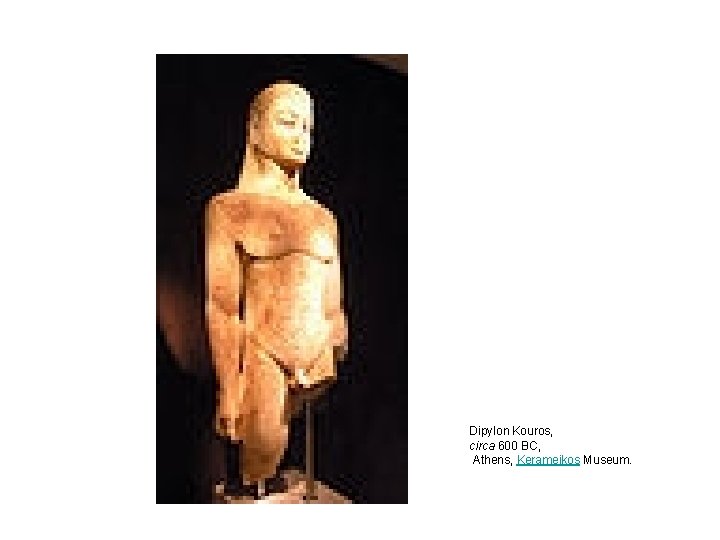
Dipylon Kouros, circa 600 BC, Athens, Kerameikos Museum.
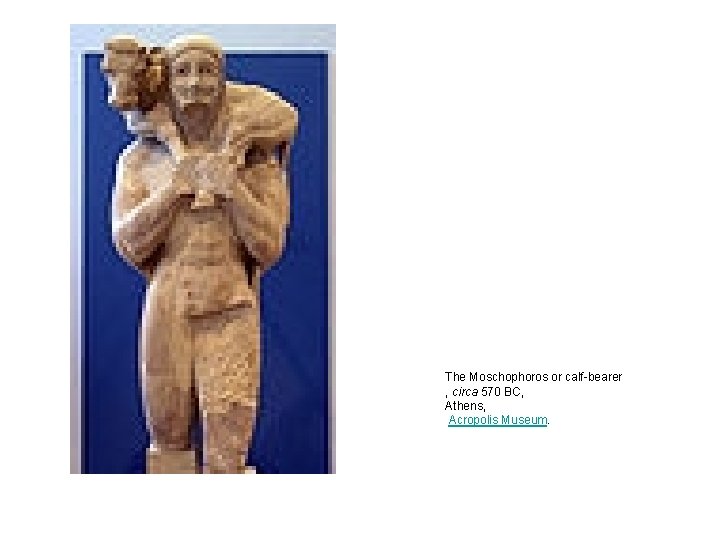
The Moschophoros or calf-bearer , circa 570 BC, Athens, Acropolis Museum.
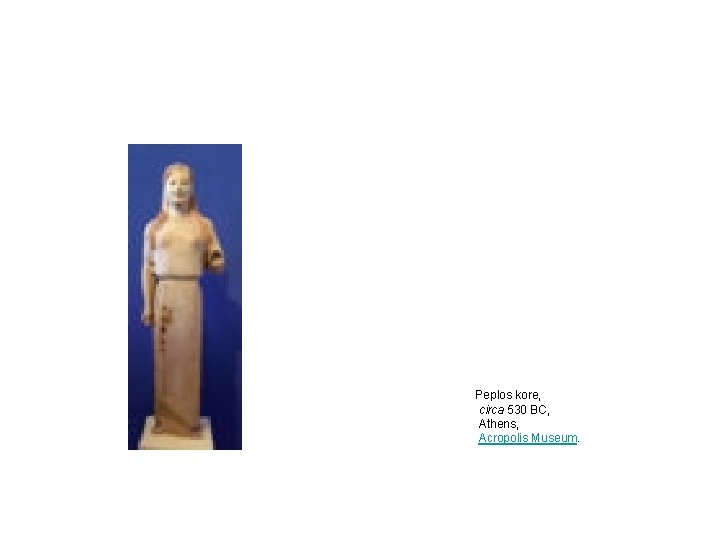
Peplos kore, circa 530 BC, Athens, Acropolis Museum.
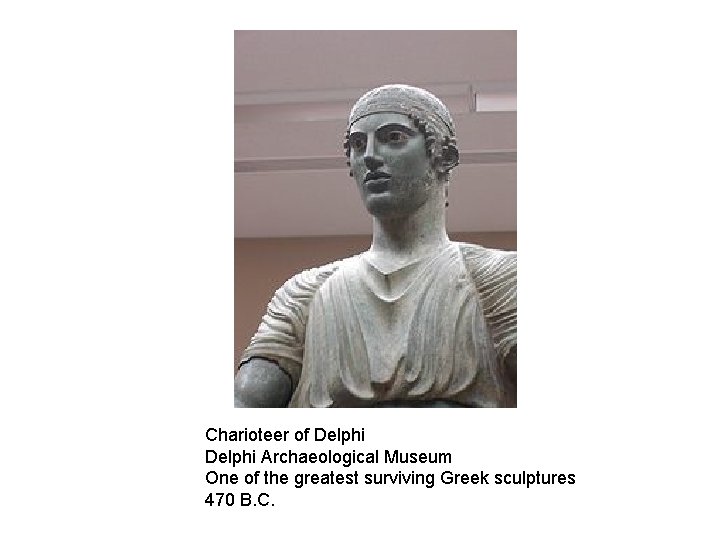
Charioteer of Delphi Archaeological Museum One of the greatest surviving Greek sculptures 470 B. C.
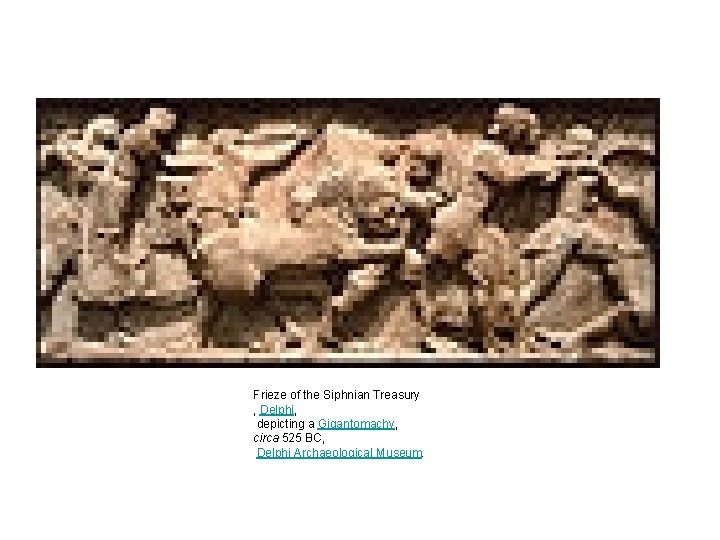
Frieze of the Siphnian Treasury , Delphi, depicting a Gigantomachy, circa 525 BC, Delphi Archaeological Museum.
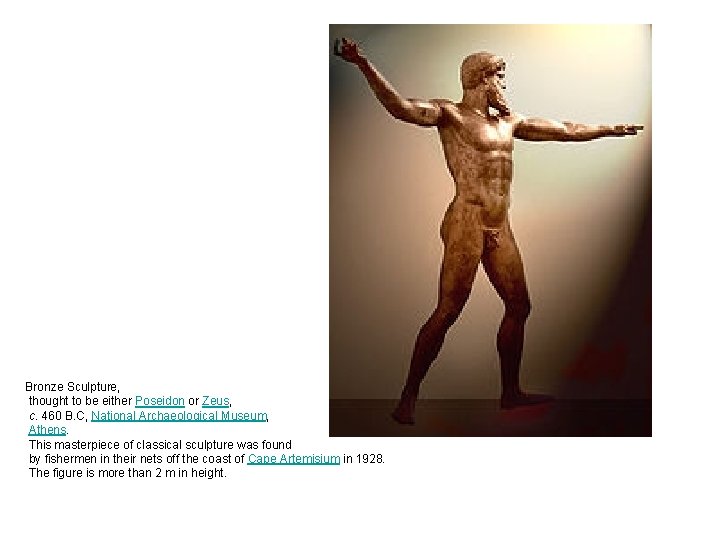
Bronze Sculpture, thought to be either Poseidon or Zeus, c. 460 B. C, National Archaeological Museum, Athens. This masterpiece of classical sculpture was found by fishermen in their nets off the coast of Cape Artemisium in 1928. The figure is more than 2 m in height.
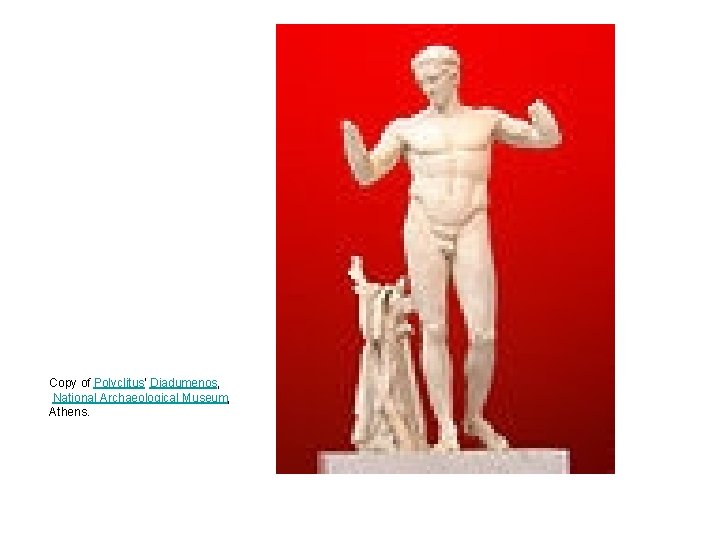
Copy of Polyclitus' Diadumenos, National Archaeological Museum, Athens.
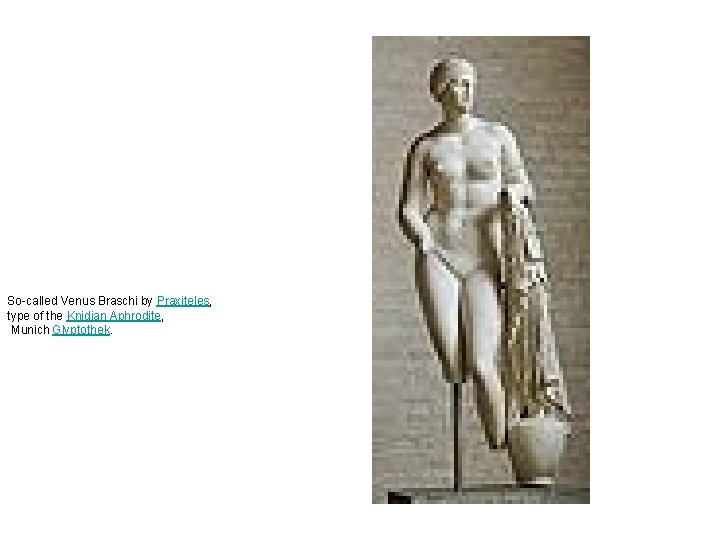
So-called Venus Braschi by Praxiteles, type of the Knidian Aphrodite, Munich Glyptothek.
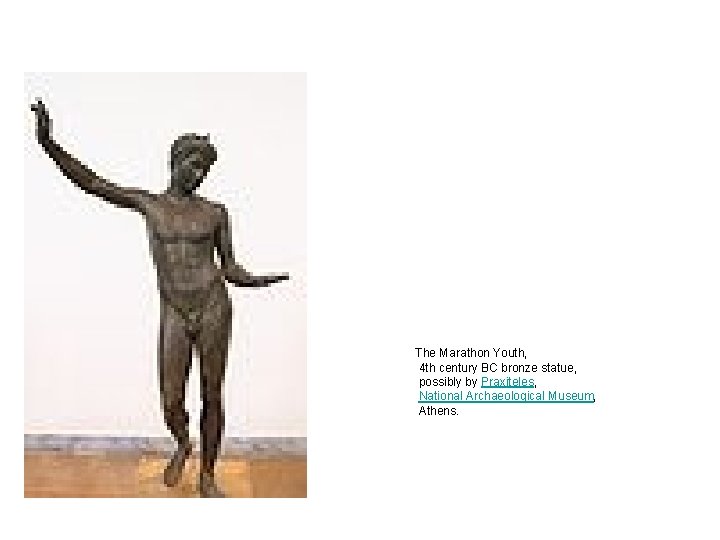
The Marathon Youth, 4 th century BC bronze statue, possibly by Praxiteles, National Archaeological Museum, Athens.
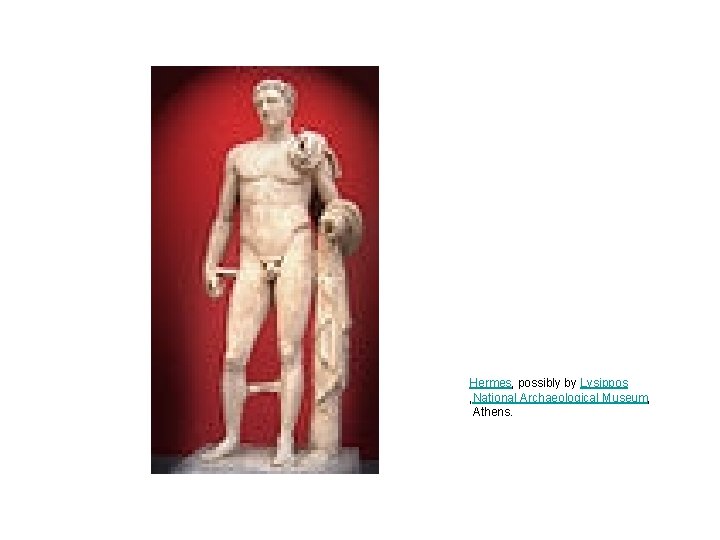
Hermes, possibly by Lysippos , National Archaeological Museum, Athens.
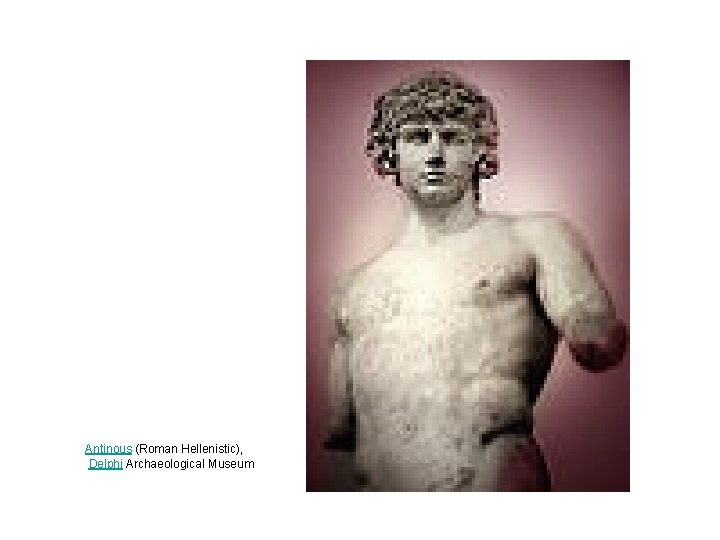
Antinous (Roman Hellenistic), Delphi Archaeological Museum
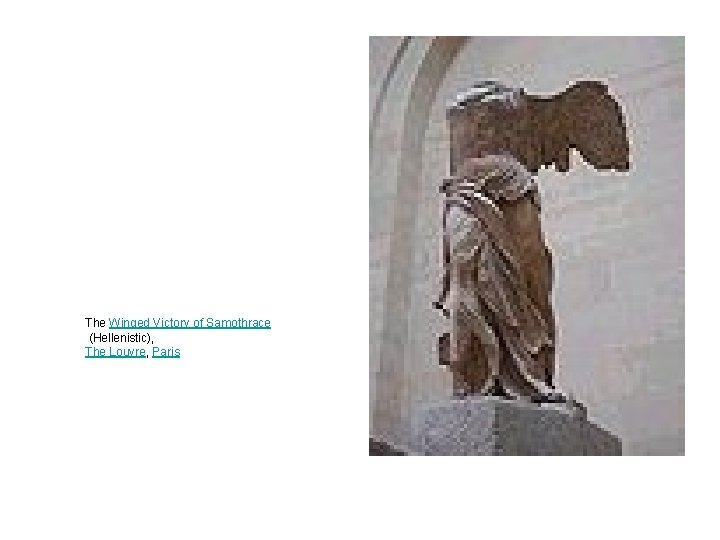
The Winged Victory of Samothrace (Hellenistic), The Louvre, Paris
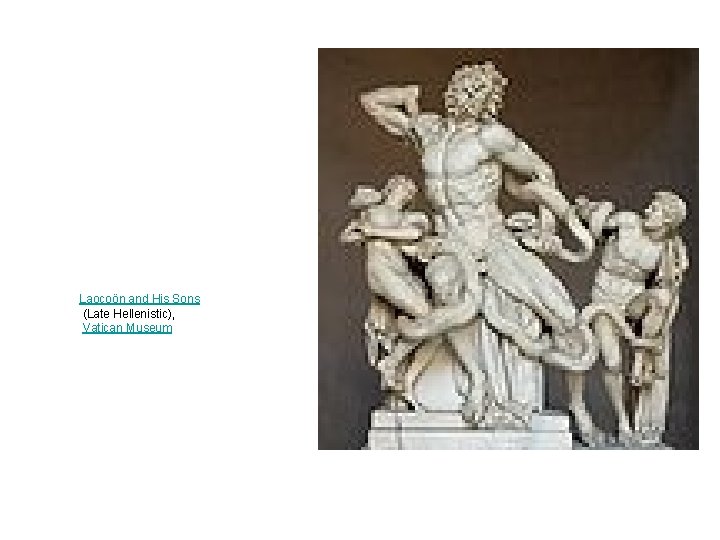
Laocoön and His Sons (Late Hellenistic), Vatican Museum
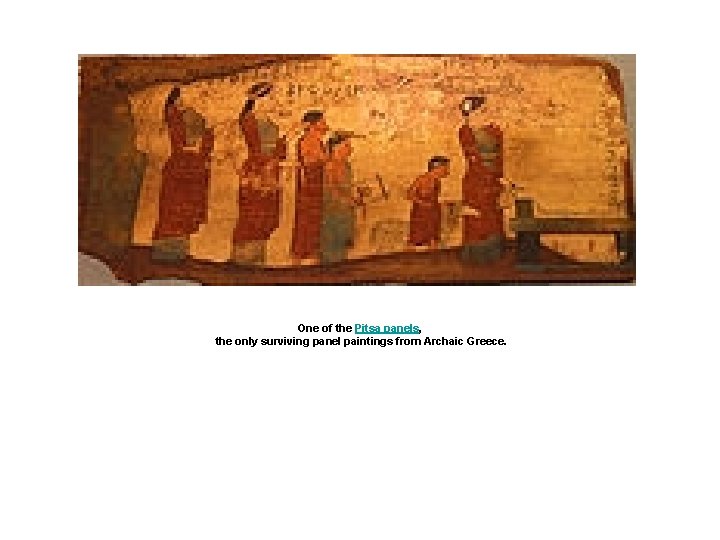
One of the Pitsa panels, the only surviving panel paintings from Archaic Greece.
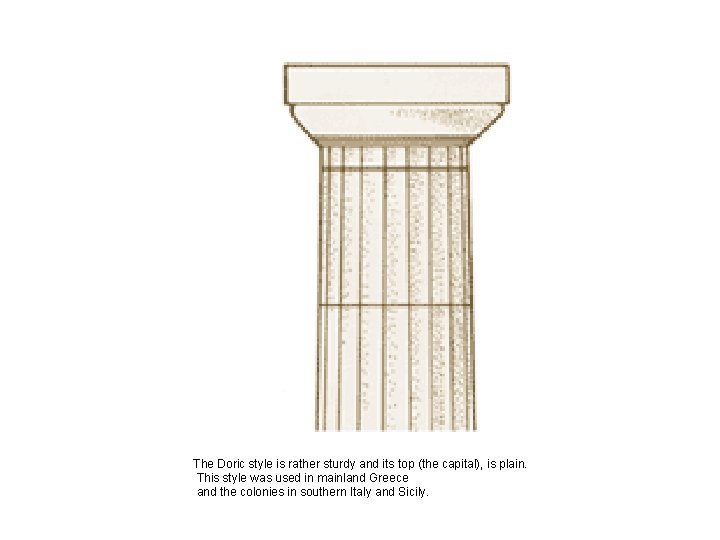
The Doric style is rather sturdy and its top (the capital), is plain. This style was used in mainland Greece and the colonies in southern Italy and Sicily.
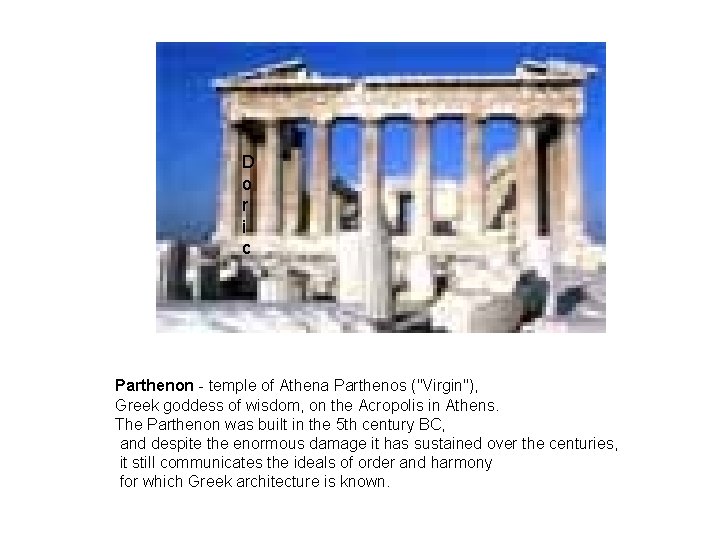
D o r i c Parthenon - temple of Athena Parthenos ("Virgin"), Greek goddess of wisdom, on the Acropolis in Athens. The Parthenon was built in the 5 th century BC, and despite the enormous damage it has sustained over the centuries, it still communicates the ideals of order and harmony for which Greek architecture is known.
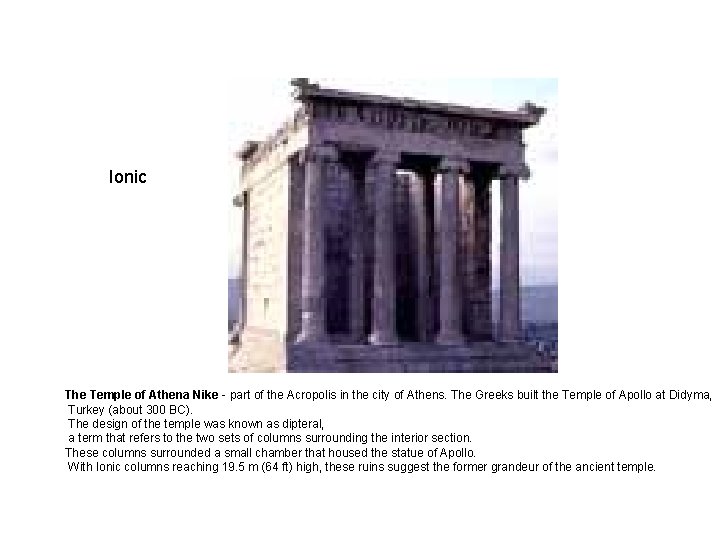
Ionic The Temple of Athena Nike - part of the Acropolis in the city of Athens. The Greeks built the Temple of Apollo at Didyma, Turkey (about 300 BC). The design of the temple was known as dipteral, a term that refers to the two sets of columns surrounding the interior section. These columns surrounded a small chamber that housed the statue of Apollo. With Ionic columns reaching 19. 5 m (64 ft) high, these ruins suggest the former grandeur of the ancient temple.
The Temple of Hephaistos at Athens, late 5 th century BC.
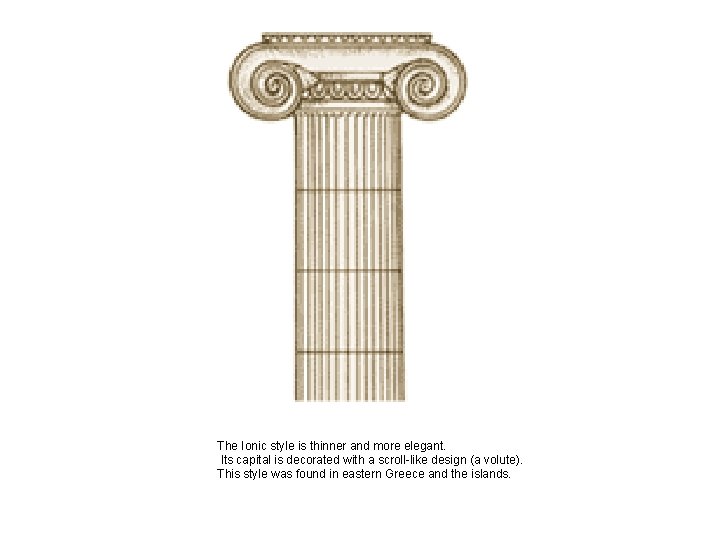
The Ionic style is thinner and more elegant. Its capital is decorated with a scroll-like design (a volute). This style was found in eastern Greece and the islands.
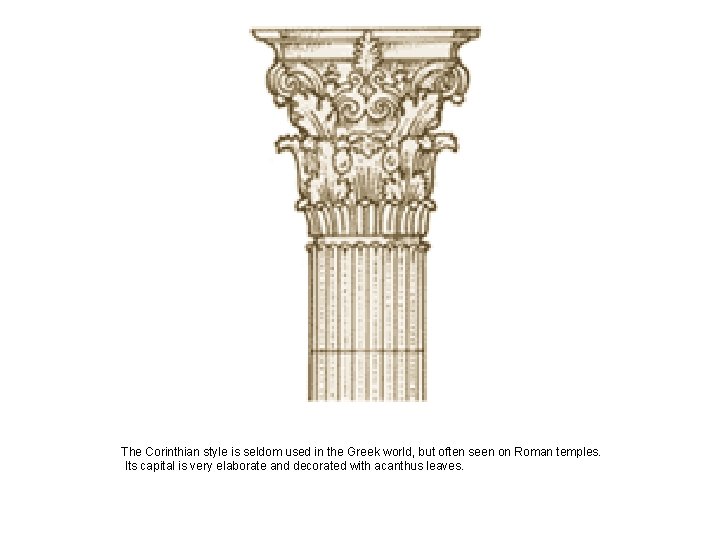
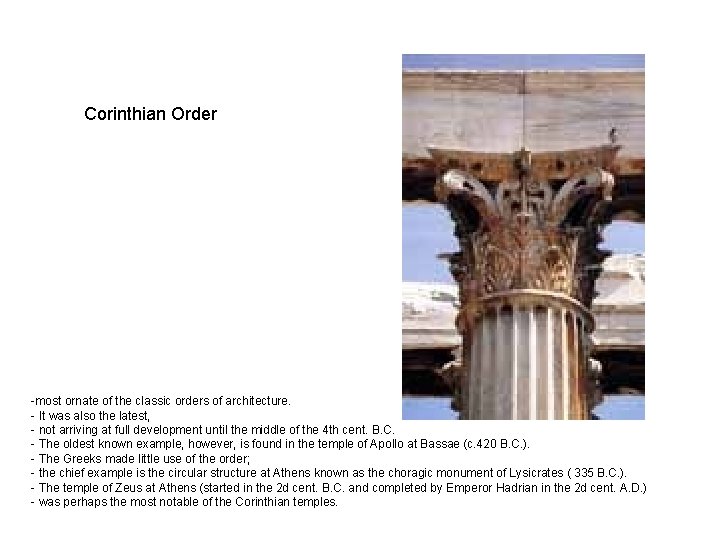
The Corinthian style is seldom used in the Greek world, but often seen on Roman temples. Its capital is very elaborate and decorated with acanthus leaves.
Corinthian Order -most ornate of the classic orders of architecture. - It was also the latest, - not arriving at full development until the middle of the 4 th cent. B. C. - The oldest known example, however, is found in the temple of Apollo at Bassae (c. 420 B. C. ). - The Greeks made little use of the order; - the chief example is the circular structure at Athens known as the choragic monument of Lysicrates ( 335 B. C. ). - The temple of Zeus at Athens (started in the 2 d cent. B. C. and completed by Emperor Hadrian in the 2 d cent. A. D. ) - was perhaps the most notable of the Corinthian temples.
The theatre of Epidauros, 4 th century BC.
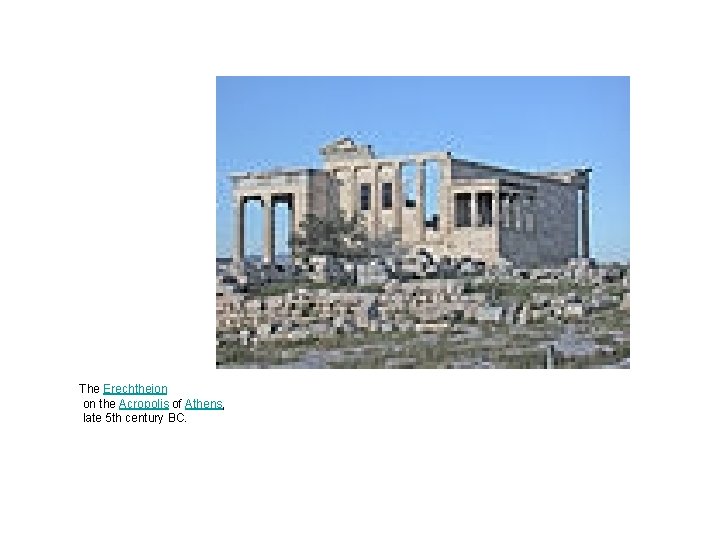
The Erechtheion on the Acropolis of Athens, late 5 th century BC.
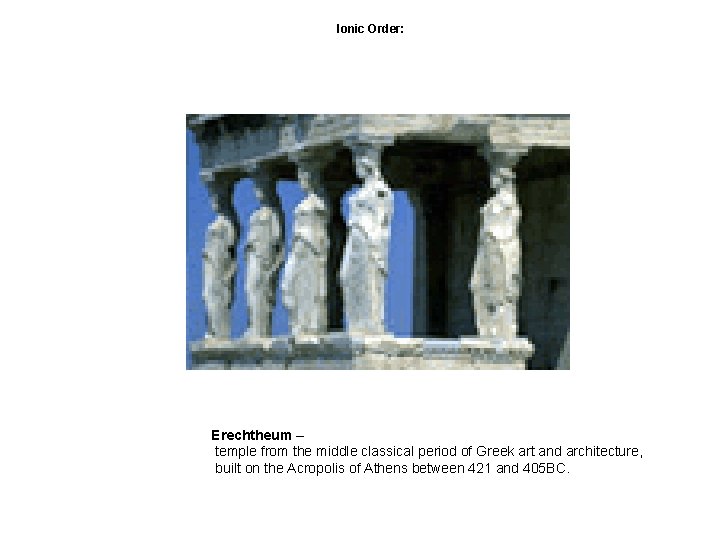
Ionic Order: Erechtheum – temple from the middle classical period of Greek art and architecture, built on the Acropolis of Athens between 421 and 405 BC.
Acropolis in Greek means "The Sacred Rock, the high city". All around the world the Acropolis of Athens is known as 'The Acropolis'. There are many Acropolises in Greece but the Acropolis of Athens is the best known. The Acropolis is primarily dedicated to the Goddess Athena.
Parthenon show the world the dominance and power of Athens. The vast majority of the money used i henian dominance over the rest of the Greek peninsula and that Athens was its Greek imper