Analysis Synthesis The Vocoder and its related technology

- Slides: 22
Analysis & Synthesis The Vocoder and its related technology
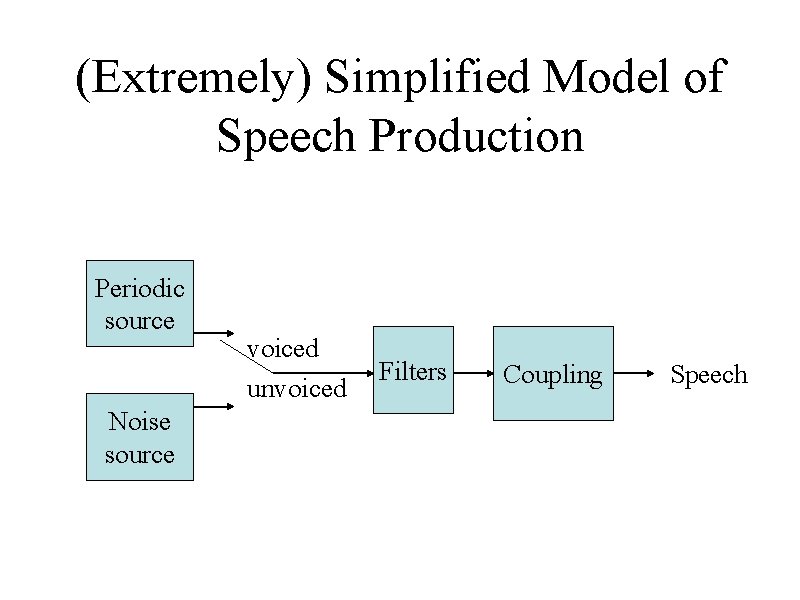
(Extremely) Simplified Model of Speech Production Periodic source Noise source voiced unvoiced Filters Coupling Speech
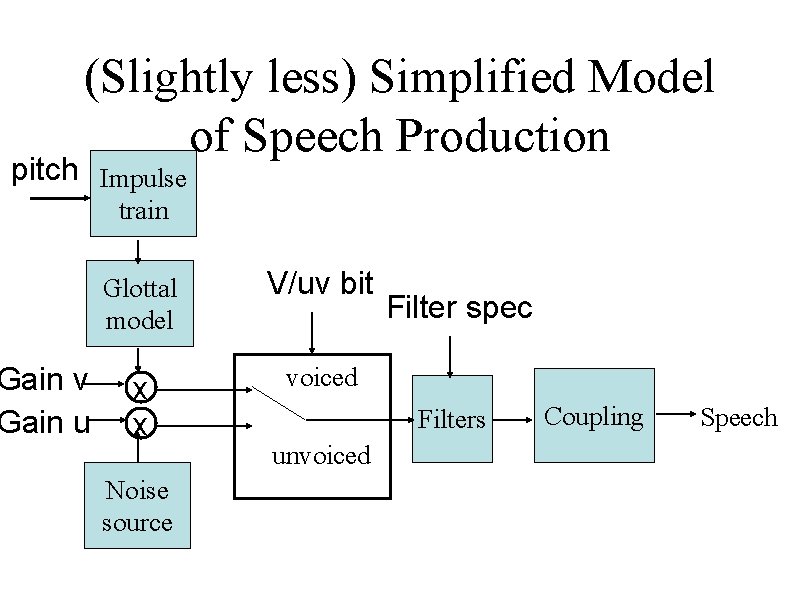
(Slightly less) Simplified Model of Speech Production pitch Impulse Gain v Gain u train Glottal model V/uv bit x x voiced Noise source Filter spec Filters unvoiced Coupling Speech
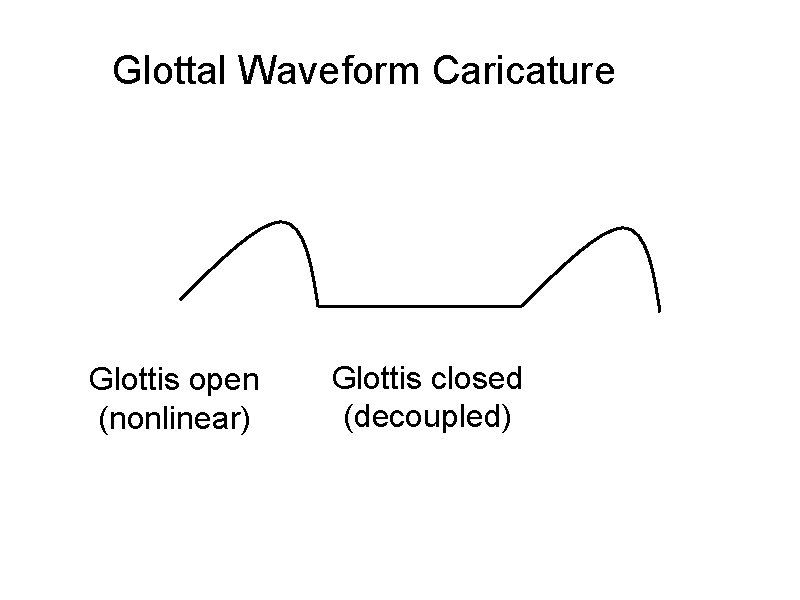
Glottal Waveform Caricature Glottis open (nonlinear) Glottis closed (decoupled)
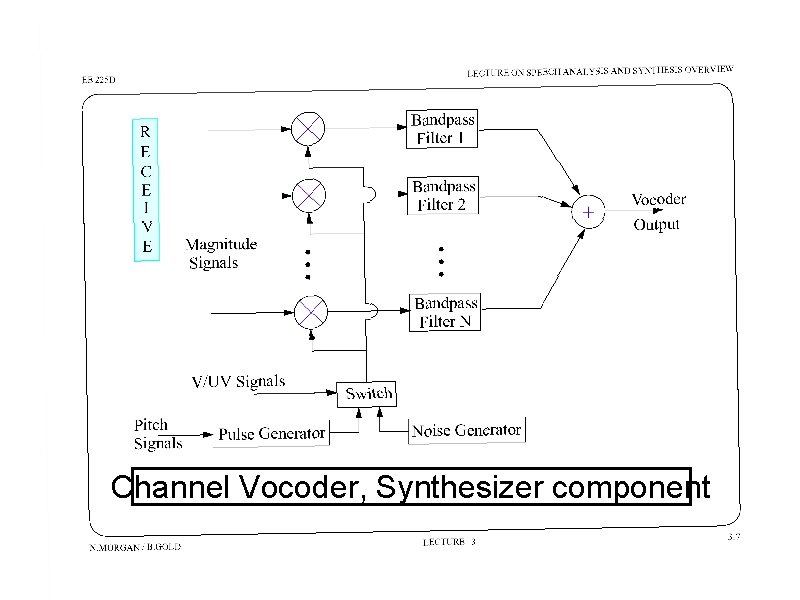
Channel Vocoder, Synthesizer component
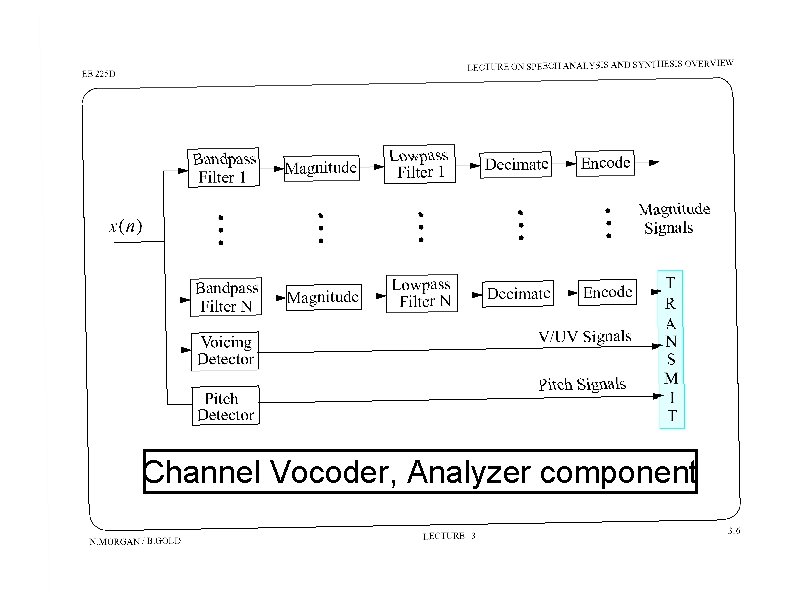
Channel Vocoder, Analyzer component
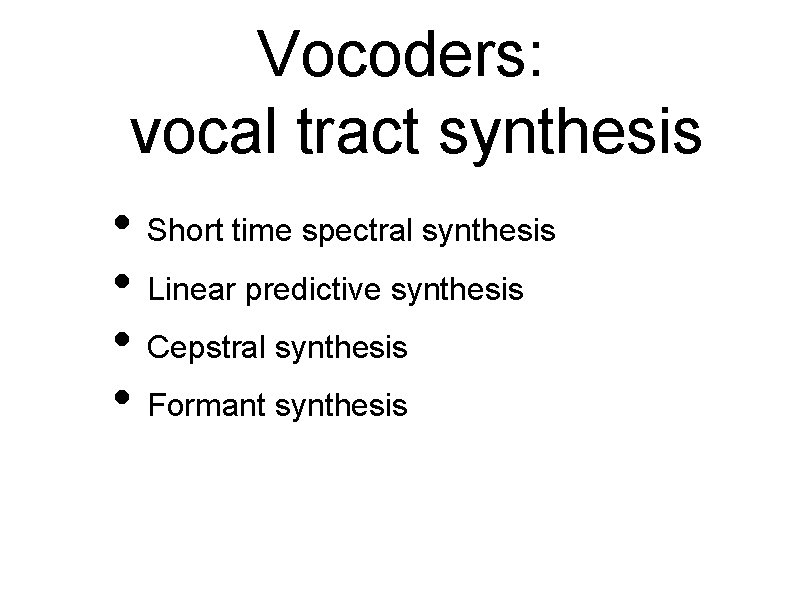
Vocoders: vocal tract synthesis • Short time spectral synthesis • Linear predictive synthesis • Cepstral synthesis • Formant synthesis
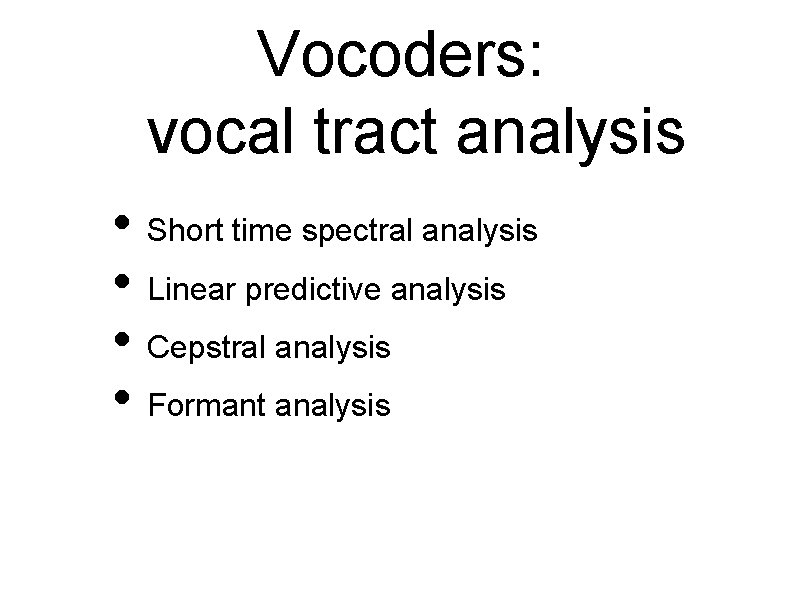
Vocoders: vocal tract analysis • Short time spectral analysis • Linear predictive analysis • Cepstral analysis • Formant analysis
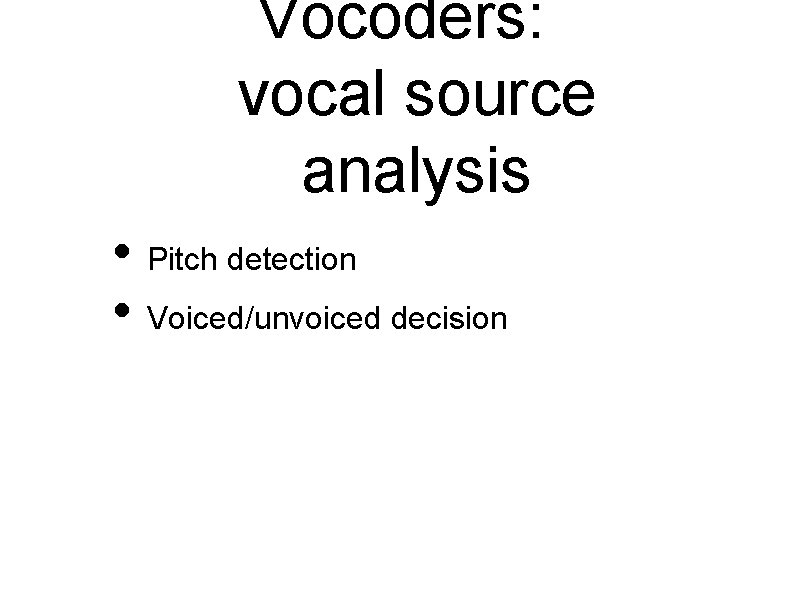
Vocoders: vocal source analysis • Pitch detection • Voiced/unvoiced decision
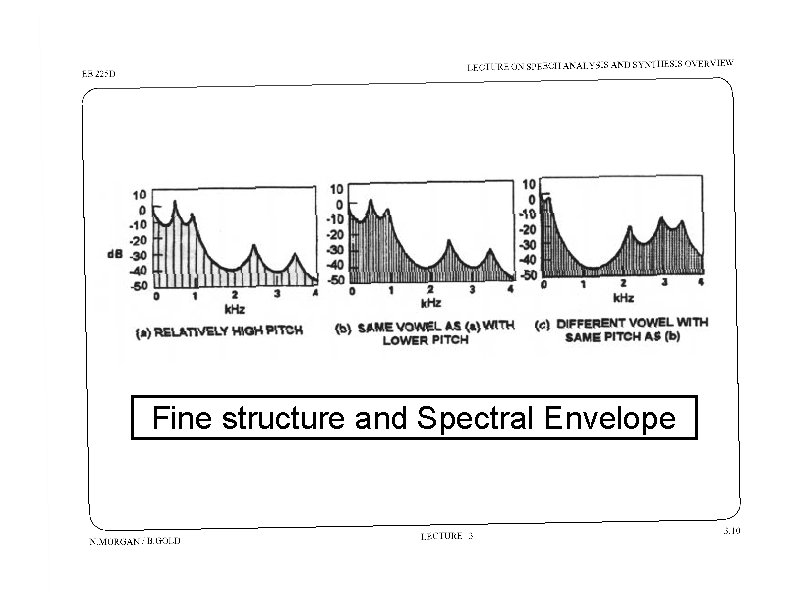
Fine structure and Spectral Envelope
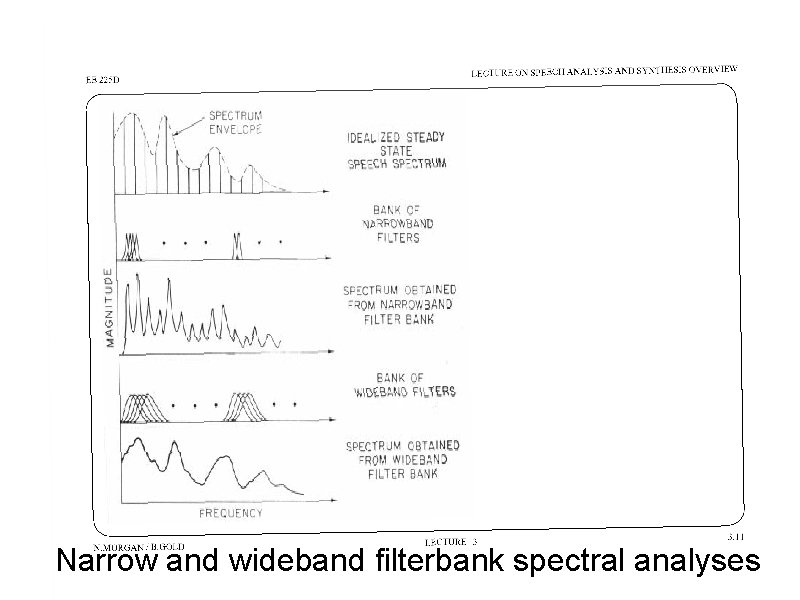
Narrow and wideband filterbank spectral analyses
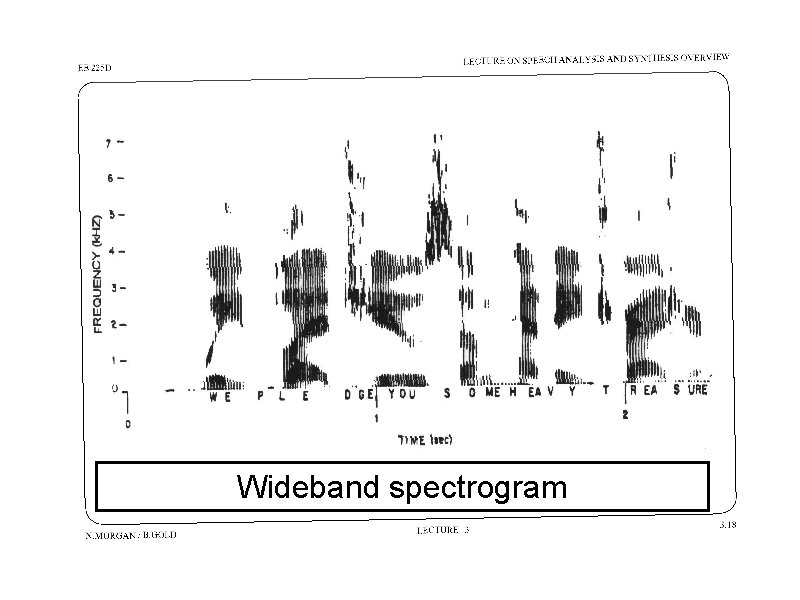
Wideband spectrogram
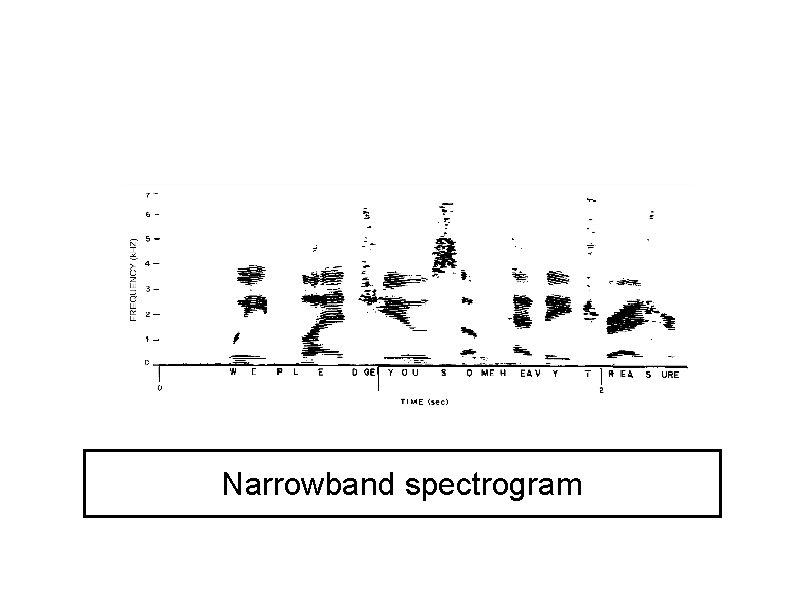
Figure 3. 5: Narrow band spectrogram Narrowband spectrogram
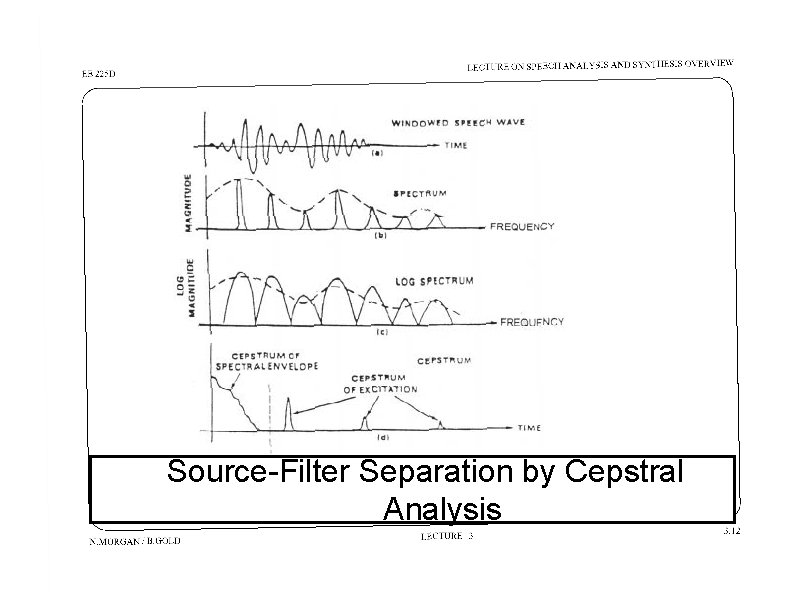
Source-Filter Separation by Cepstral Analysis
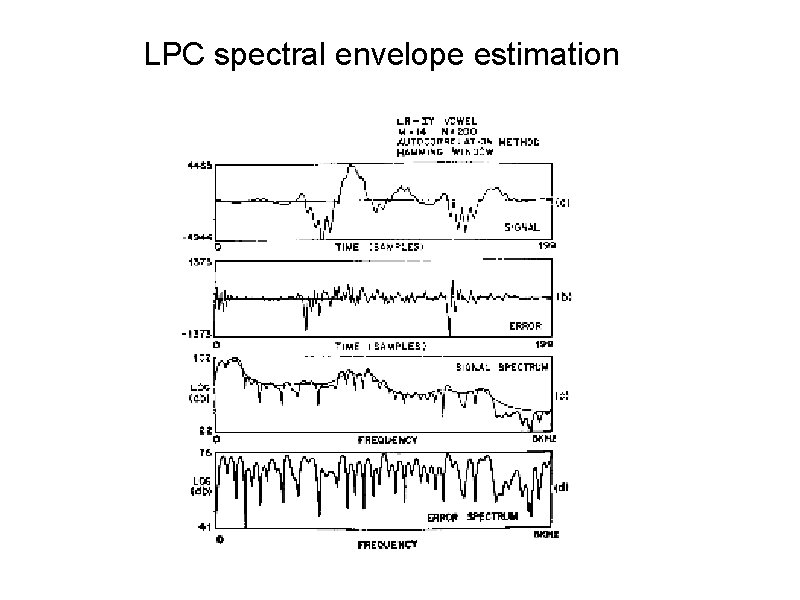
LPC spectral envelope estimation
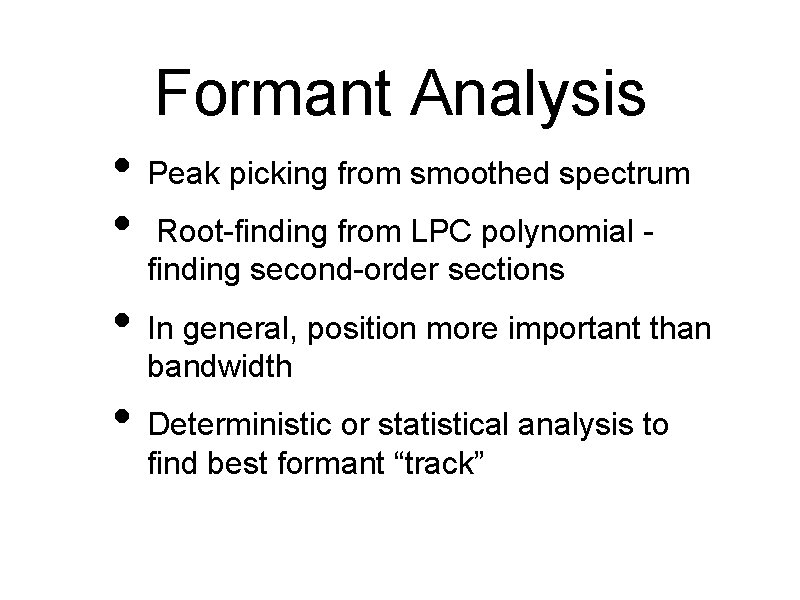
Formant Analysis • Peak picking from smoothed spectrum • Root-finding from LPC polynomial finding second-order sections • In general, position more important than bandwidth • Deterministic or statistical analysis to find best formant “track”
Ed Lee Vocoder Page http: //ptolemy. eecs. berkeley. edu/~eal/audio/vocoder. html
Linux Vocoder Page http: //www. sirlab. de/linux/descr_vocoder. html