An Integrated Service Management Architecture for Assuring SLA
- Slides: 21
An Integrated Service Management Architecture for Assuring SLA in Multi-layer Networks Sept. 13, 2000 Choong Seon HONG and Eun. Chul Kim 1
Outline § Integrated CNM Concept § Modeling of Integrated CNM with SLA Monitoring § SLA Metrics for Multi-layer Networks § Computational Model for Proposed Architecture § Implementation § Conclusions
Introduction § Service level agreement – Key criteria when customers choose service providers § Service level assurance – Becoming more important ingredient in competition environment § How to monitor and report SLA metrics – Not simple to monitor SLA per customer in new data networks – Adopting the extension of legacy CNM concept § Historical performance, fault and configuration data + SLA monitoring and reporting functionalities § Integrated CNM architecture – Including frame relay, ATM, IP networks as multiple-layer networks – Providing consolidated view for customer’s own portion – Providing various SLA metrics for multiple layer networks
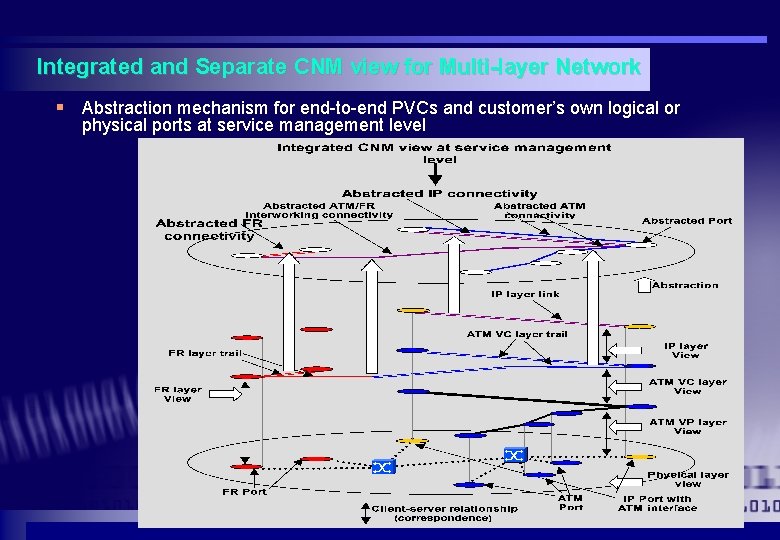
Integrated CNM Concept § Existing CNM works – providing customer control and monitoring capabilities of his/her portion of public networks – addressing the definition of management information for specific layer network § Supporting multiple layer networks – adopting layering concept and abstraction mechanism for CNM information – using data network services over multiple layer networks – coordinating CNM information which is dependent on each layer network § integrating to one unified CNM information
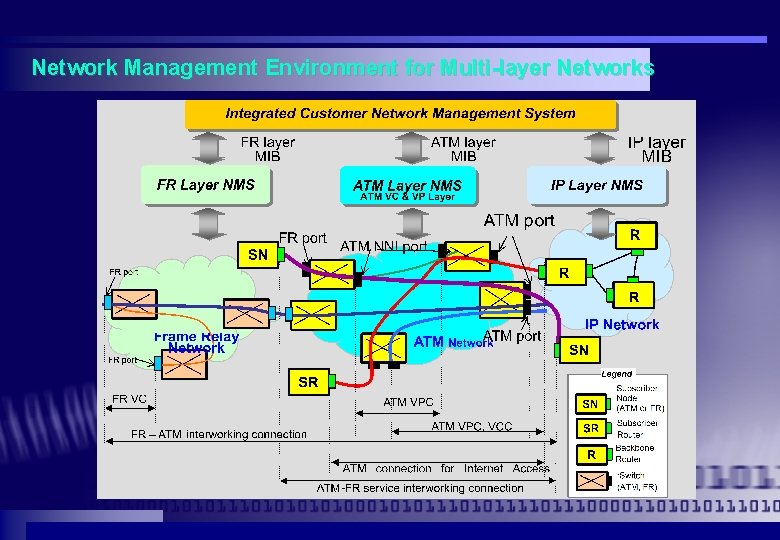
Network Management Environment for Multi-layer Networks
Integrated and Separate CNM view for Multi-layer Network § Abstraction mechanism for end-to-end PVCs and customer’s own logical or physical ports at service management level
Approach that Makes Integrated CNM Information § Offering CNM services without efforts for correlation of management of different layer networks – getting all information of customer own networks by contacting one CNM system in operator domain § Can care the characteristics of the specific layer network management information – for example, when monitor ATM PVCC for Internet access, customer can get IP layer view and VC layer view, separately § Can make decision to plan, reconfigure customer networks from the physical layer network (e. g. , DS 3 physical links) to the top layer network (e. g. , IP layer)
Modeling of Integrated CNM with SLA Monitoring
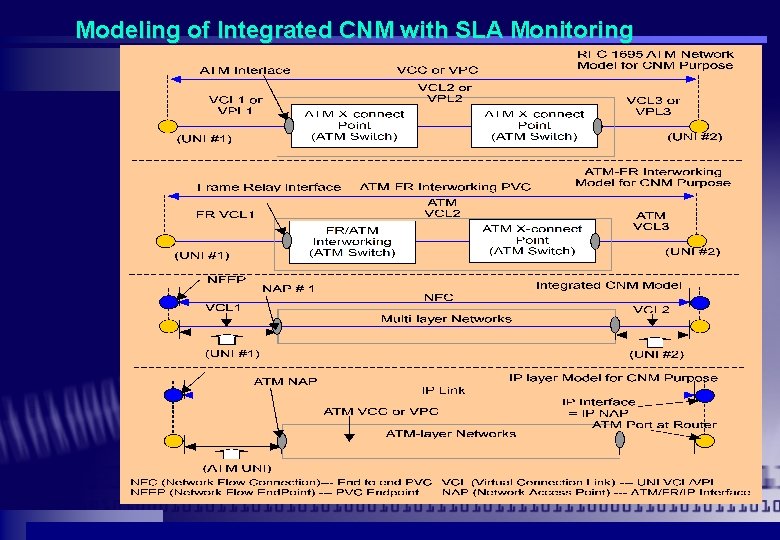
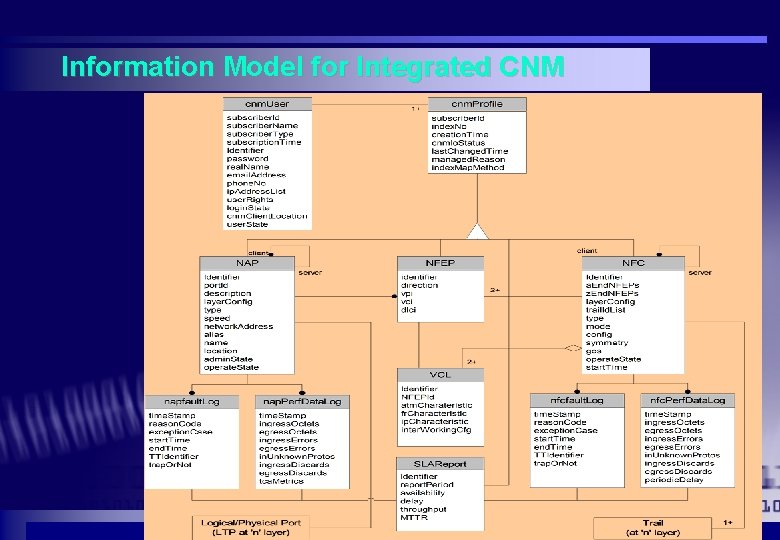
Modeling of Integrated CNM with SLA Monitoring (Cont’d) § Integrated CNM model for multi-layer networks using standard CNM information model and extended TINA’s NAP, NFC and NFEP information objects – ATM-Forum M 3, IETF RFC 1695 of CNM MIB for ATM – FR Forum, IETF RFC 1604 of CNM MIB for Frame Relay – Adopting PCG (Physical Connection Graph) concept of TINA § Mapping relationship between standard CNM Model and PCG – Integrating features of standard CNM MIB
Information Model for Integrated CNM
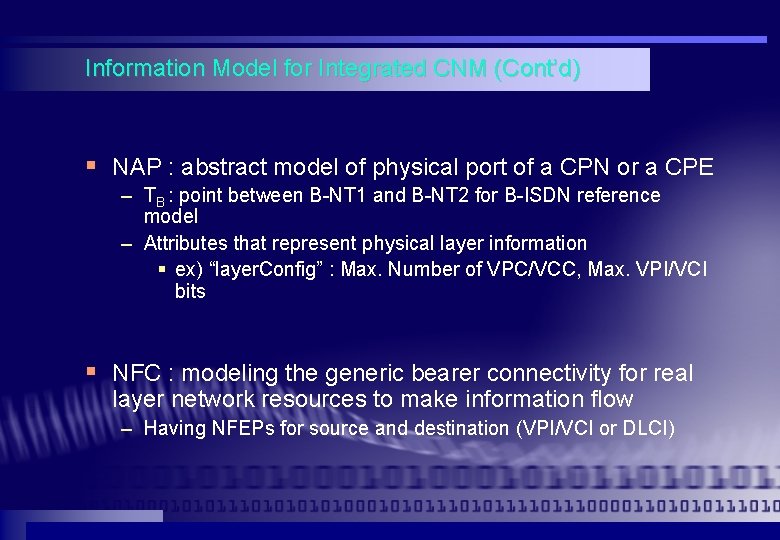
Information Model for Integrated CNM (Cont’d) § NAP : abstract model of physical port of a CPN or a CPE – TB : point between B-NT 1 and B-NT 2 for B-ISDN reference model – Attributes that represent physical layer information § ex) “layer. Config” : Max. Number of VPC/VCC, Max. VPI/VCI bits § NFC : modeling the generic bearer connectivity for real layer network resources to make information flow – Having NFEPs for source and destination (VPI/VCI or DLCI)
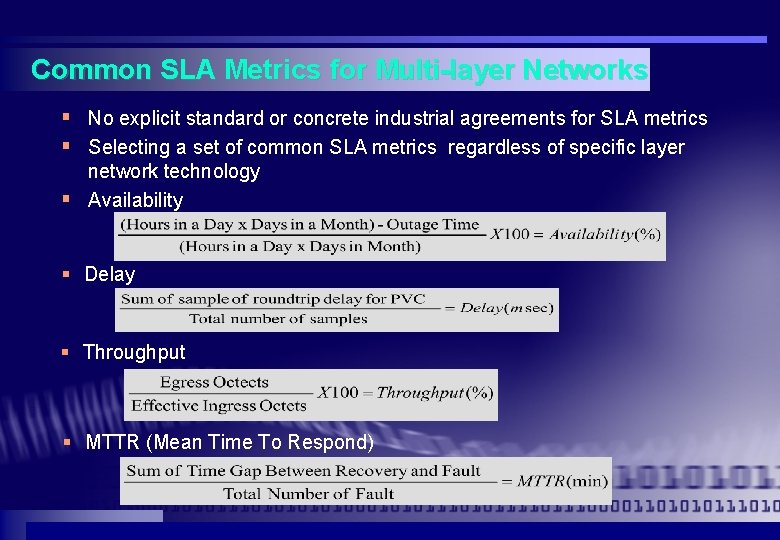
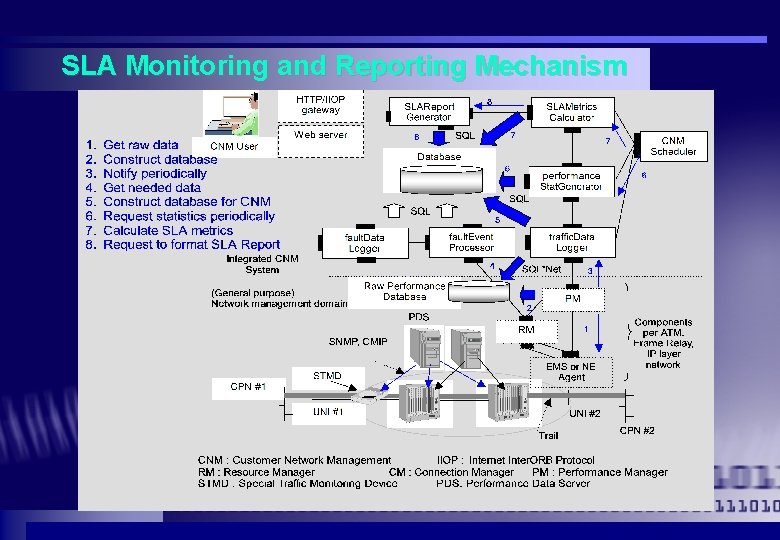
Common SLA Metrics for Multi-layer Networks § No explicit standard or concrete industrial agreements for SLA metrics § Selecting a set of common SLA metrics regardless of specific layer network technology § Availability § Delay § Throughput § MTTR (Mean Time To Respond)
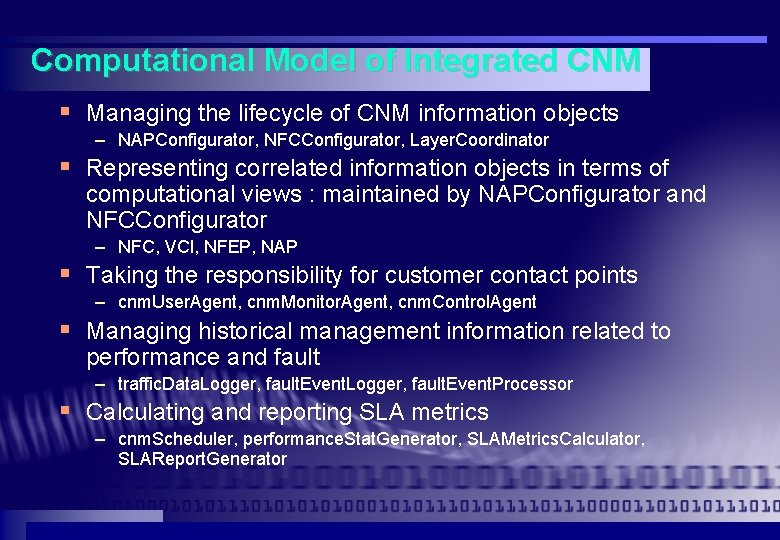
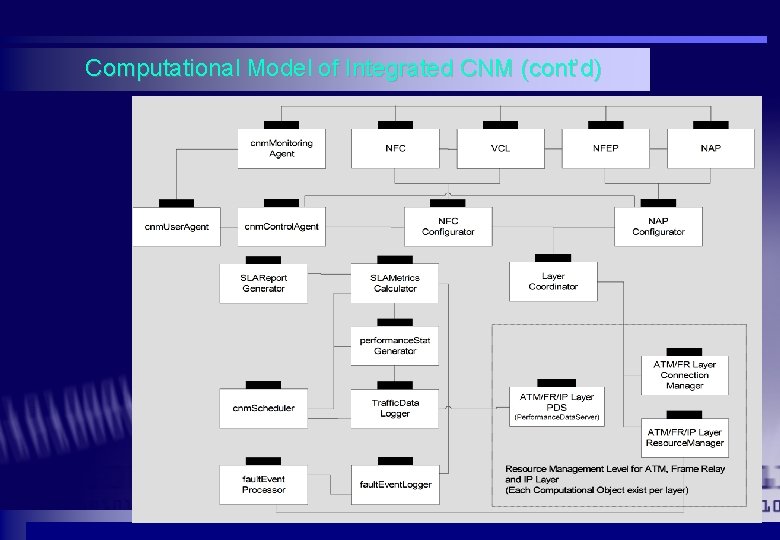
Computational Model of Integrated CNM § Managing the lifecycle of CNM information objects – NAPConfigurator, NFCConfigurator, Layer. Coordinator § Representing correlated information objects in terms of computational views : maintained by NAPConfigurator and NFCConfigurator – NFC, VCl, NFEP, NAP § Taking the responsibility for customer contact points – cnm. User. Agent, cnm. Monitor. Agent, cnm. Control. Agent § Managing historical management information related to performance and fault – traffic. Data. Logger, fault. Event. Processor § Calculating and reporting SLA metrics – cnm. Scheduler, performance. Stat. Generator, SLAMetrics. Calculator, SLAReport. Generator
Computational Model of Integrated CNM (cont’d)
SLA Monitoring and Reporting Mechanism
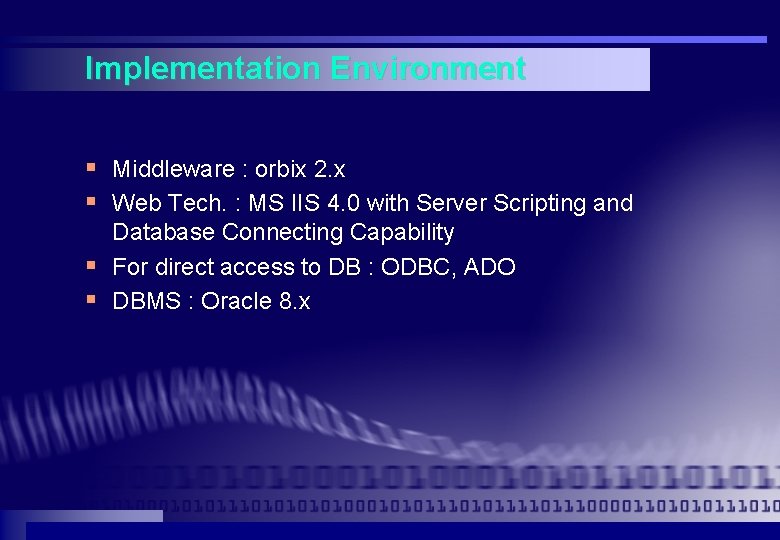
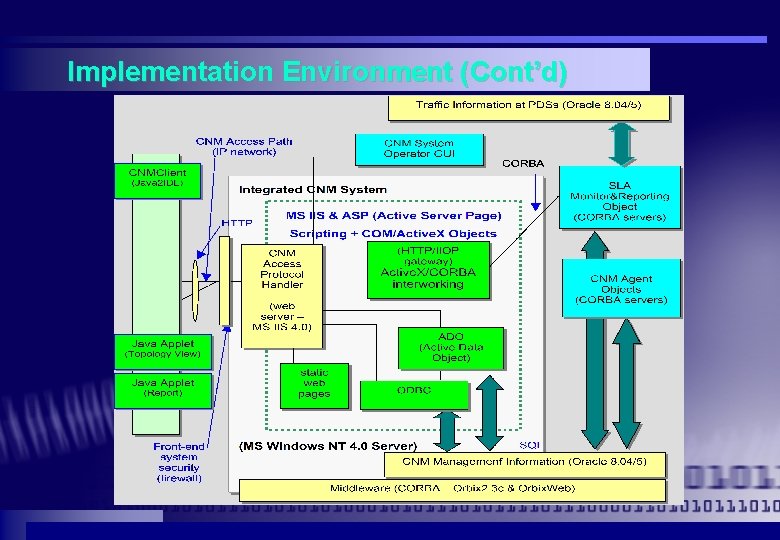
Implementation Environment § Middleware : orbix 2. x § Web Tech. : MS IIS 4. 0 with Server Scripting and Database Connecting Capability § For direct access to DB : ODBC, ADO § DBMS : Oracle 8. x
Implementation Environment (Cont’d)
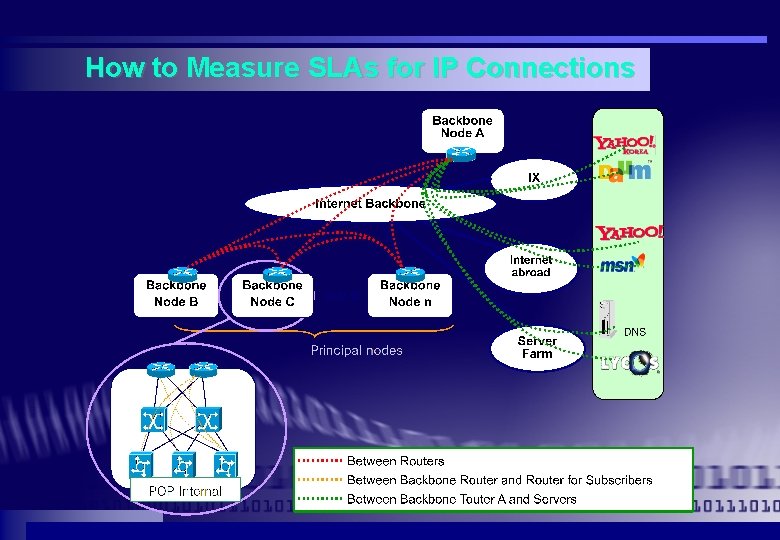
How to Measure SLAs for IP Connections
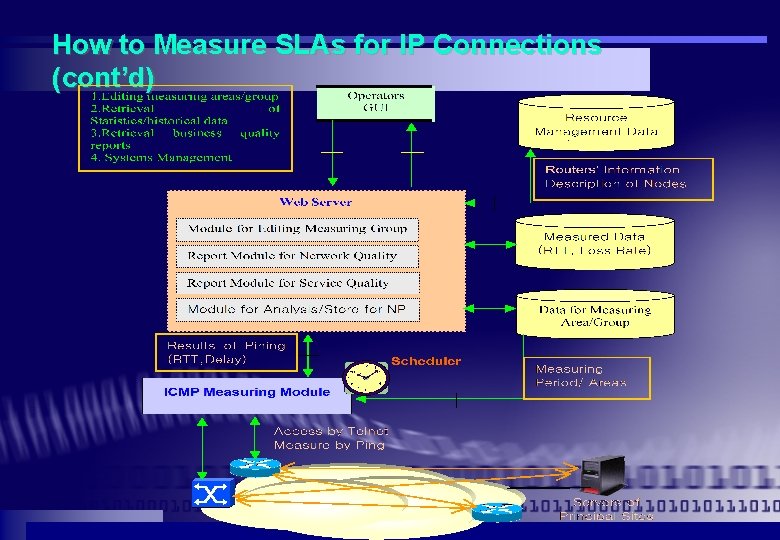
How to Measure SLAs for IP Connections (cont’d)
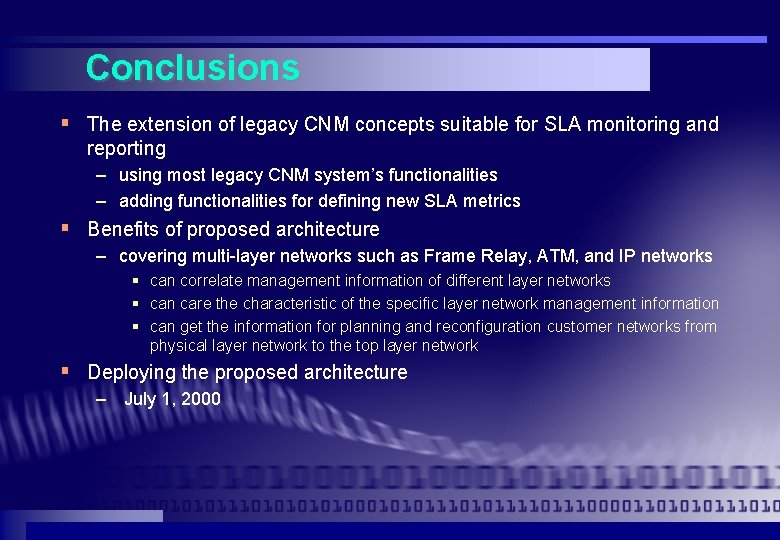
Conclusions § The extension of legacy CNM concepts suitable for SLA monitoring and reporting – using most legacy CNM system’s functionalities – adding functionalities for defining new SLA metrics § Benefits of proposed architecture – covering multi-layer networks such as Frame Relay, ATM, and IP networks § can correlate management information of different layer networks § can care the characteristic of the specific layer network management information § can get the information for planning and reconfiguration customer networks from physical layer network to the top layer network § Deploying the proposed architecture – July 1, 2000
Further Study § Proposing SLA Metrics for End-to-end IP Connections § Flow Control Mechanism for Real-time Streaming on End-to-end IP connections