Africa and the Arrival of Islam AP World
- Slides: 16
Africa and the Arrival of Islam AP World History
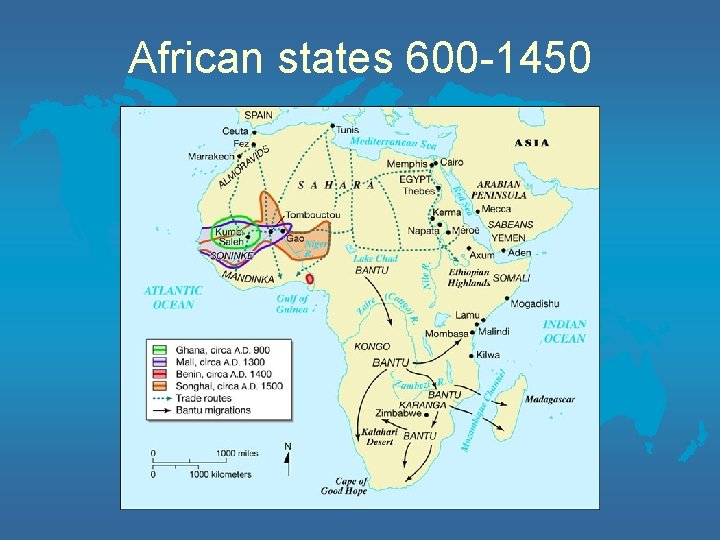
African states 600 -1450
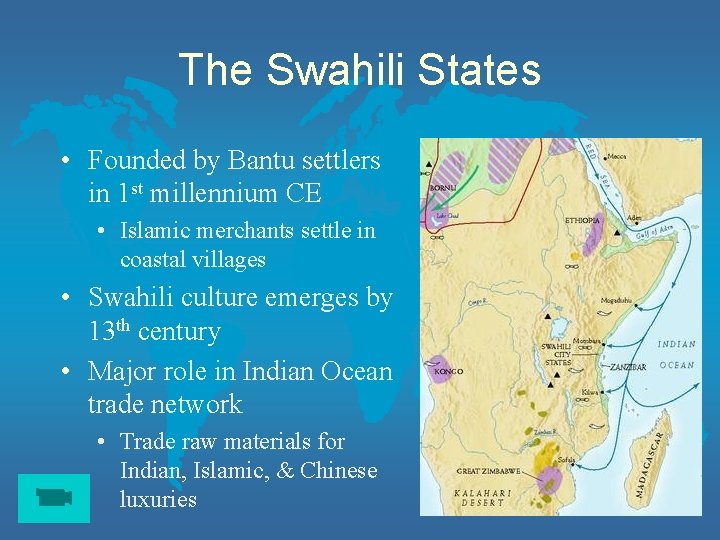
The Swahili States • Founded by Bantu settlers in 1 st millennium CE • Islamic merchants settle in coastal villages • Swahili culture emerges by 13 th century • Major role in Indian Ocean trade network • Trade raw materials for Indian, Islamic, & Chinese luxuries
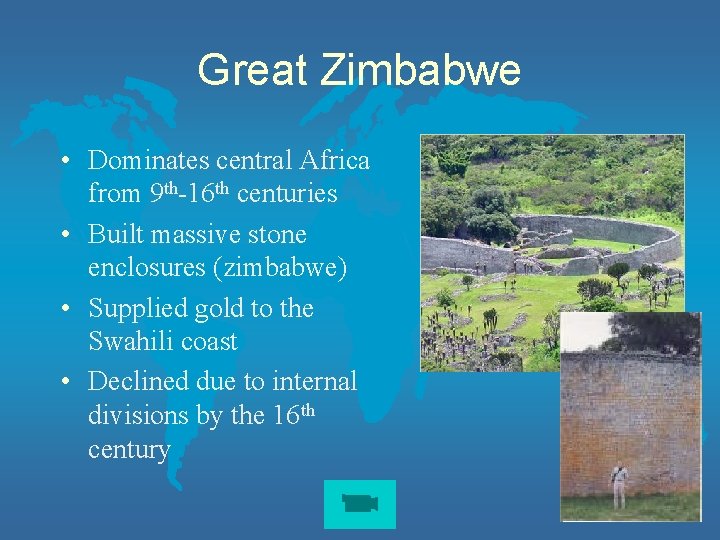
Great Zimbabwe • Dominates central Africa from 9 th-16 th centuries • Built massive stone enclosures (zimbabwe) • Supplied gold to the Swahili coast • Declined due to internal divisions by the 16 th century
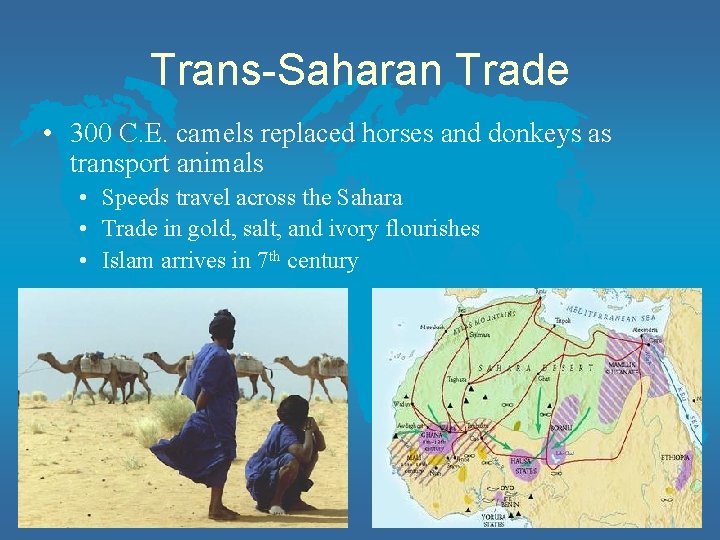
Trans-Saharan Trade • 300 C. E. camels replaced horses and donkeys as transport animals • Speeds travel across the Sahara • Trade in gold, salt, and ivory flourishes • Islam arrives in 7 th century
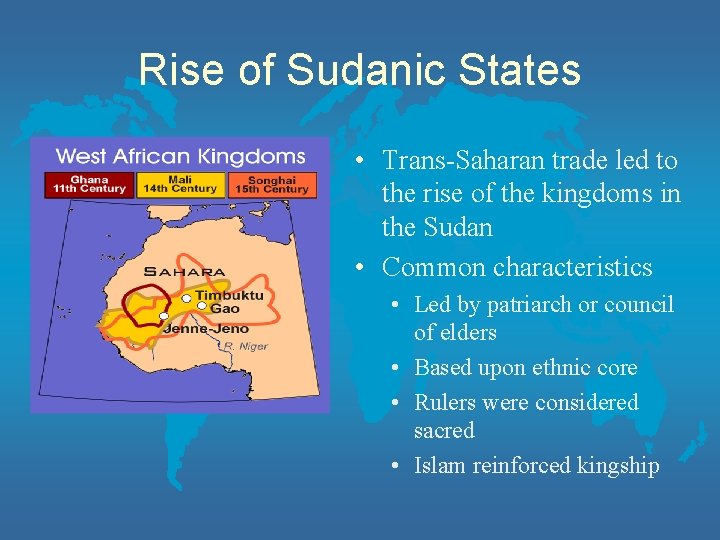
Rise of Sudanic States • Trans-Saharan trade led to the rise of the kingdoms in the Sudan • Common characteristics • Led by patriarch or council of elders • Based upon ethnic core • Rulers were considered sacred • Islam reinforced kingship
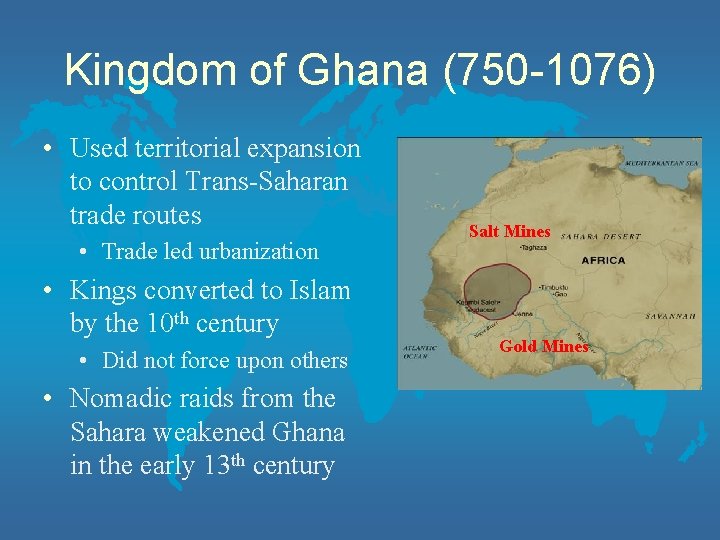
Kingdom of Ghana (750 -1076) • Used territorial expansion to control Trans-Saharan trade routes • Trade led urbanization • Kings converted to Islam by the 10 th century • Did not force upon others • Nomadic raids from the Sahara weakened Ghana in the early 13 th century Salt Mines Gold Mines
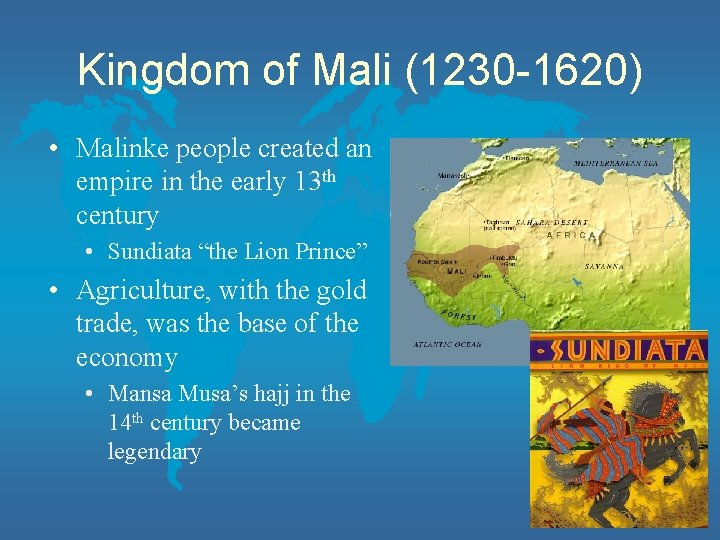
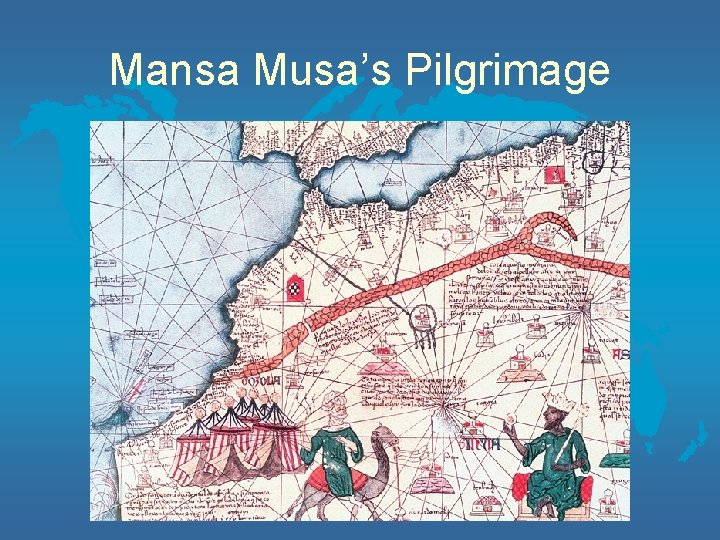
Kingdom of Mali (1230 -1620) • Malinke people created an empire in the early 13 th century • Sundiata “the Lion Prince” • Agriculture, with the gold trade, was the base of the economy • Mansa Musa’s hajj in the 14 th century became legendary
Mansa Musa’s Pilgrimage
Malinke Economy • Most of the people were rural farmers • Small farms owned by families • A special merchant class, called the juula, controlled trade • Slave trade became common after the Islamic conquest of North Africa • High demand for women and children • Estimated 4. 8 million slaves over 700 years
Malinke Society & Culture • Formation of the kingdom heightened social differences • Society was organized according to clans • Many societies were matrilineal • Women enjoyed more freedom than most Eurasian cultures • Polygamy was common
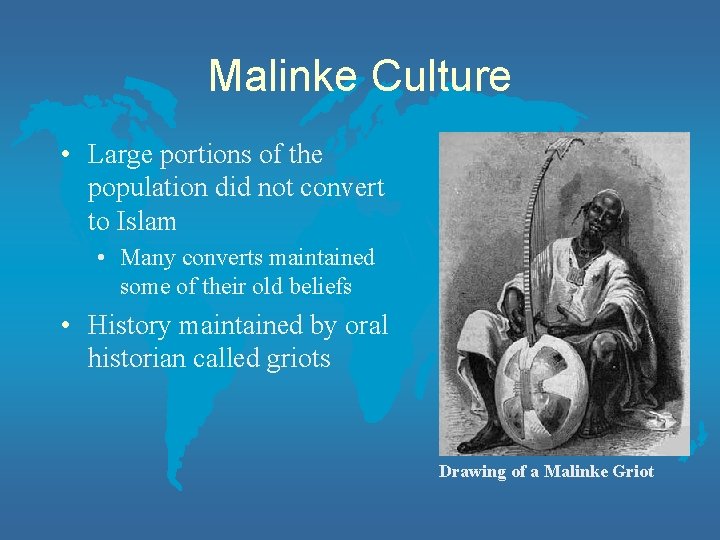
Malinke Culture • Large portions of the population did not convert to Islam • Many converts maintained some of their old beliefs • History maintained by oral historian called griots Drawing of a Malinke Griot
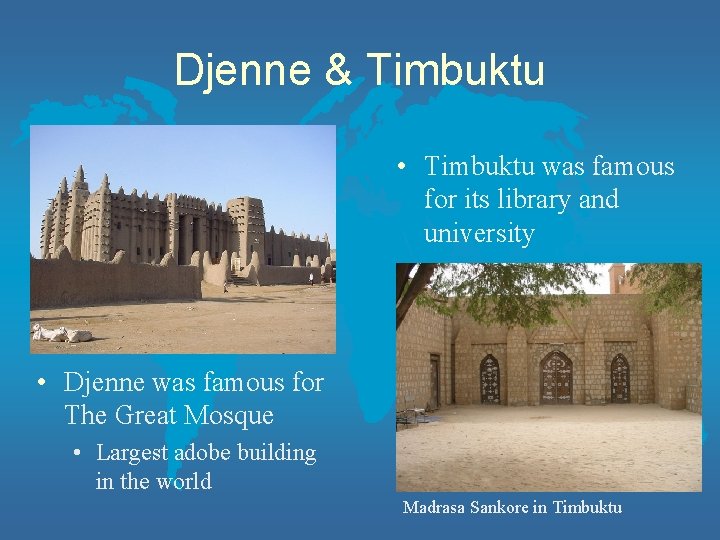
Djenne & Timbuktu • Timbuktu was famous for its library and university • Djenne was famous for The Great Mosque • Largest adobe building in the world Madrasa Sankore in Timbuktu
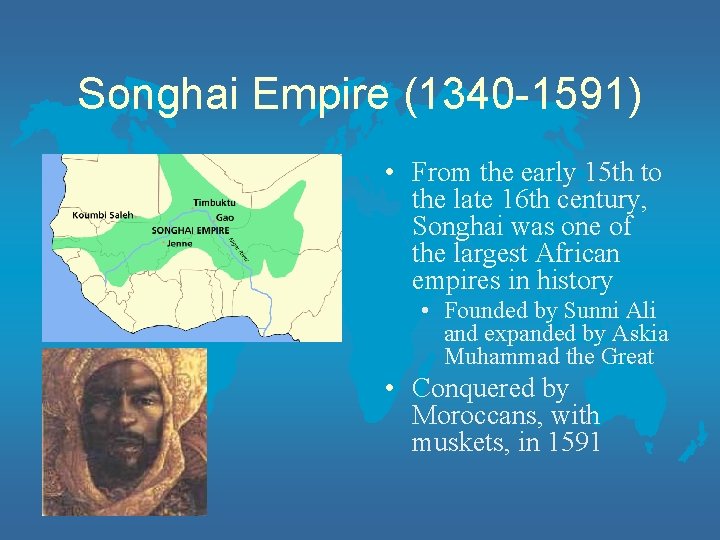
Songhai Empire (1340 -1591) • From the early 15 th to the late 16 th century, Songhai was one of the largest African empires in history • Founded by Sunni Ali and expanded by Askia Muhammad the Great • Conquered by Moroccans, with muskets, in 1591
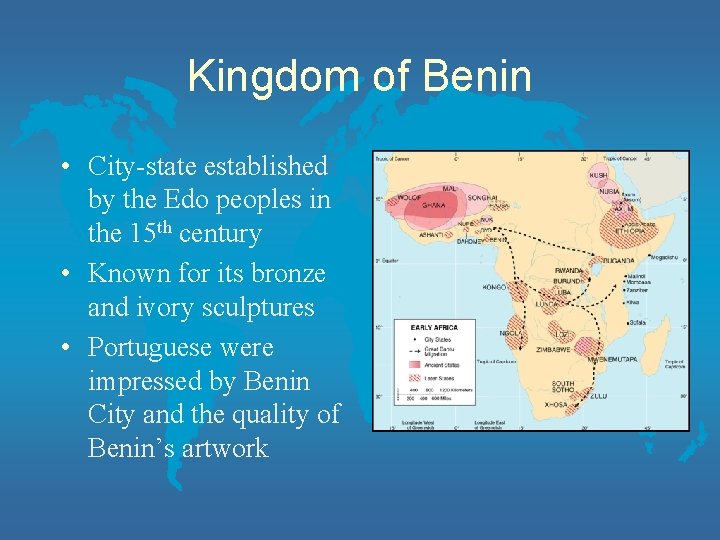
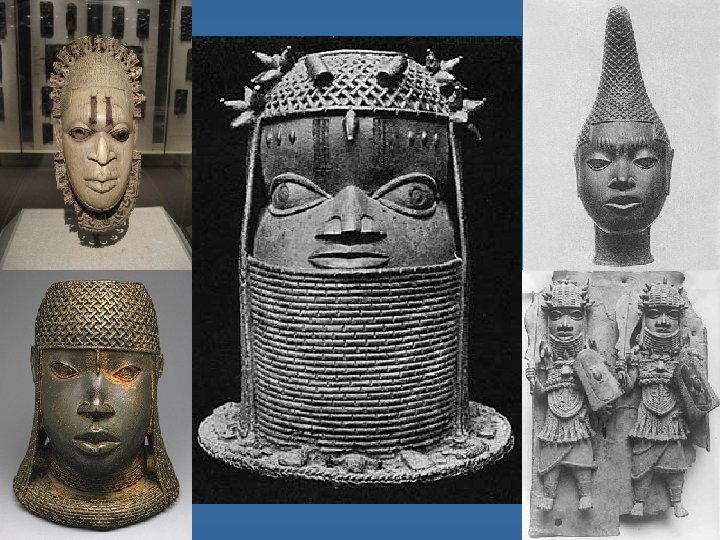
Kingdom of Benin • City-state established by the Edo peoples in the 15 th century • Known for its bronze and ivory sculptures • Portuguese were impressed by Benin City and the quality of Benin’s artwork