Adverse oneyear outcomes for patients newly treated with

- Slides: 14
Adverse one-year outcomes for patients newly treated with oral anticoagulants plus antiplatelet therapy after a diagnosis of atrial fibrillation Results from the GARFIELD-AF prospective registry Keith A. A. Fox, Priscilla Velentgas, A. John Camm, Jean-Pierre Bassand, David A. Fitzmaurice, Bernard J. Gersh, Samuel Z. Goldhaber, Shinya Goto, Sylvia Haas, Frank Misselwitz, Karen Pieper, Alexander G. G. Turpie, Freek W. A. Verheugt, Ajay K. Kakkar, for the GARFIELD-AF Investigators Disclosures for KAAF Grants: Bayer/Janssen, Astra. Zeneca; Consulting: Bayer/Janssen, Sanofi/Regeneron, Verseon
Declaration of interest -Research contracts (Bayer/Janssen, Astra. Zeneca) - Consulting/Royalties/Owner/ Stockholder of a healthcare company (Bayer/Jar Verseon) -Research contracts (Bayer/Janssen, Astra. Zeneca) ESC Congress Munich 2018 •
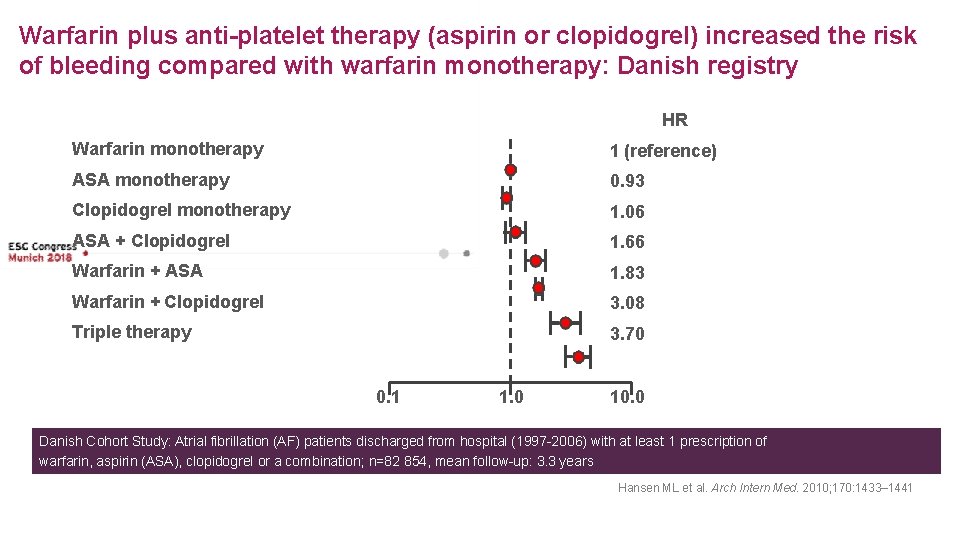
Warfarin plus anti-platelet therapy (aspirin or clopidogrel) increased the risk of bleeding compared with warfarin monotherapy: Danish registry HR Warfarin monotherapy 1 (reference) ASA monotherapy 0. 93 Clopidogrel monotherapy 1. 06 ASA + Clopidogrel 1. 66 Warfarin + ASA 1. 83 Warfarin + Clopidogrel 3. 08 Triple therapy 3. 70 0. 1 1. 0 10. 0 Danish Cohort Study: Atrial fibrillation (AF) patients discharged from hospital (1997 -2006) with at least 1 prescription of warfarin, aspirin (ASA), clopidogrel or a combination; n=82 854, mean follow-up: 3. 3 years Hansen ML et al. Arch Intern Med. 2010; 170: 1433– 1441
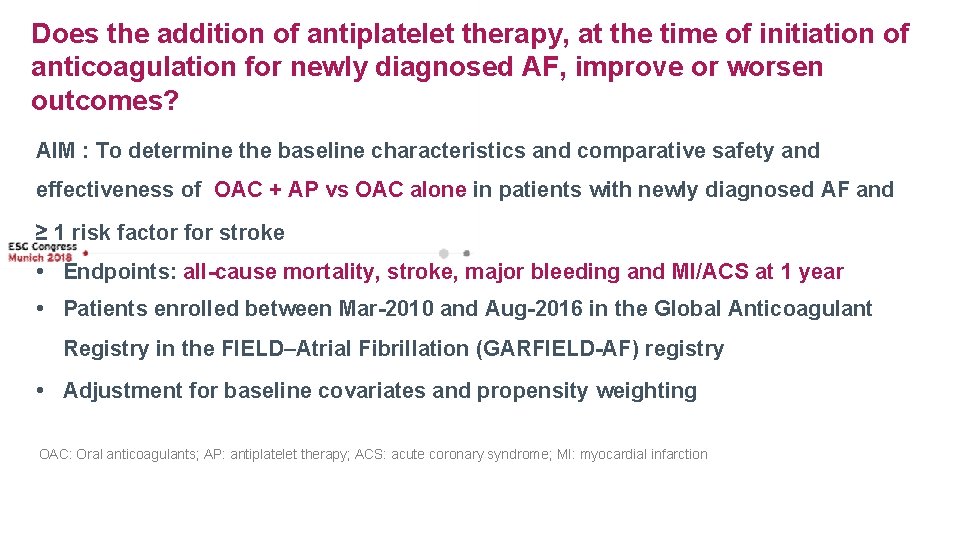
Does the addition of antiplatelet therapy, at the time of initiation of anticoagulation for newly diagnosed AF, improve or worsen outcomes? AIM : To determine the baseline characteristics and comparative safety and effectiveness of OAC + AP vs OAC alone in patients with newly diagnosed AF and ≥ 1 risk factor for stroke • Endpoints: all-cause mortality, stroke, major bleeding and MI/ACS at 1 year • Patients enrolled between Mar-2010 and Aug-2016 in the Global Anticoagulant Registry in the FIELD–Atrial Fibrillation (GARFIELD-AF) registry • Adjustment for baseline covariates and propensity weighting OAC: Oral anticoagulants; AP: antiplatelet therapy; ACS: acute coronary syndrome; MI: myocardial infarction
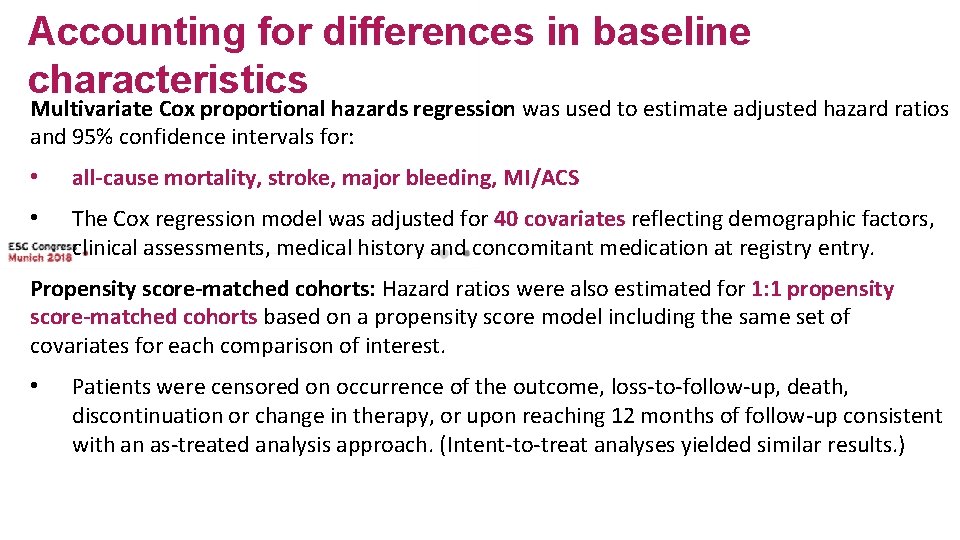
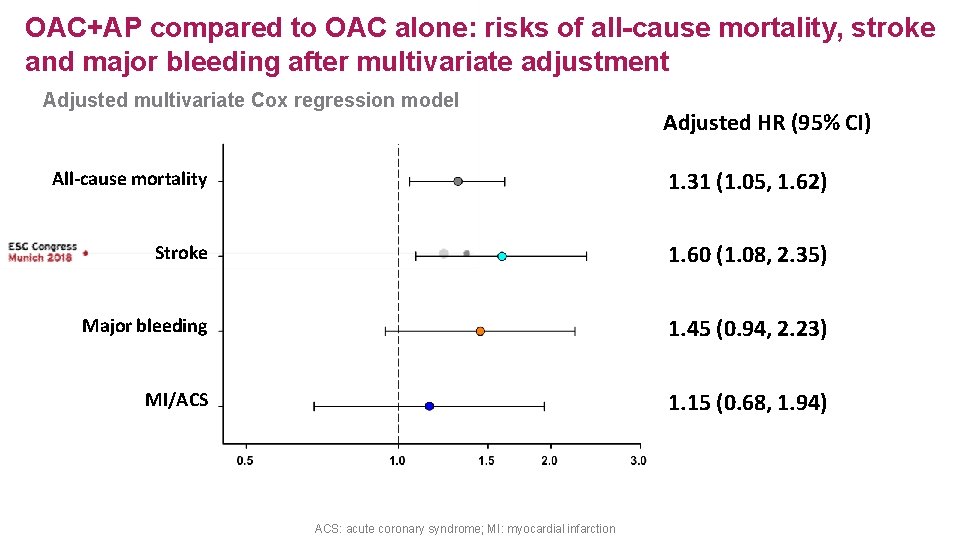
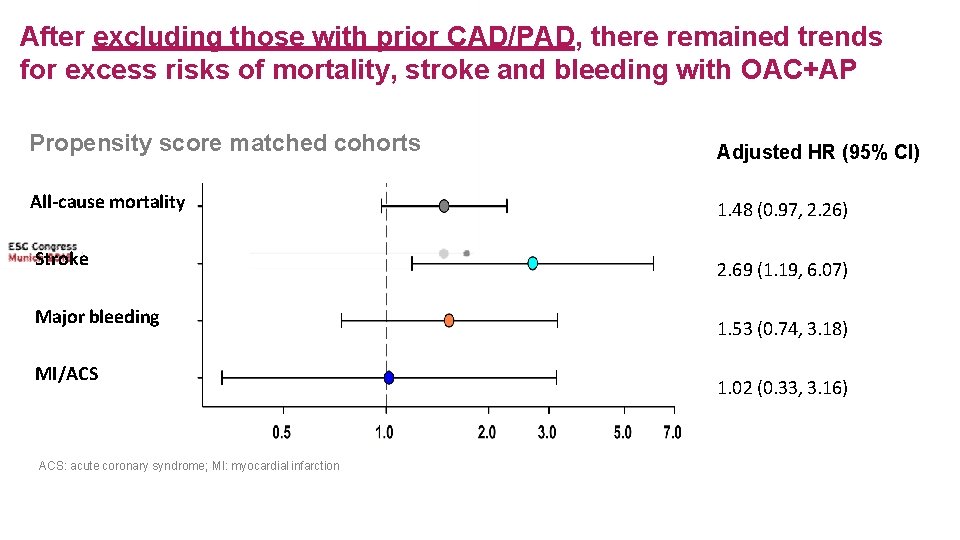
Accounting for differences in baseline characteristics Multivariate Cox proportional hazards regression was used to estimate adjusted hazard ratios and 95% confidence intervals for: • all-cause mortality, stroke, major bleeding, MI/ACS • The Cox regression model was adjusted for 40 covariates reflecting demographic factors, clinical assessments, medical history and concomitant medication at registry entry. Propensity score-matched cohorts: Hazard ratios were also estimated for 1: 1 propensity score-matched cohorts based on a propensity score model including the same set of covariates for each comparison of interest. • Patients were censored on occurrence of the outcome, loss-to-follow-up, death, discontinuation or change in therapy, or upon reaching 12 months of follow-up consistent with an as-treated analysis approach. (Intent-to-treat analyses yielded similar results. )
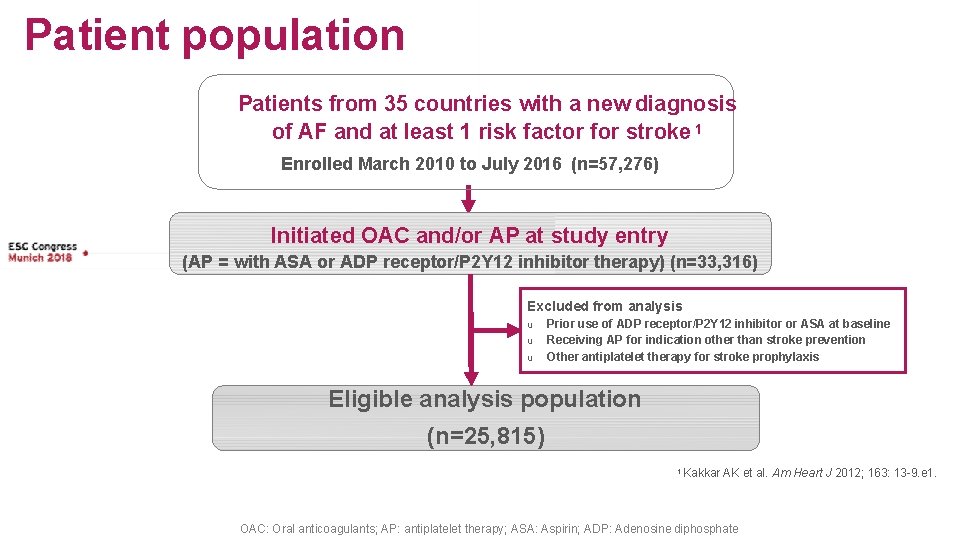
Patient population Patients from 35 countries with a new diagnosis of AF and at least 1 risk factor for stroke 1 Enrolled March 2010 to July 2016 (n=57, 276) Initiated OAC and/or AP at study entry (AP = with ASA or ADP receptor/P 2 Y 12 inhibitor therapy) (n=33, 316) Excluded from analysis u u u Prior use of ADP receptor/P 2 Y 12 inhibitor or ASA at baseline Receiving AP for indication other than stroke prevention Other antiplatelet therapy for stroke prophylaxis Eligible analysis population (n=25, 815) 1 Kakkar AK et al. Am Heart J 2012; 163: 13 -9. e 1. OAC: Oral anticoagulants; AP: antiplatelet therapy; ASA: Aspirin; ADP: Adenosine diphosphate
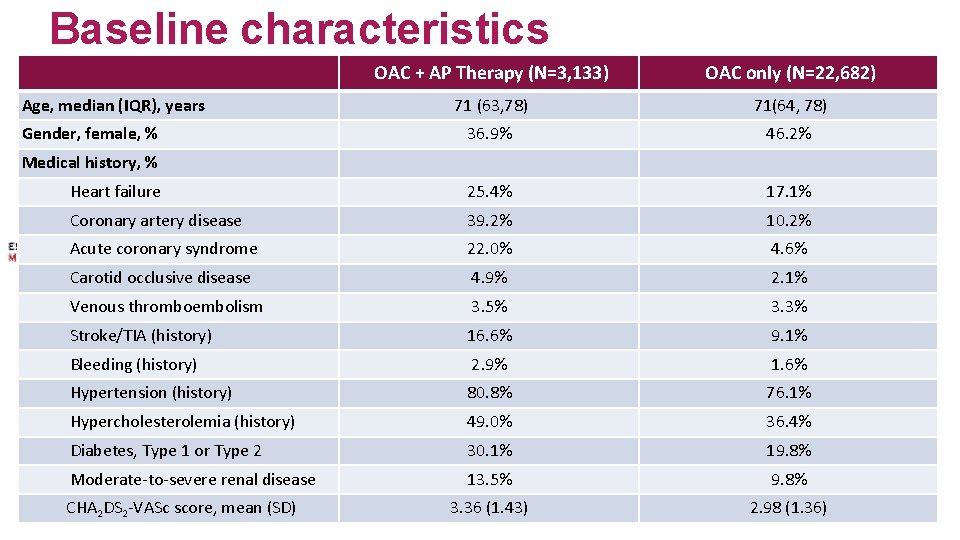
Baseline characteristics OAC + AP Therapy (N=3, 133) OAC only (N=22, 682) 71 (63, 78) 71(64, 78) 36. 9% 46. 2% Heart failure 25. 4% 17. 1% Coronary artery disease 39. 2% 10. 2% Acute coronary syndrome 22. 0% 4. 6% Carotid occlusive disease 4. 9% 2. 1% Venous thromboembolism 3. 5% 3. 3% Stroke/TIA (history) 16. 6% 9. 1% Bleeding (history) 2. 9% 1. 6% Hypertension (history) 80. 8% 76. 1% Hypercholesterolemia (history) 49. 0% 36. 4% Diabetes, Type 1 or Type 2 30. 1% 19. 8% Moderate-to-severe renal disease 13. 5% 9. 8% 3. 36 (1. 43) 2. 98 (1. 36) Age, median (IQR), years Gender, female, % Medical history, % CHA 2 DS 2 -VASc score, mean (SD)
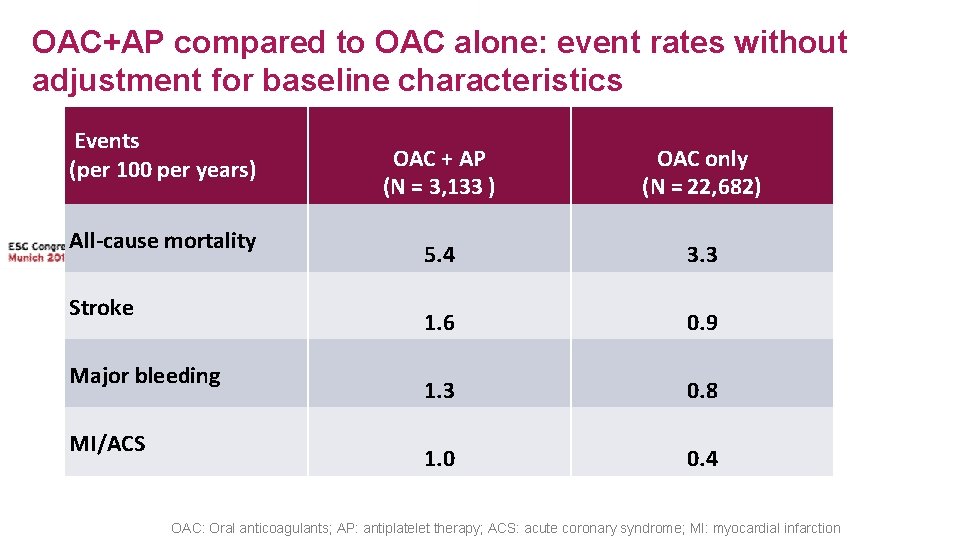
OAC+AP compared to OAC alone: event rates without adjustment for baseline characteristics Events (per 100 per years) All-cause mortality Stroke Major bleeding MI/ACS OAC + AP (N = 3, 133 ) OAC only (N = 22, 682) 5. 4 3. 3 1. 6 0. 9 1. 3 0. 8 1. 0 0. 4 OAC: Oral anticoagulants; AP: antiplatelet therapy; ACS: acute coronary syndrome; MI: myocardial infarction
OAC+AP compared to OAC alone: risks of all-cause mortality, stroke and major bleeding after multivariate adjustment Adjusted multivariate Cox regression model Adjusted HR (95% CI) All-cause mortality 1. 31 (1. 05, 1. 62) Stroke 1. 60 (1. 08, 2. 35) Major bleeding 1. 45 (0. 94, 2. 23) MI/ACS 1. 15 (0. 68, 1. 94) ACS: acute coronary syndrome; MI: myocardial infarction
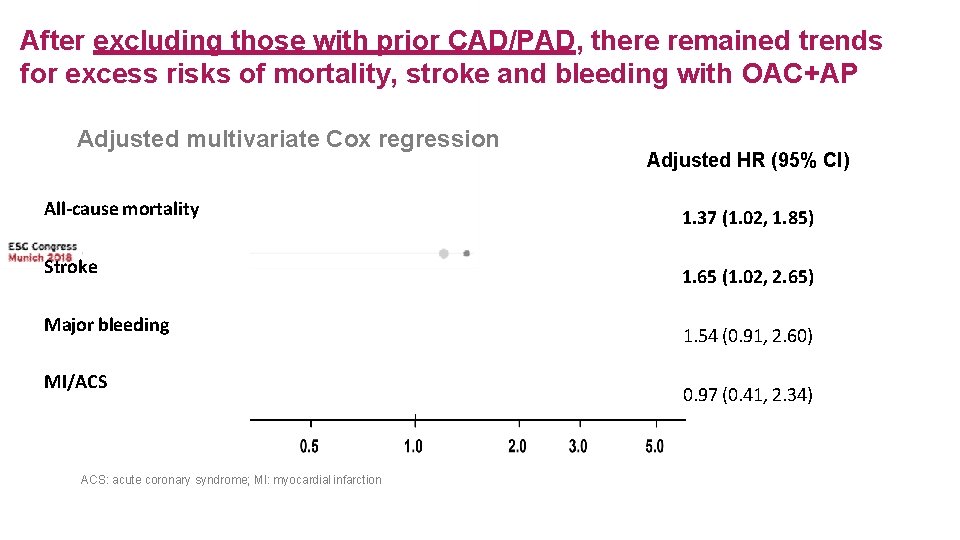
After excluding those with prior CAD/PAD, there remained trends for excess risks of mortality, stroke and bleeding with OAC+AP Adjusted multivariate Cox regression All-cause mortality Stroke Major bleeding MI/ACS ACS: acute coronary syndrome; MI: myocardial infarction Adjusted HR (95% CI) 1. 37 (1. 02, 1. 85) 1. 65 (1. 02, 2. 65) 1. 54 (0. 91, 2. 60) 0. 97 (0. 41, 2. 34)
After excluding those with prior CAD/PAD, there remained trends for excess risks of mortality, stroke and bleeding with OAC+AP Propensity score matched cohorts Adjusted HR (95% CI) All-cause mortality 1. 48 (0. 97, 2. 26) Stroke Major bleeding MI/ACS ACS: acute coronary syndrome; MI: myocardial infarction 2. 69 (1. 19, 6. 07) 1. 53 (0. 74, 3. 18) 1. 02 (0. 33, 3. 16)
Conclusions • Patients who receive OAC+AP at the time of diagnosis of AF have a worse prognosis than patients on OAC alone • Treatment with OAC+AP (vs OAC alone) was associated with indicators of increased risks of mortality, stroke and major bleeding • The findings challenge the use of combined OAC+AP therapy among those without a clear indication for AP therapy OAC: Oral anticoagulants; AP: antiplatelet therapy
Acknowledgements