
Early virologic and immunologic events following untreated or
- Slides: 21
Early virologic and immunologic events following untreated or treated acute HIV infection Thumbi Ndung’u, BVM, Ph. D Investigator, Africa Health Research Institute (AHRI) Professor and Director, HIV Pathogenesis Programme (HPP), Doris Duke Medical Research Institute Nelson R. Mandela School of Medicine University of Kwa. Zulu-Natal HIV Transmission: Virus, host and microbiome session IAS 2018 Conference, Amsterdam, Netherlands 24 July June 2018
Disclosures • Thumbi Ndung’u has received HIV cure research grant funds from Gilead Sciences, Inc.
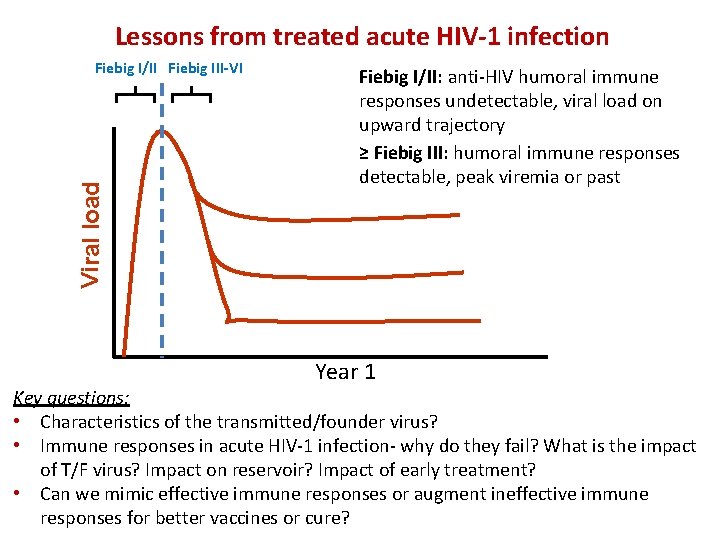
Lessons from treated acute HIV-1 infection Viral load Fiebig I/II Fiebig III-VI Fiebig I/II: anti-HIV humoral immune responses undetectable, viral load on upward trajectory ≥ Fiebig III: humoral immune responses detectable, peak viremia or past Year 1 Key questions: • Characteristics of the transmitted/founder virus? • Immune responses in acute HIV-1 infection- why do they fail? What is the impact of T/F virus? Impact on reservoir? Impact of early treatment? • Can we mimic effective immune responses or augment ineffective immune responses for better vaccines or cure?
FRESH study cohort • FRESH: Females Rising through Education, Support and Health • Recruit women 18 to 23 at very high risk of HIV infection – Provide an intensive empowerment, life-skills and job readiness curriculum that coincides with the sample collection protocol. • Empowerment and training program coincides with twice per week HIV RNA testing for 9 months. Serial pre- and post-infection samples (blood, FGT and lymph nodes) are collected. • Study host and viral factors associated with acquisition and disease progression- T/F virus, antiviral immune mechanisms.
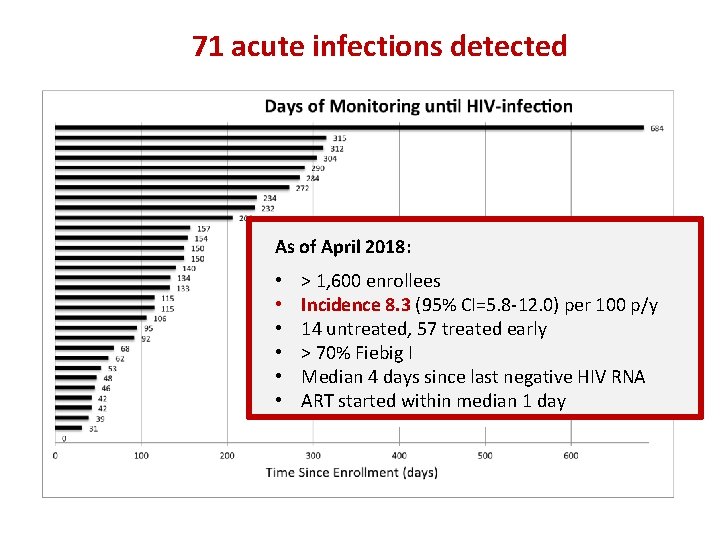
71 acute infections detected As of April 2018: • • • > 1, 600 enrollees Incidence 8. 3 (95% CI=5. 8 -12. 0) per 100 p/y 14 untreated, 57 treated early > 70% Fiebig I Median 4 days since last negative HIV RNA ART started within median 1 day
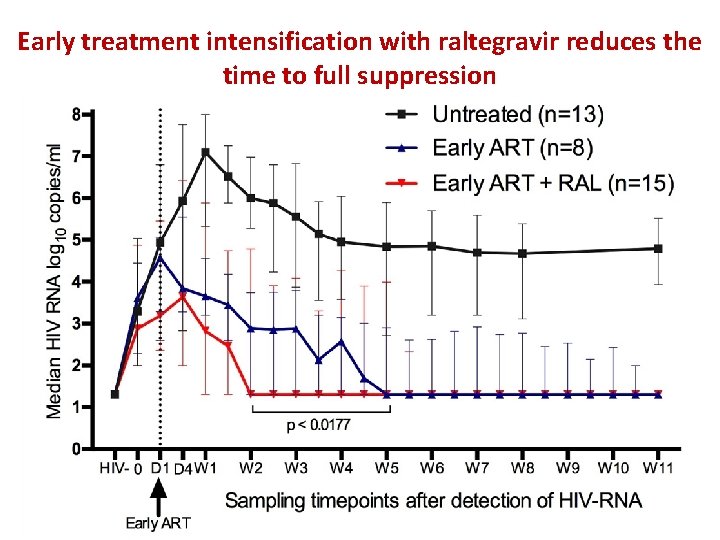
Early treatment intensification with raltegravir reduces the time to full suppression
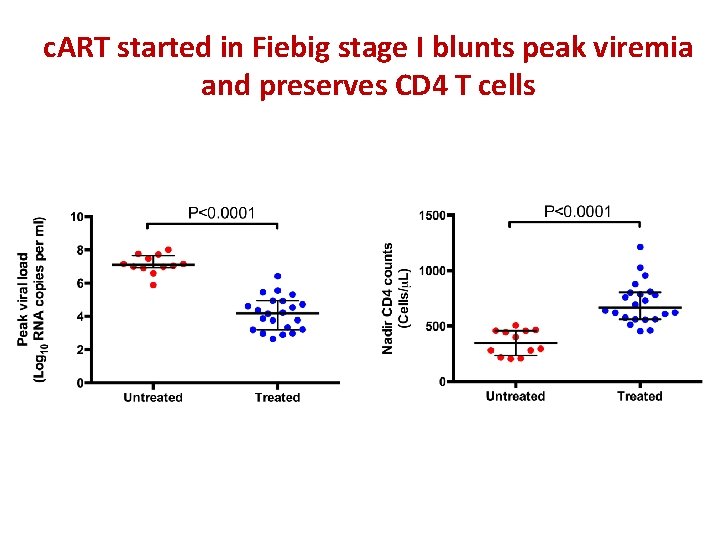
c. ART started in Fiebig stage I blunts peak viremia and preserves CD 4 T cells
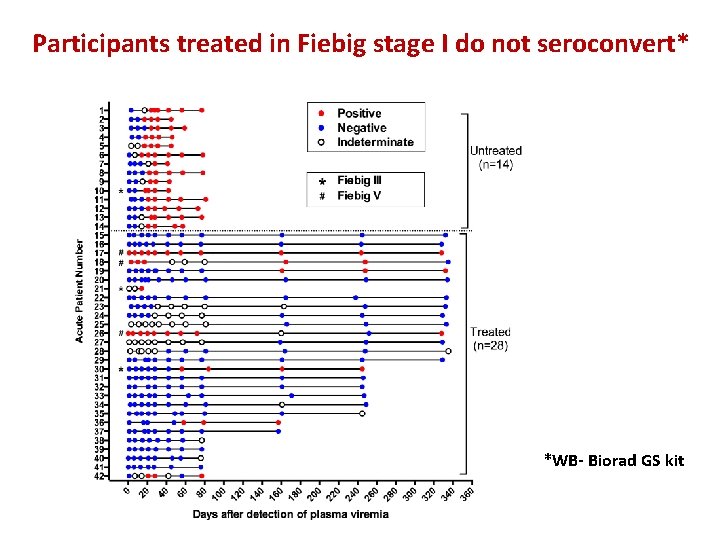
Participants treated in Fiebig stage I do not seroconvert* *WB- Biorad GS kit
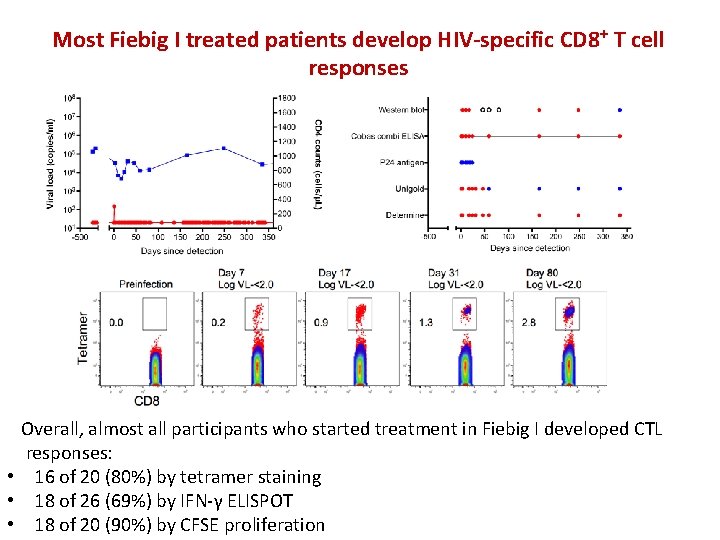
Most Fiebig I treated patients develop HIV-specific CD 8+ T cell responses Overall, almost all participants who started treatment in Fiebig I developed CTL responses: • 16 of 20 (80%) by tetramer staining • 18 of 26 (69%) by IFN-γ ELISPOT • 18 of 20 (90%) by CFSE proliferation
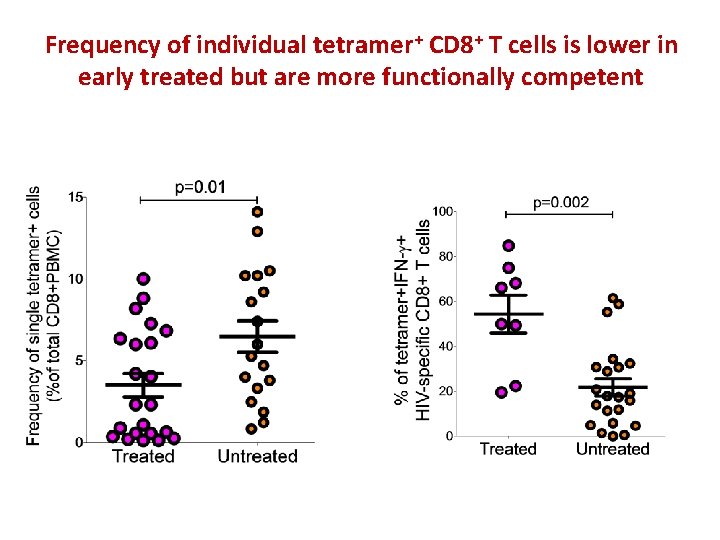
Frequency of individual tetramer+ CD 8+ T cells is lower in early treated but are more functionally competent
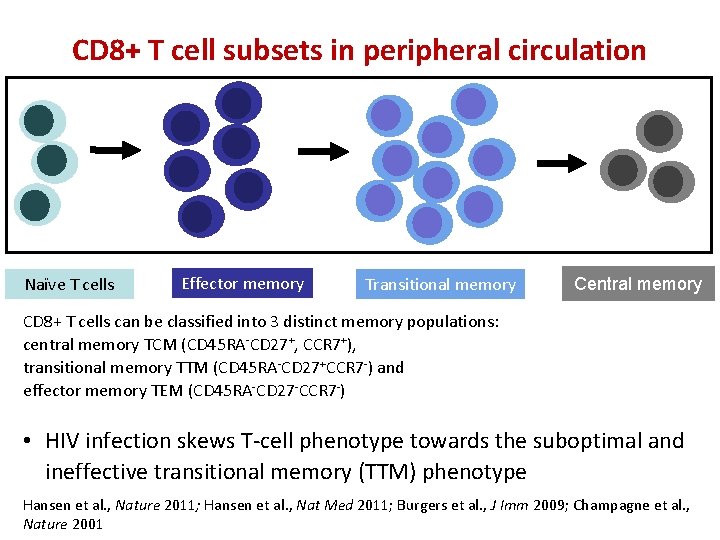
CD 8+ T cell subsets in peripheral circulation Naïve T cells Effector memory Transitional memory Central memory CD 8+ T cells can be classified into 3 distinct memory populations: central memory TCM (CD 45 RA-CD 27+, CCR 7+), transitional memory TTM (CD 45 RA-CD 27+CCR 7 -) and effector memory TEM (CD 45 RA-CD 27 -CCR 7 -) • HIV infection skews T-cell phenotype towards the suboptimal and ineffective transitional memory (TTM) phenotype Hansen et al. , Nature 2011; Hansen et al. , Nat Med 2011; Burgers et al. , J Imm 2009; Champagne et al. , Nature 2001
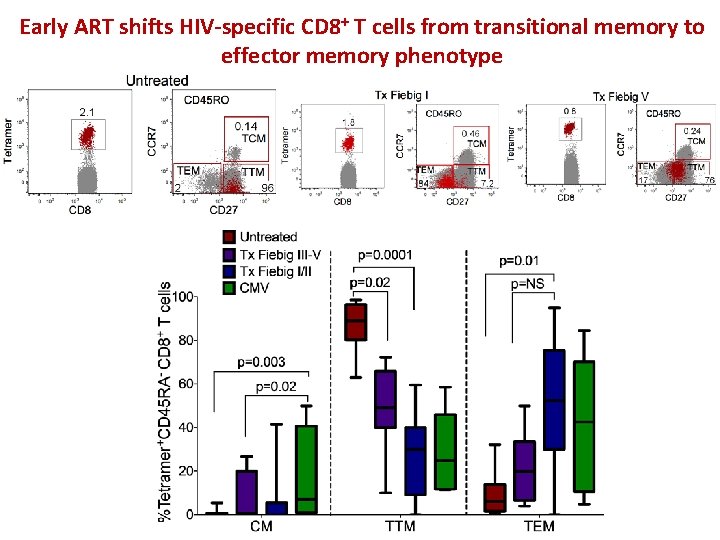
Early ART shifts HIV-specific CD 8+ T cells from transitional memory to effector memory phenotype
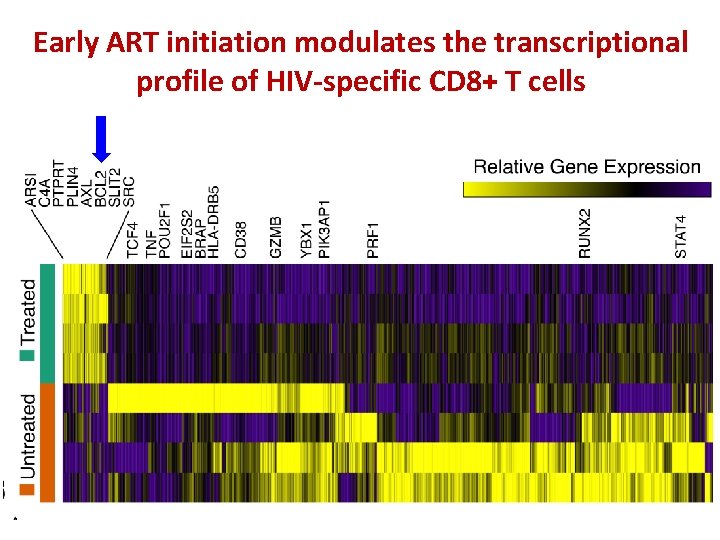
Early ART initiation modulates the transcriptional profile of HIV-specific CD 8+ T cells
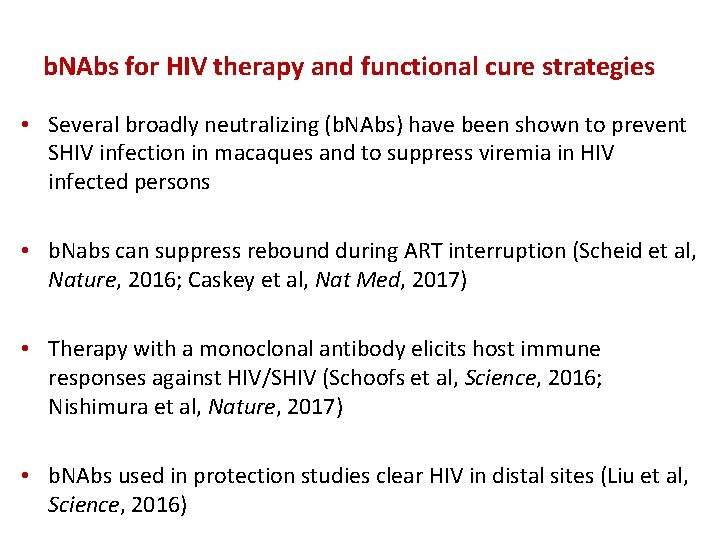
b. NAbs for HIV therapy and functional cure strategies • Several broadly neutralizing (b. NAbs) have been shown to prevent SHIV infection in macaques and to suppress viremia in HIV infected persons • b. Nabs can suppress rebound during ART interruption (Scheid et al, Nature, 2016; Caskey et al, Nat Med, 2017) • Therapy with a monoclonal antibody elicits host immune responses against HIV/SHIV (Schoofs et al, Science, 2016; Nishimura et al, Nature, 2017) • b. NAbs used in protection studies clear HIV in distal sites (Liu et al, Science, 2016)
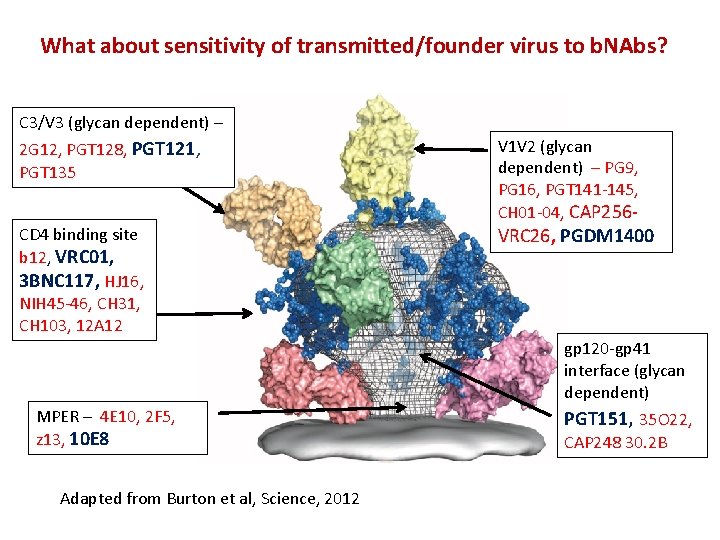
What about sensitivity of transmitted/founder virus to b. NAbs? C 3/V 3 (glycan dependent) – 2 G 12, PGT 128, PGT 121, PGT 135 CD 4 binding site b 12, VRC 01, 3 BNC 117, HJ 16, NIH 45 -46, CH 31, CH 103, 12 A 12 V 1 V 2 (glycan dependent) – PG 9, PG 16, PGT 141 -145, CH 01 -04, CAP 256 - VRC 26, PGDM 1400 gp 120 -gp 41 interface (glycan dependent) MPER – 4 E 10, 2 F 5, z 13, 10 E 8 Adapted from Burton et al, Science, 2012 PGT 151, 35 O 22, CAP 248 30. 2 B
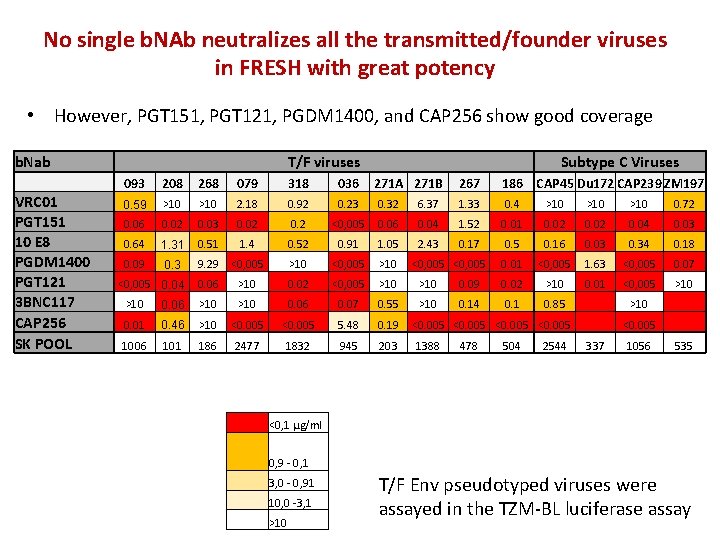
No single b. NAb neutralizes all the transmitted/founder viruses in FRESH with great potency • However, PGT 151, PGT 121, PGDM 1400, and CAP 256 show good coverage b. Nab VRC 01 PGT 151 10 E 8 PGDM 1400 PGT 121 3 BNC 117 CAP 256 SK POOL T/F viruses Subtype C Viruses 093 208 268 079 318 036 0. 59 >10 2. 18 0. 92 0. 23 0. 32 0. 06 0. 02 0. 03 0. 02 0. 2 <0, 005 0. 64 1. 31 0. 51 1. 4 0. 52 0. 09 0. 3 9. 29 <0, 005 0. 06 <0, 005 0. 04 271 A 271 B 267 186 CAP 45 Du 172 CAP 239 ZM 197 6. 37 1. 33 0. 4 >10 >10 0. 72 0. 06 0. 04 1. 52 0. 01 0. 02 0. 04 0. 03 0. 91 1. 05 2. 43 0. 17 0. 5 0. 16 0. 03 0. 34 0. 18 >10 <0, 005 >10 0. 01 <0, 005 1. 63 <0, 005 0. 07 >10 0. 02 <0, 005 >10 0. 09 0. 02 >10 0. 01 <0, 005 >10 0. 14 0. 1 0. 85 >10 <0. 005 337 1056 535 >10 0. 06 0. 07 0. 55 0. 01 0. 46 >10 <0. 005 5. 48 0. 19 1006 101 186 2477 1832 945 203 <0, 1 µg/ml 0, 9 - 0, 1 3, 0 - 0, 91 10, 0 -3, 1 >10 <0, 005 <0. 005 1388 478 504 2544 T/F Env pseudotyped viruses were assayed in the TZM-BL luciferase assay
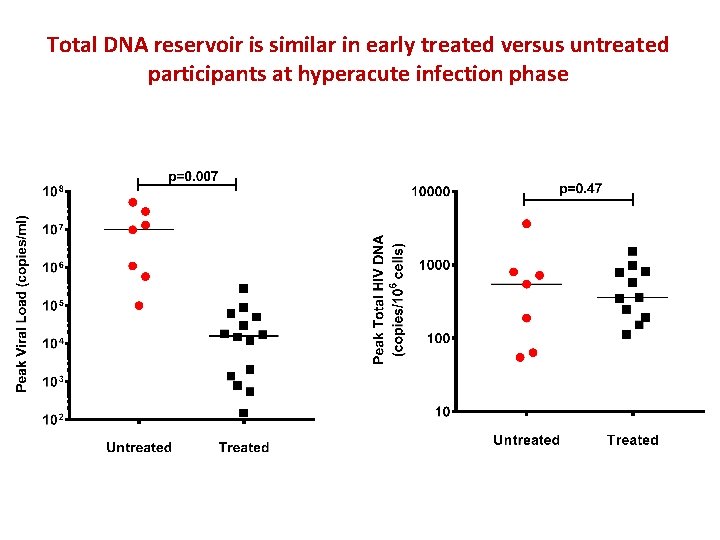
Total DNA reservoir is similar in early treated versus untreated participants at hyperacute infection phase
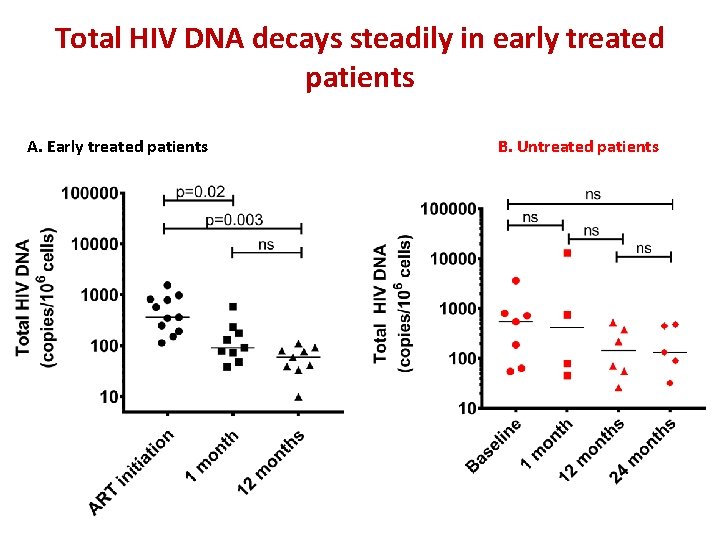
Total HIV DNA decays steadily in early treated patients A. Early treated patients B. Untreated patients
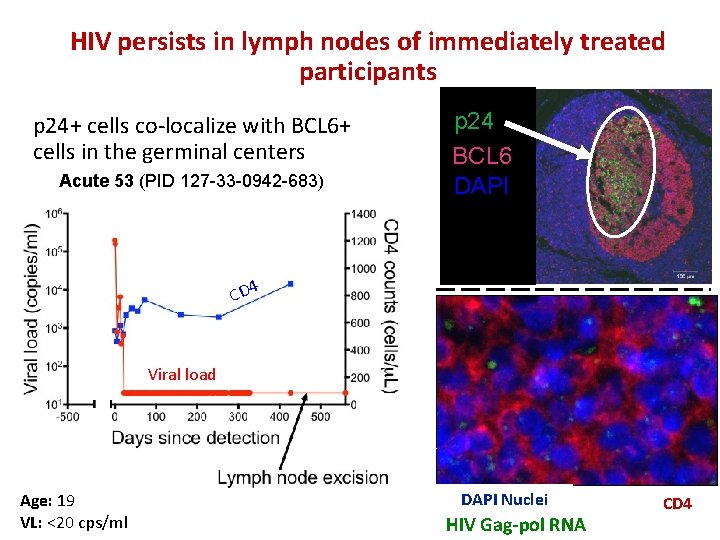
HIV persists in lymph nodes of immediately treated participants p 24+ cells co-localize with BCL 6+ cells in the germinal centers Acute 53 (PID 127 -33 -0942 -683) p 24 BCL 6 DAPI CD 4 Viral load Age: 19 VL: <20 cps/ml DAPI Nuclei HIV Gag-pol RNA CD 4
Conclusions • Acute HIV infections- novel insights into characteristics of T/F virus, immune responses and reservoir establishment • Study participants initiated on c. ART during Fiebig stage I/II show diminished magnitude of humoral and CTL immune responses but the latter may be more functional- durability and location? • In FRESH, the reservoir is established very early and even in Fiebig I treated participants, the size during acute infection is similar to untreated participants, persistence in lymphoid tissues • Early initiation of c. ART leads to slow but steady decay of the reservoir, which may have implications for ease of cure. • Combination approaches- early treatment + specific antiviral-immune agents (b. NAbs) that target sanctuary sites and harnessing a patient’s own immune system may be required for a functional cure
Acknowledgements AHRI and HPP- UKZN • • • Krista Dong Amber Moodley Zaza Ndhlovu Kavidha Reddy Omolara Baiyegunhi Jenn Mabuka Bongiwe Ndlovu Kamini Gounder Daniel Muema Nasreen Ismael Prince Mshiyeni Hospital • Johann Pansegrouw • • FRESH study participants FRESH study team Harvard/MGH • • Bruce Walker Galit Alter Mathias Lichterfeld Guinevere Lee Douglas Kwon Musie Ghebremichael Alex Shalek Sam Kazer Funding • • • Bill and Melinda Gates Foundation IAVI NIH South African DST/NRF HHMI Gilead Sciences, Inc.