Academic Remediation Peggy Cyr Maine Medical Center Kristin

- Slides: 20
Academic Remediation Peggy Cyr – Maine Medical Center Kristin De. Simone – Jefferson Kathryn Trayes - Jefferson
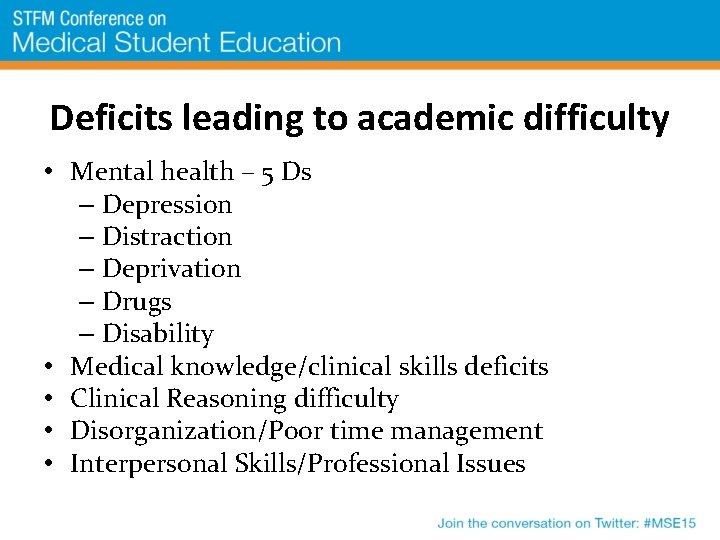
Deficits leading to academic difficulty • Mental health – 5 Ds – Depression – Distraction – Deprivation – Drugs – Disability • Medical knowledge/clinical skills deficits • Clinical Reasoning difficulty • Disorganization/Poor time management • Interpersonal Skills/Professional Issues
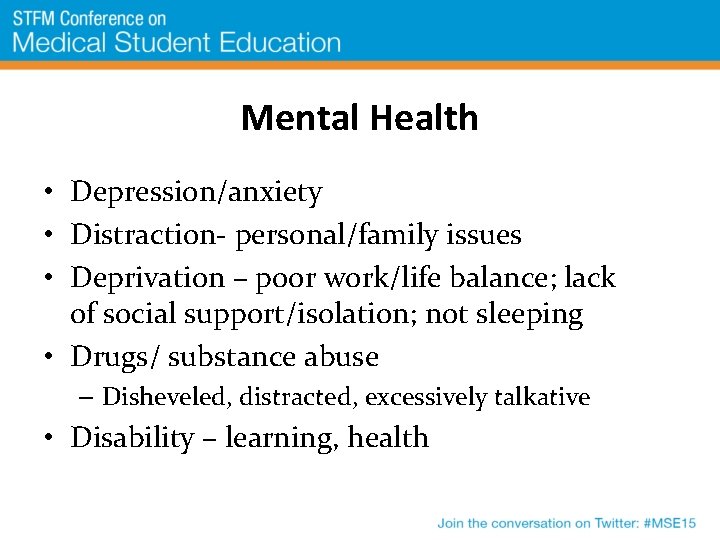
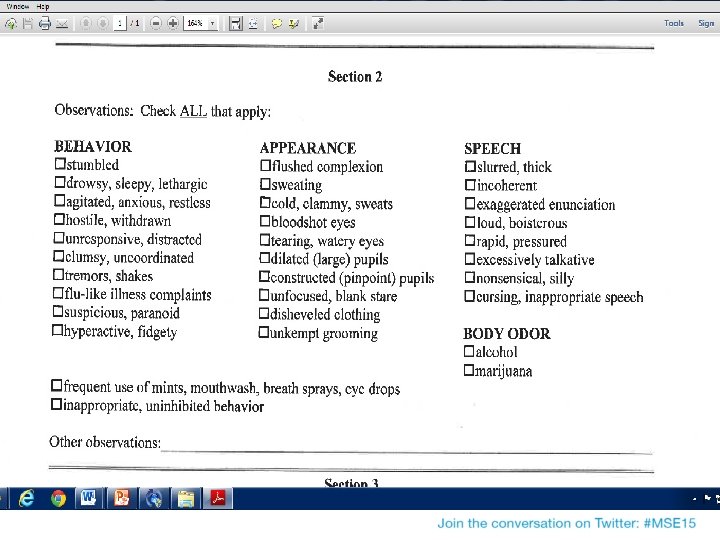
Mental Health • Depression/anxiety • Distraction- personal/family issues • Deprivation – poor work/life balance; lack of social support/isolation; not sleeping • Drugs/ substance abuse – Disheveled, distracted, excessively talkative • Disability – learning, health
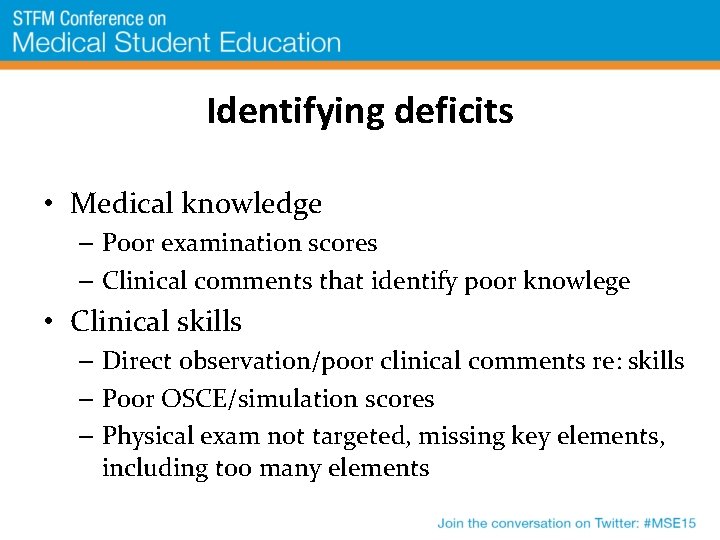
Identifying deficits • Medical knowledge – Poor examination scores – Clinical comments that identify poor knowlege • Clinical skills – Direct observation/poor clinical comments re: skills – Poor OSCE/simulation scores – Physical exam not targeted, missing key elements, including too many elements
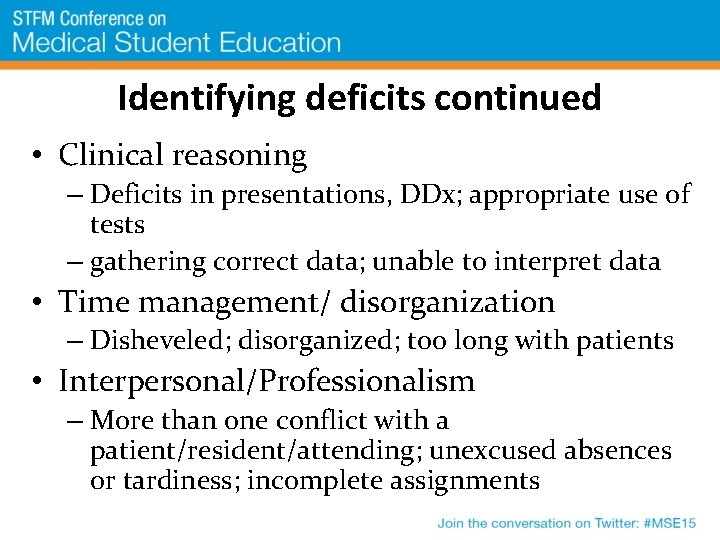
Identifying deficits continued • Clinical reasoning – Deficits in presentations, DDx; appropriate use of tests – gathering correct data; unable to interpret data • Time management/ disorganization – Disheveled; disorganized; too long with patients • Interpersonal/Professionalism – More than one conflict with a patient/resident/attending; unexcused absences or tardiness; incomplete assignments
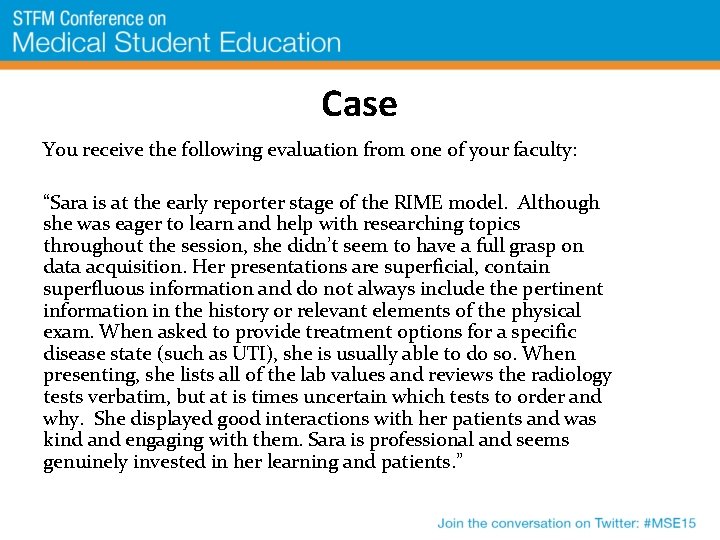
Case You receive the following evaluation from one of your faculty: “Sara is at the early reporter stage of the RIME model. Although she was eager to learn and help with researching topics throughout the session, she didn’t seem to have a full grasp on data acquisition. Her presentations are superficial, contain superfluous information and do not always include the pertinent information in the history or relevant elements of the physical exam. When asked to provide treatment options for a specific disease state (such as UTI), she is usually able to do so. When presenting, she lists all of the lab values and reviews the radiology tests verbatim, but at is times uncertain which tests to order and why. She displayed good interactions with her patients and was kind and engaging with them. Sara is professional and seems genuinely invested in her learning and patients. ”
Break Out Session What is the underlying deficit? Propose a remediation plan
Case • Clinical reasoning vs • Medical Knowledge?
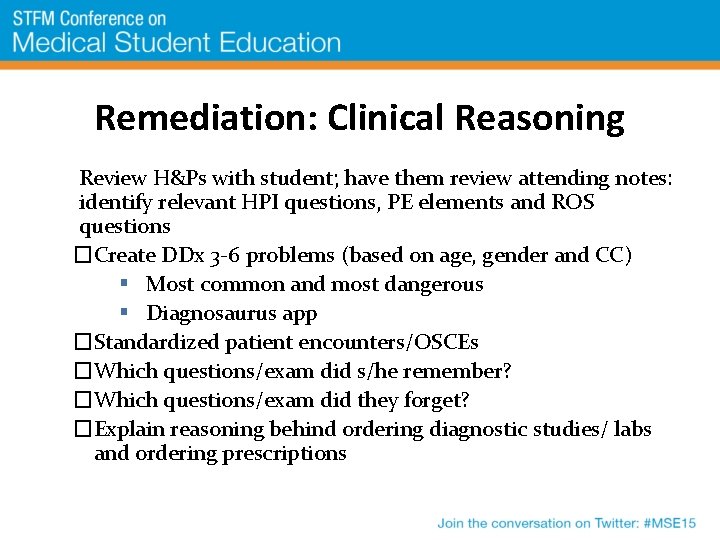
Remediation: Clinical Reasoning Review H&Ps with student; have them review attending notes: identify relevant HPI questions, PE elements and ROS questions �Create DDx 3 -6 problems (based on age, gender and CC) § Most common and most dangerous § Diagnosaurus app �Standardized patient encounters/OSCEs �Which questions/exam did s/he remember? �Which questions/exam did they forget? �Explain reasoning behind ordering diagnostic studies/ labs and ordering prescriptions
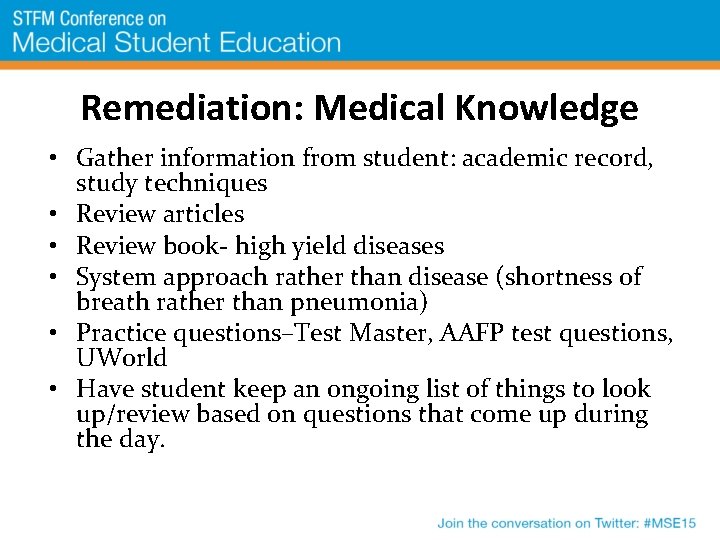
Remediation: Medical Knowledge • Gather information from student: academic record, study techniques • Review articles • Review book- high yield diseases • System approach rather than disease (shortness of breath rather than pneumonia) • Practice questions–Test Master, AAFP test questions, UWorld • Have student keep an ongoing list of things to look up/review based on questions that come up during the day.
Individual Education Program • Student, Clerkship director (or faculty member), Clinical Skills director, Student Affairs dean/advocate
Case As the course director, you are approached by an attending who reports that Eric, the student working with him, has missed one day of work with no explanation is consistently 5 -10 minutes late for rounds in the morning. When questioned, he has an excuse to explain each instance. Eric’s presentations are disorganized and often include physical exam elements that are not related to the chief complaint. When observed examining a patient with upper respiratory complaints, he listened to the lungs only in the anterior chest and failed to examine the ears or throat. Additionally, he is unprepared for the scheduled lecture series and does not seem to be as engaged as his peers. You review his academic record and note that he honored all of his courses during his preclinical years and did not have any academic issues.
Break Out Session What is the underlying deficit? Propose a remediation plan
Case • • Mental health vs Clinical skills vs Organization vs Professionalism?
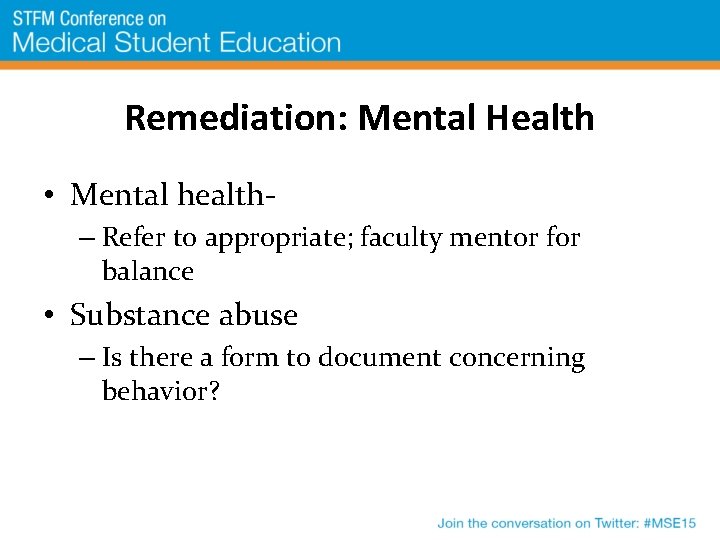
Remediation: Mental Health • Mental health– Refer to appropriate; faculty mentor for balance • Substance abuse – Is there a form to document concerning behavior?
Substance abuse form
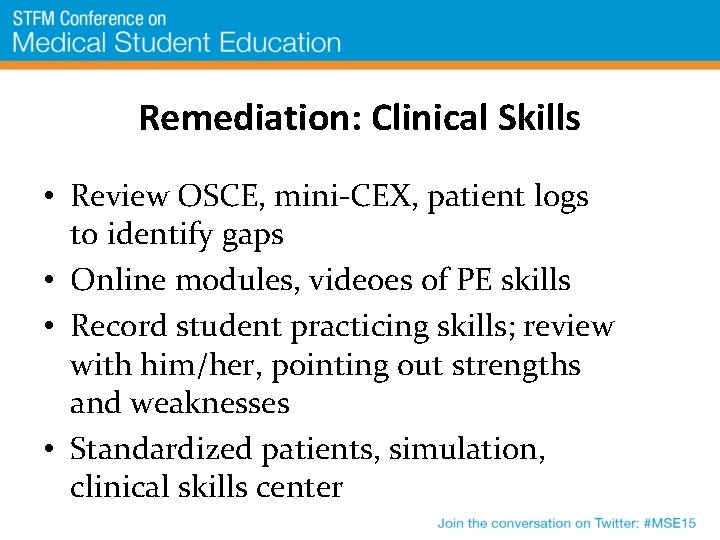
Remediation: Clinical Skills • Review OSCE, mini-CEX, patient logs to identify gaps • Online modules, videoes of PE skills • Record student practicing skills; review with him/her, pointing out strengths and weaknesses • Standardized patients, simulation, clinical skills center
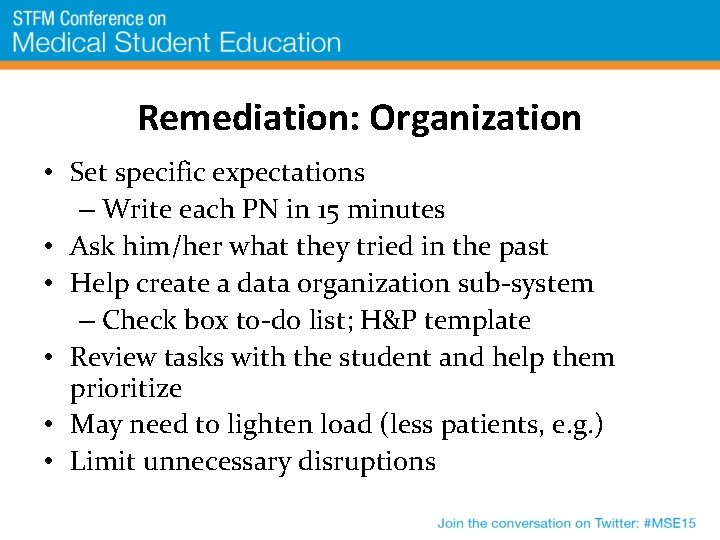
Remediation: Organization • Set specific expectations – Write each PN in 15 minutes • Ask him/her what they tried in the past • Help create a data organization sub-system – Check box to-do list; H&P template • Review tasks with the student and help them prioritize • May need to lighten load (less patients, e. g. ) • Limit unnecessary disruptions
Resources • Remediation of the Struggling Medical Learner by Jeannette Guerrasio, MD
Please evaluate this session at: stfm. org/sessionevaluation