AAE 251 FINAL DESIGN PROJECT TEAM PM 13

- Slides: 28
AAE 251 FINAL DESIGN PROJECT TEAM PM 13 Alex R. Corbin Skyler M. Doss Jacob D. Hazi Min Kyum (David) Kim Michael D. Rosenberg 1
OVERVIEW § § § § § 2 Goal and Solution Launch Site Change in Velocity Rocket Sizing and Optimal ΔV Split Mid-Air Deployment Airplane Profile Propulsion System and Aircraft Engine Flight Performances Total Cost
GOAL § To build an emergency crew rescue vehicle § Capable of launching to 200 km low Earth orbit from an air force base § Recover at most 4 crew members who can be as high as a 1000 km orbit § Safely deorbit to 9. 144 km altitude for mid-air deployment § Return to the launch site with a powered flight vehicle 3
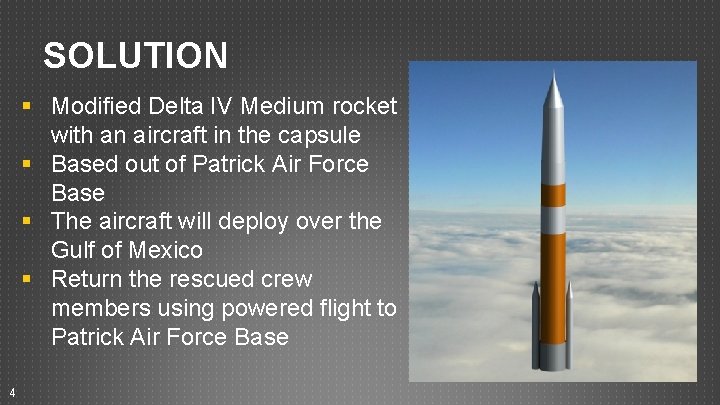
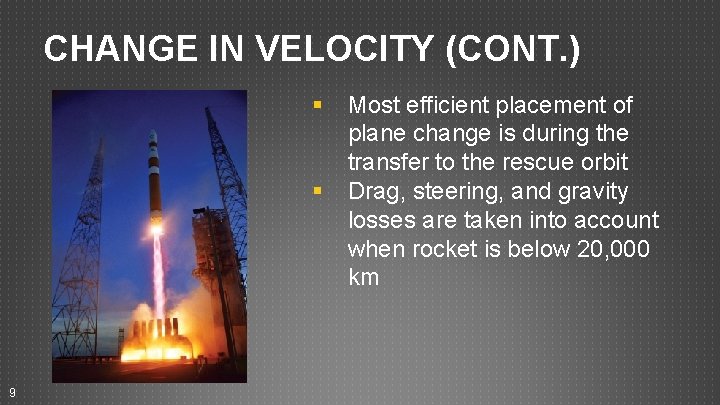
SOLUTION § Modified Delta IV Medium rocket with an aircraft in the capsule § Based out of Patrick Air Force Base § The aircraft will deploy over the Gulf of Mexico § Return the rescued crew members using powered flight to Patrick Air Force Base 4
5
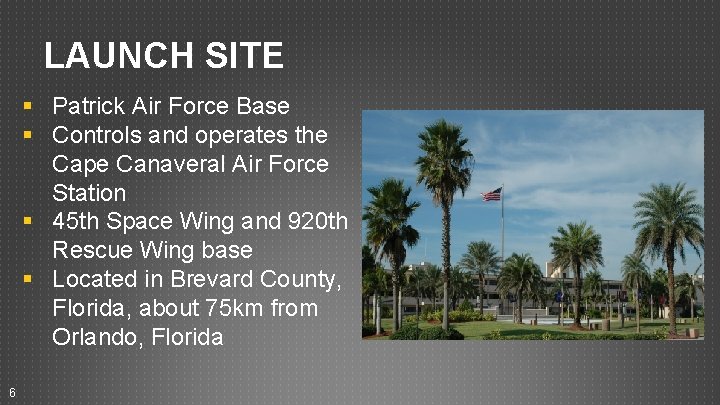
LAUNCH SITE § Patrick Air Force Base § Controls and operates the Cape Canaveral Air Force Station § 45 th Space Wing and 920 th Rescue Wing base § Located in Brevard County, Florida, about 75 km from Orlando, Florida 6
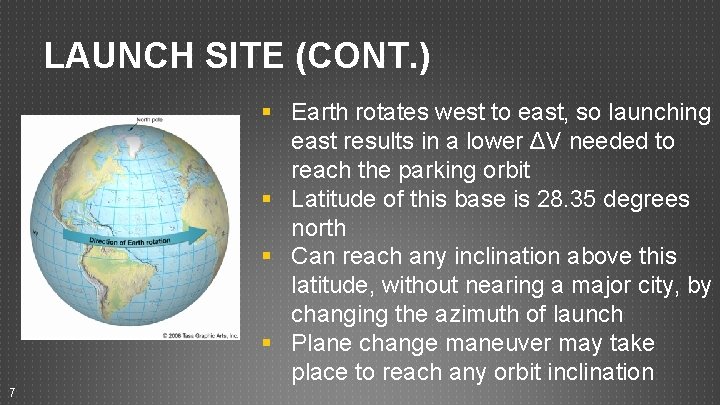
LAUNCH SITE (CONT. ) § Earth rotates west to east, so launching east results in a lower ΔV needed to reach the parking orbit § Latitude of this base is 28. 35 degrees north § Can reach any inclination above this latitude, without nearing a major city, by changing the azimuth of launch § Plane change maneuver may take place to reach any orbit inclination 7
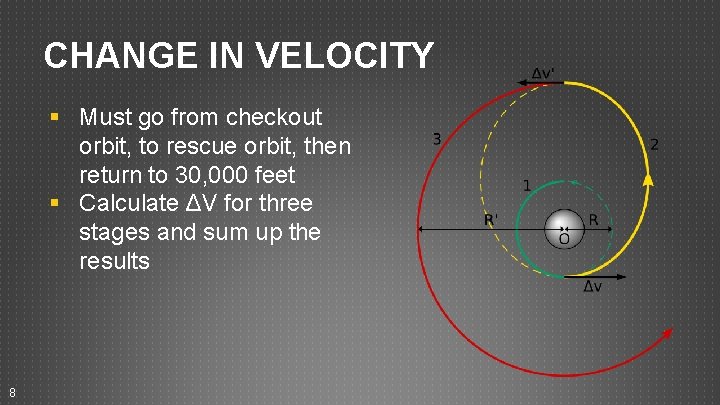
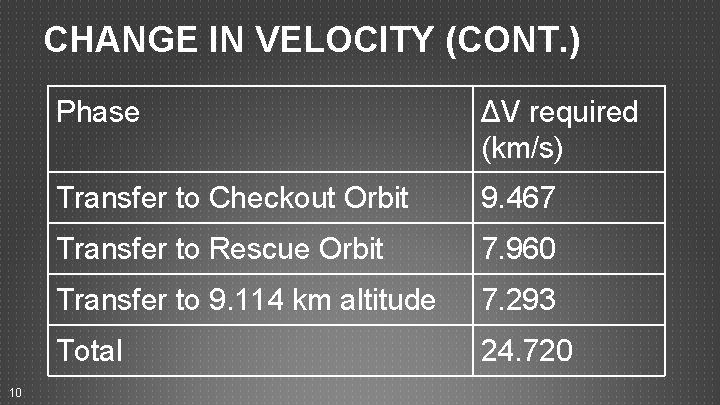
CHANGE IN VELOCITY § Must go from checkout orbit, to rescue orbit, then return to 30, 000 feet § Calculate ΔV for three stages and sum up the results 8
CHANGE IN VELOCITY (CONT. ) § § 9 Most efficient placement of plane change is during the transfer to the rescue orbit Drag, steering, and gravity losses are taken into account when rocket is below 20, 000 km
CHANGE IN VELOCITY (CONT. ) 10 Phase ΔV required (km/s) Transfer to Checkout Orbit 9. 467 Transfer to Rescue Orbit 7. 960 Transfer to 9. 114 km altitude 7. 293 Total 24. 720
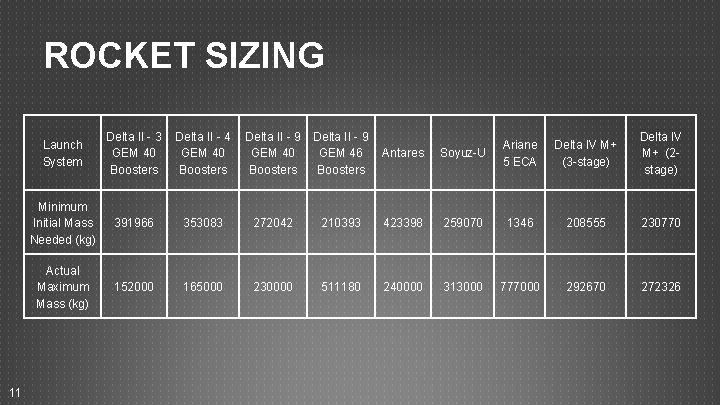
ROCKET SIZING 11 Launch System Delta II - 3 GEM 40 Boosters Delta II - 4 GEM 40 Boosters Delta II - 9 GEM 46 Boosters Soyuz-U Ariane 5 ECA Delta IV M+ (3 -stage) Delta IV M+ (2 stage) Antares Minimum Initial Mass Needed (kg) 391966 353083 272042 210393 423398 259070 1346 208555 230770 Actual Maximum Mass (kg) 152000 165000 230000 511180 240000 313000 777000 292670 272326
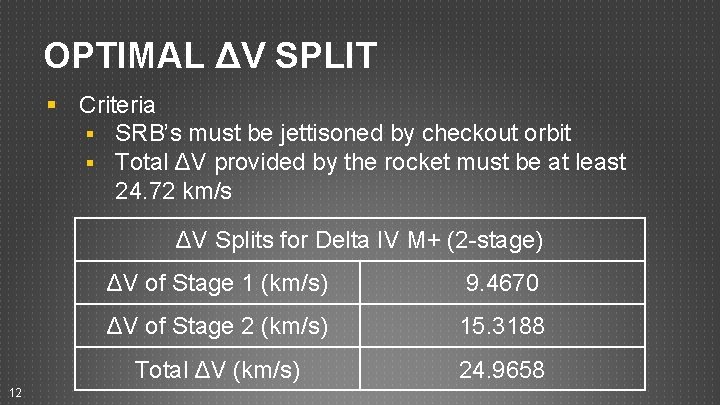
OPTIMAL ΔV SPLIT § Criteria § SRB’s must be jettisoned by checkout orbit § Total ΔV provided by the rocket must be at least 24. 72 km/s ΔV Splits for Delta IV M+ (2 -stage) 12 ΔV of Stage 1 (km/s) 9. 4670 ΔV of Stage 2 (km/s) 15. 3188 Total ΔV (km/s) 24. 9658
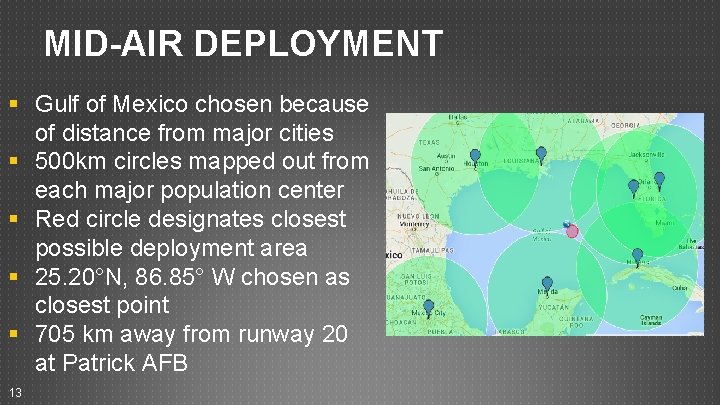
MID-AIR DEPLOYMENT § Gulf of Mexico chosen because of distance from major cities § 500 km circles mapped out from each major population center § Red circle designates closest possible deployment area § 25. 20°N, 86. 85° W chosen as closest point § 705 km away from runway 20 at Patrick AFB 13
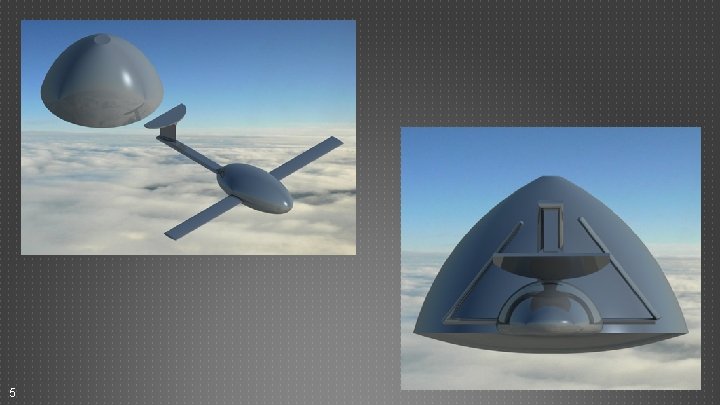
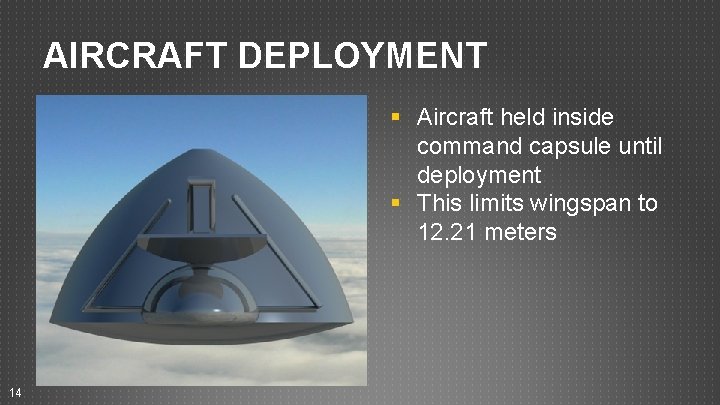
AIRCRAFT DEPLOYMENT § Aircraft held inside command capsule until deployment § This limits wingspan to 12. 21 meters 14
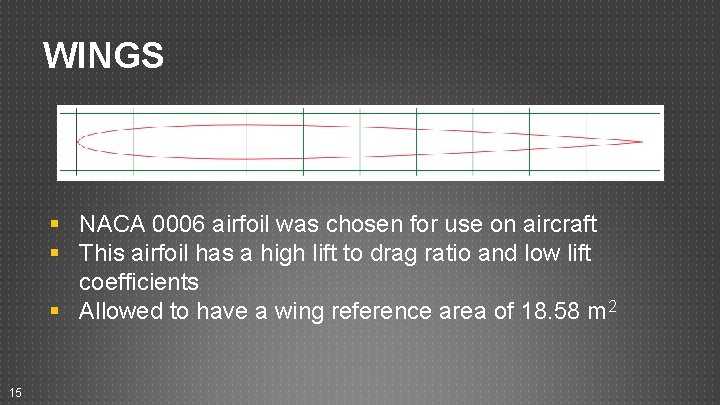
WINGS § NACA 0006 airfoil was chosen for use on aircraft § This airfoil has a high lift to drag ratio and low lift coefficients § Allowed to have a wing reference area of 18. 58 m 2 15
PROPULSION SYSTEM § The propulsion system is only required to carry a small weight over a moderate length, we considered: § Low bypass ratio turbo fan § Turbojet § Propeller § Turboprop § Rotary blades 16
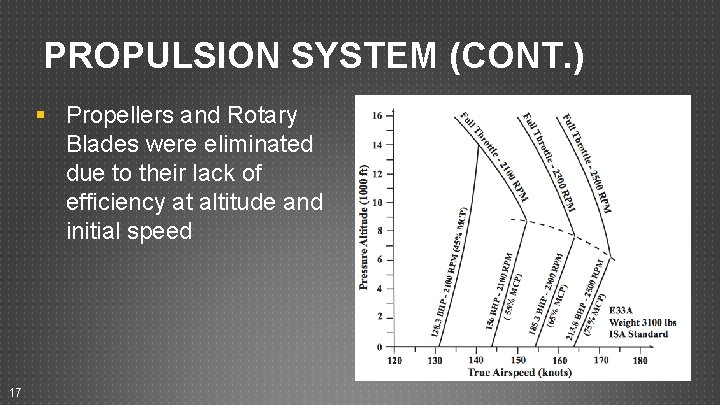
PROPULSION SYSTEM (CONT. ) § Propellers and Rotary Blades were eliminated due to their lack of efficiency at altitude and initial speed 17
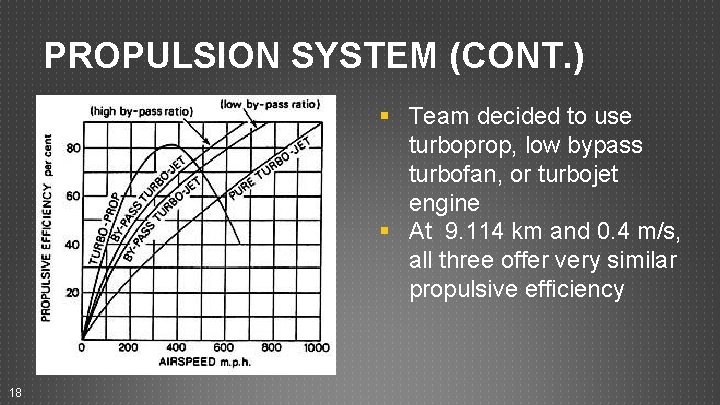
PROPULSION SYSTEM (CONT. ) § Team decided to use turboprop, low bypass turbofan, or turbojet engine § At 9. 114 km and 0. 4 m/s, all three offer very similar propulsive efficiency 18
DECISION ON PROPULSION SYSTEM § By changing the flight plan, the turboprop is the best option for a propulsion system § Instead of flying at a cruise altitude of 30, 000 feet, the aircraft will glide down to an altitude of 20, 000 feet (still in Class A airspace) § Rest of distance to Patrick AFB covered at cruise speed 19
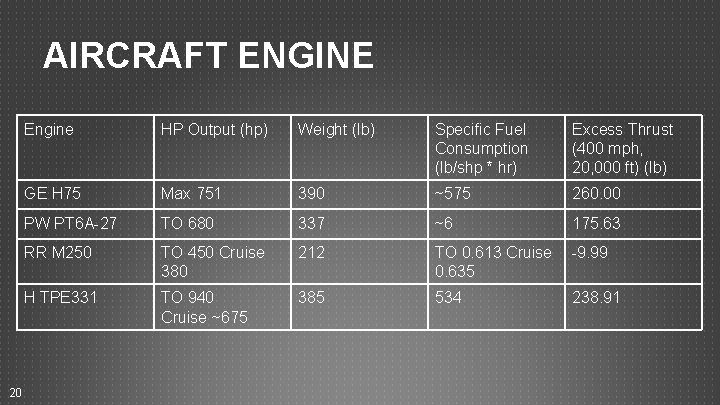
AIRCRAFT ENGINE 20 Engine HP Output (hp) Weight (lb) Specific Fuel Consumption (lb/shp * hr) Excess Thrust (400 mph, 20, 000 ft) (lb) GE H 75 Max 751 390 ~575 260. 00 PW PT 6 A-27 TO 680 337 ~6 175. 63 RR M 250 TO 450 Cruise 380 212 TO 0. 613 Cruise 0. 635 -9. 99 H TPE 331 TO 940 Cruise ~675 385 534 238. 91
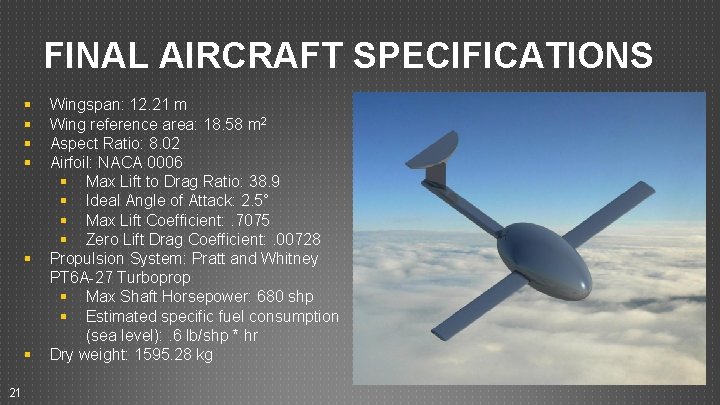
FINAL AIRCRAFT SPECIFICATIONS § § § 21 Wingspan: 12. 21 m Wing reference area: 18. 58 m 2 Aspect Ratio: 8. 02 Airfoil: NACA 0006 § Max Lift to Drag Ratio: 38. 9 § Ideal Angle of Attack: 2. 5° § Max Lift Coefficient: . 7075 § Zero Lift Drag Coefficient: . 00728 Propulsion System: Pratt and Whitney PT 6 A-27 Turboprop § Max Shaft Horsepower: 680 shp § Estimated specific fuel consumption (sea level): . 6 lb/shp * hr Dry weight: 1595. 28 kg
FLIGHT PERFORMANCE § Aircraft has to fly 705 km to reach Patrick AFB with no leftover fuel § Even with gliding maneuver, enough fuel to cover 705 km is onboard § Using the Breguet range formula, the range is 705 km § The aircraft will need to carry 33. 62 kg of fuel on board § The final weight of the aircraft is 1628. 54 kg and has a mass ratio of 1. 02 § The endurance is 6408. 14 seconds 22
FLIGHT PERFORMANCE CONT. § Maximum rate of climb is where power required is at lowest point § From the max rate of climb equation, it was found to be 0. 0234 km/s 23
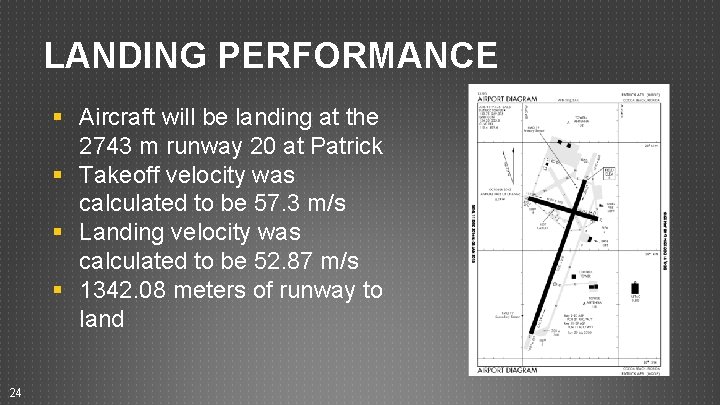
LANDING PERFORMANCE § Aircraft will be landing at the 2743 m runway 20 at Patrick § Takeoff velocity was calculated to be 57. 3 m/s § Landing velocity was calculated to be 52. 87 m/s § 1342. 08 meters of runway to land 24
TOTAL COST § § 25 Orbital launch system cost - $9, 261, 960 Aircraft cost - $797, 751 Total cost for the ECRV - $10, 059, 711 92% of total cost came from orbital launch system
SUMMARY § § § § § 26 Goal and Solution Launch Site Change in Velocity Rocket Sizing and Optimal ΔV Split Mid-Air Deployment Airplane Profile Propulsion System and Aircraft Engine Flight Performances Total Cost
SOURCES § § § 27 https: //earthspacescience. wordpress. com/2009/09/16/earths-rotation-withlatitude-longitude-lines/ http: //www. universetoday. com/87531/ula-delta-iv-thunders-off-pad-with-gps -iif-2 -satellite/ http: //www. patrick. af. mil/main/welcome. asp http: //upload. wikimedia. org/wikipedia/commons/6/69/Delta_IV_Medium_Ro cket_DSCS. jpg http: //upload. wikimedia. org/wikipedia/commons/thumb/d/df/Hohmann_tran sfer_orbit. svg/2000 px-Hohmann_transfer_orbit. svg. png http: //www. freemaptools. com/radius-around-point. htm
Questions? 28