6 4 GAS EXCHANGE Understanding Ventilation maintains concentration
- Slides: 20
6. 4 GAS EXCHANGE
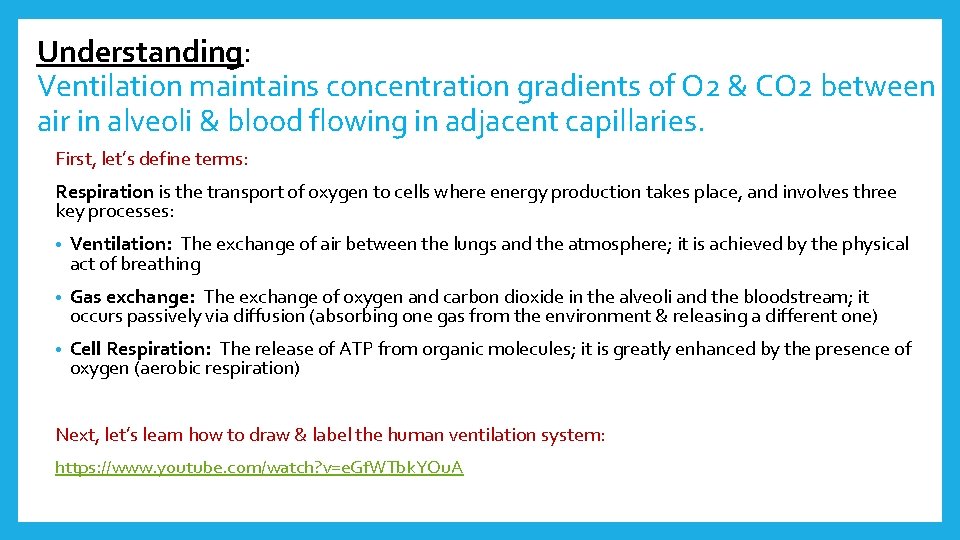
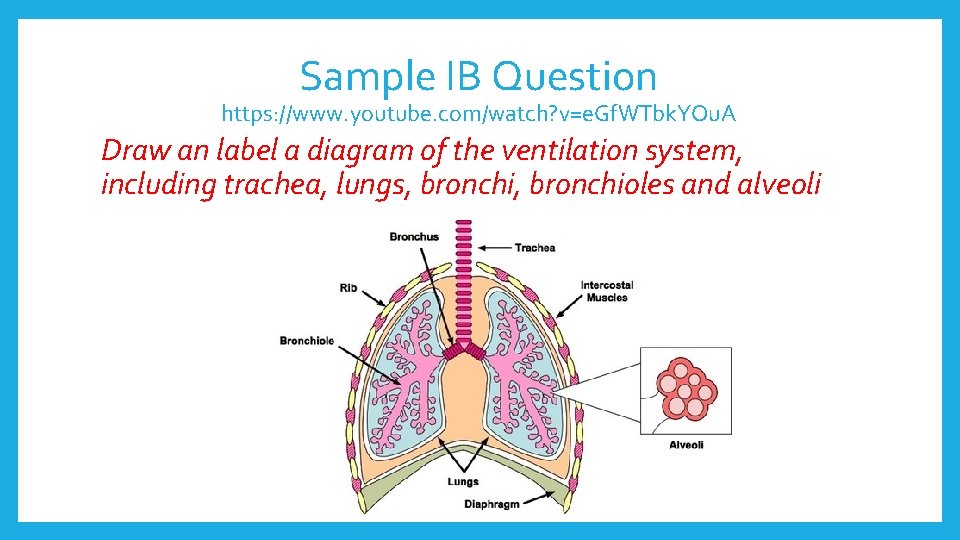
Understanding: Ventilation maintains concentration gradients of O 2 & CO 2 between air in alveoli & blood flowing in adjacent capillaries. oxygen & CO 2 First, let’s define terms: between air in alveoli & blood flowing in adjacent capillaries. Respiration is the transport of oxygen to cells where energy production takes place, and involves three key processes: • Ventilation: The exchange of air between the lungs and the atmosphere; it is achieved by the physical act of breathing • Gas exchange: The exchange of oxygen and carbon dioxide in the alveoli and the bloodstream; it occurs passively via diffusion (absorbing one gas from the environment & releasing a different one) • Cell Respiration: The release of ATP from organic molecules; it is greatly enhanced by the presence of oxygen (aerobic respiration) Next, let’s learn how to draw & label the human ventilation system: https: //www. youtube. com/watch? v=e. Gf. WTbk. YOu. A
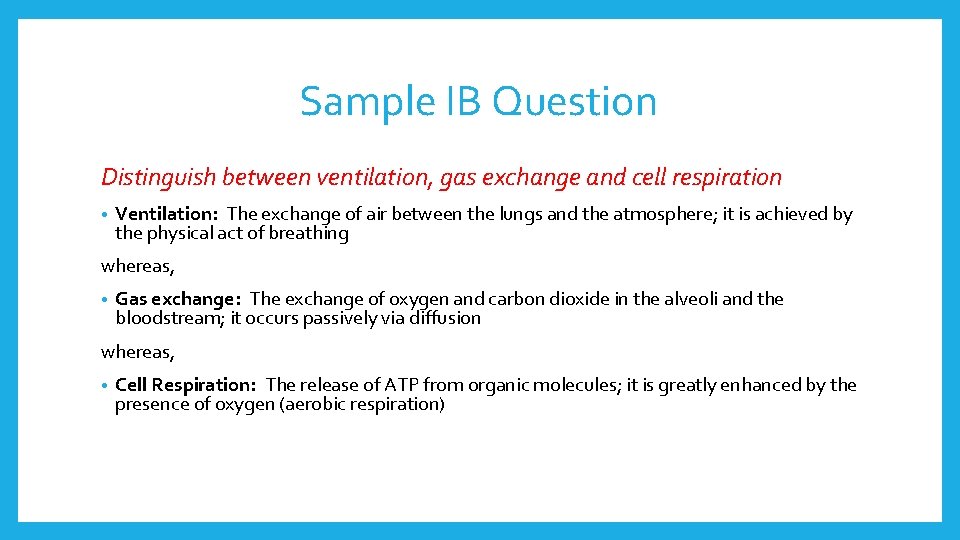
Sample IB Question Distinguish between ventilation, gas exchange and cell respiration • Ventilation: The exchange of air between the lungs and the atmosphere; it is achieved by the physical act of breathing whereas, • Gas exchange: The exchange of oxygen and carbon dioxide in the alveoli and the bloodstream; it occurs passively via diffusion whereas, • Cell Respiration: The release of ATP from organic molecules; it is greatly enhanced by the presence of oxygen (aerobic respiration)
Sample IB Question https: //www. youtube. com/watch? v=e. Gf. WTbk. YOu. A Draw an label a diagram of the ventilation system, including trachea, lungs, bronchioles and alveoli
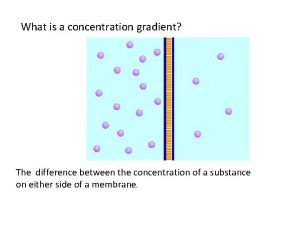
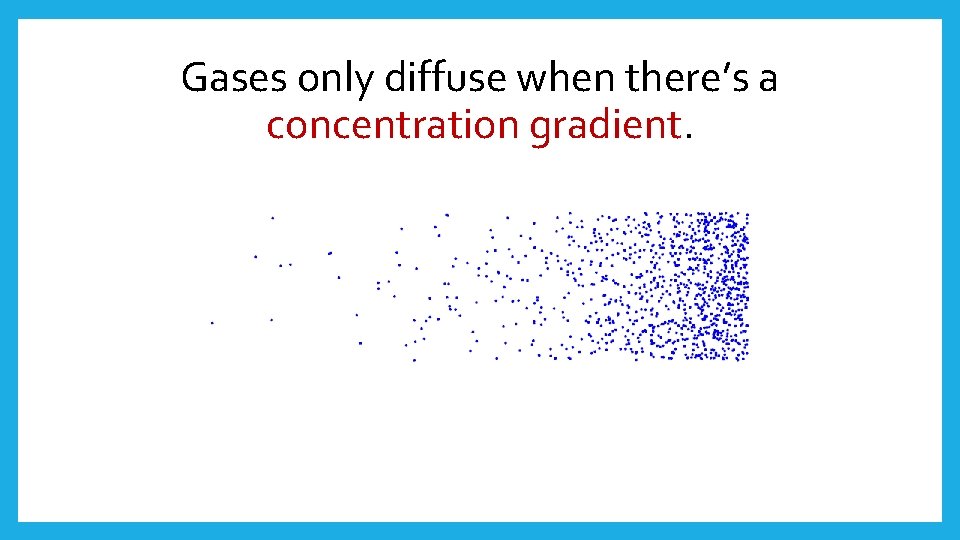
Gases only diffuse when there’s a concentration gradient.
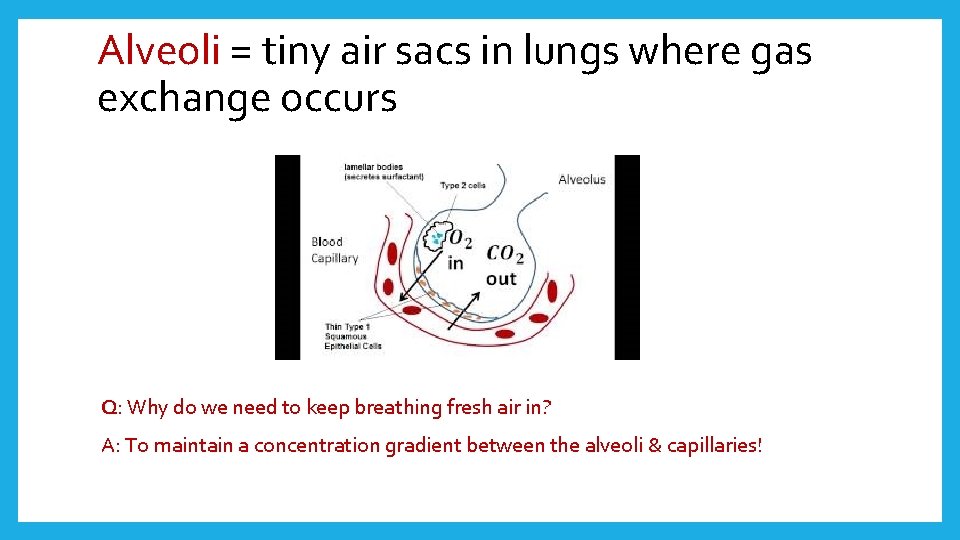
Alveoli = tiny air sacs in lungs where gas exchange occurs Q: Why do we need to keep breathing fresh air in? A: To maintain a concentration gradient between the alveoli & capillaries!
Sample IB Question Explain the need for a ventilation system. • Because gas exchange is a passive process, a ventilation system is needed to maintain a concentration gradient within the alveoli • Oxygen is needed by cells to make ATP via aerobic respiration, while carbon dioxide is a waste product of this process and must be removed • Therefore, oxygen must diffuse from the lungs into the blood, while carbon dioxide must diffuse from the blood into the lungs • This requires a high concentration of oxygen - and a low concentration of carbon dioxide - in the lungs • A ventilation system maintains this concentration gradient by continually cycling the air in the lungs with the atmosphere
Skill: Monitoring of ventilation in humans at rest and after mild & vigorous exercise. (Practical 6) Dependent variable can be either: 1. Ventilation rate = # of times air drawn in or expelled per minute - count the number of times air is exhaled or inhaled in a minute, while breathing naturally as slowly as possible without getting out of breath - measured using a data-logger & an inflatable chest belt to measure pressure variations in the belt 2. Tidal volume = volume of air drawn in & expelled - one normal breath is exhaled through a tube into a vessel & volume is measured - measured using a data-logger and a spirometer to measure flow rate into and out of the lungs
Skill: …Monitoring of ventilation in humans at rest and after mild & vigorous exercise. (Practical 6) Other factors to consider when designing this experiment: • Independent variable = levels of activity ranging from inactive to very active: lying down, sitting and standing, walking, jogging, sprinting (qualitative indep var) • running at different speeds on a treadmill (quantitative independent var) • • Dependent variable should be measured several times at all levels of exercise with each person in the trial. • As many different people as possible should be tested. • Make sure controlled variables are kept constant. What would those be?
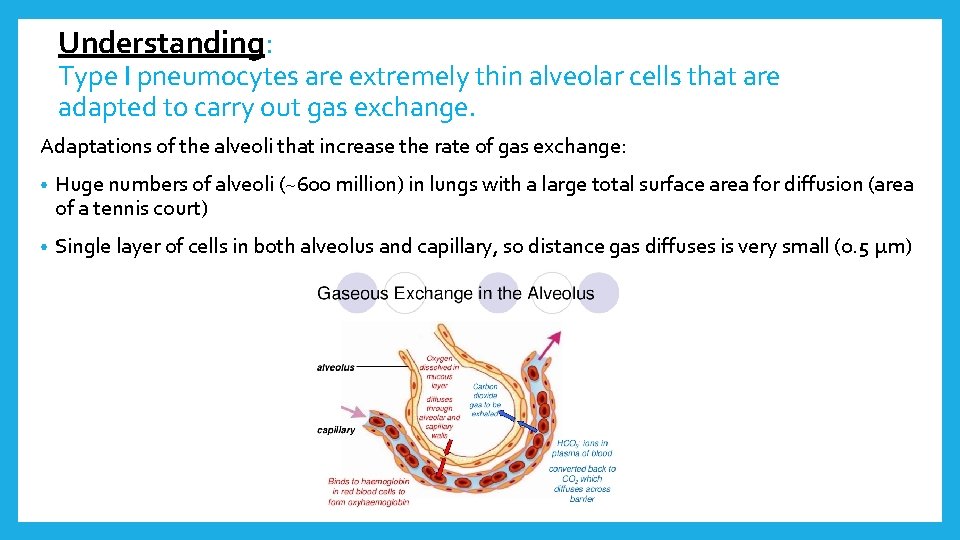
Understanding: Type I pneumocytes are extremely thin alveolar cells that are adapted to carry out gas exchange. Adaptations of the alveoli that increase the rate of gas exchange: • Huge numbers of alveoli (~600 million) in lungs with a large total surface area for diffusion (area of a tennis court) • Single layer of cells in both alveolus and capillary, so distance gas diffuses is very small (0. 5 μm)
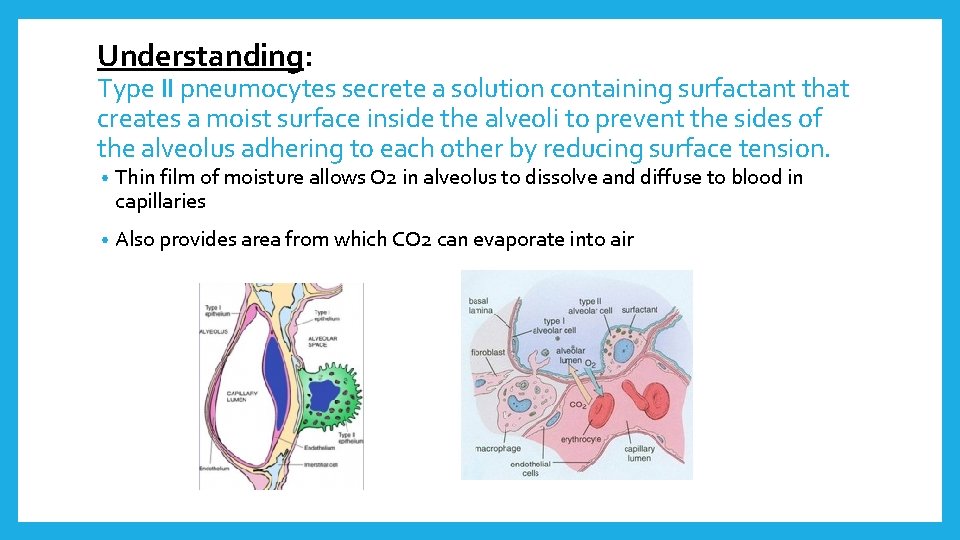
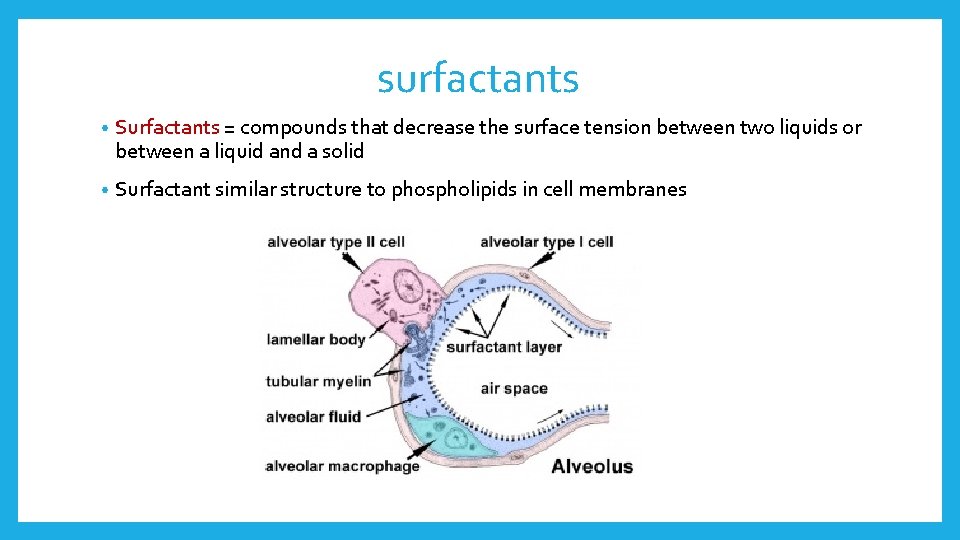
Understanding: Type II pneumocytes secrete a solution containing surfactant that creates a moist surface inside the alveoli to prevent the sides of the alveolus adhering to each other by reducing surface tension. • Thin film of moisture allows O 2 in alveolus to dissolve and diffuse to blood in capillaries • Also provides area from which CO 2 can evaporate into air
surfactants • Surfactants = compounds that decrease the surface tension between two liquids or between a liquid and a solid • Surfactant similar structure to phospholipids in cell membranes
Sample IB Question (on your whiteboard!) Describe the features of alveoli that adapt them to gas exchange • Thin wall: Made of a single layer of flattened Type I pneumocytes so that diffusion distance is small • Rich capillary network: Alveoli are covered by a dense network of capillaries that help to maintain a concentration gradient • Increased SA: Vol ratio: High numbers of spherically-shaped alveoli optimise surface area for gas exchange (600 million alveoli = 80 m 2) • Moist: Type II pneumocytes in the lining secrete surfactant to allow gases to dissolve and to prevent alveoli from collapsing (through cohesion)
Understanding: Air is carried to the lungs in the trachea & bronchi & then to the alveoli in bronchioles. • Flow of Air sequencing activity • Correct Sequence: Mouth or nose Trachea – rings of cartilage to keep it open 2 bronchi – walls of cartilage many bronchioles – narrower, smooth muscle allowing airway width to vary alveoli – where gas exchange occurs
Understanding: Muscle contractions cause the pressure changes inside thorax that force air in & out of the lungs to ventilate them. • Boyle’s Law • https: //www. youtube. com/watch? v=e. R 49 g 3 ub. TBg • https: //www. youtube. com/watch? v=N 5 xft 2 f. Iq. QU • https: //www. youtube. com/watch? v=27 yq. J 9 v. J 5 k. Q • inspiration = air being drawn into lungs • Expiration = air being forced out from the lungs Caused by changes in pressure due to muscle contractions • Lungs do no work! •
Understanding: Different muscles are required for inspiration & expiration because muscles only do work when they contract. • Muscles can only pull. They do not push. • Muscles can either contract (shorten) in which they pull on a bone, or they can relax (lengthen). • Muscles contract on their own, but do not lengthen themselves. • Another opposite muscle must pull muscles into a lengthened state. • Antogonistic muscles = muscles that perform opposite movements • E. g. biceps brachii and triceps brachii • Rectus abdominis and erector spinae
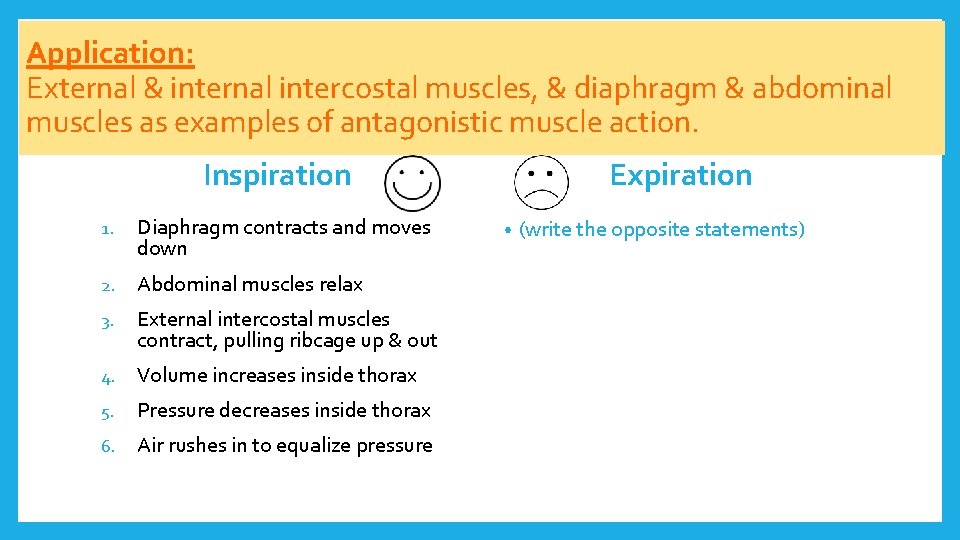
Application: External & internal intercostal muscles, & diaphragm & abdominal muscles as examples of antagonistic muscle action. Expiration Inspiration 1. Diaphragm contracts and moves down 2. Abdominal muscles relax 3. External intercostal muscles contract, pulling ribcage up & out 4. Volume increases inside thorax 5. Pressure decreases inside thorax 6. Air rushes in to equalize pressure • (write the opposite statements)
Nature of Science: Obtain evidence for theories: Epidemiological studies have contributed to our understanding of the causes of lung cancer. • Epidemiology = study of incidence & causes of disease (through observation, not experiments) 1. A theory about the cause of disease is proposed. (Smoking causes lung cancer. ) 2. Evidence is gathered through surveys. (Survey smoking habits of ppl who have lung cancer & smoking habits of ppl who do NOT have lung cancer. ) • Correlation does not imply causation! • Other confounding factors may LOOK like they are a cause when they are NOT. (There is an association between lung cancer and the lean-ness of a person, however leanness does not cause lung cancer. Smoking just decreases appetite, so smokers on average are leaner. ) • Surveys include confounding factors in order to rule them out. (Age & sex. )
Application: Causes and consequences of lung cancer. • Most common cancer in world Causes: Smoking (87% of cases; increase incidence as number cigs smoked per day & number of year increases) Air pollution (5%) - (diesel exhaust fumes, N oxides from all vehicle exhaust fumes, & smoke from burning coal & wood) Radon gas (3%) (radioactive gas that leaks out of granite, badly ventilated buildings http: //www. radon. com/radon_facts. html) § Second-hand smoke (3%) § Asbestos & silica if inhaled (2%) (“World Trade Center Cough” http: //www. asbestos. com/world-trade-center/) § § § Consequences: § § § § Difficulty with breathing Persistent cough Coughing up blood Chest pain Loss of appetite Weight loss Fatigue 15% -49% survive more than 5 years after diagnosis Treatments: Chemotherapy, radiation, surgery
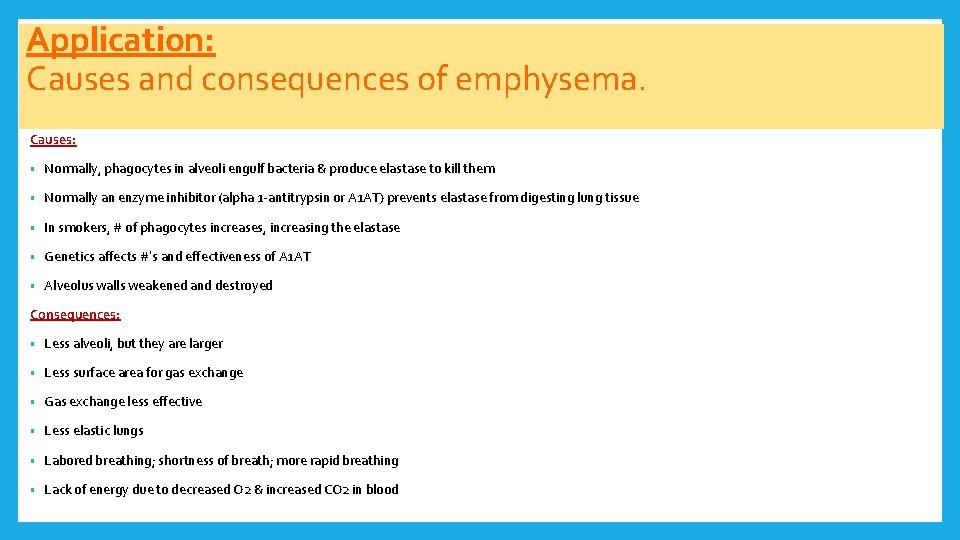
Application: Causes and consequences of emphysema. Causes: • Normally, phagocytes in alveoli engulf bacteria & produce elastase to kill them • Normally an enzyme inhibitor (alpha 1 -antitrypsin or A 1 AT) prevents elastase from digesting lung tissue • In smokers, # of phagocytes increases, increasing the elastase • Genetics affects #’s and effectiveness of A 1 AT • Alveolus walls weakened and destroyed Consequences: • Less alveoli, but they are larger • Less surface area for gas exchange • Gas exchange less effective • Less elastic lungs • Labored breathing; shortness of breath; more rapid breathing • Lack of energy due to decreased O 2 & increased CO 2 in blood