4 S Group Conference Stockholm Wednesday 15 th




- Slides: 47
4 S Group Conference Stockholm Wednesday 15 th October 2014 A Training and Certification Standard for Fusion Welding of PE Pipes Edward Ingham (Exova Utilities)
Introduction • Failure statistics for PE joints in the UK Water Industry • Causes of failure of PE joints • Auditing of the welding process • On site assessment of weld integrity Destructive testing Non- Destructive Testing (NDT) • Training and Development of a UK National Training Standard
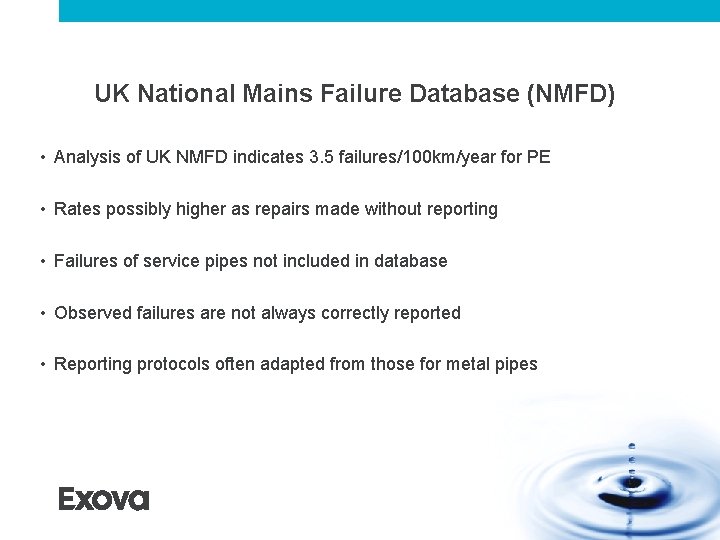
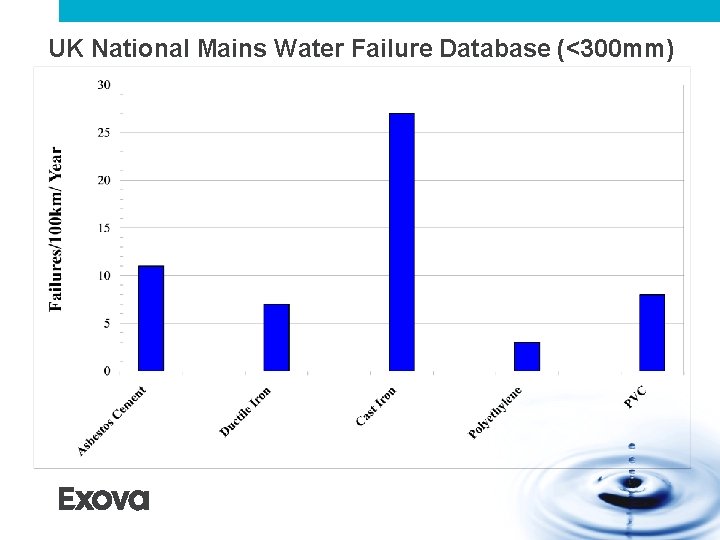
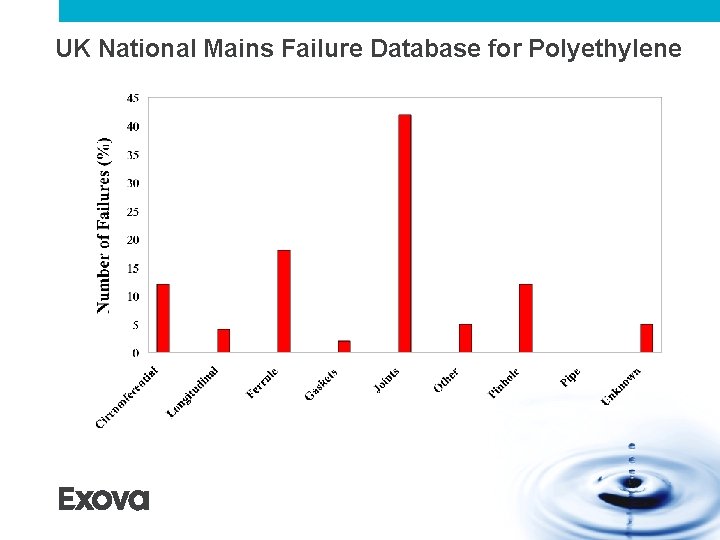
UK National Mains Failure Database (NMFD) • Analysis of UK NMFD indicates 3. 5 failures/100 km/year for PE • Rates possibly higher as repairs made without reporting • Failures of service pipes not included in database • Observed failures are not always correctly reported • Reporting protocols often adapted from those for metal pipes
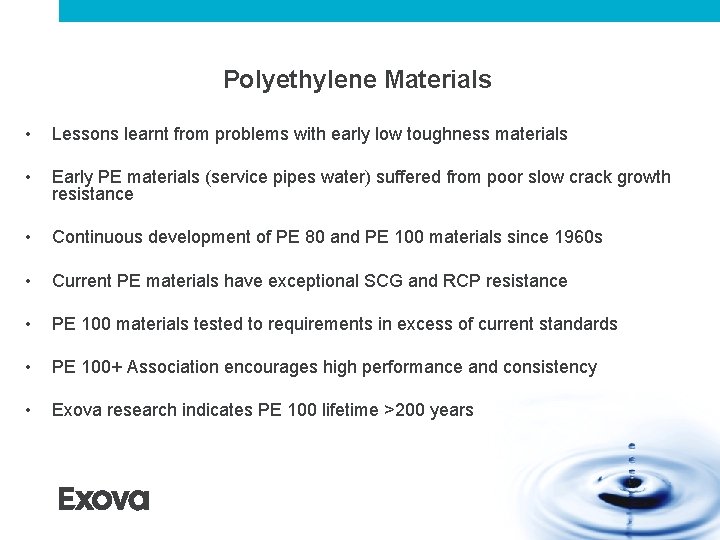
Polyethylene Materials • Lessons learnt from problems with early low toughness materials • Early PE materials (service pipes water) suffered from poor slow crack growth resistance • Continuous development of PE 80 and PE 100 materials since 1960 s • Current PE materials have exceptional SCG and RCP resistance • PE 100 materials tested to requirements in excess of current standards • PE 100+ Association encourages high performance and consistency • Exova research indicates PE 100 lifetime >200 years
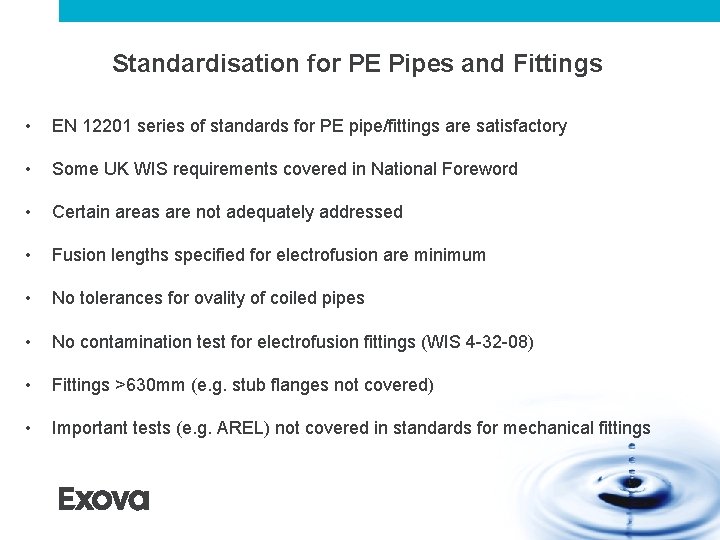
Standardisation for PE Pipes and Fittings • EN 12201 series of standards for PE pipe/fittings are satisfactory • Some UK WIS requirements covered in National Foreword • Certain areas are not adequately addressed • Fusion lengths specified for electrofusion are minimum • No tolerances for ovality of coiled pipes • No contamination test for electrofusion fittings (WIS 4 -32 -08) • Fittings >630 mm (e. g. stub flanges not covered) • Important tests (e. g. AREL) not covered in standards for mechanical fittings
UK National Mains Water Failure Database (<300 mm)
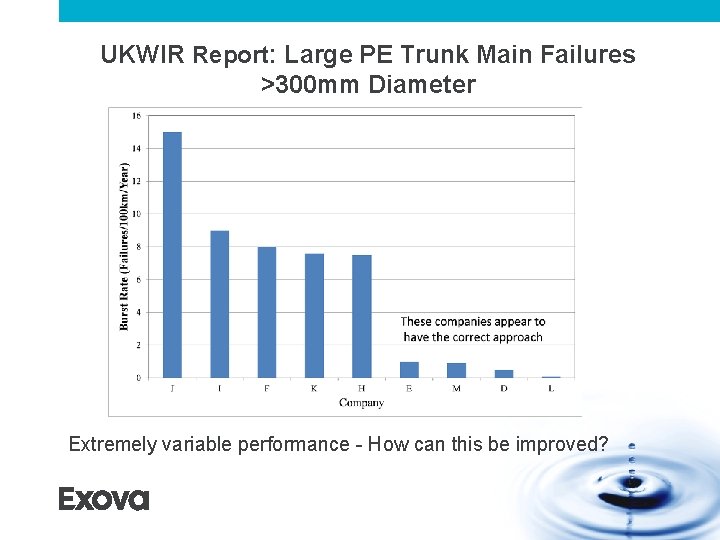
UKWIR Report: Large PE Trunk Main Failures >300 mm Diameter Extremely variable performance - How can this be improved?
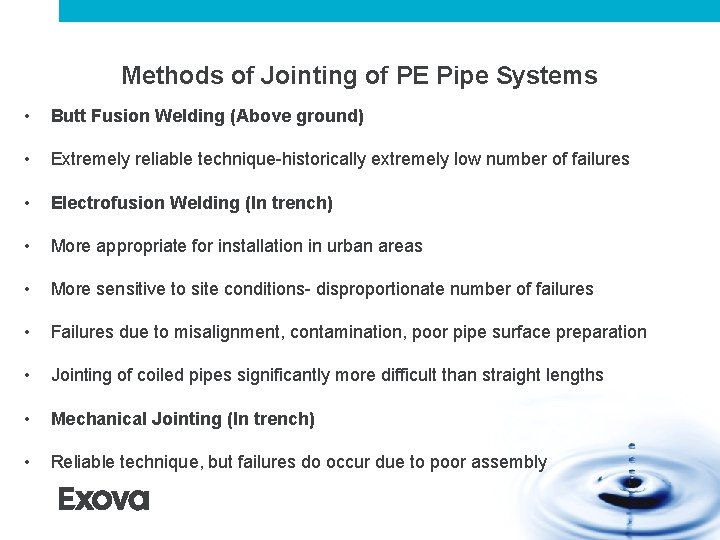
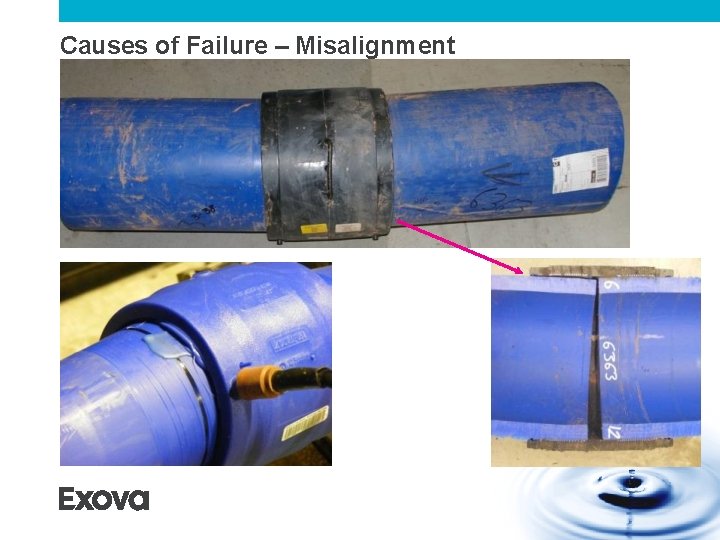
Methods of Jointing of PE Pipe Systems • Butt Fusion Welding (Above ground) • Extremely reliable technique-historically extremely low number of failures • Electrofusion Welding (In trench) • More appropriate for installation in urban areas • More sensitive to site conditions- disproportionate number of failures • Failures due to misalignment, contamination, poor pipe surface preparation • Jointing of coiled pipes significantly more difficult than straight lengths • Mechanical Jointing (In trench) • Reliable technique, but failures do occur due to poor assembly
UK National Mains Failure Database for Polyethylene
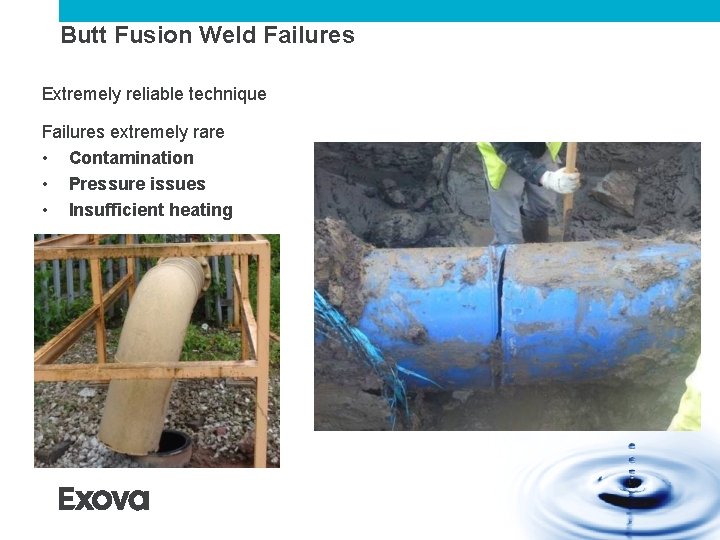
Butt Fusion Weld Failures Extremely reliable technique Failures extremely rare • Contamination • Pressure issues • Insufficient heating
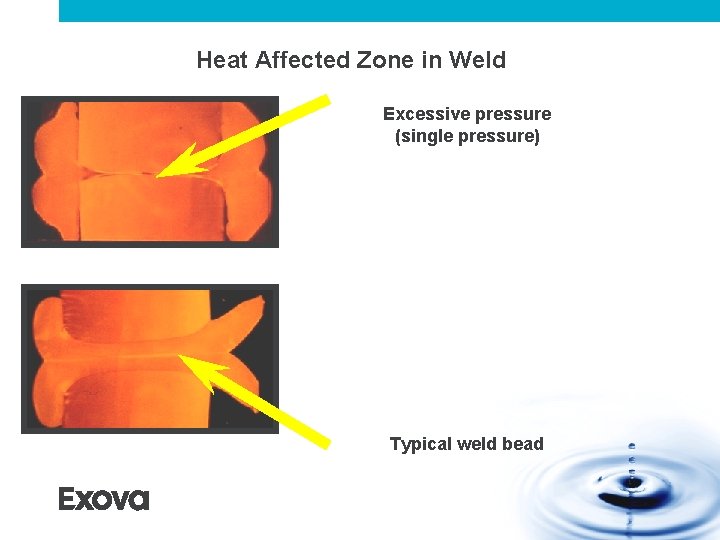
Heat Affected Zone in Weld Excessive pressure (single pressure) Typical weld bead
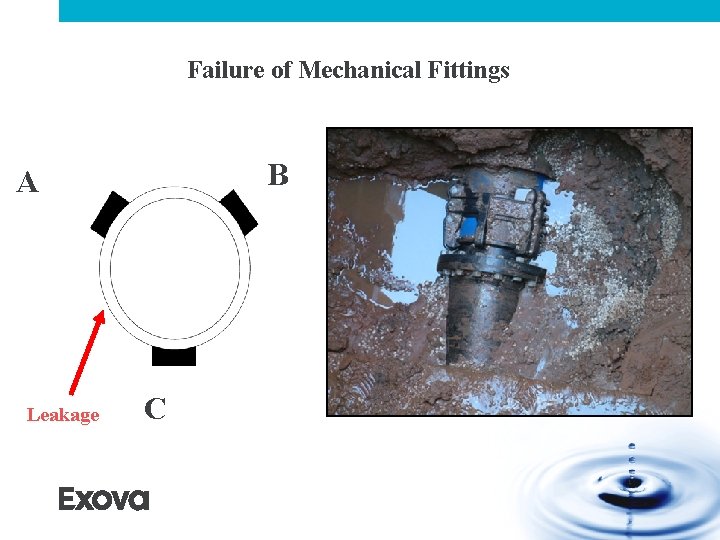
Failure of Mechanical Fittings B A Leakage C
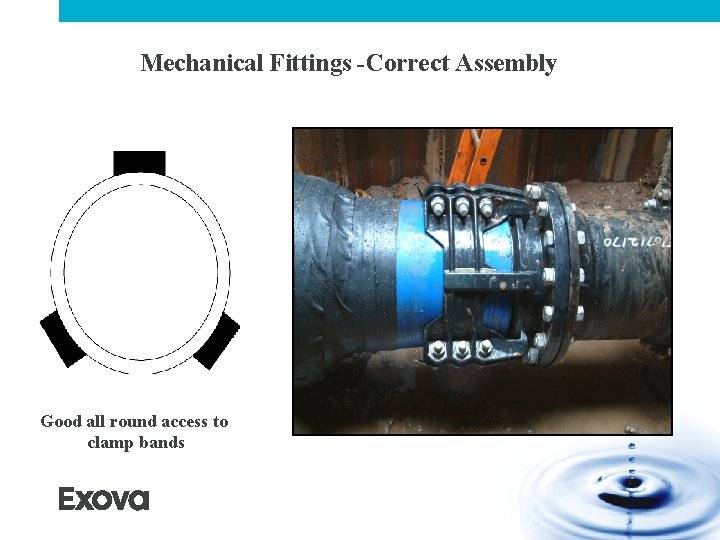
Mechanical Fittings -Correct Assembly Good all round access to clamp bands
On Site Welding Conditions Suppliers’ ‘Vision’ of a typical trench The reality! Manchester in Summertime
Causes of Failure – Misalignment
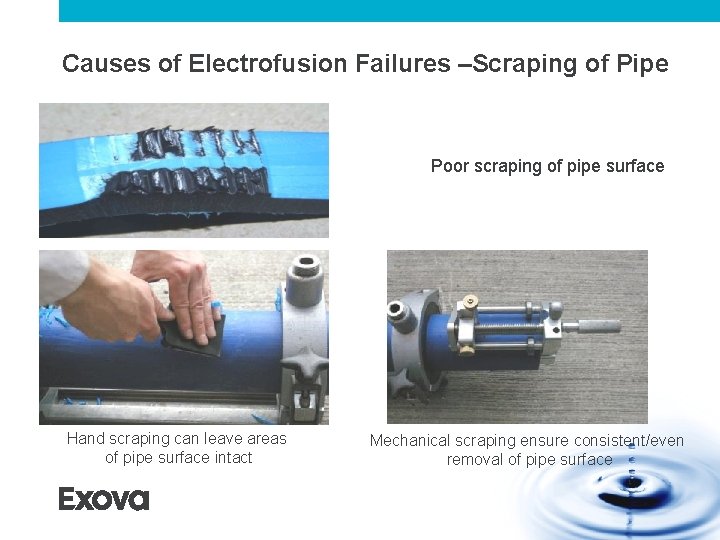
Causes of Electrofusion Failures –Scraping of Pipe Poor scraping of pipe surface Hand scraping can leave areas of pipe surface intact Mechanical scraping ensure consistent/even removal of pipe surface
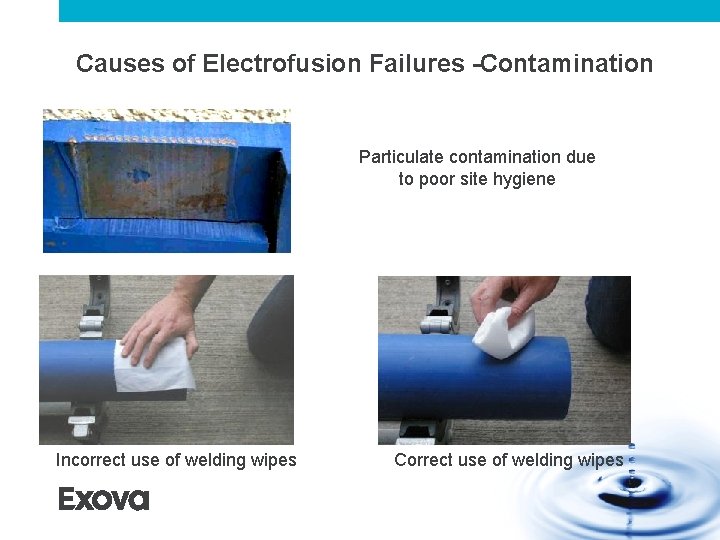
Causes of Electrofusion Failures -Contamination Particulate contamination due to poor site hygiene Incorrect use of welding wipes Correct use of welding wipes
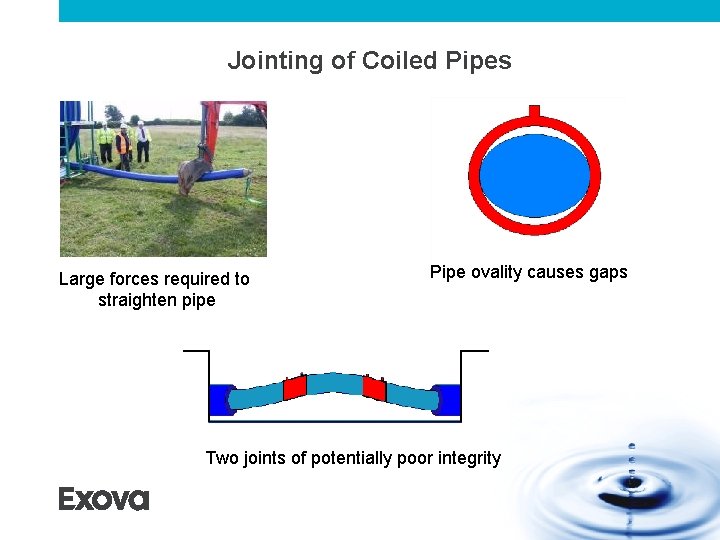
Jointing of Coiled Pipes Large forces required to straighten pipe Pipe ovality causes gaps Two joints of potentially poor integrity
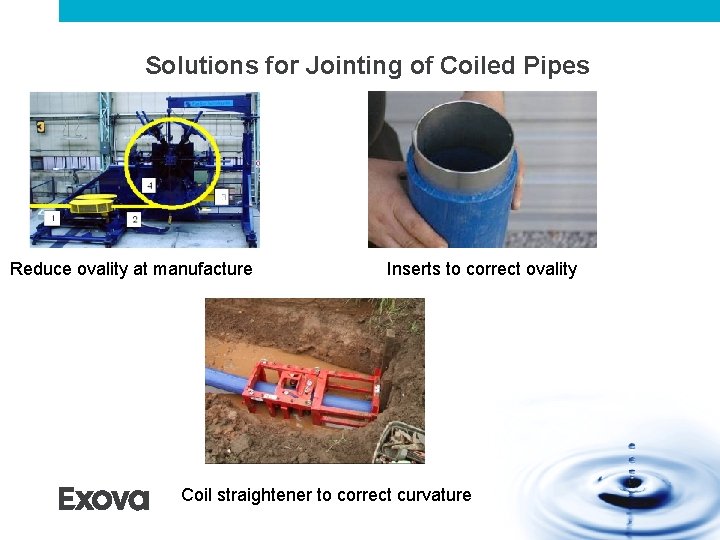
Solutions for Jointing of Coiled Pipes Reduce ovality at manufacture Inserts to correct ovality Coil straightener to correct curvature
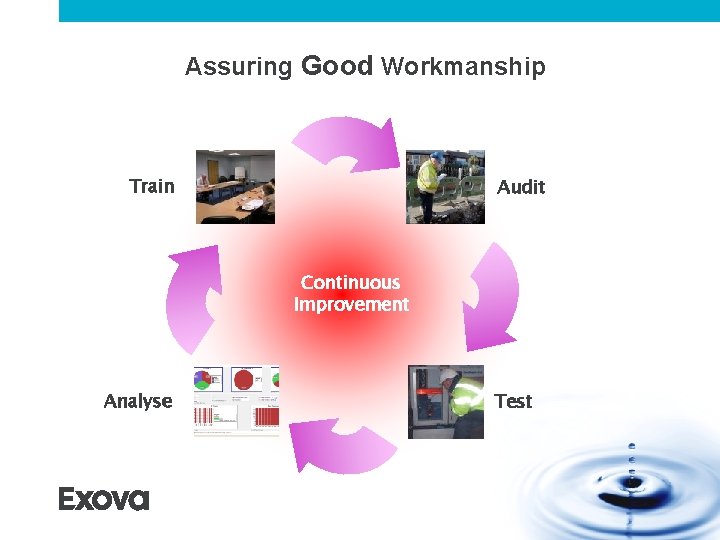
Assuring Good Workmanship Train Audit Continuous Improvement Analyse Test
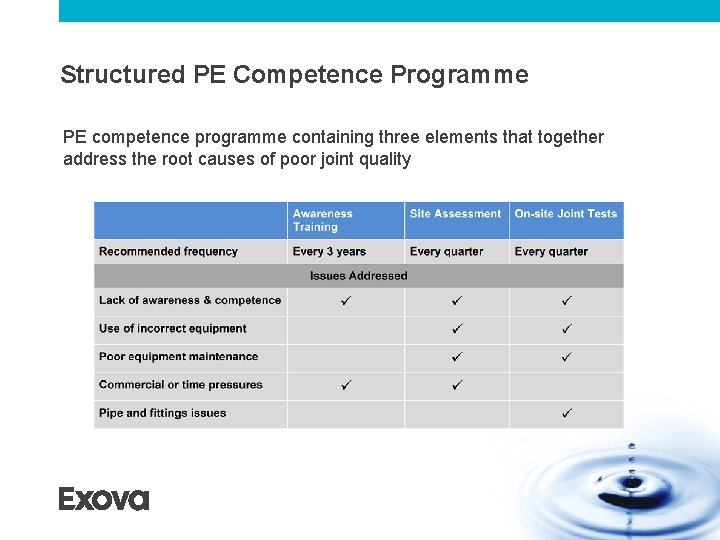
Structured PE Competence Programme PE competence programme containing three elements that together address the root causes of poor joint quality
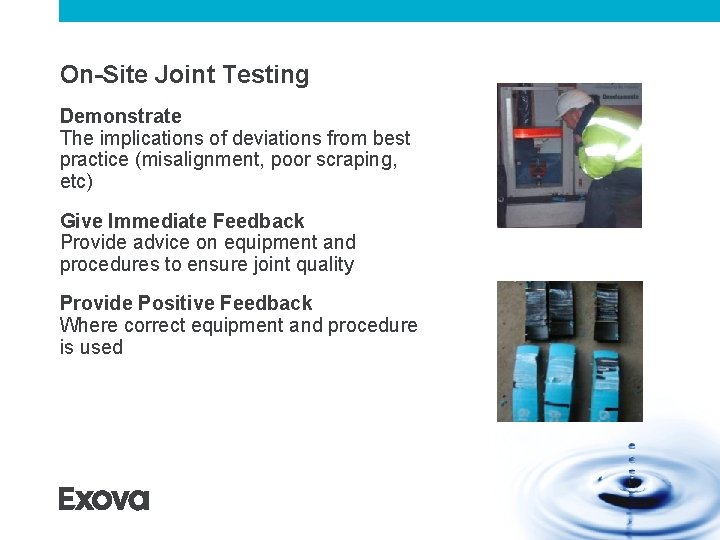
On-Site Joint Testing Demonstrate The implications of deviations from best practice (misalignment, poor scraping, etc) Give Immediate Feedback Provide advice on equipment and procedures to ensure joint quality Provide Positive Feedback Where correct equipment and procedure is used
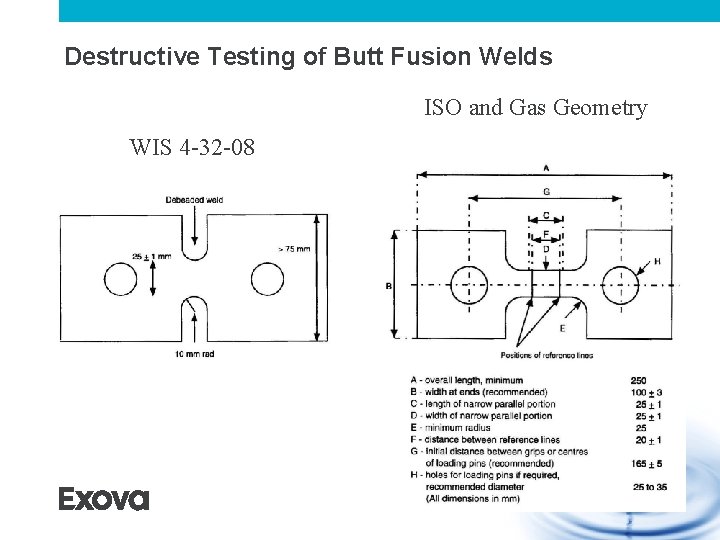
Destructive Testing of Butt Fusion Welds ISO and Gas Geometry WIS 4 -32 -08
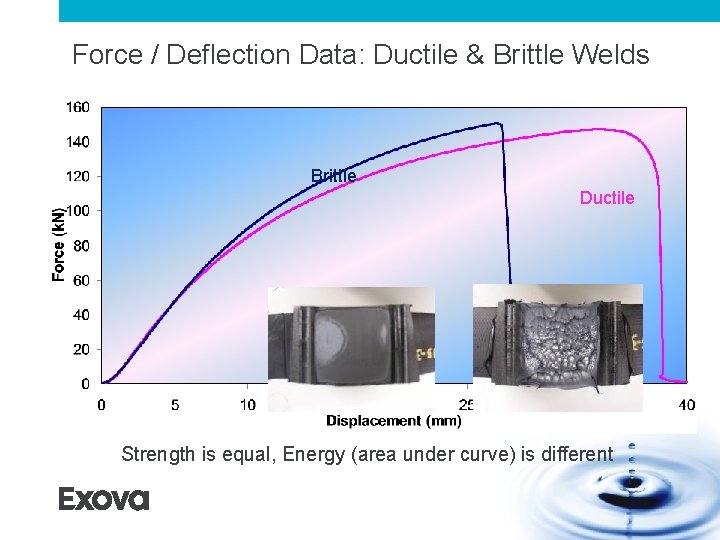
Force / Deflection Data: Ductile & Brittle Welds Brittle Ductile Strength is equal, Energy (area under curve) is different
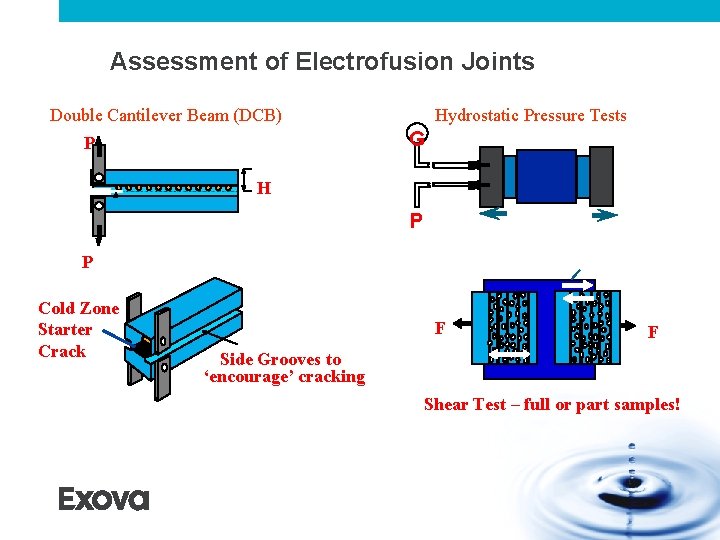
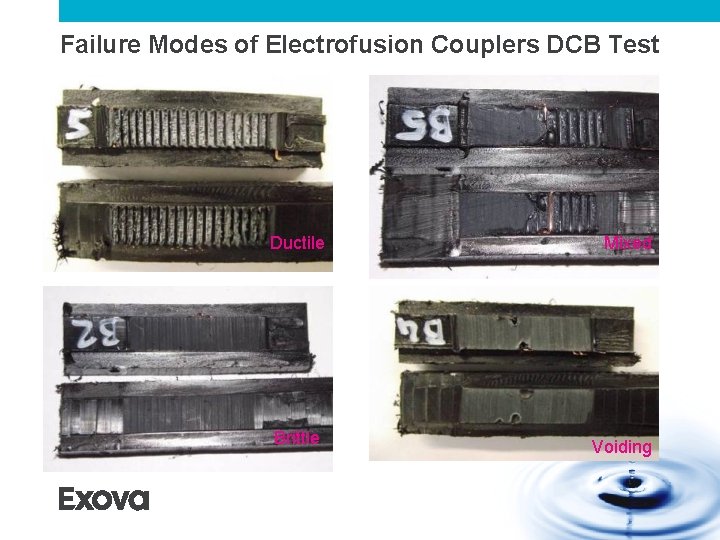
Assessment of Electrofusion Joints Hydrostatic Pressure Tests Double Cantilever Beam (DCB) G P H P P Cold Zone Starter Crack F F Side Grooves to ‘encourage’ cracking Shear Test – full or part samples!
Failure Modes of Electrofusion Couplers DCB Test Ductile Mixed Brittle Voiding
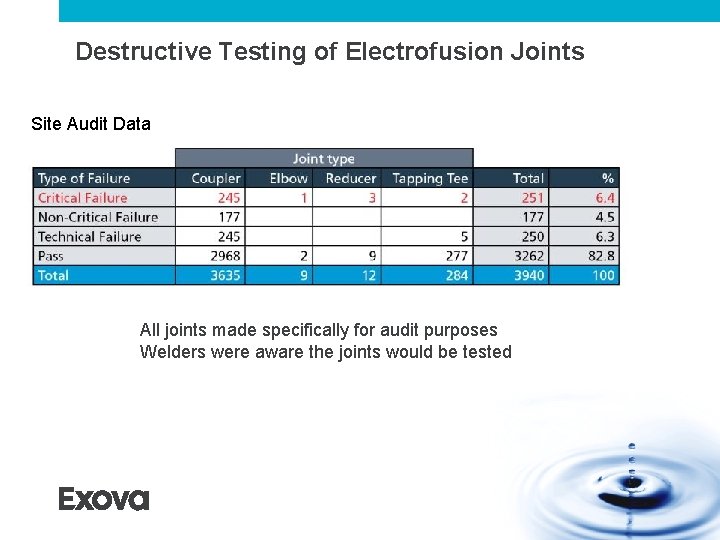
Destructive Testing of Electrofusion Joints Site Audit Data All joints made specifically for audit purposes Welders were aware the joints would be tested
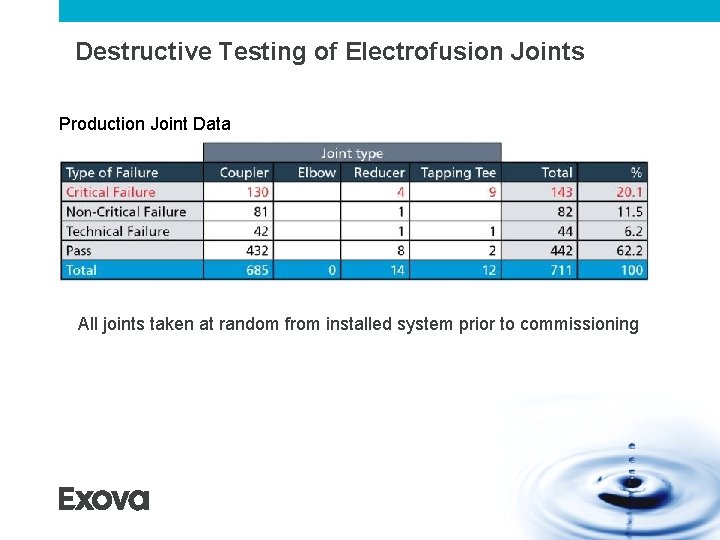
Destructive Testing of Electrofusion Joints Production Joint Data All joints taken at random from installed system prior to commissioning
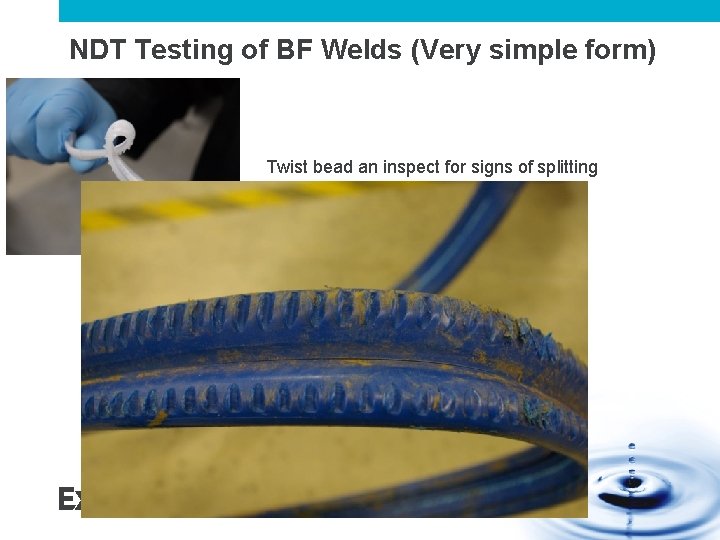
NDT Testing of BF Welds (Very simple form) Twist bead an inspect for signs of splitting
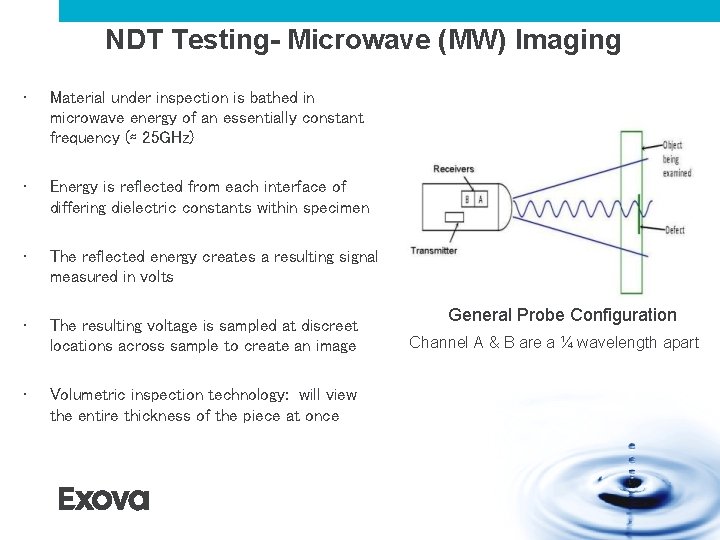
NDT Testing- Microwave (MW) Imaging • Material under inspection is bathed in microwave energy of an essentially constant frequency (≈ 25 GHz) • Energy is reflected from each interface of differing dielectric constants within specimen • The reflected energy creates a resulting signal measured in volts • The resulting voltage is sampled at discreet locations across sample to create an image • Volumetric inspection technology: will view the entire thickness of the piece at once General Probe Configuration Channel A & B are a ¼ wavelength apart
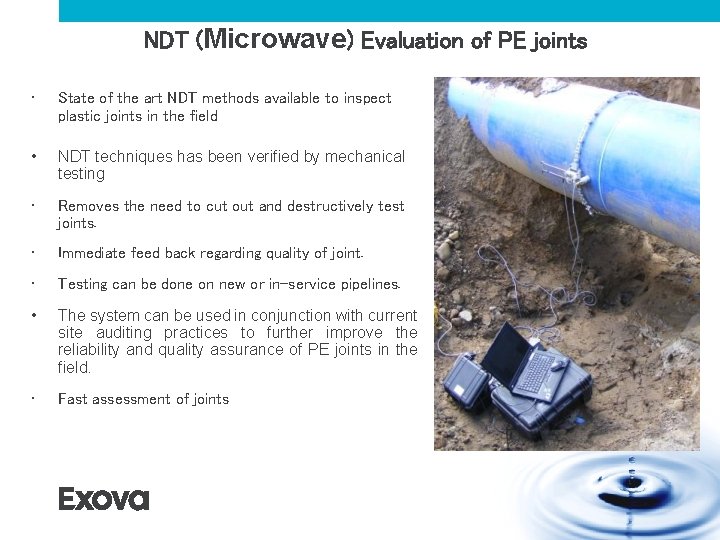
NDT (Microwave) Evaluation of PE joints • State of the art NDT methods available to inspect plastic joints in the field • NDT techniques has been verified by mechanical testing • Removes the need to cut out and destructively test joints. • Immediate feed back regarding quality of joint. • Testing can be done on new or in-service pipelines. • The system can be used in conjunction with current site auditing practices to further improve the reliability and quality assurance of PE joints in the field. • Fast assessment of joints
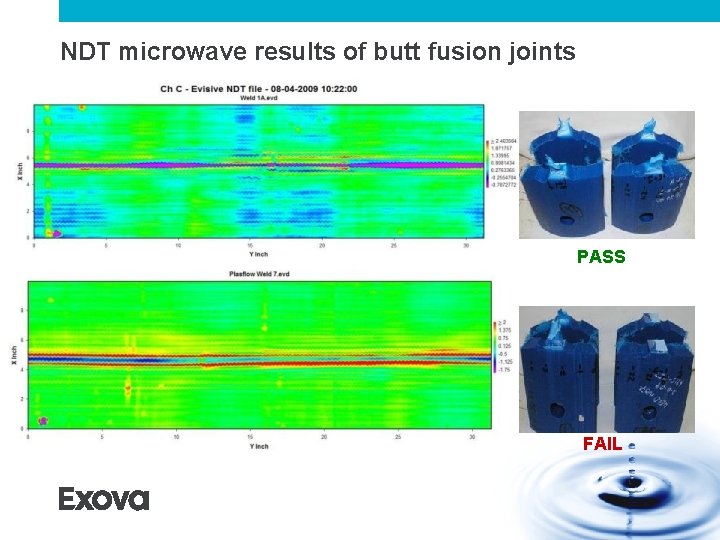
NDT microwave results of butt fusion joints PASS FAIL
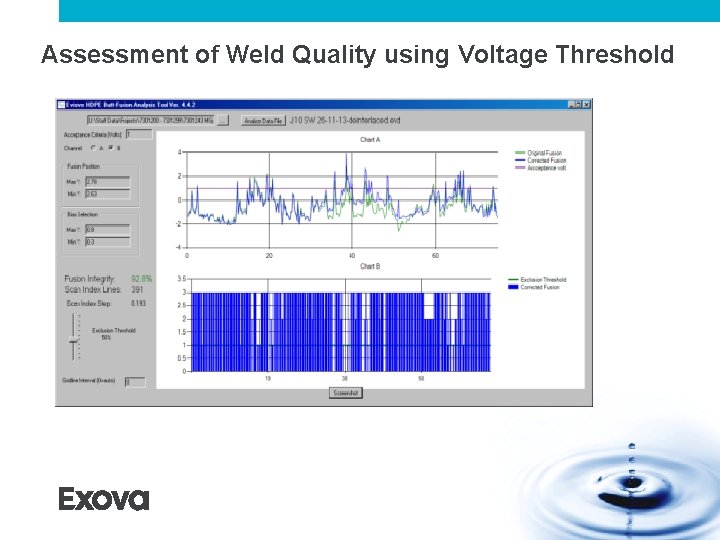
Assessment of Weld Quality using Voltage Threshold
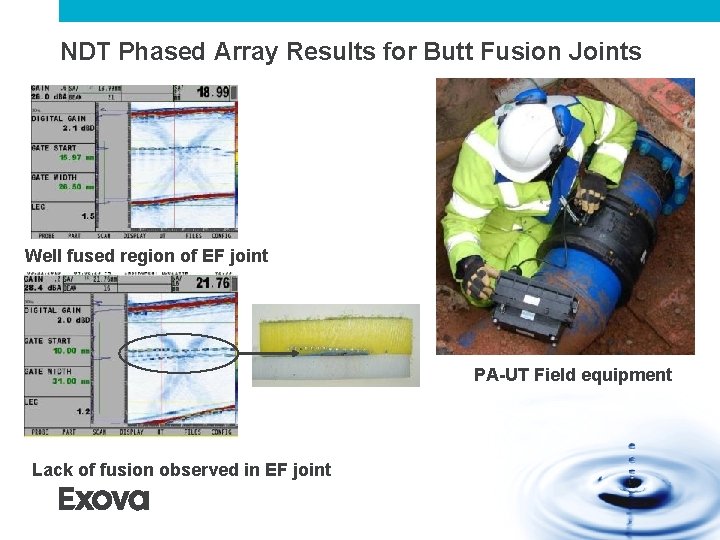
NDT Phased Array Results for Butt Fusion Joints Well fused region of EF joint PA-UT Field equipment Lack of fusion observed in EF joint
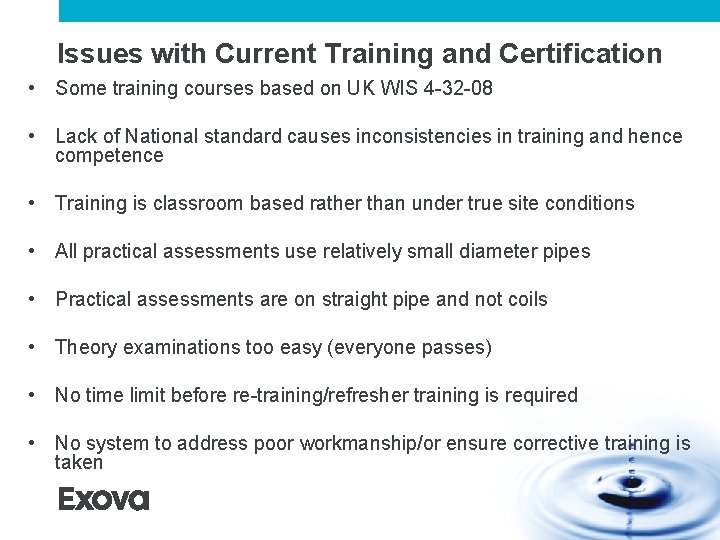
Issues with Current Training and Certification • Some training courses based on UK WIS 4 -32 -08 • Lack of National standard causes inconsistencies in training and hence competence • Training is classroom based rather than under true site conditions • All practical assessments use relatively small diameter pipes • Practical assessments are on straight pipe and not coils • Theory examinations too easy (everyone passes) • No time limit before re-training/refresher training is required • No system to address poor workmanship/or ensure corrective training is taken
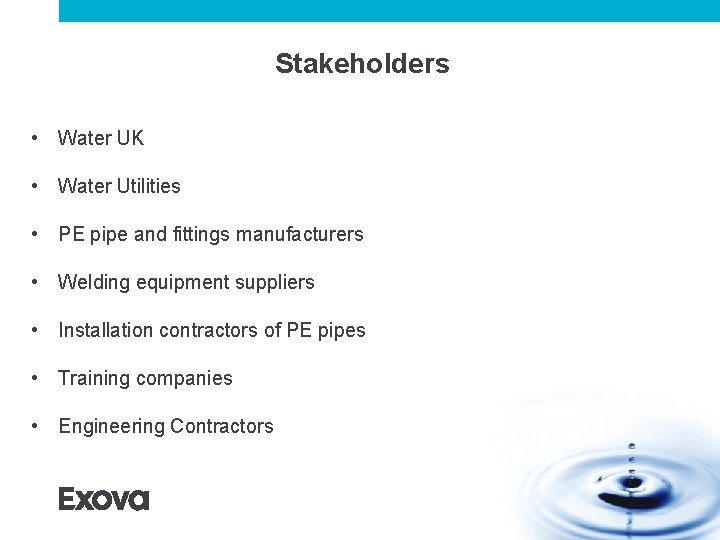
Stakeholders • Water UK • Water Utilities • PE pipe and fittings manufacturers • Welding equipment suppliers • Installation contractors of PE pipes • Training companies • Engineering Contractors
Administration of Standard and Qualification • Expert group to be set up by Water UK • Will review effectiveness of training and make change if necessary • National database holding qualifications- held by UKAS accredited body • Accreditation body to be appointed by Water UK
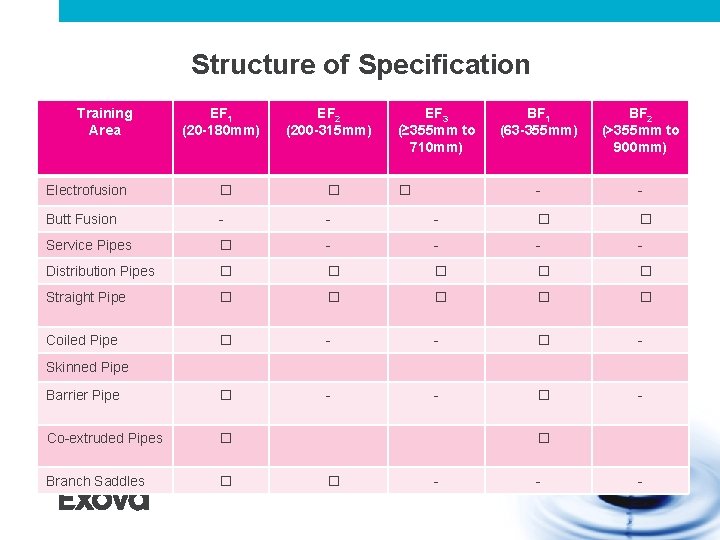
Structure of Specification Training Area EF 1 (20 -180 mm) EF 2 (200 -315 mm) EF 3 (≥ 355 mm to 710 mm) BF 1 (63 -355 mm) BF 2 (>355 mm to 900 mm) - - Electrofusion � � Butt Fusion - - - � � Service Pipes � - - Distribution Pipes � � � Straight Pipe � � � Coiled Pipe � - - � - Barrier Pipe � - - � - Co-extruded Pipes � Branch Saddles � � Skinned Pipe � � - - -
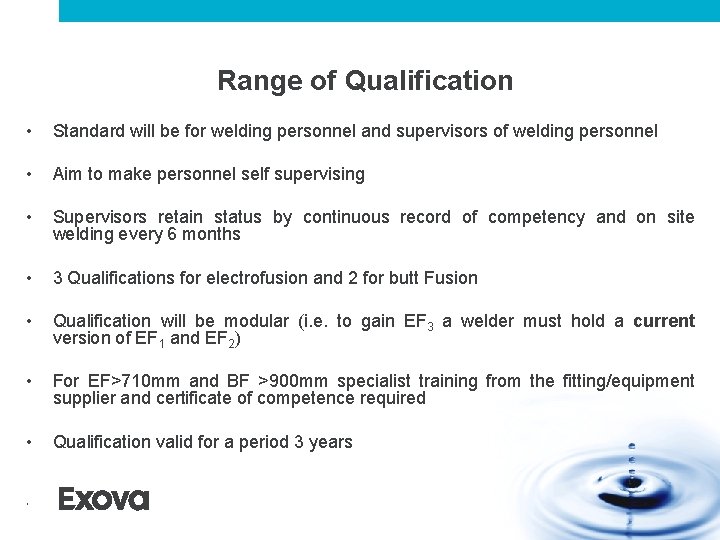
Range of Qualification • Standard will be for welding personnel and supervisors of welding personnel • Aim to make personnel self supervising • Supervisors retain status by continuous record of competency and on site welding every 6 months • 3 Qualifications for electrofusion and 2 for butt Fusion • Qualification will be modular (i. e. to gain EF 3 a welder must hold a current version of EF 1 and EF 2) • For EF>710 mm and BF >900 mm specialist training from the fitting/equipment supplier and certificate of competence required • Qualification valid for a period 3 years •
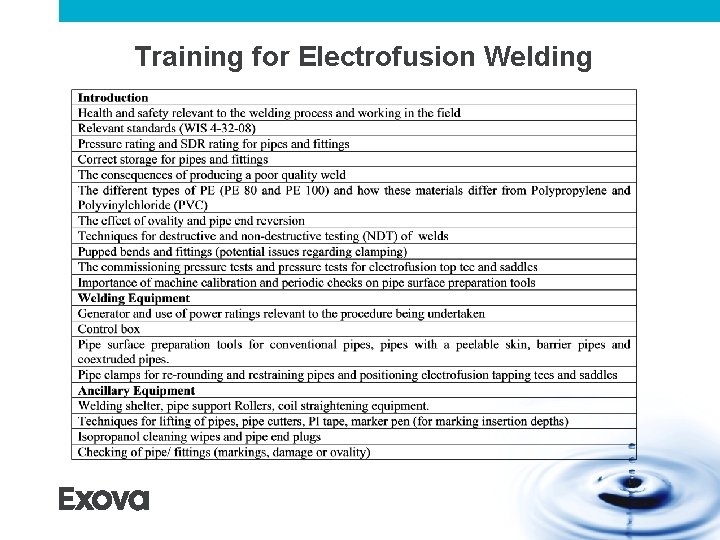
Training for Electrofusion Welding
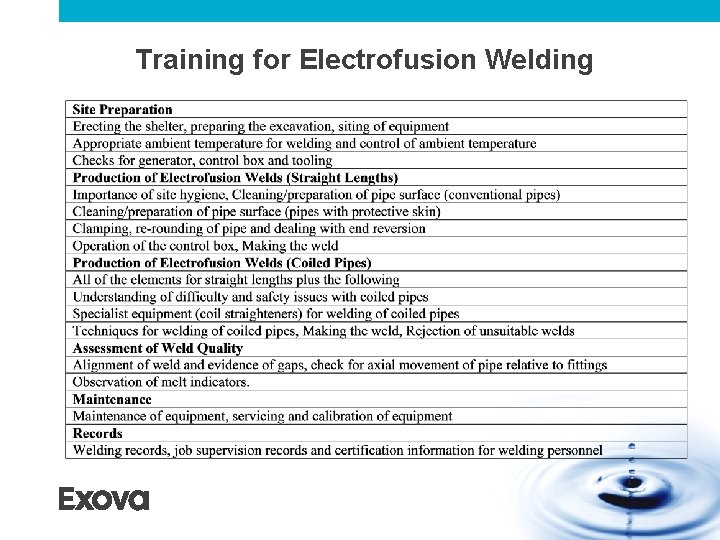
Training for Electrofusion Welding
Training for Butt Fusion Welding
Training for Butt Fusion Welding
Theory Exam • To ensure knowledge safe working/ production of high quality welds • Separate exam for each qualification • Exam will be 1 hour in duration with 20 multiple choice questions • Failure to answer key questions will result in failure of whole exam • Score of 80% required to proceed to the practical exam
Practical Test • Carried out under site rather than classroom conditions • Welding area set up in accordance with best safety and site practice • Test to include welding of different pipe diameters • Demonstrate ability to weld coils and handle long pipe lengths • Welder and joints will be visually assessed • Joints produced will be destructively tested
Welding Test Certificate • Details of qualifications held on National database • Welder provided with identity card containing qualification information Retention of qualification provided: • Welding undertaken with regular frequency (no inactivity>1 year) • No issue regarding knowledge or practical ability of the welder • Employer shall establish the competency of the welder on an annual basis
Conclusions • Draft specification well advanced. Publication hopefully in 2014 • Strong basis on practical competency under site conditions • Theoretical exam will be more demanding that at present • Practical test ensures competency in joining coiled pipe • Welders must show competency in welding large diameters before they are permitted to install these pipes on site • Utilities can ensure competency of workforce by specifying the training standard in their procurement documents • Standard will improve quality of installation and reduce leakage