
LECTURE 19 Wednesday 32217 DISACCHARIDES Disaccharides are two




- Slides: 26
LECTURE 19 Wednesday 3/22/17
DISACCHARIDES • Disaccharides are two monosaccharide units linked together by acetal or ketal • A is identified by: • the numbers associated with the carbon atoms joined together by the linkage. • the configuration of the linkage for any anomeric carbon atom joined by the linkage.
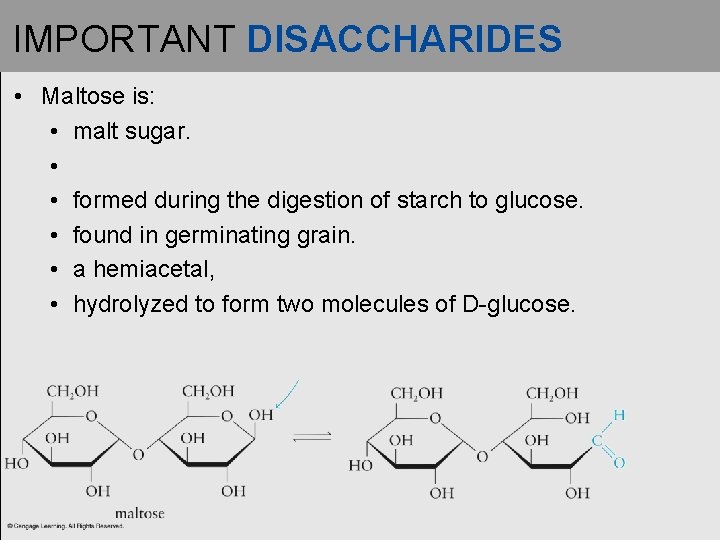
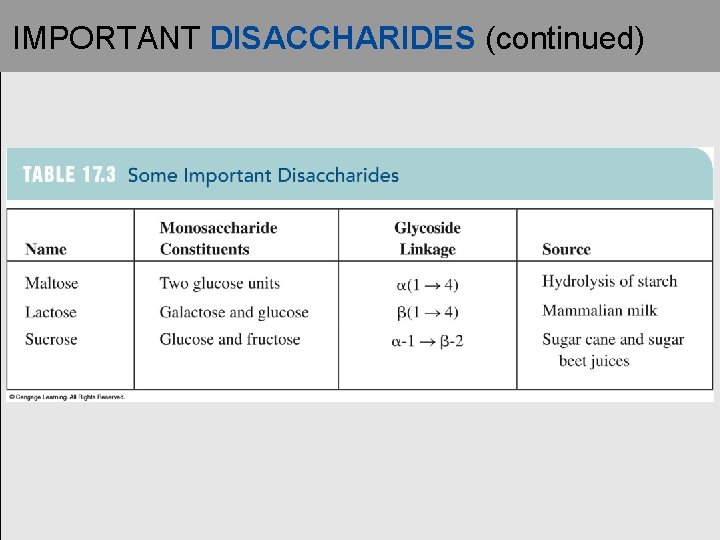
IMPORTANT DISACCHARIDES • Maltose is: • malt sugar. • • formed during the digestion of starch to glucose. • found in germinating grain. • a hemiacetal, • hydrolyzed to form two molecules of D-glucose.
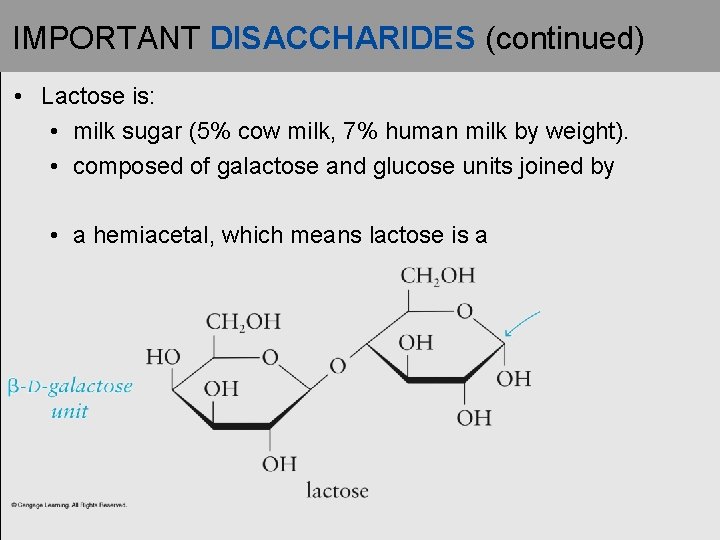
IMPORTANT DISACCHARIDES (continued) • Lactose is: • milk sugar (5% cow milk, 7% human milk by weight). • composed of galactose and glucose units joined by • a hemiacetal, which means lactose is a
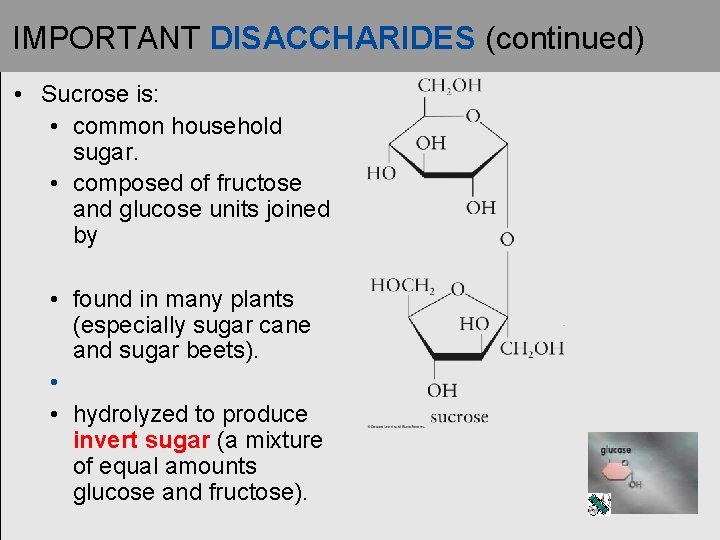
IMPORTANT DISACCHARIDES (continued) • Sucrose is: • common household sugar. • composed of fructose and glucose units joined by • found in many plants (especially sugar cane and sugar beets). • • hydrolyzed to produce invert sugar (a mixture of equal amounts glucose and fructose).
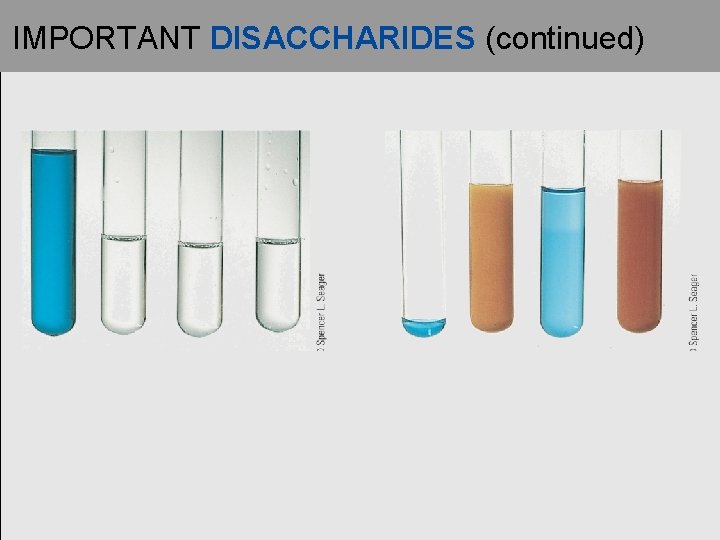
IMPORTANT DISACCHARIDES (continued)
IMPORTANT DISACCHARIDES (continued)
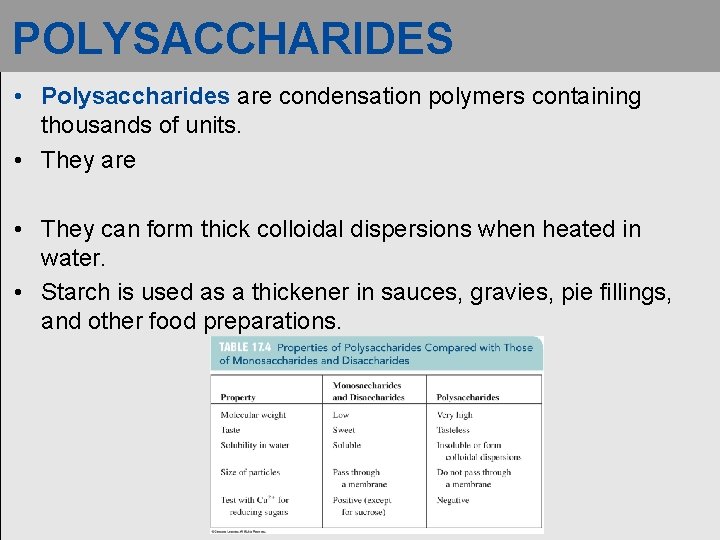
POLYSACCHARIDES • Polysaccharides are condensation polymers containing thousands of units. • They are • They can form thick colloidal dispersions when heated in water. • Starch is used as a thickener in sauces, gravies, pie fillings, and other food preparations.
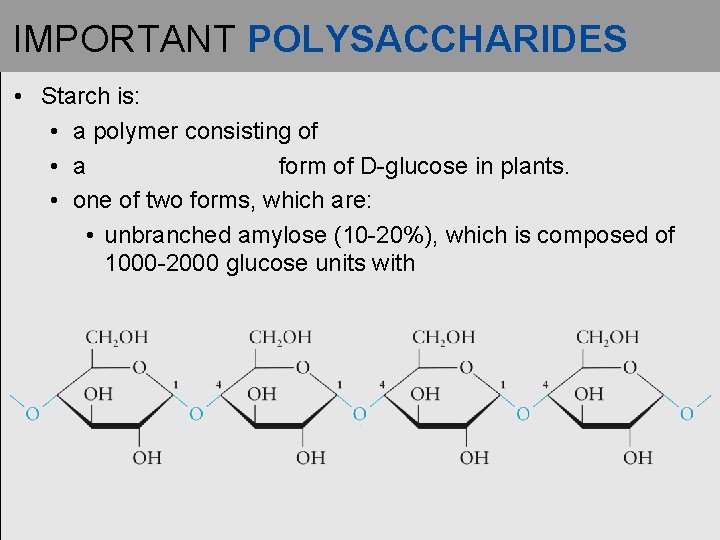
IMPORTANT POLYSACCHARIDES • Starch is: • a polymer consisting of • a form of D-glucose in plants. • one of two forms, which are: • unbranched amylose (10 -20%), which is composed of 1000 -2000 glucose units with
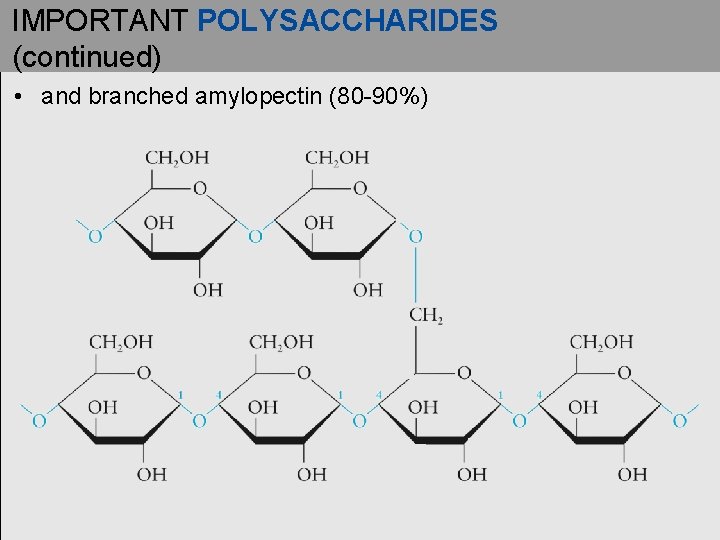
IMPORTANT POLYSACCHARIDES (continued) • and branched amylopectin (80 -90%)
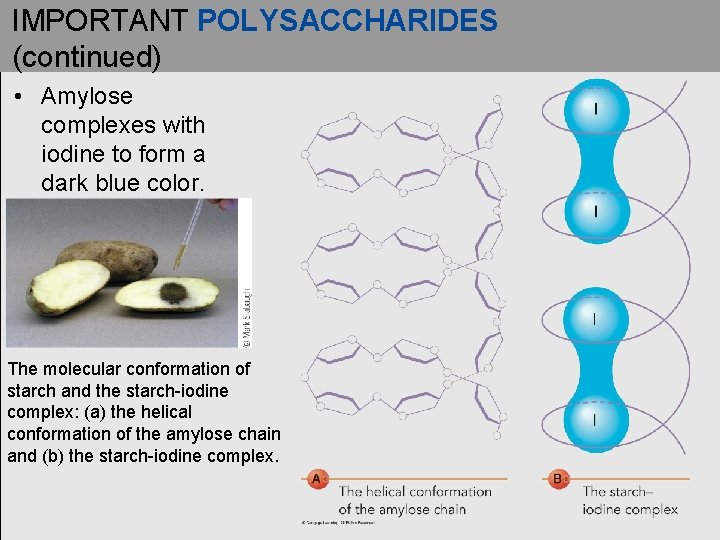
IMPORTANT POLYSACCHARIDES (continued) • Amylose complexes with iodine to form a dark blue color. The molecular conformation of starch and the starch-iodine complex: (a) the helical conformation of the amylose chain and (b) the starch-iodine complex.
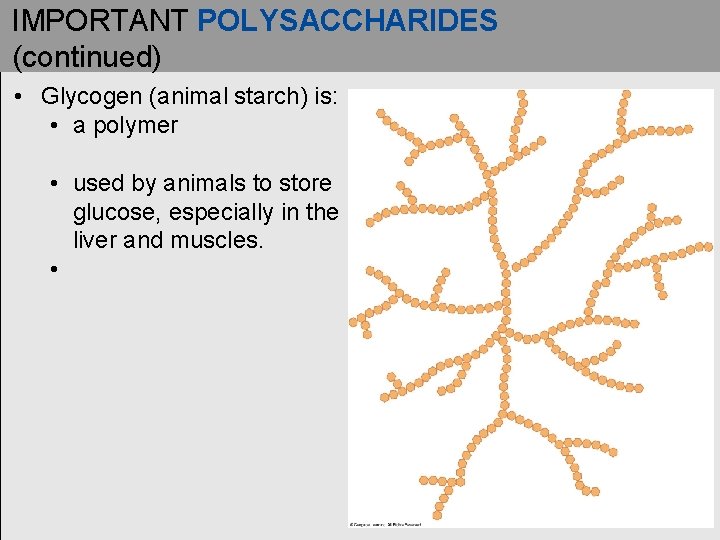
IMPORTANT POLYSACCHARIDES (continued) • Glycogen (animal starch) is: • a polymer • used by animals to store glucose, especially in the liver and muscles. •
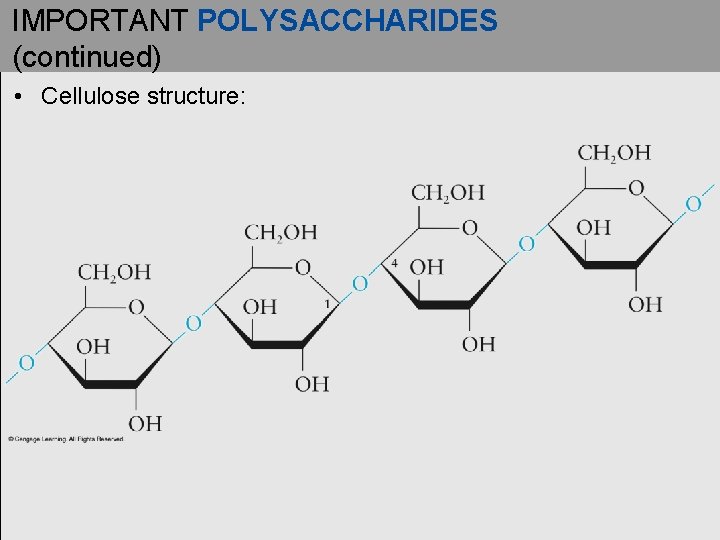
IMPORTANT POLYSACCHARIDES (continued) • Cellulose is: • a polymer of • the most important structural polysaccharide. • the most abundant organic compound on earth. • found in • a linear polymer like amylose, but has • not easily digested and a constituent of dietary
IMPORTANT POLYSACCHARIDES (continued) • Cellulose structure:
Chapter 18 Lipids
IMPORTANT FUNCTIONS OF LIPIDS • • coatings found on some plants compounds with low densities form of energy for plants and animals components, especially in cellular membrane formation
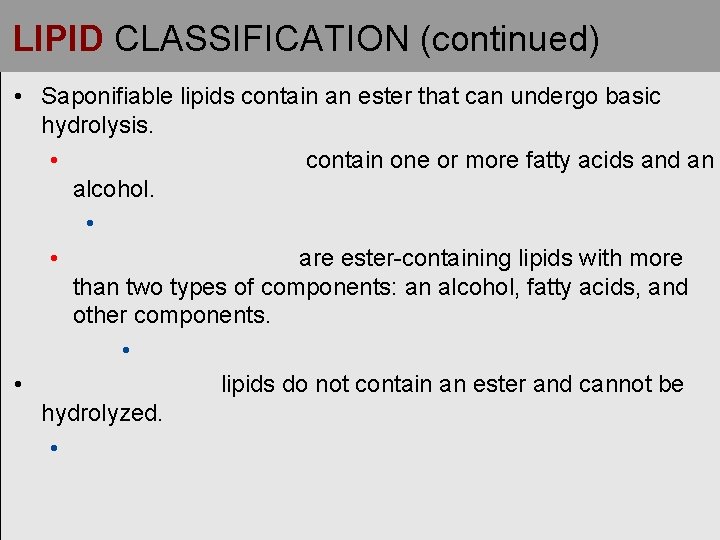
LIPID CLASSIFICATION (continued) • Saponifiable lipids contain an ester that can undergo basic hydrolysis. • contain one or more fatty acids and an alcohol. • • are ester-containing lipids with more than two types of components: an alcohol, fatty acids, and other components. • • lipids do not contain an ester and cannot be hydrolyzed. •
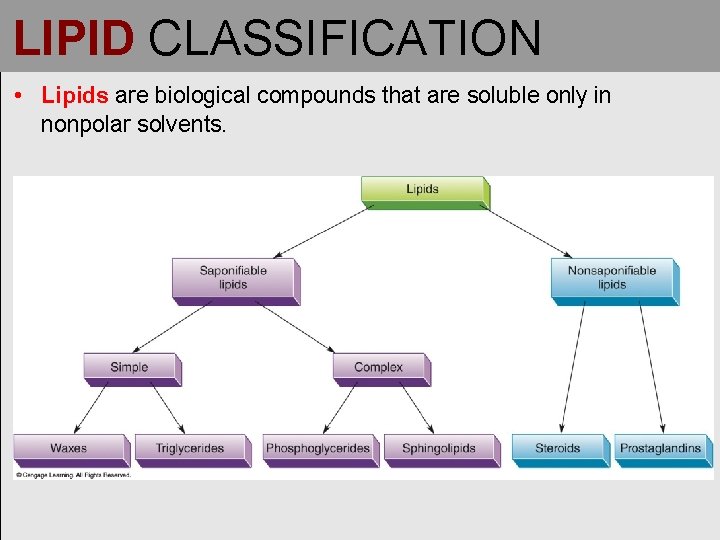
LIPID CLASSIFICATION • Lipids are biological compounds that are soluble only in nonpolar solvents.
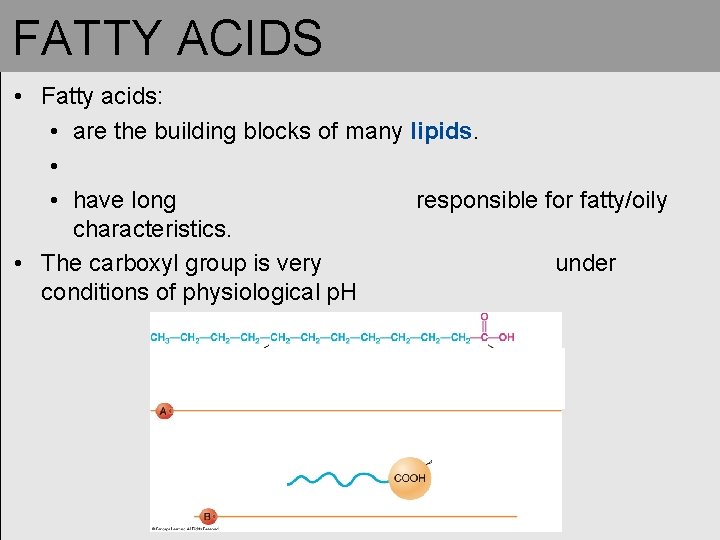
FATTY ACIDS • Fatty acids: • are the building blocks of many lipids. • • have long responsible for fatty/oily characteristics. • The carboxyl group is very under conditions of physiological p. H
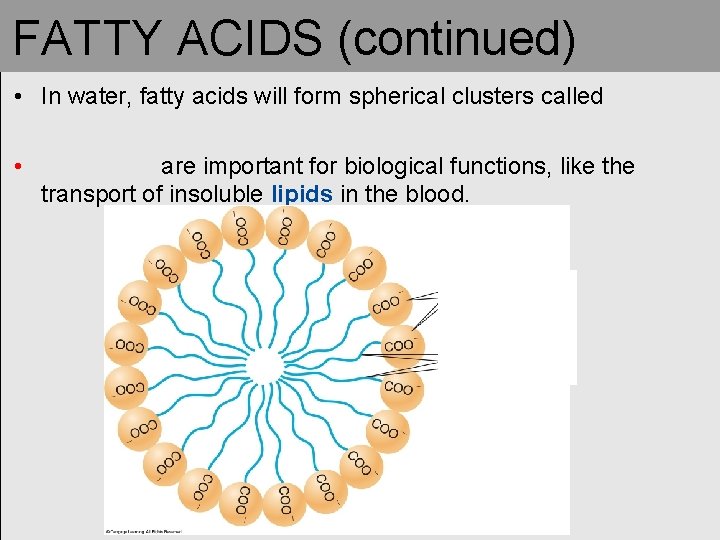
FATTY ACIDS (continued) • In water, fatty acids will form spherical clusters called • are important for biological functions, like the transport of insoluble lipids in the blood.
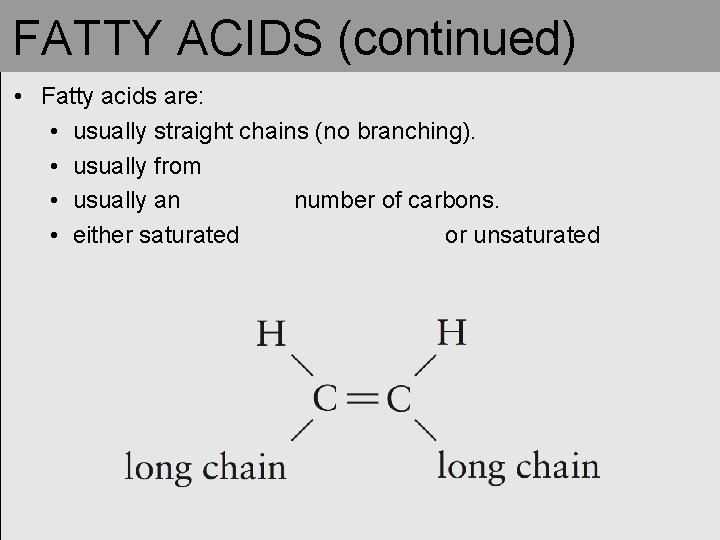
FATTY ACIDS (continued) • Fatty acids are: • usually straight chains (no branching). • usually from • usually an number of carbons. • either saturated or unsaturated
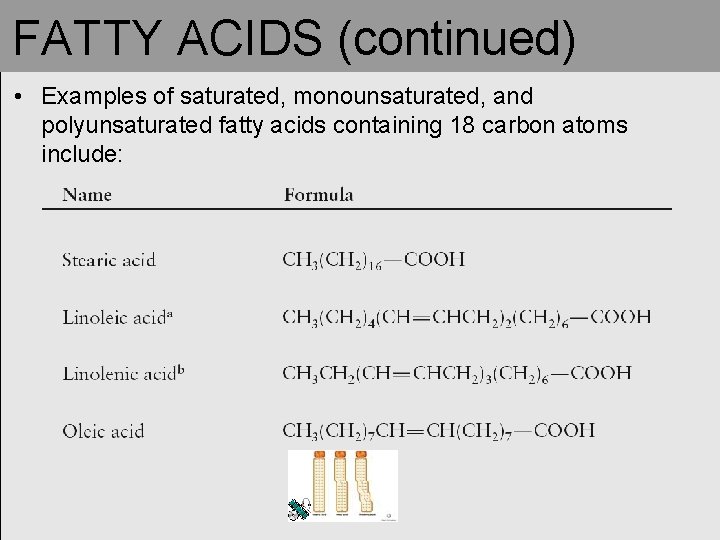
FATTY ACIDS (continued) • Examples of saturated, monounsaturated, and polyunsaturated fatty acids containing 18 carbon atoms include:
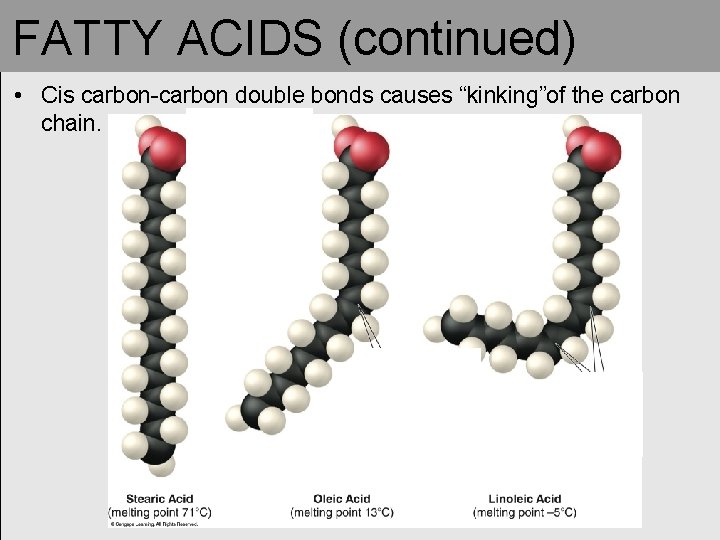
FATTY ACIDS (continued) • Cis carbon-carbon double bonds causes “kinking”of the carbon chain.
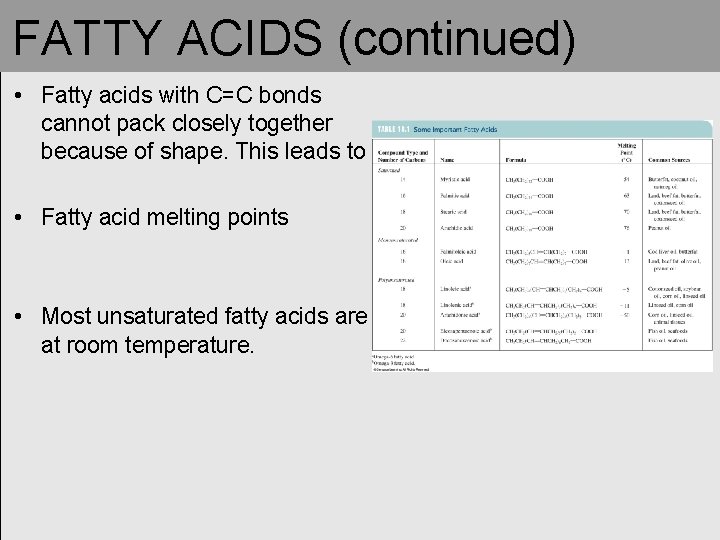
FATTY ACIDS (continued) • Fatty acids with C=C bonds cannot pack closely together because of shape. This leads to • Fatty acid melting points • Most unsaturated fatty acids are at room temperature.
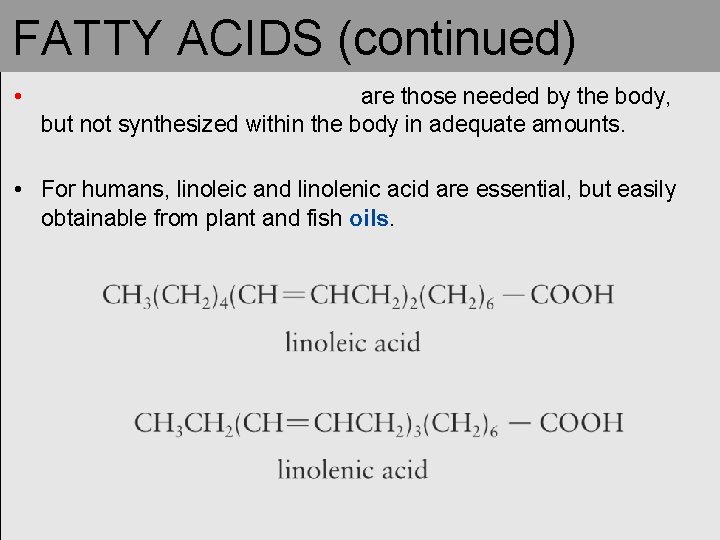
FATTY ACIDS (continued) • are those needed by the body, but not synthesized within the body in adequate amounts. • For humans, linoleic and linolenic acid are essential, but easily obtainable from plant and fish oils.
FATTY ACIDS (continued) • Linoleic (an omega-3 fatty acid) and linolenic (an omega-6 fatty acid) acids: • are used to produce hormonelike substances that regulate a wide range of functions and characteristics, including: • e. g. blood pressure, blood clotting, blood lipid levels, the immune response, and the inflammation response to injury and infection. • can be converted to other omega-3 and omega-6 fatty acids.