1 WHAT I HAVE TO PRESENT A PRESENTATION


- Slides: 24
1
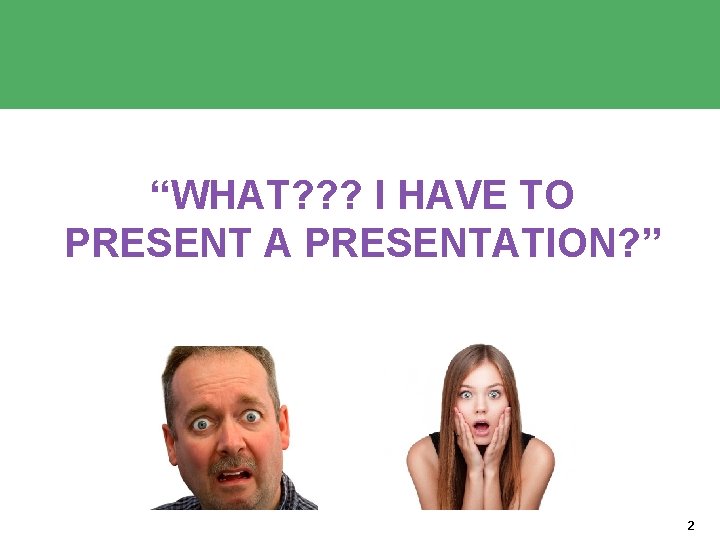
“WHAT? ? ? I HAVE TO PRESENT A PRESENTATION? ” 2
TIPS FOR ORGANIZING AND PRESENTING PRESENTATIONS Tip #1 -Organize Your Presentation Tip #2 -Use Effective Delivery Skills Tip #3 –Control Speaking Fears 3
Tip #1 Organize Your Presentation • Pattern – Tell them what your going to tell them – Tell them what you told them • Written/Oral Communication
Tip #1 Organize Your Presentation Introduction Gain audience attention Explain why you are credible to talk about topic Link topic to audience Preview your main points (Tell them what your going to tell them)
Tip #1 Organize Your Presentation Introduction Gain audience attention I. “Human activities currently release about 37 billion metric tons of CO 2 per year” Para 10). Explain why you are credible to talk about topic I. II. I have studied this topic for the past two months. Conducted a research project for science class. Link topic to audience I. The release of CO 2 impacts our lifestyle and the lifestyle of our children. Preview your main points (Tell them what your going to tell them) I. III. Carbon dioxide is produced when animals breathe. Carbon dioxide is produced by volcanic activity. Carbon dioxide is produced by burning oil, coal, natural gas, or wood. (Justfacts, n. d. ,
Tip #1 Organize Your Presentation Body (Tell Them) I. Carbon dioxide is produced when animals breathe. II. Carbon dioxide is produced by volcanic activity. III. Carbon dioxide is produced by burning oil, coal, natural gas, or wood.
Tip #1 Organize Your Presentation • Conclusion I. Summarize your main points (Tell them what you told them) II. Memorable ending
Tip #1 Organize Your Presentation • Conclusion I. Summarize your main points (Tell them what you told them) I. Carbon dioxide is produced when animals breathe. II. Carbon dioxide is produced by volcanic activity. III. Carbon dioxide is produced by burning oil, coal, natural gas, or wood. II. Memorable ending I. “Human activities currently release about 37 billion metric tons of CO 2 per year” How many of those tons have you and I released? (Justfacts, n. d. , Para 10).
Tip #2 -Use Effective Delivery Skills 1. 2. 3. 4. 5. Eye Contact Gestures Facial Expression Personal Appearance Thought Rate vs. Speech Rate
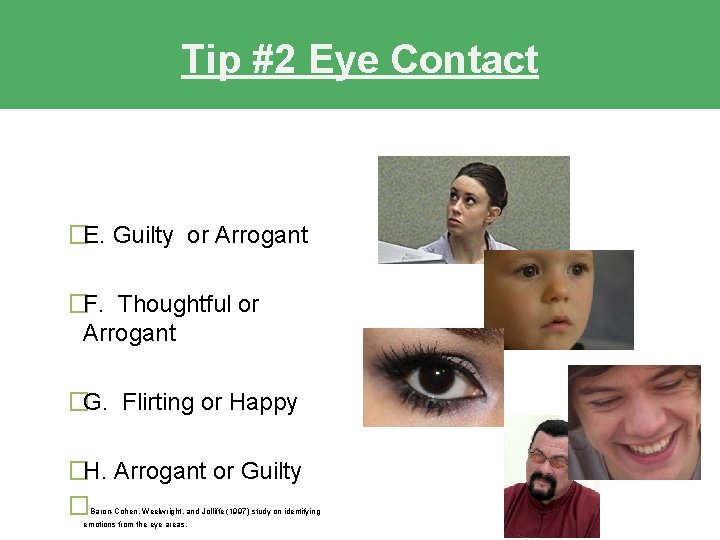
Tip #2 Eye Contact �E. Guilty or Arrogant �F. Thoughtful or Arrogant �G. Flirting or Happy �H. Arrogant or Guilty � Baron-Cohen, Weelwright, and Jolliffe (1997) study on identifying emotions from the eye areas.
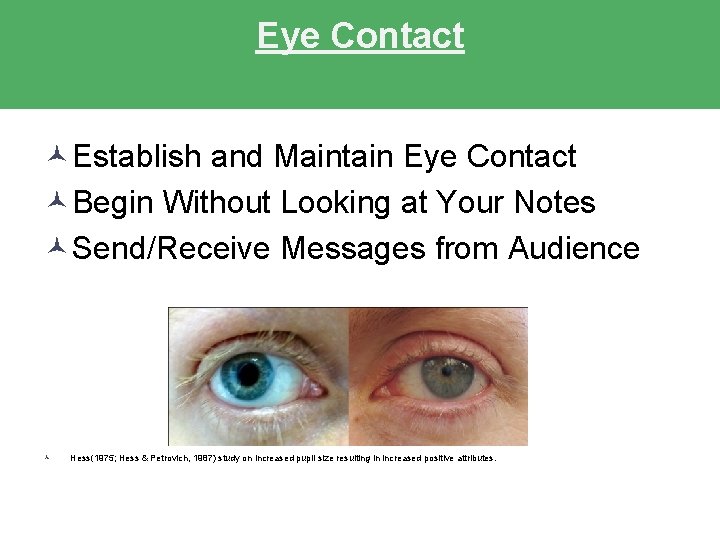
Eye Contact ©Establish and Maintain Eye Contact ©Begin Without Looking at Your Notes ©Send/Receive Messages from Audience © Hess(1975; Hess & Petrovich, 1987) study on increased pupil size resulting in increased positive attributes.
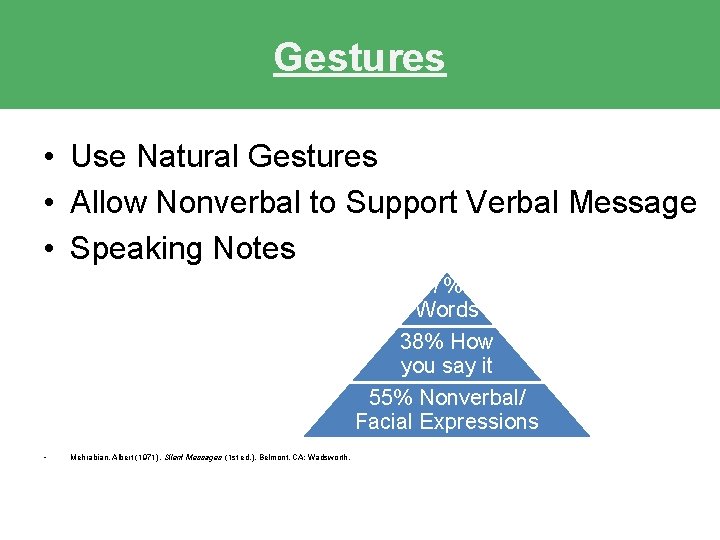
Gestures • Use Natural Gestures • Allow Nonverbal to Support Verbal Message • Speaking Notes 7% Words 38% How you say it 55% Nonverbal/ Facial Expressions • Mehrabian, Albert (1971). Silent Messages (1 st ed. ). Belmont, CA: Wadsworth.
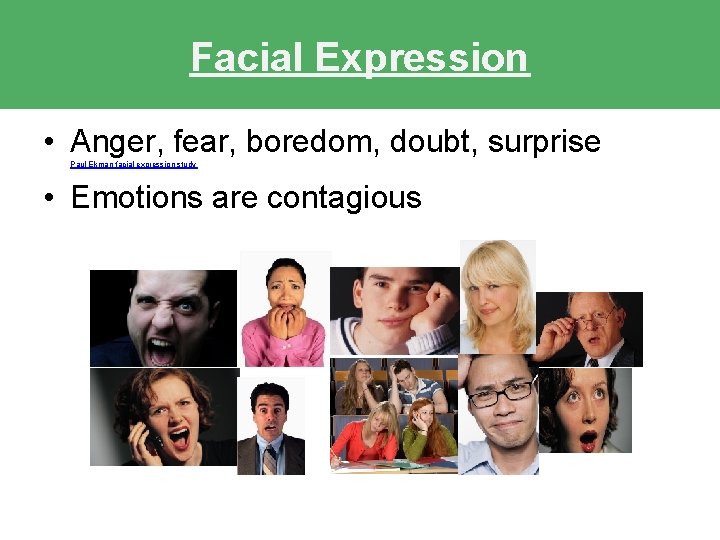
Facial Expression • Anger, fear, boredom, doubt, surprise Paul Ekman facial expression study • Emotions are contagious
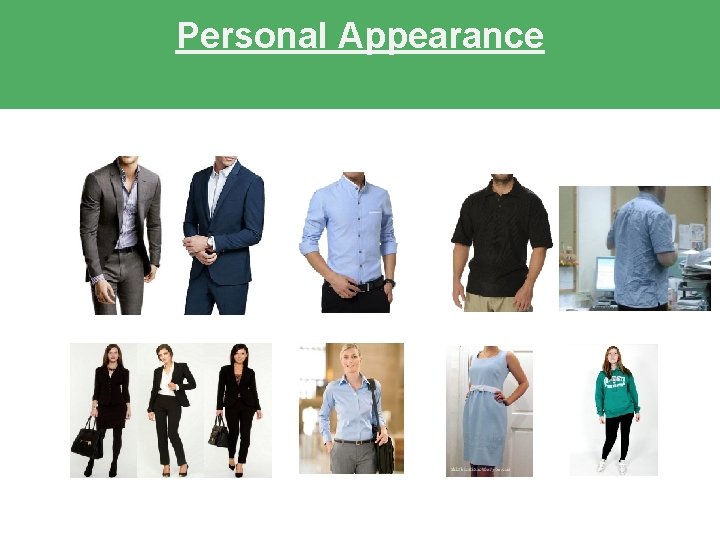
Personal Appearance
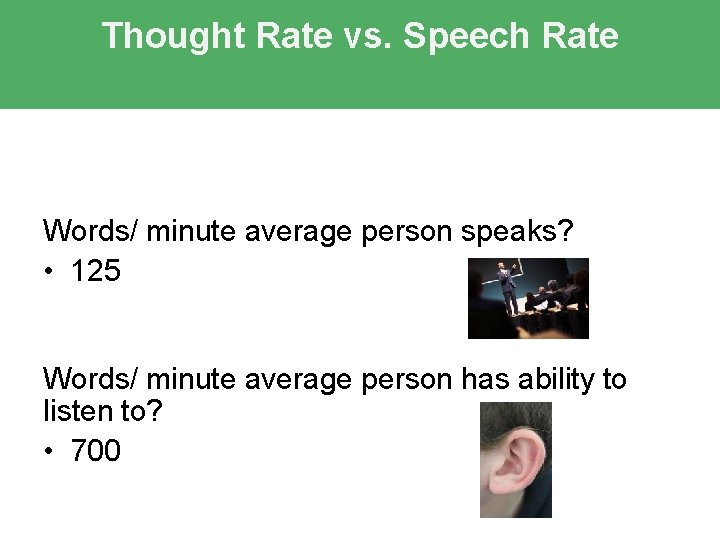
Thought Rate vs. Speech Rate Words/ minute average person speaks? • 125 Words/ minute average person has ability to listen to? • 700
Thought Rate vs. Speech Rate Solution Vocal Delivery ©Vary speech (rate, tone, pitch) ©Use pauses/vocalized pause ©Speak with enthusiasm and sincerity ©Speak loud enough to be heard ©Extemporaneous delivery
Tip #2 -Use Effective Delivery Skills 1. 2. 3. 4. 5. Eye Contact Gestures Facial Expression Personal Appearance Thought Rate vs. Speech Rate
Tip #3 –Control Speaking Fears
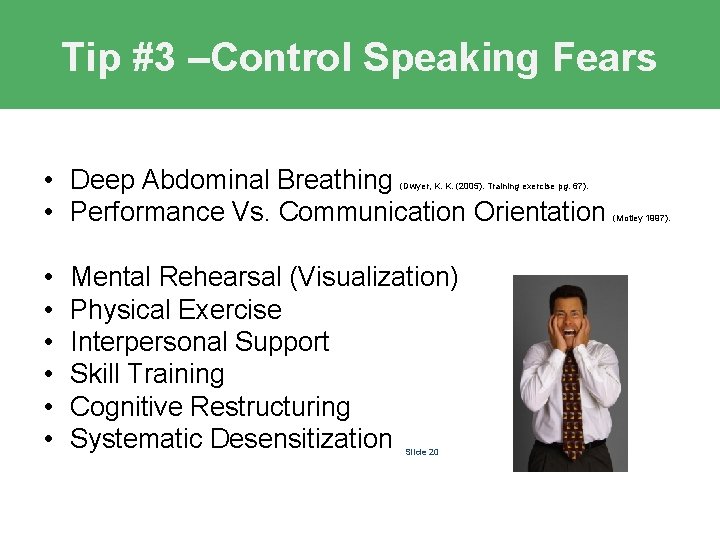
Tip #3 –Control Speaking Fears • Deep Abdominal Breathing • Performance Vs. Communication Orientation (Dwyer, K. K. (2005). Training exercise pg. 67). • • • Mental Rehearsal (Visualization) Physical Exercise Interpersonal Support Skill Training Cognitive Restructuring Systematic Desensitization Slide 20 (Motley 1997).
“WHAT? ? ? I HAVE TO PRESENT A PRESENTATION? ” 21
TIPS FOR ORGANIZING AND PRESENTING PRESENTATIONS Tip #1 -Organize Your Presentation Tip #2 -Use Effective Delivery Skills Tip #3 –Control Speaking Fears 22
References Baker, M. (2010, December 10). Ekman's Studies on Facial Expression of Emotion [video file]. Retrieved from https: //www. youtube. com/watch? v=umhb 95 Cyy. Uk Baron-Cohen, S. , Weelwright, S. , and Jolliffe, T. (1997). Is there a “language of the eyes”? Evidence for normal adults, and adults with autism or Asperger syndrome. Visual Cognition 4, 311 -331. Dwyer, K. K. (2005). Conquer your Speech Anxiety. Belmont, CA: Wadsworth Hess, E. H. (1975). The tell-tale eye. New York: Van Nostrand Reinhold. Hess, E. H. , & Petrovich S. B. (1987). Pupillary behavior in communication. In A. W. Siegman & S. Feldstein (Eds. ) Nonverbal behavior and communication (2 nd ed. ). Hillsdale, NJ: Erlbaum. Just Facts (N. D. ) Just facts : A resource for independent thinkers. Retrieved from https: //www. justfacts. com/globalwarming. asp#overview Knapp, M. L. , and Hall, J. A. (2002). Nonverbal communication in human interaction (5 th ed. ). Albert complex, Singapore: Thompson Learning Mehrabian, A. (1971). Silent Messages (1 st ed. ). Belmont, CA: Wadsworth Motley, M. T. (1997). Overcoming your Fear of public speaking. Boston, MA: Houghton Mifflin. Ralph G. N. & Leonard A. S. (1957) “Six bad listening habits. ” In Are your Listening? (New York: Mc. Graw-Hill 1957). 23
24