Worlds Collide First encounter with the Spanish on
- Slides: 16
Worlds Collide First encounter with the Spanish on Hispaniola
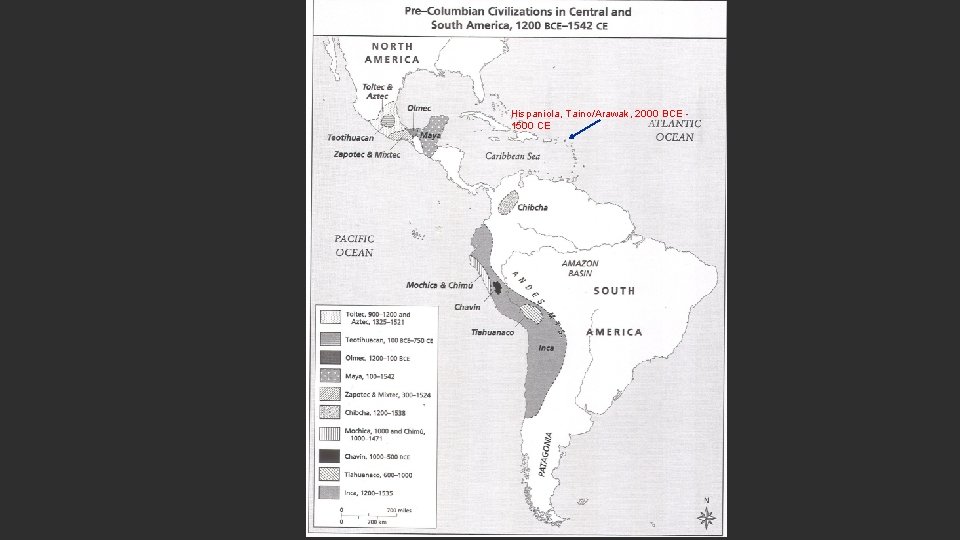
Hispaniola, Taino/Arawak, 2000 BCE 1500 CE
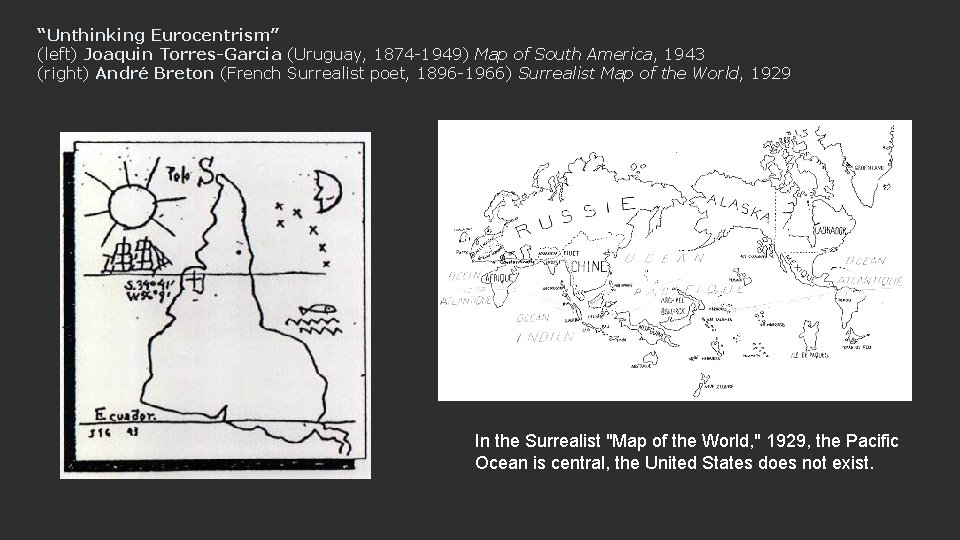
“Unthinking Eurocentrism” (left) Joaquin Torres-Garcia (Uruguay, 1874 -1949) Map of South America, 1943 (right) André Breton (French Surrealist poet, 1896 -1966) Surrealist Map of the World, 1929 In the Surrealist "Map of the World, " 1929, the Pacific Ocean is central, the United States does not exist.
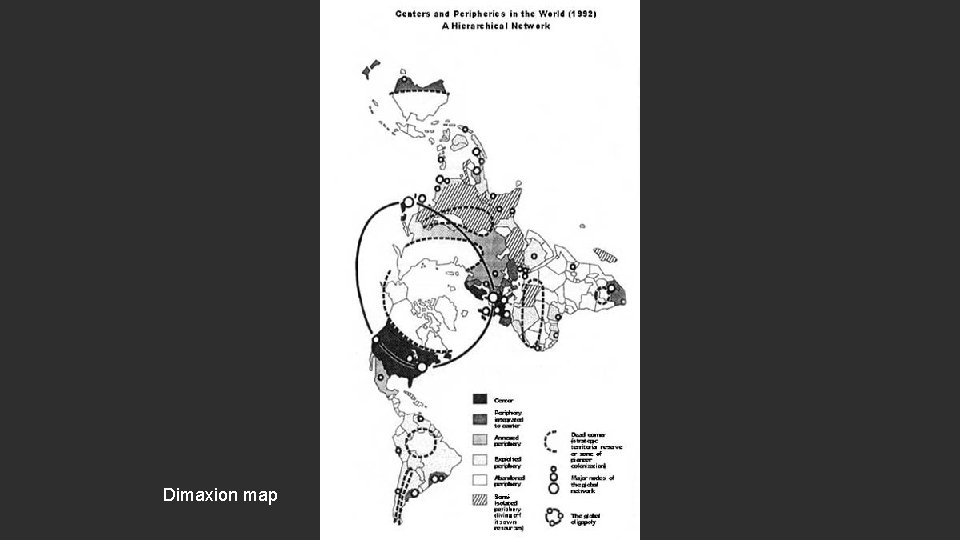
Dimaxion map
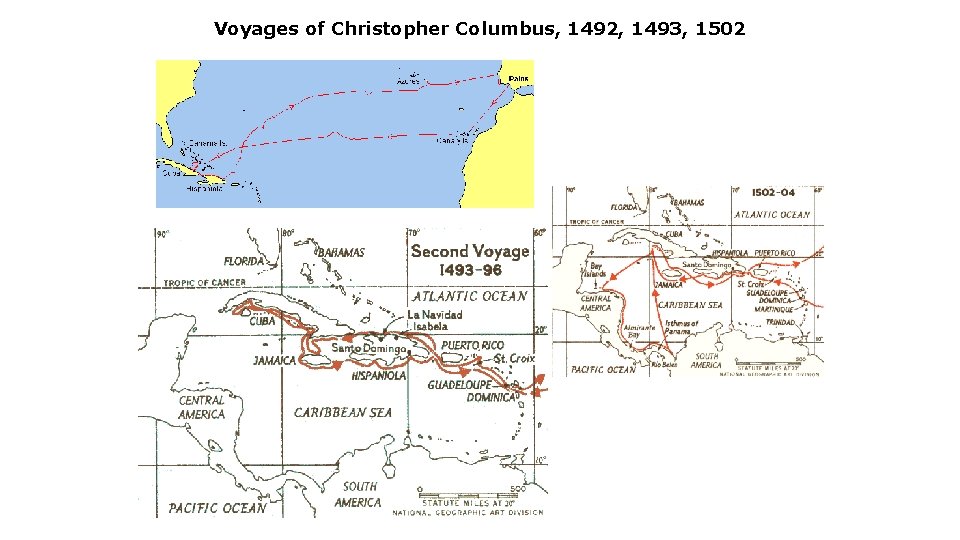
Voyages of Christopher Columbus, 1492, 1493, 1502
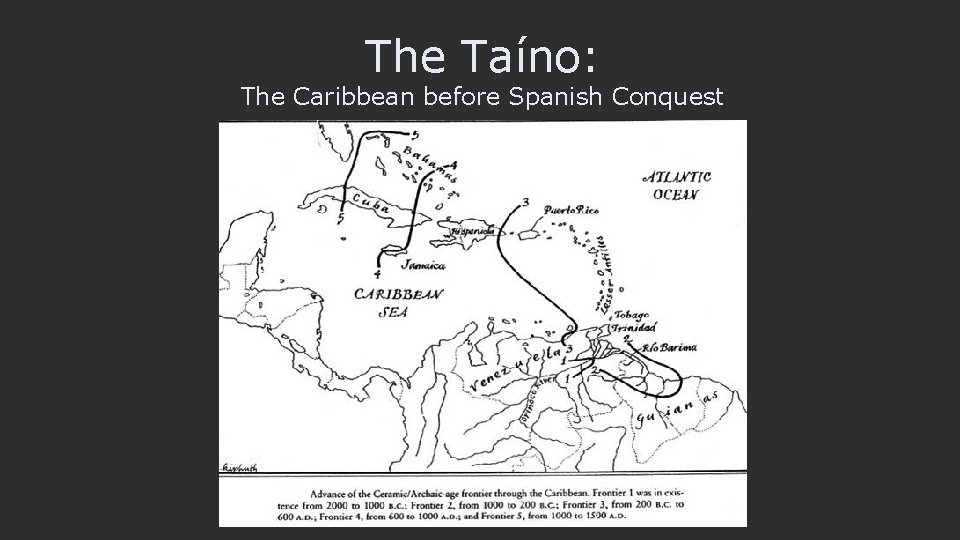
The Taíno: The Caribbean before Spanish Conquest
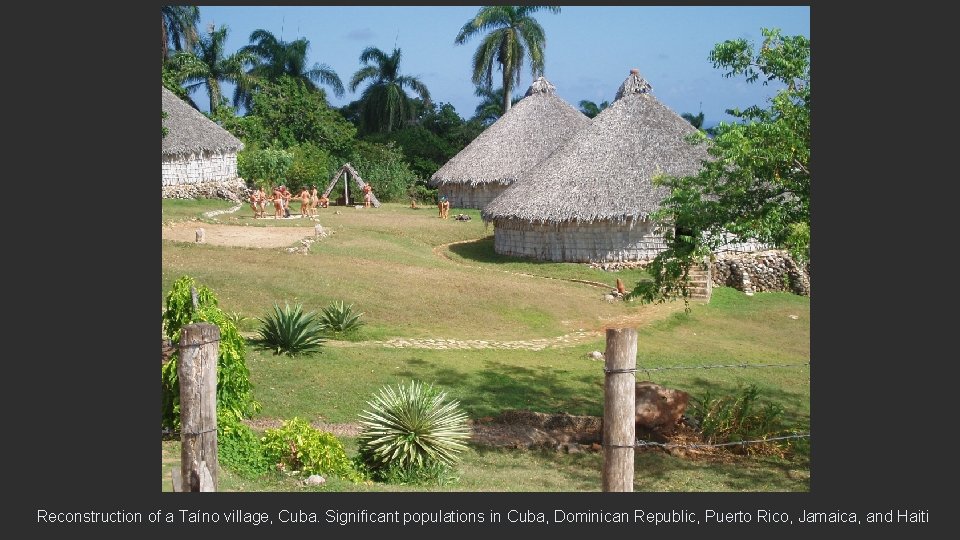
Reconstruction of a Taíno village, Cuba. Significant populations in Cuba, Dominican Republic, Puerto Rico, Jamaica, and Haiti
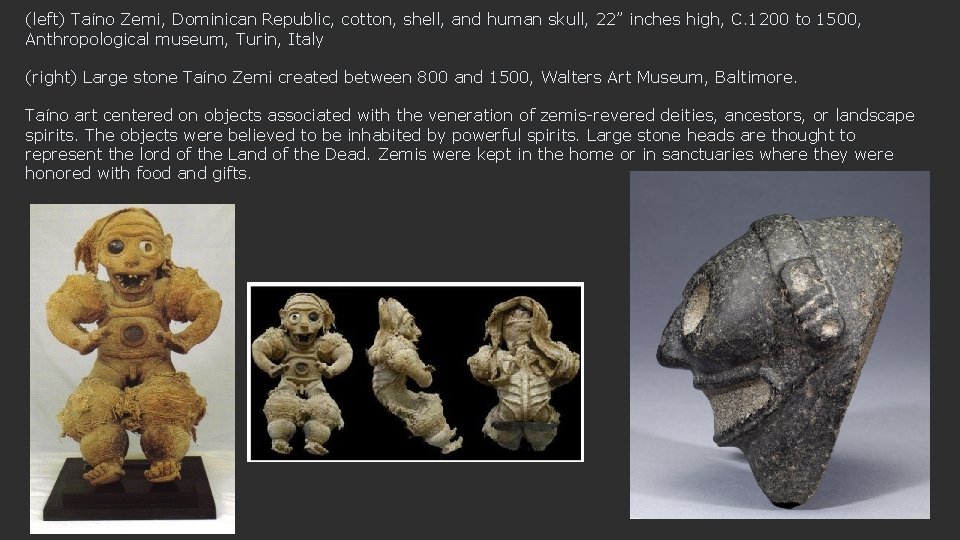
(left) Taíno Zemi, Dominican Republic, cotton, shell, and human skull, 22” inches high, C. 1200 to 1500, Anthropological museum, Turin, Italy (right) Large stone Taíno Zemi created between 800 and 1500, Walters Art Museum, Baltimore. Taíno art centered on objects associated with the veneration of zemis-revered deities, ancestors, or landscape spirits. The objects were believed to be inhabited by powerful spirits. Large stone heads are thought to represent the lord of the Land of the Dead. Zemis were kept in the home or in sanctuaries where they were honored with food and gifts.
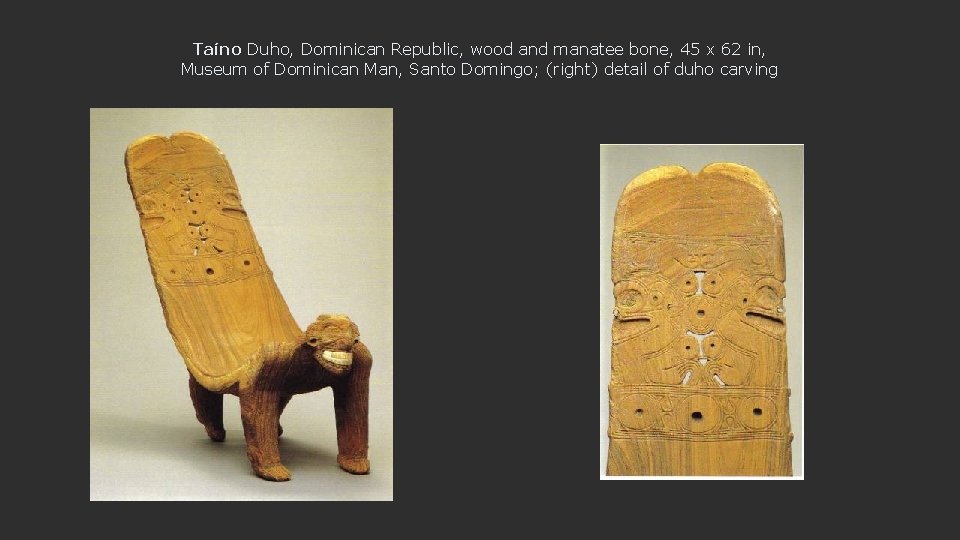
Taíno Duho, Dominican Republic, wood and manatee bone, 45 x 62 in, Museum of Dominican Man, Santo Domingo; (right) detail of duho carving
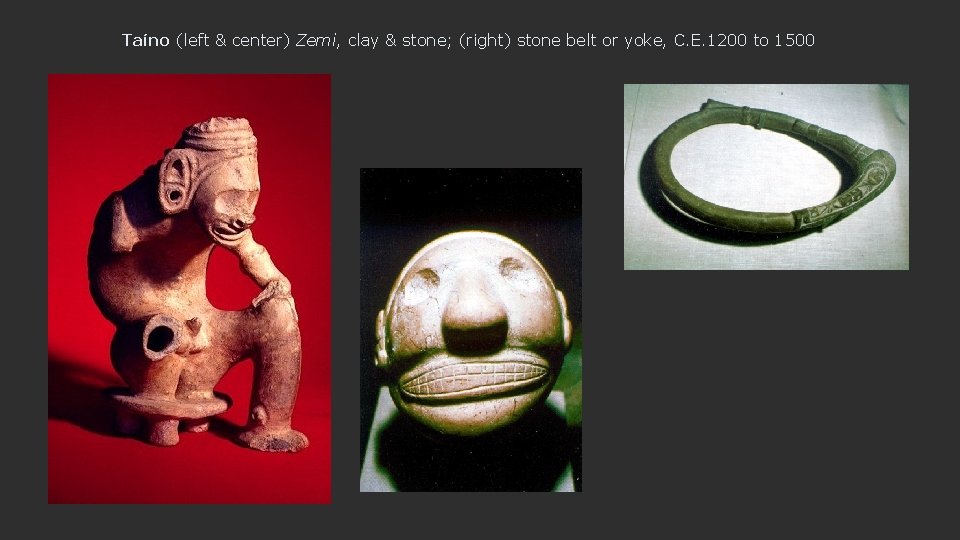
Taíno (left & center) Zemi, clay & stone; (right) stone belt or yoke, C. E. 1200 to 1500
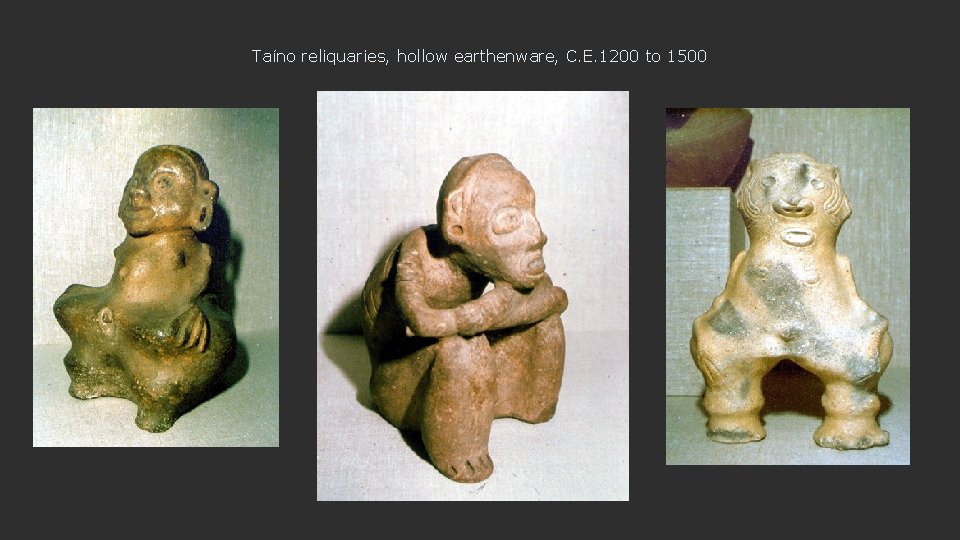
Taíno reliquaries, hollow earthenware, C. E. 1200 to 1500
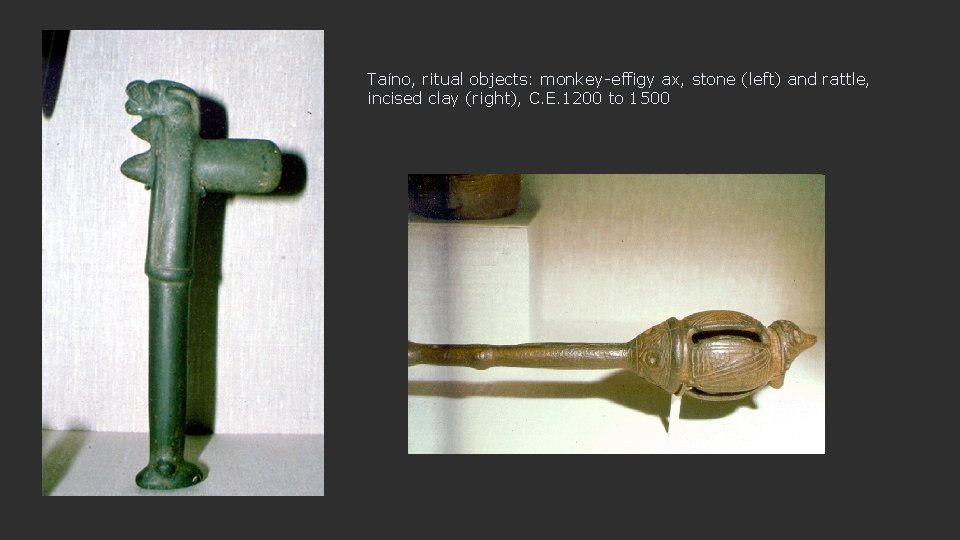
Taíno, ritual objects: monkey-effigy ax, stone (left) and rattle, incised clay (right), C. E. 1200 to 1500
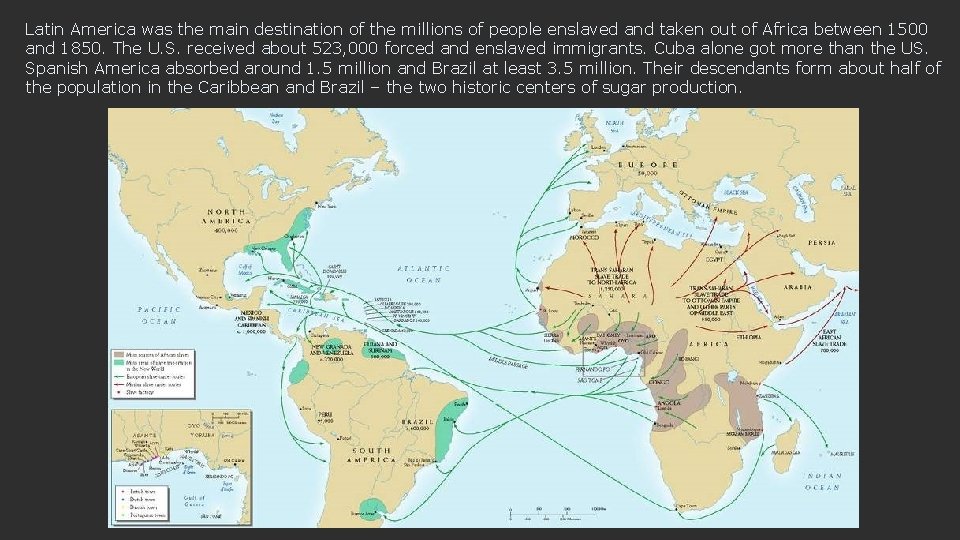
Latin America was the main destination of the millions of people enslaved and taken out of Africa between 1500 and 1850. The U. S. received about 523, 000 forced and enslaved immigrants. Cuba alone got more than the US. Spanish America absorbed around 1. 5 million and Brazil at least 3. 5 million. Their descendants form about half of the population in the Caribbean and Brazil – the two historic centers of sugar production.
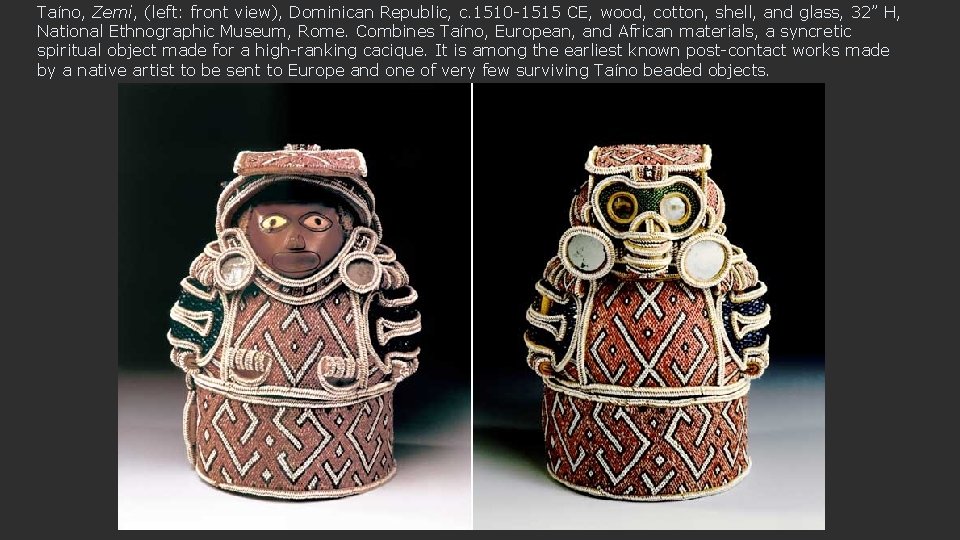
Taíno, Zemi, (left: front view), Dominican Republic, c. 1510 -1515 CE, wood, cotton, shell, and glass, 32” H, National Ethnographic Museum, Rome. Combines Taíno, European, and African materials, a syncretic spiritual object made for a high-ranking cacique. It is among the earliest known post-contact works made by a native artist to be sent to Europe and one of very few surviving Taíno beaded objects.
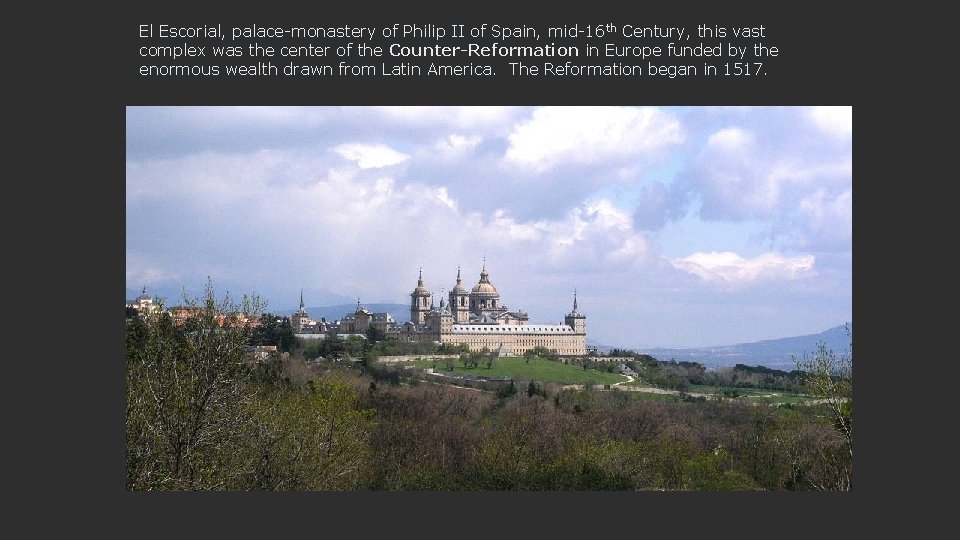
El Escorial, palace-monastery of Philip II of Spain, mid-16 th Century, this vast complex was the center of the Counter-Reformation in Europe funded by the enormous wealth drawn from Latin America. The Reformation began in 1517.
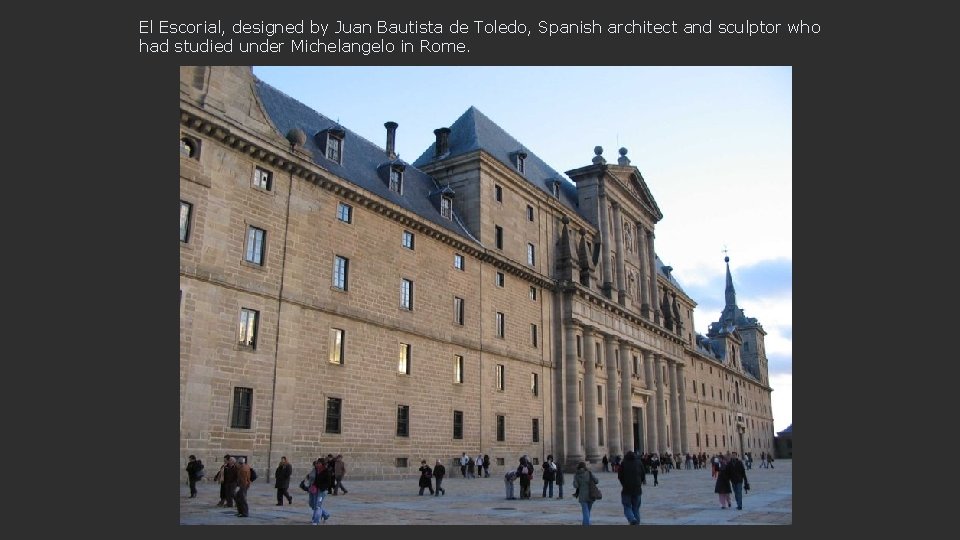
El Escorial, designed by Juan Bautista de Toledo, Spanish architect and sculptor who had studied under Michelangelo in Rome.