Wind profilers and radio contamination issues Dominique Ruffieux
- Slides: 24
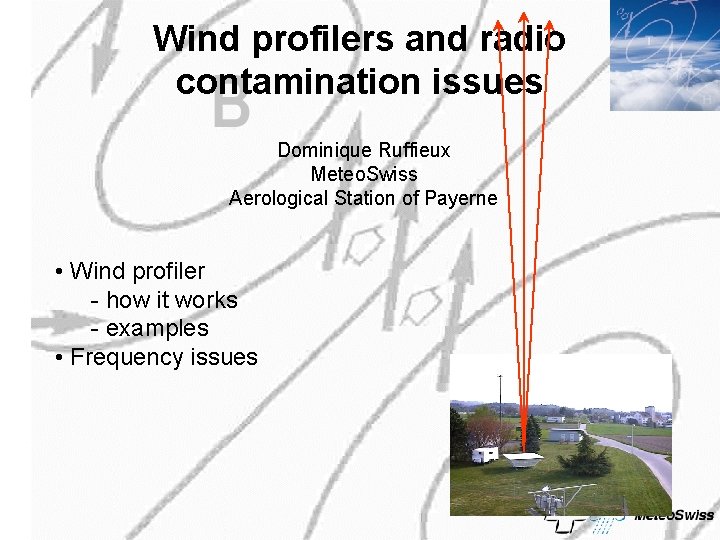
Wind profilers and radio contamination issues Dominique Ruffieux Meteo. Swiss Aerological Station of Payerne • Wind profiler - how it works - examples • Frequency issues
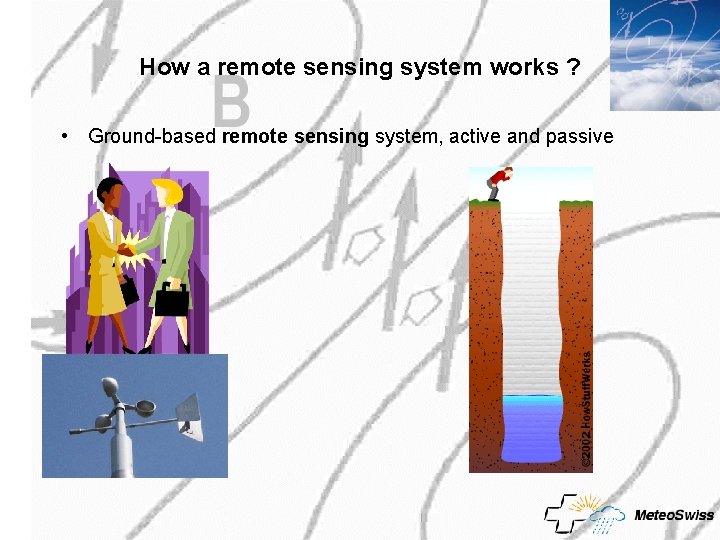
How a remote sensing system works ? • Ground-based remote sensing system, active and passive
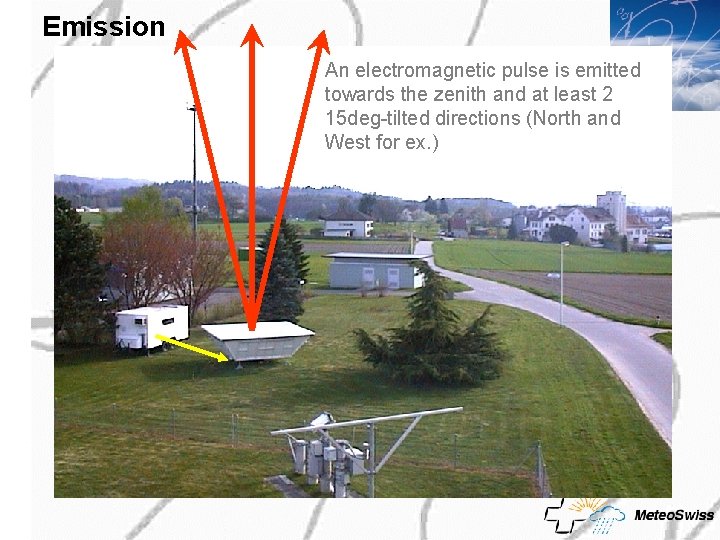
Emission An electromagnetic pulse is emitted towards the zenith and at least 2 15 deg-tilted directions (North and West for ex. )
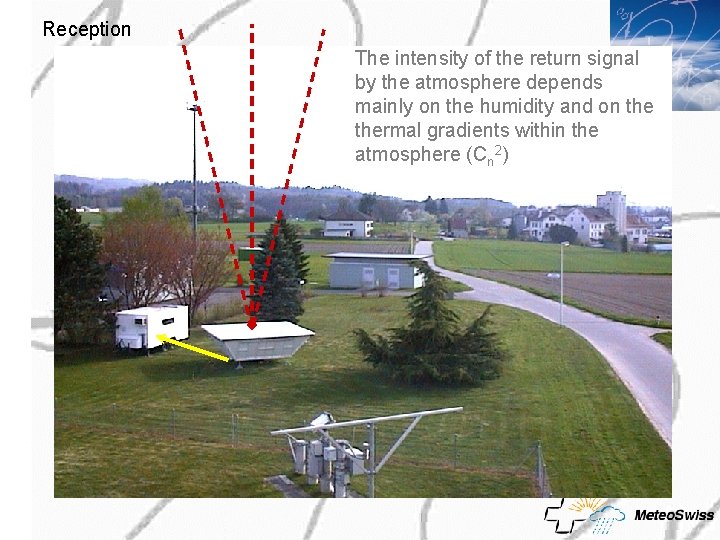
Reception The intensity of the return signal by the atmosphere depends mainly on the humidity and on thermal gradients within the atmosphere (Cn 2)
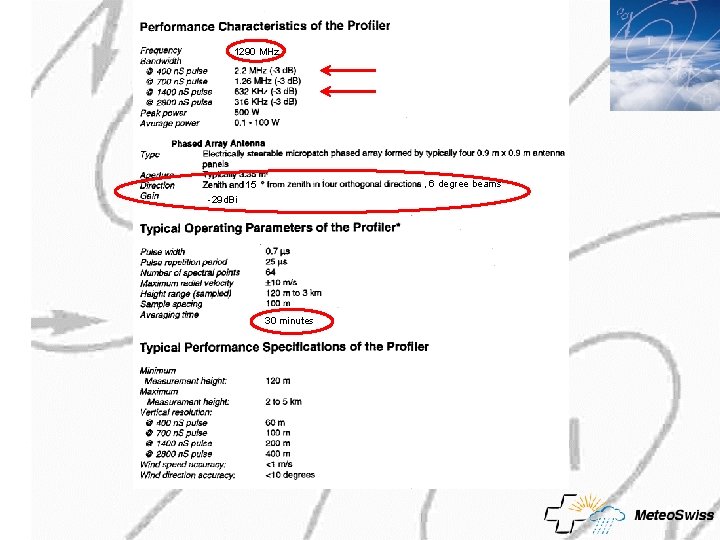
1290 MHz , 6 degree beams 15 -29 d. Bi 30 minutes
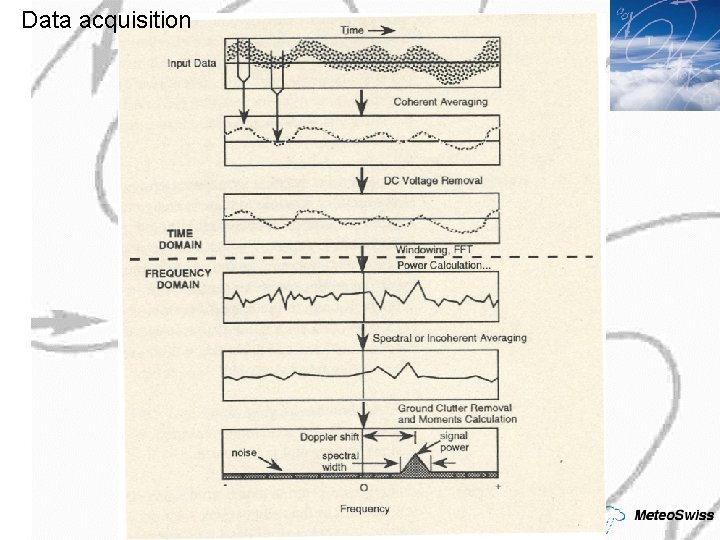
Data acquisition
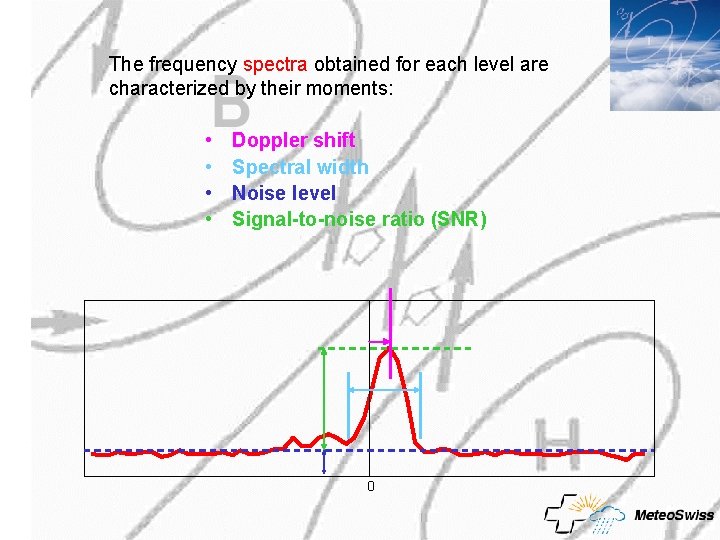
The frequency spectra obtained for each level are characterized by their moments: • • Doppler shift Spectral width Noise level Signal-to-noise ratio (SNR) 0
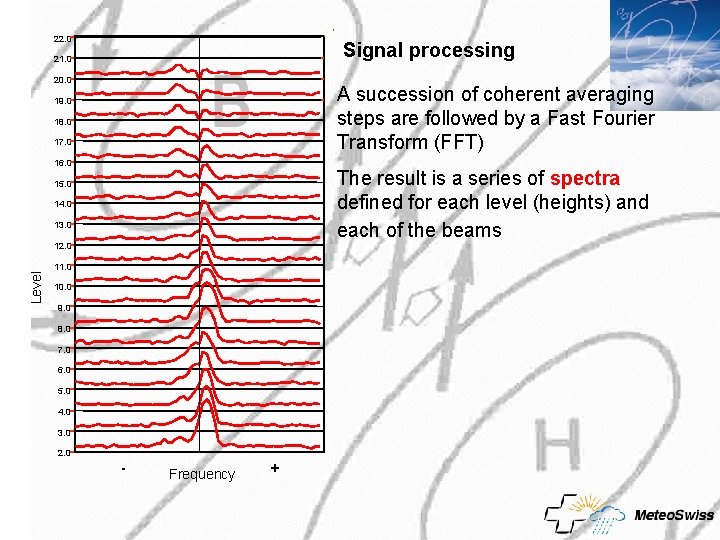
22. 0 Signal processing 21. 0 20. 0 A succession of coherent averaging steps are followed by a Fast Fourier Transform (FFT) 19. 0 18. 0 17. 0 16. 0 The result is a series of spectra defined for each level (heights) and each of the beams 15. 0 14. 0 13. 0 Level 12. 0 11. 0 10. 0 9. 0 8. 0 7. 0 6. 0 5. 0 4. 0 3. 0 2. 0 - Frequency +
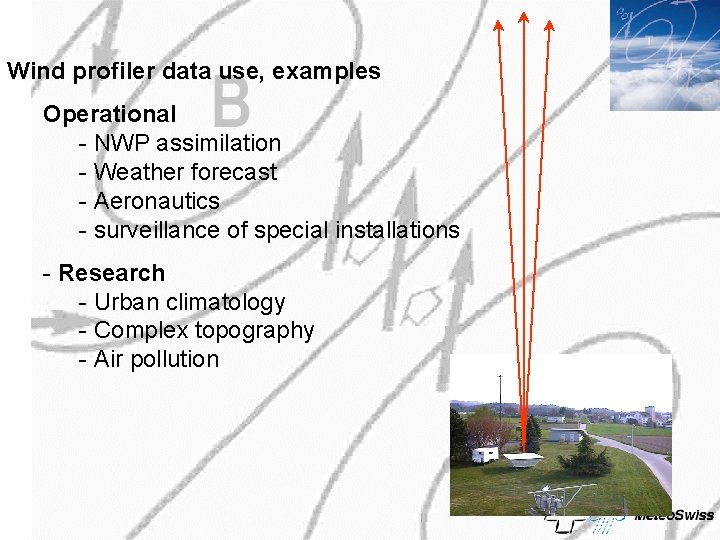
Wind profiler data use, examples Operational - NWP assimilation - Weather forecast - Aeronautics - surveillance of special installations - Research - Urban climatology - Complex topography - Air pollution
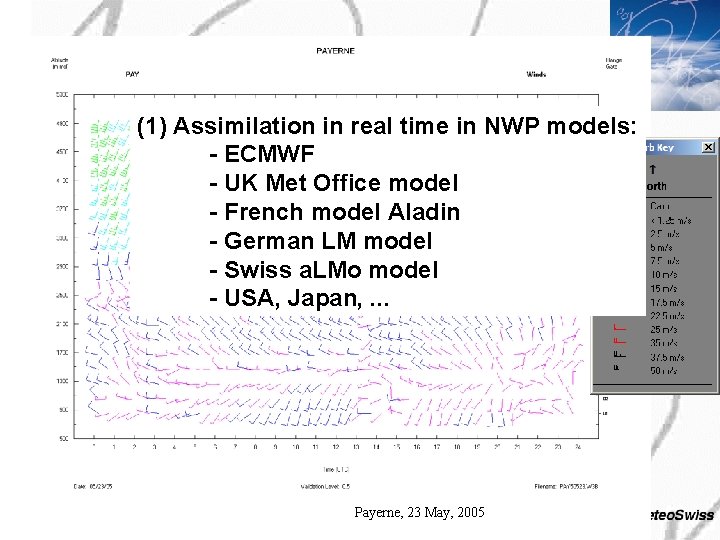
(1) Assimilation in real time in NWP models: - ECMWF - UK Met Office model - French model Aladin - German LM model - Swiss a. LMo model - USA, Japan, . . . Payerne, 23 May, 2005
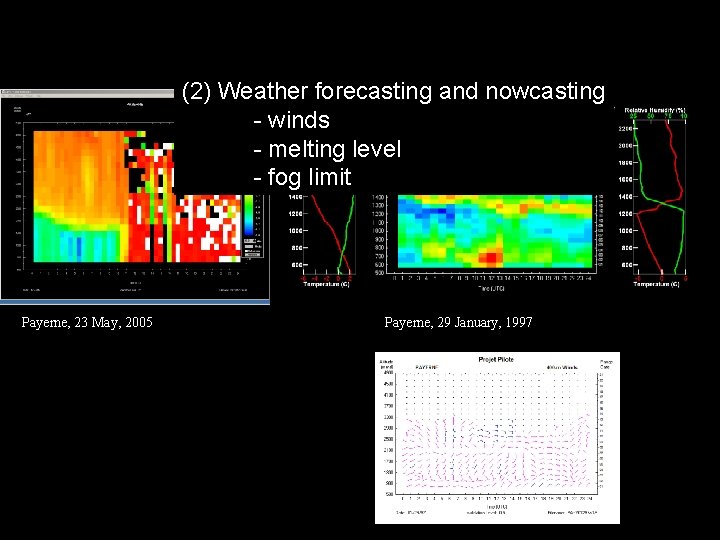
(2) Weather forecasting and nowcasting - winds - melting level - fog limit Payerne, 23 May, 2005 Payerne, 29 January, 1997
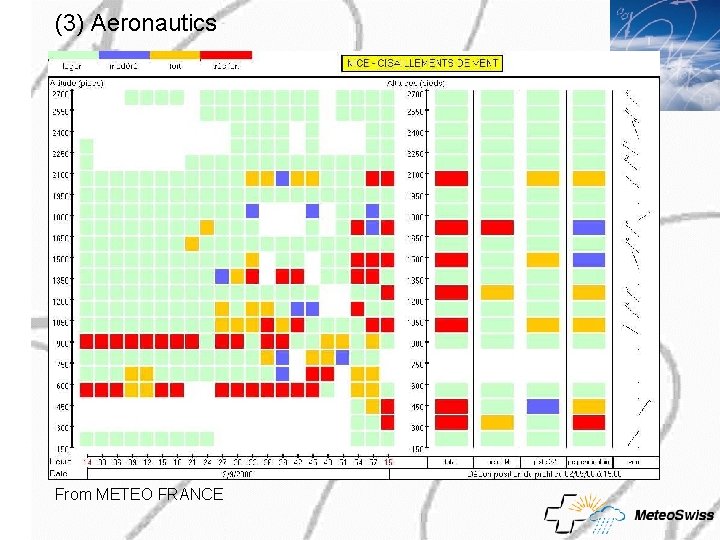
(3) Aeronautics From METEO FRANCE
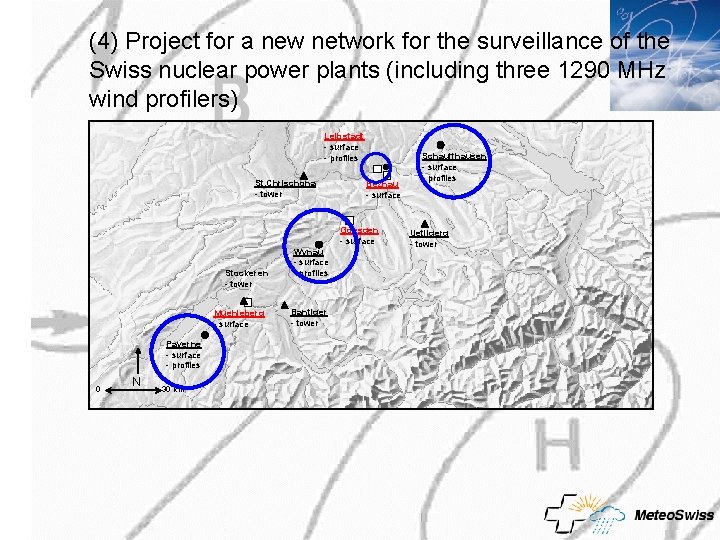
(4) Project for a new network for the surveillance of the Swiss nuclear power plants (including three 1290 MHz wind profilers) Leibstadt - surface - profiles St. Chrischona - tower Beznau - surface Goesgen - surface Stockeren - tower Muehleberg - surface Payerne - surface - profiles 0 N 30 km Wynau - surface - profiles Bantiger - tower Schauffhausen - surface - profiles Uetligerg - tower
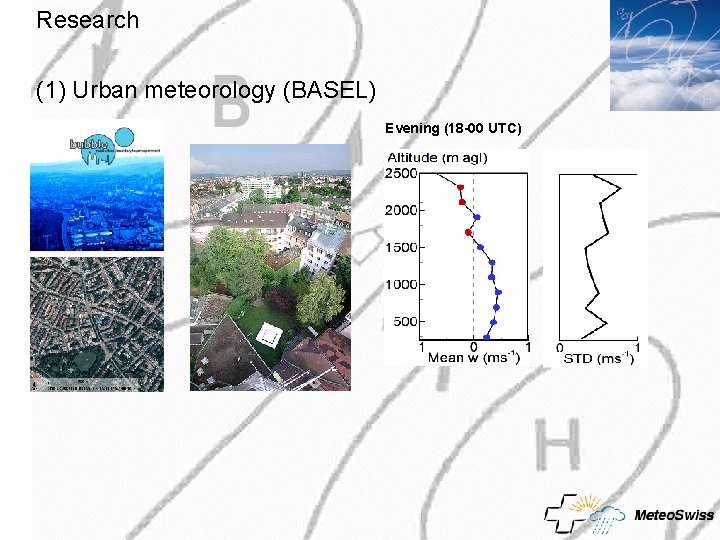
Research (1) Urban meteorology (BASEL) Evening (18 -00 UTC)
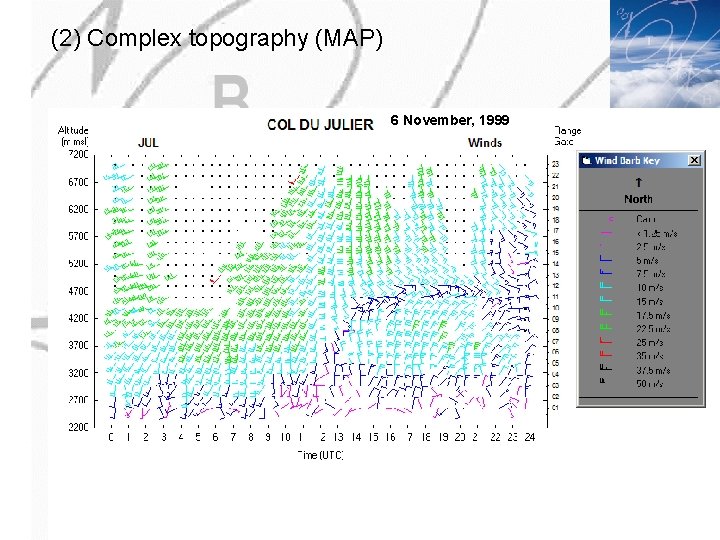
(2) Complex topography (MAP) 6 November, 1999
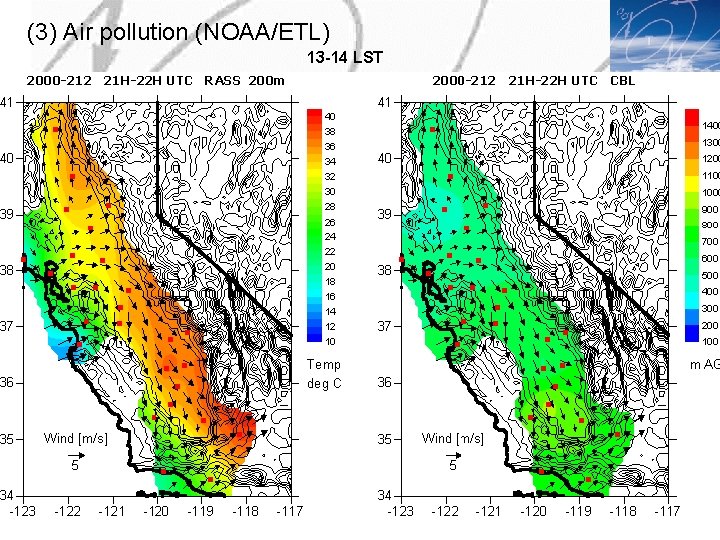
(3) Air pollution (NOAA/ETL) 13 -14 LST
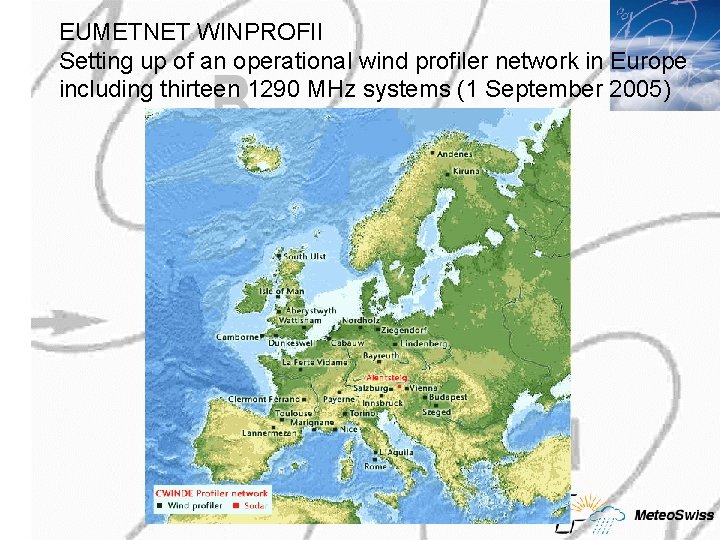
EUMETNET WINPROFII Setting up of an operational wind profiler network in Europe including thirteen 1290 MHz systems (1 September 2005)
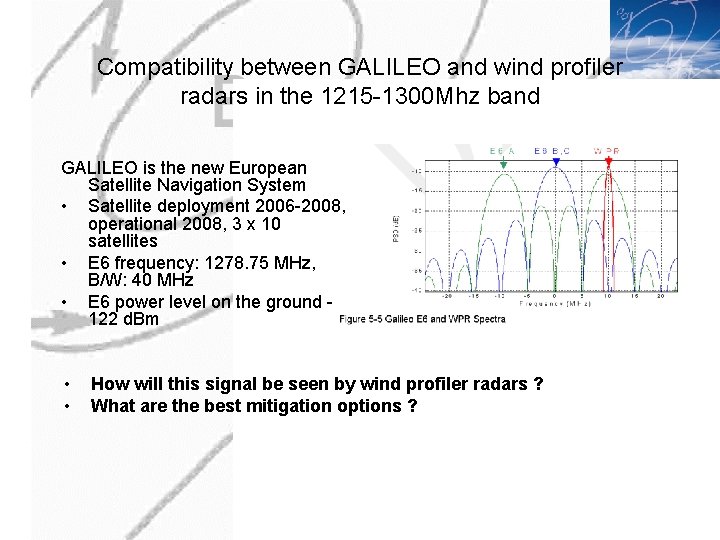
Compatibility between GALILEO and wind profiler radars in the 1215 -1300 Mhz band GALILEO is the new European Satellite Navigation System • Satellite deployment 2006 -2008, operational 2008, 3 x 10 satellites • E 6 frequency: 1278. 75 MHz, B/W: 40 MHz • E 6 power level on the ground 122 d. Bm • • How will this signal be seen by wind profiler radars ? What are the best mitigation options ?
Various studies in Europe performed within the Electronic Communication Committee (ECC-SE 39 working group) • Finnisch/Vaisala report • Roke Manor report • Deutscher Wetterdienst report • Meteofrance report final ECC report with mitigation proposals (in progress)
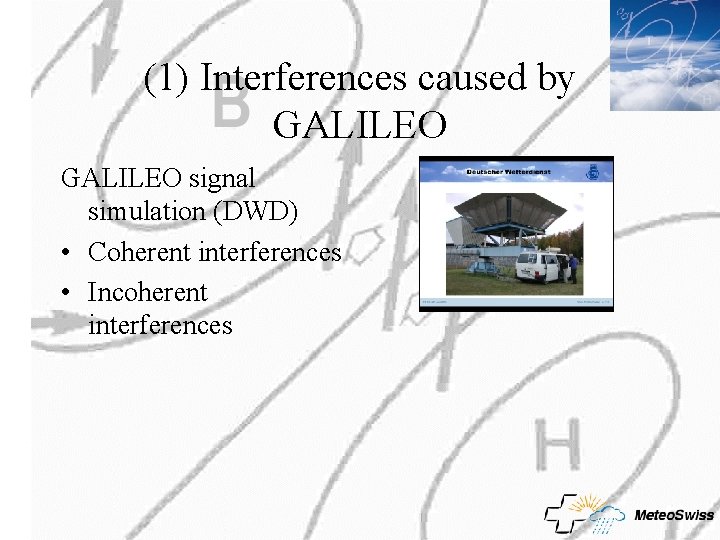
(1) Interferences caused by GALILEO signal simulation (DWD) • Coherent interferences • Incoherent interferences
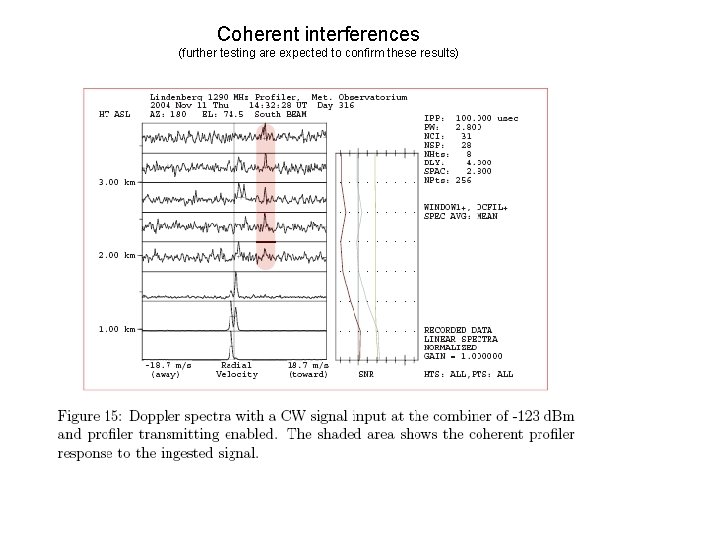
Coherent interferences (further testing are expected to confirm these results)
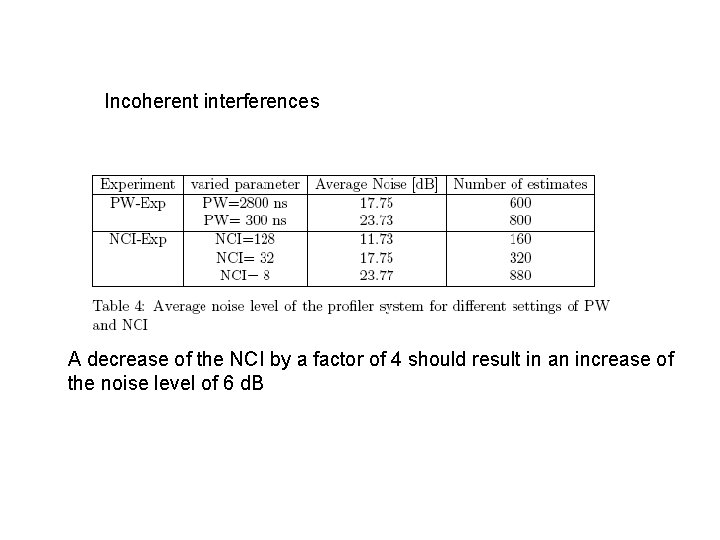
Incoherent interferences A decrease of the NCI by a factor of 4 should result in an increase of the noise level of 6 d. B
(2) Main mitigation options currently in discussion • a minor frequency shift into GALILEO signal spectral minima (E 6 null), • Increasing the number of beams • a modification of the beam sequence, • a major frequency shift of the wind profiler frequency. In case no mitigation techniques would be efficient, the wind profiler community would recommend a shift of the wind profiler frequencies down to the 0. 8 – 1. 2 GHz band.
Summary • Wind profilers are operational worldwide (Europe, USA, Australia, Japan, . . ) • Wind profilers are providing valuable information for both operational and research applications related to meteorology and climatology • Low-tropospheric 1 GHz systems performance will likely experience interference from the new GALILEO system • Mitigation options are still currently under investigation • Because of the high sensitivity of the wind profiler receiver, new types of contamination can be expected in the near future.