What is Wellness Nutrition for Healthy Living 120








- Slides: 23
What is Wellness? Nutrition for Healthy Living 120
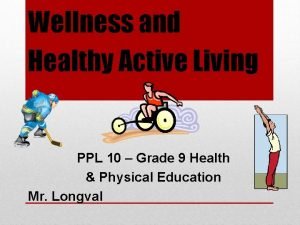
What Is Wellness? �Wellness - [noun] the state of being healthy. �Wellness is the realization of our true potential to live a healthier, happier and more successful existence. �Wellness is an active, lifelong process of becoming aware of your choices and making decisions that will help you to live a more balanced and fulfilling life.
Wellness Dimensions �Wellness involves the awareness of our current state of health in multiple dimensions.
7 Dimensions of Wellness �Physical �Emotional �Spiritual �Financial �Environmental �Career & Academic �Social & Cultural
Physical �Physical Wellness is about creating opportunities for healthy eating, active living and self-care practices that will support your health and wellness. �Physical Wellness means: �Maintaining an active lifestyle �Eating nutritiously �Seeing a doctor for regular check-ups �Limiting alcohol & tobacco use �Sleeping enough to feel rested
Strategies to Enhance your Physical Wellness �Find time in a busy schedule to be active: �Set small goals. Go for a quick walk during your class or study breaks �Schedule an activity with a friend so you can support each other in being active �Maintain healthy eating habits: �Compare your intake against Canada’s Food Guide to help you stay on track �Eat a balanced breakfast daily to fuel your body and mind
Emotional �Emotional Wellness involves accepting and exploring who you are, enhancing your inner resources to reduce stress and maintaining a positive outlook on life. �Examples of Emotional Wellness: �Accepting yourself for who you are �Valuing self-exploration & improvement �Having a generally positive outlook �Taking care of yourself �Being willing to ask for help �Recognizing & managing stressors
Strategies to Enhance Your Emotional Wellness �Learn how to manage a busy schedule: � Focus on the present moment and what you are able to control � Practice five or ten minutes of mindfulness meditation each day � Strive for balance by making time for things you enjoy and family and friends �Keep your self-esteem high: � Volunteer for something you care about and share your skills and knowledge with others � Surround yourself with supportive and caring friends � Create a list in your mind or on paper of all of your strengths and accomplishments
�Learn how to deal with worries about exams, relationships, work or unexpected hurdles in your life: �Ask for help when you need it. There are many people and resources at school that can help �Increase your physical activity. Whether its running, yoga or walking with a friend, being active will help you manage those stressful moments �Make sure you’re getting enough sleep – lack of sleep has a major impact on your ability to cope with worries and stress �Try to maintain a positive outlook
Spiritual �Spiritual Wellness means developing the mind-body connection to foster personal growth and support mental and emotional wellness. �Examples of Spiritual Wellness: �Having an overall sense of peace & well-being �Developing the mind-body connection �Understanding your own values �Feeling part of a larger community �Recognizing that spirituality is a personal experience �Respecting the values & beliefs of others
Strategies to Enhance Your Spiritual Wellness �Manage stress and anxiety through mindfulness: �Look for opportunities to practice mindfulness throughout the day, for example, while eating a snack or waiting for the bus �Focus on the present moment and your physical and mental experience in that moment �Be aware of your breathing and concentrate on the breath itself as it moves in and out
�Reflect on your own values and beliefs, and learn how you can be spiritually aware: � Participate in activities that connect the mind and body such as yoga � Follow your creative impulses and act on them. For example try keeping a journal, paint or draw, listen to or create music � Give back by volunteering, helping others or by performing a random act of kindness �Respect the beliefs and values of others: � Practice compassion if you meet others whose values differ from your own � Know your own beliefs and values through personal reflection � Be curious about others and ask questions in a respectful and open -minded way
Financial �Financial Wellness means being aware of your financial situation and managing it wisely. �Examples of Financial Wellness: �Developing long & short term financial goals �Tracking your spending �Budgeting effectively �Limiting overspending �Recognizing & managing financial risks �Using credit wisely
Strategies to Enhance Your Financial Wellness �Try to limit unnecessary expenses and debt and live within your means: �If possible, use your debit card or cash rather than a credit card for making purchases �Try to use on and off campus resources to help create and maintain a reasonable budget for yourself �Eat nutritiously on a budget. Take your lunch, snacks and drinks with you to school or work
Environmental �Environmental Wellness is about creating a safe, supportive, inclusive and sustainable community that recognizes the impact of personal and social environmental decisions. �Examples of Environmental Wellness: �Being respectful, inclusive, kind and supportive to others �Being aware of risks in your surroundings �Being aware of the impact of your decisions �Taking personal responsibility for your actions �Working to improve your community �Reducing, reusing & recycling �Using sustainable transportation
Strategies to Enhance Your Environmental Wellness �Surround yourself by supportive family, friends, and resources �Form study groups with peers and support each other with course work and assignments �Make an attempt to meet your professors in office hours, advisors, and other learning resources �Spend time with friends and family
�Live an eco-friendly lifestyle on a daily basis: �Use transit and leave your car at home when you can �Recycle plastic, paper and glass containers �Print less, try reading online or sharing reading materials with classmates �Eat locally produced food: �Visit the Farmer's Market �Try to purchase food and beverages that are grown and produced locally as an alternative to imported products
Career and Academic �Career and Academic Wellness is about expanding knowledge, creating networks, and continually challenging your mind. �Examples of Career and Academic Wellness: �Seeking out resources to help make decisions �Challenging yourself to new life experiences �Having a well developed sense of self �Setting career & academic goals �Having friends & peers who can support your goals �Creating professional networks
Strategies to Enhance Your Career and Academic Wellness �Manage anxiety before exams: �Schedule your study time in advance rather than cramming the night before �Try to be physically and mentally balanced prior to exams by eating nutritious foods, getting enough sleep and being active �Work hard before the exam but plan a reward for yourself such as connecting with friends
Social and Cultural Wellness �Social and Cultural Wellness means developing and maintaining healthy relationships with those around you, and supporting the diversity of our communities through knowledge, acceptance and understanding. �Examples of Social and Cultural Wellness: �Developing healthy relationships with family & friends �Respecting & understanding other individuals �Respecting the cultural identities of others �Effectively managing unhealthy relationships �Spending time with loved ones �Feeling self-confident alone or with others
Strategies to Enhance Your Social and Cultural Wellness �Be willing to meet new people and make new friends: �Be assertive but friendly by smiling, introducing yourself and being open to meeting others �Sign up for courses or activities on campus which genuinely interest you �Take up offers that come your way and look for new experiences. Unfamiliar situations can be opportunities for personal growth and meeting new people
�Manage challenging relationships with friends, colleagues, romantic partners or family members: �Try to resolve conflicts through compromise. Consider the other person’s perspective and respect their point of view �Be yourself and respect your own thoughts and feelings �Focus on your feelings and share your perspective instead of blaming others. Use “I” statements when communicating and be clear about your needs (‘I feel hurt’)
�Develop your intercultural skills: �Be open-minded and appreciative of diversity �Challenge your assumptions and discomfort around the unknown �Be aware of how your individual culture influences how you perceive others �Be curious and look for opportunities to learn new things