What is Sociology Sociology explores the social world
- Slides: 17
What is Sociology? Sociology explores the social world around us. It is the scientific study of society and human behaviour. http: //www. youtube. com/watch? v=az. Ws. ESXZrk https: //www. youtube. com/watch? v=e 5 pp_f. ZDU 8 I
‘ologies! – How does Sociology Compare? • Biologists focus on the body. • Psychologists focus on the mind. • Sociologists focus on the environment and the social aspects of human behaviour.
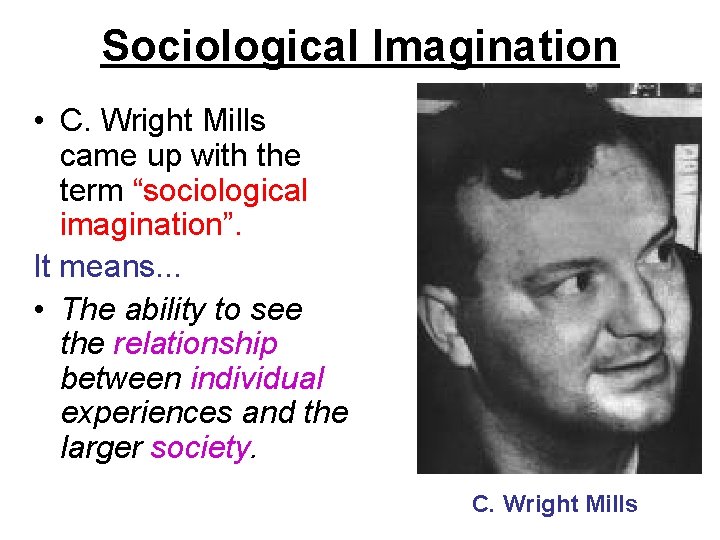
Sociological Imagination • C. Wright Mills came up with the term “sociological imagination”. It means. . . • The ability to see the relationship between individual experiences and the larger society. C. Wright Mills
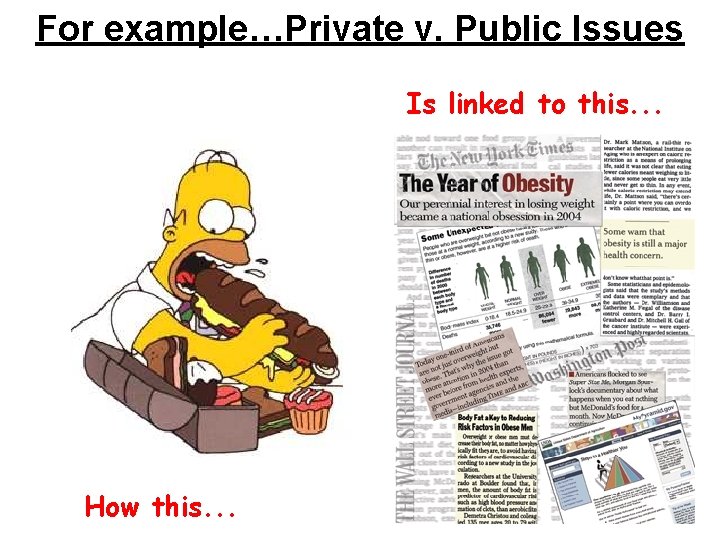
For example…Private v. Public Issues Is linked to this. . . How this. . .
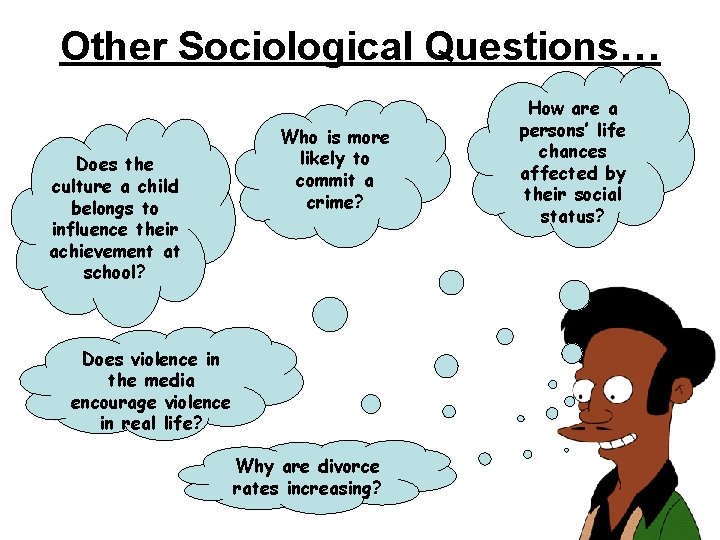
Other Sociological Questions… Does the culture a child belongs to influence their achievement at school? Who is more likely to commit a crime? Does violence in the media encourage violence in real life? Why are divorce rates increasing? How are a persons’ life chances affected by their social status?
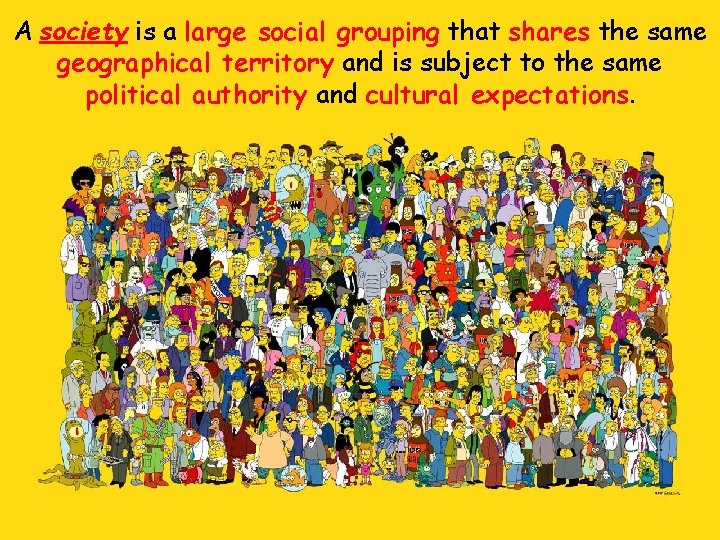
A society is a large social grouping that shares the same geographical territory and is subject to the same political authority and cultural expectations.
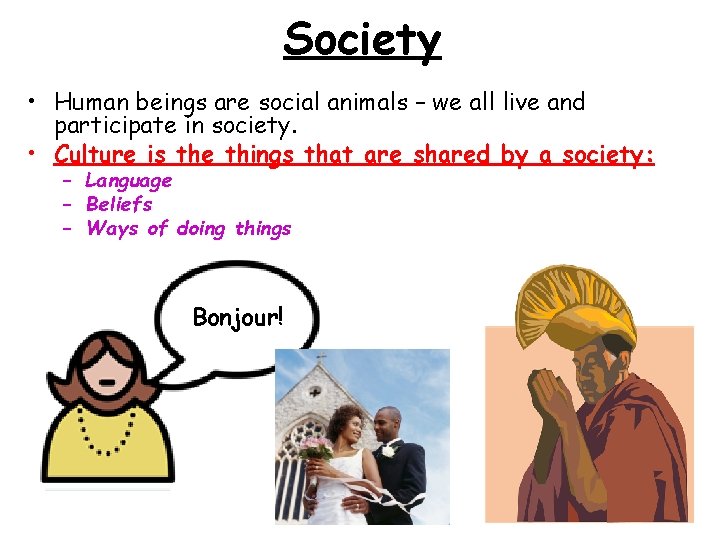
Society • Human beings are social animals – we all live and participate in society. • Culture is the things that are shared by a society: – Language – Beliefs – Ways of doing things Bonjour!
Culture and Society • Not all societies have the same Culture – this is cultural diversity. E. g. , the UK has very different ways of doing things to China. • However all Cultures share some basic ideas (language, family, religion, property) called Cultural Universals. • Some people may judge another culture as it is very different to their own – the acceptance that there are differences but that every culture should be treated with equal respect is called cultural relativism.
Cultural Transmission • Culture is passed on to the next generation in a society through the process of • Socialisation • This is a process which begins in the family when we are born and continues all of our lives.
Social Life – is full of rules… • Norms: The unspoken and unwritten rules of behaviour in everyday life. • Mores (pronounced more-ays): Stronger form of norms – behaviour that is seen as essential to maintain decency. • Values: The beliefs that we all share that form the basis for our norms. • Role: The norms that go with our status. • Status: The position that a person has in our society. – ascribed status (what you are born with) – achieved status (the result of a person’s efforts).
Sociological Perspectives • There are different types of views in sociology. • A bit like the different denominations in religion! • They don’t always agree!
Functionalists • They compare society to a human body. • All the different parts are like organs, essential to the overall health. • They all have their own role and function. • If these parts of society fail there would be a negative affect on all of us. • Therefore people should do as they’re told for the good of the whole society. In other words – every PART of society has the function of contributing to the WHOLE to help it ‘FUNCTION’
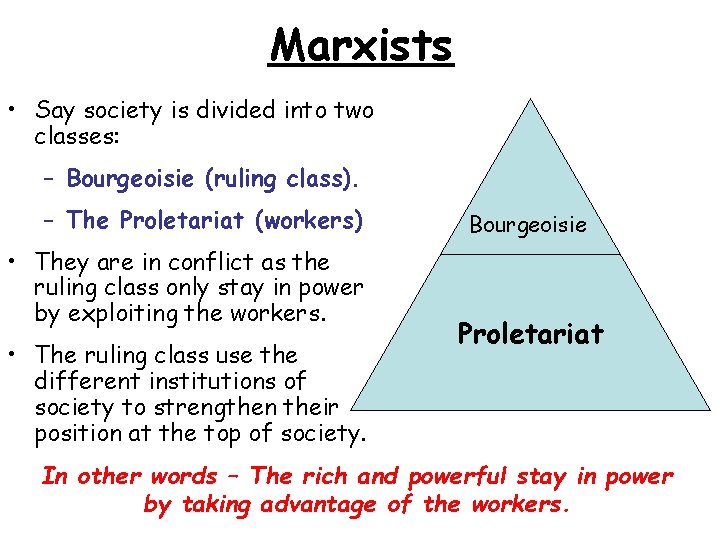
Marxists • Say society is divided into two classes: – Bourgeoisie (ruling class). – The Proletariat (workers) • They are in conflict as the ruling class only stay in power by exploiting the workers. • The ruling class use the different institutions of society to strengthen their position at the top of society. Bourgeoisie Proletariat In other words – The rich and powerful stay in power by taking advantage of the workers.
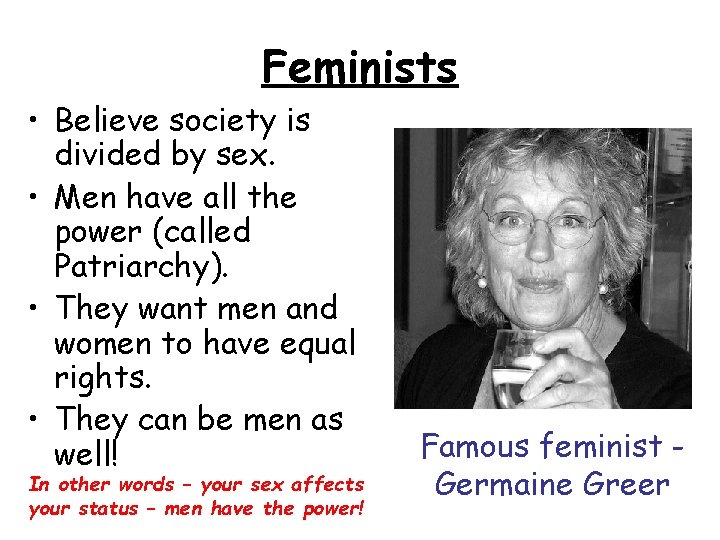
Feminists • Believe society is divided by sex. • Men have all the power (called Patriarchy). • They want men and women to have equal rights. • They can be men as well! In other words – your sex affects your status – men have the power! Famous feminist Germaine Greer
Postmodernism • Postmodernist sociologists claim that changes that took place in the 20 th century have rendered exiting sociological theories redundant. Such theories were devised to make sense of the modern era with its industrial societies and nation states. Today, they claim, these societies have altered so much that we need a new type of sociology to make sense of them.
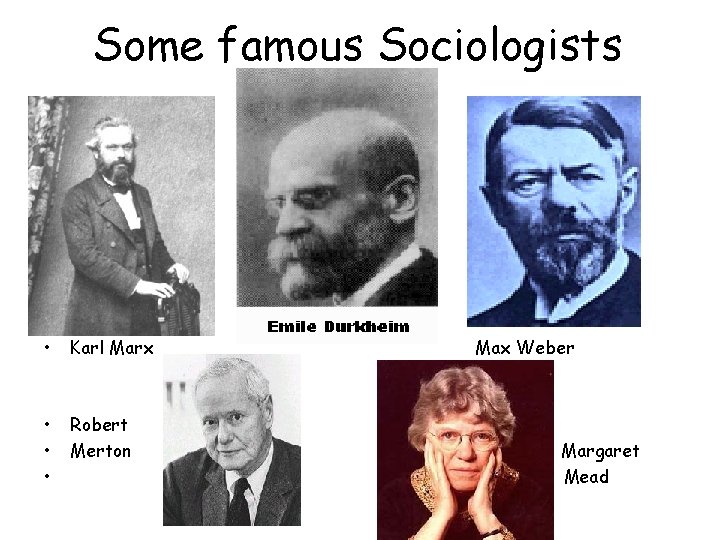
Some famous Sociologists • Karl Marx • • • Robert Merton Max Weber Margaret Mead
Mix and Match Task • Check your understanding of today’s key words by matching them to their definitions.