Welcome Please help yourselves to refreshments and sign

- Slides: 22
Welcome! Please help yourselves to refreshments and sign the register Have a go at making sense of the story on your chair…
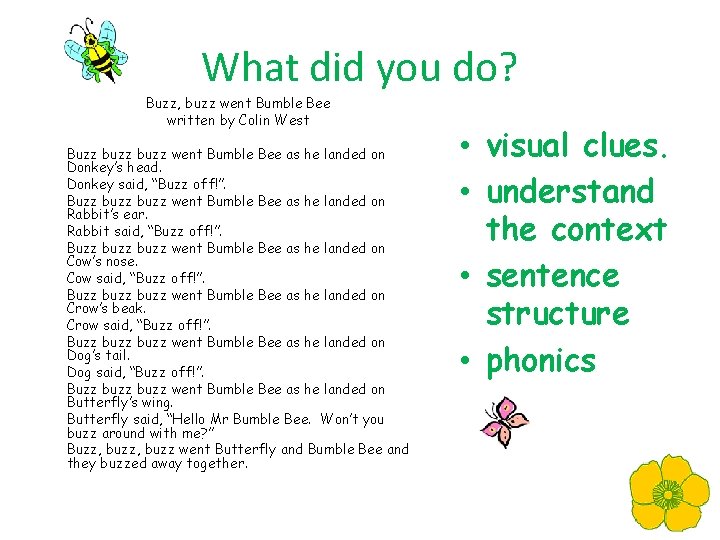
What did you do? Buzz, buzz went Bumble Bee written by Colin West Buzz buzz went Bumble Bee as he landed on Donkey’s head. Donkey said, “Buzz off!”. Buzz buzz went Bumble Bee as he landed on Rabbit’s ear. Rabbit said, “Buzz off!”. Buzz buzz went Bumble Bee as he landed on Cow’s nose. Cow said, “Buzz off!”. Buzz buzz went Bumble Bee as he landed on Crow’s beak. Crow said, “Buzz off!”. Buzz buzz went Bumble Bee as he landed on Dog’s tail. Dog said, “Buzz off!”. Buzz buzz went Bumble Bee as he landed on Butterfly’s wing. Butterfly said, “Hello Mr Bumble Bee. Won’t you buzz around with me? ” Buzz, buzz went Butterfly and Bumble Bee and they buzzed away together. • visual clues. • understand the context • sentence structure • phonics
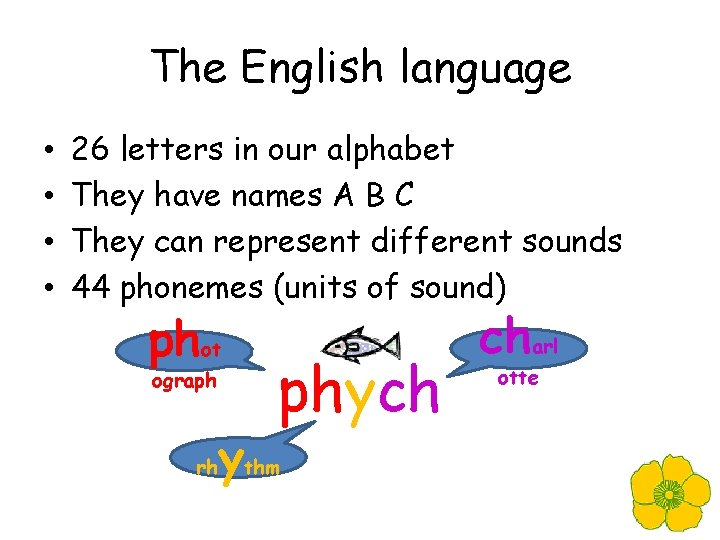
The English language • • 26 letters in our alphabet They have names A B C They can represent different sounds 44 phonemes (units of sound) phot ograph rh phych ythm charl otte
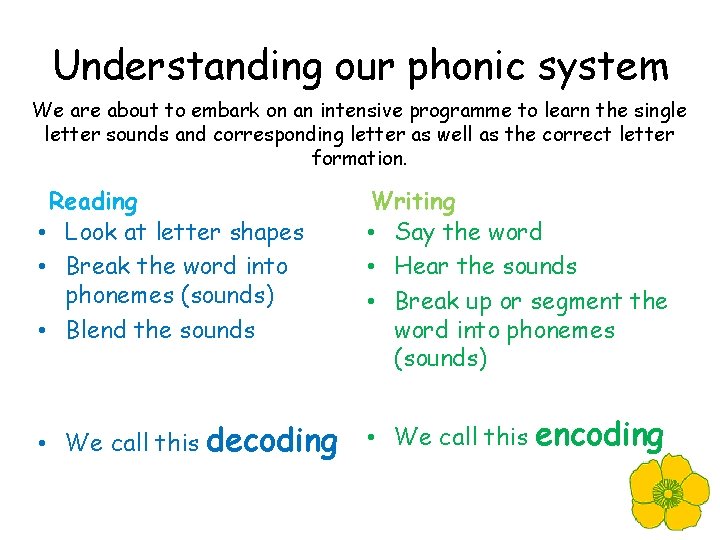
Understanding our phonic system We are about to embark on an intensive programme to learn the single letter sounds and corresponding letter as well as the correct letter formation. Reading • Look at letter shapes • Break the word into phonemes (sounds) • Blend the sounds • We call this decoding Writing • Say the word • Hear the sounds • Break up or segment the word into phonemes (sounds) • We call this encoding
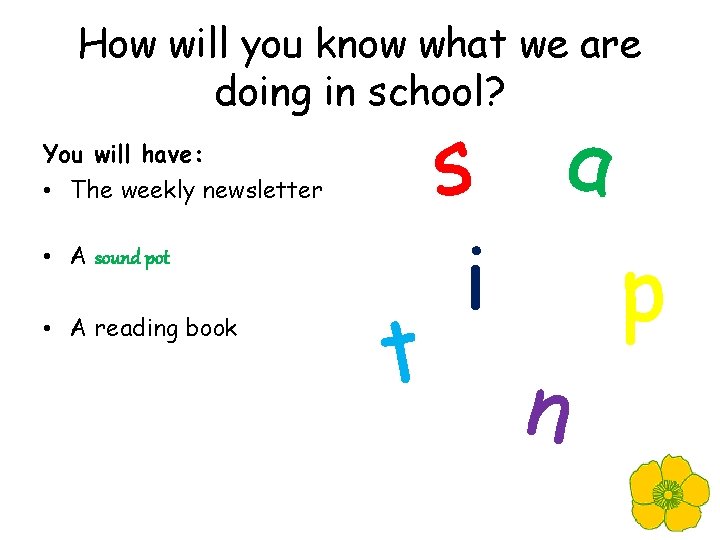
How will you know what we are doing in school? You will have: • The weekly newsletter • A sound pot • A reading book s a i p t n
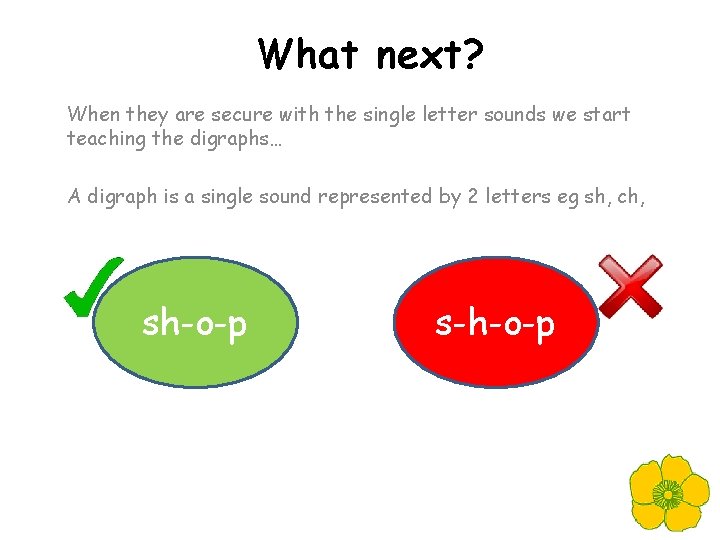
What next? When they are secure with the single letter sounds we start teaching the digraphs… A digraph is a single sound represented by 2 letters eg sh, ch, sh-o-p s-h-o-p
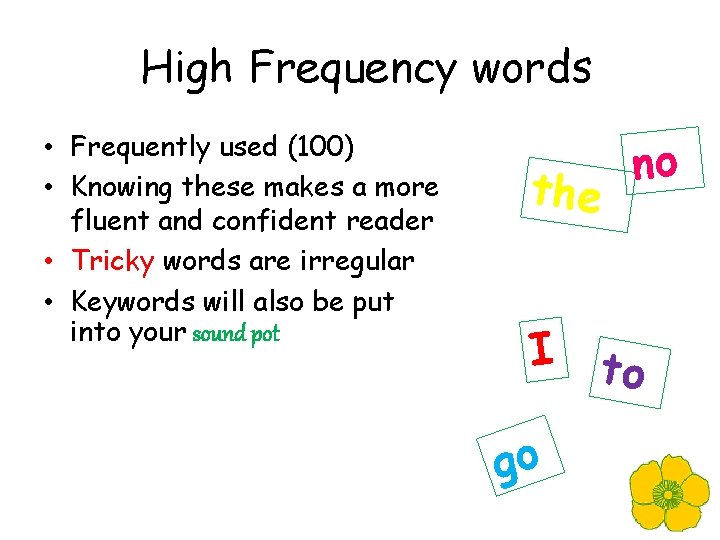
High Frequency words • Frequently used (100) • Knowing these makes a more fluent and confident reader • Tricky words are irregular • Keywords will also be put into your sound pot the no I to go
Some things to remember… • Words are made up of letters • Sentences are made up of words • Text generally goes from left to right, top to bottom
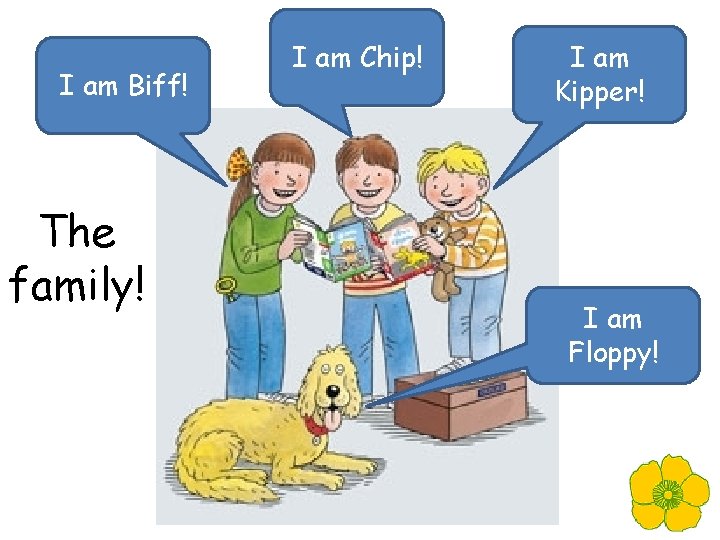
I am Biff! The family! I am Chip! I am Kipper! I am Floppy!
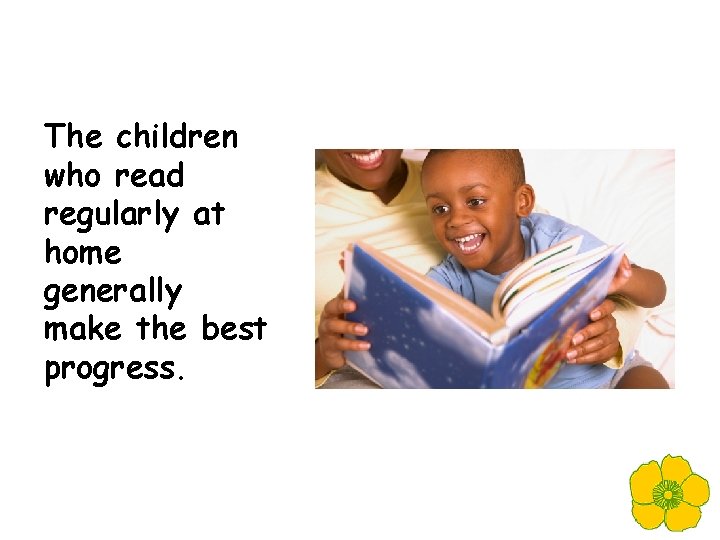
The children who read regularly at home generally make the best progress.
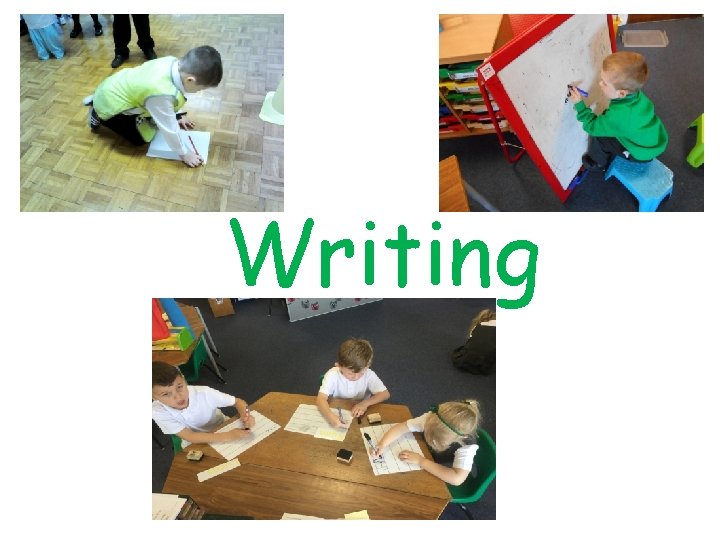
Writing
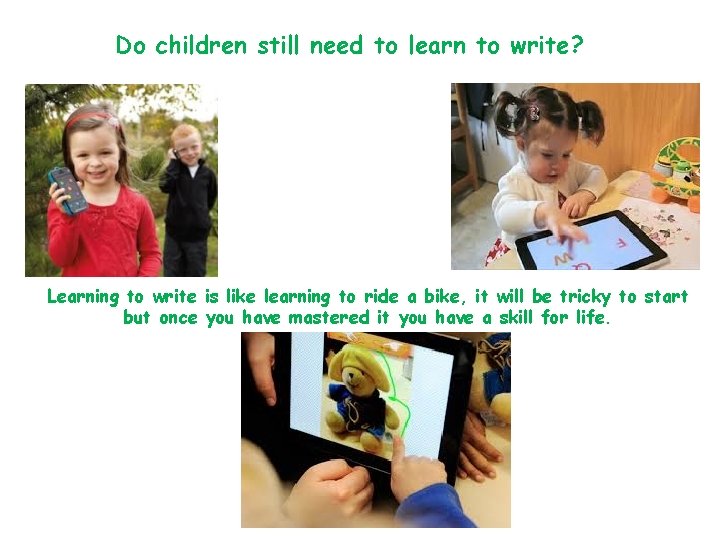
Do children still need to learn to write? Learning to write is like learning to ride a bike, it will be tricky to start but once you have mastered it you have a skill for life.
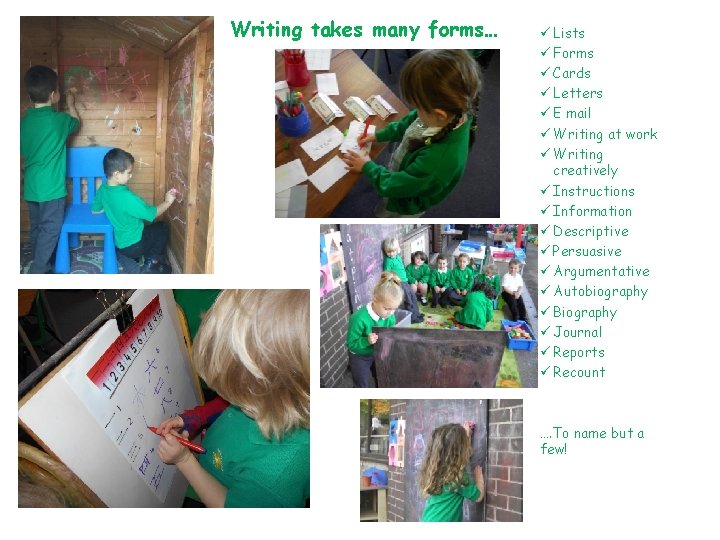
Writing takes many forms… ü Lists ü Forms ü Cards ü Letters ü E mail ü Writing at work ü Writing creatively ü Instructions ü Information ü Descriptive ü Persuasive ü Argumentative ü Autobiography ü Biography ü Journal ü Reports ü Recount …. To name but a few!
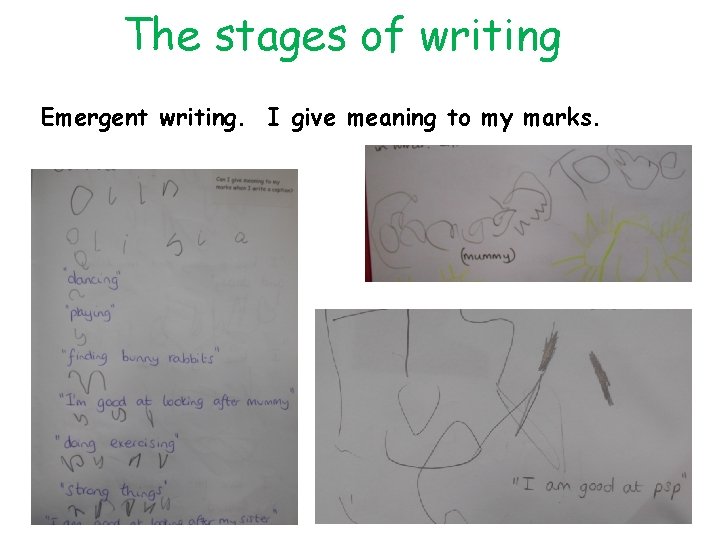
The stages of writing Emergent writing. I give meaning to my marks.
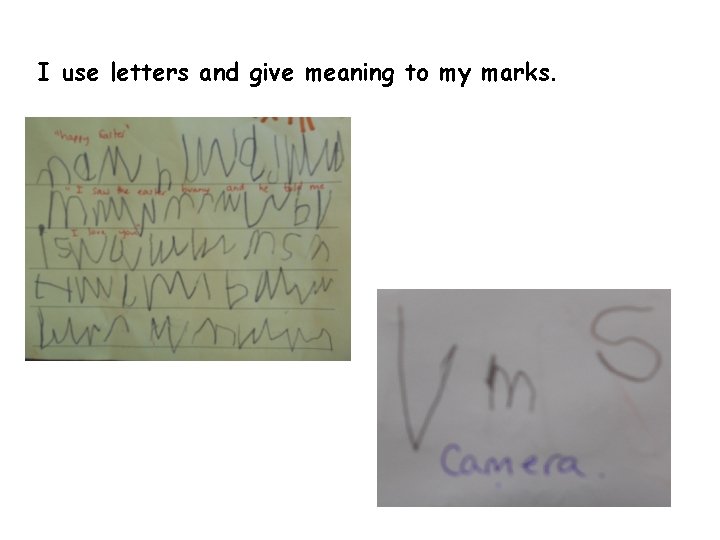
I use letters and give meaning to my marks.
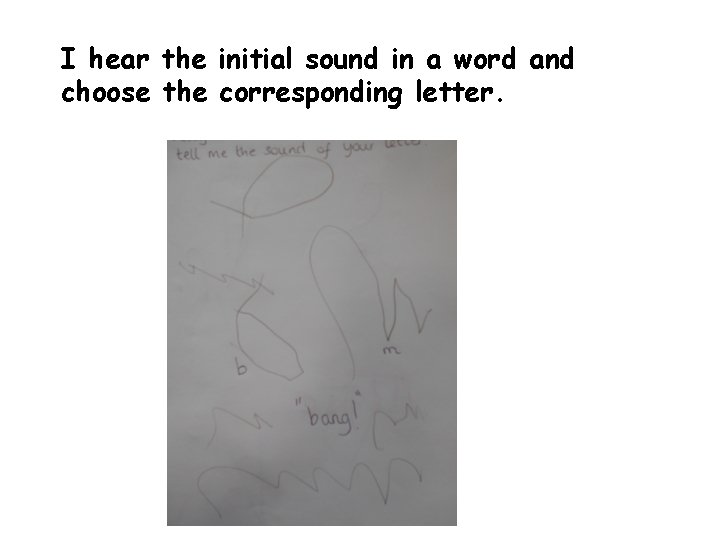
I hear the initial sound in a word and choose the corresponding letter.
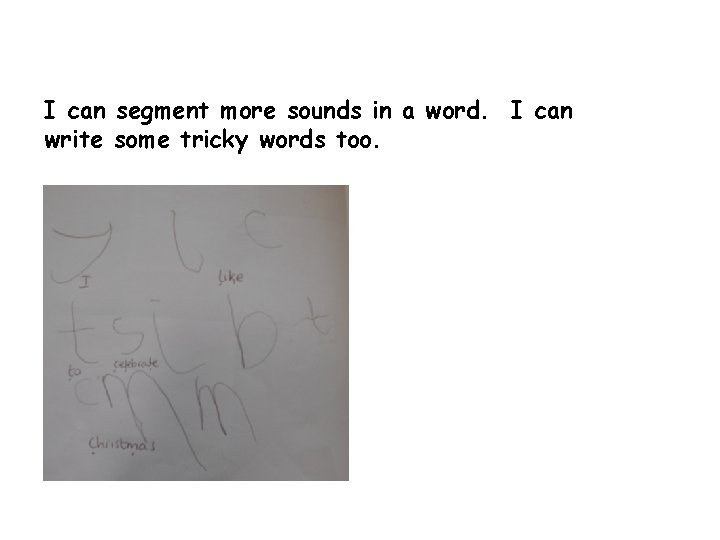
I can segment more sounds in a word. I can write some tricky words too.
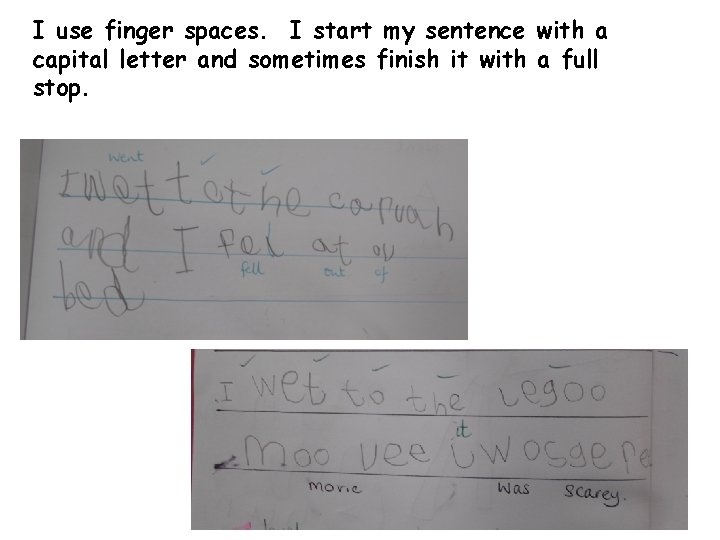
I use finger spaces. I start my sentence with a capital letter and sometimes finish it with a full stop.
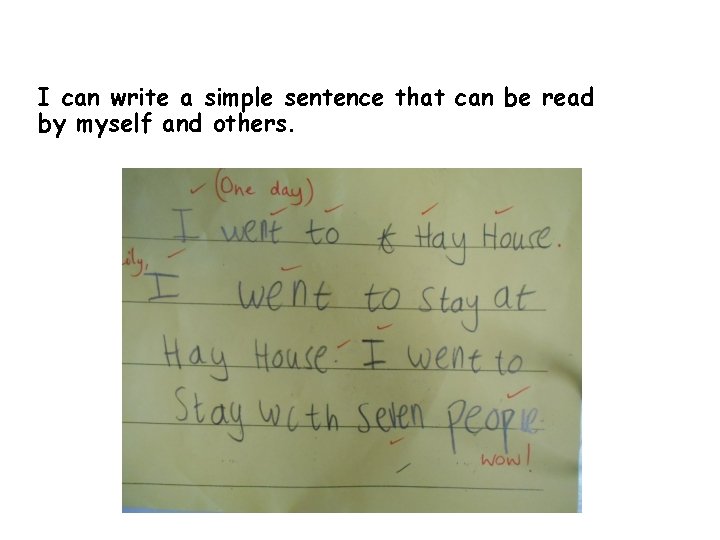
I can write a simple sentence that can be read by myself and others.
Spoken Language Ø Ø Think Speak Write Check
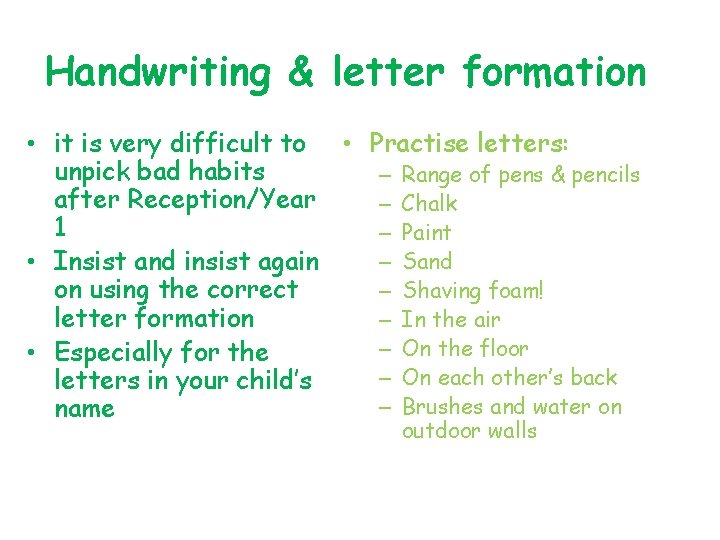
Handwriting & letter formation • it is very difficult to • Practise letters: unpick bad habits – Range of pens & pencils after Reception/Year – Chalk 1 – Paint – Sand • Insist and insist again – Shaving foam! on using the correct letter formation – In the air – On the floor • Especially for the – On each other’s back letters in your child’s – Brushes and water on name outdoor walls
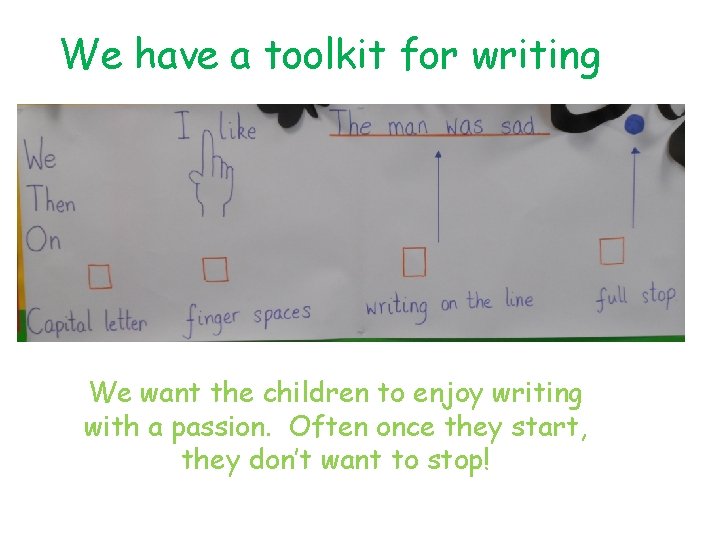
We have a toolkit for writing We want the children to enjoy writing with a passion. Often once they start, they don’t want to stop!