Welcome Knowledge Discovery and Data Mining Qiang Yang

- Slides: 19
Welcome! Knowledge Discovery and Data Mining Qiang Yang Hong Kong University of Science and Technology qyang@cs. ust. hk http: //www. cs. ust. hk 2020/12/5 Course Introduction 1
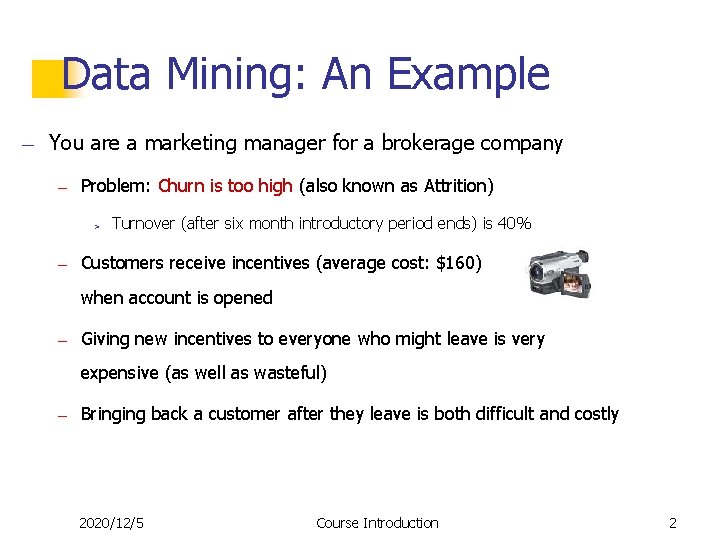
Data Mining: An Example — You are a marketing manager for a brokerage company — Problem: Churn is too high (also known as Attrition) > — Turnover (after six month introductory period ends) is 40% Customers receive incentives (average cost: $160) when account is opened — Giving new incentives to everyone who might leave is very expensive (as well as wasteful) — Bringing back a customer after they leave is both difficult and costly 2020/12/5 Course Introduction 2 2
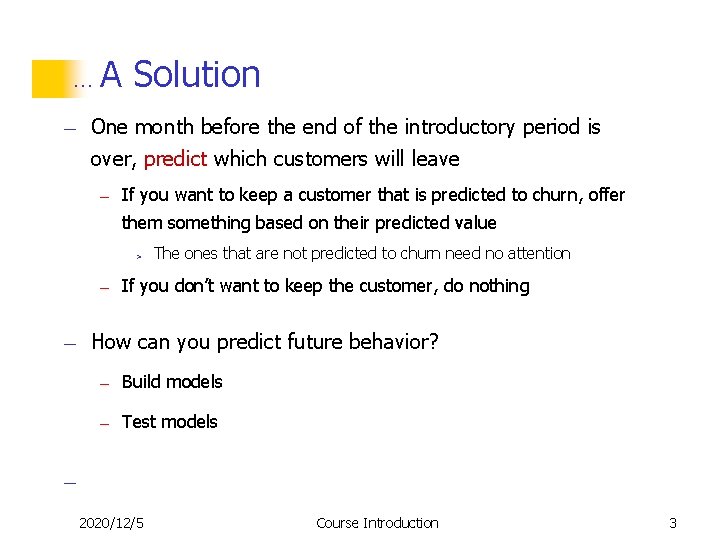
… — A Solution One month before the end of the introductory period is over, predict which customers will leave — If you want to keep a customer that is predicted to churn, offer them something based on their predicted value > — — The ones that are not predicted to churn need no attention If you don’t want to keep the customer, do nothing How can you predict future behavior? — Build models — Test models — 2020/12/5 Course Introduction 3 3
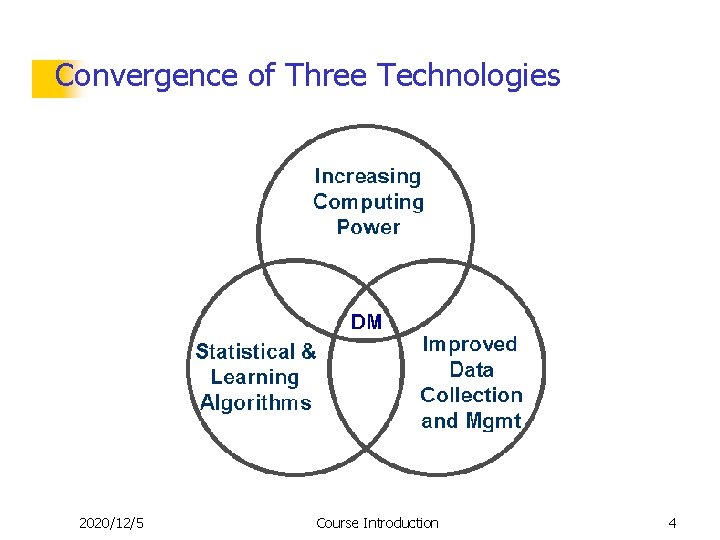
Convergence of Three Technologies 2020/12/5 Course Introduction 4 4
Why Now? 1. Increasing Computing Power — Moore’s law doubles computing power every 18 months — — Powerful workstations became common Cost effective servers (SMPs) provide parallel processing to the mass market 2020/12/5 Course Introduction 5 5
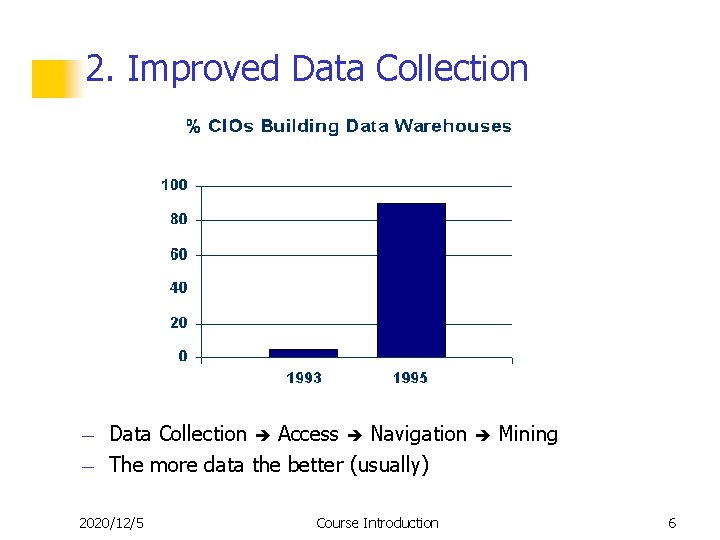
2. Improved Data Collection — — Data Collection Access Navigation The more data the better (usually) 2020/12/5 Course Introduction Mining 6 6
3. Improved Algorithms (AI + Data Base) — Techniques have often been waiting for computing technology to catch up — — Statisticians already doing “manual data mining” Good machine learning = intelligent application of statistical processes — A lot of data mining research focused on tweaking existing techniques to get small percentage gains 2020/12/5 Course Introduction 7 7
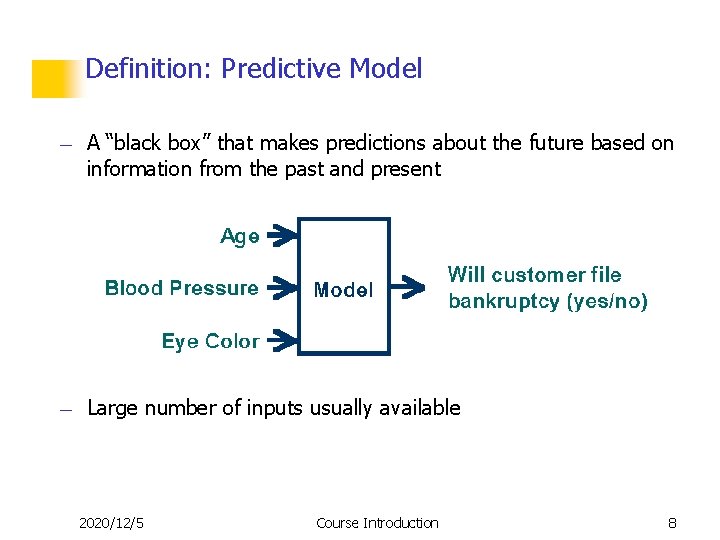
Definition: Predictive Model — — A “black box” that makes predictions about the future based on information from the past and present Large number of inputs usually available 2020/12/5 Course Introduction 8 8
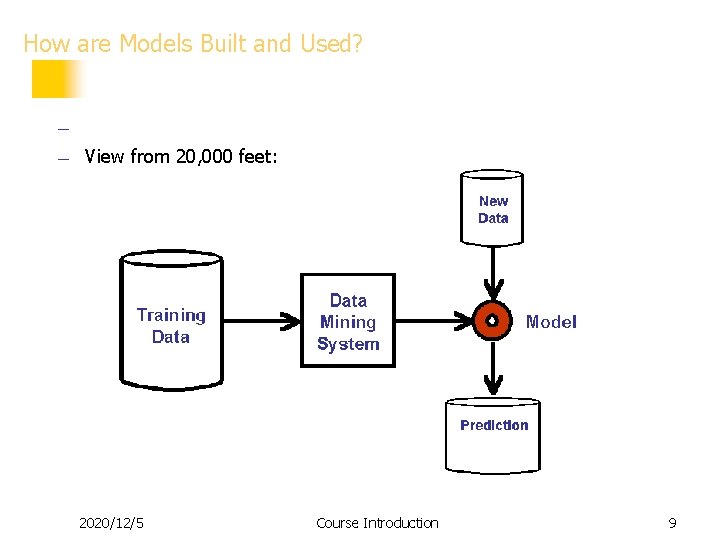
How are Models Built and Used? — — View from 20, 000 feet: 2020/12/5 Course Introduction 9 9
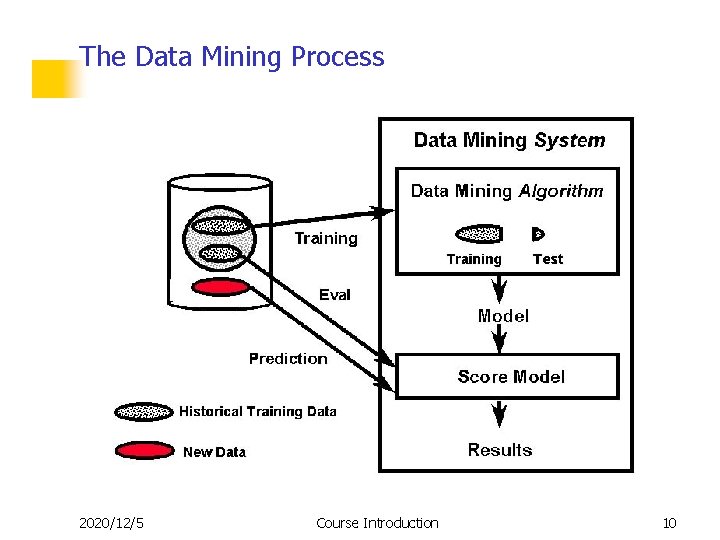
The Data Mining Process 2020/12/5 Course Introduction 10 10
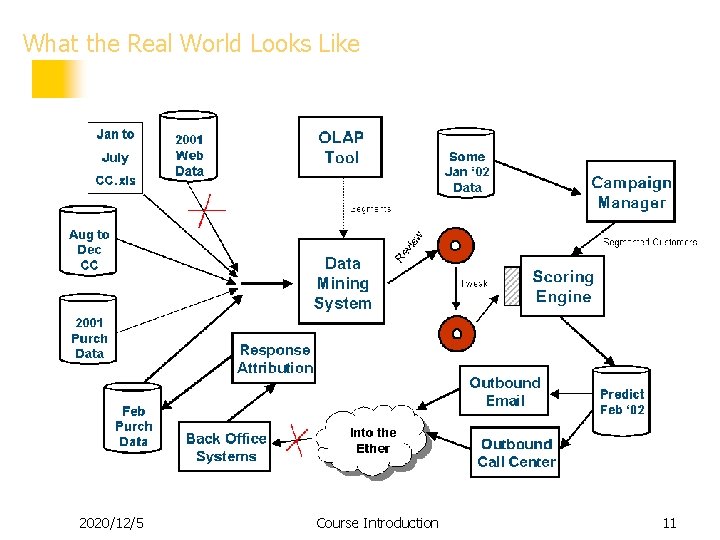
What the Real World Looks Like 2020/12/5 Course Introduction 11 11
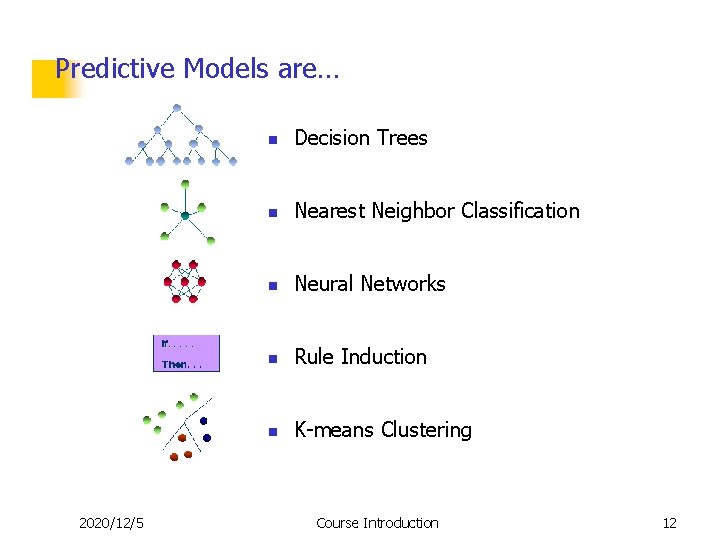
Predictive Models are… 2020/12/5 n Decision Trees n Nearest Neighbor Classification n Neural Networks n Rule Induction n K-means Clustering Course Introduction 12 12
Data Mining is Not. . . — Data warehousing — SQL / Ad Hoc Queries / Reporting — Software Agents — Online Analytical Processing (OLAP) — Data Visualization 2020/12/5 Course Introduction 13 13
Common Uses of Data Mining — — Marketing: — Direct mail marketing — Web site personalization Fraud Detection — — — Credit card fraud detection Science — Bioinformatics — Gene analysis Web & Text analysis — Google 2020/12/5 Course Introduction 14 14
Course Description § § Data Mining and Knowledge Discovery Focus: § Focus 1: Theoretical foundations in Pattern Recognition and Machine Learning § Algorithms: § § 2020/12/5 Differences? where they apply? Focus 2: Broad survey of recent research Focus 3: Hands-on, apply algorithms to KDD data sets Course Introduction 15
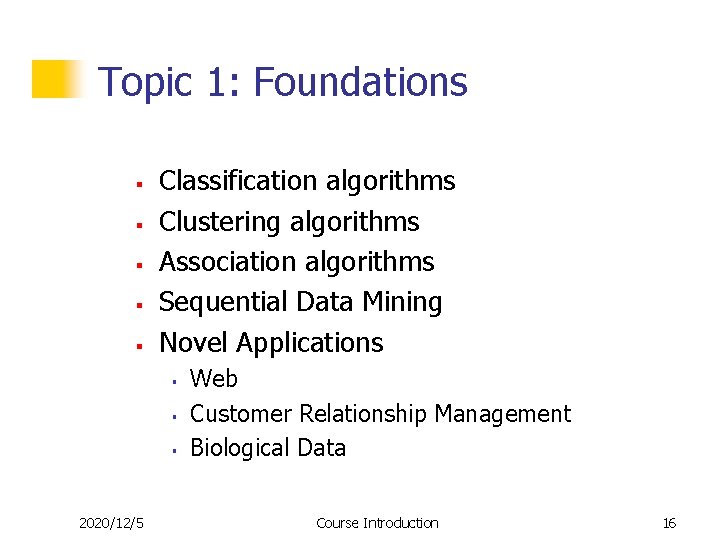
Topic 1: Foundations § § § Classification algorithms Clustering algorithms Association algorithms Sequential Data Mining Novel Applications § § § 2020/12/5 Web Customer Relationship Management Biological Data Course Introduction 16
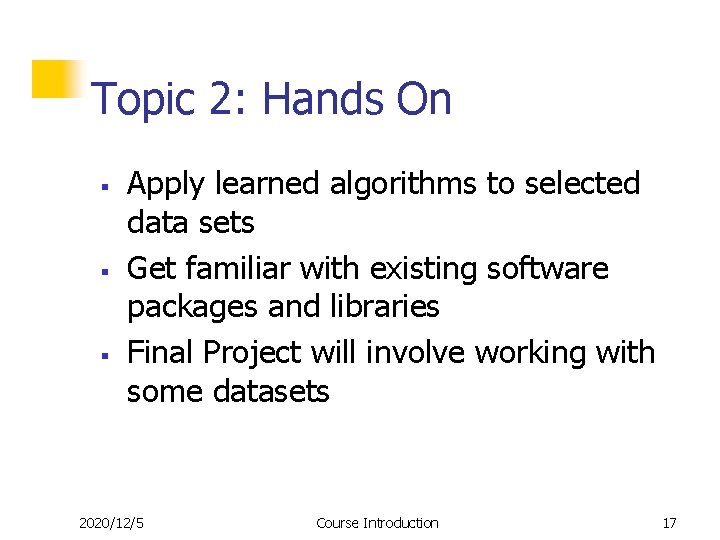
Topic 2: Hands On § § § Apply learned algorithms to selected data sets Get familiar with existing software packages and libraries Final Project will involve working with some datasets 2020/12/5 Course Introduction 17
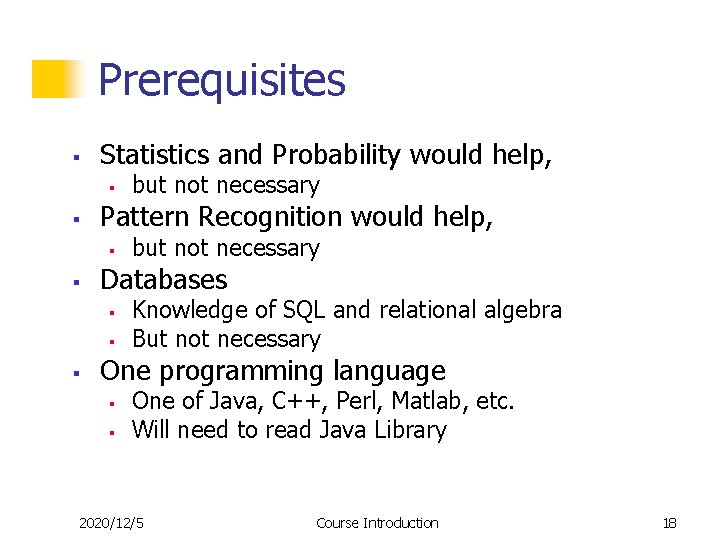
Prerequisites § Statistics and Probability would help, § § Pattern Recognition would help, § § but not necessary Databases § § § but not necessary Knowledge of SQL and relational algebra But not necessary One programming language § § One of Java, C++, Perl, Matlab, etc. Will need to read Java Library 2020/12/5 Course Introduction 18
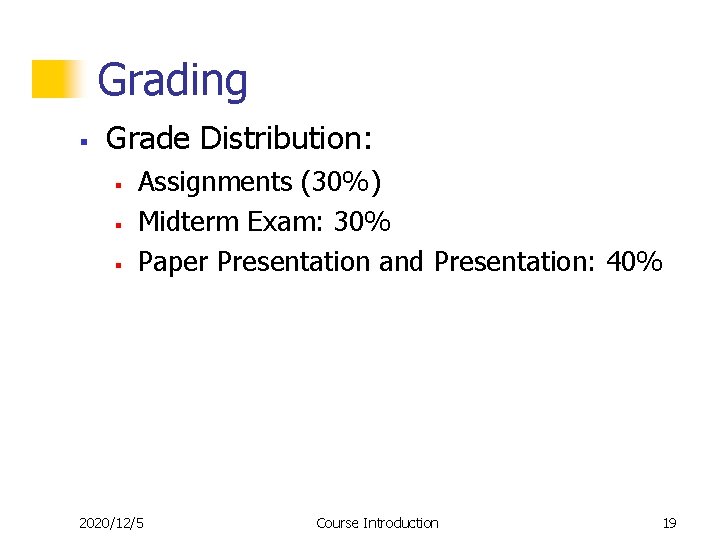
Grading § Grade Distribution: § § § Assignments (30%) Midterm Exam: 30% Paper Presentation and Presentation: 40% 2020/12/5 Course Introduction 19