Week 14 Diuretics Clearance The rate at which
- Slides: 28
Week 14 Diuretics
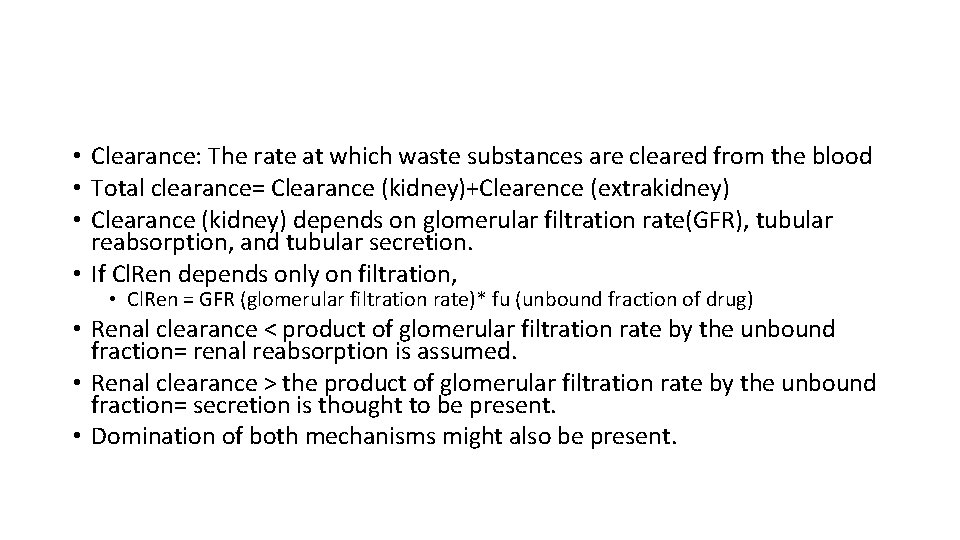
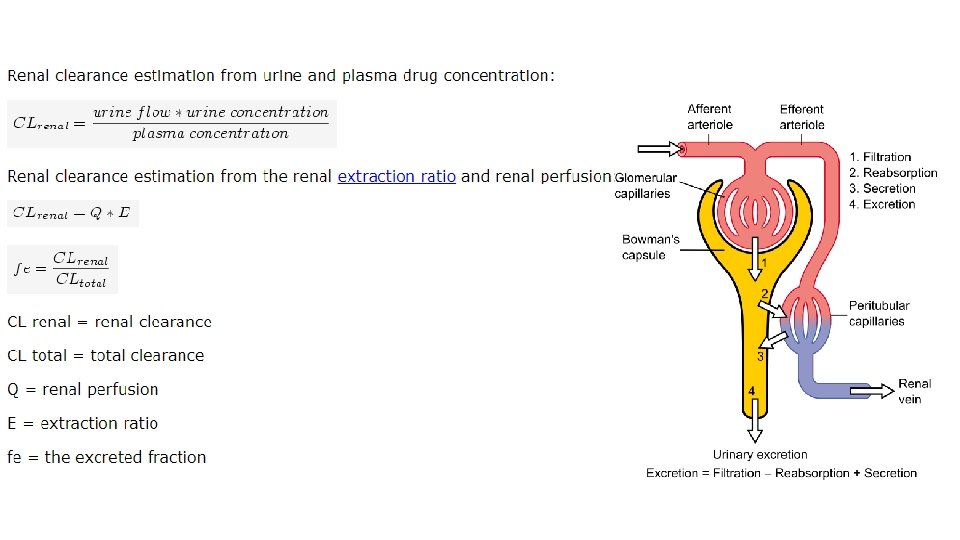
• Clearance: The rate at which waste substances are cleared from the blood • Total clearance= Clearance (kidney)+Clearence (extrakidney) • Clearance (kidney) depends on glomerular filtration rate(GFR), tubular reabsorption, and tubular secretion. • If Cl. Ren depends only on filtration, • Cl. Ren = GFR (glomerular filtration rate)* fu (unbound fraction of drug) • Renal clearance < product of glomerular filtration rate by the unbound fraction= renal reabsorption is assumed. • Renal clearance > the product of glomerular filtration rate by the unbound fraction= secretion is thought to be present. • Domination of both mechanisms might also be present.
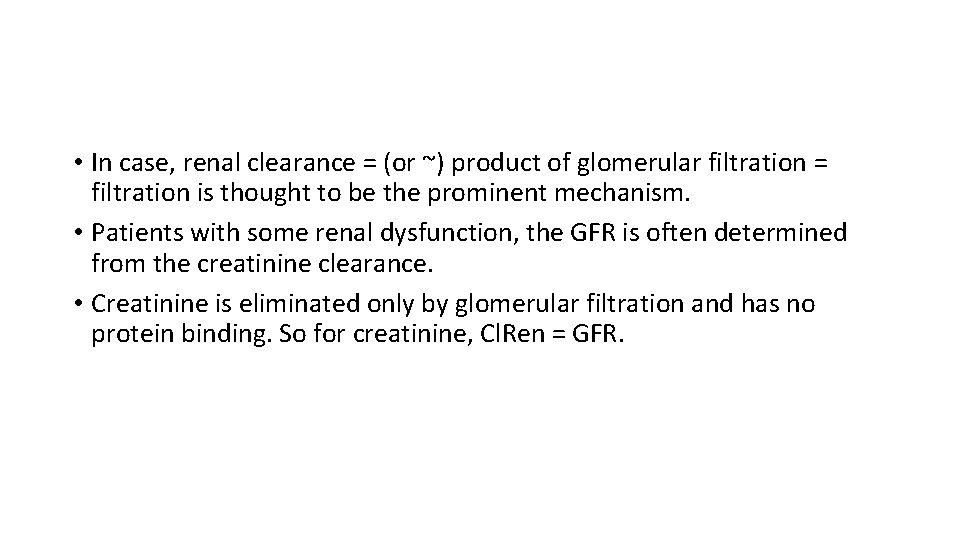
• In case, renal clearance = (or ~) product of glomerular filtration = filtration is thought to be the prominent mechanism. • Patients with some renal dysfunction, the GFR is often determined from the creatinine clearance. • Creatinine is eliminated only by glomerular filtration and has no protein binding. So for creatinine, Cl. Ren = GFR.
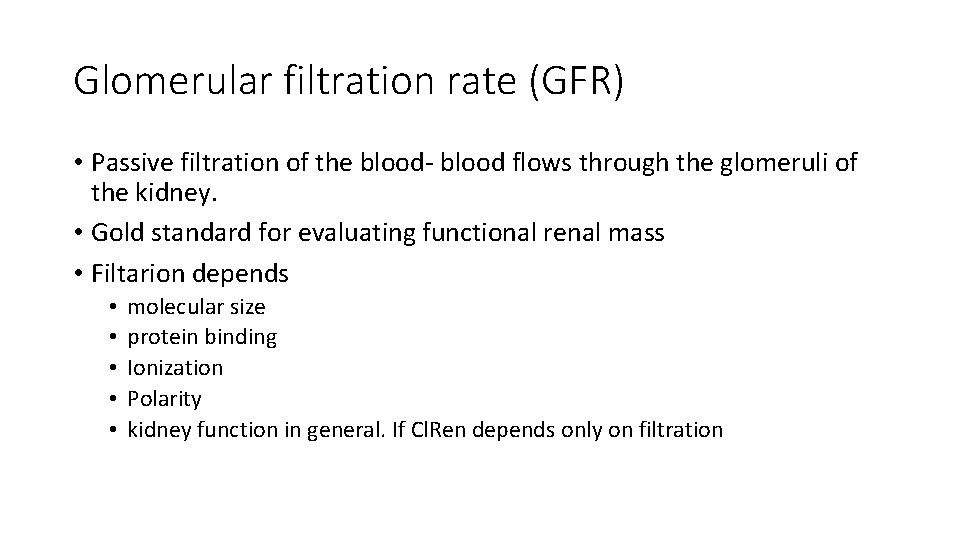
Glomerular filtration rate (GFR) • Passive filtration of the blood- blood flows through the glomeruli of the kidney. • Gold standard for evaluating functional renal mass • Filtarion depends • • • molecular size protein binding Ionization Polarity kidney function in general. If Cl. Ren depends only on filtration
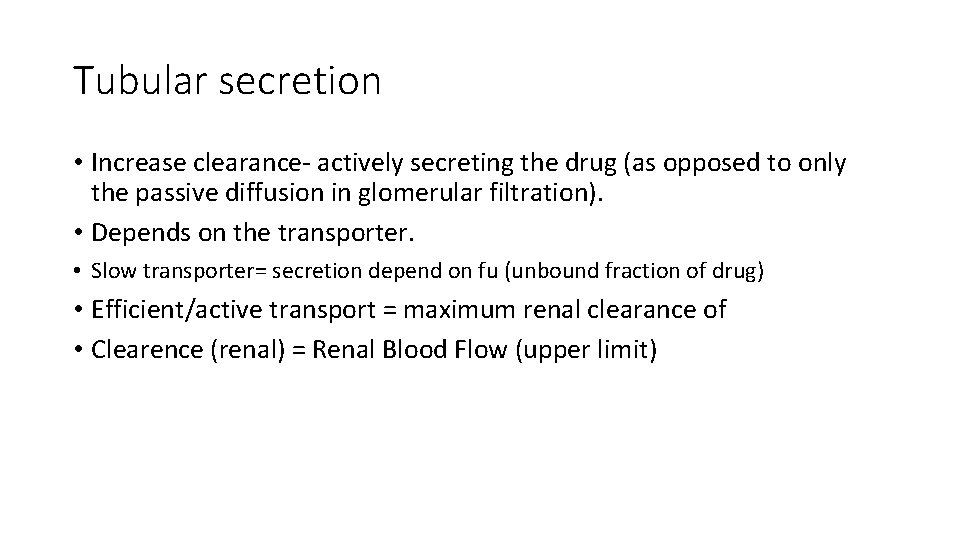
Tubular secretion • Increase clearance- actively secreting the drug (as opposed to only the passive diffusion in glomerular filtration). • Depends on the transporter. • Slow transporter= secretion depend on fu (unbound fraction of drug) • Efficient/active transport = maximum renal clearance of • Clearence (renal) = Renal Blood Flow (upper limit)
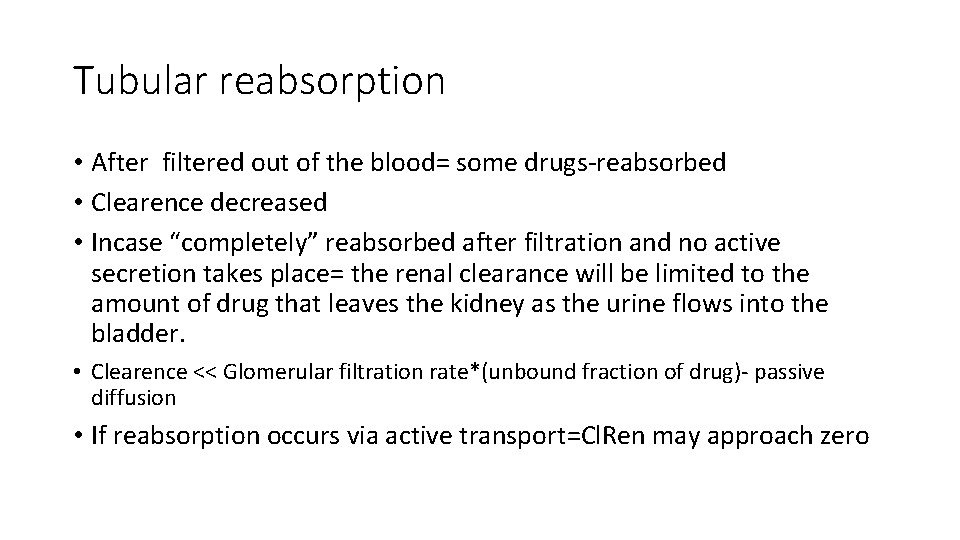
Tubular reabsorption • After filtered out of the blood= some drugs-reabsorbed • Clearence decreased • Incase “completely” reabsorbed after filtration and no active secretion takes place= the renal clearance will be limited to the amount of drug that leaves the kidney as the urine flows into the bladder. • Clearence << Glomerular filtration rate*(unbound fraction of drug)- passive diffusion • If reabsorption occurs via active transport=Cl. Ren may approach zero
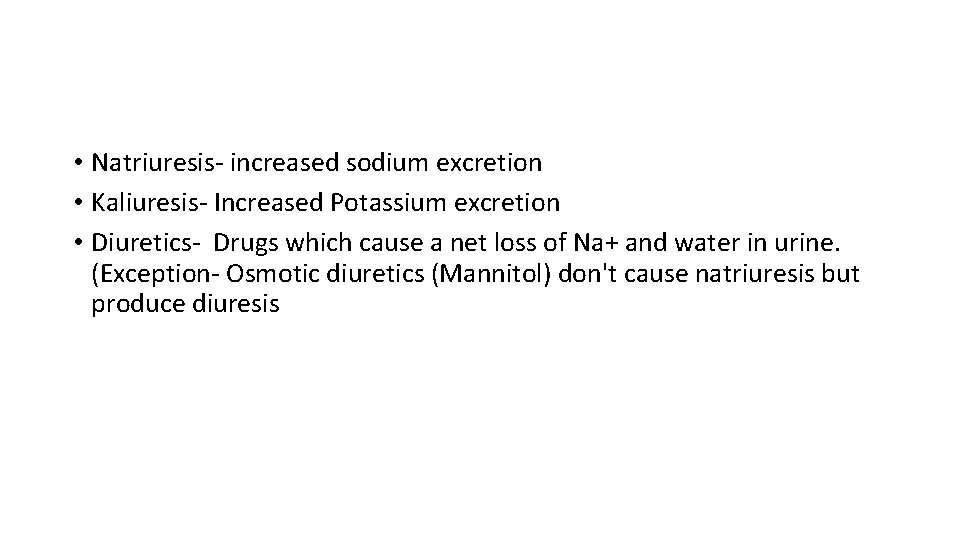
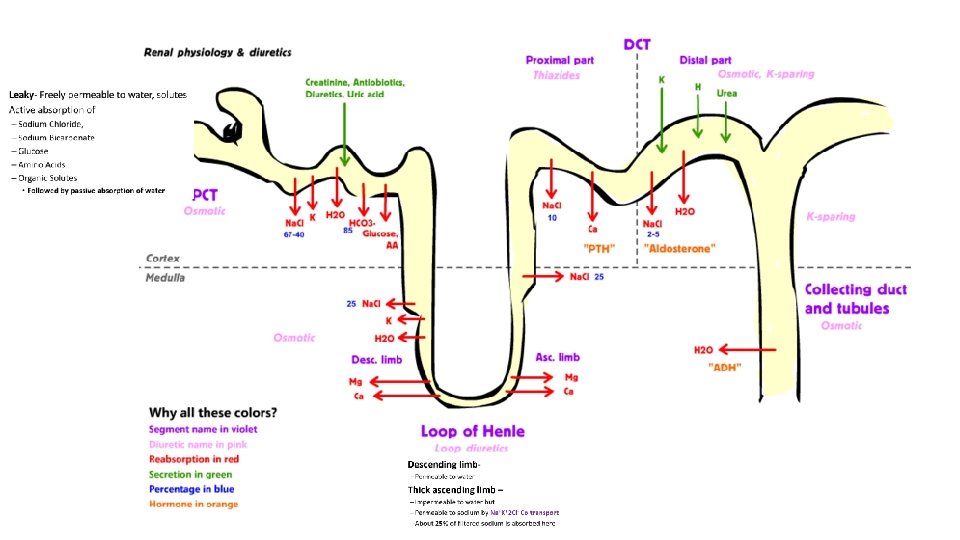
• Natriuresis- increased sodium excretion • Kaliuresis- Increased Potassium excretion • Diuretics- Drugs which cause a net loss of Na+ and water in urine. (Exception- Osmotic diuretics (Mannitol) don't cause natriuresis but produce diuresis
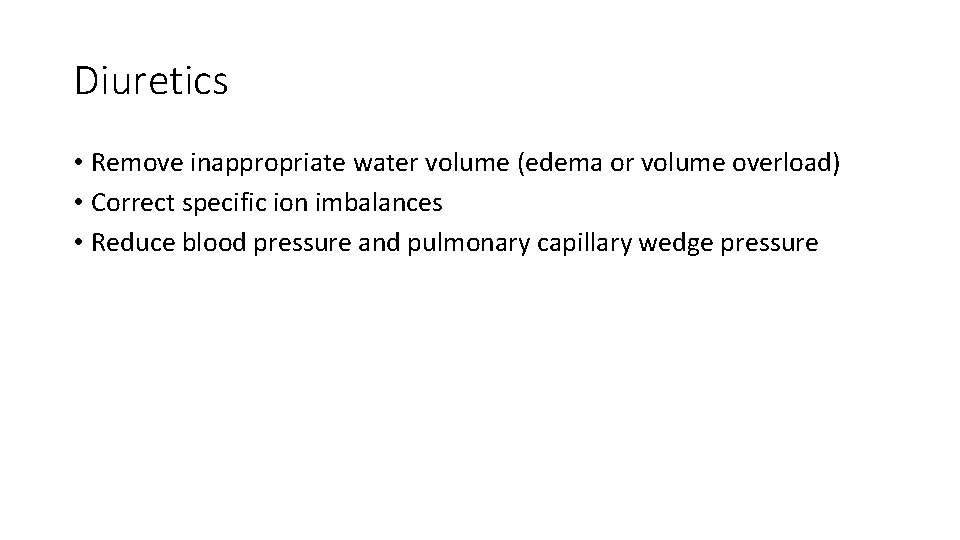
Diuretics • Remove inappropriate water volume (edema or volume overload) • Correct specific ion imbalances • Reduce blood pressure and pulmonary capillary wedge pressure
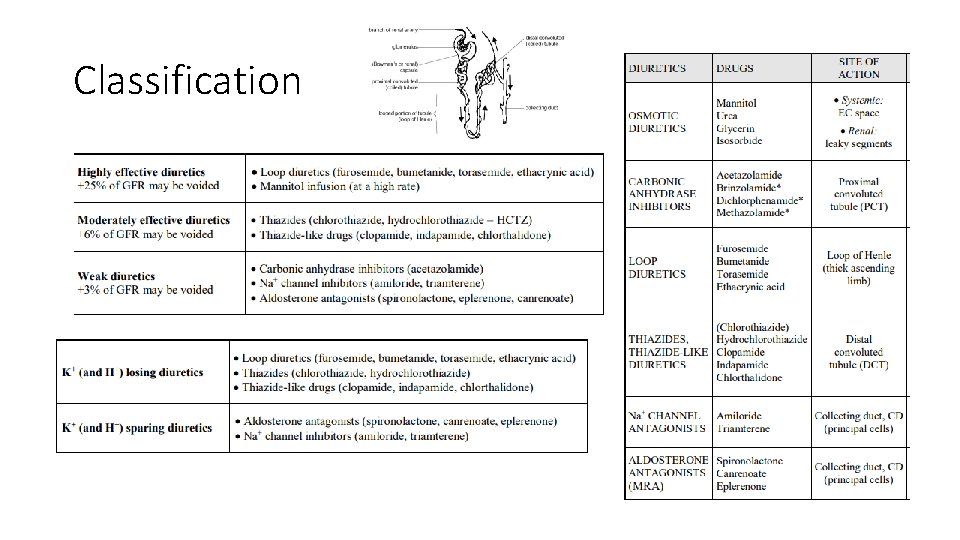
Classification
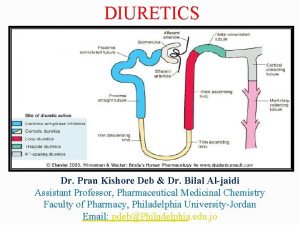
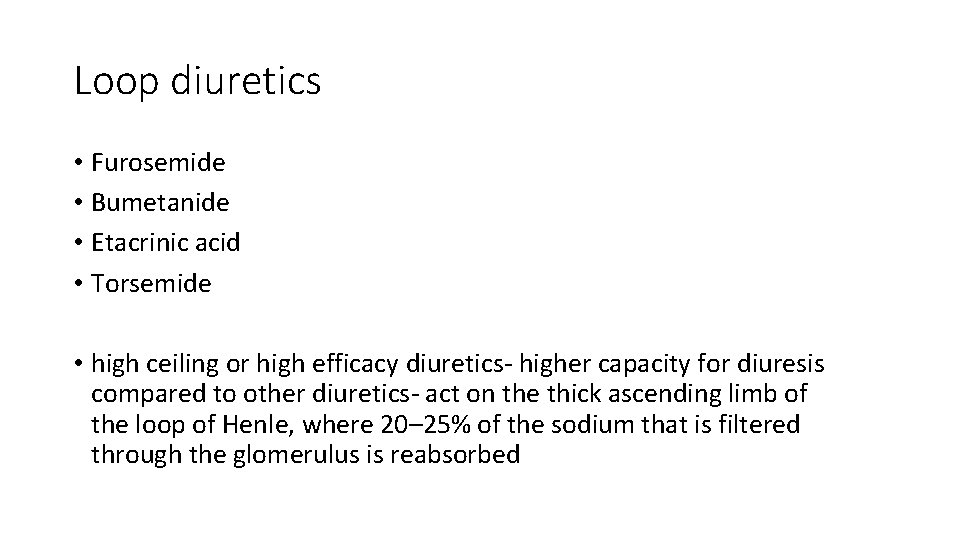
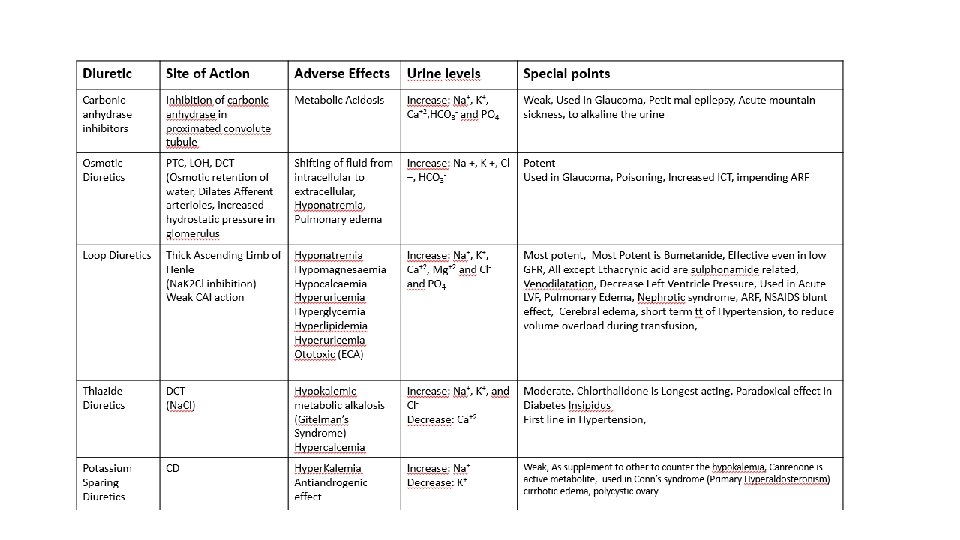
Loop diuretics • Furosemide • Bumetanide • Etacrinic acid • Torsemide • high ceiling or high efficacy diuretics- higher capacity for diuresis compared to other diuretics- act on the thick ascending limb of the loop of Henle, where 20– 25% of the sodium that is filtered through the glomerulus is reabsorbed
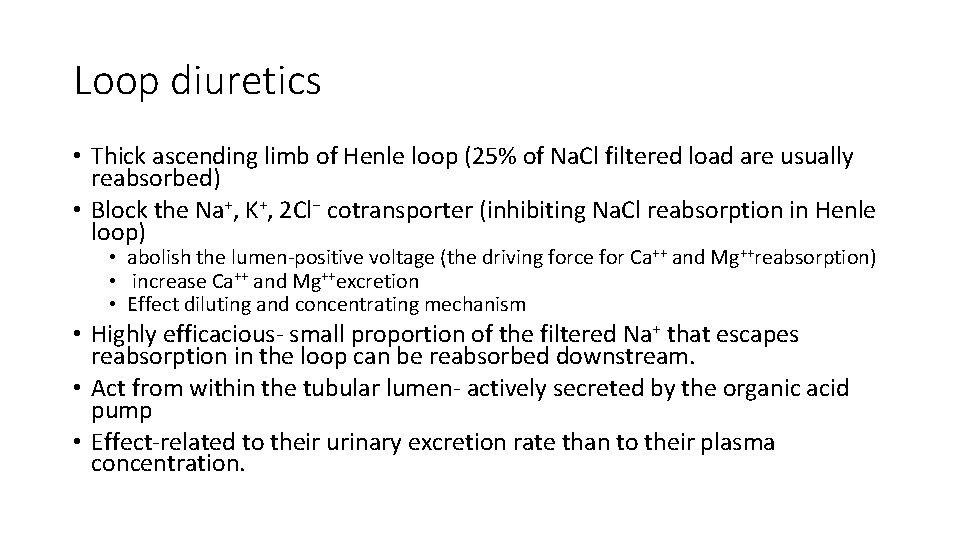
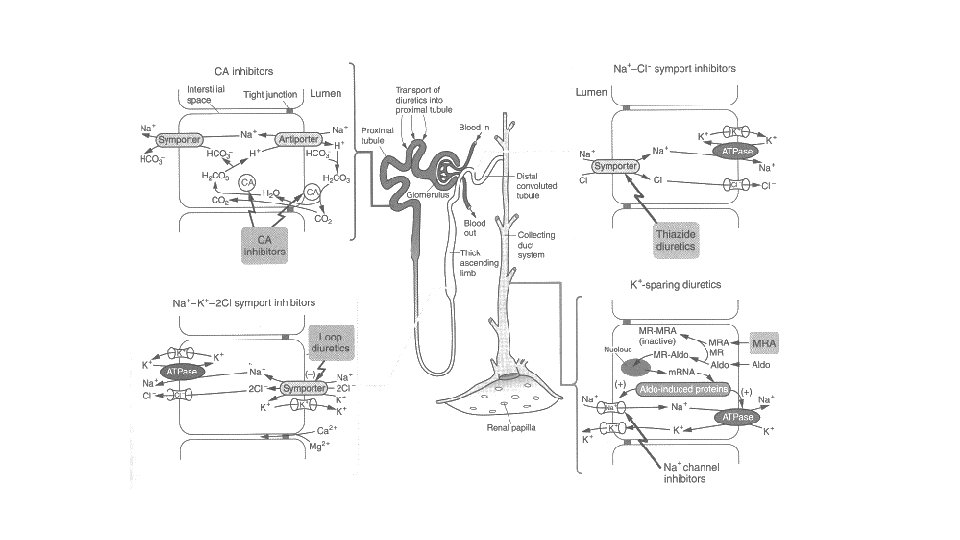
Loop diuretics • Thick ascending limb of Henle loop (25% of Na. Cl filtered load are usually reabsorbed) • Block the Na+, K+, 2 Cl− cotransporter (inhibiting Na. Cl reabsorption in Henle loop) • abolish the lumen-positive voltage (the driving force for Ca++ and Mg++reabsorption) • increase Ca++ and Mg++excretion • Effect diluting and concentrating mechanism • Highly efficacious- small proportion of the filtered Na+ that escapes reabsorption in the loop can be reabsorbed downstream. • Act from within the tubular lumen- actively secreted by the organic acid pump • Effect-related to their urinary excretion rate than to their plasma concentration.
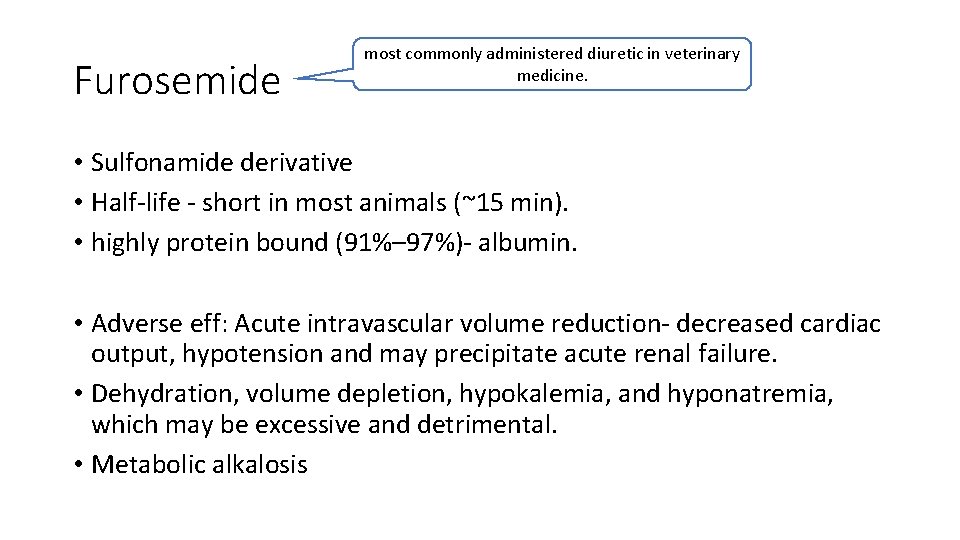
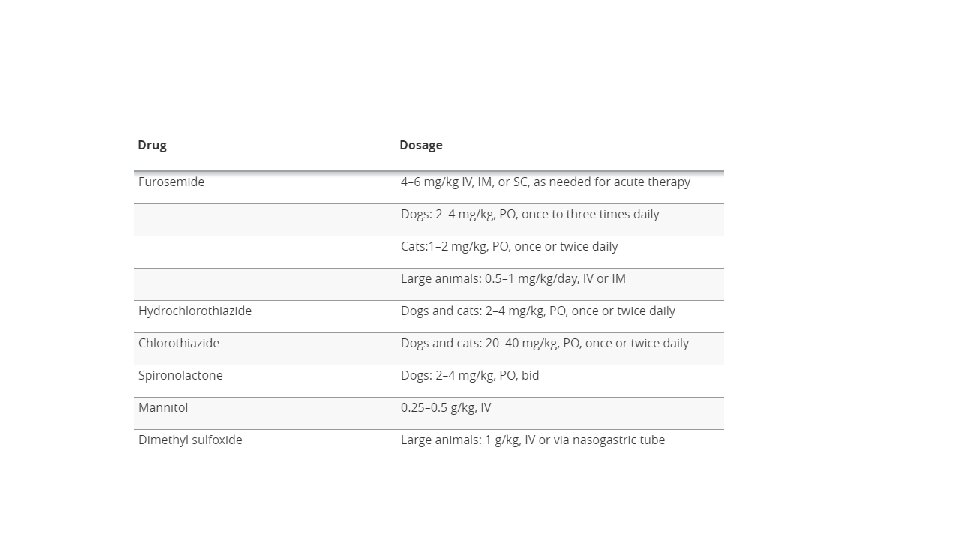
Furosemide most commonly administered diuretic in veterinary medicine. • Sulfonamide derivative • Half-life - short in most animals (~15 min). • highly protein bound (91%– 97%)- albumin. • Adverse eff: Acute intravascular volume reduction- decreased cardiac output, hypotension and may precipitate acute renal failure. • Dehydration, volume depletion, hypokalemia, and hyponatremia, which may be excessive and detrimental. • Metabolic alkalosis
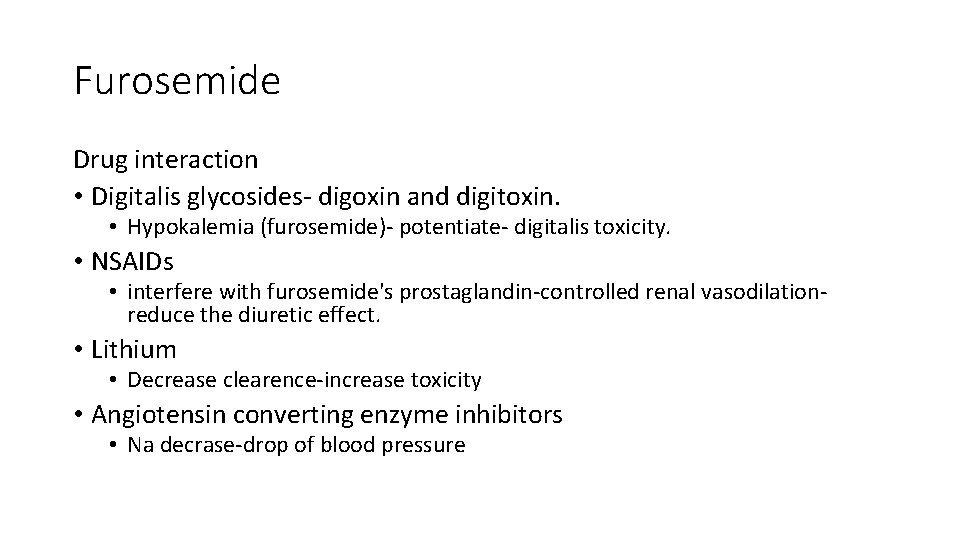
Furosemide Drug interaction • Digitalis glycosides- digoxin and digitoxin. • Hypokalemia (furosemide)- potentiate- digitalis toxicity. • NSAIDs • interfere with furosemide's prostaglandin-controlled renal vasodilationreduce the diuretic effect. • Lithium • Decrease clearence-increase toxicity • Angiotensin converting enzyme inhibitors • Na decrase-drop of blood pressure
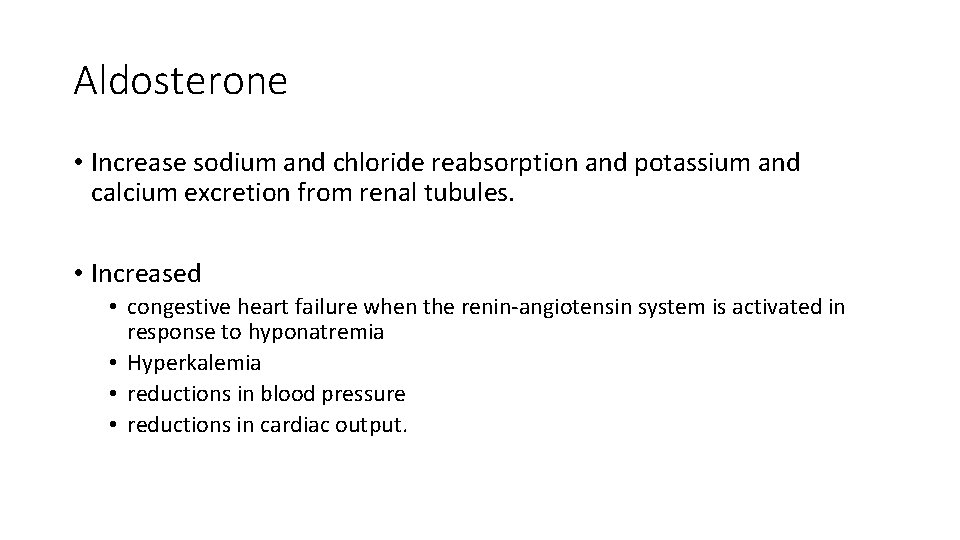
Aldosterone • Increase sodium and chloride reabsorption and potassium and calcium excretion from renal tubules. • Increased • congestive heart failure when the renin-angiotensin system is activated in response to hyponatremia • Hyperkalemia • reductions in blood pressure • reductions in cardiac output.
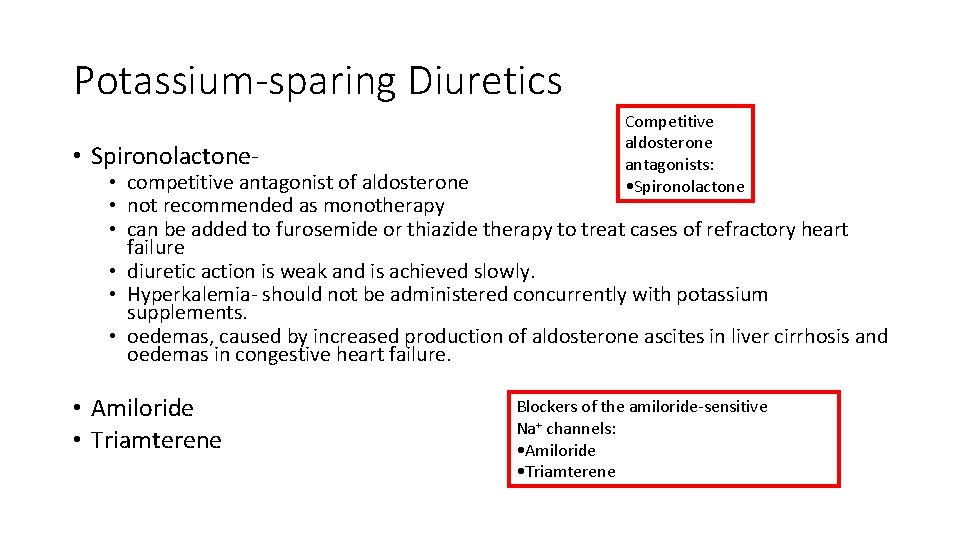
Potassium-sparing Diuretics • Spironolactone- Competitive aldosterone antagonists: • Spironolactone • competitive antagonist of aldosterone • not recommended as monotherapy • can be added to furosemide or thiazide therapy to treat cases of refractory heart failure • diuretic action is weak and is achieved slowly. • Hyperkalemia- should not be administered concurrently with potassium supplements. • oedemas, caused by increased production of aldosterone ascites in liver cirrhosis and oedemas in congestive heart failure. • Amiloride • Triamterene Blockers of the amiloride-sensitive Na+ channels: • Amiloride • Triamterene
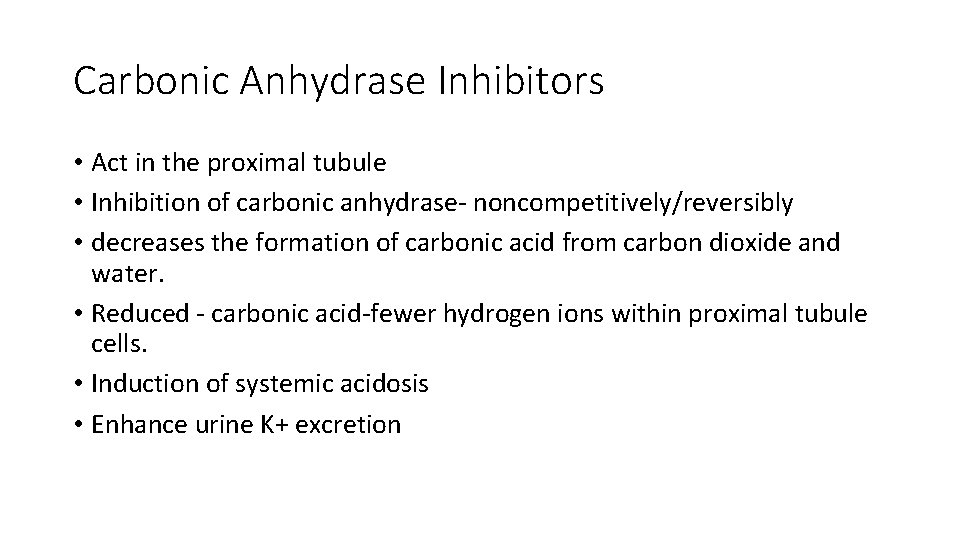
Carbonic Anhydrase Inhibitors • Act in the proximal tubule • Inhibition of carbonic anhydrase- noncompetitively/reversibly • decreases the formation of carbonic acid from carbon dioxide and water. • Reduced - carbonic acid-fewer hydrogen ions within proximal tubule cells. • Induction of systemic acidosis • Enhance urine K+ excretion
Carbonic Anhydrase Inhibitors • Acetazolamide – nonbacteriostatic sulfpnamide • weak diuretic action. • Metazolamide • Dorzolamide • Blocks also carbonic anhydrase in the ciliary body in the eye (reducing production of eye liquid) and in the brain (facilitation of GABA synthesis) • Incase given with salicylates- CA cummunulation- CNS toxicity+metabolic acidosis
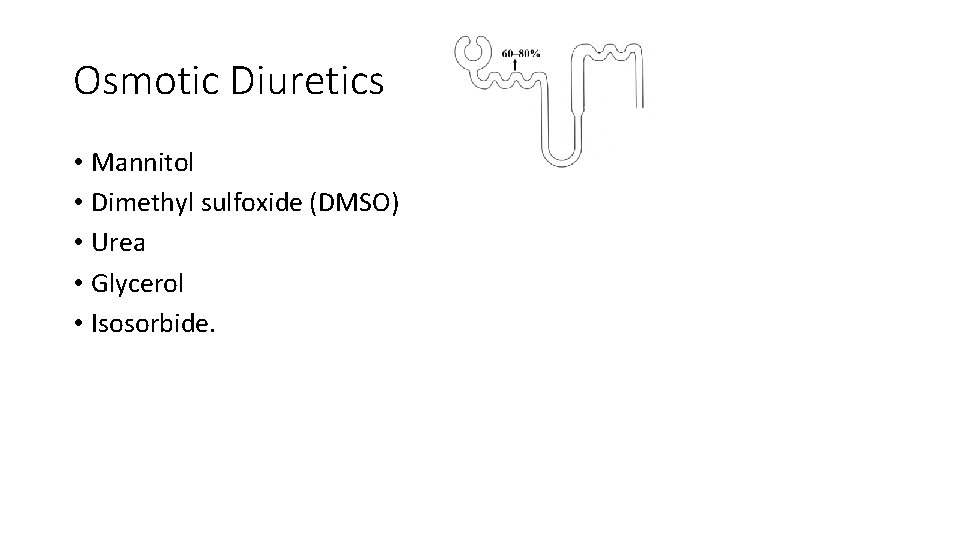
Osmotic Diuretics • Mannitol • Dimethyl sulfoxide (DMSO) • Urea • Glycerol • Isosorbide.
Osmotic Diuretics Mannitol • Commonly used in small animals (expensive for large animals-DMSO used as alternative). • Protectant- renal tubular damage • Does not influence renin synthesis. • Does not cross tissue barriers (BBB neither) • Does not penetrate to the eye and brain and in osmotic way reduces intraocular and intra-cranial pressure. • Brain oedema, initial stages of acute renal failure, chronic renal failure, glaucoma, intoxications with drugs DMSO Large animals - inflammatory and edematous conditions can penetrate intact skin and carry other chemicals along with it • May cause dehydration, hypernatremia, nausea and vomiting
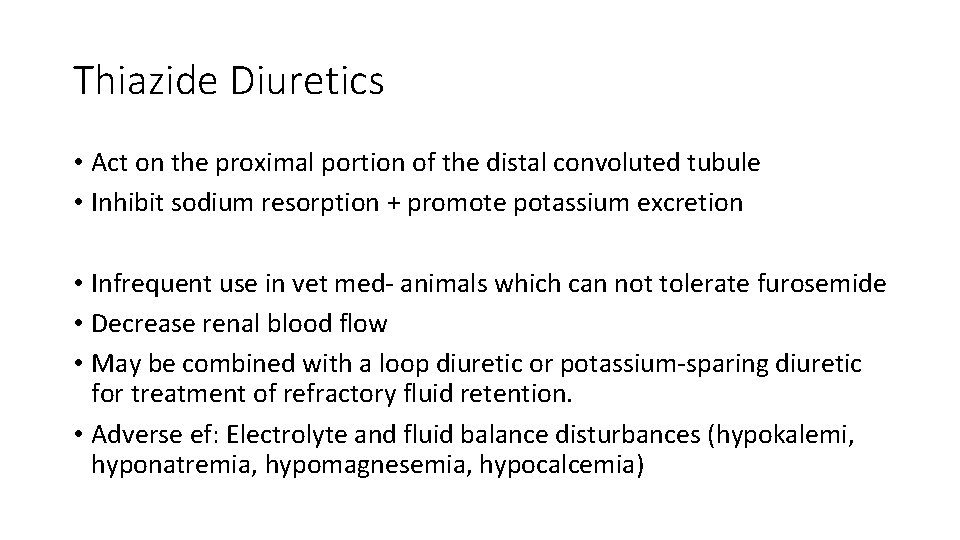
Thiazide Diuretics • Hydrochlorothiazide • Chlorothiazide • Indapamide • Metolazone • Chlortalidone Not potent as furosemide
Thiazide Diuretics • Act on the proximal portion of the distal convoluted tubule • Inhibit sodium resorption + promote potassium excretion • Infrequent use in vet med- animals which can not tolerate furosemide • Decrease renal blood flow • May be combined with a loop diuretic or potassium-sparing diuretic for treatment of refractory fluid retention. • Adverse ef: Electrolyte and fluid balance disturbances (hypokalemi, hyponatremia, hypomagnesemia, hypocalcemia)
Selection of some diuretics • Congestive heart failure- Furosemide • Acute lung edema- Furosemide • Hypertension-Hydrochlorotiazide • Kidney cirrhosis-Spironolacton • Diabetes insipitus (induced by lithium)- Amiloride • Ca Stones-Hydrochlorotiazide • Idiopatic hypercalciurea-Hydrochlorotiazide • Diabetes insipitus (nephrogenic)-hydroclorothiazide
Phytodiuretics • Rhizoma Graminis (Couch-grass) • Stipites Cerasorum (Cherry) • Fructus Petroselini (Parsley) • Stigmata Maydis (Maize, corn) • Fructus Faseoli sine semine (Haricot) MOA: Act on different sites