WATER FOOD AND INDIGENOUS CULTURE Yury Sumarokov MD
- Slides: 19
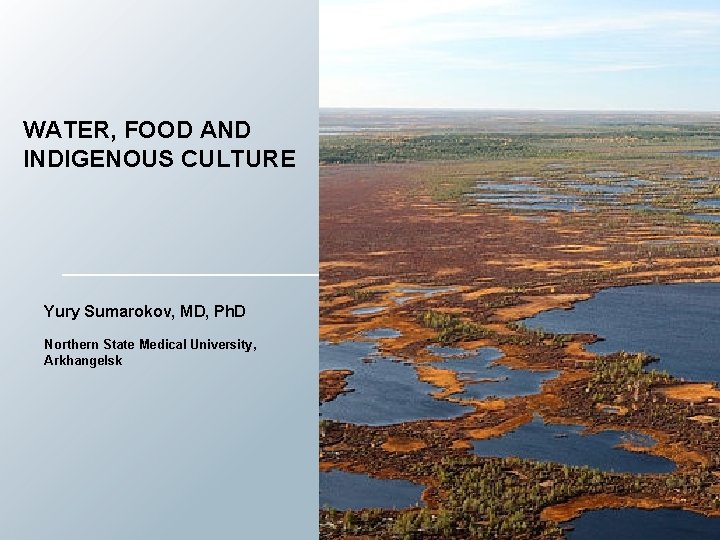
WATER, FOOD AND INDIGENOUS CULTURE Yury Sumarokov, MD, Ph. D Northern State Medical University, Arkhangelsk
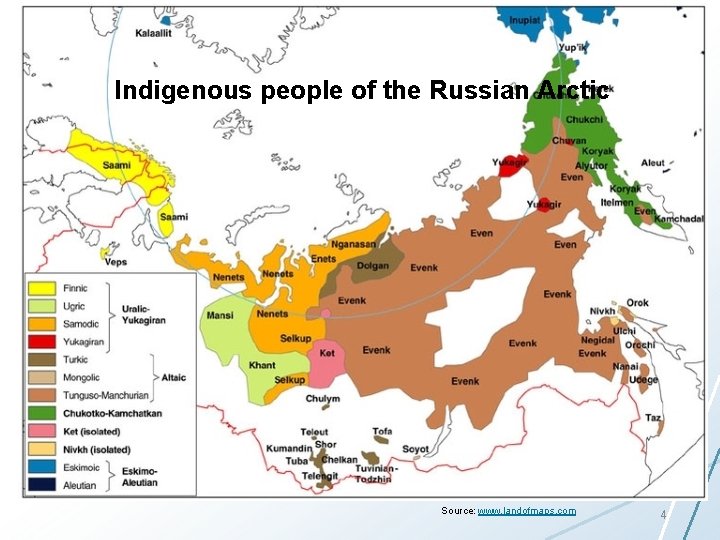
Indigenous people of the Russian Arctic Source: www. landofmaps. com 4
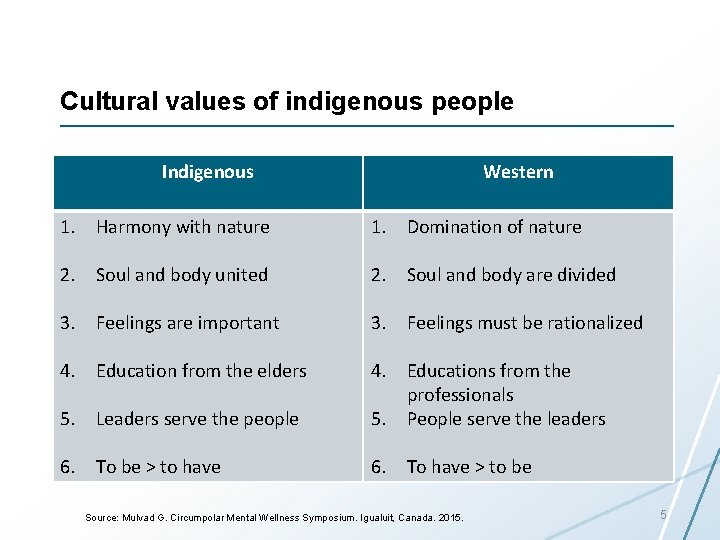
Cultural values of indigenous people Indigenous Western 1. Harmony with nature 1. Domination of nature 2. Soul and body united 2. Soul and body are divided 3. Feelings are important 3. Feelings must be rationalized 4. Education from the elders 5. Leaders serve the people 4. Educations from the professionals 5. People serve the leaders 6. To be > to have 6. To have > to be Source: Mulvad G. Circumpolar Mental Wellness Symposium. Igualuit, Canada. 2015. 5
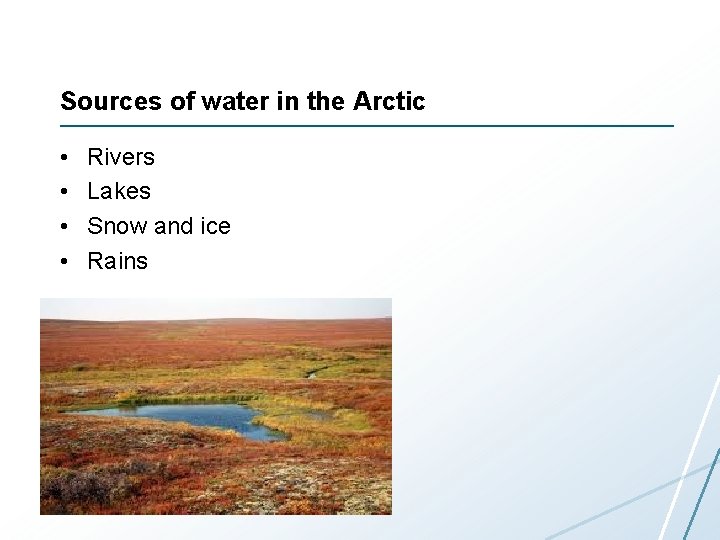
Sources of water in the Arctic • • Rivers Lakes Snow and ice Rains
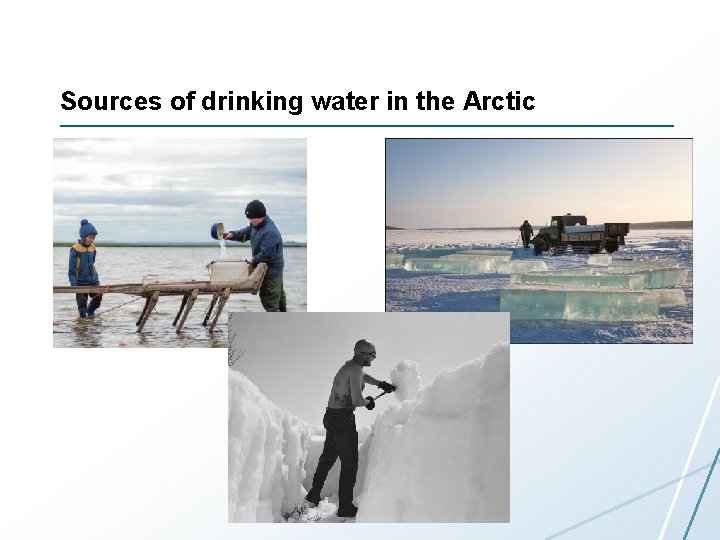
Sources of drinking water in the Arctic
Indigenous values of water • • Water is source of life and food Water is health Water is communication (logistics) Water is home of spirits (religion and spiritual value)
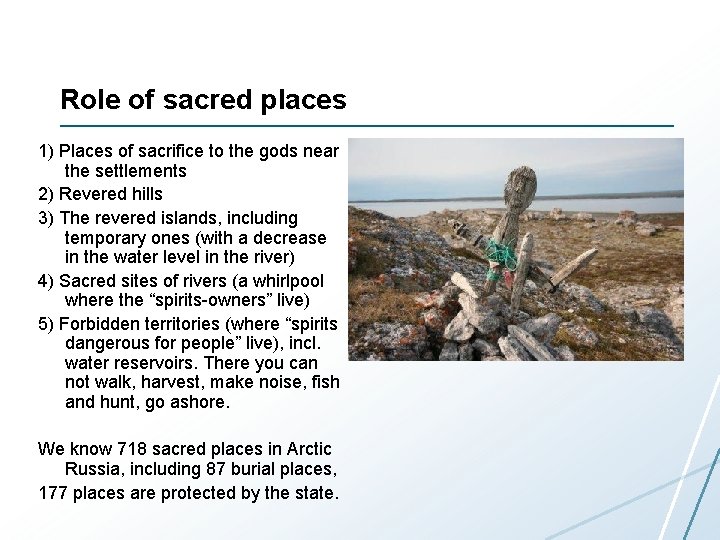
Role of sacred places 1) Places of sacrifice to the gods near the settlements 2) Revered hills 3) The revered islands, including temporary ones (with a decrease in the water level in the river) 4) Sacred sites of rivers (a whirlpool where the “spirits-owners” live) 5) Forbidden territories (where “spirits dangerous for people” live), incl. water reservoirs. There you can not walk, harvest, make noise, fish and hunt, go ashore. We know 718 sacred places in Arctic Russia, including 87 burial places, 177 places are protected by the state.
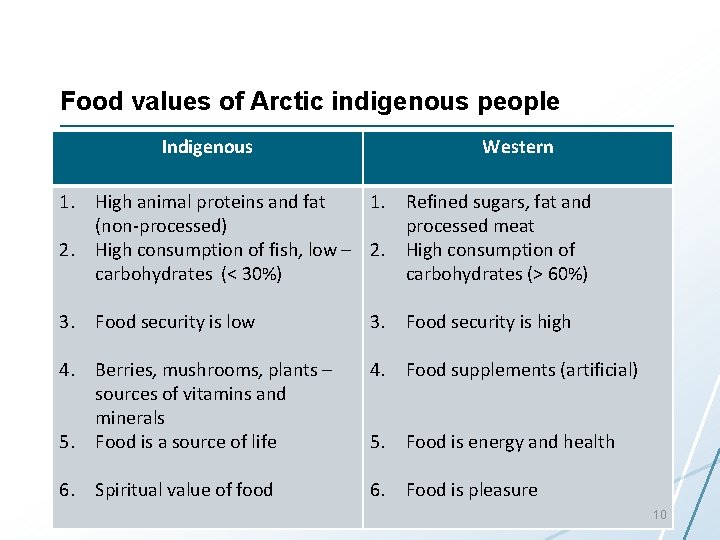
Food values of Arctic indigenous people Indigenous Western 1. High animal proteins and fat 1. Refined sugars, fat and (non-processed) processed meat 2. High consumption of fish, low – 2. High consumption of carbohydrates (< 30%) carbohydrates (> 60%) 3. Food security is low 3. Food security is high 4. Berries, mushrooms, plants – sources of vitamins and minerals 5. Food is a source of life 4. Food supplements (artificial) 6. Spiritual value of food 6. Food is pleasure 5. Food is energy and health 10
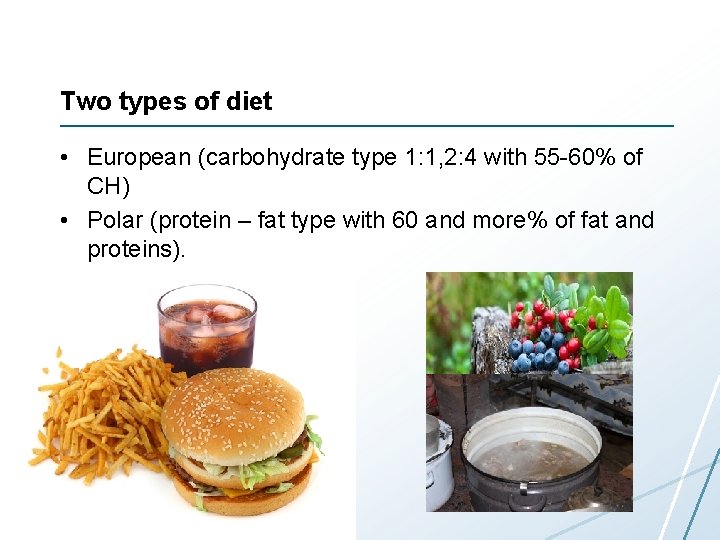
Two types of diet • European (carbohydrate type 1: 1, 2: 4 with 55 -60% of CH) • Polar (protein – fat type with 60 and more% of fat and proteins).
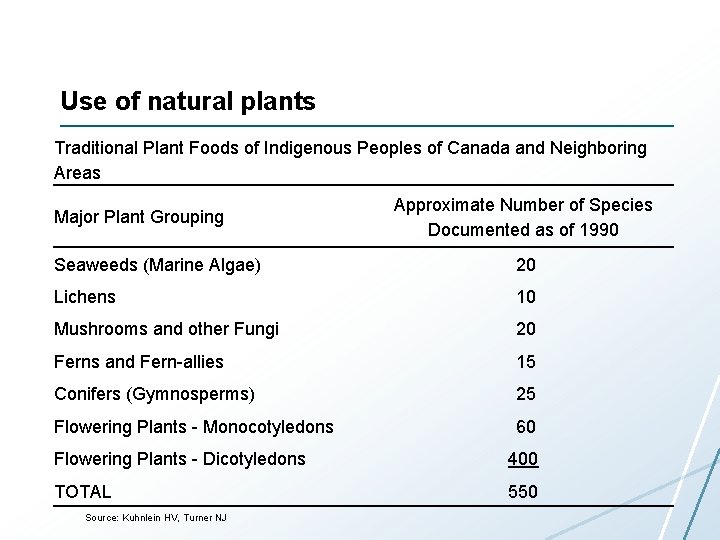
Use of natural plants Traditional Plant Foods of Indigenous Peoples of Canada and Neighboring Areas Major Plant Grouping Approximate Number of Species Documented as of 1990 Seaweeds (Marine Algae) 20 Lichens 10 Mushrooms and other Fungi 20 Ferns and Fern-allies 15 Conifers (Gymnosperms) 25 Flowering Plants - Monocotyledons 60 Flowering Plants - Dicotyledons 400 TOTAL 550 Source: Kuhnlein HV, Turner NJ
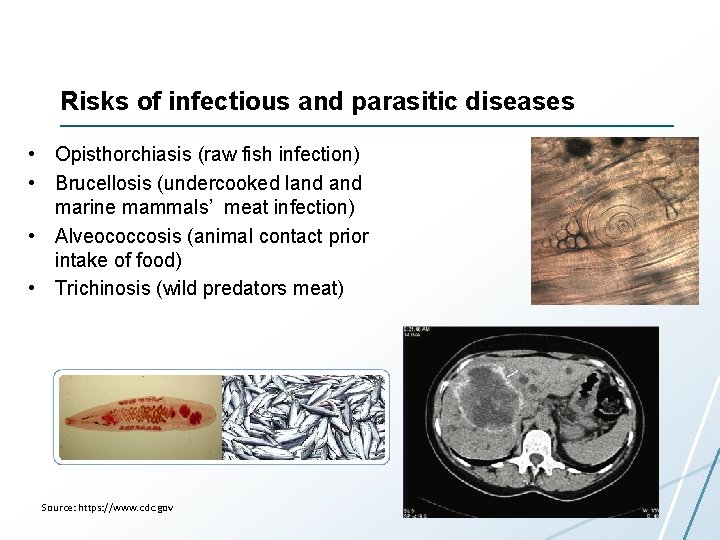
Risks of infectious and parasitic diseases • Opisthorchiasis (raw fish infection) • Brucellosis (undercooked land marine mammals’ meat infection) • Alveococcosis (animal contact prior intake of food) • Trichinosis (wild predators meat) Source: https: //www. cdc. gov
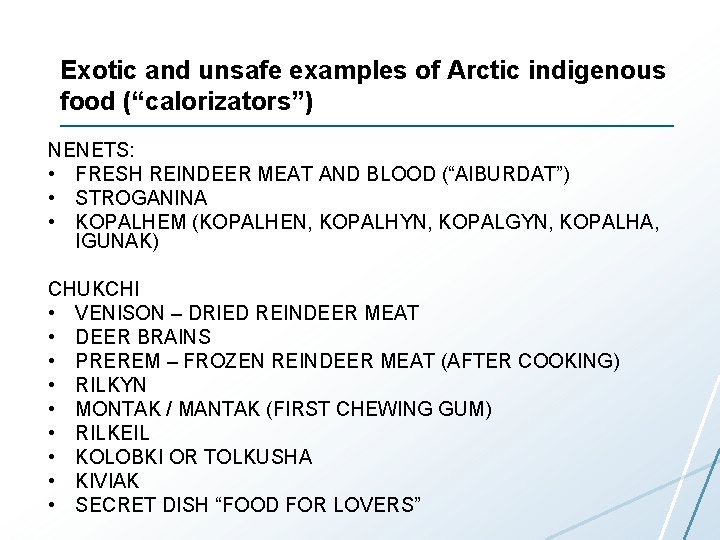
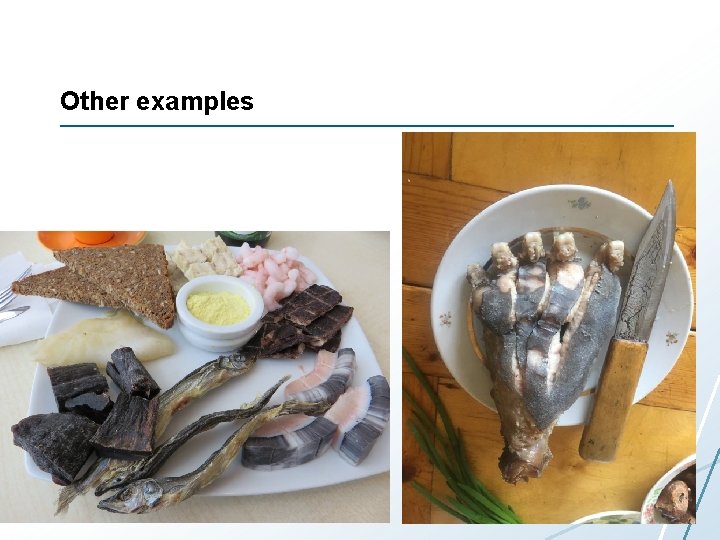
Exotic and unsafe examples of Arctic indigenous food (“calorizators”) NENETS: • FRESH REINDEER MEAT AND BLOOD (“AIBURDAT”) • STROGANINA • KOPALHEM (KOPALHEN, KOPALHYN, KOPALGYN, KOPALHA, IGUNAK) CHUKCHI • VENISON – DRIED REINDEER MEAT • DEER BRAINS • PREREM – FROZEN REINDEER MEAT (AFTER COOKING) • RILKYN • MONTAK / MANTAK (FIRST CHEWING GUM) • RILKEIL • KOLOBKI OR TOLKUSHA • KIVIAK • SECRET DISH “FOOD FOR LOVERS”
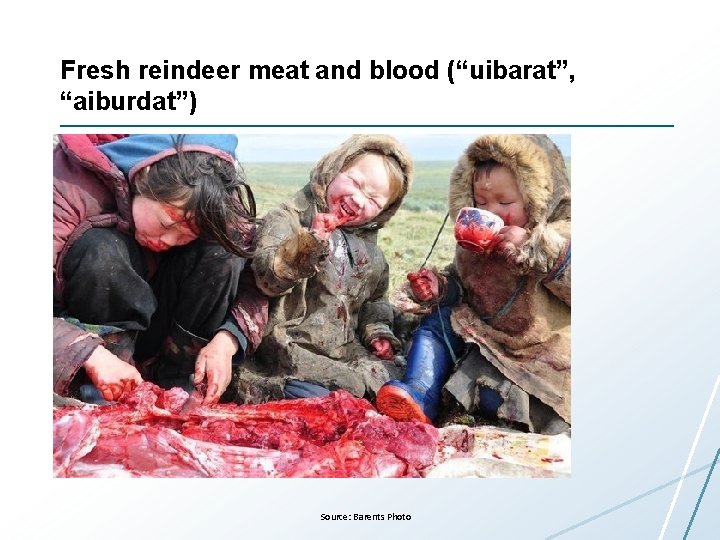
Fresh reindeer meat and blood (“uibarat”, “aiburdat”) Source: Barents Photo
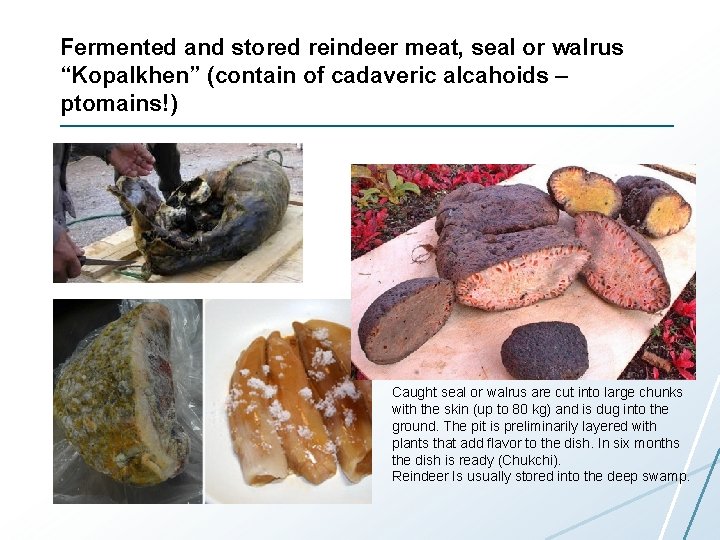
Fermented and stored reindeer meat, seal or walrus “Kopalkhen” (contain of cadaveric alcahoids – ptomains!) Caught seal or walrus are cut into large chunks with the skin (up to 80 kg) and is dug into the ground. The pit is preliminarily layered with plants that add flavor to the dish. In six months the dish is ready (Chukchi). Reindeer Is usually stored into the deep swamp.
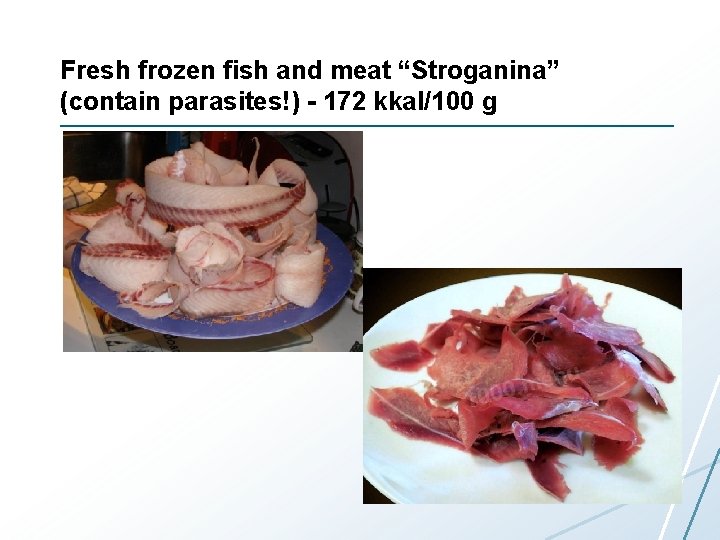
Fresh frozen fish and meat “Stroganina” (contain parasites!) - 172 kkal/100 g
Other examples
Health impact and food changes • Obesity (fast food, high consumption of CH) • Diabetes (refined sugars and high consumption of CH) • Alcohol abuse( supported by high consumption of CH, low consumption of non-processed meat and fish) • Urban life (economic, cultural and mental deprivation, hypo-dynamics, obesity, stress, depression alcohol and drug abuse, suicidal behavior).
Literature • • • Encyclopedia of Indigenous Peoples of the North, Siberia and the Far East of the Russian Federation. Translated from Russian by Jennifer Castner. Edited by Nikita Vronski. M, 2011, pp. 471. Traditional Knowledge, Culture and Nature Use of the Northen Peoples. Moscow. RAIPON, 2005. P. 116 Hassan AA, Sandanger TM, Brustad M. Level of selected nutrients in meat, liver, tallow and bone marrow from semidomesticated reindeer (Rangifer t. tarandus L. ), International Journal of Circumpolar Health (2012), 71: 17997 Burtseva TE, Uvarova TE, Tomsky MI, Odland JØ. The health of populations living in the indigenous minority settlements of northern Yakutia. International Journal of Circumpolar Health. 2014; 73: 10. 3402/ijch. v 73. 25758. Sarkar A, Hanrahan M, Hudson A. Water insecurity in Canadian Indigenous communities: some inconvenient truths. Rural Remote Health. 2015 Oct. Dec; 15(4): 3354. Sumarokov YA, Brenn T, Kudryavtsev AV, Sidorenkov O, Nilssen O. Alcohol and suicides in the Nenets Autonomous Okrug and Arkhangelsk Oblast, Russia. Int J Circumpolar Health 2016; 75: 30965 20
Thank you for attention! sioury@mail. ru