v Goffman 1959 Erickson 1964 Tudor Nelson 1991

- Slides: 28
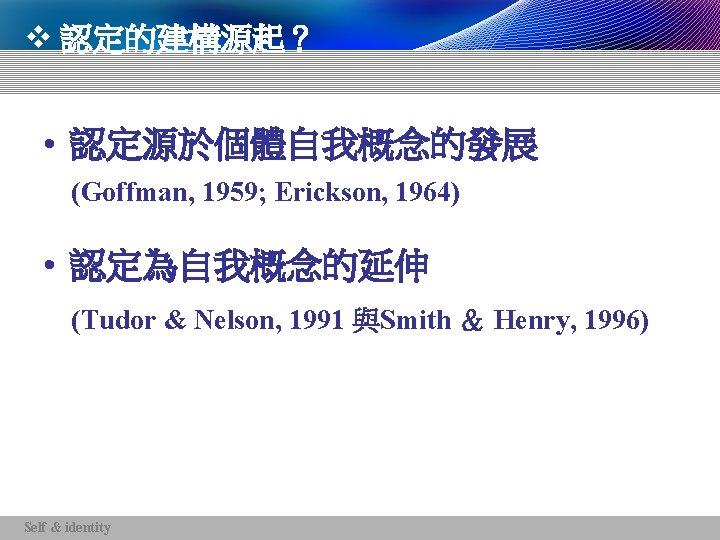
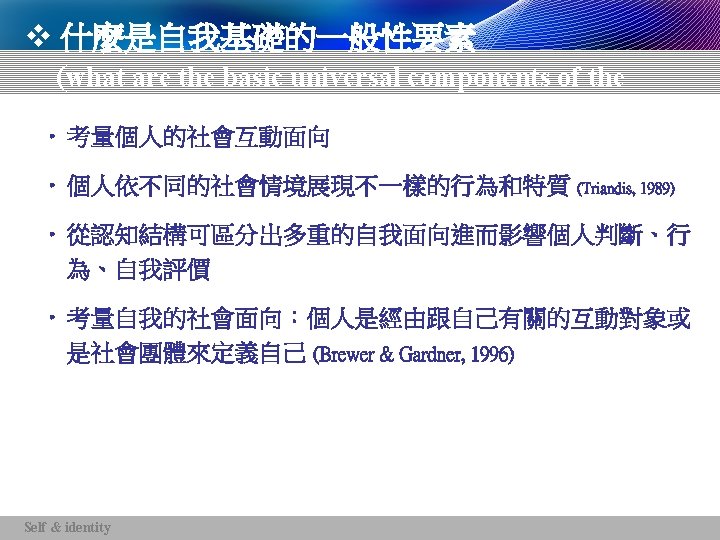
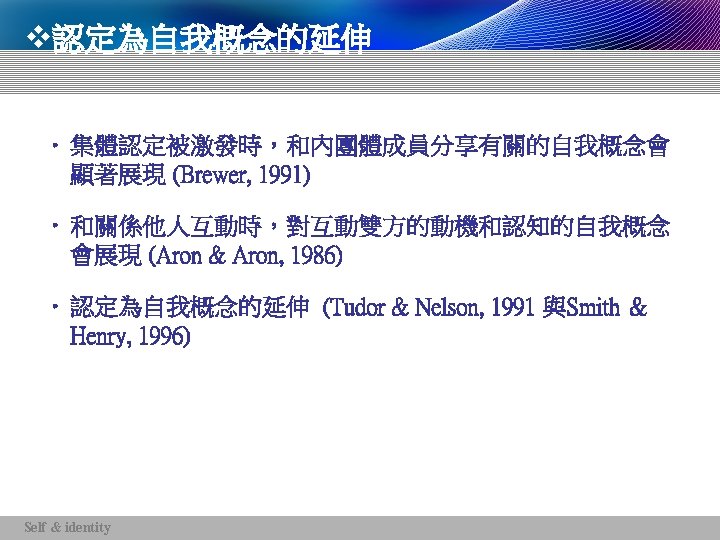
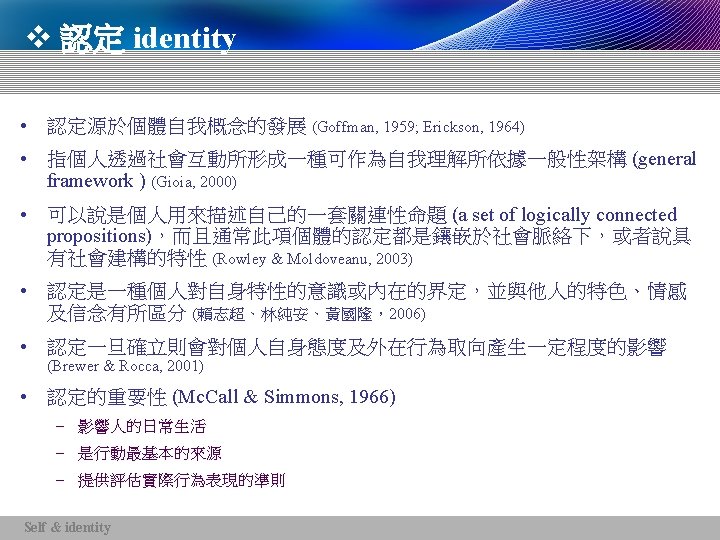
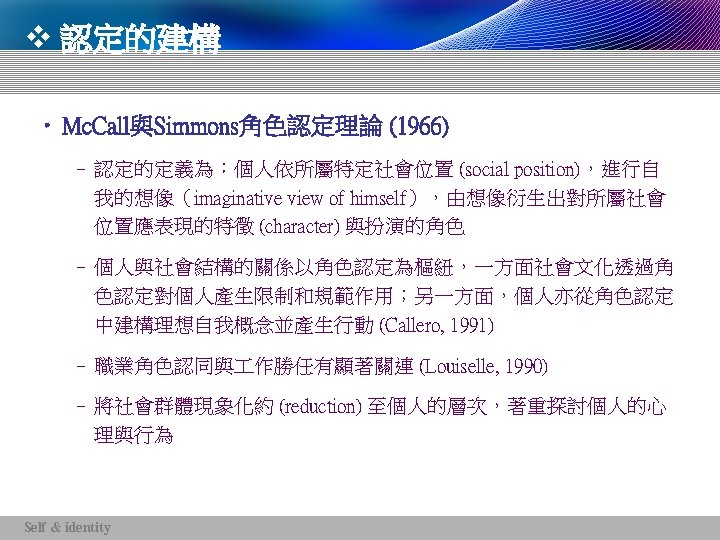
v 認定的建構源起? • 認定源於個體自我概念的發展 (Goffman, 1959; Erickson, 1964) • 認定為自我概念的延伸 (Tudor & Nelson, 1991 與Smith & Henry, 1996) Self & identity
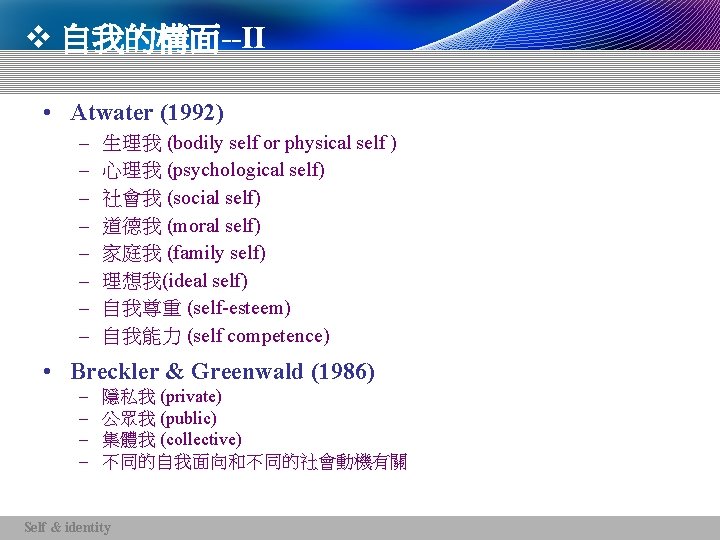
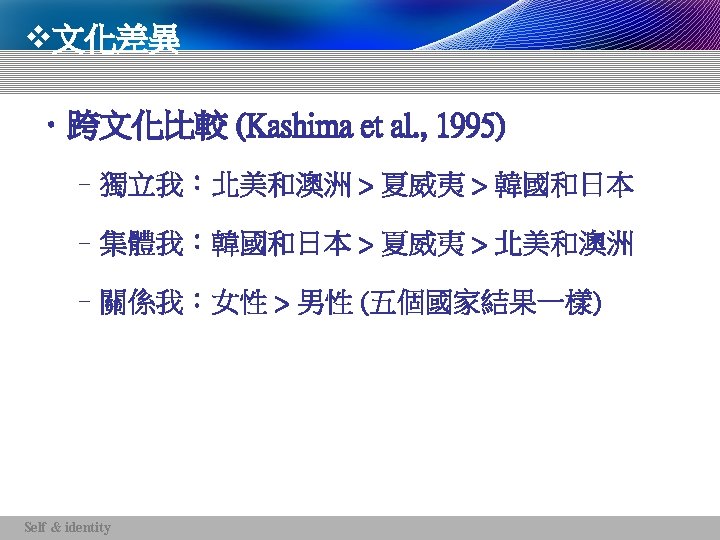
v 自我的構面--II • Atwater (1992) – – – – 生理我 (bodily self or physical self ) 心理我 (psychological self) 社會我 (social self) 道德我 (moral self) 家庭我 (family self) 理想我(ideal self) 自我尊重 (self-esteem) 自我能力 (self competence) • Breckler & Greenwald (1986) – – 隱私我 (private) 公眾我 (public) 集體我 (collective) 不同的自我面向和不同的社會動機有關 Self & identity
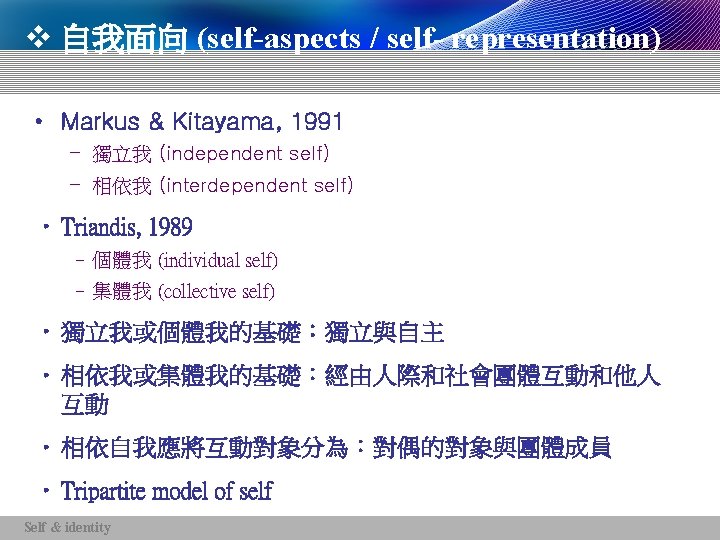
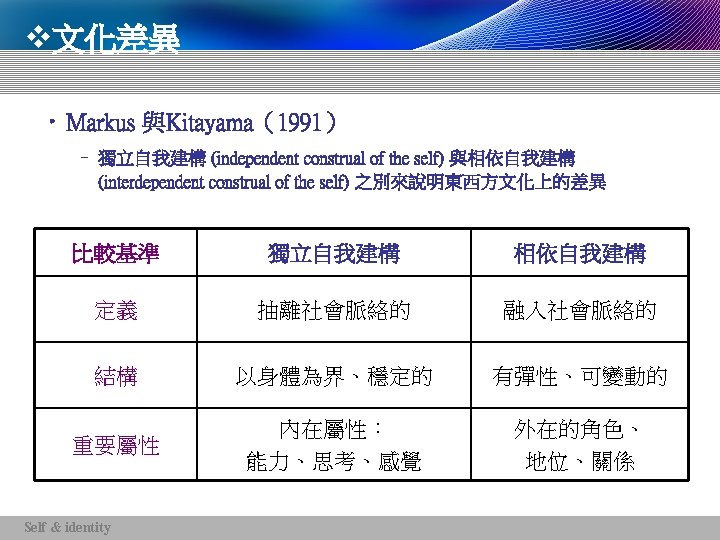
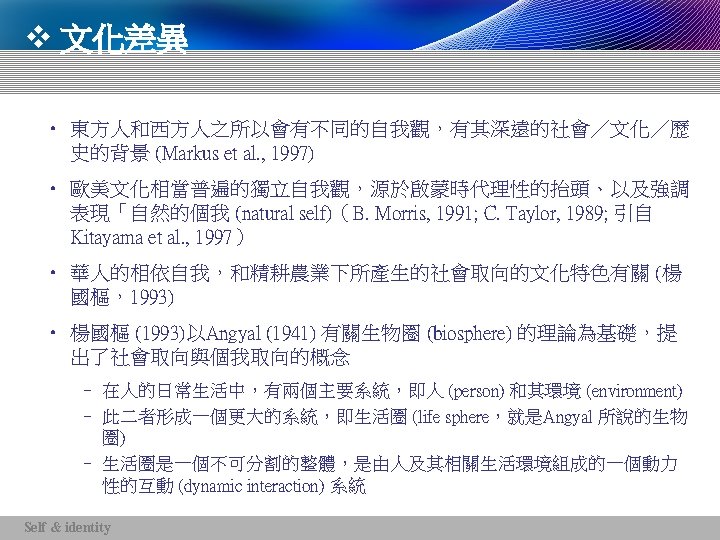
v 自我面向 (self-aspects / self- representation) • Markus & Kitayama, 1991 – 獨立我 (independent self) – 相依我 (interdependent self) • Triandis, 1989 – 個體我 (individual self) – 集體我 (collective self) • 獨立我或個體我的基礎:獨立與自主 • 相依我或集體我的基礎:經由人際和社會團體互動和他人 互動 • 相依自我應將互動對象分為:對偶的對象與團體成員 • Tripartite model of self Self & identity
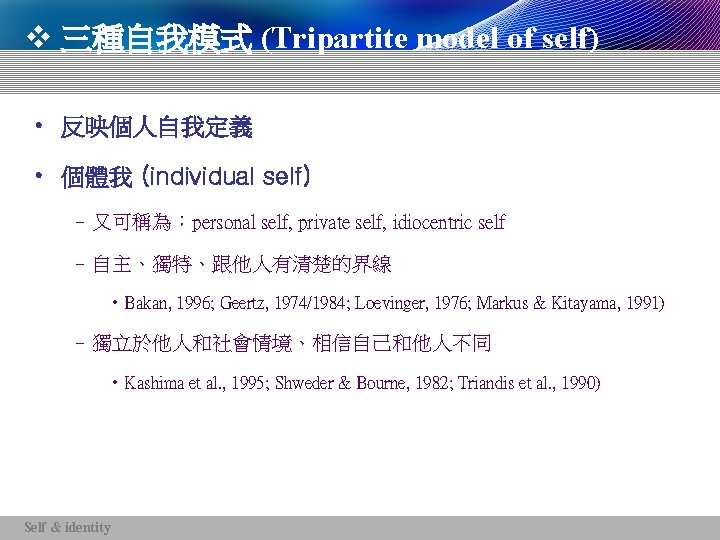
v 三種自我模式 (Tripartite model of self) • 反映個人自我定義 • 個體我 (individual self) – 又可稱為:personal self, private self, idiocentric self – 自主、獨特、跟他人有清楚的界線 • Bakan, 1996; Geertz, 1974/1984; Loevinger, 1976; Markus & Kitayama, 1991) – 獨立於他人和社會情境、相信自己和他人不同 • Kashima et al. , 1995; Shweder & Bourne, 1982; Triandis et al. , 1990) Self & identity
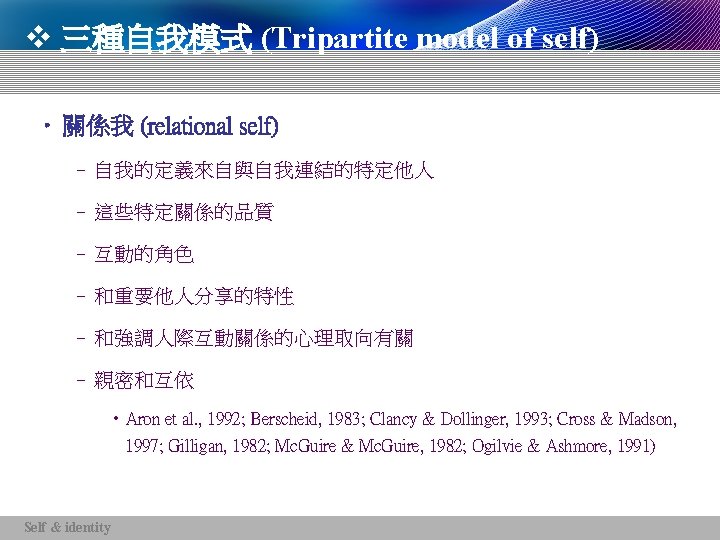
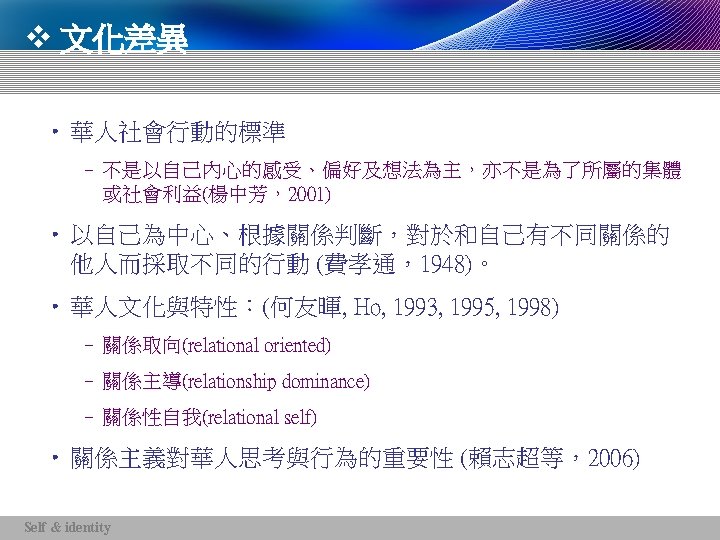
v 三種自我模式 (Tripartite model of self) • 關係我 (relational self) – 自我的定義來自與自我連結的特定他人 – 這些特定關係的品質 – 互動的角色 – 和重要他人分享的特性 – 和強調人際互動關係的心理取向有關 – 親密和互依 • Aron et al. , 1992; Berscheid, 1983; Clancy & Dollinger, 1993; Cross & Madson, 1997; Gilligan, 1982; Mc. Guire & Mc. Guire, 1982; Ogilvie & Ashmore, 1991) Self & identity
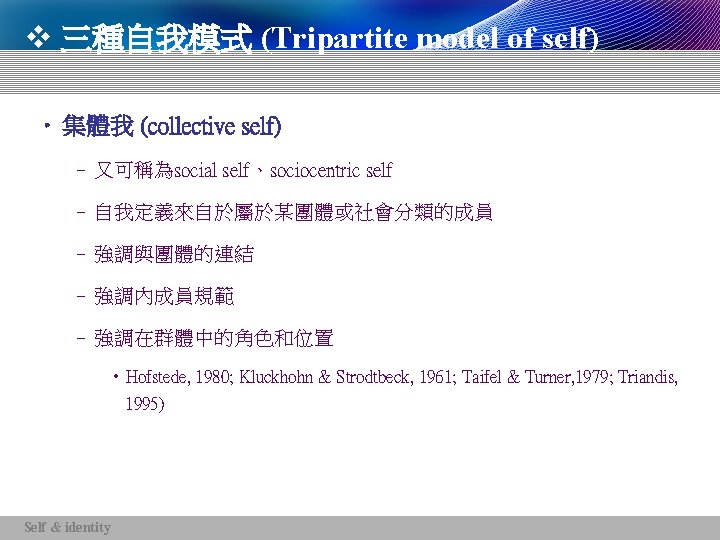
v 三種自我模式 (Tripartite model of self) • 集體我 (collective self) – 又可稱為social self、sociocentric self – 自我定義來自於屬於某團體或社會分類的成員 – 強調與團體的連結 – 強調內成員規範 – 強調在群體中的角色和位置 • Hofstede, 1980; Kluckhohn & Strodtbeck, 1961; Taifel & Turner, 1979; Triandis, 1995) Self & identity
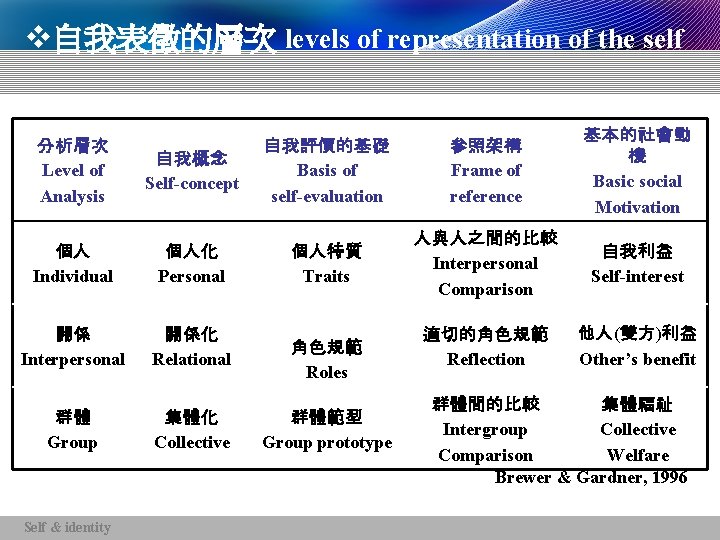
v自我表徵的層次 levels of representation of the self 自我概念 Self-concept 自我評價的基礎 Basis of self-evaluation 參照架構 Frame of reference 基本的社會動 機 Basic social Motivation 個人 Individual 個人化 Personal 個人特質 Traits 人與人之間的比較 Interpersonal Comparison 自我利益 Self-interest 關係 Interpersonal 關係化 Relational 適切的角色規範 Reflection 他人(雙方)利益 Other’s benefit 群體 Group 集體化 Collective 分析層次 Level of Analysis Self & identity 角色規範 Roles 群體範型 Group prototype 群體間的比較 集體福祉 Intergroup Collective Comparison Welfare Brewer & Gardner, 1996
認定標準 Self & identity
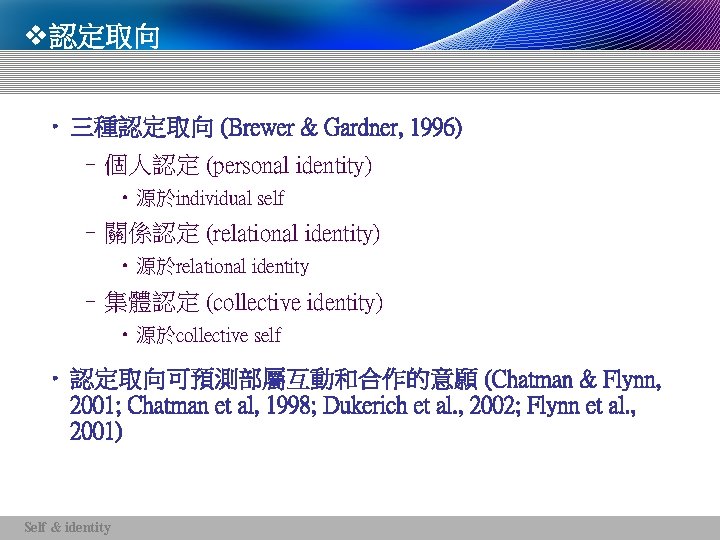
v認定取向 • 三種認定取向 (Brewer & Gardner, 1996) –個人認定 (personal identity) • 源於individual self –關係認定 (relational identity) • 源於relational identity –集體認定 (collective identity) • 源於collective self • 認定取向可預測部屬互動和合作的意願 (Chatman & Flynn, 2001; Chatman et al, 1998; Dukerich et al. , 2002; Flynn et al. , 2001) Self & identity
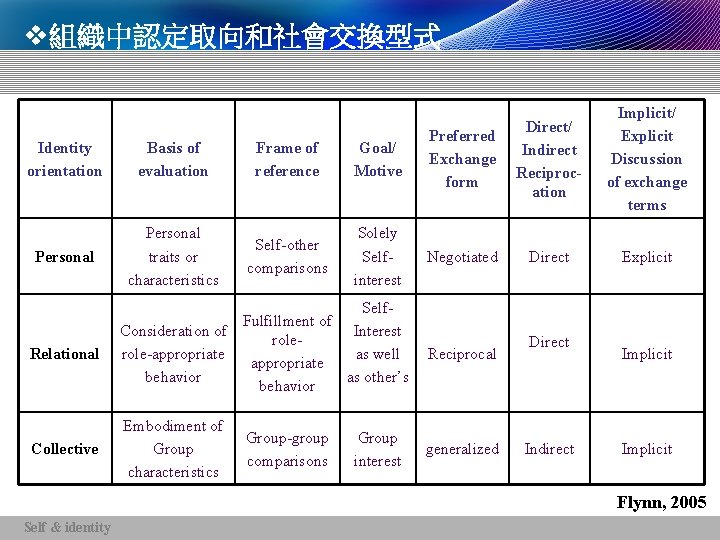
v組織中認定取向和社會交換型式 Identity orientation Basis of evaluation Frame of reference Goal/ Motive Preferred Exchange form Direct/ Indirect Reciprocation Personal traits or characteristics Self-other comparisons Solely Selfinterest Negotiated Direct Relational Self. Fulfillment of Interest Consideration of roleas well role-appropriate as other’s behavior Reciprocal Collective Embodiment of Group characteristics generalized Group-group comparisons Group interest Direct Indirect Implicit/ Explicit Discussion of exchange terms Explicit Implicit Flynn, 2005 Self & identity