USC Awards to Fund Your Research Silvia da
- Slides: 31
USC Awards to Fund Your Research Silvia da Costa, Ph. D Director, Faculty Research Relations Office of Research Juli Wu, Ph. D Sr. RD and Team Building Administrator Research Development – SC CTSI Aileen Dinkjian, MPH RD and Team Building Administrator Research Development – SC CTSI
OFFICE OF RESEARCH AWARDS PROGRAMS
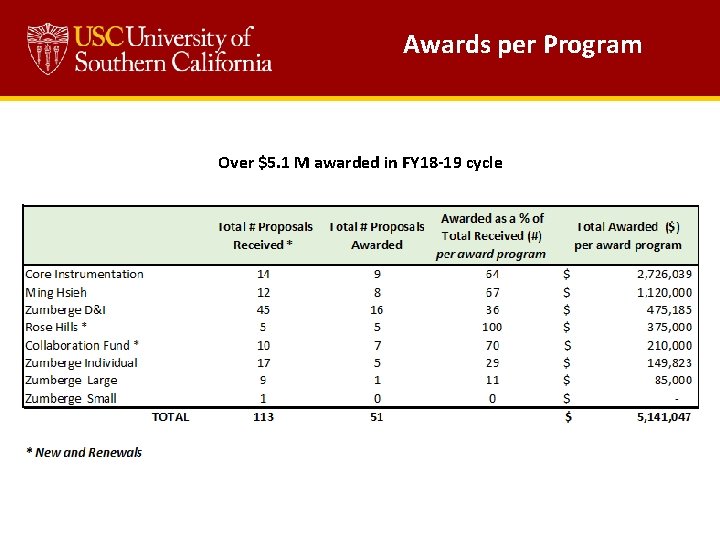
Awards per Program Over $5. 1 M awarded in FY 18 -19 cycle
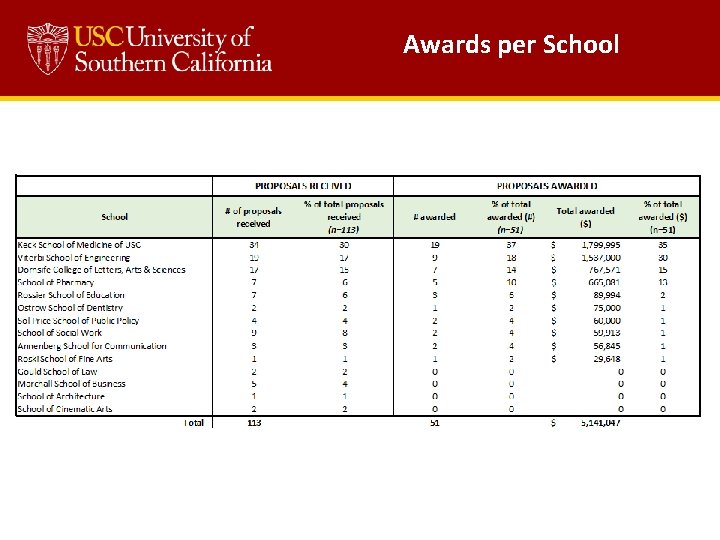
Awards per School
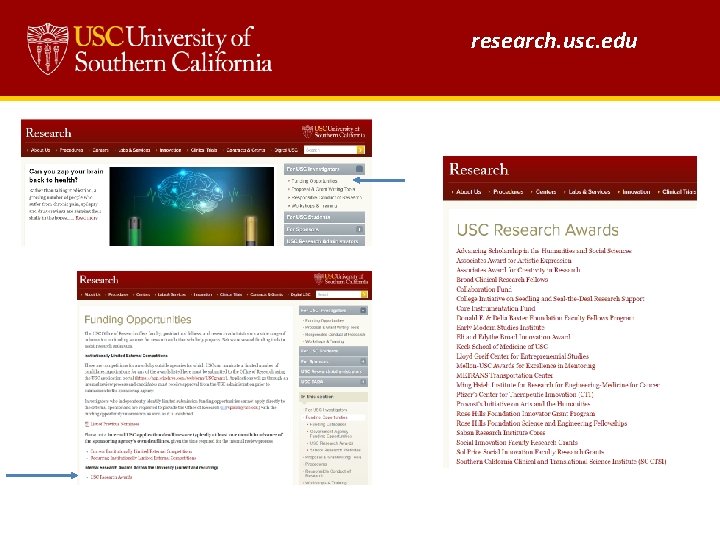
research. usc. edu
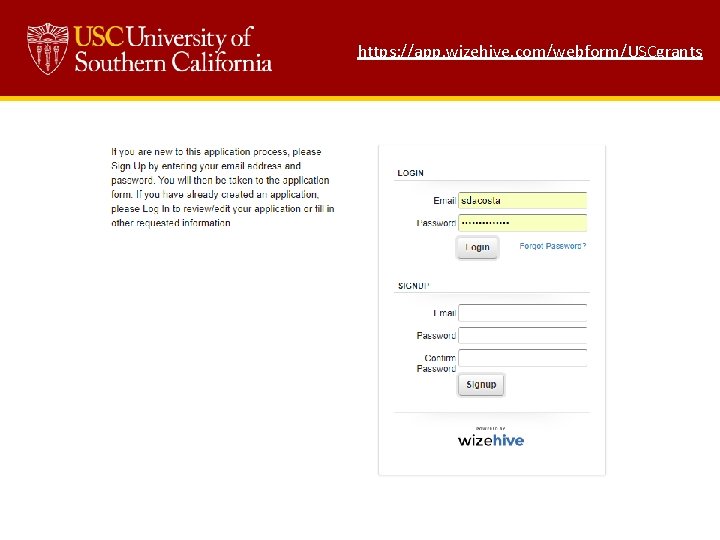
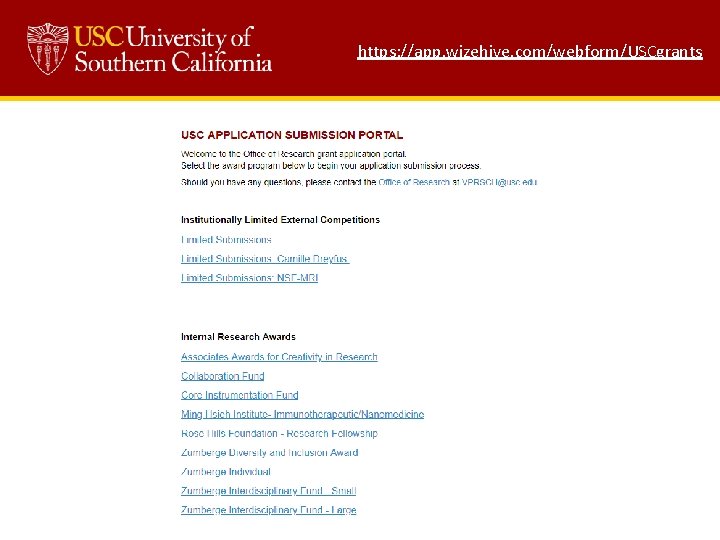
https: //app. wizehive. com/webform/USCgrants
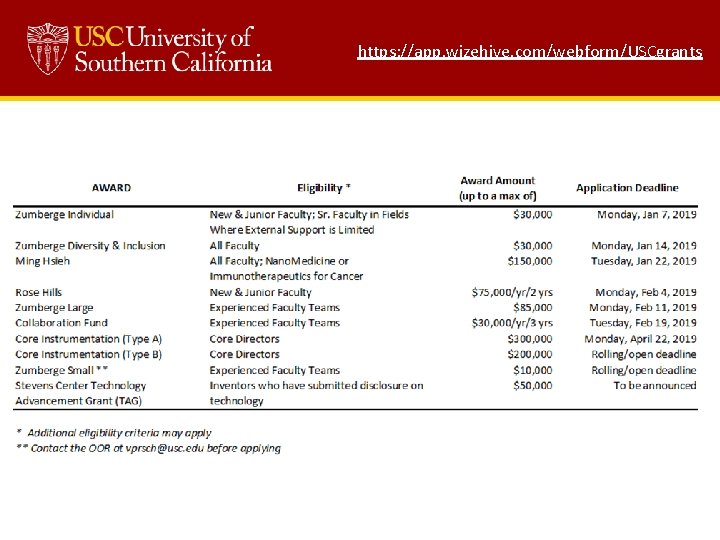
https: //app. wizehive. com/webform/USCgrants
https: //app. wizehive. com/webform/USCgrants
For all Office of Research Programs FACULTY RANK • Applicants must be permanent, full-time faculty at USC at the start of the award period. • Tenure track and non-tenure track faculty, where research is a job expectation, are eligible. • Individuals who are adjunct or visiting faculty are not eligible to apply. REVIEW PROCESS • NIH-style peer review, mostly USC faculty, previous awardees. When needed, outside expertise is consulted. • Zumberge Interdisciplinary & Collaboration Fund: 2 -stage process. Finalists of initial review have a second in-person interview.
For all Office of Research Programs NOTIFICATION & TERM OF AWARD • Applicants will be notified of award by the beginning of June, 2019 • Funds will not be available for expenditure until beginning of August, 2019. • Awards to CHLA are paid through a Keck Account • Awardees are required to create an account specific to the award, with expiration date as described in the letter of award – mostly all awards are for a one-year term. • A no-cost extension may be granted under exceptional circumstances and at the discretion of the Office of Research, and must be requested in writing, justifying the need for the extension.
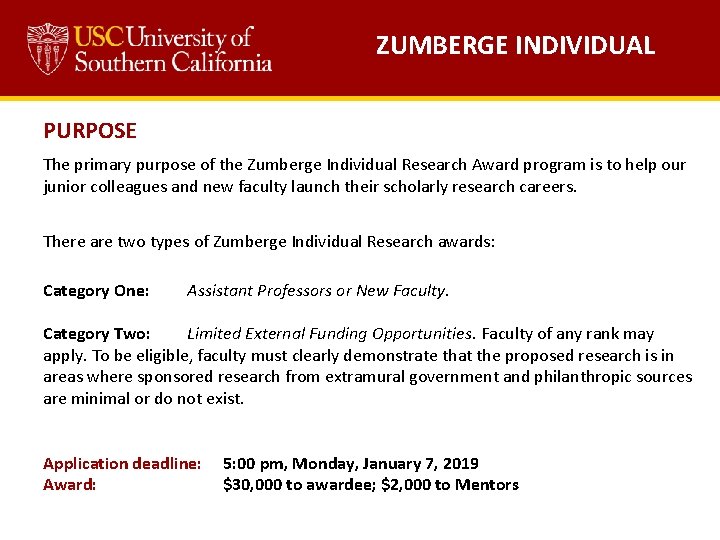
ZUMBERGE INDIVIDUAL PURPOSE The primary purpose of the Zumberge Individual Research Award program is to help our junior colleagues and new faculty launch their scholarly research careers. There are two types of Zumberge Individual Research awards: Category One: Assistant Professors or New Faculty. Category Two: Limited External Funding Opportunities. Faculty of any rank may apply. To be eligible, faculty must clearly demonstrate that the proposed research is in areas where sponsored research from extramural government and philanthropic sources are minimal or do not exist. Application deadline: Award: 5: 00 pm, Monday, January 7, 2019 $30, 000 to awardee; $2, 000 to Mentors
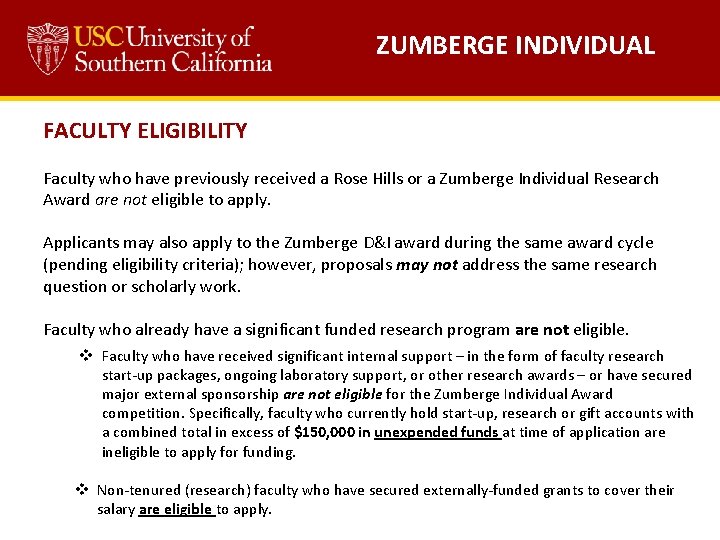
ZUMBERGE INDIVIDUAL FACULTY ELIGIBILITY Faculty who have previously received a Rose Hills or a Zumberge Individual Research Award are not eligible to apply. Applicants may also apply to the Zumberge D&I award during the same award cycle (pending eligibility criteria); however, proposals may not address the same research question or scholarly work. Faculty who already have a significant funded research program are not eligible. v Faculty who have received significant internal support – in the form of faculty research start-up packages, ongoing laboratory support, or other research awards – or have secured major external sponsorship are not eligible for the Zumberge Individual Award competition. Specifically, faculty who currently hold start-up, research or gift accounts with a combined total in excess of $150, 000 in unexpended funds at time of application are ineligible to apply for funding. v Non-tenured (research) faculty who have secured externally-funded grants to cover their salary are eligible to apply.
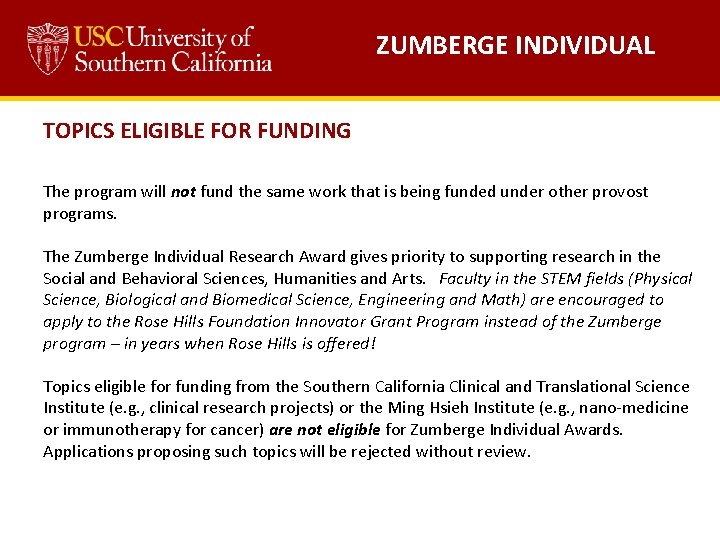
ZUMBERGE INDIVIDUAL TOPICS ELIGIBLE FOR FUNDING The program will not fund the same work that is being funded under other provost programs. The Zumberge Individual Research Award gives priority to supporting research in the Social and Behavioral Sciences, Humanities and Arts. Faculty in the STEM fields (Physical Science, Biological and Biomedical Science, Engineering and Math) are encouraged to apply to the Rose Hills Foundation Innovator Grant Program instead of the Zumberge program – in years when Rose Hills is offered! Topics eligible for funding from the Southern California Clinical and Translational Science Institute (e. g. , clinical research projects) or the Ming Hsieh Institute (e. g. , nano-medicine or immunotherapy for cancer) are not eligible for Zumberge Individual Awards. Applications proposing such topics will be rejected without review.
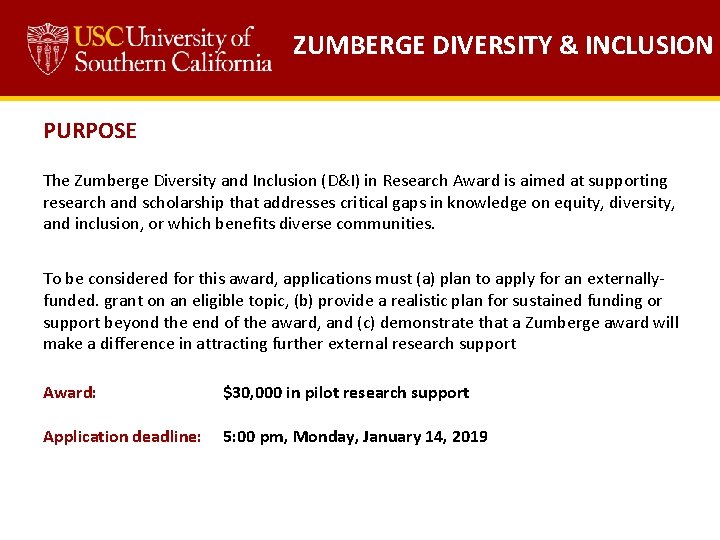
ZUMBERGE DIVERSITY & INCLUSION PURPOSE The Zumberge Diversity and Inclusion (D&I) in Research Award is aimed at supporting research and scholarship that addresses critical gaps in knowledge on equity, diversity, and inclusion, or which benefits diverse communities. To be considered for this award, applications must (a) plan to apply for an externallyfunded. grant on an eligible topic, (b) provide a realistic plan for sustained funding or support beyond the end of the award, and (c) demonstrate that a Zumberge award will make a difference in attracting further external research support Award: $30, 000 in pilot research support Application deadline: 5: 00 pm, Monday, January 14, 2019
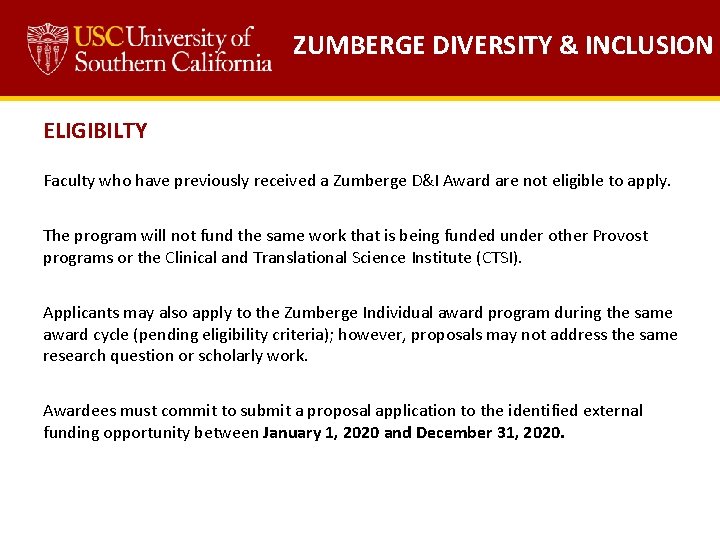
ZUMBERGE DIVERSITY & INCLUSION ELIGIBILTY Faculty who have previously received a Zumberge D&I Award are not eligible to apply. The program will not fund the same work that is being funded under other Provost programs or the Clinical and Translational Science Institute (CTSI). Applicants may also apply to the Zumberge Individual award program during the same award cycle (pending eligibility criteria); however, proposals may not address the same research question or scholarly work. Awardees must commit to submit a proposal application to the identified external funding opportunity between January 1, 2020 and December 31, 2020.
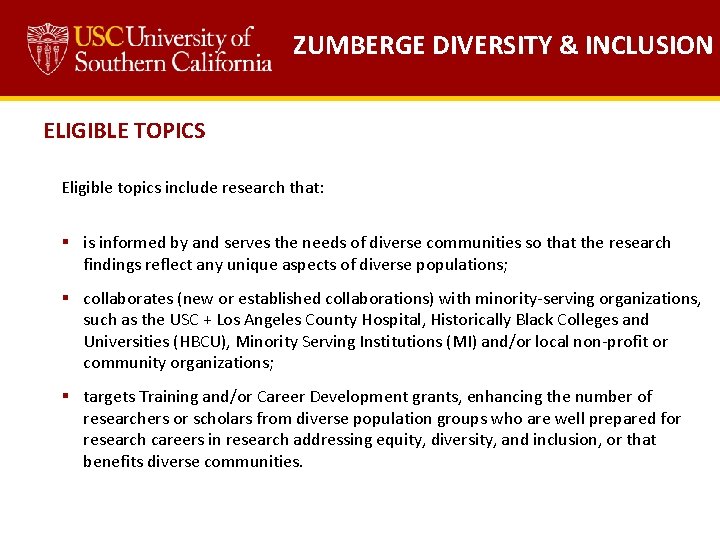
ZUMBERGE DIVERSITY & INCLUSION ELIGIBLE TOPICS Eligible topics include research that: § is informed by and serves the needs of diverse communities so that the research findings reflect any unique aspects of diverse populations; § collaborates (new or established collaborations) with minority-serving organizations, such as the USC + Los Angeles County Hospital, Historically Black Colleges and Universities (HBCU), Minority Serving Institutions (MI) and/or local non-profit or community organizations; § targets Training and/or Career Development grants, enhancing the number of researchers or scholars from diverse population groups who are well prepared for research careers in research addressing equity, diversity, and inclusion, or that benefits diverse communities.
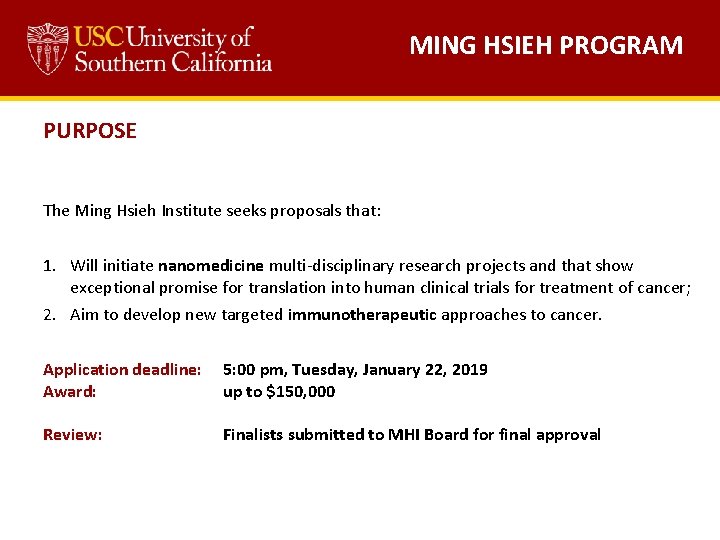
MING HSIEH PROGRAM PURPOSE The Ming Hsieh Institute seeks proposals that: 1. Will initiate nanomedicine multi-disciplinary research projects and that show exceptional promise for translation into human clinical trials for treatment of cancer; 2. Aim to develop new targeted immunotherapeutic approaches to cancer. Application deadline: Award: 5: 00 pm, Tuesday, January 22, 2019 up to $150, 000 Review: Finalists submitted to MHI Board for final approval
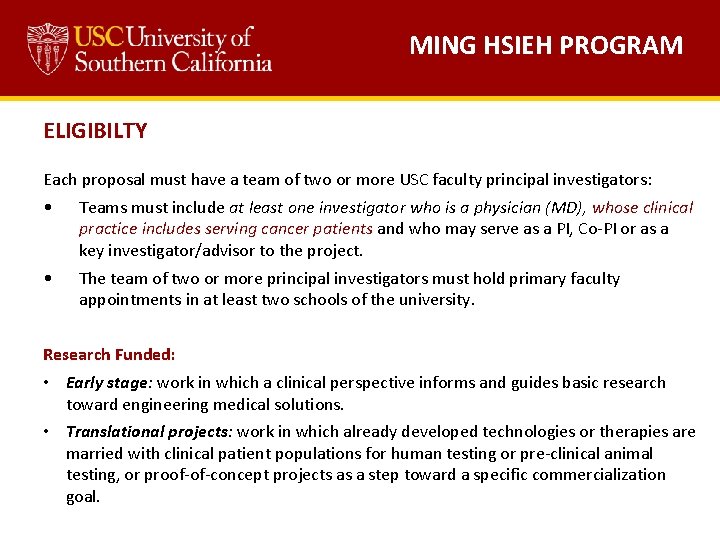
MING HSIEH PROGRAM ELIGIBILTY Each proposal must have a team of two or more USC faculty principal investigators: • Teams must include at least one investigator who is a physician (MD), whose clinical practice includes serving cancer patients and who may serve as a PI, Co-PI or as a key investigator/advisor to the project. • The team of two or more principal investigators must hold primary faculty appointments in at least two schools of the university. Research Funded: • Early stage: work in which a clinical perspective informs and guides basic research toward engineering medical solutions. • Translational projects: work in which already developed technologies or therapies are married with clinical patient populations for human testing or pre-clinical animal testing, or proof-of-concept projects as a step toward a specific commercialization goal.
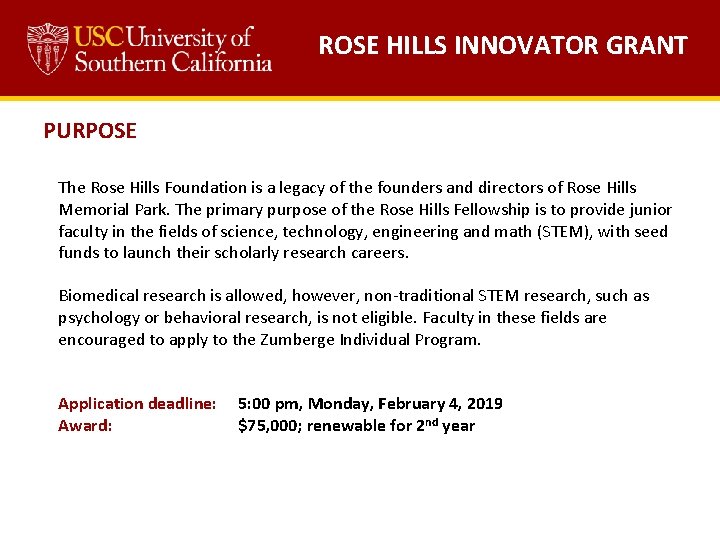
ROSE HILLS INNOVATOR GRANT PURPOSE The Rose Hills Foundation is a legacy of the founders and directors of Rose Hills Memorial Park. The primary purpose of the Rose Hills Fellowship is to provide junior faculty in the fields of science, technology, engineering and math (STEM), with seed funds to launch their scholarly research careers. Biomedical research is allowed, however, non-traditional STEM research, such as psychology or behavioral research, is not eligible. Faculty in these fields are encouraged to apply to the Zumberge Individual Program. Application deadline: 5: 00 pm, Monday, February 4, 2019 Award: $75, 000; renewable for 2 nd year
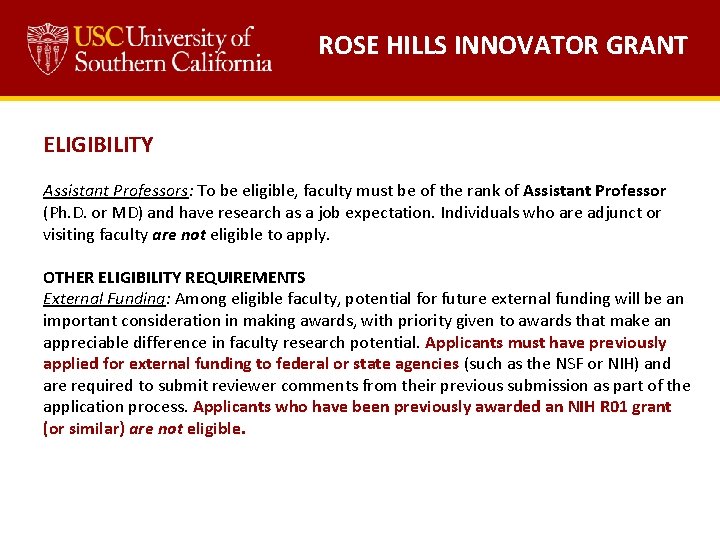
ROSE HILLS INNOVATOR GRANT ELIGIBILITY Assistant Professors: To be eligible, faculty must be of the rank of Assistant Professor (Ph. D. or MD) and have research as a job expectation. Individuals who are adjunct or visiting faculty are not eligible to apply. OTHER ELIGIBILITY REQUIREMENTS External Funding: Among eligible faculty, potential for future external funding will be an important consideration in making awards, with priority given to awards that make an appreciable difference in faculty research potential. Applicants must have previously applied for external funding to federal or state agencies (such as the NSF or NIH) and are required to submit reviewer comments from their previous submission as part of the application process. Applicants who have been previously awarded an NIH R 01 grant (or similar) are not eligible.
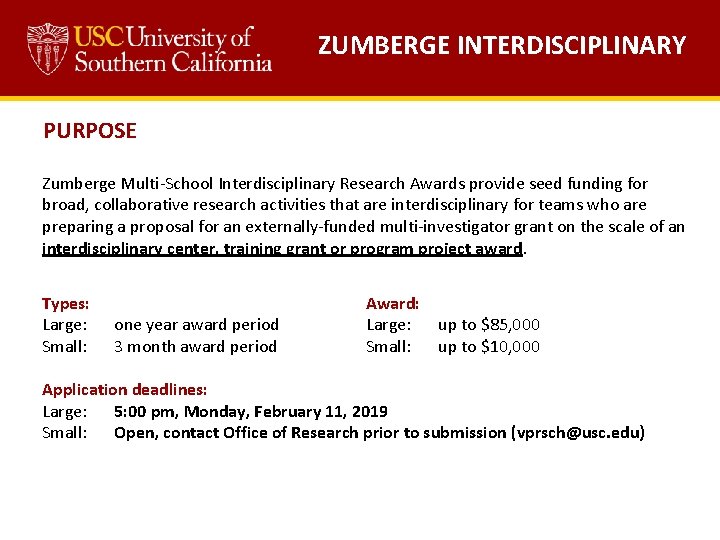
ZUMBERGE INTERDISCIPLINARY PURPOSE Zumberge Multi-School Interdisciplinary Research Awards provide seed funding for broad, collaborative research activities that are interdisciplinary for teams who are preparing a proposal for an externally-funded multi-investigator grant on the scale of an interdisciplinary center, training grant or program project award. Types: Large: Small: one year award period 3 month award period Award: Large: up to $85, 000 Small: up to $10, 000 Application deadlines: Large: 5: 00 pm, Monday, February 11, 2019 Small: Open, contact Office of Research prior to submission (vprsch@usc. edu)
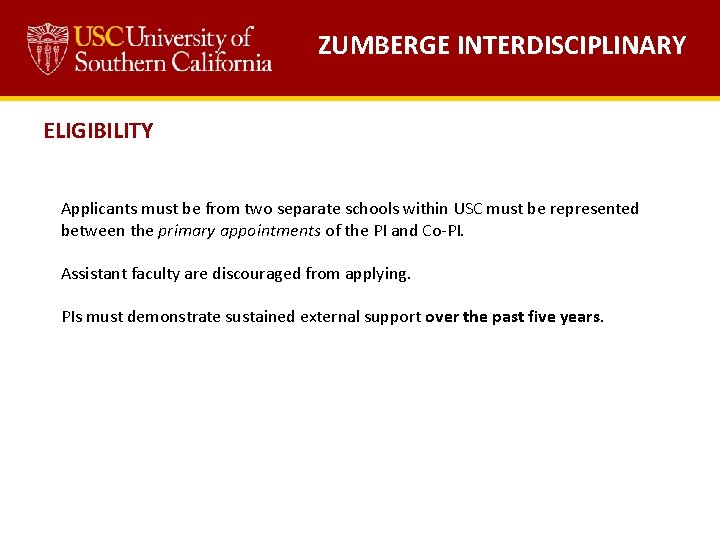
ZUMBERGE INTERDISCIPLINARY ELIGIBILITY Applicants must be from two separate schools within USC must be represented between the primary appointments of the PI and Co-PI. Assistant faculty are discouraged from applying. PIs must demonstrate sustained external support over the past five years.
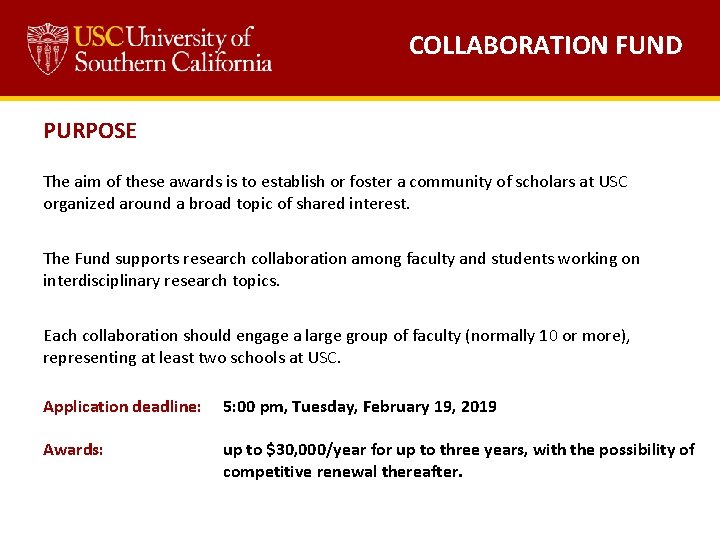
COLLABORATION FUND PURPOSE The aim of these awards is to establish or foster a community of scholars at USC organized around a broad topic of shared interest. The Fund supports research collaboration among faculty and students working on interdisciplinary research topics. Each collaboration should engage a large group of faculty (normally 10 or more), representing at least two schools at USC. Application deadline: 5: 00 pm, Tuesday, February 19, 2019 Awards: up to $30, 000/year for up to three years, with the possibility of competitive renewal thereafter.
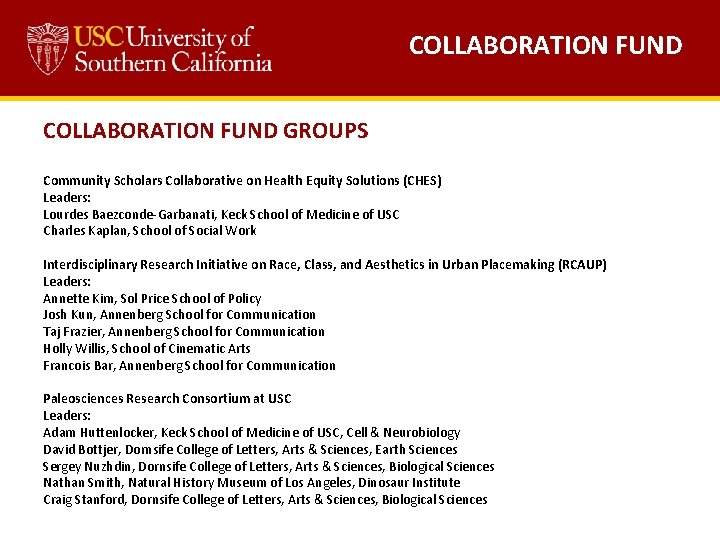
COLLABORATION FUND GROUPS Community Scholars Collaborative on Health Equity Solutions (CHES) Leaders: Lourdes Baezconde-Garbanati, Keck School of Medicine of USC Charles Kaplan, School of Social Work Interdisciplinary Research Initiative on Race, Class, and Aesthetics in Urban Placemaking (RCAUP) Leaders: Annette Kim, Sol Price School of Policy Josh Kun, Annenberg School for Communication Taj Frazier, Annenberg School for Communication Holly Willis, School of Cinematic Arts Francois Bar, Annenberg School for Communication Paleosciences Research Consortium at USC Leaders: Adam Huttenlocker, Keck School of Medicine of USC, Cell & Neurobiology David Bottjer, Dornsife College of Letters, Arts & Sciences, Earth Sciences Sergey Nuzhdin, Dornsife College of Letters, Arts & Sciences, Biological Sciences Nathan Smith, Natural History Museum of Los Angeles, Dinosaur Institute Craig Stanford, Dornsife College of Letters, Arts & Sciences, Biological Sciences
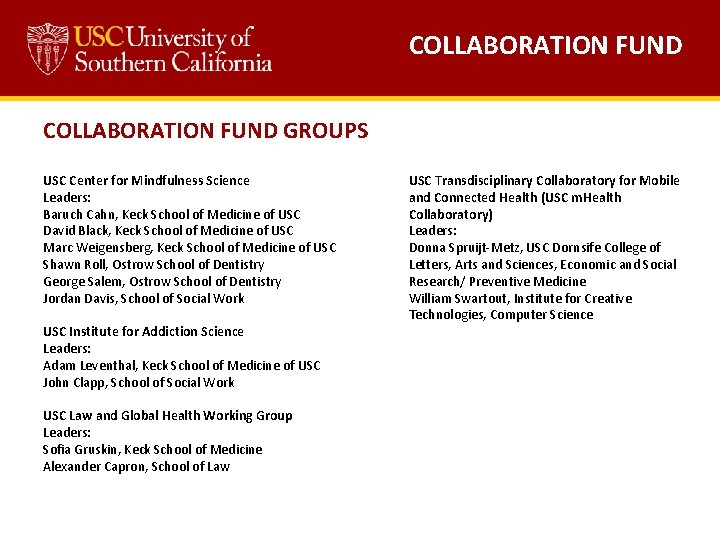
COLLABORATION FUND GROUPS USC Center for Mindfulness Science Leaders: Baruch Cahn, Keck School of Medicine of USC David Black, Keck School of Medicine of USC Marc Weigensberg, Keck School of Medicine of USC Shawn Roll, Ostrow School of Dentistry George Salem, Ostrow School of Dentistry Jordan Davis, School of Social Work USC Institute for Addiction Science Leaders: Adam Leventhal, Keck School of Medicine of USC John Clapp, School of Social Work USC Law and Global Health Working Group Leaders: Sofia Gruskin, Keck School of Medicine Alexander Capron, School of Law USC Transdisciplinary Collaboratory for Mobile and Connected Health (USC m. Health Collaboratory) Leaders: Donna Spruijt-Metz, USC Dornsife College of Letters, Arts and Sciences, Economic and Social Research/ Preventive Medicine William Swartout, Institute for Creative Technologies, Computer Science
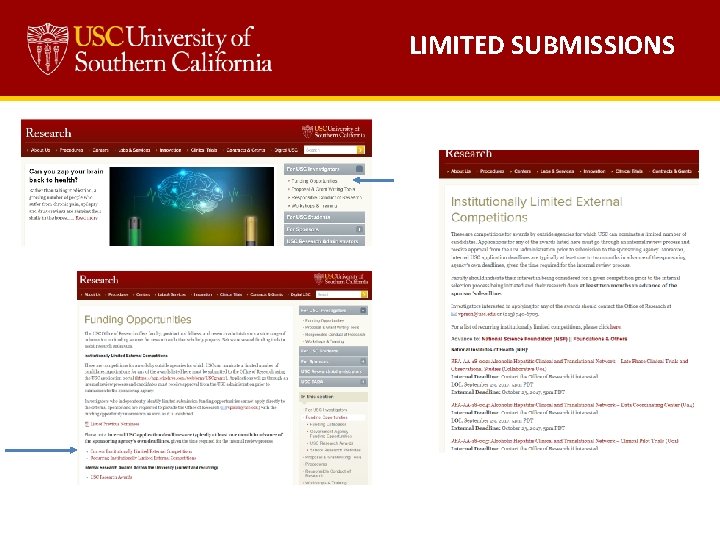
LIMITED SUBMISSIONS
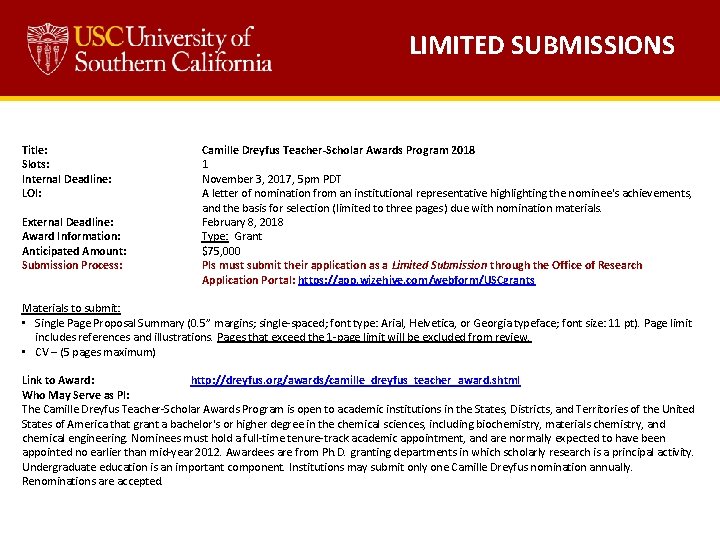
Title: Slots: Internal Deadline: LOI: External Deadline: Award Information: Anticipated Amount: Submission Process: LIMITED SUBMISSIONS Camille Dreyfus Teacher-Scholar Awards Program 2018 1 November 3, 2017, 5 pm PDT A letter of nomination from an institutional representative highlighting the nominee's achievements, and the basis for selection (limited to three pages) due with nomination materials. February 8, 2018 Type: Grant $75, 000 PIs must submit their application as a Limited Submission through the Office of Research Application Portal: https: //app. wizehive. com/webform/USCgrants Materials to submit: • Single Page Proposal Summary (0. 5” margins; single-spaced; font type: Arial, Helvetica, or Georgia typeface; font size: 11 pt). Page limit includes references and illustrations. Pages that exceed the 1 -page limit will be excluded from review. • CV – (5 pages maximum) Link to Award: http: //dreyfus. org/awards/camille_dreyfus_teacher_award. shtml Who May Serve as PI: The Camille Dreyfus Teacher-Scholar Awards Program is open to academic institutions in the States, Districts, and Territories of the United States of America that grant a bachelor's or higher degree in the chemical sciences, including biochemistry, materials chemistry, and chemical engineering. Nominees must hold a full-time tenure-track academic appointment, and are normally expected to have been appointed no earlier than mid-year 2012. Awardees are from Ph. D. granting departments in which scholarly research is a principal activity. Undergraduate education is an important component. Institutions may submit only one Camille Dreyfus nomination annually. Renominations are accepted.
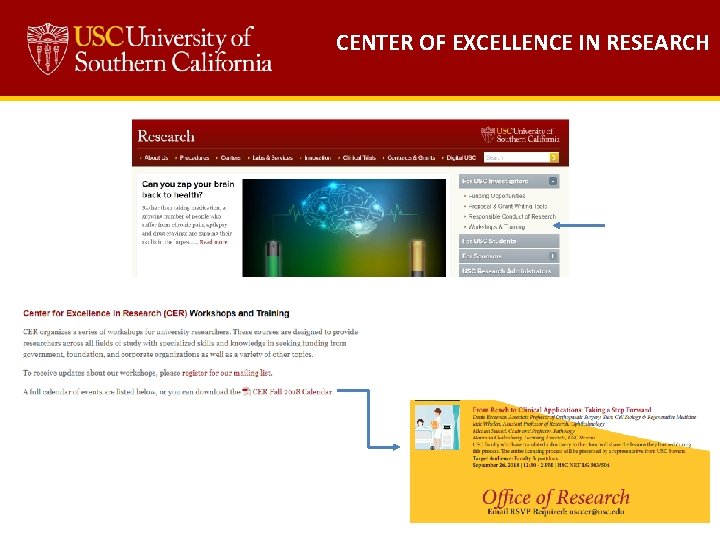
CENTER OF EXCELLENCE IN RESEARCH
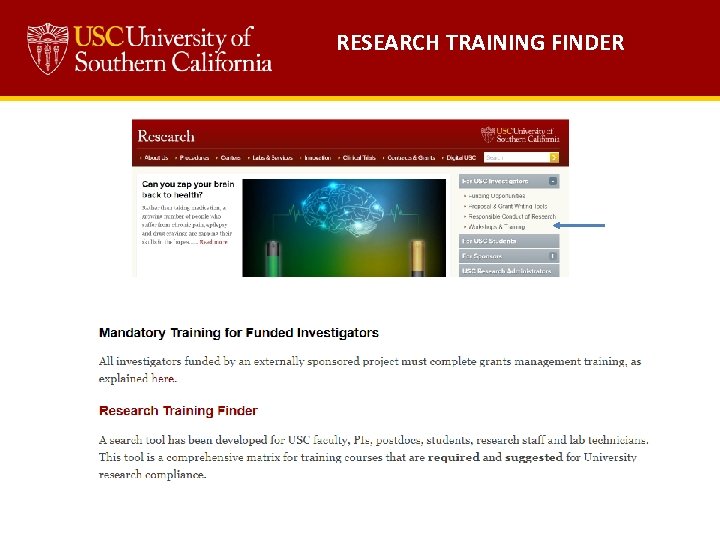
RESEARCH TRAINING FINDER
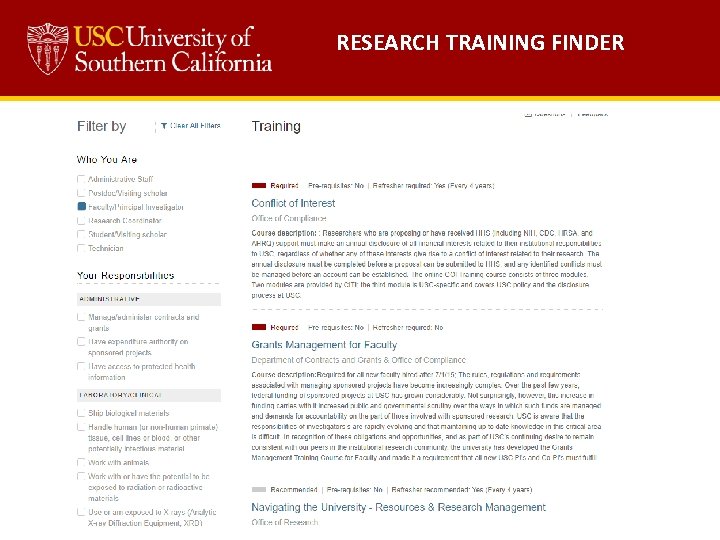
RESEARCH TRAINING FINDER
THANK YOU! Silvia da Costa, Ph. D Director, Faculty Research Relations Office of Research vprsch@usc. edu sdacosta@usc. edu