Urology and male health Eamonn Rogers Mercy University

- Slides: 30
Urology and male health Eamonn Rogers Mercy University Hospital Cork
Role of Urologist n Cancer u Prostate u Testis Benign Prostatic Hyperplasia n Erectile Dysfunction n Urinary Incontinence n
The Prostate – Why does it become diseased so often? Only male organ to enlarge with age n Enlargement impedes urine emptying from bladder n May inhibit ejaculation n Commonest cause of cancer in males n
Aging and the Prostate n Only 2 known risk factors for developing Prostate Hyperplasia / Neoplasia u Aging u Functional testicular tissue (Testosterone)
Ageing Male n The Irish Longtitu. Dinal Ageing Study u 1999 = 11% > 65 YEARS u 2011 = 15% > 65 YEARS u 2031 = 19% > 65 YEARS n 2035 = 66% > 80 YEARS
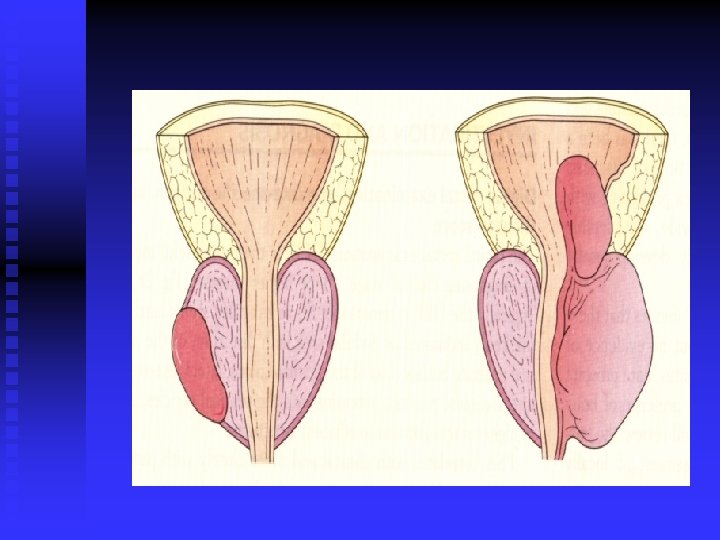
n Benign Prostatic Hyperplasia (BPH) develops deep within the prostate and is more likely to “squeeze” the water passage and cause symptoms u It is much more common than cancer (90%) u It starts in men from the age of 40 and progressively grows n Cancer develops in the outside of the gland rarely causes symptoms in its early stages until the tumour becomes advanced
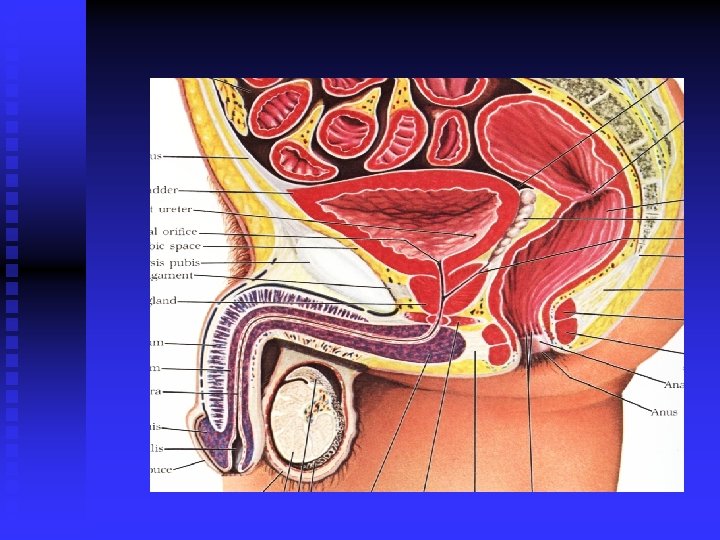
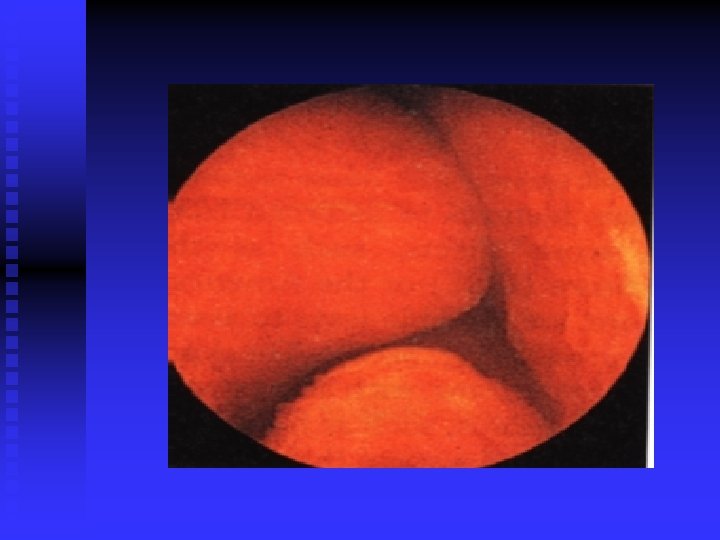
Structure of the Bladder
Prostate cancer n Slow growing but eventually lethal u Most prevalent male cancer u 2 nd commonest cause of male cancer deaths u 85% PSA detetcted cancers will eventually progress (7 -10 years)
n Therefore the only way one can detect early prostate cancer is with u A) a blood test (PSA) u B) feeling the surface of the prostate by means of an internal examination
Histological Differentiation – Gleason Grade /Score n In multivariate analysis the most important clinical parameter predicting the NATURAL HISTORY OF PROSTATE CANCER i. e. u Rate of progression u Prognosis
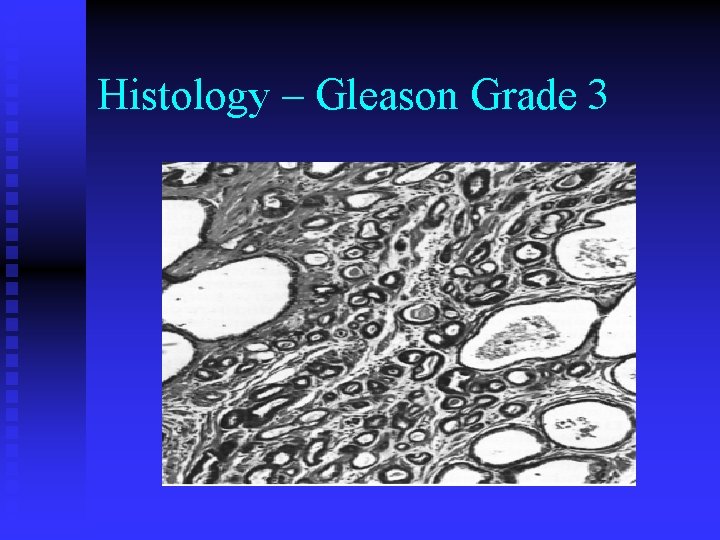
Histology – Gleason Grade 3
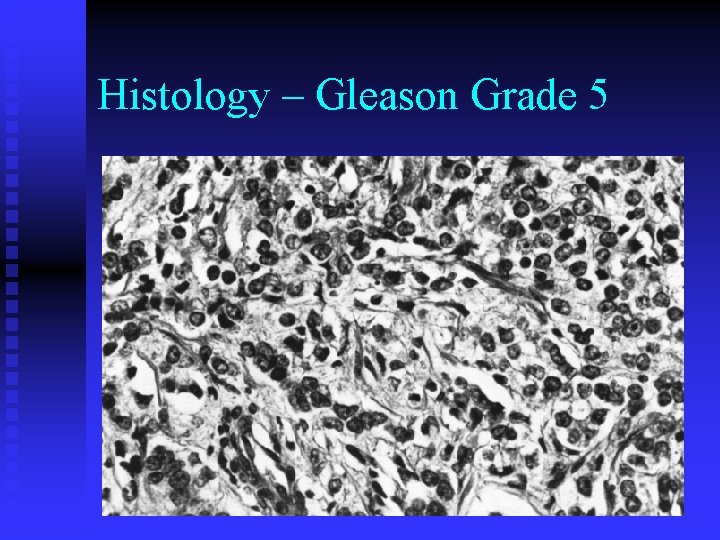
Histology – Gleason Grade 5
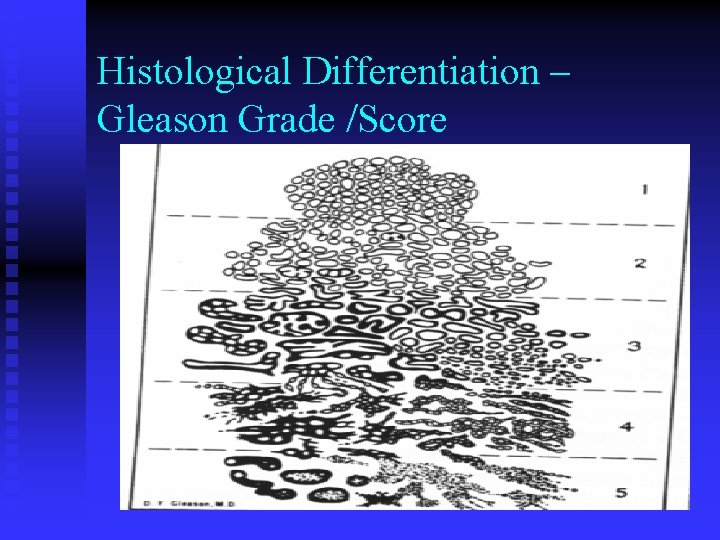
Histological Differentiation – Gleason Grade /Score n 5 Gleason grades (1 -5) based on histological aggression of tissue u Architecture u Cytology n Gleason score estimates the 2 most prevalent patterns (e. g. 3+4 = 7; 2+2 = 4)
Histological Differentiation – Gleason Grade /Score
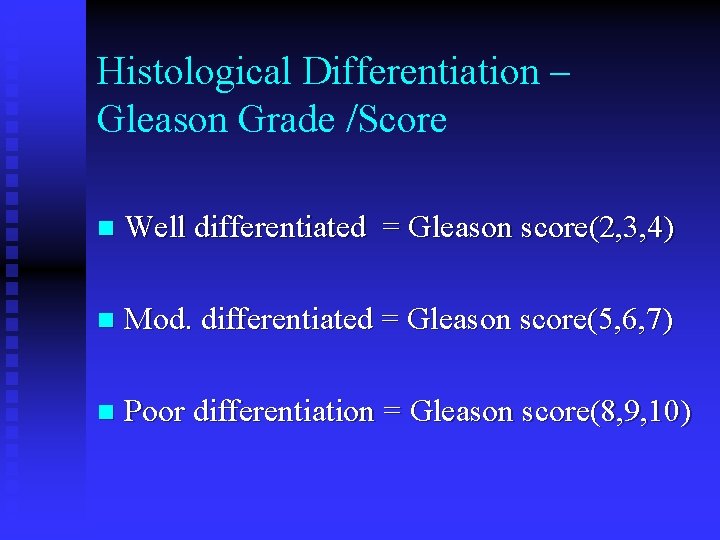
Histological Differentiation – Gleason Grade /Score n Well differentiated = Gleason score(2, 3, 4) n Mod. differentiated = Gleason score(5, 6, 7) n Poor differentiation = Gleason score(8, 9, 10)
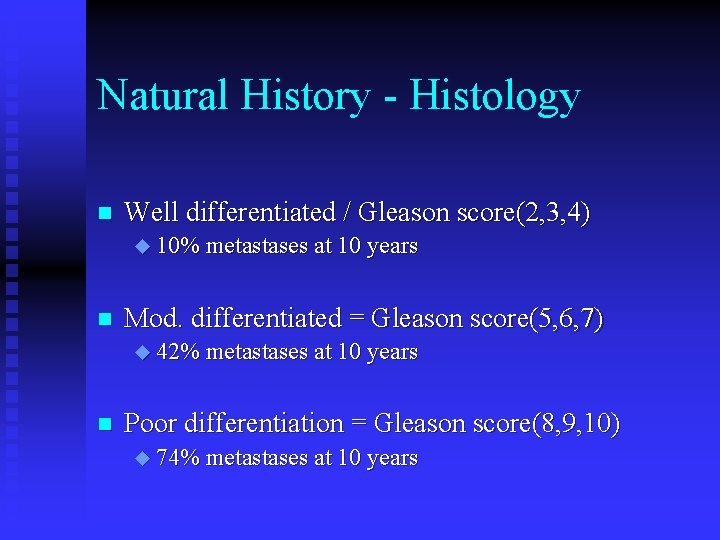
Natural History - Histology n Well differentiated / Gleason score(2, 3, 4) u 10% metastases at 10 years n Mod. differentiated = Gleason score(5, 6, 7) u 42% metastases at 10 years n Poor differentiation = Gleason score(8, 9, 10) u 74% metastases at 10 years
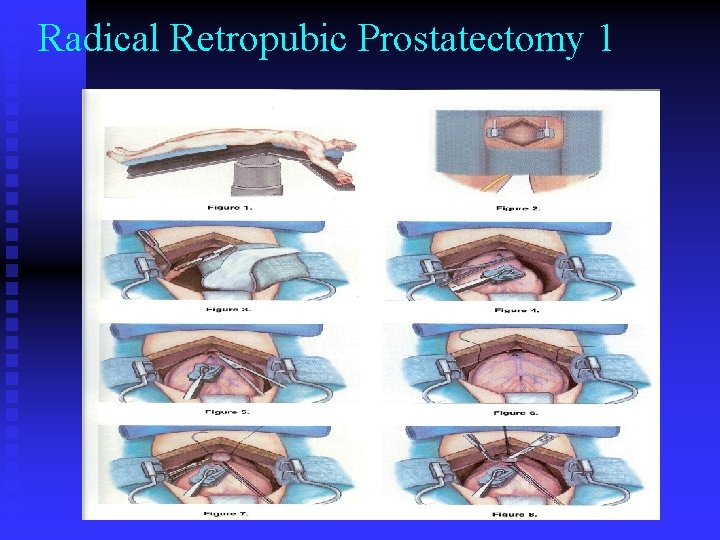
Radical Retropubic Prostatectomy 1
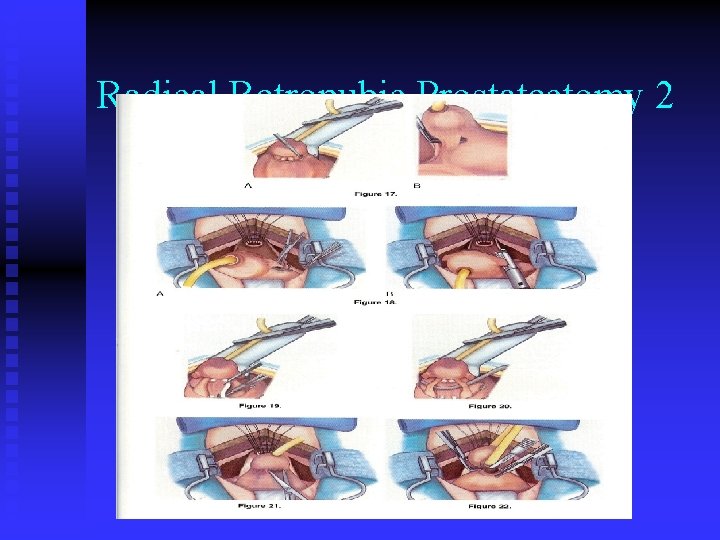
Radical Retropubic Prostatectomy 2
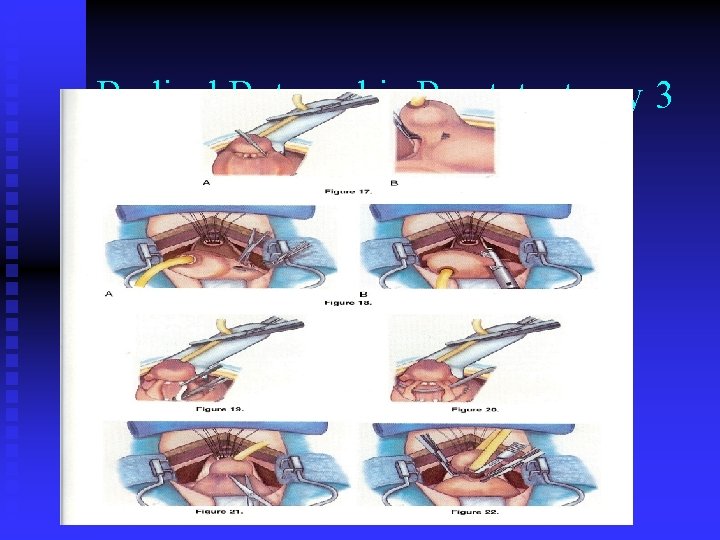
Radical Retropubic Prostatectomy 3
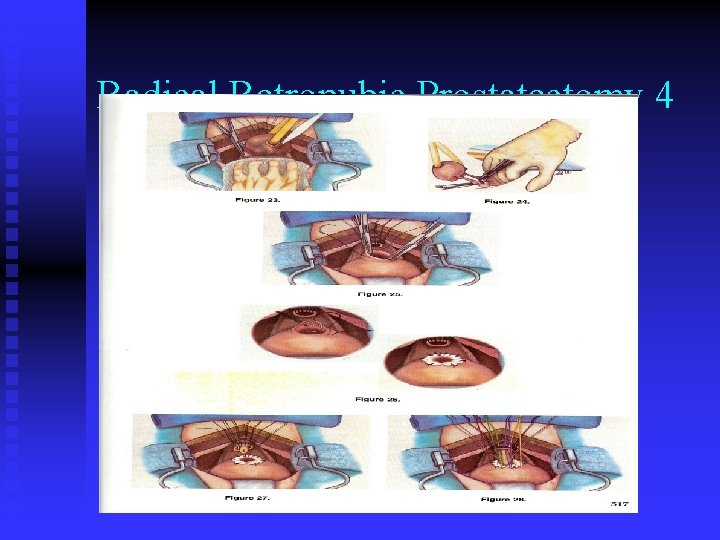
Radical Retropubic Prostatectomy 4
Complications - Longterm Bladder neck contracture n Impotence n Urinary Incontinence n u Sphincter =Stress u Bladder
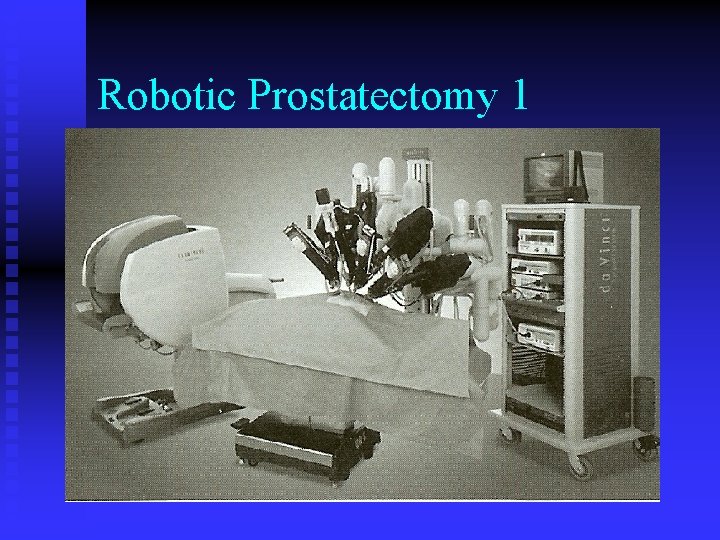
Robotic Prostatectomy 1
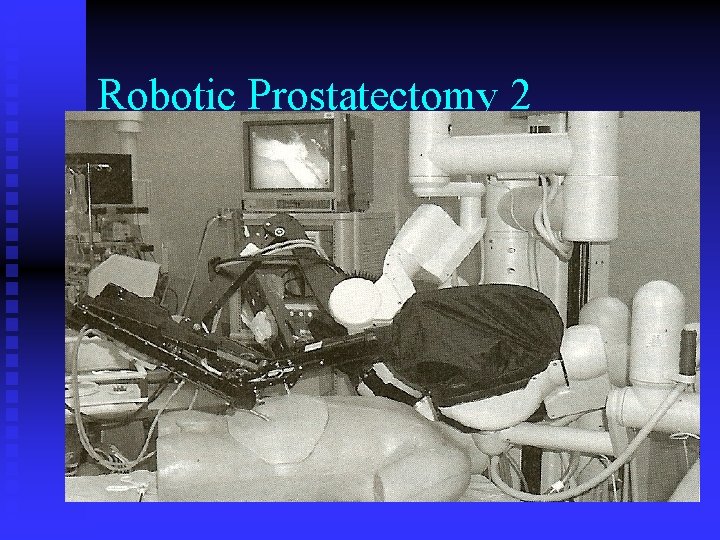
Robotic Prostatectomy 2
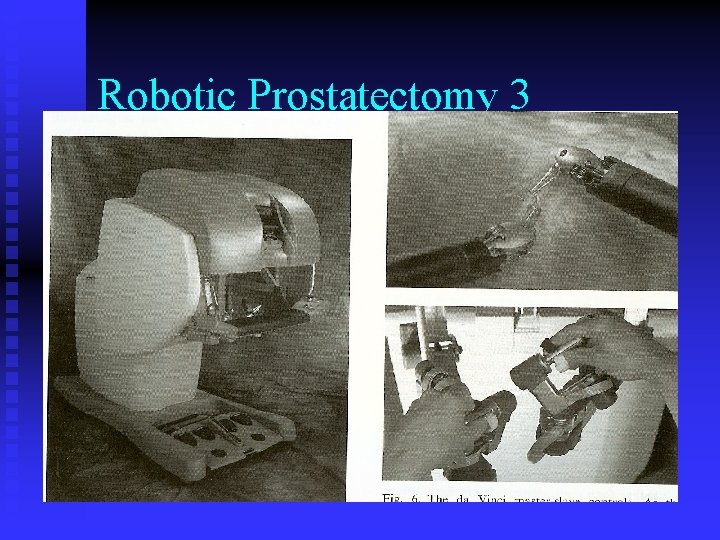
Robotic Prostatectomy 3
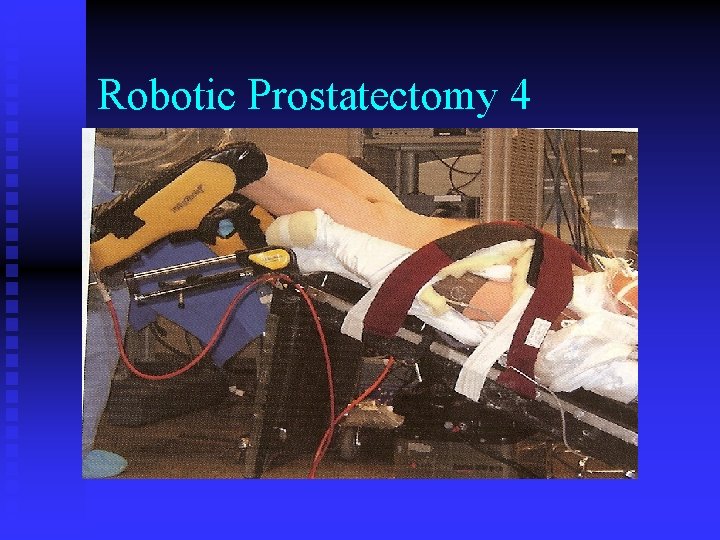
Robotic Prostatectomy 4
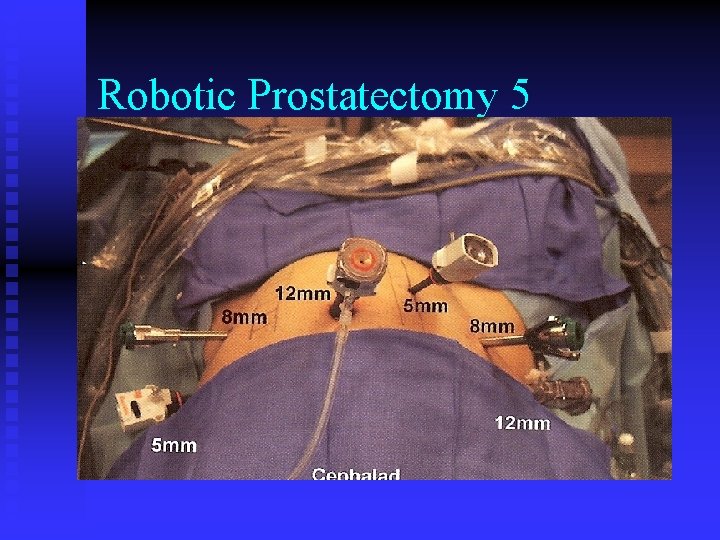
Robotic Prostatectomy 5
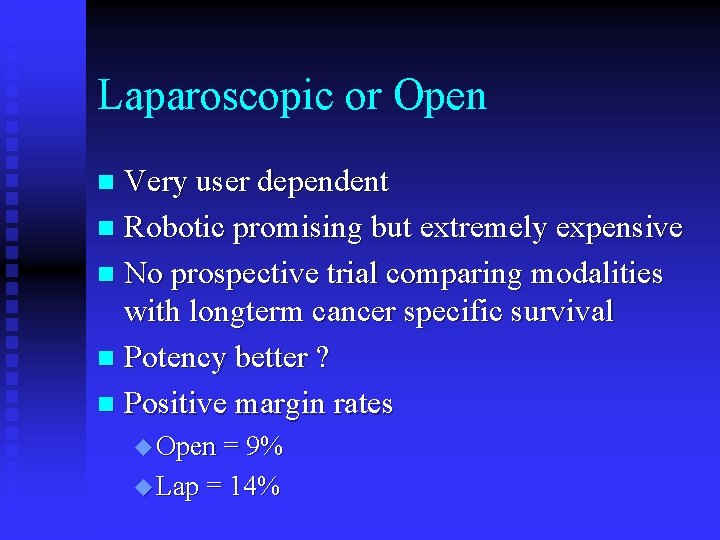
Laparoscopic or Open Very user dependent n Robotic promising but extremely expensive n No prospective trial comparing modalities with longterm cancer specific survival n Potency better ? n Positive margin rates n u Open = 9% u Lap = 14%