USC Institute of Urology Minimalmargin Unclamped Partial Nephrectomy

- Slides: 10
USC Institute of Urology ‘Minimal-margin’ Unclamped Partial Nephrectomy: Histologic & Anatomic Basis Raed Azhar, MD MS FRCSC Clinical Fellow, Robotic Surgery & Advanced Laparoscopy USC Institute of Urology
USC Institute of Urology Tumor – Kidney Parenchyma Interface: Histologic Analysis
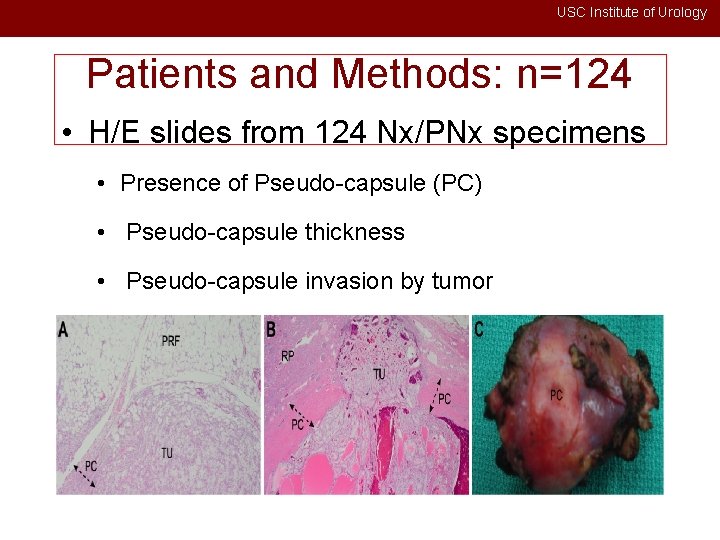
USC Institute of Urology Patients and Methods: n=124 • H/E slides from 124 Nx/PNx specimens • Presence of Pseudo-capsule (PC) • Pseudo-capsule thickness • Pseudo-capsule invasion by tumor
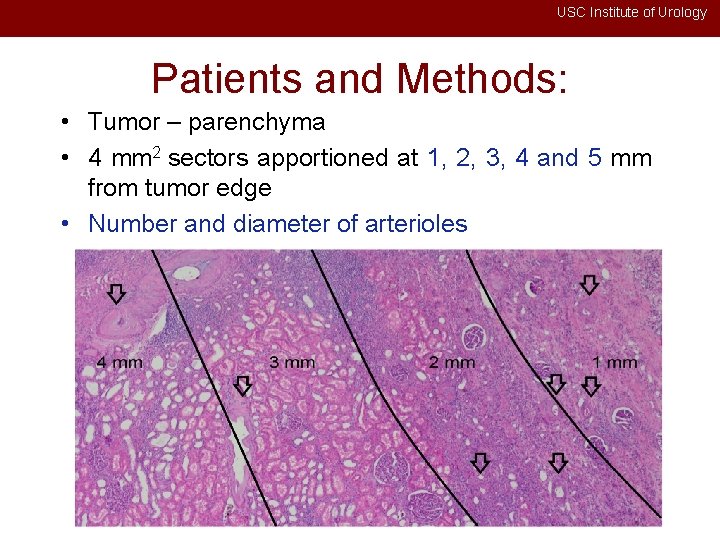
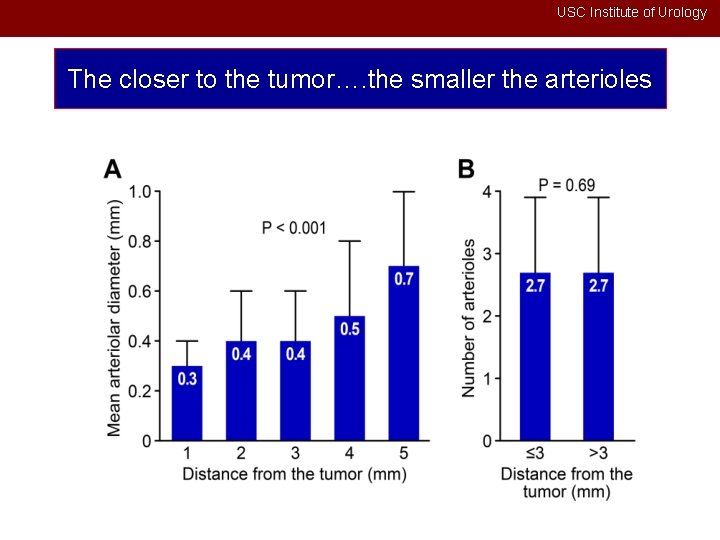
USC Institute of Urology Patients and Methods: • Tumor – parenchyma • 4 mm 2 sectors apportioned at 1, 2, 3, 4 and 5 mm from tumor edge • Number and diameter of arterioles
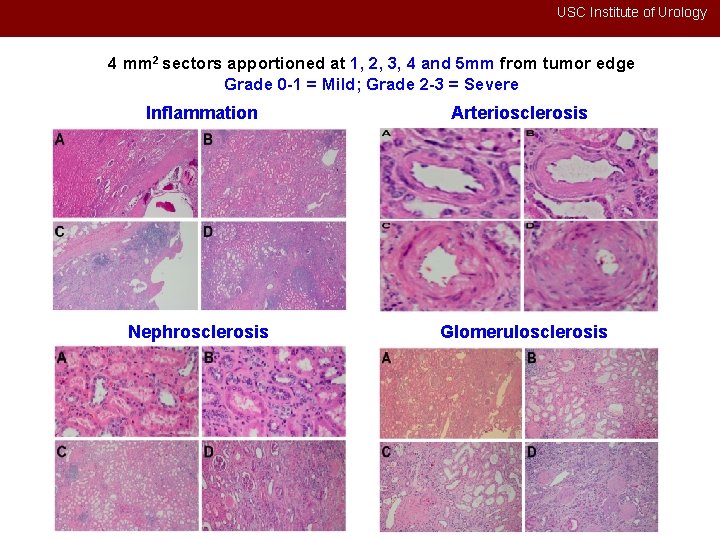
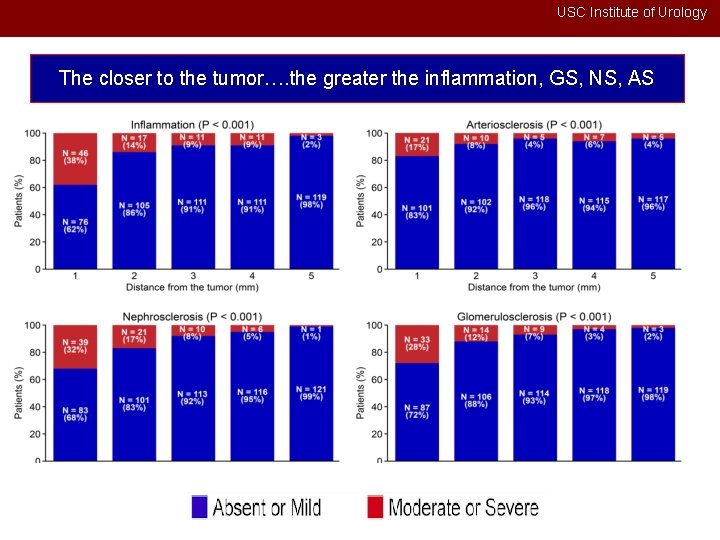
USC Institute of Urology 4 mm 2 sectors apportioned at 1, 2, 3, 4 and 5 mm from tumor edge Grade 0 -1 = Mild; Grade 2 -3 = Severe Inflammation Arteriosclerosis Nephrosclerosis Glomerulosclerosis
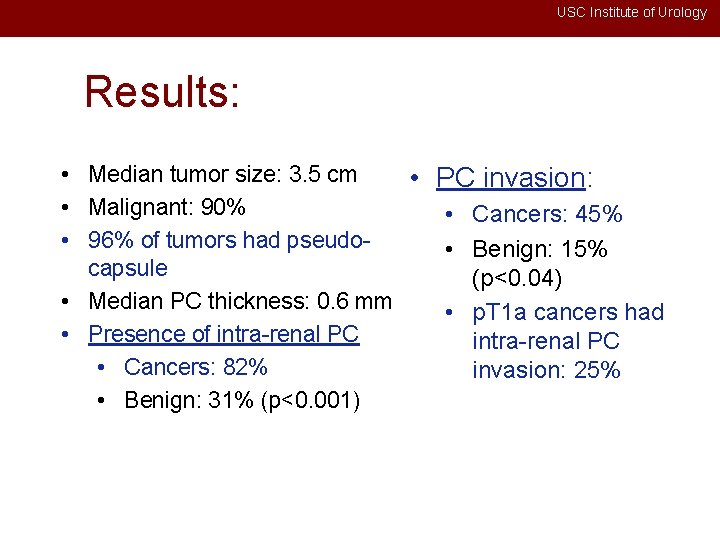
USC Institute of Urology Results: • Median tumor size: 3. 5 cm • Malignant: 90% • 96% of tumors had pseudocapsule • Median PC thickness: 0. 6 mm • Presence of intra-renal PC • Cancers: 82% • Benign: 31% (p<0. 001) • PC invasion: • Cancers: 45% • Benign: 15% (p<0. 04) • p. T 1 a cancers had intra-renal PC invasion: 25%
USC Institute of Urology The closer to the tumor…. the smaller the arterioles
USC Institute of Urology The closer to the tumor…. the greater the inflammation, GS, NS, AS
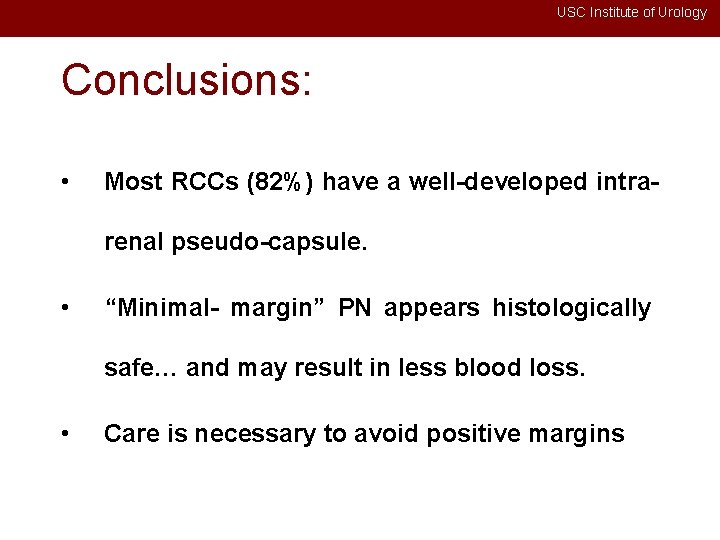
USC Institute of Urology Conclusions: • Most RCCs (82%) have a well-developed intrarenal pseudo-capsule. • “Minimal- margin” PN appears histologically safe… and may result in less blood loss. • Care is necessary to avoid positive margins
USC Institute of Urology THANK YOU !