
UBC Department of Urologic Sciences Lecture Series Urological
UBC Department of Urologic Sciences Lecture Series Urological Trauma

Disclaimer: • This is a lot of information to cover and we are unlikely to cover it all today • These slides are to be utilized for your reference to guide your self study
MCC Objectives http: //mcc. ca/examinations/objectives-overview/ For LMCC Part 1 Objectives applicable to this lecture: – Urinary Tract Injuries • Kidney • Bladder and Urethra
Objectives Trauma: 1. Given a patient with a potential urinary tract injury: 1. To list and interpret key clinical findings 2. To list and interpret critical investigations 3. Construct an initial management plan Systems: • • • Renal Bladder Urethra Ureter External Genitalia
Case #1 • 55 year old healthy male in MVA, T-boned, high speed • Brought in by ambulance • ABCs done, c-spine cleared • GCS 8 • Presents with gross hematuria – DDx and sites of bleeding?
Case # 1 cont’d • Potential Causes of Hematuria: – Urethral Injury – Bladder Injury – Ureteric Injury – Renal Injury
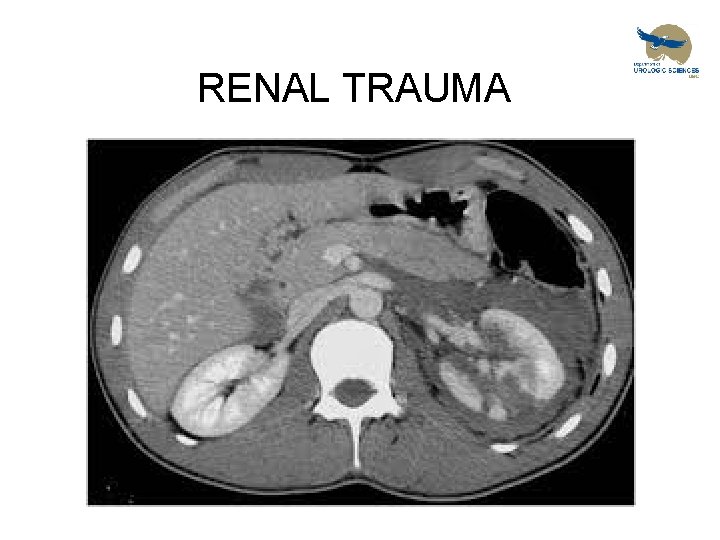
RENAL TRAUMA
Renal Trauma Overview • Most commonly injured GU organ • 10% of all serious injuries abdominal have associated renal injury • Variable etiology depending on the area – Rural: 80 -95% blunt – Urban: as little as 15% blunt
Hematuria and Renal Injury • NOT related to the degree of injury Gross Hematuria is Variable: – 1/3 rd of patients with renovascular injuries – 24% of patients with renal artery occlusion – Only 63% of Grade IV injuries (4% have no hematuria whatsoever!)
Whom to workup • Penetrating trauma: EVERYONE • Blunt trauma: Image with CT if: • gross hematuria • microhematuria plus shock • microhematuria plus acceleration/deceleration Mee et al. (1989) Hardeman et al (1987)
Imaging of trauma patient with hematuria • CT preferred – With contrast – With “delayed” films (mandatory) – Why not get CT cystogram too? • Standard intravenous pyelogram (IVP): Forget it • “One Shot” intraoperative IVP – 2 cc/kg intravenous contrast – Single film at 10 minutes
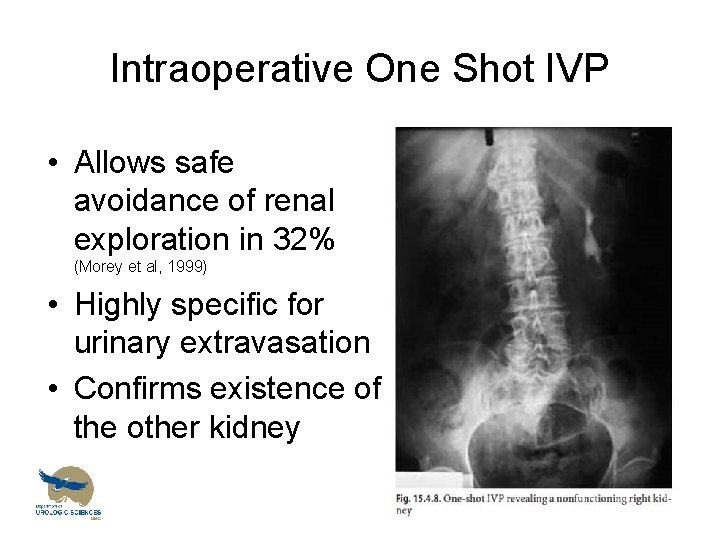
Intraoperative One Shot IVP • Allows safe avoidance of renal exploration in 32% (Morey et al, 1999) • Highly specific for urinary extravasation • Confirms existence of the other kidney
Indications for renal trauma surgery • Absolute – Grade V renal injury (debatable in blunt trauma): NEPHRECTOMY or REPAIR – Vascular injury in a single kidney: Vascular repair • Relative – Persistent bleeding > 2 units/day – Devitalized segment AND urinary extrav (80% complication rate? ) – Renal pelvis injury – Ureter injury – Incomplete staging and ongoing laparotomy – Grade IV vein or artery (thrombosis): nephrectomy • Most penetrating renal injuries
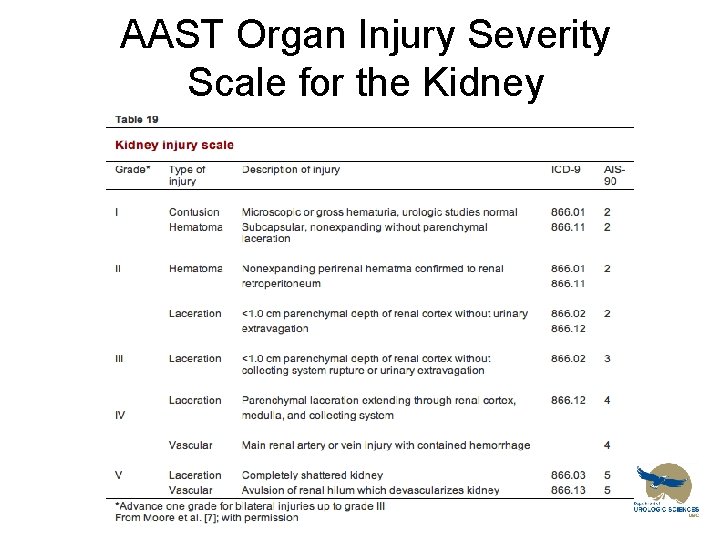
AAST Organ Injury Severity Scale for the Kidney
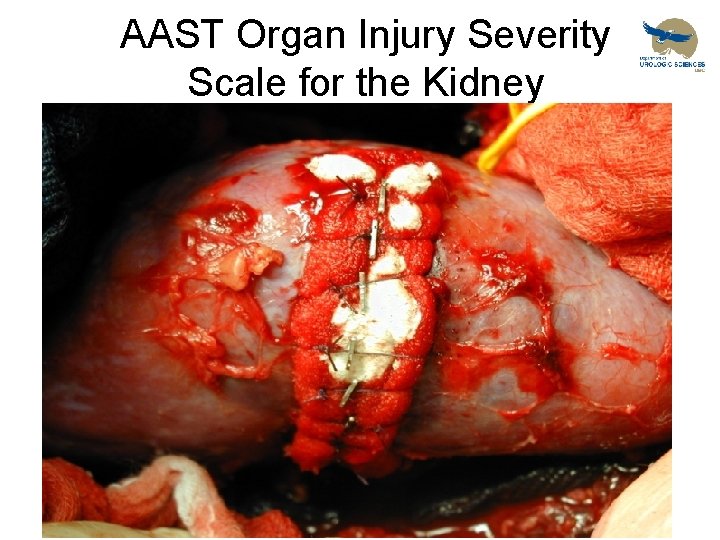
AAST Organ Injury Severity Scale for the Kidney
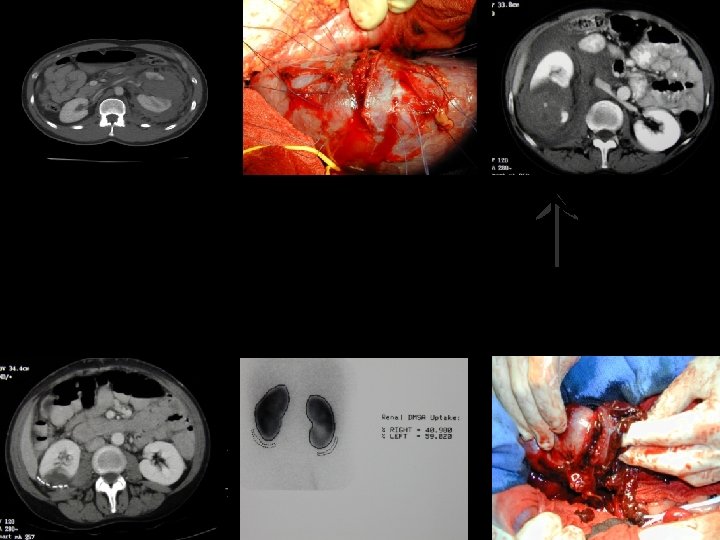
Case • 34 year old man flipped over handlebars of mountain bike • Gross hematuria • Stable • Investigations?
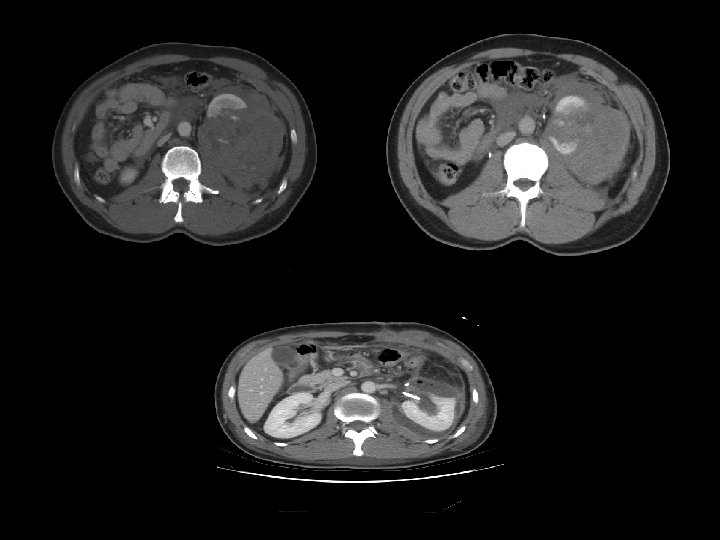
Case • Patient continues to be febrile • Hgb drifts down to 70 after 3 U PRBCs • Management?
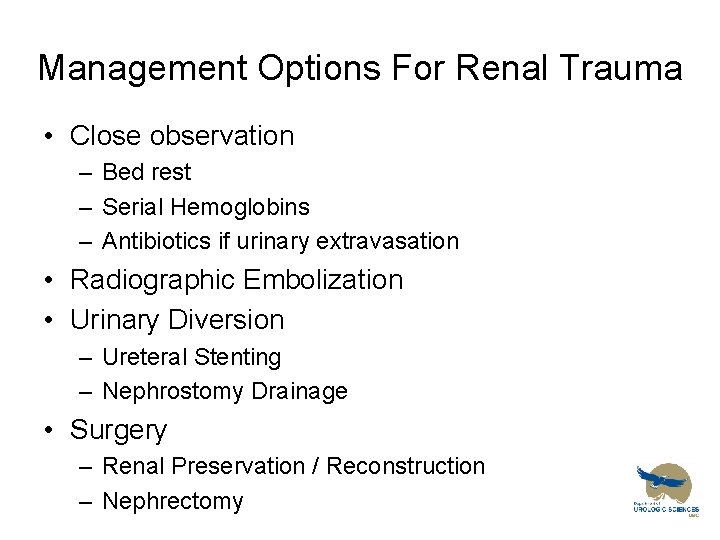
Management Options For Renal Trauma • Close observation – Bed rest – Serial Hemoglobins – Antibiotics if urinary extravasation • Radiographic Embolization • Urinary Diversion – Ureteral Stenting – Nephrostomy Drainage • Surgery – Renal Preservation / Reconstruction – Nephrectomy
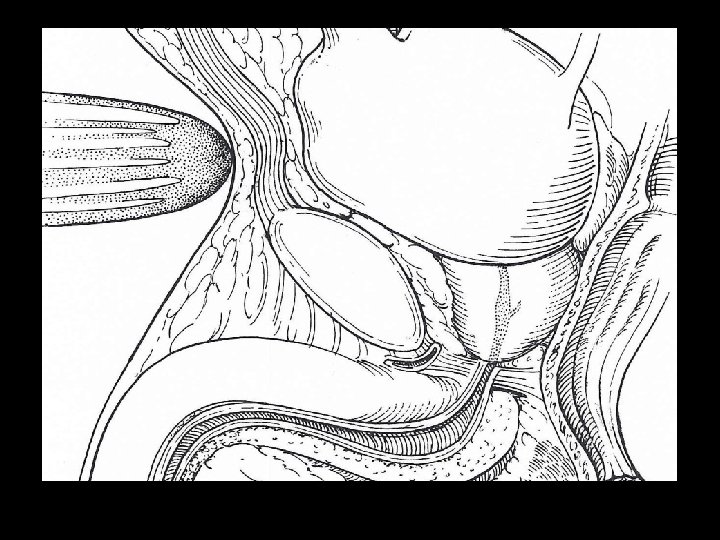
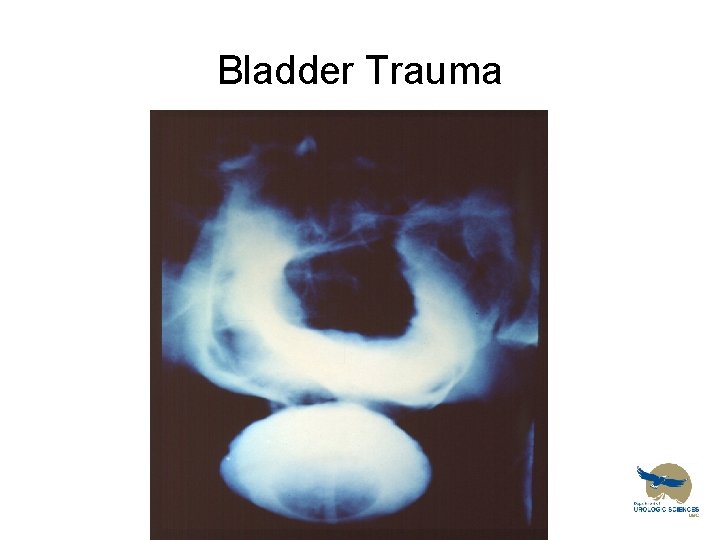
Bladder Trauma
Bladder: BLUNT: Overview • • Rare: <2% of all injuries requiring surgery Often with a severe associated injuries Often high-energy injuries Associated with urethral rupture 10 -29% and pelvic fracture 6 -10%
Bladder: PENETRATING: Overview l l l Civilian incidence 2% Associated major abdominal injuries (35%) and shock (22%) Mortality high: 12%
Bladder: Diagnosis: Physical Signs l l Suspicion: required in cases of penetrating trauma (no time for studies): based on trajectory Physical signs: l l l Abdominal pain Abdominal tenderness Abdominal bruising Urethral catheter does not return urine Delayed? l l Fever No urine output Peritoneal signs BUN / Creatinine
Bladder: Diagnosis: Hematuria l l Most (95%) have gross hematuria Microhematuria does occur: usually with minimal injury
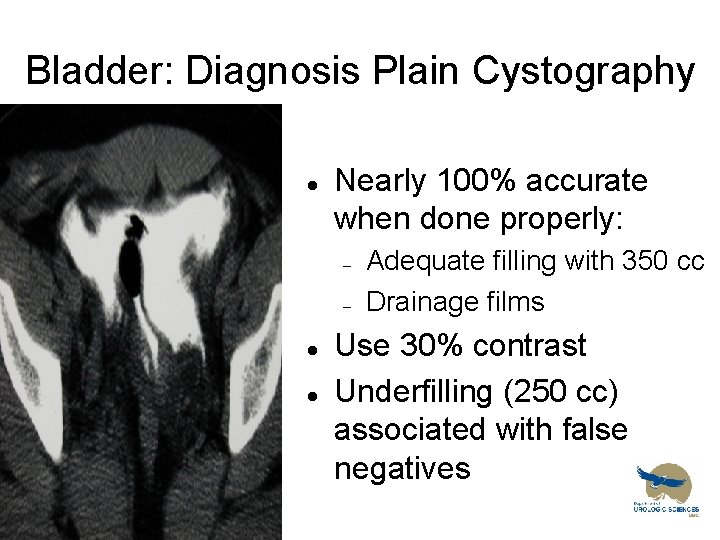
Bladder: Diagnosis Plain Cystography l Nearly 100% accurate when done properly: – – l l Adequate filling with 350 cc Drainage films Use 30% contrast Underfilling (250 cc) associated with false negatives
Bladder: Diagnosis CT Cystography l l l Preferred, especially if already getting other CTs Antegrade filling by “clamping the Foley” is not OK! Must dilute contrast (6: 1 with saline, or to about 2 -4%)
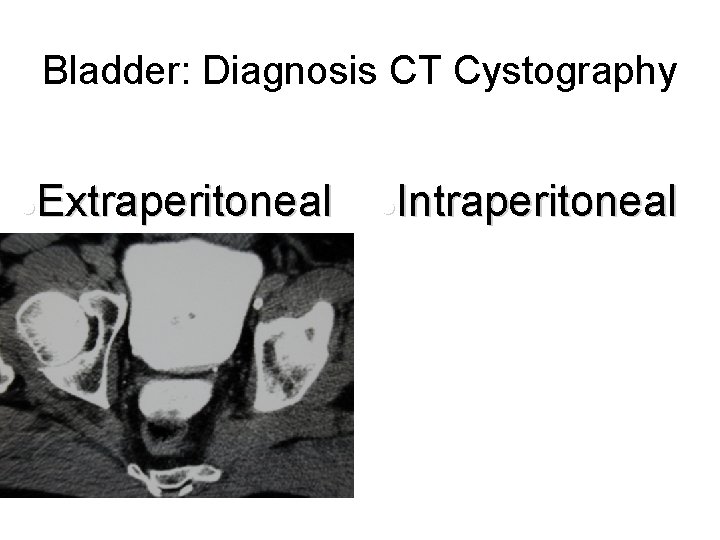
Bladder: Diagnosis CT Cystography Extraperitoneal l Intraperitoneal l
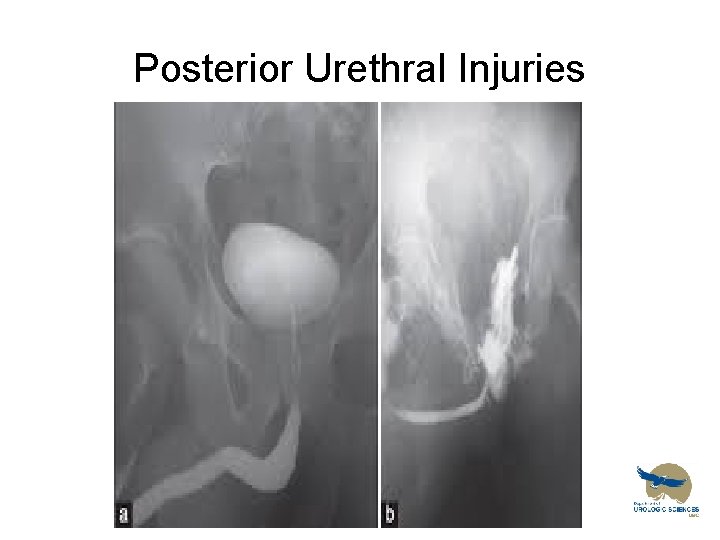
Posterior Urethral Injuries
Posterior Urethra Trauma: Etiology l l l 4 -14% of pelvic fractures Bilateral pubic rami fractures (straddle fracture) and sacroiliac diasthasis Mostly males, but can happen in females Associated bladder rupture in 10 -17% Rectal injury can lead to urethral-rectal fistula in 8%
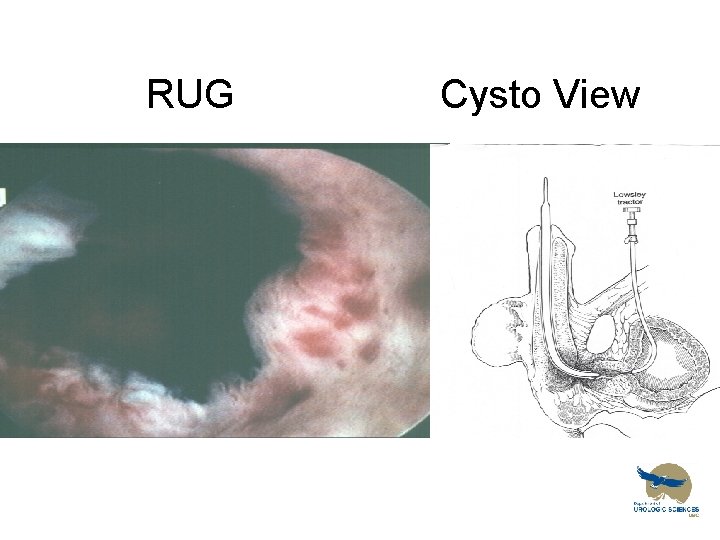
Posterior Urethra Trauma: Diagnosis l l l Blood at meatus: 50% “High riding prostate”: 34% Inability to urinate Inability to place urethral catheter Rarely, perineal hematoma (late finding)
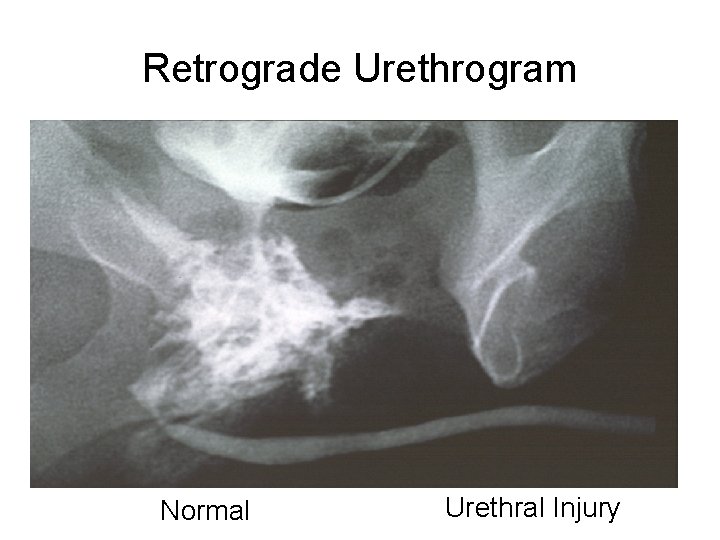
Retrograde Urethrogram Normal Urethral Injury
RUG Cysto View
Posterior Urethra Trauma: Management l l l Unable to get Foley in: Place an open suprapubic catheter Allows inspection/repair of the bladder for associated injury No evidence that s/p “infects orthopedic hardware” although ortho docs worry about it
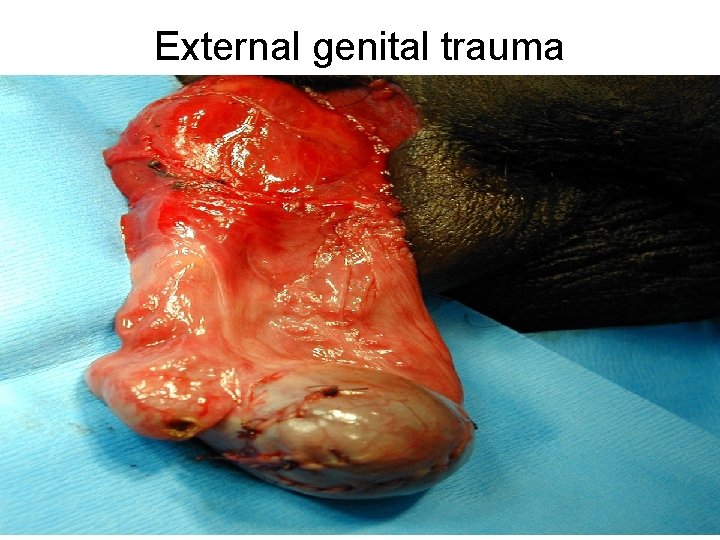
External genital trauma
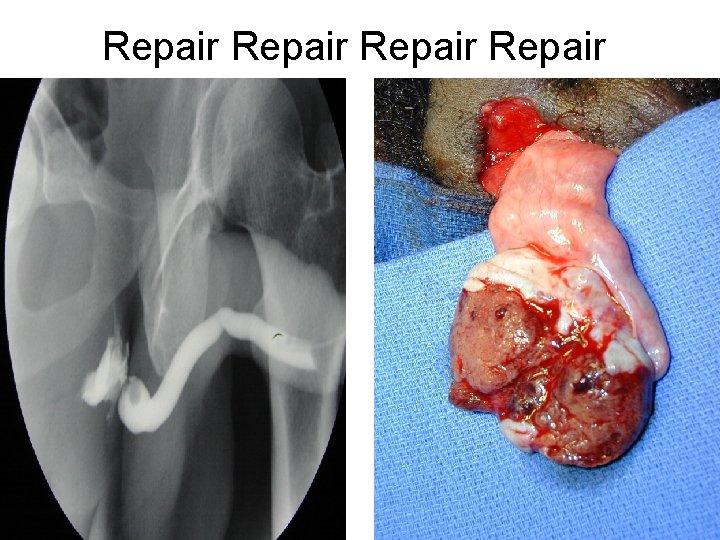
Testes Trauma • Rare in general • But, in significant scrotal blunt trauma, rupture can be as high as 50% • Bilateral 1. 5% • Assaults and sports injuries predominate • Local anesthetic block may improve exam
Repair
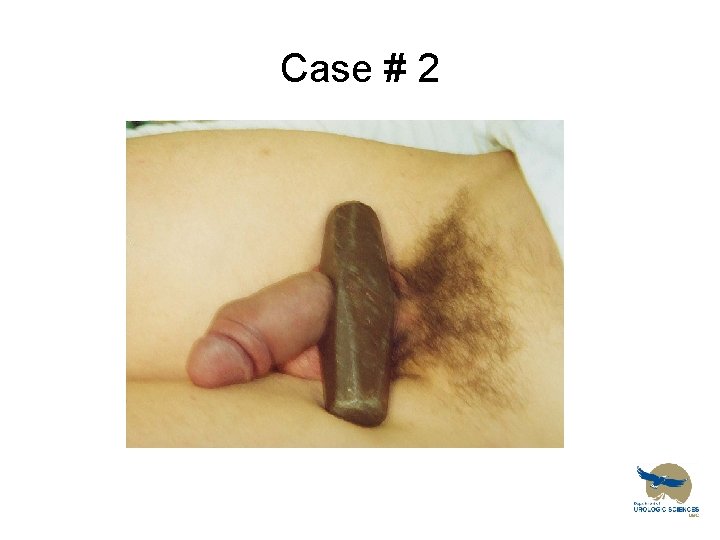
Case #2 • 34 y. o. male in high velocity MVA presents to ER • GCS 13, ABCs OK • “cannot void” • Tib-fib, Pelvic #, multiple rib #s and pulmonary contusions • Next step?
Case # 2
We get all sorts of calls….
Main points : Kidney Trauma • Get a CT in everyone with – Gross hematuria – Microhematuria + deceleration or shock • Treat most kidneys nonoperatively • Indications for operation: – – Grade V renal injury Persistent bleeding Suspected ureter or collecting system injury Incomplete staging and ALREADY having lap • Isolate the vessels first
Main Points: Bladder Trauma • Get a CT cystogram if pelvic fracture • Most extraperitoneal ruptures can be managed conservatively, – BUT: Consider treating extraperitoneal bladder ruptures OPEN, especially if undergoing lap and DEFINITELY if undergoing pelvic ORIF • Microhematuria (no gross hematuria) usually means no significant injury to bladder
Main Points: Ureter/Urethra • Suspect ureter injuries and you’ll miss them less • If the Foley isn’t draining, it’s probably not in the right place

- Slides: 46