UNPACKING EXPLICIT INSTRUCTION PLEASE SIGN IN AND PICK
- Slides: 23
UNPACKING EXPLICIT INSTRUCTION PLEASE SIGN IN AND PICK UP A PACKET Eisenhower High School March 6, 2013
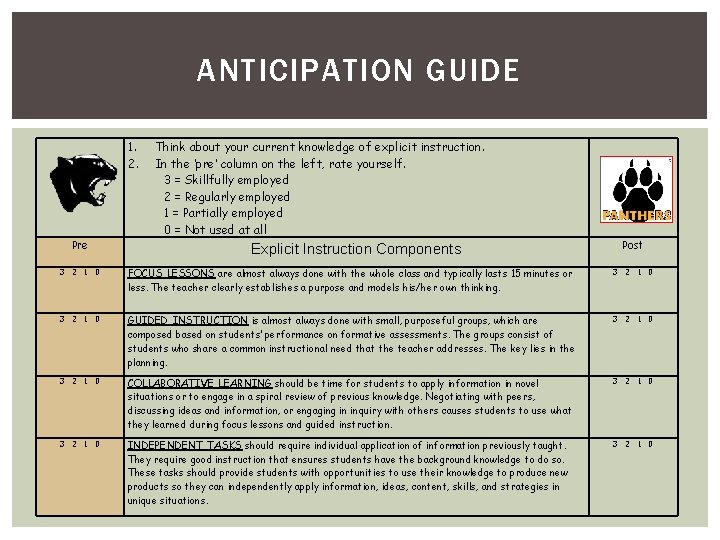
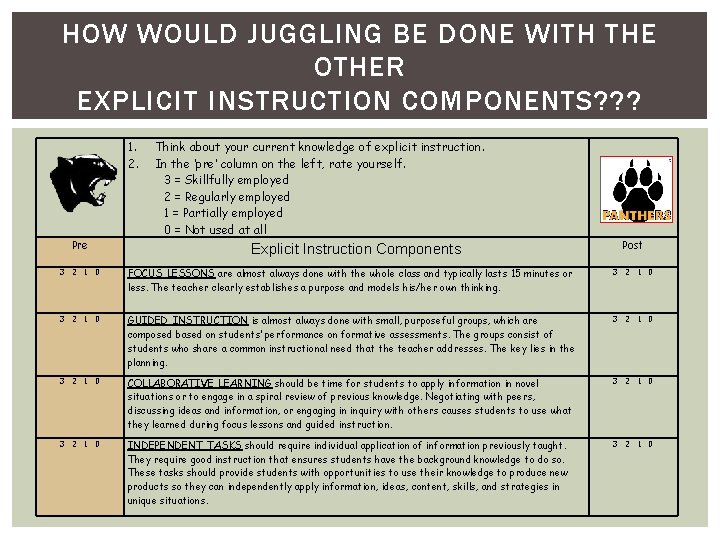
ANTICIPATION GUIDE 1. 2. Pre Think about your current knowledge of explicit instruction. In the ‘pre’ column on the left, rate yourself. 3 = Skillfully employed 2 = Regularly employed 1 = Partially employed 0 = Not used at all Explicit Instruction Components Post 3 2 1 0 FOCUS LESSONS are almost always done with the whole class and typically lasts 15 minutes or less. The teacher clearly establishes a purpose and models his/her own thinking. 3 2 1 0 GUIDED INSTRUCTION is almost always done with small, purposeful groups, which are composed based on students’ performance on formative assessments. The groups consist of students who share a common instructional need that the teacher addresses. The key lies in the planning. 3 2 1 0 COLLABORATIVE LEARNING should be time for students to apply information in novel situations or to engage in a spiral review of previous knowledge. Negotiating with peers, discussing ideas and information, or engaging in inquiry with others causes students to use what they learned during focus lessons and guided instruction. 3 2 1 0 INDEPENDENT TASKS should require individual application of information previously taught. They require good instruction that ensures students have the background knowledge to do so. These tasks should provide students with opportunities to use their knowledge to produce new products so they can independently apply information, ideas, content, skills, and strategies in unique situations. 3 2 1 0
OBJECTIVE After a demonstration of a Focus Lesson using modeling teachers will share their implementation plans.
COMPONENTS OF EXPLICIT INSTRUCTION Focus Lesson
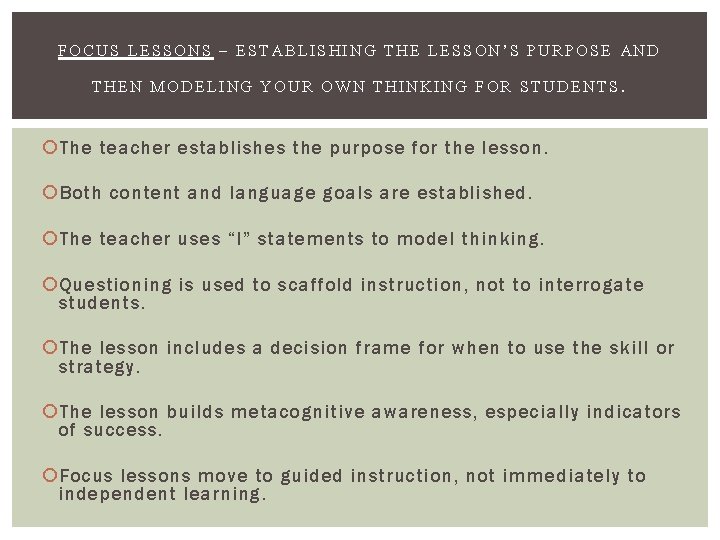
FOCUS LESSONS – ESTABLISHING THE LESSON’S PURPOSE AND THEN MODELING YOUR OWN THINKING FOR STUDENTS. The teacher establishes the purpose for the lesson. Both content and language goals are established. The teacher uses “I” statements to model thinking. Questioning is used to scaffold instruction, not to interrogate students. The lesson includes a decision frame for when to use the skill or strategy. The lesson builds metacognitive awareness, especially indicators of success. Focus lessons move to guided instruction, not immediately to independent learning.
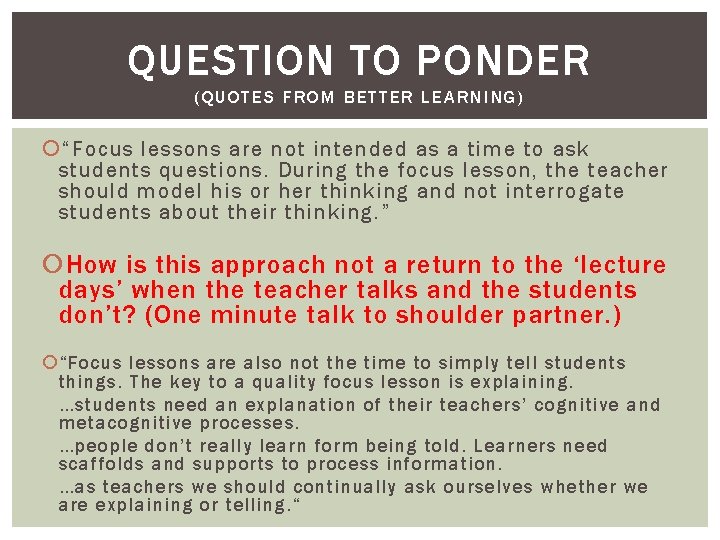
QUESTION TO PONDER (QUOTES FROM BETTER LEARNING) “Focus lessons are not intended as a time to ask students questions. During the focus lesson, the teacher should model his or her thinking and not interrogate students about their thinking. ” How is this approach not a return to the ‘lecture days’ when the teacher talks and the students don’t? (One minute talk to shoulder partner. ) “Focus lessons are also not the time to simply tell students things. The key to a quality focus lesson is explaining. …students need an explanation of their teachers’ cognitive and metacognitive processes. …people don’t really learn form being told. Learners need scaffolds and supports to process information. …as teachers we should continually ask ourselves whether we are explaining or telling. “
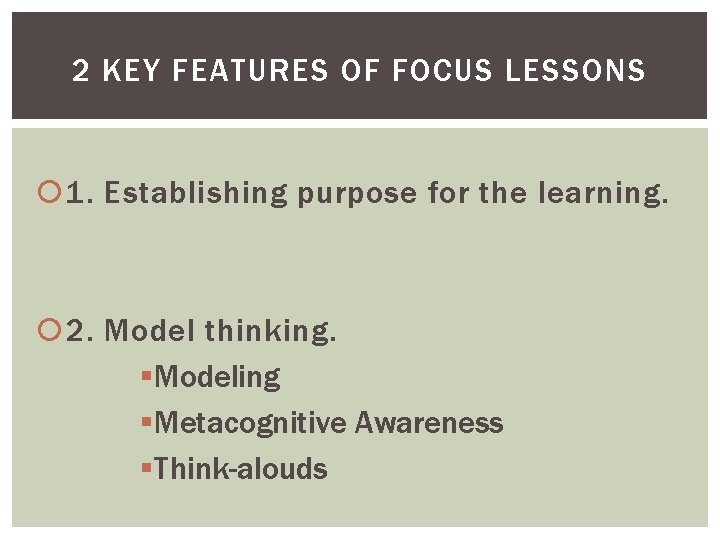
2 KEY FEATURES OF FOCUS LESSONS 1. Establishing purpose for the learning. 2. Model thinking. §Modeling §Metacognitive Awareness §Think-alouds
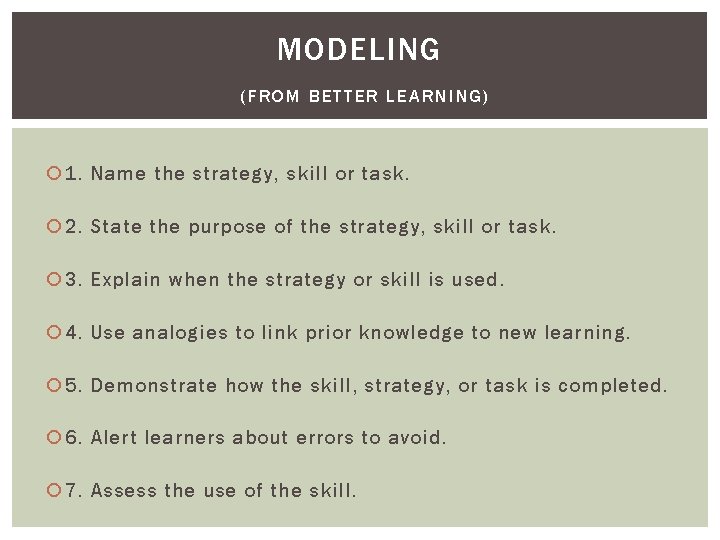
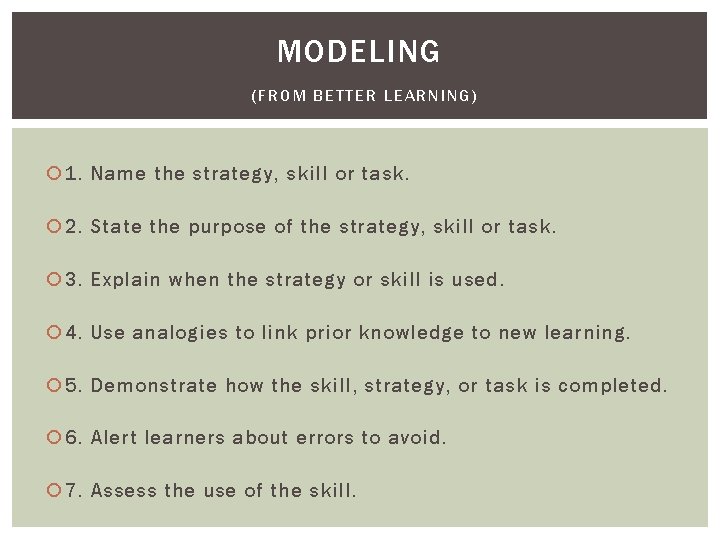
MODELING (FROM BETTER LEARNING) 1. Name the strategy, skill or task. 2. State the purpose of the strategy, skill or task. 3. Explain when the strategy or skill is used. 4. Use analogies to link prior knowledge to new learning. 5. Demonstrate how the skill, strategy, or task is completed. 6. Alert learners about errors to avoid. 7. Assess the use of the skill.
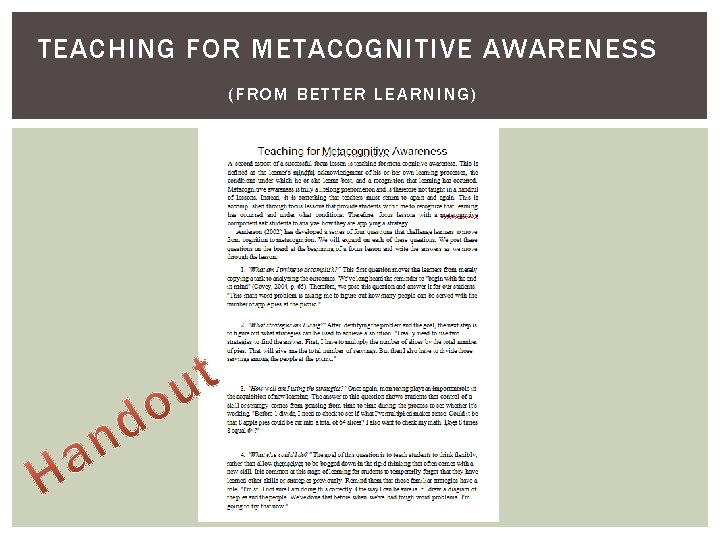
TEACHING FOR METACOGNITIVE AWARENESS (FROM BETTER LEARNING)
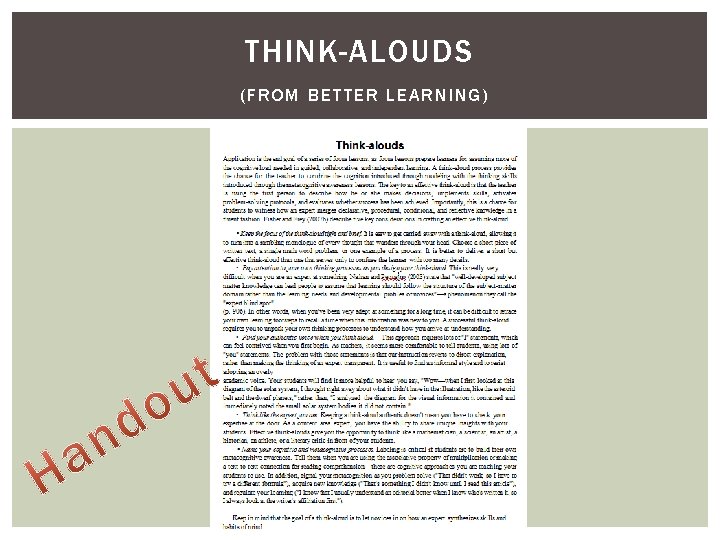
THINK-ALOUDS (FROM BETTER LEARNING)
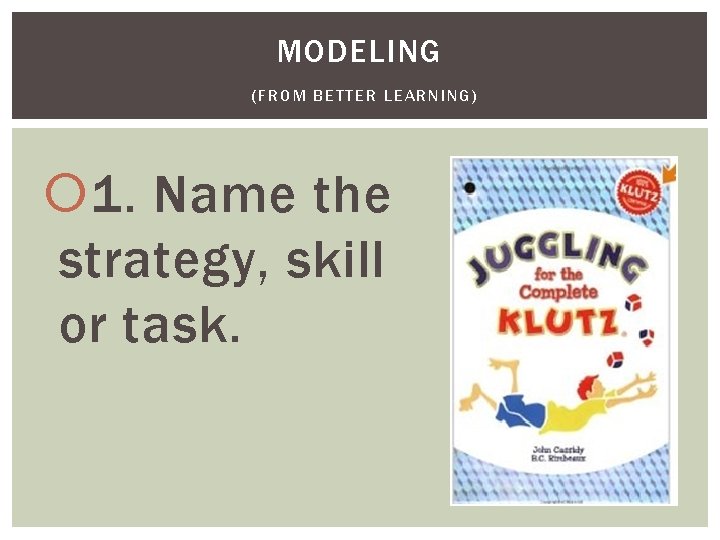
MODELING (FROM BETTER LEARNING) 1. Name the strategy, skill or task.
MODELING (FROM BETTER LEARNING) 2. State the purpose of the strategy, skill or task. The purpose of juggling is to keep multiple objects moving at the same time.
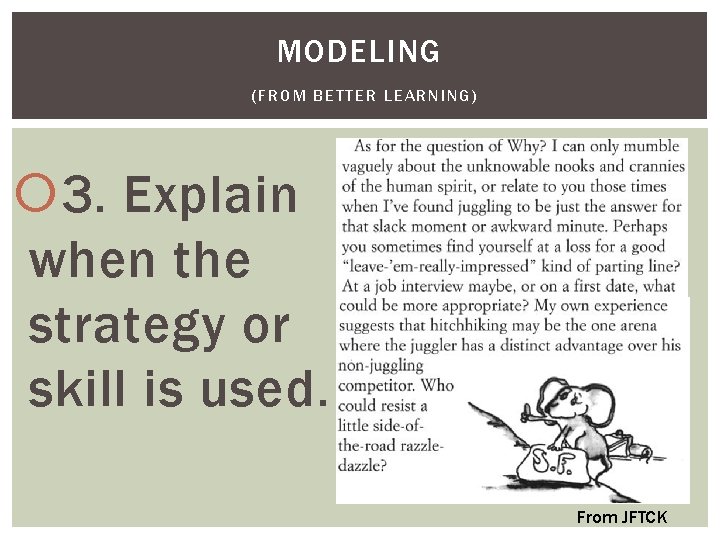
MODELING (FROM BETTER LEARNING) 3. Explain when the strategy or skill is used. From JFTCK
MODELING (FROM BETTER LEARNING) 4. Use analogies to link prior knowledge to new learning.
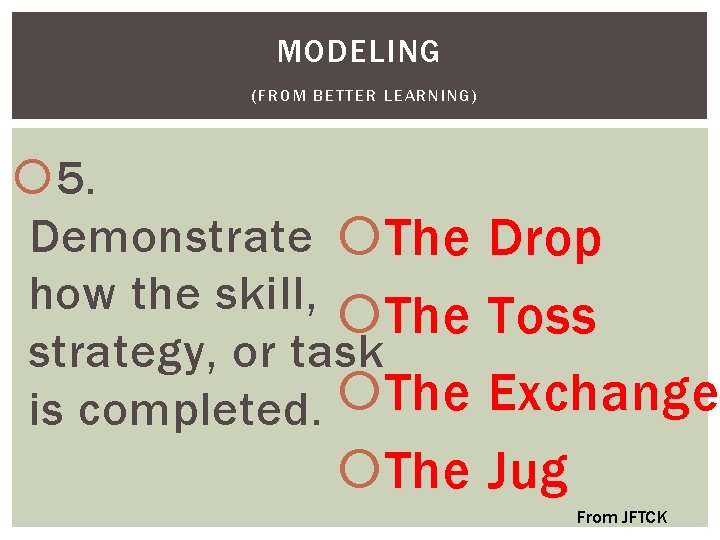
MODELING (FROM BETTER LEARNING) 5. Demonstrate The Drop how the skill, The Toss strategy, or task The Exchange is completed. The Jug From JFTCK
MODELING (FROM BETTER LEARNING) Tossing too far away…leads to leaning…running Dropped objects can roll under furniture DON’T Keep your eye on THE ball @#! 6. Alert learners about errors to avoid.
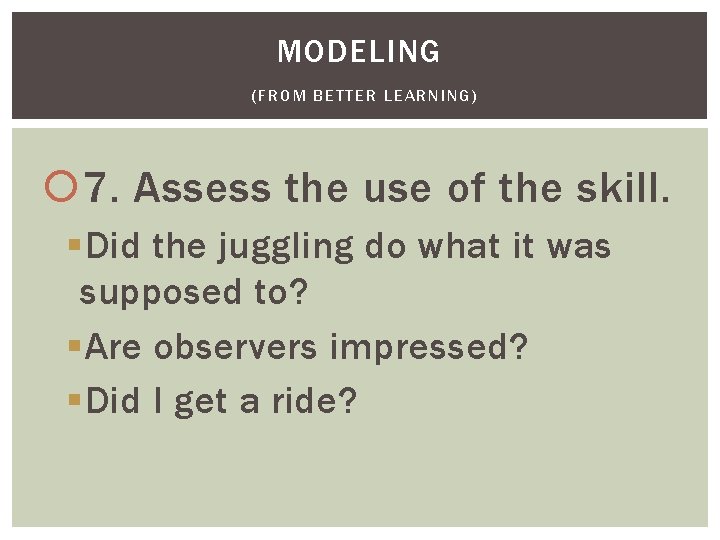
MODELING (FROM BETTER LEARNING) 7. Assess the use of the skill. §Did the juggling do what it was supposed to? §Are observers impressed? §Did I get a ride?
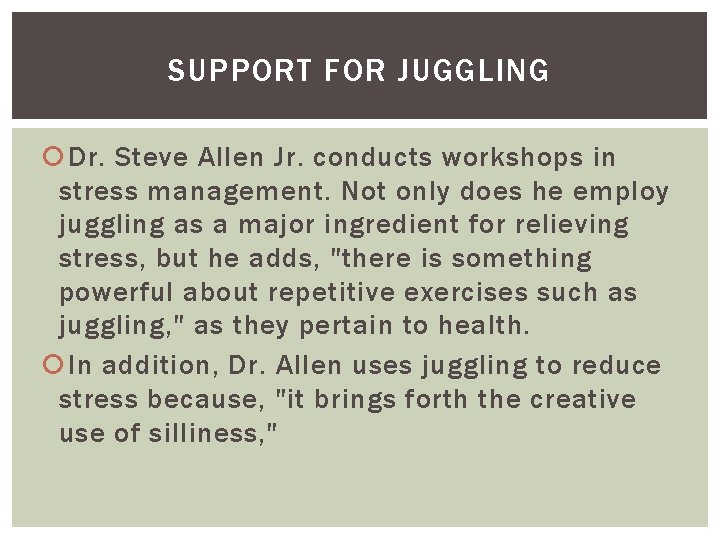
SUPPORT FOR JUGGLING Dr. Steve Allen Jr. conducts workshops in stress management. Not only does he employ juggling as a major ingredient for relieving stress, but he adds, "there is something powerful about repetitive exercises such as juggling, " as they pertain to health. In addition, Dr. Allen uses juggling to reduce stress because, "it brings forth the creative use of silliness, "
MODELING (FROM BETTER LEARNING) 1. Name the strategy, skill or task. 2. State the purpose of the strategy, skill or task. 3. Explain when the strategy or skill is used. 4. Use analogies to link prior knowledge to new learning. 5. Demonstrate how the skill, strategy, or task is completed. 6. Alert learners about errors to avoid. 7. Assess the use of the skill.
HOW WOULD JUGGLING BE DONE WITH THE OTHER EXPLICIT INSTRUCTION COMPONENTS? ? ? 1. 2. Pre Think about your current knowledge of explicit instruction. In the ‘pre’ column on the left, rate yourself. 3 = Skillfully employed 2 = Regularly employed 1 = Partially employed 0 = Not used at all Explicit Instruction Components Post 3 2 1 0 FOCUS LESSONS are almost always done with the whole class and typically lasts 15 minutes or less. The teacher clearly establishes a purpose and models his/her own thinking. 3 2 1 0 GUIDED INSTRUCTION is almost always done with small, purposeful groups, which are composed based on students’ performance on formative assessments. The groups consist of students who share a common instructional need that the teacher addresses. The key lies in the planning. 3 2 1 0 COLLABORATIVE LEARNING should be time for students to apply information in novel situations or to engage in a spiral review of previous knowledge. Negotiating with peers, discussing ideas and information, or engaging in inquiry with others causes students to use what they learned during focus lessons and guided instruction. 3 2 1 0 INDEPENDENT TASKS should require individual application of information previously taught. They require good instruction that ensures students have the background knowledge to do so. These tasks should provide students with opportunities to use their knowledge to produce new products so they can independently apply information, ideas, content, skills, and strategies in unique situations. 3 2 1 0
ORDER OF INSTRUCTION Steve Leinwand, Principal Research Analyst at the American Institutes for Research Says “you do, we do , I do” order is for Monday and Friday, “I do, we do, you do” is for Tuesday. Thursday
HAPPY JUGGLING!!!! For the next part of the Explicit Instructional Process please go to 127: GUIDED INSTRUCTION with Mac Moore
RESOURCES Juggling for the Complete Klutz By: John Cassidy, B. C. Rimbeaux Klutz Press / 1994 / Other Juggling and Health § http: //www. juggling. org/jw/86/1/health. html Juggler’s World § http: //www. juggling. org/jw/87/4/decade. html Douglas Fisher and Nancy Frey in their book Better Learning Through Structured Teaching (ASCD, 2008) from Chapter 2 Focus Lessons: Establishing Purpose and Modeling. http: //en. wikibooks. org/wiki/Juggling/Three_Bal l_Cascade