UNIVERSITY OF ATHENS SCHOOL OF DENTISTRY DEPARTMENT OF
- Slides: 34
UNIVERSITY OF ATHENS SCHOOL OF DENTISTRY DEPARTMENT OF ORTHODONTICS Tweed - Typodont Course 2015 Introduction into “Tweed Philosophy” Dimitrios Konstantonis DDS, MS, Ph. D
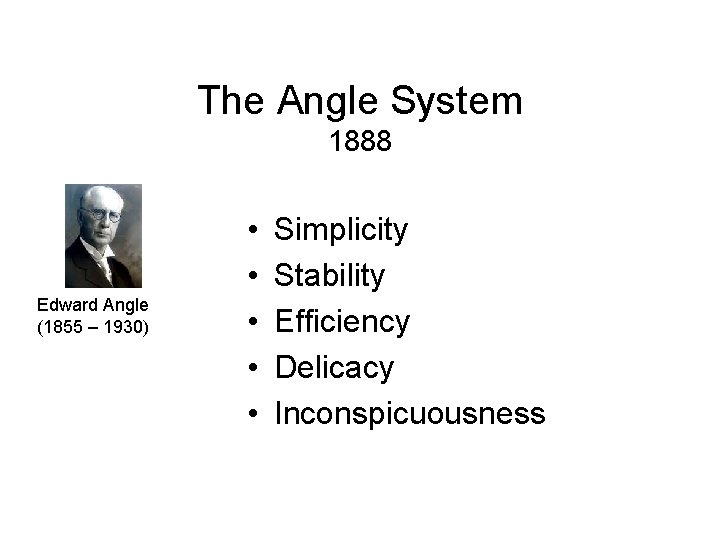
The Angle System Edward Angle (1855 – 1930) • • • 1888 Simplicity Stability Efficiency Delicacy Inconspicuousness
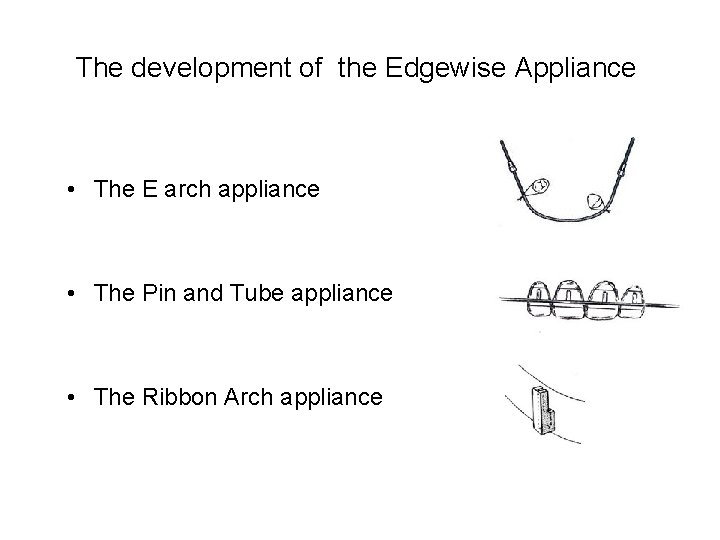
The development of the Edgewise Appliance • The E arch appliance • The Pin and Tube appliance • The Ribbon Arch appliance
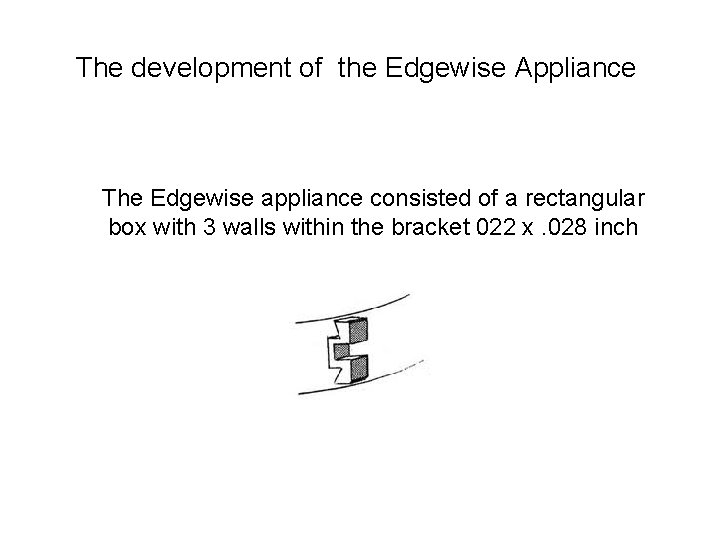
The development of the Edgewise Appliance The Edgewise appliance consisted of a rectangular box with 3 walls within the bracket 022 x. 028 inch
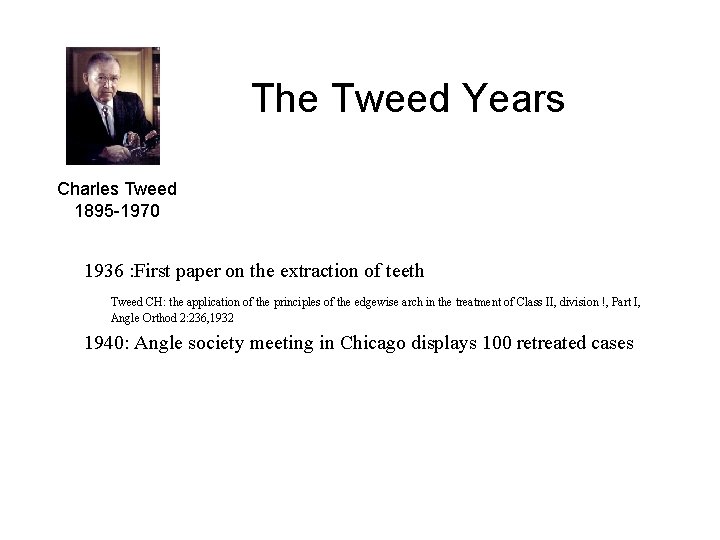
The Tweed Years Charles Tweed 1895 -1970 • • Applied to the “Angle School of Orthodontia” - refused 1925 Angle Course 1928 (33 yrs old) Establishes in Arizona the first Edgewise practice in the US Works very closely with Angle and lectures throughout the country • 1932 publishes the first article in the Angle Orthodontist “reports of cases treated with edgewise arch mechanism” and for 3 years holds to the conviction that one never extracts teeth
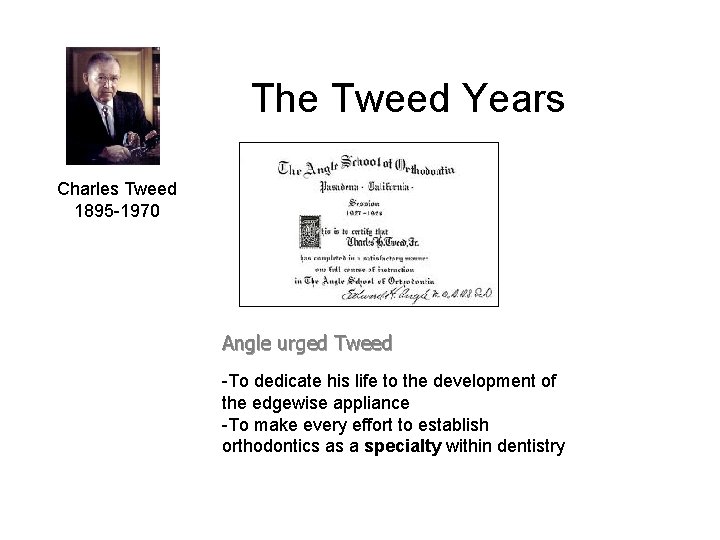
The Tweed Years Charles Tweed 1895 -1970 Angle urged Tweed -To dedicate his life to the development of the edgewise appliance -To make every effort to establish orthodontics as a specialty within dentistry
The Tweed Years Charles Tweed 1895 -1970 USA, State of Arizona 1929 AD The first law limiting the practice of orthodontics to specialists Tweed receives certificate #1 becoming the first certified specialist in Orthodontics in the United States
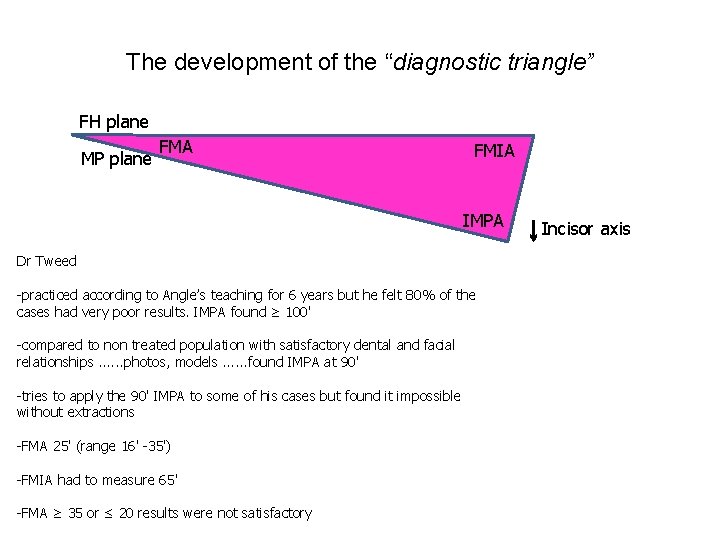
The development of the “diagnostic triangle” FH plane MP plane FMA FMIA IMPA Dr Tweed -practiced according to Angle’s teaching for 6 years but he felt 80% of the cases had very poor results. IMPA found ≥ 100' -compared to non treated population with satisfactory dental and facial relationships. . . photos, models. . . found IMPA at 90' -tries to apply the 90' IMPA to some of his cases but found it impossible without extractions -FMA 25' (range 16' -35') -FMIA had to measure 65' -FMA ≥ 35 or ≤ 20 results were not satisfactory Incisor axis
The Tweed Years Charles Tweed 1895 -1970 1936 : First paper on the extraction of teeth Tweed CH: the application of the principles of the edgewise arch in the treatment of Class II, division !, Part I, Angle Orthod 2: 236, 1932 1940: Angle society meeting in Chicago displays 100 retreated cases
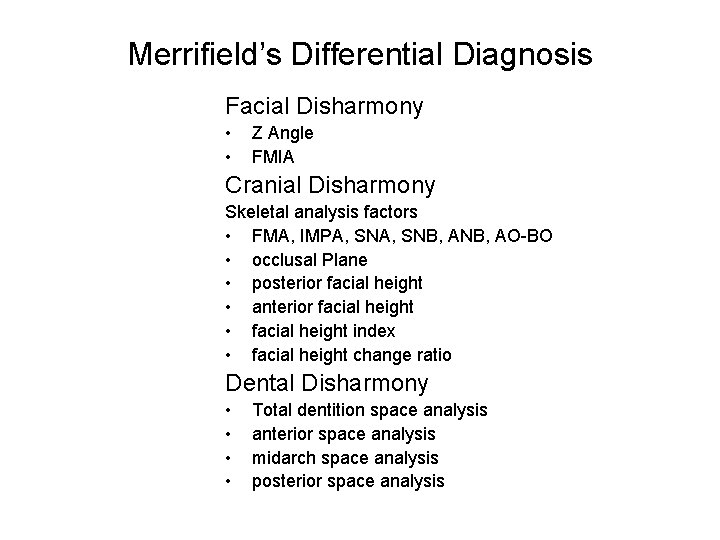
Merrifield’s Differential Diagnosis Facial Disharmony • • Z Angle FMIA Cranial Disharmony Skeletal analysis factors • FMA, IMPA, SNB, ANB, AO-BO • occlusal Plane • posterior facial height • anterior facial height • facial height index • facial height change ratio Dental Disharmony • • Total dentition space analysis anterior space analysis midarch space analysis posterior space analysis
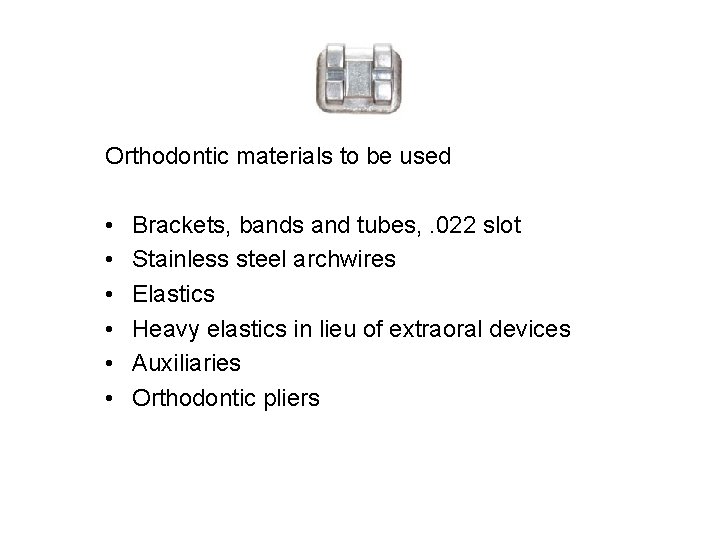
Orthodontic materials to be used • • • Brackets, bands and tubes, . 022 slot Stainless steel archwires Elastics Heavy elastics in lieu of extraoral devices Auxiliaries Orthodontic pliers
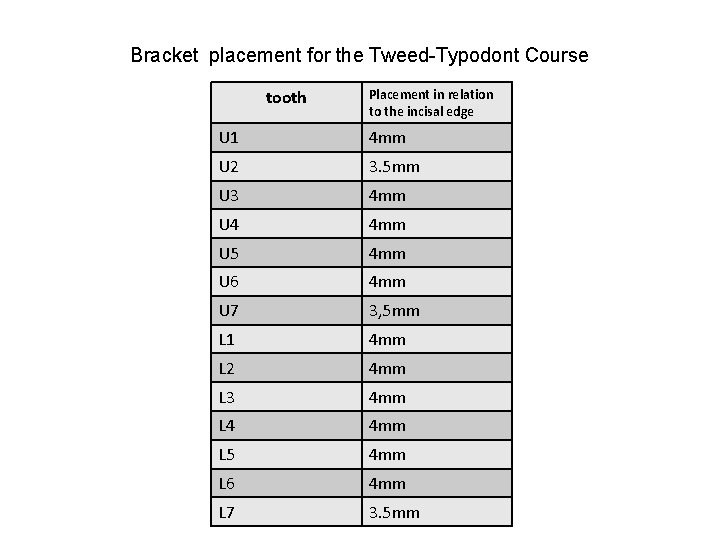
Bracket placement for the Tweed-Typodont Course tooth Placement in relation to the incisal edge U 1 4 mm U 2 3. 5 mm U 3 4 mm U 4 4 mm U 5 4 mm U 6 4 mm U 7 3, 5 mm L 1 4 mm L 2 4 mm L 3 4 mm L 4 4 mm L 5 4 mm L 6 4 mm L 7 3. 5 mm
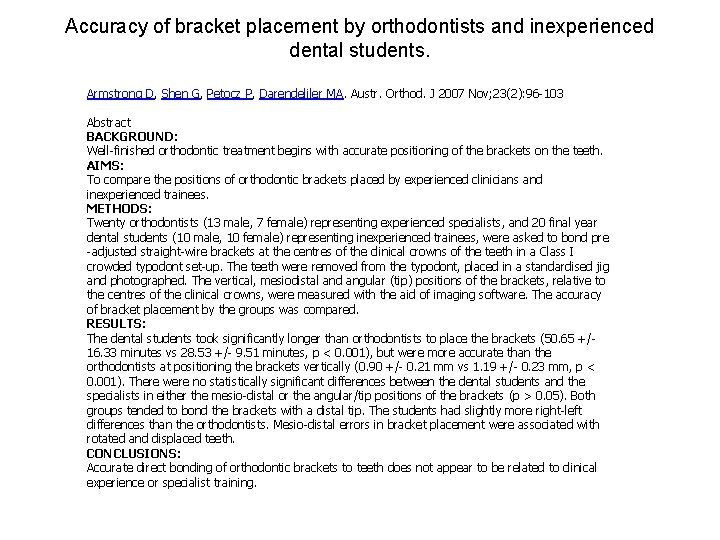
Accuracy of bracket placement by orthodontists and inexperienced dental students. Armstrong D, Shen G, Petocz P, Darendeliler MA. Austr. Orthod. J 2007 Nov; 23(2): 96 -103 Abstract BACKGROUND: Well-finished orthodontic treatment begins with accurate positioning of the brackets on the teeth. AIMS: To compare the positions of orthodontic brackets placed by experienced clinicians and inexperienced trainees. METHODS: Twenty orthodontists (13 male, 7 female) representing experienced specialists, and 20 final year dental students (10 male, 10 female) representing inexperienced trainees, were asked to bond pre -adjusted straight-wire brackets at the centres of the clinical crowns of the teeth in a Class I crowded typodont set-up. The teeth were removed from the typodont, placed in a standardised jig and photographed. The vertical, mesiodistal and angular (tip) positions of the brackets, relative to the centres of the clinical crowns, were measured with the aid of imaging software. The accuracy of bracket placement by the groups was compared. RESULTS: The dental students took significantly longer than orthodontists to place the brackets (50. 65 +/- 16. 33 minutes vs 28. 53 +/- 9. 51 minutes, p < 0. 001), but were more accurate than the orthodontists at positioning the brackets vertically (0. 90 +/- 0. 21 mm vs 1. 19 +/- 0. 23 mm, p < 0. 001). There were no statistically significant differences between the dental students and the specialists in either the mesio-distal or the angular/tip positions of the brackets (p > 0. 05). Both groups tended to bond the brackets with a distal tip. The students had slightly more right-left differences than the orthodontists. Mesio-distal errors in bracket placement were associated with rotated and displaced teeth. CONCLUSIONS: Accurate direct bonding of orthodontic brackets to teeth does not appear to be related to clinical experience or specialist training.
Tweed - Typodont Course 2015 PREPARATORY COURSE • • -Exercise: wire bending and soldering -Bonwill Hawley – Revised steps -Archwires, first-second and third order bands -Exercise: coordinated ideal arches. 215 x. 275 first order bands (upper and lower). 215 x. 275 first and second order bands (upper and lower). 215 x. 275 first, second and third order bands (upper and lower)
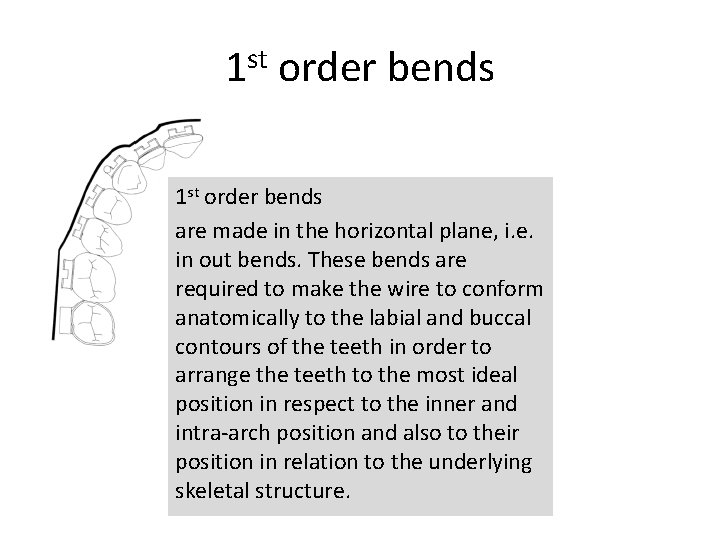
1 st order bends are made in the horizontal plane, i. e. in out bends. These bends are required to make the wire to conform anatomically to the labial and buccal contours of the teeth in order to arrange the teeth to the most ideal position in respect to the inner and intra-arch position and also to their position in relation to the underlying skeletal structure.
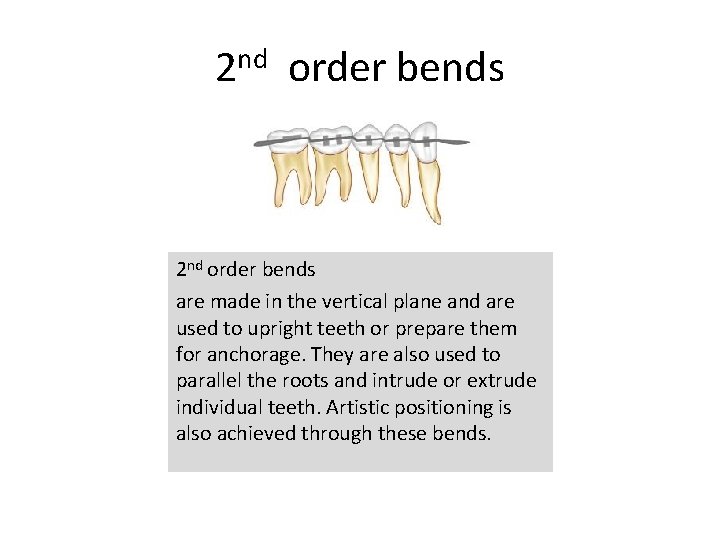
2 nd order bends are made in the vertical plane and are used to upright teeth or prepare them for anchorage. They are also used to parallel the roots and intrude or extrude individual teeth. Artistic positioning is also achieved through these bends.
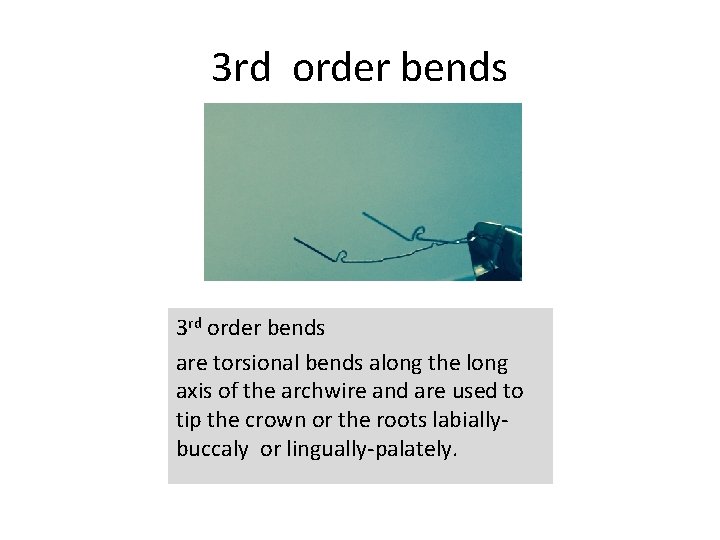
3 rd order bends are torsional bends along the long axis of the archwire and are used to tip the crown or the roots labiallybuccaly or lingually-palately.
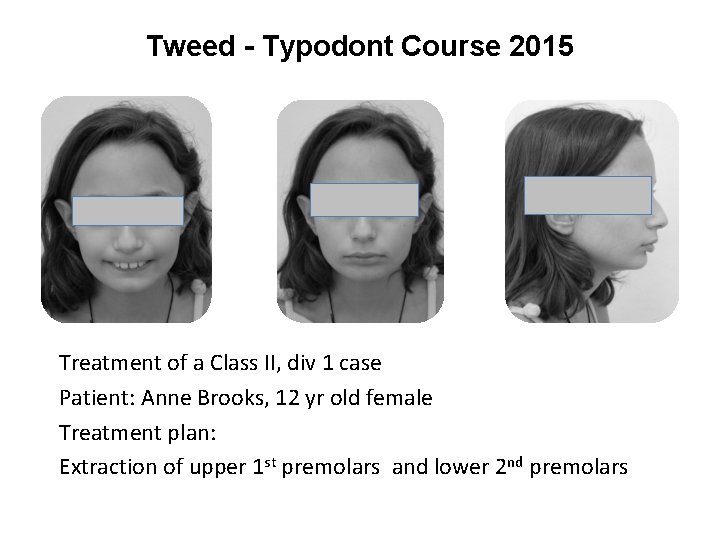
Tweed - Typodont Course 2015 Treatment of a Class II, div 1 case Patient: Anne Brooks, 12 yr old female Treatment plan: Extraction of upper 1 st premolars and lower 2 nd premolars
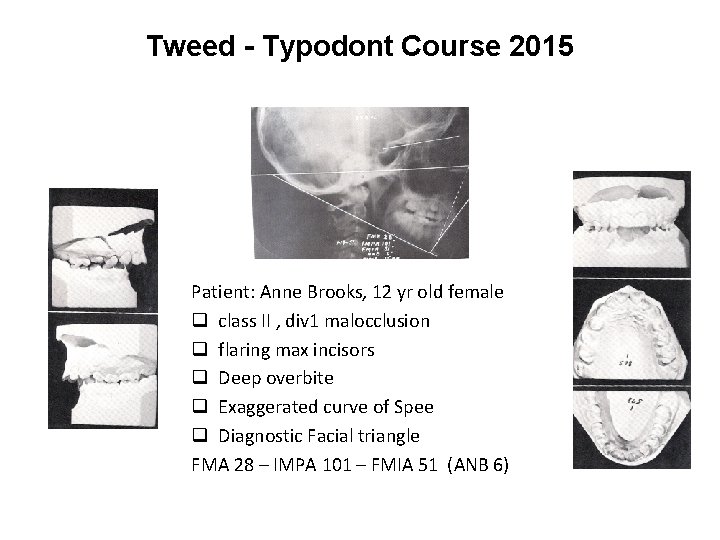
Tweed - Typodont Course 2015 Patient: Anne Brooks, 12 yr old female q class II , div 1 malocclusion q flaring max incisors q Deep overbite q Exaggerated curve of Spee q Diagnostic Facial triangle FMA 28 – IMPA 101 – FMIA 51 (ANB 6)
Tweed - Typodont Course 2015 Let’s start orthodontic treatment of Anne Detailed description of Mechanotherapy
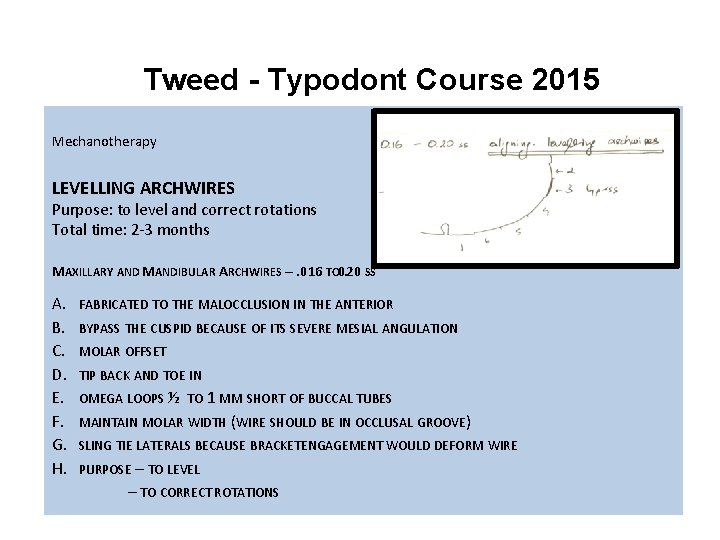
Tweed - Typodont Course 2015 Mechanotherapy LEVELLING ARCHWIRES Purpose: to level and correct rotations Total time: 2 -3 months MAXILLARY AND MANDIBULAR ARCHWIRES –. 016 TO 020 . SS A. FABRICATED TO THE MALOCCLUSION IN THE ANTERIOR B. BYPASS THE CUSPID BECAUSE OF ITS SEVERE MESIAL ANGULATION C. MOLAR OFFSET D. TIP BACK AND TOE IN E. OMEGA LOOPS ½ TO 1 MM SHORT OF BUCCAL TUBES F. MAINTAIN MOLAR WIDTH (WIRE SHOULD BE IN OCCLUSAL GROOVE) G. SLING TIE LATERALS BECAUSE BRACKET ENGAGEMENT WOULD DEFORM WIRE H. PURPOSE – TO LEVEL – TO CORRECT ROTATIONS
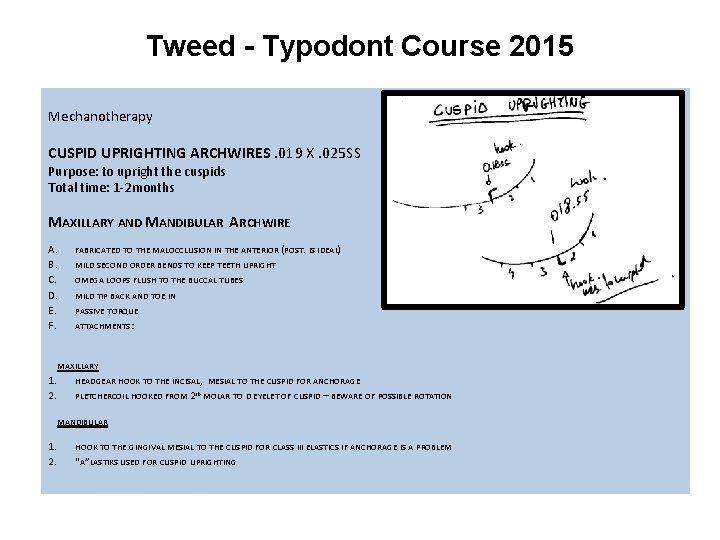
Tweed - Typodont Course 2015 Mechanotherapy CUSPID UPRIGHTING ARCHWIRES. 019 X. 025 SS Purpose: to upright the cuspids Total time: 1 -2 months MAXILLARY AND MANDIBULAR ARCHWIRE A. B. C. D. E. F. FABRICATED TO THE MALOCCLUSION IN THE ANTERIOR (POST. IS IDEAL) MILD SECOND ORDER BENDS TO KEEP TEETH UPRIGHT OMEGA LOOPS FLUSH TO THE BUCCAL TUBES MILD TIP BACK AND TOE IN PASSIVE TORQUE ATTACHMENTS: MAXILLARY 1. 2. HEADGEAR HOOK TO THE INCISAL, MESIAL TO THE CUSPID FOR ANCHORAGE PLETCHERCOIL HOOKED FROM 2 ND MOLAR TO D EYELET OF CUSPID – BEWARE OF POSSIBLE ROTATION MANDIBULAR 1. 2. HOOK TO THE GINGIVAL MESIAL TO THE CUSPID FOR CLASS III ELASTICS IF ANCHORAGE IS A PROBLEM “A”LASTIKS USED FOR CUSPID UPRIGHTING
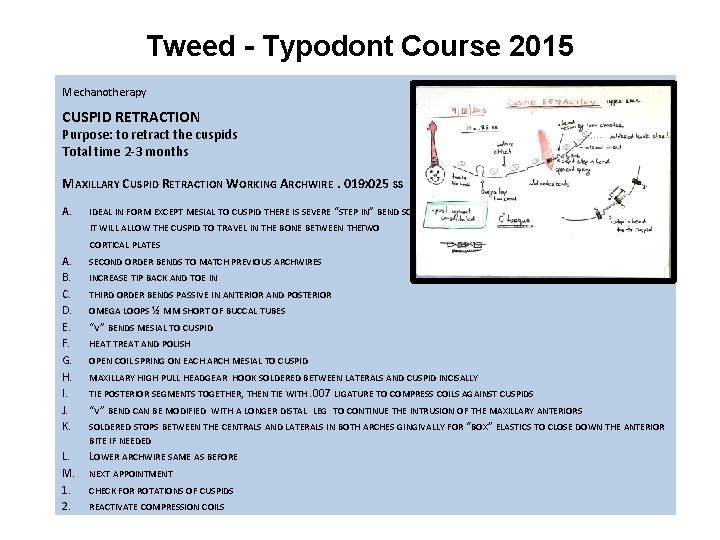
Tweed - Typodont Course 2015 Mechanotherapy CUSPID RETRACTION Purpose: to retract the cuspids Total time 2 -3 months MAXILLARY CUSPID RETRACTION WORKING ARCHWIRE. 019 X 025 . SS A. IDEAL IN FORM EXCEPT MESIAL TO CUSPID THERE IS SEVERE “STEP IN” BEND SO IT WILL ALLOW THE CUSPID TO TRAVEL IN THE BONE BETWEEN THETWO CORTICAL PLATES A. SECOND ORDER BENDS TO MATCH PREVIOUS ARCHWIRES B. INCREASE TIP BACK AND TOE IN C. THIRD ORDER BENDS PASSIVE IN ANTERIOR AND POSTERIOR D. OMEGA LOOPS ½ MM SHORT OF BUCCAL TUBES E. “V” BENDS MESIAL TO CUSPID F. HEAT TREAT AND POLISH G. OPEN COIL SPRING ON EACH ARCH MESIAL TO CUSPID H. MAXILLARY HIGH PULL HEADGEAR HOOK SOLDERED BETWEEN LATERALS AND CUSPID INCISALLY I. TIE POSTERIOR SEGMENTS TOGETHER, THEN TIE WITH. 007 LIGATURE TO COMPRESS COILS AGAINST CUSPIDS J. “V” BEND CAN BE MODIFIED WITH A LONGER DISTAL LEG TO CONTINUE THE INTRUSION OF THE MAXILLARY ANTERIORS K. SOLDERED STOPS BETWEEN THE CENTRALS AND LATERALS IN BOTH ARCHES GINGIVALLY FOR “BOX” ELASTICS TO CLOSE DOWN THE ANTERIOR BITE IF NEEDED L. LOWER ARCHWIRE SAME AS BEFORE M. NEXT APPOINTMENT 1. CHECK FOR ROTATIONS OF CUSPIDS 2. REACTIVATE COMPRESSION COILS
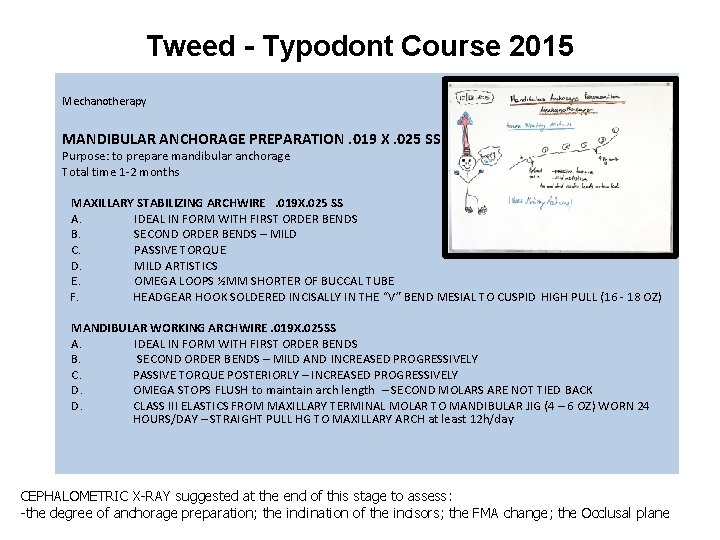
Tweed - Typodont Course 2015 Mechanotherapy MANDIBULAR ANCHORAGE PREPARATION. 019 X. 025 SS Purpose: to prepare mandibular anchorage Total time 1 -2 months MAXILLARY STABILIZING ARCHWIRE . 019 X. 025 SS A. IDEAL IN FORM WITH FIRST ORDER BENDS B. SECOND ORDER BENDS – MILD C. PASSIVE TORQUE D. MILD ARTISTICS E. OMEGA LOOPS ½MM SHORTER OF BUCCAL TUBE F. HEADGEAR HOOK SOLDERED INCISALLY IN THE “V” BEND MESIAL TO CUSPID HIGH PULL (16 - 18 OZ) MANDIBULAR WORKING ARCHWIRE. 019 X. 025 SS A. IDEAL IN FORM WITH FIRST ORDER BENDS B. SECOND ORDER BENDS – MILD AND INCREASED PROGRESSIVELY C. PASSIVE TORQUE POSTERIORLY – INCREASED PROGRESSIVELY D. OMEGA STOPS FLUSH to maintain arch length – SECOND MOLARS ARE NOT TIED BACK D. CLASS III ELASTICS FROM MAXILLARY TERMINAL MOLAR TO MANDIBULAR JIG (4 – 6 OZ) WORN 24 HOURS/DAY – STRAIGHT PULL HG TO MAXILLARY ARCH at least 12 h/day CEPHALOMETRIC X-RAY suggested at the end of this stage to assess: -the degree of anchorage preparation; the inclination of the incisors; the FMA change; the Occlusal plane
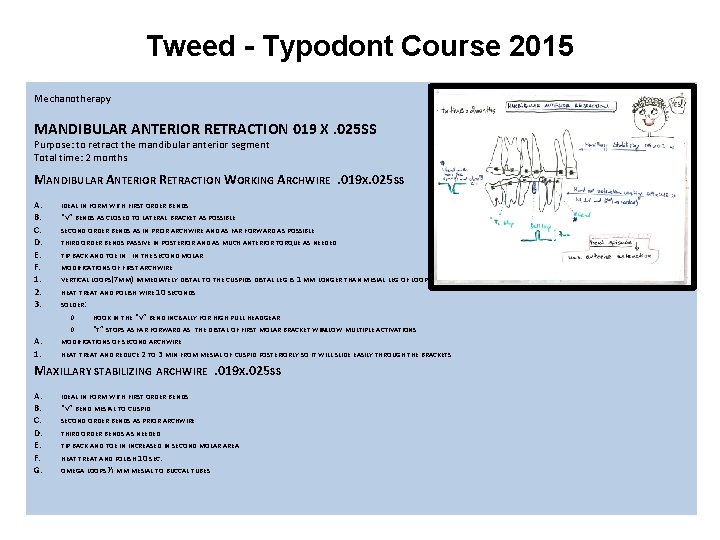
Tweed - Typodont Course 2015 Mechanotherapy MANDIBULAR ANTERIOR RETRACTION 019 X. 025 SS Purpose: to retract the mandibular anterior segment Total time: 2 months MANDIBULAR ANTERIOR RETRACTION WORKING ARCHWIRE . 019 X. 025 SS A. B. C. D. E. F. 1. 2. 3. A. 1. IDEAL IN FORM WITH FIRST ORDER BENDS “V” BENDS AS CLOSED TO LATERAL BRACKET AS POSSIBLE SECOND ORDER BENDS AS IN PRIOR ARCHWIRE AND AS FAR FORWARD AS POSSIBLE THIRD ORDER BENDS PASSIVE IN POSTERIOR AND AS MUCH ANTERIOR TORQUE AS NEEDED TIP BACK AND TOE IN THE SECOND MOLAR MODIFICATIONS OF FIRST ARCHWIRE VERTICAL LOOPS(7 MM) IMMEDIATELY DISTAL TO THE CUSPIDS DISTAL LEG IS 1 MM LONGER THAN MESIAL LEG OF LOOP HEAT TREAT AND POLISH WIRE 10 SECONDS SOLDER: O HOOK IN THE “V” BEND INCISALLY FOR HIGH PULL HEADGEAR O “T” STOPS AS FAR FORWARD AS THE DISTAL OF FIRST MOLAR BRACKET WILL ALLOW MULTIPLE ACTIVATIONS MODIFICATIONS OF SECOND ARCHWIRE HEAT TREAT AND REDUCE 2 TO 3 MIN FROM MESIAL OF CUSPID POSTERIORLY SO IT WILL SLIDE EASILY THROUGH THE BRACKETS MAXILLARY STABILIZING ARCHWIRE . 019 X. 025 SS A. B. C. D. E. F. G. IDEAL IN FORM WITH FIRST ORDER BENDS “V” BEND MESIAL TO CUSPID SECOND ORDER BENDS AS PRIOR ARCHWIRE THIRD ORDER BENDS AS NEEDED TIP BACK AND TOE IN INCREASED IN SECOND MOLAR AREA HEAT TREAT AND POLISH 10 SEC. OMEGA LOOPS ½ MM MESIAL TO BUCCAL TUBES
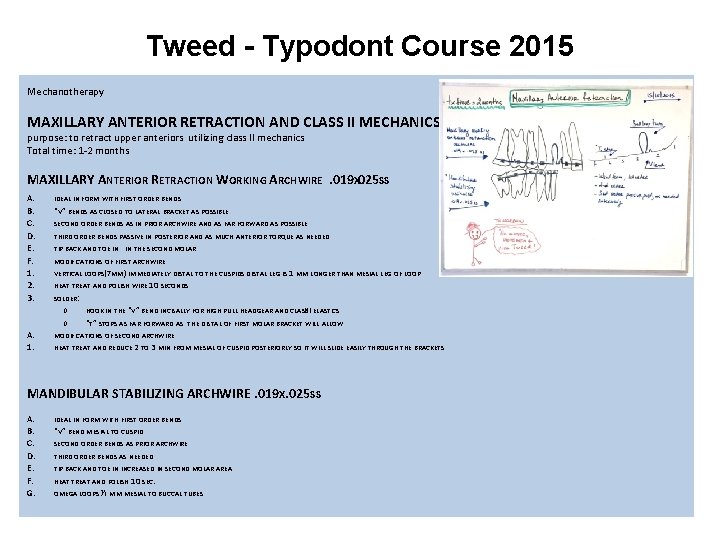
Tweed - Typodont Course 2015 Mechanotherapy MAXILLARY ANTERIOR RETRACTION AND CLASS II MECHANICS purpose: to retract upper anteriors utilizing class II mechanics Total time: 1 -2 months MAXILLARY ANTERIOR RETRACTION WORKING ARCHWIRE . 019 X 025. SS A. B. C. D. E. F. 1. 2. 3. A. 1. IDEAL IN FORM WITH FIRST ORDER BENDS “V” BENDS AS CLOSED TO LATERAL BRACKET AS POSSIBLE SECOND ORDER BENDS AS IN PRIOR ARCHWIRE AND AS FAR FORWARD AS POSSIBLE THIRD ORDER BENDS PASSIVE IN POSTERIOR AND AS MUCH ANTERIOR TORQUE AS NEEDED TIP BACK AND TOE IN THE SECOND MOLAR MODIFICATIONS OF FIRST ARCHWIRE VERTICAL LOOPS(7 MM) IMMEDIATELY DISTAL TO THE CUSPIDS DISTAL LEG IS 1 MM LONGER THAN MESIAL LEG OF LOOP HEAT TREAT AND POLISH WIRE 10 SECONDS SOLDER: O HOOK IN THE “V” BEND INCISALLY FOR HIGH PULL HEADGEAR AND CLASS III ELASTICS O “T” STOPS AS FAR FORWARD AS THE DISTAL OF FIRST MOLAR BRACKET WILL ALLOW MODIFICATIONS OF SECOND ARCHWIRE HEAT TREAT AND REDUCE 2 TO 3 MIN FROM MESIAL OF CUSPID POSTERIORLY SO IT WILL SLIDE EASILY THROUGH THE BRACKETS MANDIBULAR STABILIZING ARCHWIRE. 019 X. 025 SS A. B. C. D. E. F. G. IDEAL IN FORM WITH FIRST ORDER BENDS “V” BEND MESIAL TO CUSPID SECOND ORDER BENDS AS PRIOR ARCHWIRE THIRD ORDER BENDS AS NEEDED TIP BACK AND TOE IN INCREASED IN SECOND MOLAR AREA HEAT TREAT AND POLISH 10 SEC. OMEGA LOOPS ½ MM MESIAL TO BUCCAL TUBES
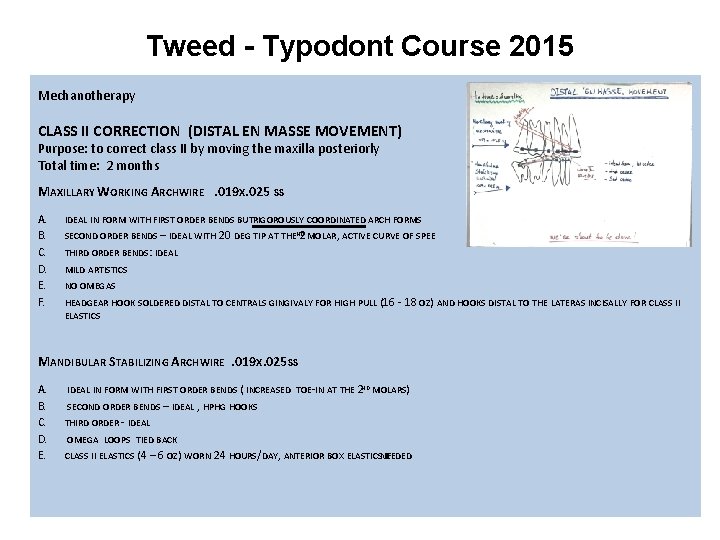
Tweed - Typodont Course 2015 Mechanotherapy CLASS II CORRECTION (DISTAL EN MASSE MOVEMENT) Purpose: to correct class II by moving the maxilla posteriorly Total time: 2 months MAXILLARY WORKING ARCHWIRE . 019 X. 025 SS A. B. C. D. E. F. IDEAL IN FORM WITH FIRST ORDER BENDS BUTR IGOROUSLY COORDINATED ARCH FORMS SECOND ORDER BENDS – IDEAL WITH 20 DEG TIP AT THEND 2 MOLAR, ACTIVE CURVE OF SPEE THIRD ORDER BENDS: IDEAL MILD ARTISTICS NO OMEGAS HEADGEAR HOOK SOLDERED DISTAL TO CENTRALS GINGIVALY FOR HIGH PULL (16 - 18 OZ) AND HOOKS DISTAL TO THE LATERAS INCISALLY FOR CLASS II ELASTICS MANDIBULAR STABILIZING ARCHWIRE . 019 X. 025 SS A. B. C. D. E. IDEAL IN FORM WITH FIRST ORDER BENDS ( INCREASED TOE-IN AT THE 2 ND MOLARS) SECOND ORDER BENDS – IDEAL , HPHG HOOKS THIRD ORDER - IDEAL OMEGA LOOPS TIED BACK CLASS II ELASTICS (4 – 6 OZ) WORN 24 HOURS/DAY, ANTERIOR BOX ELASTICSNEEDED IF
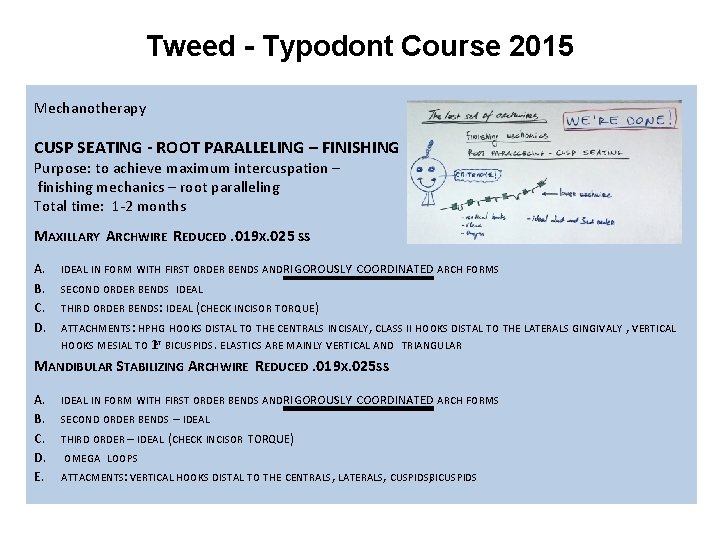
Tweed - Typodont Course 2015 Mechanotherapy CUSP SEATING - ROOT PARALLELING – FINISHING Purpose: to achieve maximum intercuspation – finishing mechanics – root paralleling Total time: 1 -2 months MAXILLARY ARCHWIRE REDUCED. 019 X. 025 SS A. B. C. D. IDEAL IN FORM WITH FIRST ORDER BENDS AND RIGOROUSLY COORDINATED ARCH FORMS SECOND ORDER BENDS IDEAL THIRD ORDER BENDS: IDEAL (CHECK INCISOR TORQUE) ATTACHMENTS: HPHG HOOKS DISTAL TO THE CENTRALS INCISALY, CLASS II HOOKS DISTAL TO THE LATERALS GINGIVALY , VERTICAL HOOKS MESIAL TO 1 ST BICUSPIDS. ELASTICS ARE MAINLY VERTICAL AND TRIANGULAR MANDIBULAR STABILIZING ARCHWIRE REDUCED. 019 X. 025 SS A. IDEAL IN FORM WITH FIRST ORDER BENDS AND RIGOROUSLY COORDINATED ARCH FORMS B. SECOND ORDER BENDS – IDEAL C. THIRD ORDER – IDEAL (CHECK INCISOR TORQUE) D. OMEGA LOOPS E. ATTACMENTS: VERTICAL HOOKS DISTAL TO THE CENTRALS, LATERALS, CUSPIDSBICUSPIDS ,
UNIVERSITY OF ATHENS SCHOOL OF DENTISTRY DEPARTMENT OF ORTHODONTICS Tweed - Typodont Course 2015 Introduction into “Tweed Philosophy” CONGRATULATIONS ON SUCCESFULLY COMPLETING THE COURSE ! Dimitrios Konstantonis DDS, MS, Ph. D