
Chapter 16 The World in 1450 Changing Balance
Chapter 16: The World in 1450: Changing Balance of World Power
Key Concepts… The Decline of the Arab Caliphate, with its fall in 1258, and the disruptions of the Mongolian Empires caused a shift in world power. l China stepped up to the plate early, but was soon followed by Western Europe. l Western Europe initiated many internal changes first, with Italy, Spain, and Portugal leading the way. l
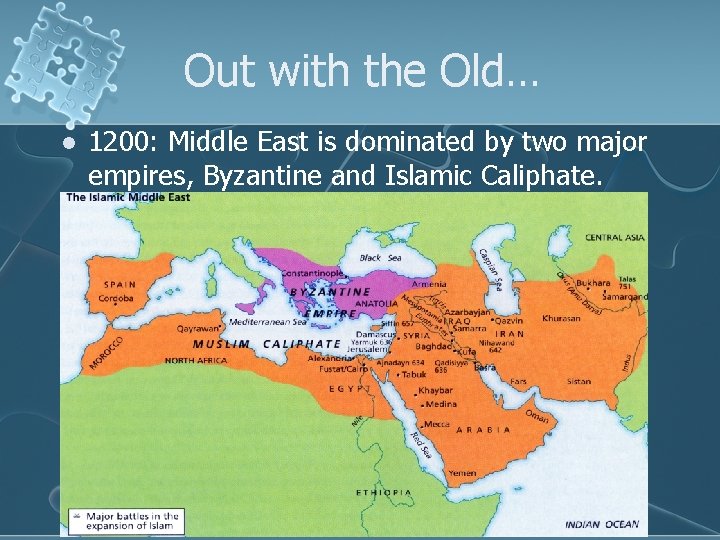
Out with the Old… l 1200: Middle East is dominated by two major empires, Byzantine and Islamic Caliphate.
Out with the Old… l By 1400, the Byzantine Empire was in decline (with the help of Ottoman Turks). l l Constantinople falls in 1453 to the Turks. 1258: Fall of the last Arab Caliphate (Abbasid) l The fall of Islamic Caliphate did NOT delete Islam, nor its empires from the maps of the world. l l Trade was disrupted, but will rebound by 1400 The Ottoman Turks will reestablish much of the power lost by the Caliphate in the 1500 s-1700 s.
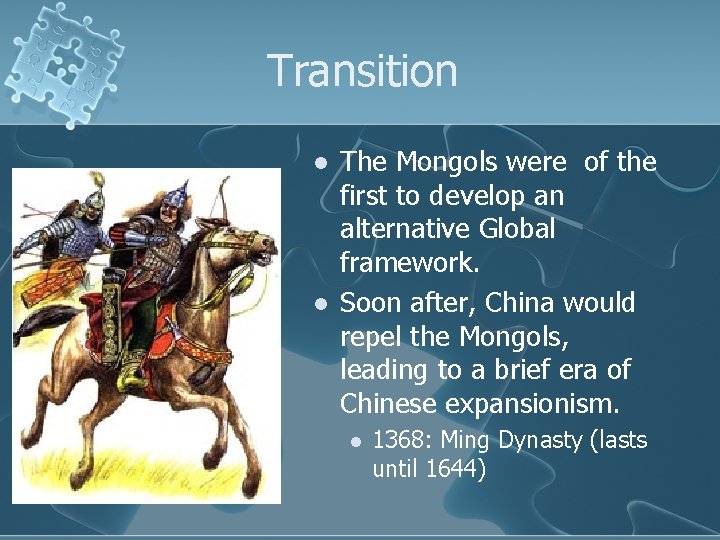
Transition l l The Mongols were of the first to develop an alternative Global framework. Soon after, China would repel the Mongols, leading to a brief era of Chinese expansionism. l 1368: Ming Dynasty (lasts until 1644)
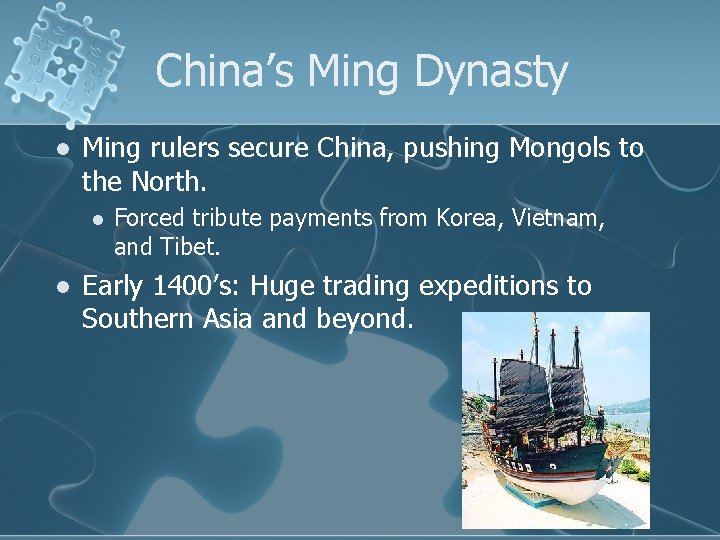
China’s Ming Dynasty l Ming rulers secure China, pushing Mongols to the North. l l Forced tribute payments from Korea, Vietnam, and Tibet. Early 1400’s: Huge trading expeditions to Southern Asia and beyond.
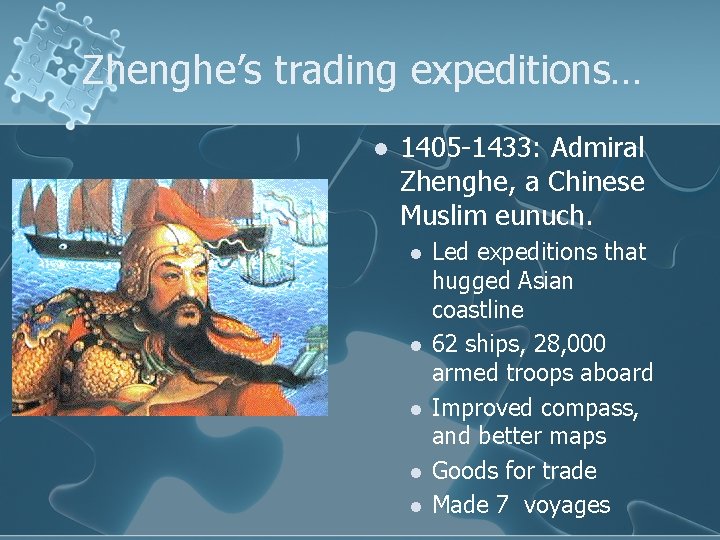
Zhenghe’s trading expeditions… l 1405 -1433: Admiral Zhenghe, a Chinese Muslim eunuch. l l l Led expeditions that hugged Asian coastline 62 ships, 28, 000 armed troops aboard Improved compass, and better maps Goods for trade Made 7 voyages

Zheng He vs. Columbus
The end of Asian expansion l Zhenghe’s expeditions were called off in 1433. l l Resented by Confucian bureaucracy Unacceptable costs (especially when fighting the Mongols, and building a new capital city in Beijing) Rooted in China’s history of emphasizing internal development, keeping commercial development at bay. China squanders the opportunity, but internally becomes stronger as a result.
Rise of the West l Where was the west around 1400? The Church (dominant institution of the Middle Ages) was under attack. l 1215: Magna Carta l Medieval Philosophy…not so creative l Warrior aristocrats…not as warrior-like l By 1300, population outpaced food supply…causes famine l l No new food supply techniques were discovered.
HERE COME THE EUROPEANS l l By 15 th century l l West began to expand its world contacts Important changes taking place in Europe l l Great Schism saw up to three rival popes Wealth led to reformers, who were condemned Church Under attack l l l Hus in Holy Roman Empire Wycliffe in England Western philosophy and creativity stagnate Political organization of feudalism not effective l l l Feudal monarchs acquire new powers, wealth Introduction of cannons, new weaponry Death of nobles led to rise of citizen armies under kings l l l Carried off almost one-third of Europe's population Hit Italy and France worst Hit merchants and urban elites including clergy heavily Impact of the Black Death,
LATE MEDIEVAL VITALITY l New States Arose l l More powerful and centralized nations arose Developed in aftermath of 100 Years' War. France, England, Castile, Aragon, Sweden New forms of military organization l l l Made greater centralization possible Improvements in metallurgical technology Construction and use of guns and munitions. Capitalism became more evident l l Arose simultaneously in Netherlands, Italy Based on cities, non-nobles, banking, trade l l Especially true in Italy, Netherlands Often associated with trade Increased urbanization
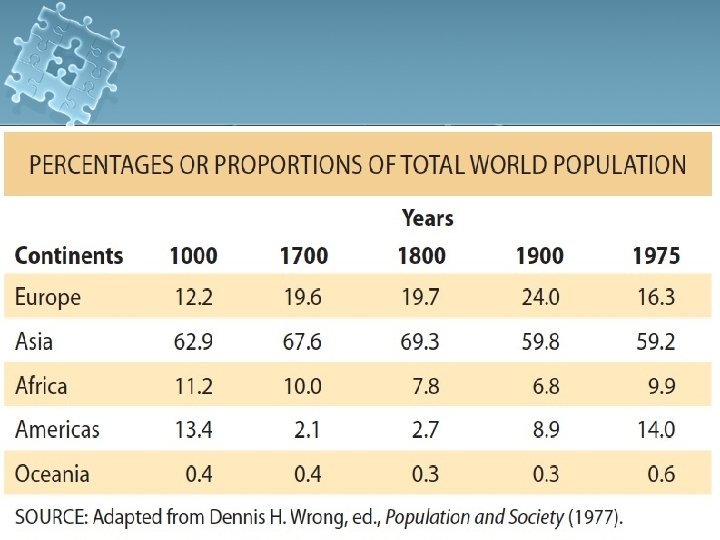
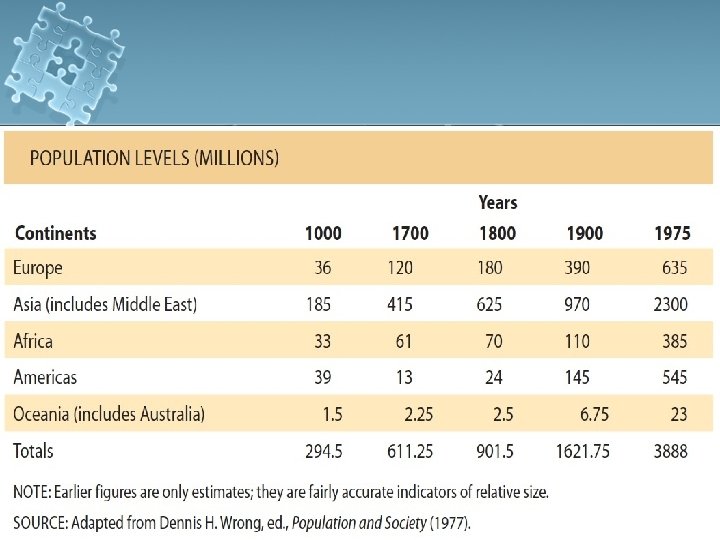
WESTERN EUROPE GROWS l Overall trend between 1000/1700 l l l Europeans acquire Asian technology l l Rapid population expansion Black Death only slowed trend Western technology equal to Eurasian Europeans adapt, improve on ideas Europeans invent new ideas Europeans apply technology l l Adapted science to practical Used technology in trade, navigation, war
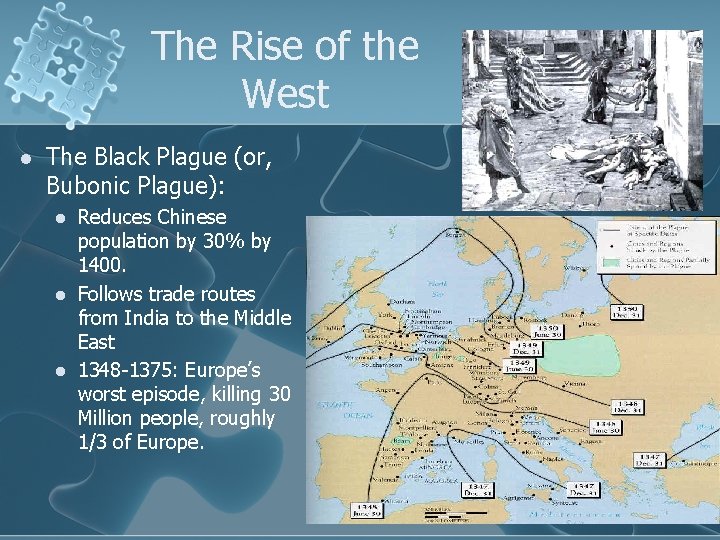
The Rise of the West l The Black Plague (or, Bubonic Plague): l l l Reduces Chinese population by 30% by 1400. Follows trade routes from India to the Middle East 1348 -1375: Europe’s worst episode, killing 30 Million people, roughly 1/3 of Europe.
The Rise of the West l How did the West achieve dominance? Strengthening of Feudal Monarchy l Hundred Years’ War (Britain and France) stimulated Military technology l l Central power of governments increase Christians drove Muslims out of Spain and Portugal l Growth of cities spurs urban economies centered on commercial capitalism. l Technology continued to expand l
The Rise of the West l How else, then, did the West achieve dominance? l Mongol domination of Asia in the 13 th and early 14 th centuries opened up Asian technology to the Westerners. l l Printing press Compass Gunpowder Ever since the Crusades, Europeans had a greater desire for Asian made goods, resulting in an unfavorable balance of trade, causing a Gold Famine that threatened the European economy.
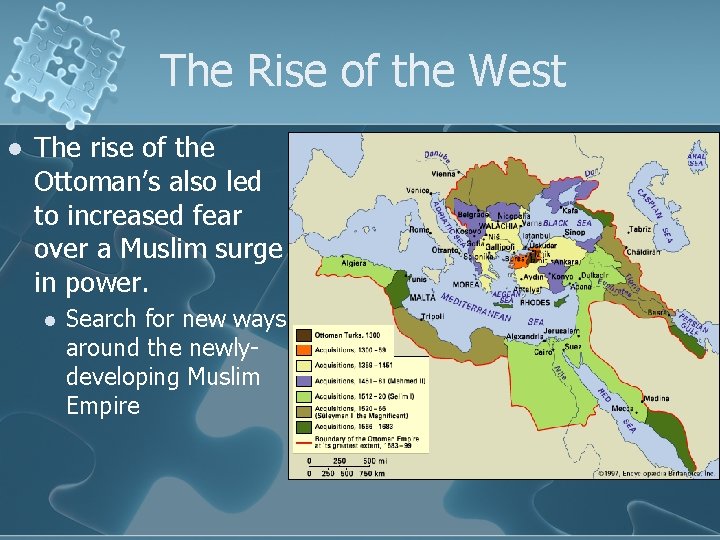
The Rise of the West l The rise of the Ottoman’s also led to increased fear over a Muslim surge in power. l Search for new ways around the newlydeveloping Muslim Empire
The Rise of the West l 1400’s: Italy, cultural and political movement known as rebirth, or the Renaissance Stressed more secular subjects l Realistic portrayals of people and nature l l Why Italy? Connection to Ancient Rome l 14 th Century: Led the West in Banking and trade l l Healthy commercial practices gave the money to be able to support cultural activities.
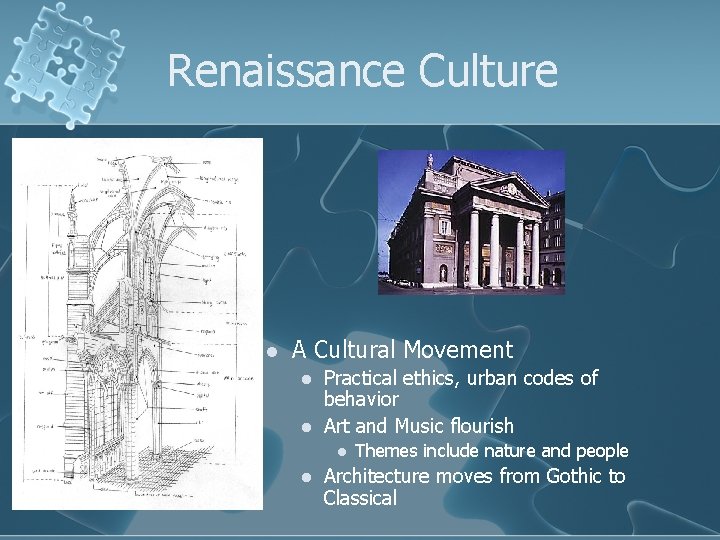
Renaissance Culture l A Cultural Movement l l Practical ethics, urban codes of behavior Art and Music flourish l l Themes include nature and people Architecture moves from Gothic to Classical
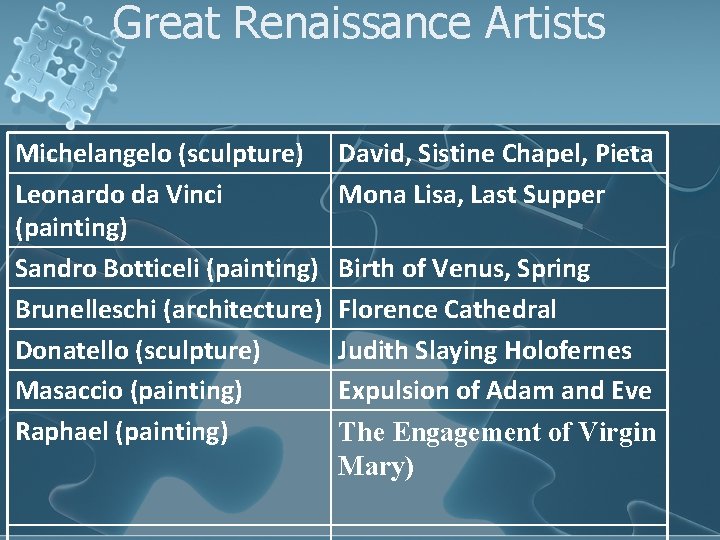
Great Renaissance Artists Michelangelo (sculpture) Leonardo da Vinci (painting) Sandro Botticeli (painting) Brunelleschi (architecture) Donatello (sculpture) Masaccio (painting) Raphael (painting) David, Sistine Chapel, Pieta Mona Lisa, Last Supper Birth of Venus, Spring Florence Cathedral Judith Slaying Holofernes Expulsion of Adam and Eve The Engagement of Virgin Mary)
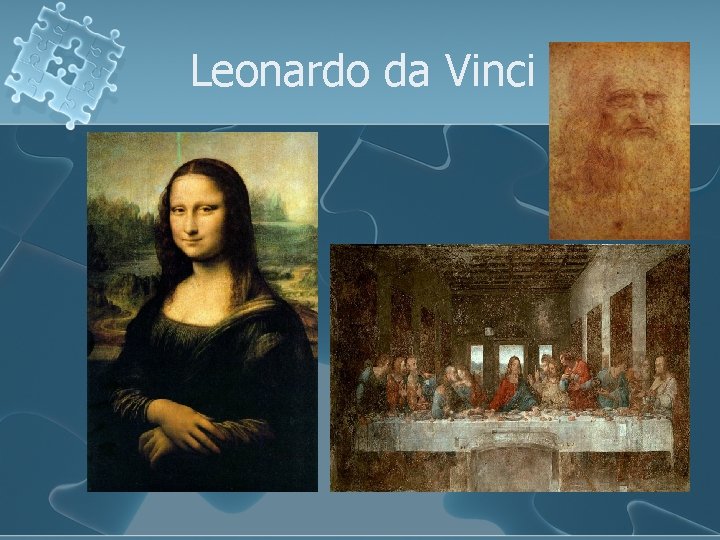
Leonardo da Vinci
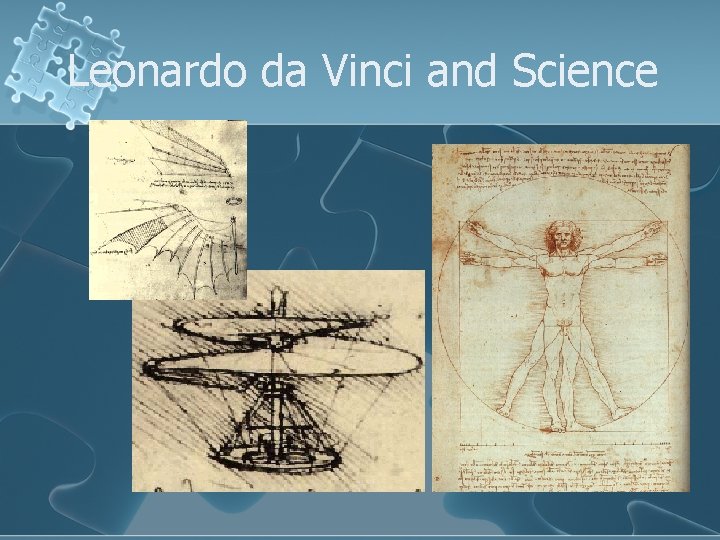
Leonardo da Vinci and Science
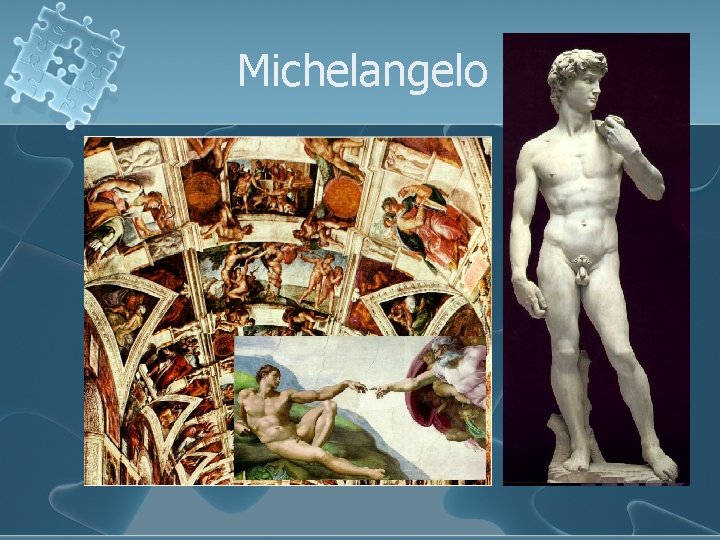
Michelangelo
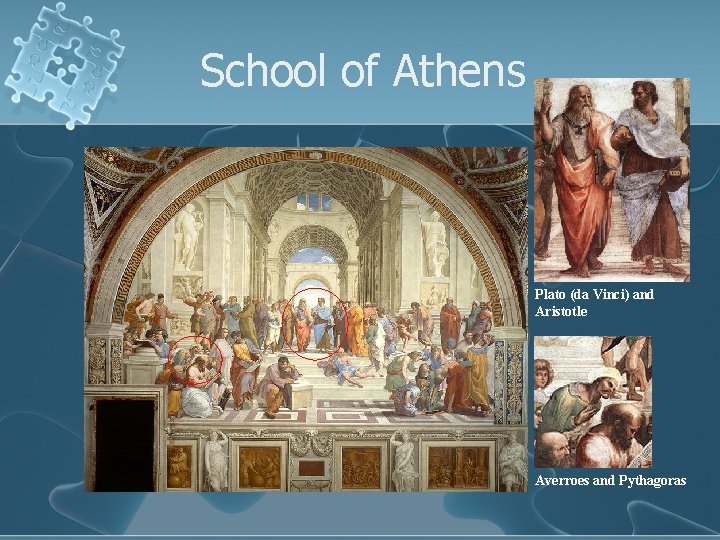
School of Athens Plato (da Vinci) and Aristotle Averroes and Pythagoras
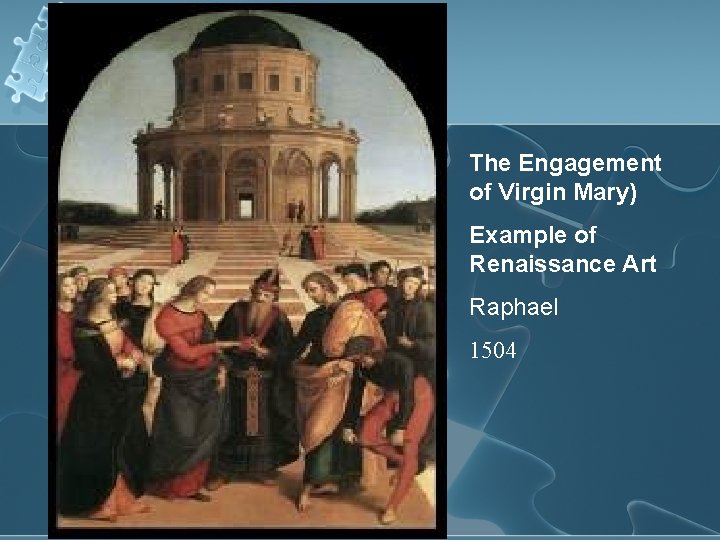
The Engagement of Virgin Mary) Example of Renaissance Art Raphael 1504
Impact of the Renaissance l Little influence outside of Italy Focused on high culture, not popular culture l Minimal interest in Science l Not a FULL-break from Medievalism l l Although, Italian commerce proved to be a building block of European power. l The “Renaissance spirit” spurred innovation.
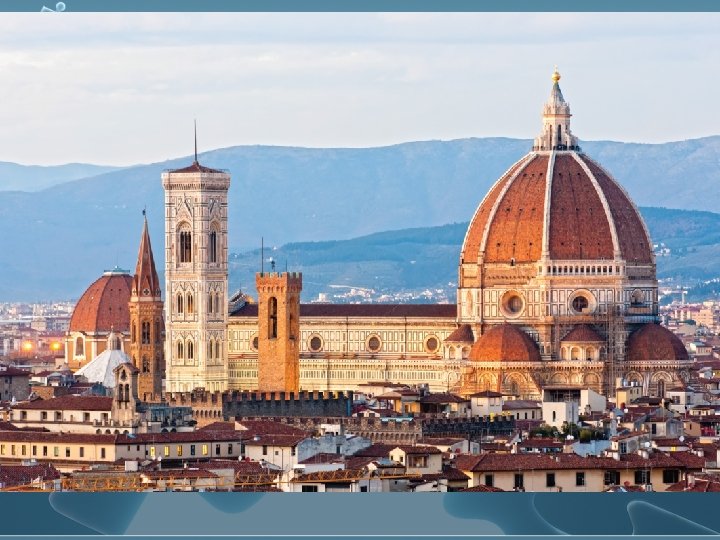
Figure 16. 3 Although the nave of Florence Cathedral was completed in the fourteenth century, it was not until the fifteenth century that architect Filippo Brunelleschi was able to solve the engineering challenge presented by the plan for the massive dome. In order to eliminate the need for temporary wooden scaffolding during construction, Brunelleschi used a skeleton of eight large ribs alternated with eight pairs of thinner ribs, all tied together by nine sets of horizontal ties, all of which would be able to support the workers as the dome was raised.
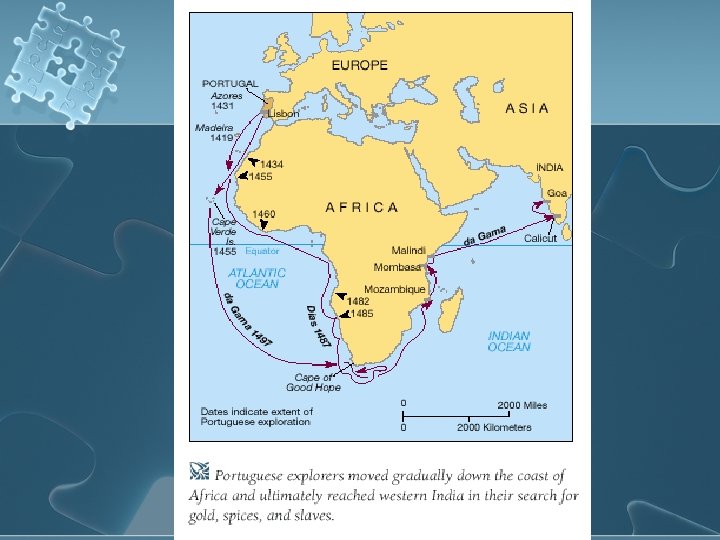
The Rise of the West l. The First Phases of Western Expansion l The Genoese Vivaldi brothers l 1291, l 14 th disappear after passing Gibraltar century explorers l Canary Islands, Madeiras, possibly the Azores l Spanish expeditions along west African coast l Vasco da Gama
The Rise of the West l The Iberian Spirit of Religious Mission Castile, Aragon l Effective armies l Promote Christianity l l Convert or expel l Arabs, Jews l Later reestablishment of the Inquisition in Spain
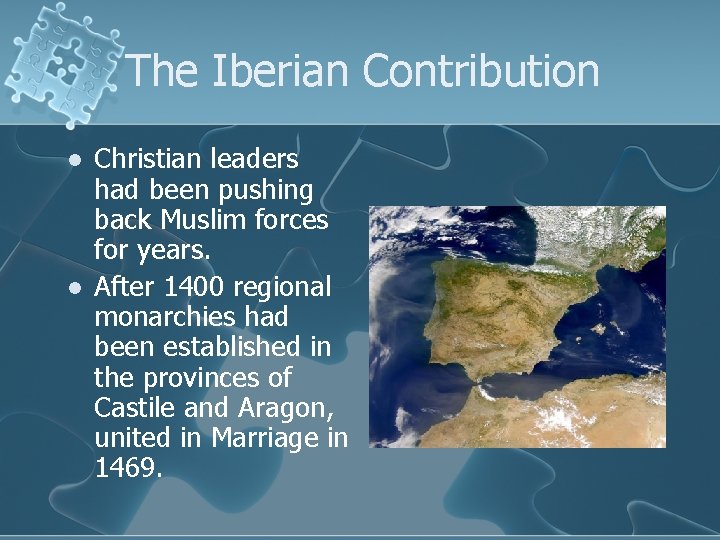
The Iberian Contribution l l Christian leaders had been pushing back Muslim forces for years. After 1400 regional monarchies had been established in the provinces of Castile and Aragon, united in Marriage in 1469.
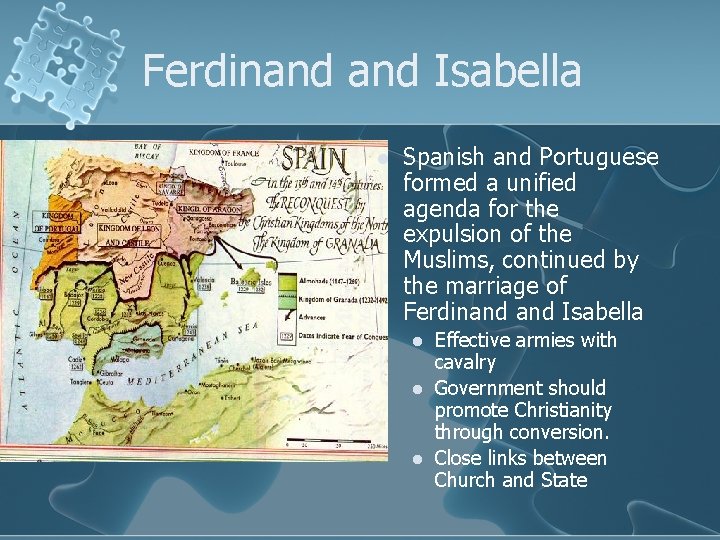
Ferdinand Isabella l Spanish and Portuguese formed a unified agenda for the expulsion of the Muslims, continued by the marriage of Ferdinand Isabella l l l Effective armies with cavalry Government should promote Christianity through conversion. Close links between Church and State
Western Expansion…attempt #1 l Early ventures were inhibited by technological barriers. Efforts were underway to improve these technologies through Arab contacts, who learned from the Chinese. l Mapmaking improved l l 1498: Vasco de Gama was the first European to reach India by sea.
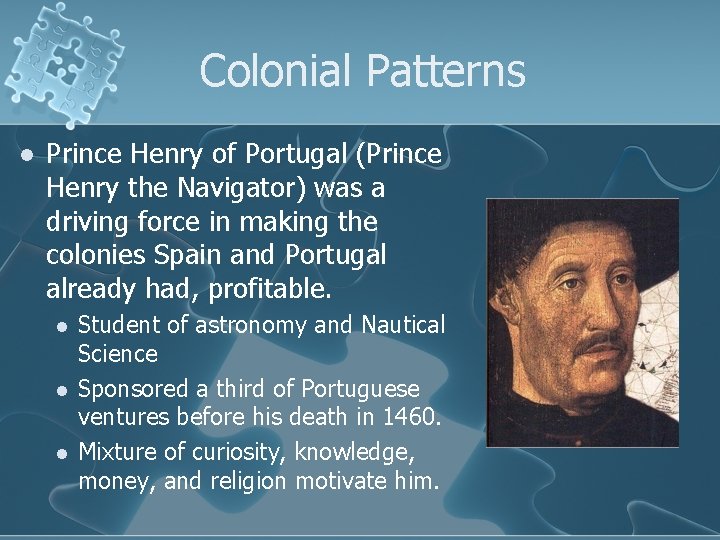
Colonial Patterns l Prince Henry of Portugal (Prince Henry the Navigator) was a driving force in making the colonies Spain and Portugal already had, profitable. l l l Student of astronomy and Nautical Science Sponsored a third of Portuguese ventures before his death in 1460. Mixture of curiosity, knowledge, money, and religion motivate him.
Colonial Patterns l Iberians set up a system of colonialism that would be seen for years to come. Colonists set up large agricultural estates for cash crops to be sold on European market. l Introduced sugar, then cotton and tobacco l Used slave labor from Northwest Africa l l Sound familiar?
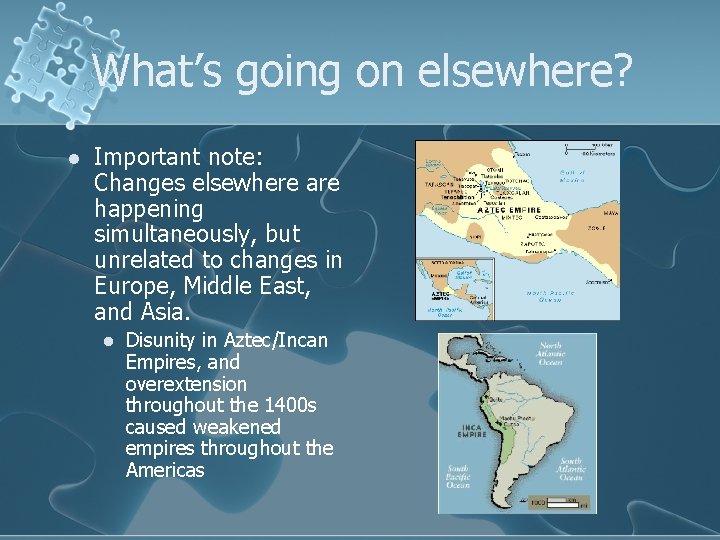
What’s going on elsewhere? l Important note: Changes elsewhere are happening simultaneously, but unrelated to changes in Europe, Middle East, and Asia. l Disunity in Aztec/Incan Empires, and overextension throughout the 1400 s caused weakened empires throughout the Americas
What’s going on elsewhere? l Polynesia: Expansion beyond the Society Islands (Tahiti, Samoa, and Fiji). l Migration to Hawaii, where Hawaiians and Polynesians mixed quickly. Pigs were imported to Hawaii l Set up regional kingdom structure that was highly warlike. l Social caste system dominated life
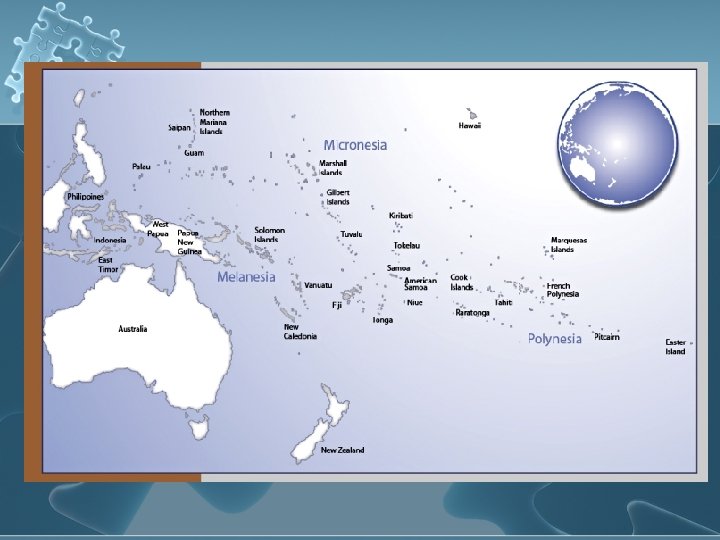
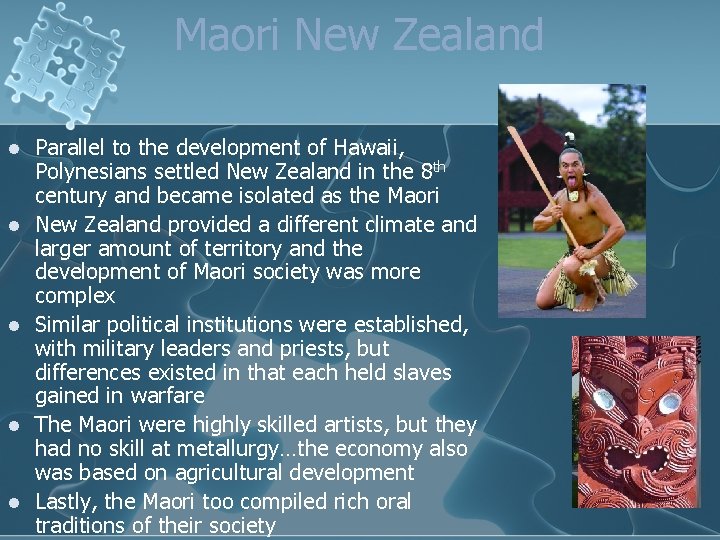
Maori New Zealand l l l Parallel to the development of Hawaii, Polynesians settled New Zealand in the 8 th century and became isolated as the Maori New Zealand provided a different climate and larger amount of territory and the development of Maori society was more complex Similar political institutions were established, with military leaders and priests, but differences existed in that each held slaves gained in warfare The Maori were highly skilled artists, but they had no skill at metallurgy…the economy also was based on agricultural development Lastly, the Maori too compiled rich oral traditions of their society
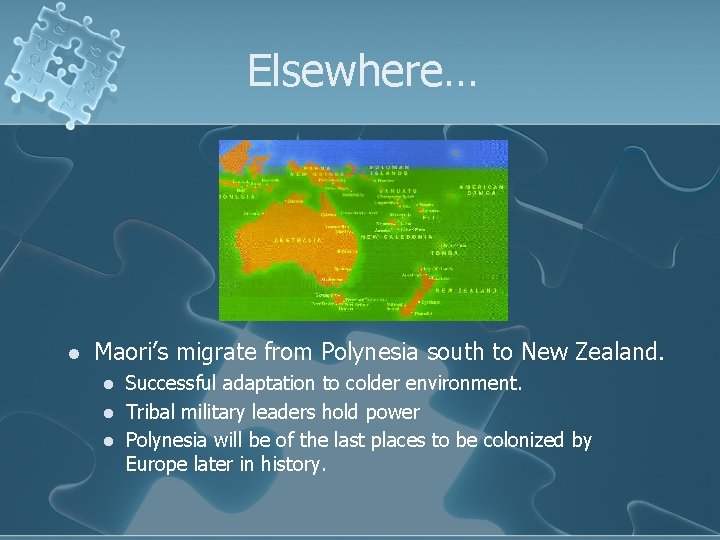
Elsewhere… l Maori’s migrate from Polynesia south to New Zealand. l l l Successful adaptation to colder environment. Tribal military leaders hold power Polynesia will be of the last places to be colonized by Europe later in history.
Put it all together… l Many changes, if not all, occur independently. Every change is explainable, but their combination is accidental. l l l Technology Roles of individuals Impact of political shifts Cultural movements Revolutions in commerce
- Slides: 43