
Unit5 Define the term population Population as a
- Slides: 20
Unit-5
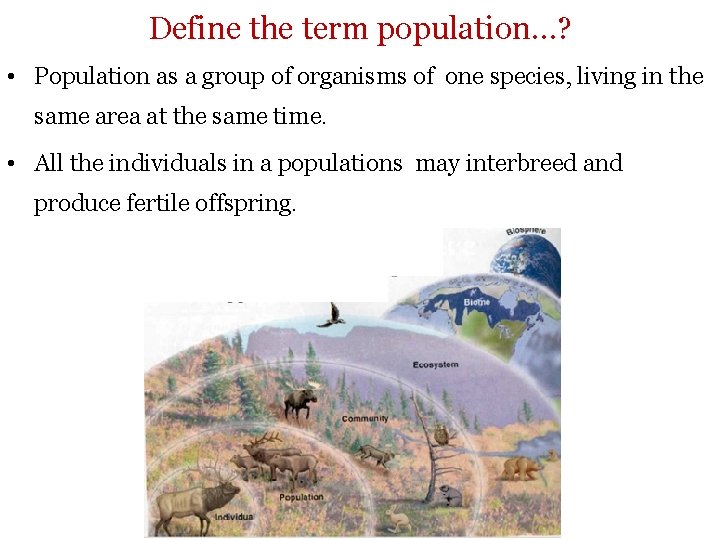
Define the term population…? • Population as a group of organisms of one species, living in the same area at the same time. • All the individuals in a populations may interbreed and produce fertile offspring.
Define the term population…? • Some species individuals are very widely distributed and it is difficult to divide them into separate populations. • These are divided into separate populations due to reproductive barrier such as rivers and mountains.
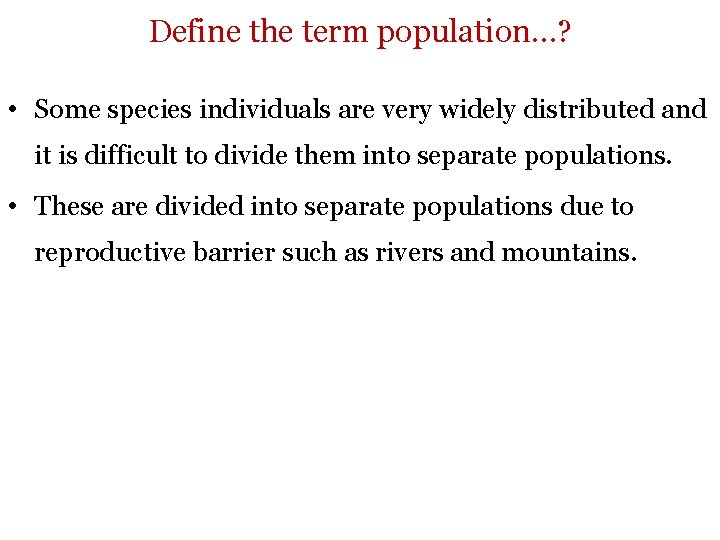
Populations: Creole wrasse Habitat: Coral reef Place: Reefs around Tobago in the Caribbean
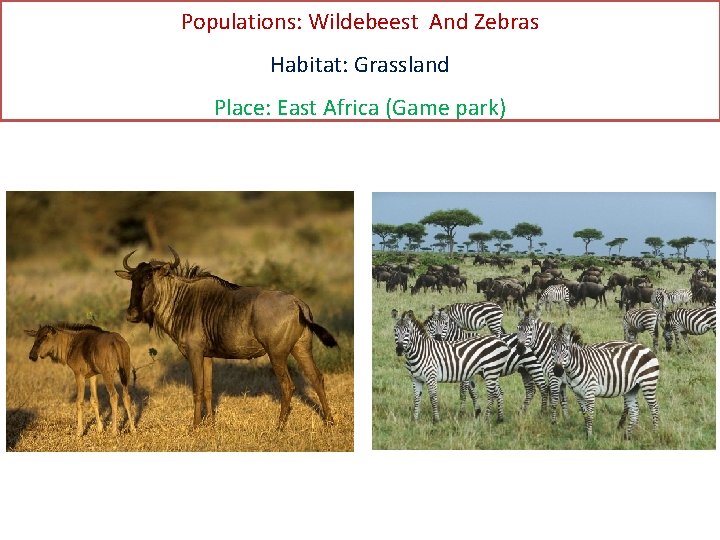
Populations: Wildebeest And Zebras Habitat: Grassland Place: East Africa (Game park)
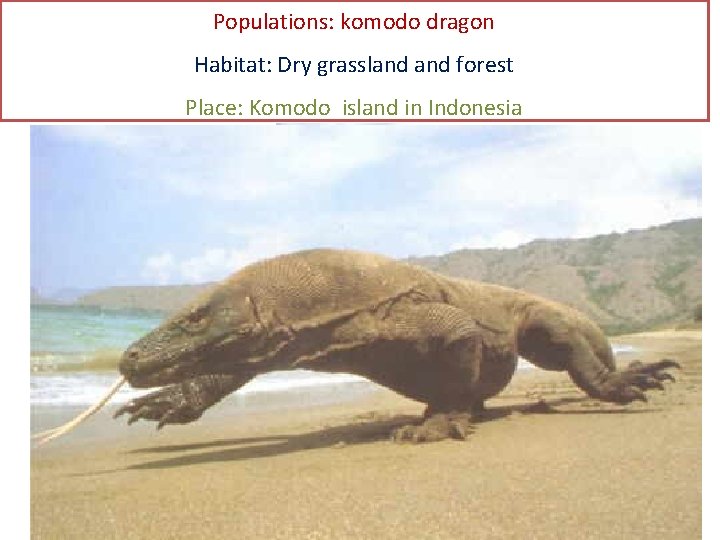
Populations: komodo dragon Habitat: Dry grassland forest Place: Komodo island in Indonesia
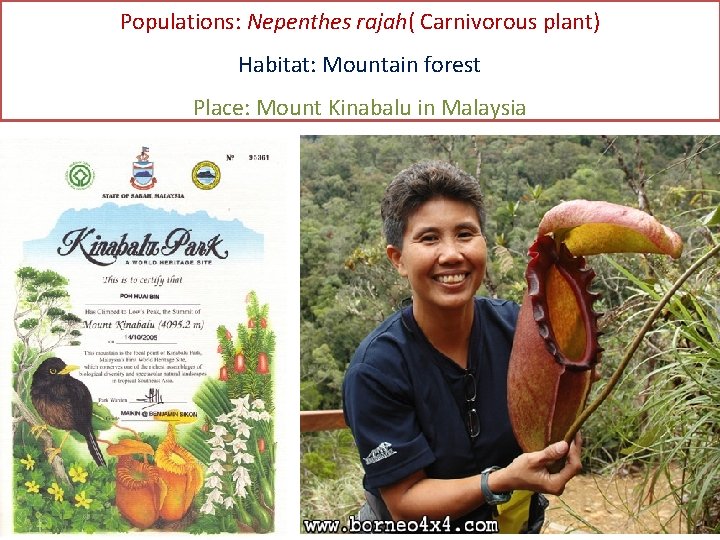
Populations: Nepenthes rajah( Carnivorous plant) Habitat: Mountain forest Place: Mount Kinabalu in Malaysia
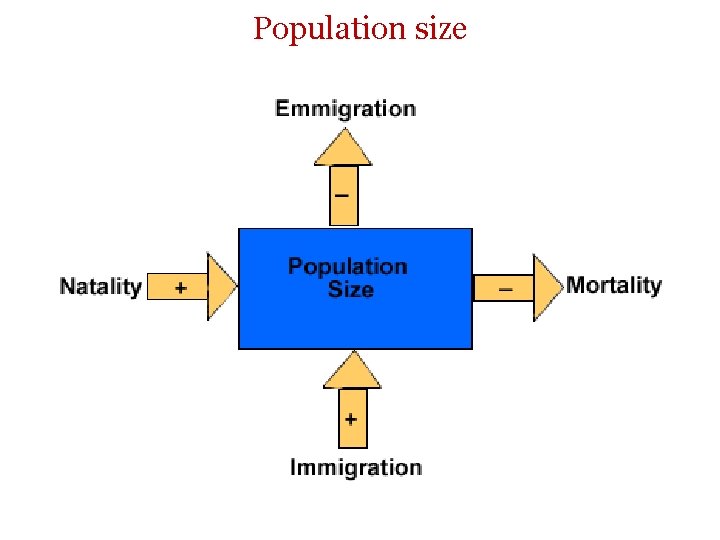
Population size
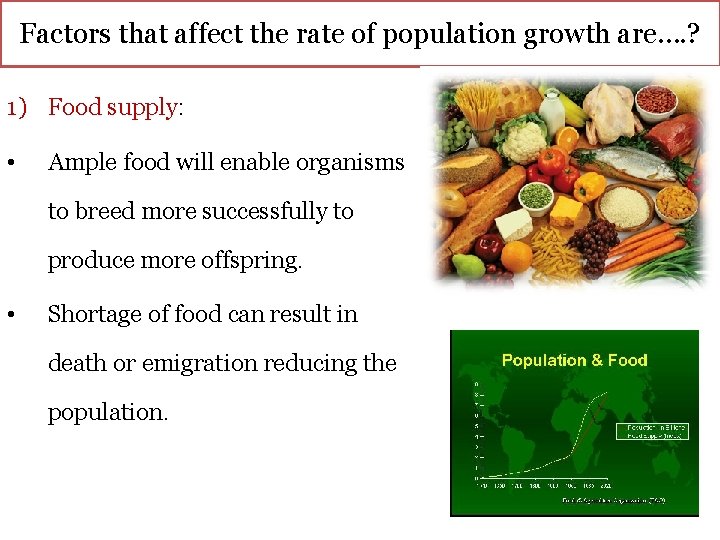
Factors that affect the rate of population growth are…. ? 1) Food supply: • Ample food will enable organisms to breed more successfully to produce more offspring. • Shortage of food can result in death or emigration reducing the population.
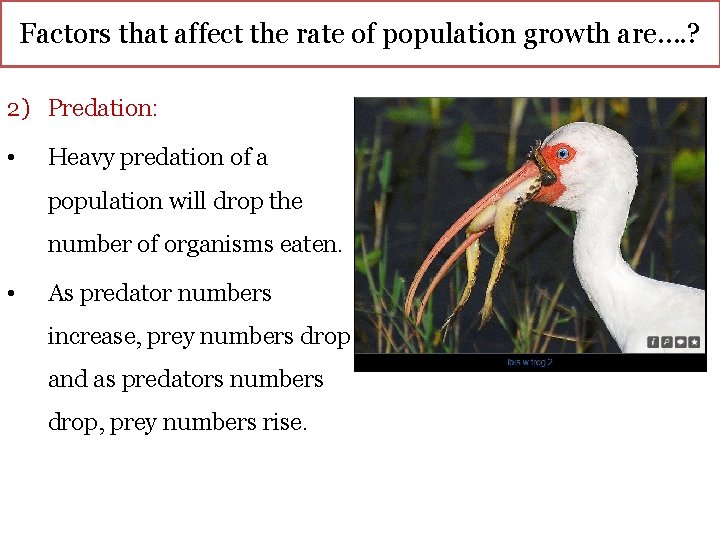
Factors that affect the rate of population growth are…. ? 2) Predation: • Heavy predation of a population will drop the number of organisms eaten. • As predator numbers increase, prey numbers drop and as predators numbers drop, prey numbers rise.
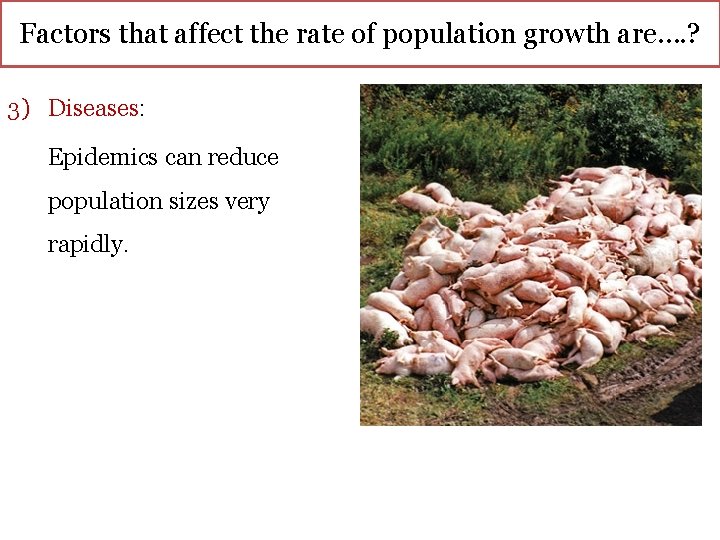
Factors that affect the rate of population growth are…. ? 3) Diseases: Epidemics can reduce population sizes very rapidly.
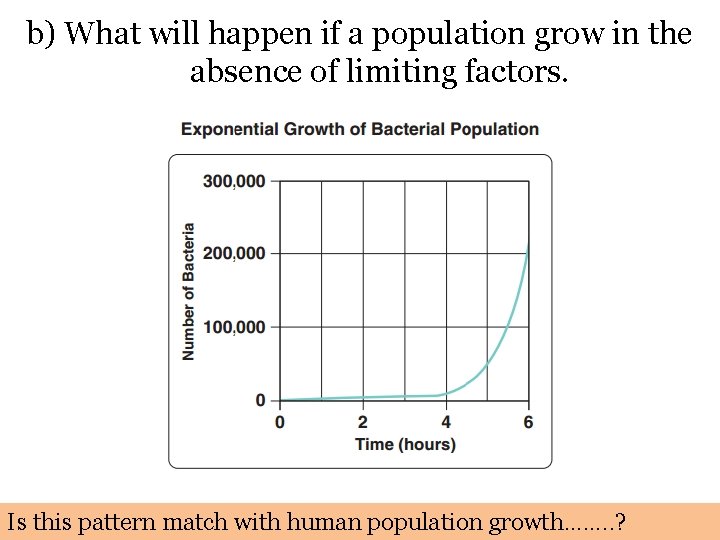
Population growth ……? a) What will happen if a population grows in the presence of any limiting factor/s. b) What will happen if a population grows in the absence of limiting factors.
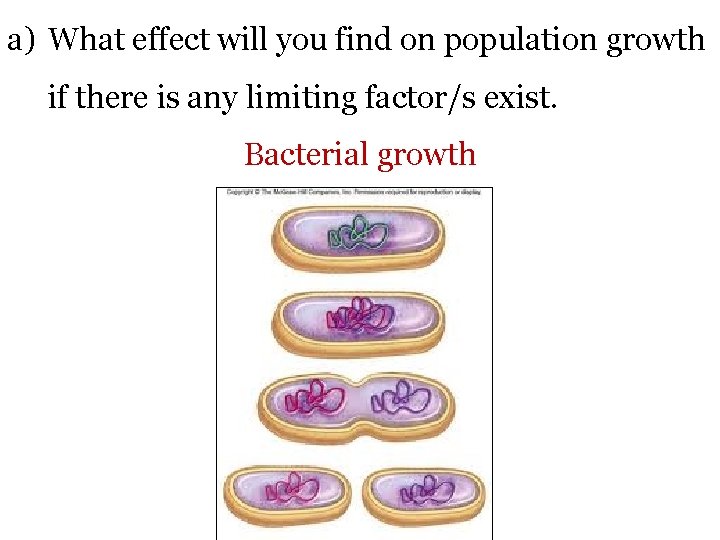
a) What effect will you find on population growth if there is any limiting factor/s exist. Bacterial growth
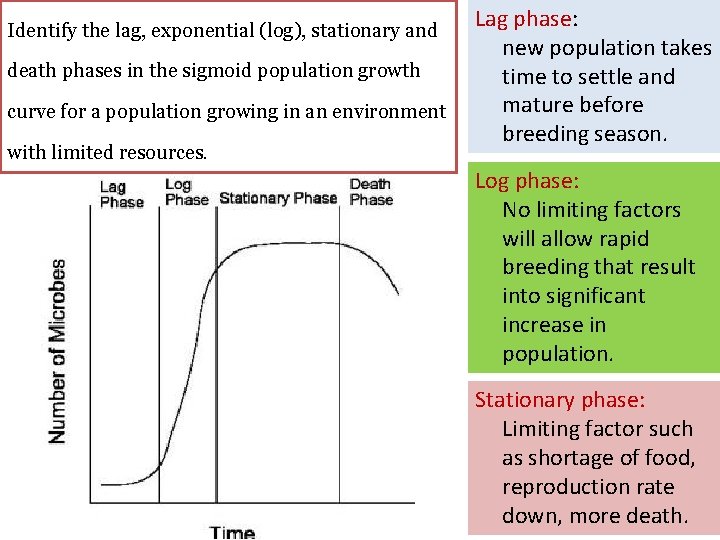
Identify the lag, exponential (log), stationary and death phases in the sigmoid population growth curve for a population growing in an environment with limited resources. Lag phase: new population takes time to settle and mature before breeding season. Log phase: No limiting factors will allow rapid breeding that result into significant increase in population. Stationary phase: Limiting factor such as shortage of food, reproduction rate down, more death.
b) What will happen if a population grow in the absence of limiting factors. Is this pattern match with human population growth……. . ?
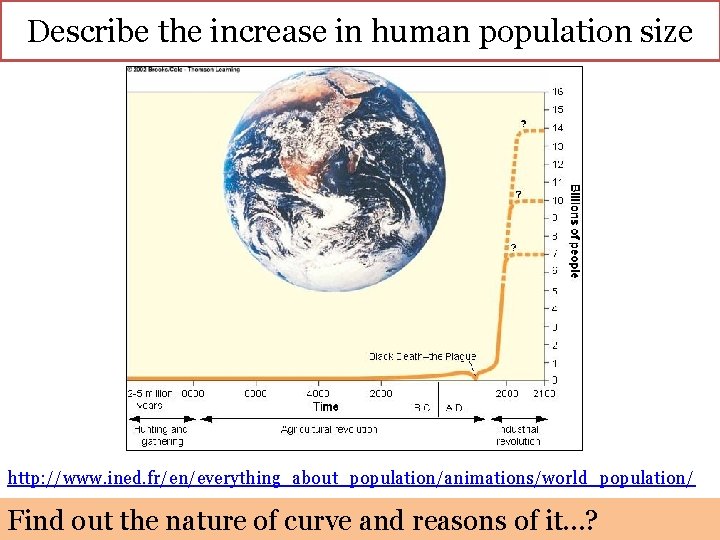
Describe the increase in human population size http: //www. ined. fr/en/everything_about_population/animations/world_population/ Find out the nature of curve and reasons of it…?
Describe the increase in human population size a)Improvement in food supply b)Development of medicine to control diseases. c)Infant mortality has decreased d)Increased life expectancy
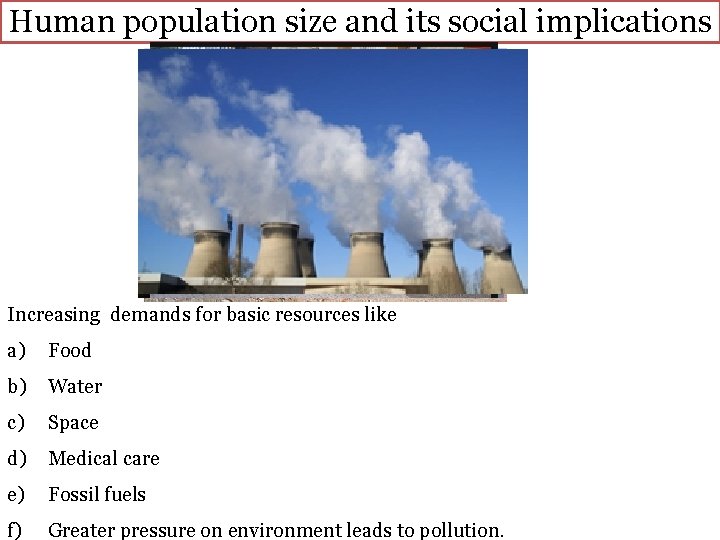
Human population size and its social implications Increasing demands for basic resources like a) Food b) Water c) Space d) Medical care e) Fossil fuels f) Greater pressure on environment leads to pollution.
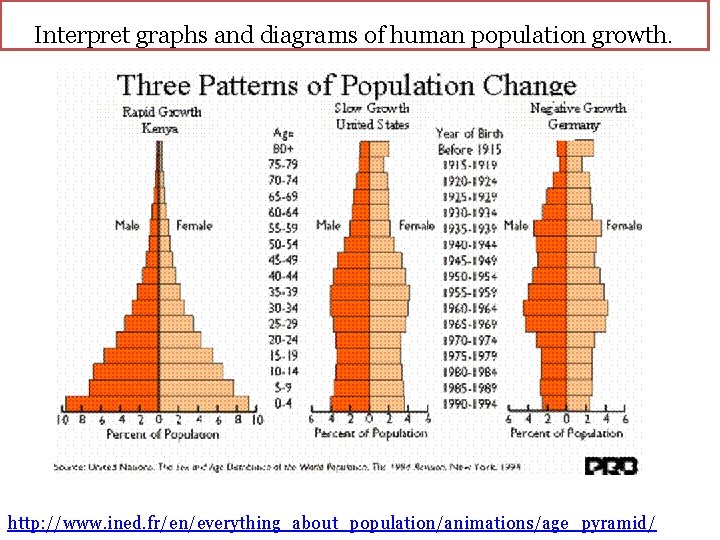
Interpret graphs and diagrams of human population growth. http: //www. ined. fr/en/everything_about_population/animations/age_pyramid/
Checks on population increase 1. Competition: 2. Predation: 3. Diseases: 4. Famine 5. War 6. Epidemics 7. Flood 8. Tsunami 9. Earthquakes