Unit 4 Contract Negotiation and Legal Framework Session


- Slides: 33
Unit 4: Contract Negotiation and Legal Framework Session xxx
4
Contents & Objectives 5
Content Unit 4: Contract Negotiation and Legal Framework • Objectives : please fill in the objectives of this Unit. Learning goals are displayed on the next slide • Topic 1: Components of the regulatory environment of extractives contracts • Topic 2: Optimising government position within a • Key questions • Further reading/resources 6
What you can expect to learn from this Unit • You will gain an understanding of the implications of one contract type compared to another • You will learn about the components of a contract which interact to produce the overall result • You will learn about the legislative framework across the extractives sector, including stabilisation clauses • You will gain insights to the influencing factors for extraction decisions 7
Contract Negotiation and Legal Framework 8
Four Rules of Thumb About Extractives Contracts • • Rule of Thumb 1: Contracts live in a complex natural habitat Rule of Thumb 2: Negotiation is permanent Rule of Thumb 3: There is a lot not in the contracts Rule of Thumb 4: Contracts are a tangled web of interlocking parts 9
The difference between theory and practise… stories from the field… • Secrecy: in many countries, even the minister of finance has not seen the contracts • Random circumstance: a bid round failed because a phone message was not passed on • The government’s task in negotiating is inherently more complex than a company’s – more issues and more actors need to be brought together. • In addition to the line ministry and state companies, joined up government would require (potential) involvement of: finance, environment, labour, justice ministries, the revenue authorities, the auditor-general, the customs office, investment authorities, sub-national government authorities… and others! • “Blind negotiation” – negotiating without number crunching • Because negotiation is permanent: there should be as much emphasis on monitoring what is actually happening now as there is on negotiating what is supposed to happen in the future. 10
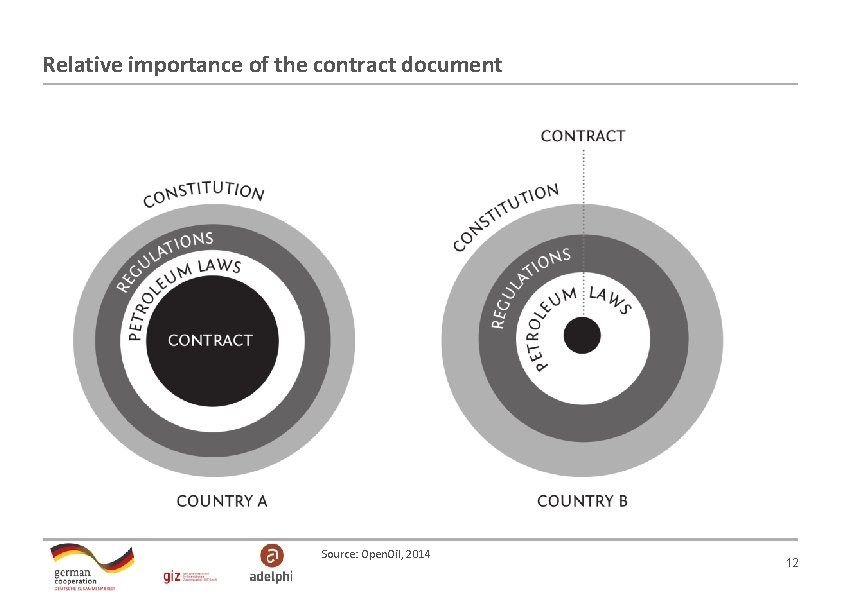
Rule of Thumb 1: Contracts in their natural habitat National Legal Framework • Secondary legislation, or regulations • Sector laws: the Petroleum Revenue Bill , or the National Mining Act • General laws: environment law, labour law, investment law • The Constitution: may specify characteristics of natural resource management International legal framework • Bilateral investment treaties (over 4, 000 exist in the world) • Multilateral conventions: e. g. World Trade Organisation 11
Relative importance of the contract document Source: Open. Oil, 2014 12
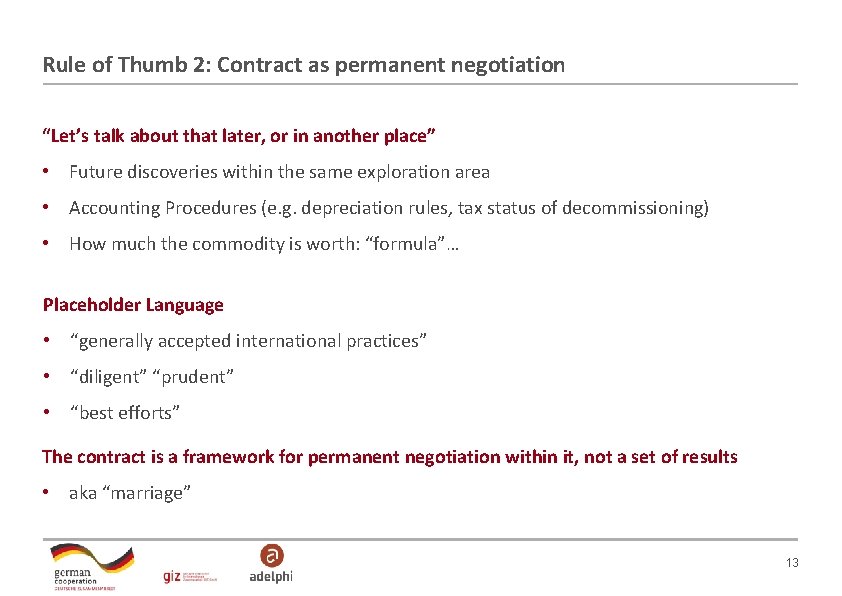
Rule of Thumb 2: Contract as permanent negotiation “Let’s talk about that later, or in another place” • Future discoveries within the same exploration area • Accounting Procedures (e. g. depreciation rules, tax status of decommissioning) • How much the commodity is worth: “formula”… Placeholder Language • “generally accepted international practices” • “diligent” “prudent” • “best efforts” The contract is a framework for permanent negotiation within it, not a set of results • aka “marriage” 13
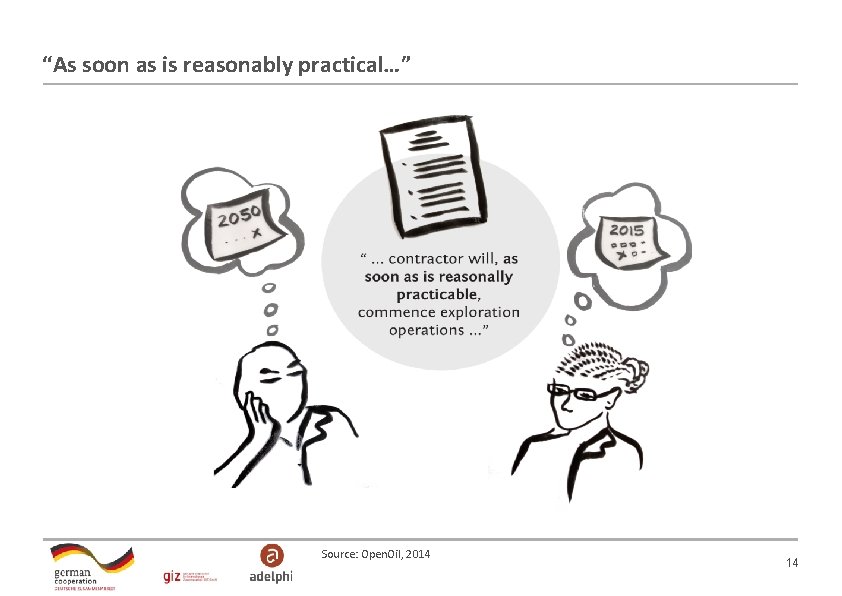
“As soon as is reasonably practical…” Source: Open. Oil, 2014 14
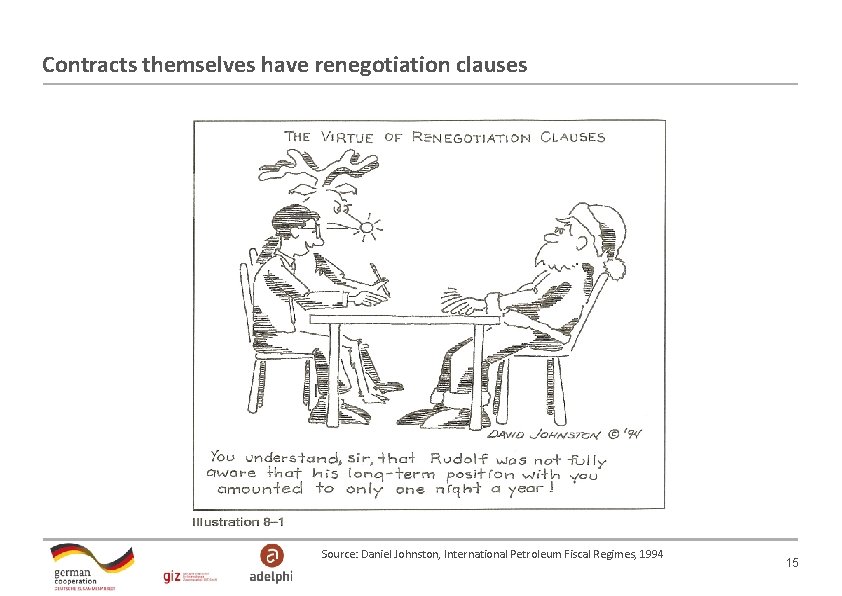
Contracts themselves have renegotiation clauses Source: Daniel Johnston, International Petroleum Fiscal Regimes, 1994 15
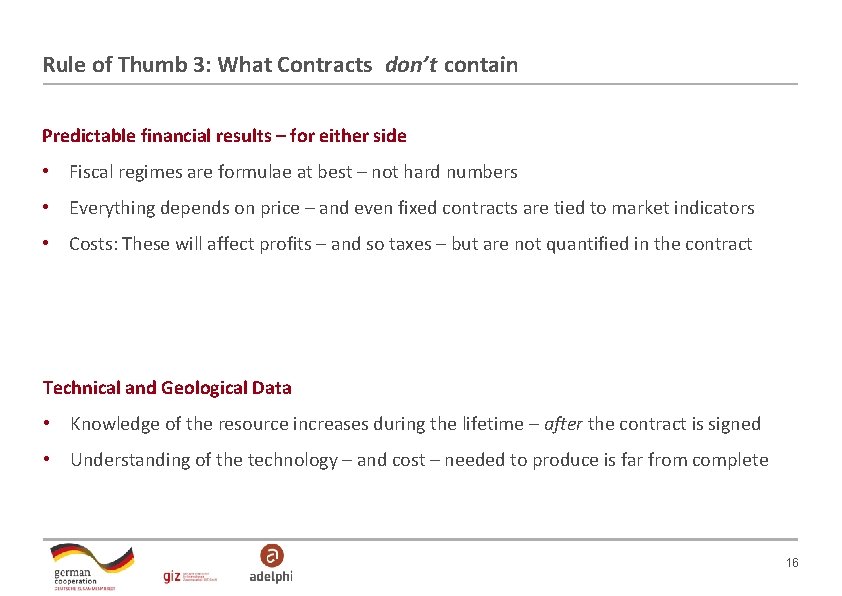
Rule of Thumb 3: What Contracts don’t contain Predictable financial results – for either side • Fiscal regimes are formulae at best – not hard numbers • Everything depends on price – and even fixed contracts are tied to market indicators • Costs: These will affect profits – and so taxes – but are not quantified in the contract Technical and Geological Data • Knowledge of the resource increases during the lifetime – after the contract is signed • Understanding of the technology – and cost – needed to produce is far from complete 16
How prices are specified in the contract Source: government of Ghana, (contract released) 17
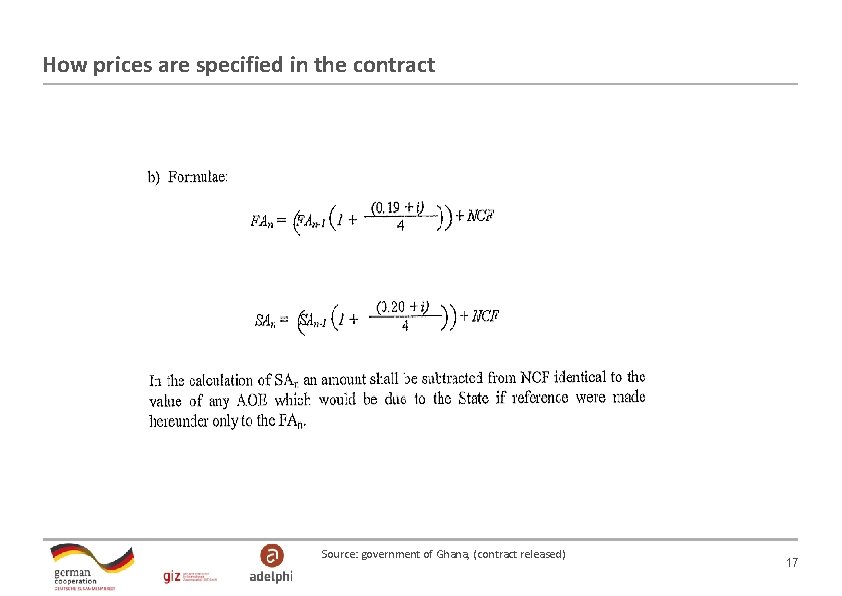
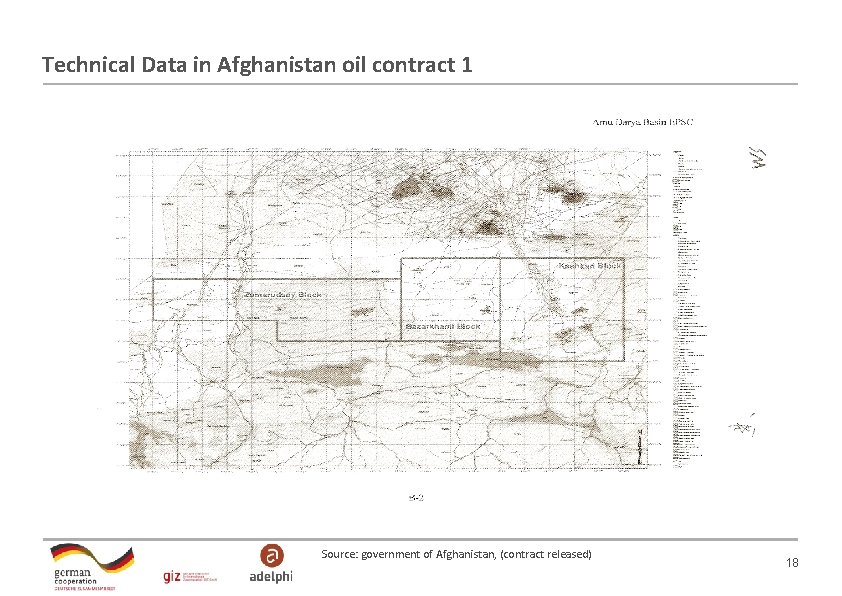
Technical Data in Afghanistan oil contract 1 Source: government of Afghanistan, (contract released) 18
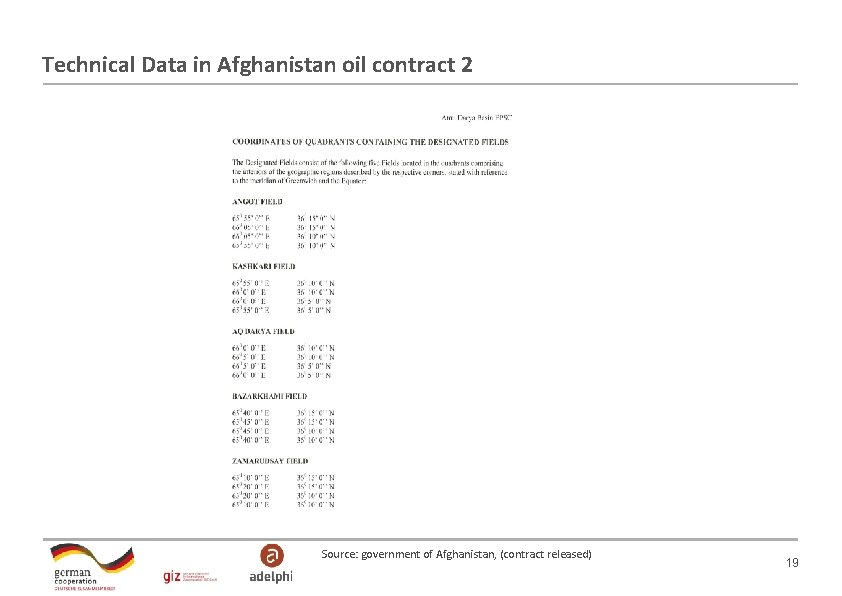
Technical Data in Afghanistan oil contract 2 Source: government of Afghanistan, (contract released) 19
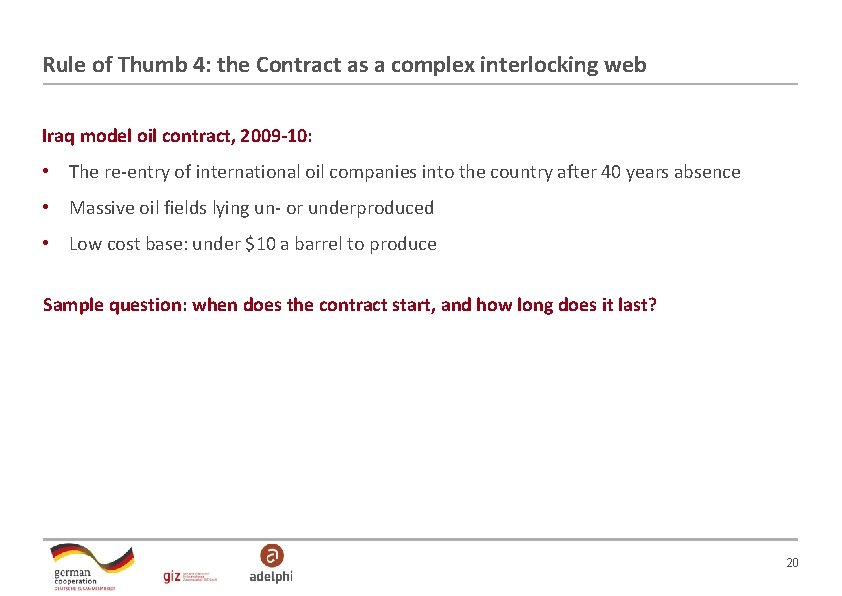
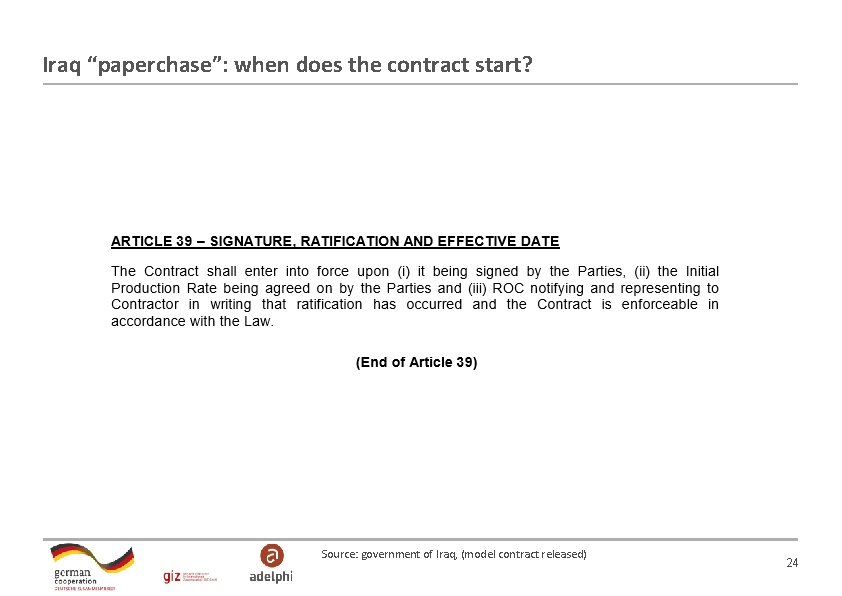
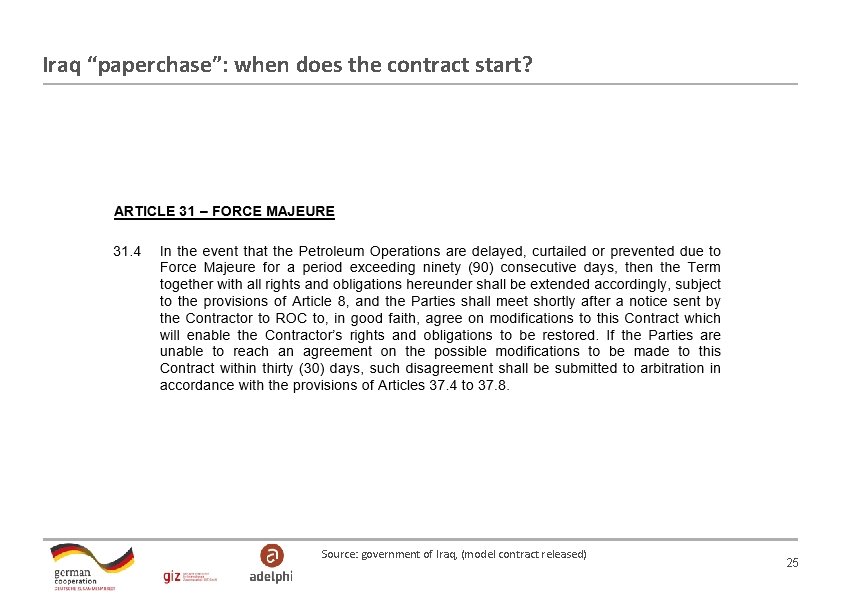
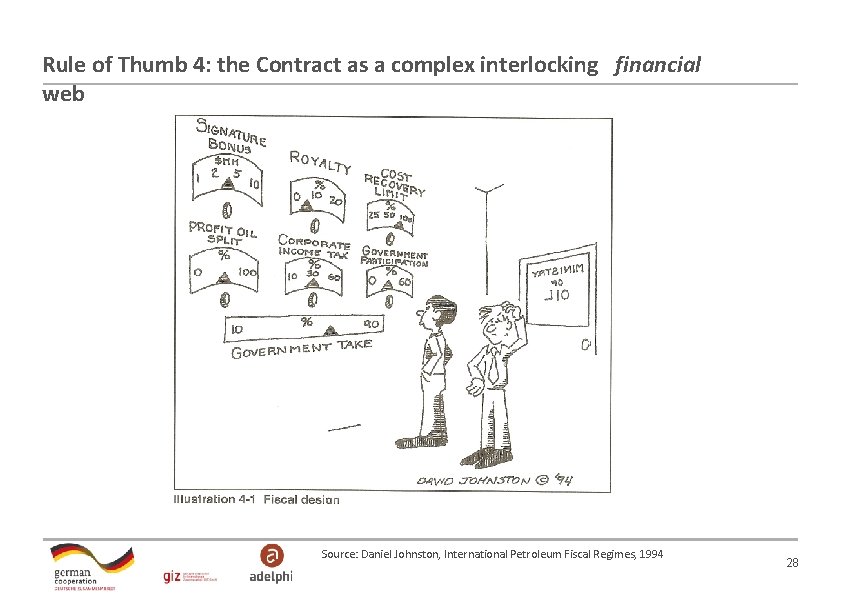
Rule of Thumb 4: the Contract as a complex interlocking web Iraq model oil contract, 2009 -10: • The re-entry of international oil companies into the country after 40 years absence • Massive oil fields lying un- or underproduced • Low cost base: under $10 a barrel to produce Sample question: when does the contract start, and how long does it last? 20
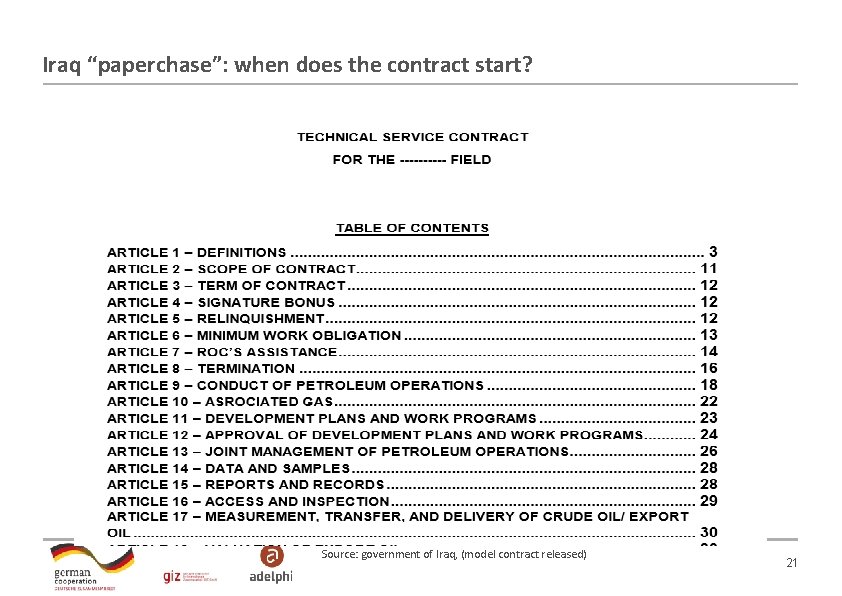
Iraq “paperchase”: when does the contract start? Source: government of Iraq, (model contract released) 21
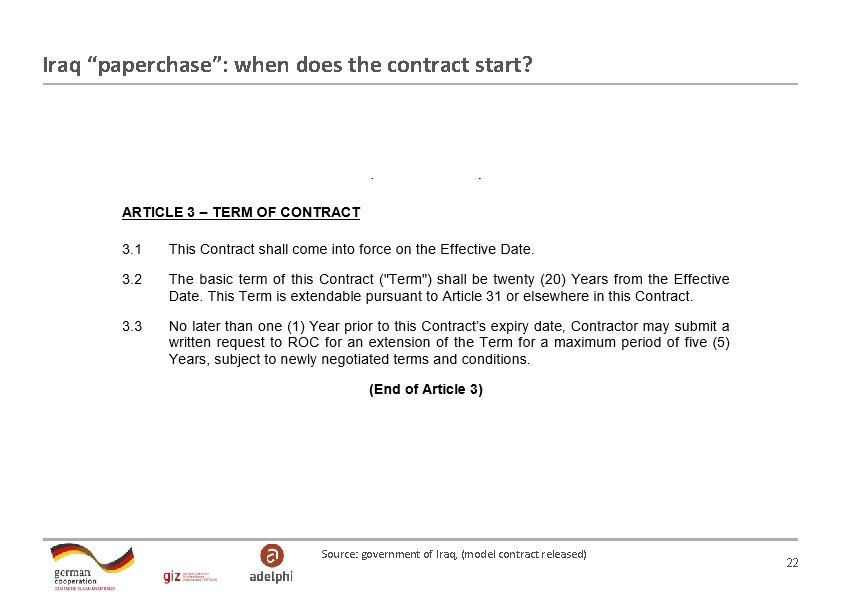
Iraq “paperchase”: when does the contract start? Source: government of Iraq, (model contract released) 22
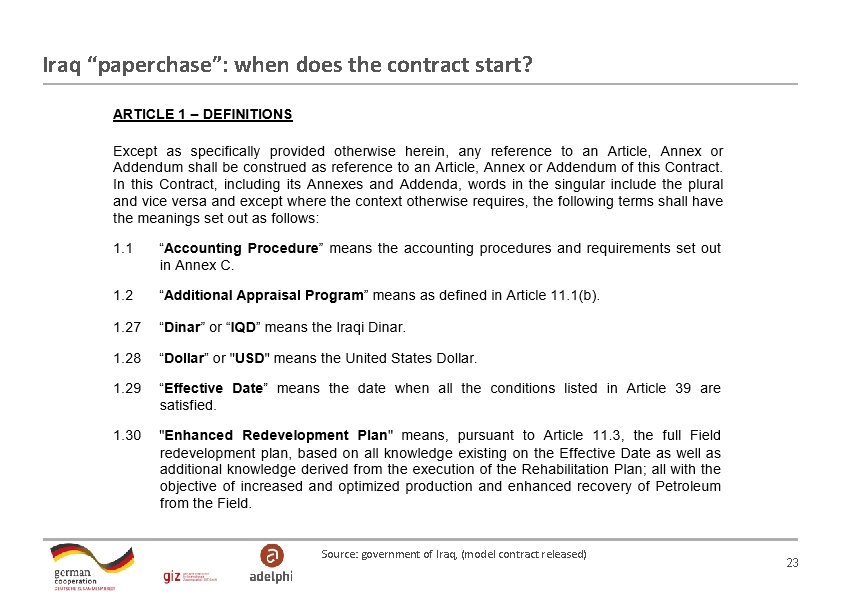
Iraq “paperchase”: when does the contract start? Source: government of Iraq, (model contract released) 23
Iraq “paperchase”: when does the contract start? Source: government of Iraq, (model contract released) 24
Iraq “paperchase”: when does the contract start? Source: government of Iraq, (model contract released) 25
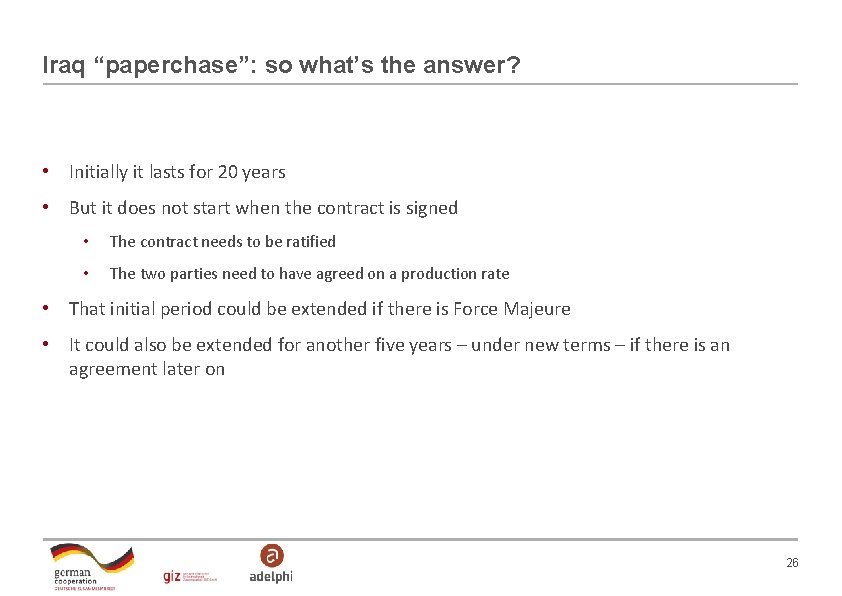
Iraq “paperchase”: so what’s the answer? • Initially it lasts for 20 years • But it does not start when the contract is signed • The contract needs to be ratified • The two parties need to have agreed on a production rate • That initial period could be extended if there is Force Majeure • It could also be extended for another five years – under new terms – if there is an agreement later on 26
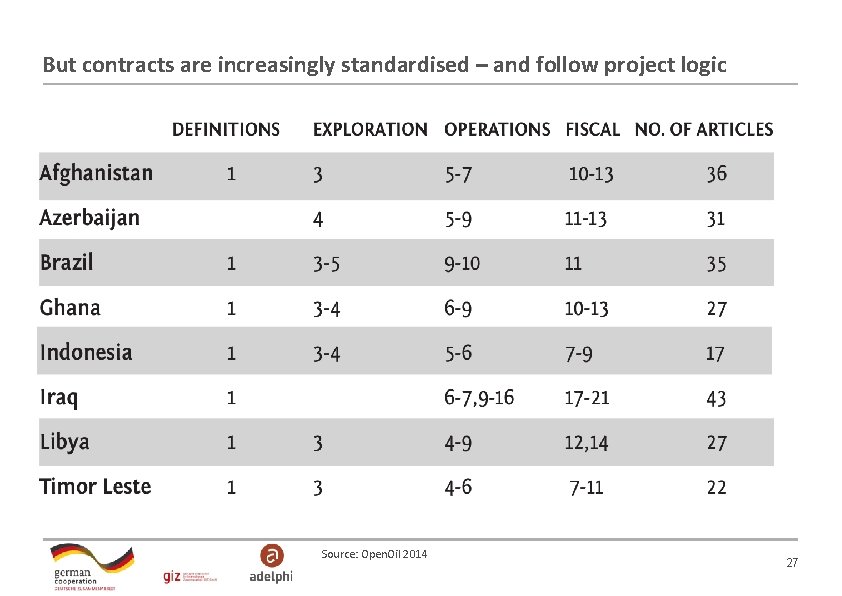
But contracts are increasingly standardised – and follow project logic Source: Open. Oil 2014 27
Rule of Thumb 4: the Contract as a complex interlocking financial web Source: Daniel Johnston, International Petroleum Fiscal Regimes, 1994 28
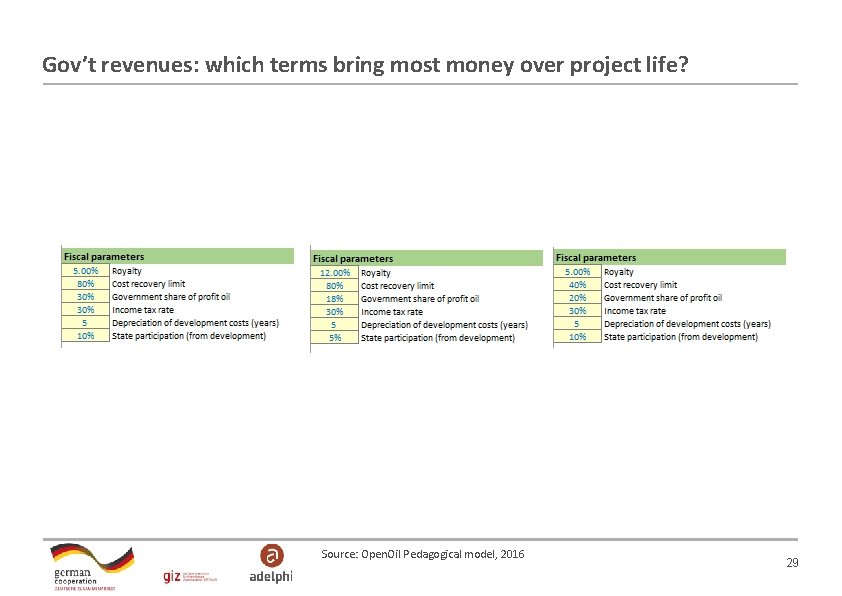
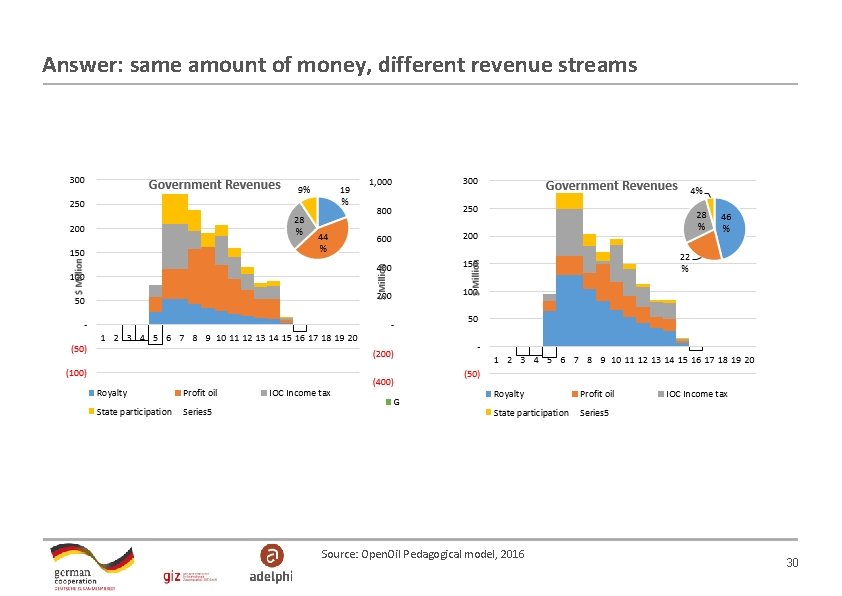
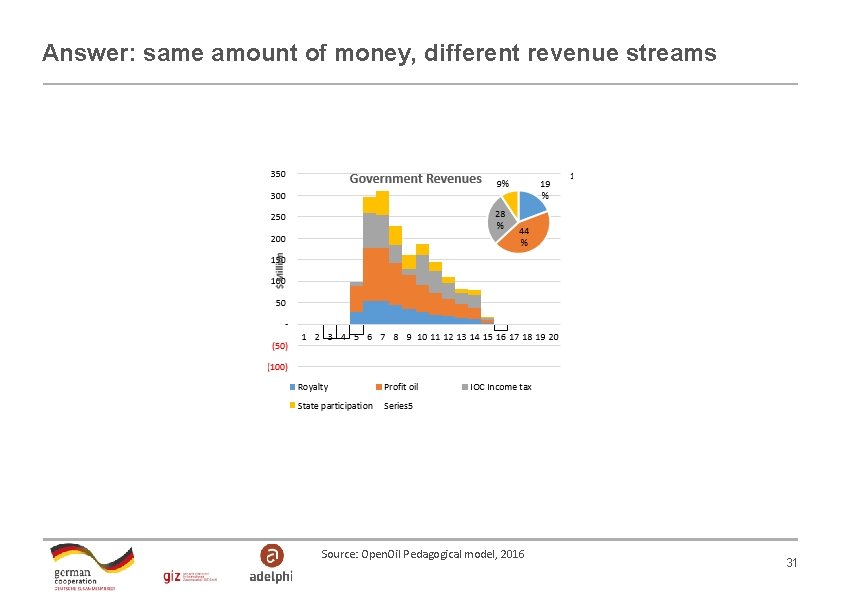
Gov’t revenues: which terms bring most money over project life? Source: Open. Oil Pedagogical model, 2016 29
Answer: same amount of money, different revenue streams Source: Open. Oil Pedagogical model, 2016 30
Answer: same amount of money, different revenue streams Source: Open. Oil Pedagogical model, 2016 31
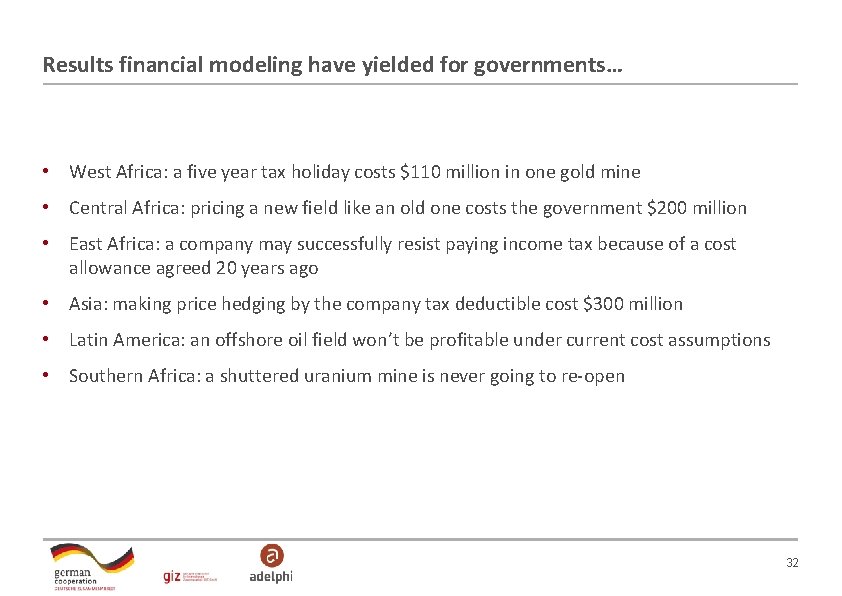
Results financial modeling have yielded for governments… • West Africa: a five year tax holiday costs $110 million in one gold mine • Central Africa: pricing a new field like an old one costs the government $200 million • East Africa: a company may successfully resist paying income tax because of a cost allowance agreed 20 years ago • Asia: making price hedging by the company tax deductible cost $300 million • Latin America: an offshore oil field won’t be profitable under current cost assumptions • Southern Africa: a shuttered uranium mine is never going to re-open 32
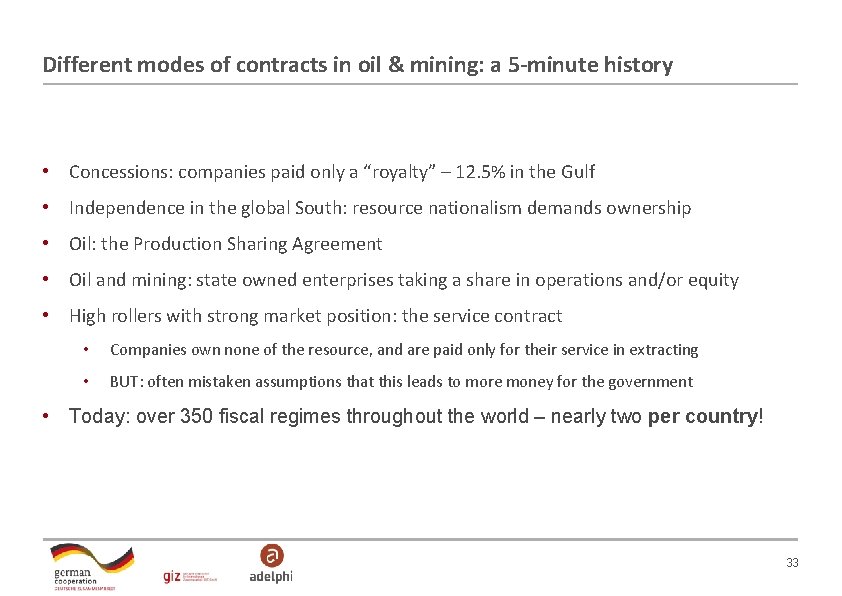
Different modes of contracts in oil & mining: a 5 -minute history • Concessions: companies paid only a “royalty” – 12. 5% in the Gulf • Independence in the global South: resource nationalism demands ownership • Oil: the Production Sharing Agreement • Oil and mining: state owned enterprises taking a share in operations and/or equity • High rollers with strong market position: the service contract • Companies own none of the resource, and are paid only for their service in extracting • BUT: often mistaken assumptions that this leads to more money for the government • Today: over 350 fiscal regimes throughout the world – nearly two per country! 33
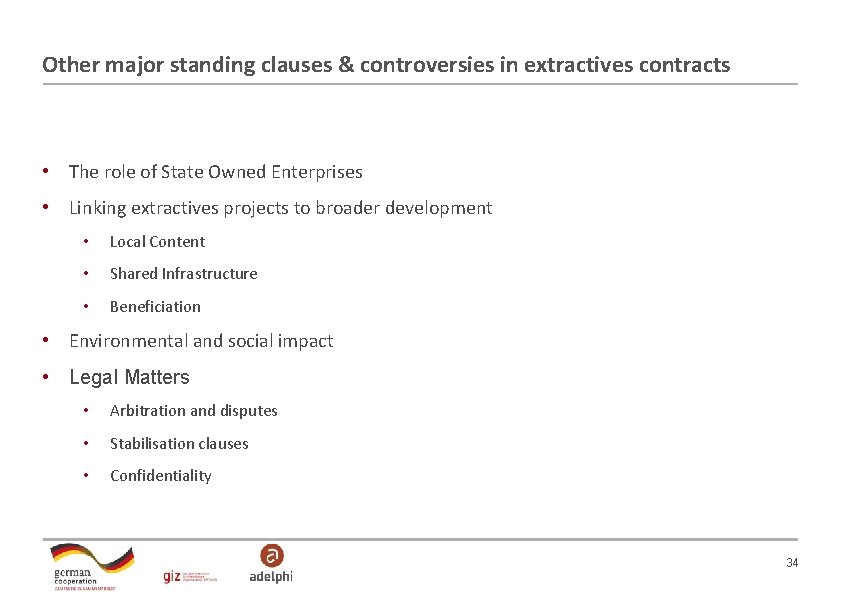
Other major standing clauses & controversies in extractives contracts • The role of State Owned Enterprises • Linking extractives projects to broader development • Local Content • Shared Infrastructure • Beneficiation • Environmental and social impact • Legal Matters • Arbitration and disputes • Stabilisation clauses • Confidentiality 34
Exercise: a Contract Paperchase 35