UM Emergency Department DeepCleaning Final Report Improving Communication

- Slides: 19
UM Emergency Department Deep-Cleaning Final Report Improving Communication, Coordination, and Deep-Clean Tracking Between Departments
IOE 481 Project Team 4 Jessica Cernak Michael Shay Emily Snitchler David Walborn
Background • Infection Control and Epidemiology (ICE) is leading an initiative to deep clean 100% of Emergency Department rooms every 24 hours • ~40 -50% of rooms deep-cleaned currently • UMHS currently uses two systems – Mi. Chart tracks patients – Tele. Tracking tracks room cleans
Goals & Objectives Goal • Provide a solution to allow Environmental Services to deepclean Emergency Department rooms every 24 hours Objectives • Improve communication between the ED and EVS • Develop tracking method to monitor deep-cleans in real-time
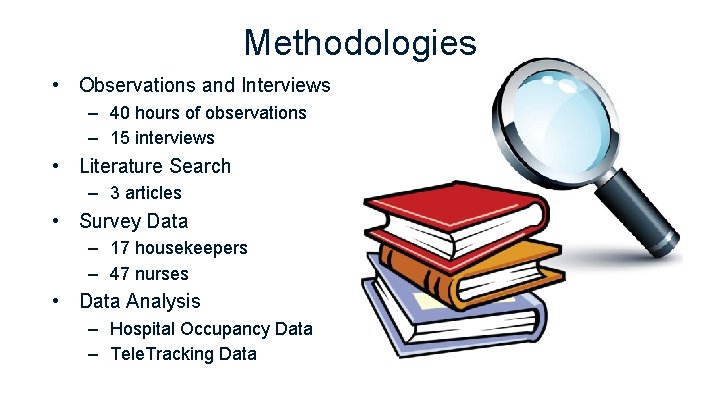
Methodologies • Observations and Interviews – 40 hours of observations – 15 interviews • Literature Search – 3 articles • Survey Data – 17 housekeepers – 47 nurses • Data Analysis – Hospital Occupancy Data – Tele. Tracking Data
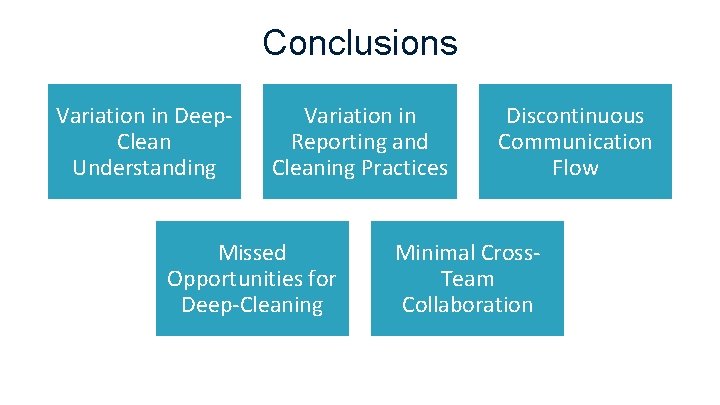
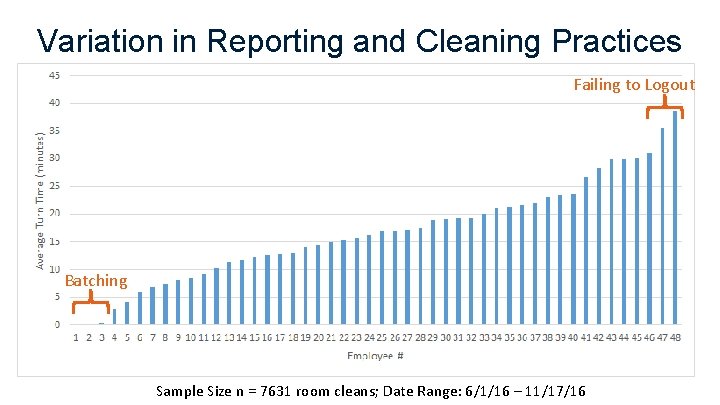
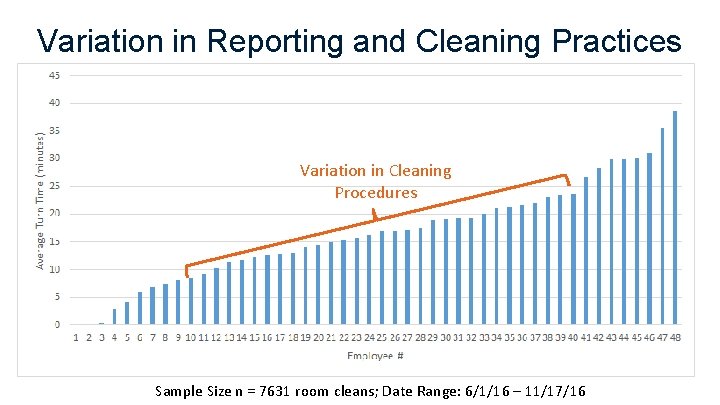
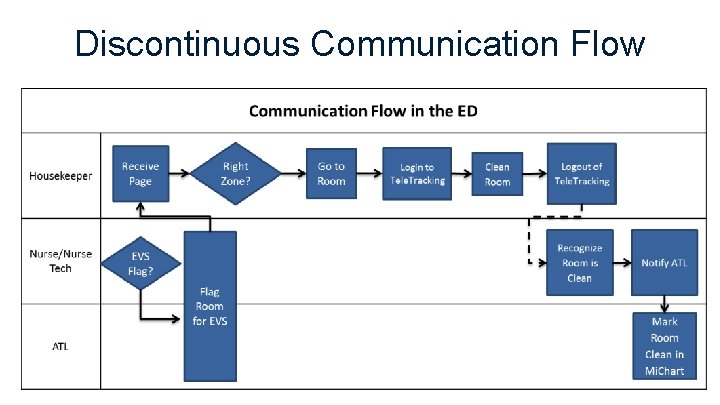
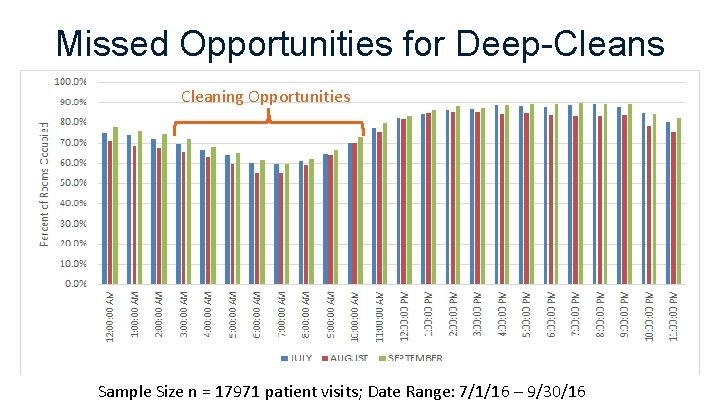
Conclusions Variation in Deep. Clean Understanding Variation in Reporting and Cleaning Practices Missed Opportunities for Deep-Cleaning Discontinuous Communication Flow Minimal Cross. Team Collaboration
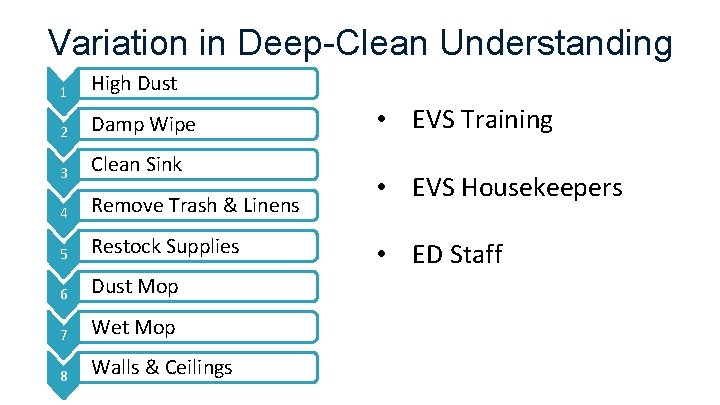
Variation in Deep-Clean Understanding 1 High Dust 2 Damp Wipe 3 Clean Sink 4 Remove Trash & Linens 5 Restock Supplies 6 Dust Mop 7 Wet Mop 8 Walls & Ceilings • EVS Training • EVS Housekeepers • ED Staff
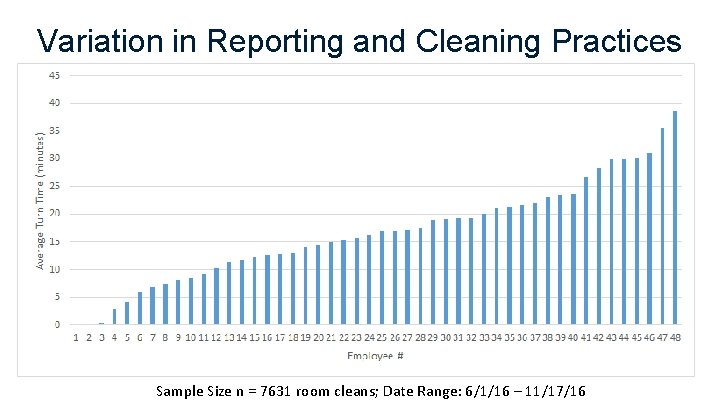
Variation in Reporting and Cleaning Practices Sample Size n = 7631 room cleans; Date Range: 6/1/16 – 11/17/16
Variation in Reporting and Cleaning Practices Failing to Logout Batching Sample Size n = 7631 room cleans; Date Range: 6/1/16 – 11/17/16
Variation in Reporting and Cleaning Practices Variation in Cleaning Procedures Sample Size n = 7631 room cleans; Date Range: 6/1/16 – 11/17/16
Discontinuous Communication Flow
Missed Opportunities for Deep-Cleans Cleaning Opportunities Sample Size n = 17971 patient visits; Date Range: 7/1/16 – 9/30/16
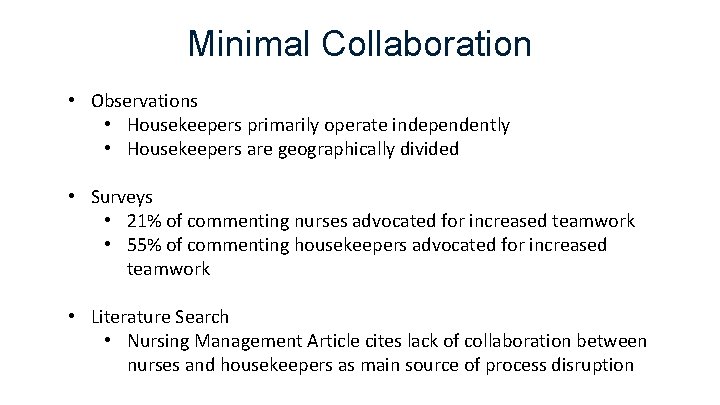
Minimal Collaboration • Observations • Housekeepers primarily operate independently • Housekeepers are geographically divided • Surveys • 21% of commenting nurses advocated for increased teamwork • 55% of commenting housekeepers advocated for increased teamwork • Literature Search • Nursing Management Article cites lack of collaboration between nurses and housekeepers as main source of process disruption
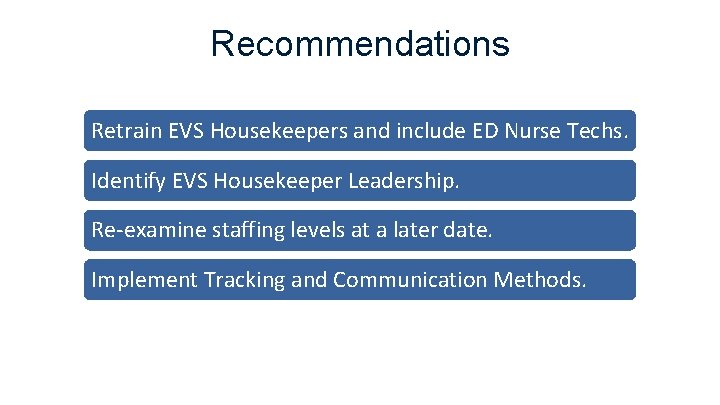
Recommendations Retrain EVS Housekeepers and include ED Nurse Techs. Identify EVS Housekeeper Leadership. Re-examine staffing levels at a later date. Implement Tracking and Communication Methods.
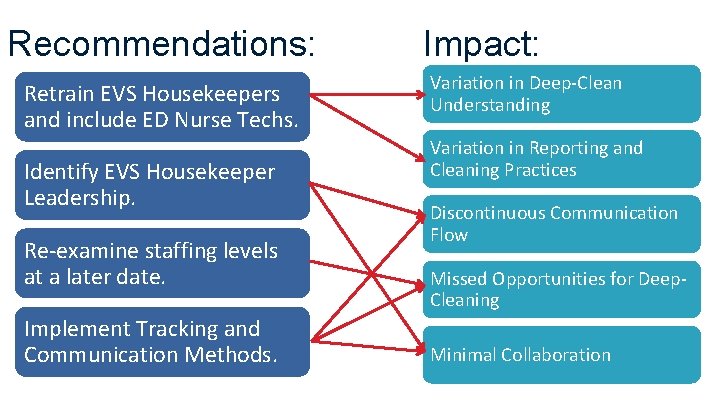
Recommendations: Retrain EVS Housekeepers and include ED Nurse Techs. Identify EVS Housekeeper Leadership. Re-examine staffing levels at a later date. Implement Tracking and Communication Methods. Impact: Variation in Deep-Clean Understanding Variation in Reporting and Cleaning Practices Discontinuous Communication Flow Missed Opportunities for Deep. Cleaning Minimal Collaboration
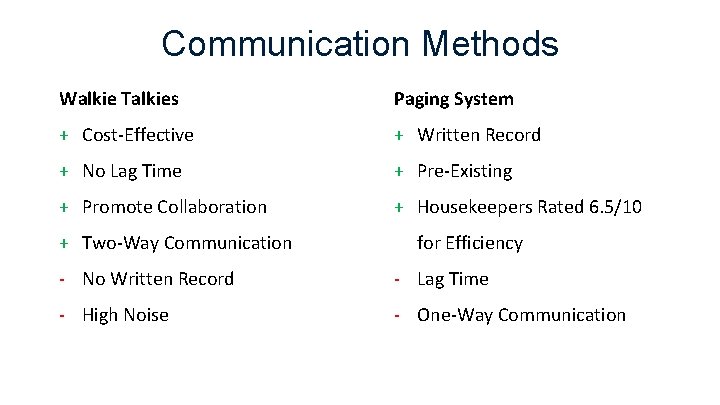
Communication Methods Walkie Talkies Paging System + Cost-Effective + Written Record + No Lag Time + Pre-Existing + Promote Collaboration + Housekeepers Rated 6. 5/10 + Two-Way Communication for Efficiency - No Written Record - Lag Time - High Noise - One-Way Communication
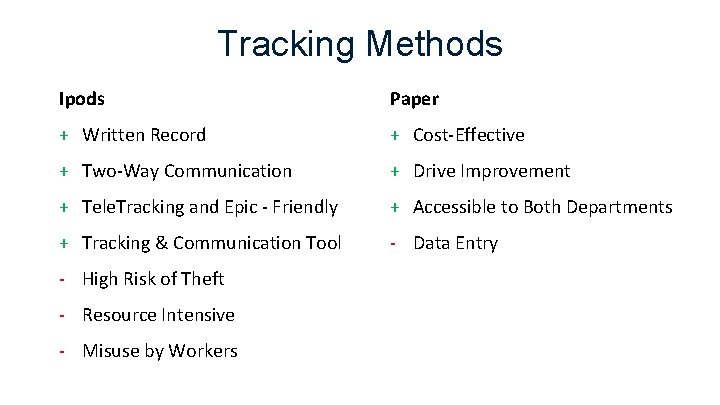
Tracking Methods Ipods Paper + Written Record + Cost-Effective + Two-Way Communication + Drive Improvement + Tele. Tracking and Epic - Friendly + Accessible to Both Departments + Tracking & Communication Tool - Data Entry - High Risk of Theft - Resource Intensive - Misuse by Workers
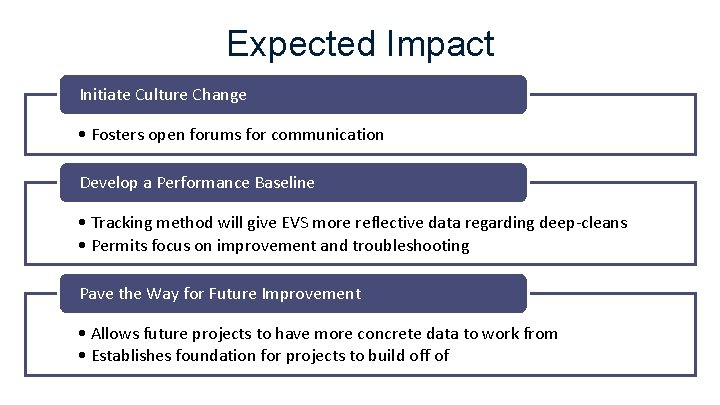
Expected Impact Initiate Culture Change • Fosters open forums for communication Develop a Performance Baseline • Tracking method will give EVS more reflective data regarding deep-cleans • Permits focus on improvement and troubleshooting Pave the Way for Future Improvement • Allows future projects to have more concrete data to work from • Establishes foundation for projects to build off of
Questions?