
SFGH Department of Psychiatry Emergency Department Case Management
- Slides: 23
SFGH- Department of Psychiatry Emergency Department Case Management Program (EDCM) September 24, 2012 Kathy O’Brien, LCSW Program Coordinator 415 -206 -5071 kathy. o’brien@sfdph. org 1 Presented at WSHA Safe Table - ER is for Emergencies
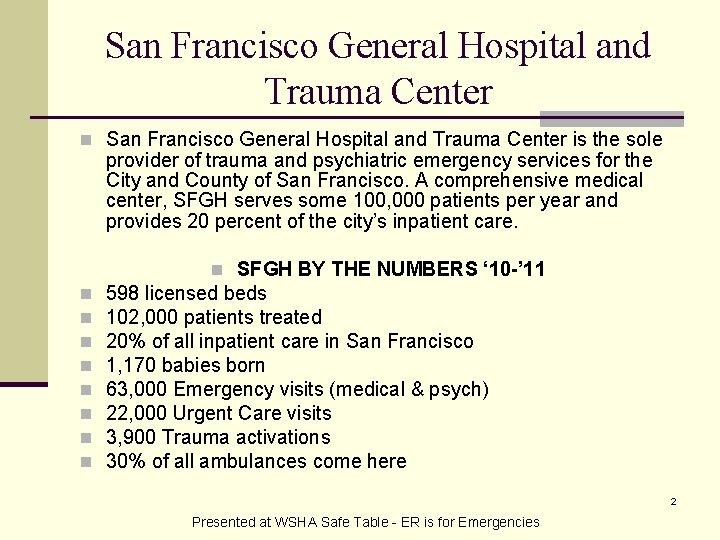
San Francisco General Hospital and Trauma Center n San Francisco General Hospital and Trauma Center is the sole provider of trauma and psychiatric emergency services for the City and County of San Francisco. A comprehensive medical center, SFGH serves some 100, 000 patients per year and provides 20 percent of the city’s inpatient care. n SFGH BY THE NUMBERS ‘ 10 -’ 11 n n n n 598 licensed beds 102, 000 patients treated 20% of all inpatient care in San Francisco 1, 170 babies born 63, 000 Emergency visits (medical & psych) 22, 000 Urgent Care visits 3, 900 Trauma activations 30% of all ambulances come here 2 Presented at WSHA Safe Table - ER is for Emergencies
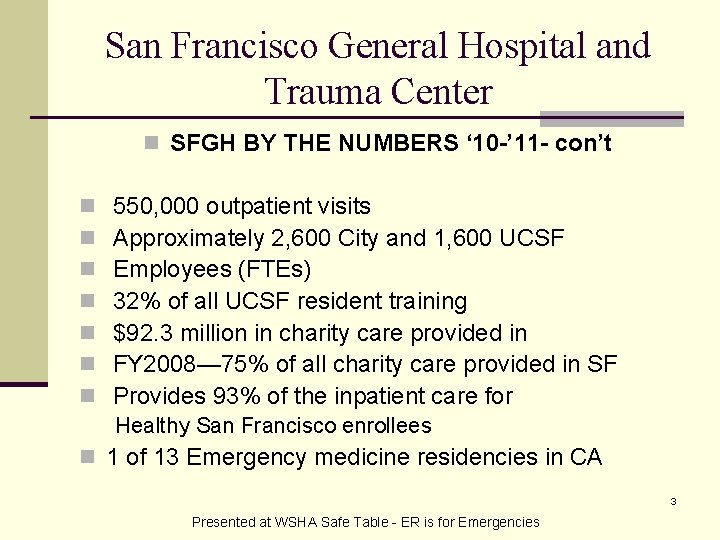
San Francisco General Hospital and Trauma Center n SFGH BY THE NUMBERS ‘ 10 -’ 11 - con’t n n n n 550, 000 outpatient visits Approximately 2, 600 City and 1, 600 UCSF Employees (FTEs) 32% of all UCSF resident training $92. 3 million in charity care provided in FY 2008— 75% of all charity care provided in SF Provides 93% of the inpatient care for Healthy San Francisco enrollees n 1 of 13 Emergency medicine residencies in CA 3 Presented at WSHA Safe Table - ER is for Emergencies
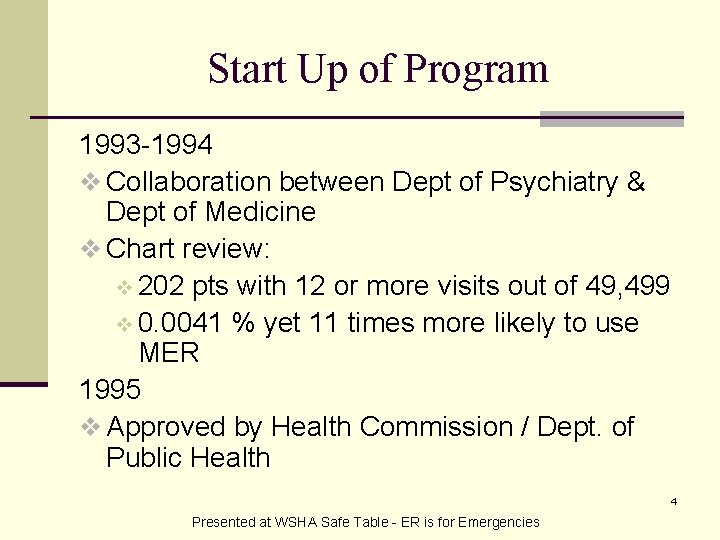
Start Up of Program 1993 -1994 v Collaboration between Dept of Psychiatry & Dept of Medicine v Chart review: v 202 pts with 12 or more visits out of 49, 499 v 0. 0041 % yet 11 times more likely to use MER 1995 v Approved by Health Commission / Dept. of Public Health 4 Presented at WSHA Safe Table - ER is for Emergencies
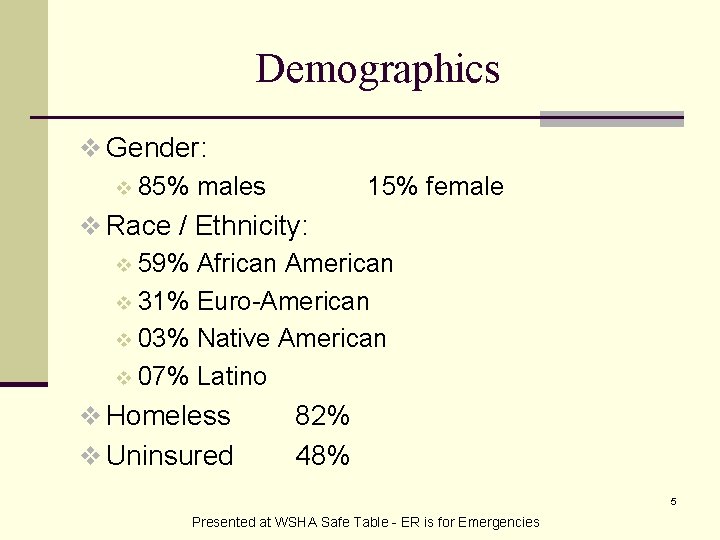
Demographics v Gender: v 85% males 15% female v Race / Ethnicity: v 59% African American v 31% Euro-American v 03% Native American v 07% Latino v Homeless v Uninsured 82% 48% 5 Presented at WSHA Safe Table - ER is for Emergencies
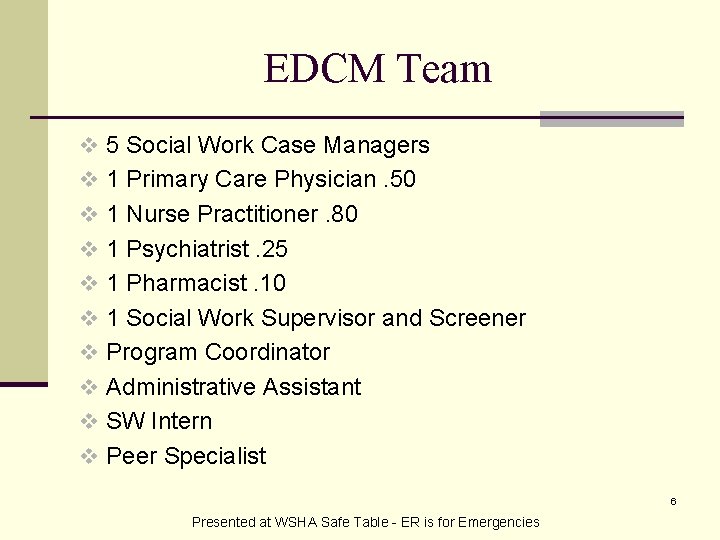
EDCM Team v 5 Social Work Case Managers v 1 Primary Care Physician. 50 v 1 Nurse Practitioner. 80 v 1 Psychiatrist. 25 v 1 Pharmacist. 10 v 1 Social Work Supervisor and Screener v Program Coordinator v Administrative Assistant v SW Intern v Peer Specialist 6 Presented at WSHA Safe Table - ER is for Emergencies
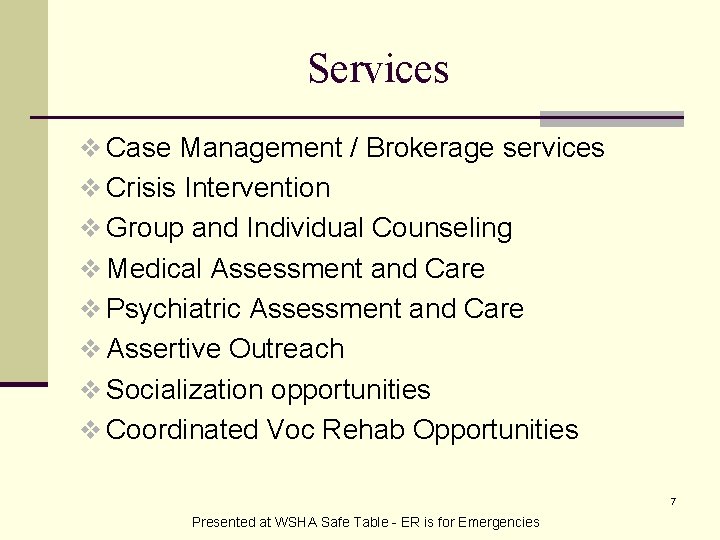
Services v Case Management / Brokerage services v Crisis Intervention v Group and Individual Counseling v Medical Assessment and Care v Psychiatric Assessment and Care v Assertive Outreach v Socialization opportunities v Coordinated Voc Rehab Opportunities 7 Presented at WSHA Safe Table - ER is for Emergencies
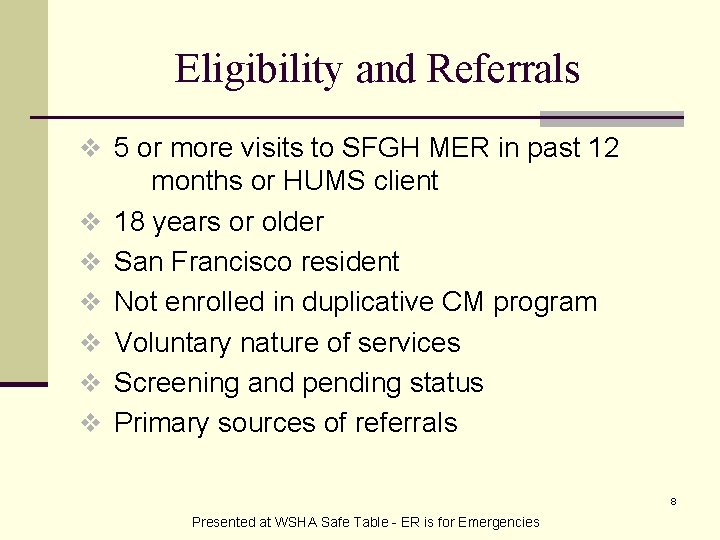
Eligibility and Referrals v 5 or more visits to SFGH MER in past 12 v v v months or HUMS client 18 years or older San Francisco resident Not enrolled in duplicative CM program Voluntary nature of services Screening and pending status Primary sources of referrals 8 Presented at WSHA Safe Table - ER is for Emergencies
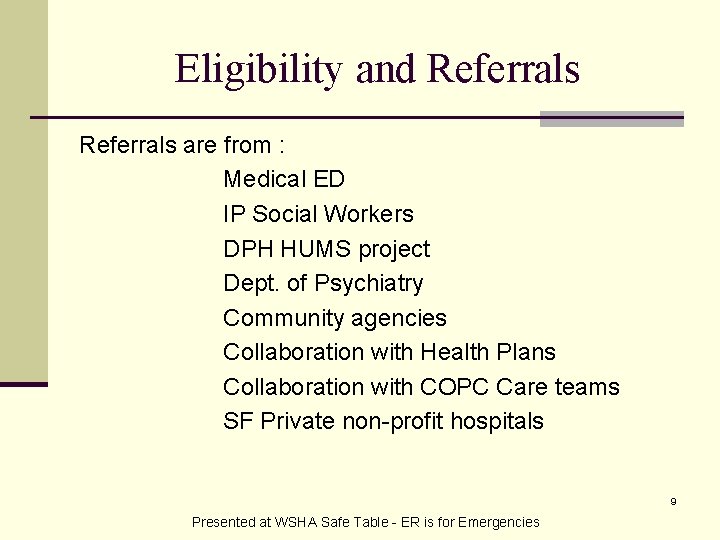
Eligibility and Referrals are from : Medical ED IP Social Workers DPH HUMS project Dept. of Psychiatry Community agencies Collaboration with Health Plans Collaboration with COPC Care teams SF Private non-profit hospitals 9 Presented at WSHA Safe Table - ER is for Emergencies
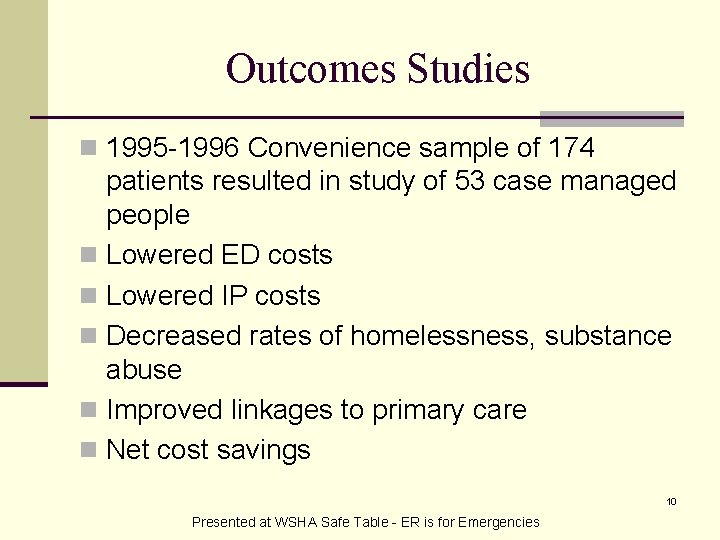
Outcomes Studies n 1995 -1996 Convenience sample of 174 patients resulted in study of 53 case managed people n Lowered ED costs n Lowered IP costs n Decreased rates of homelessness, substance abuse n Improved linkages to primary care n Net cost savings 10 Presented at WSHA Safe Table - ER is for Emergencies
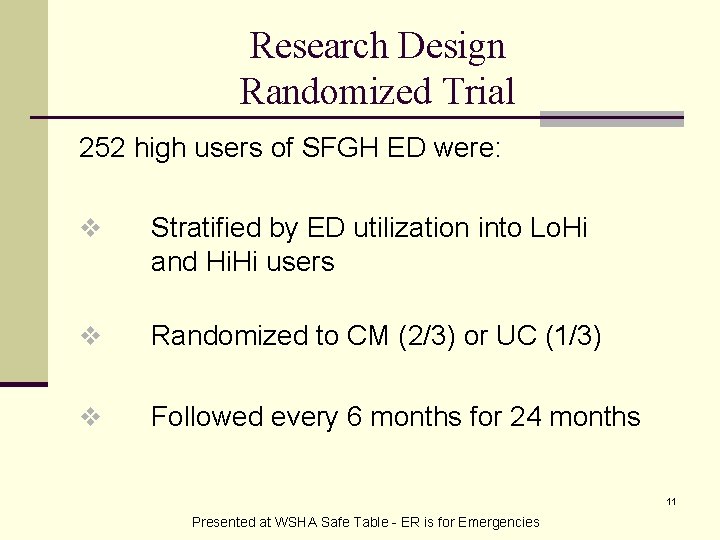
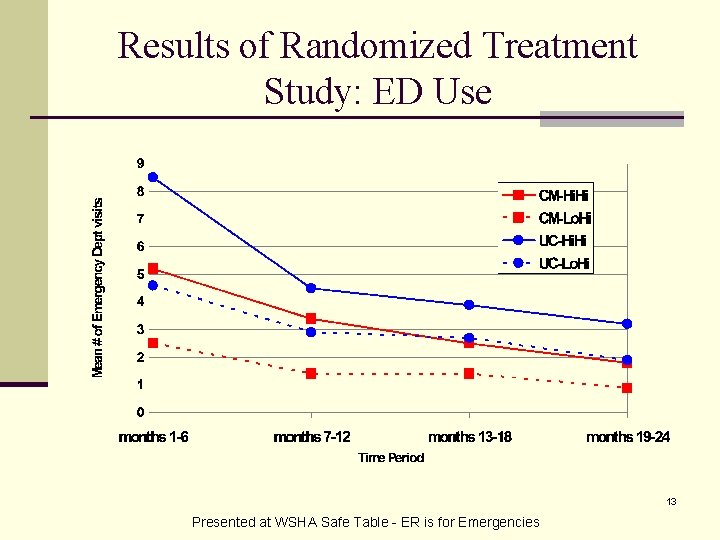
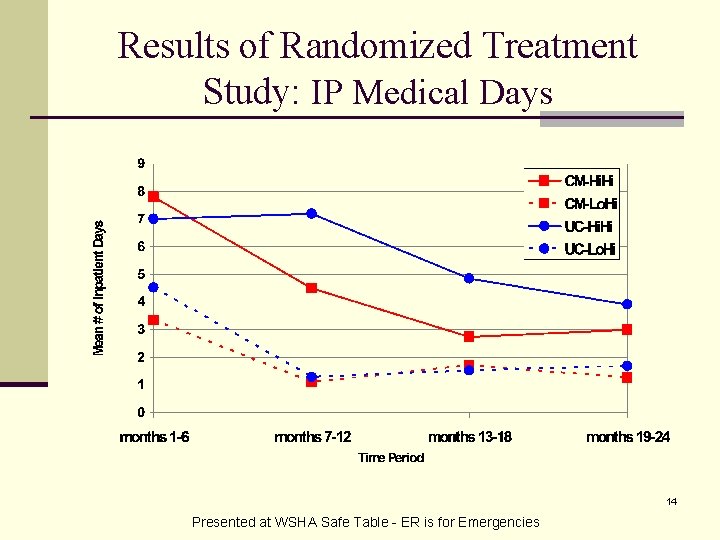
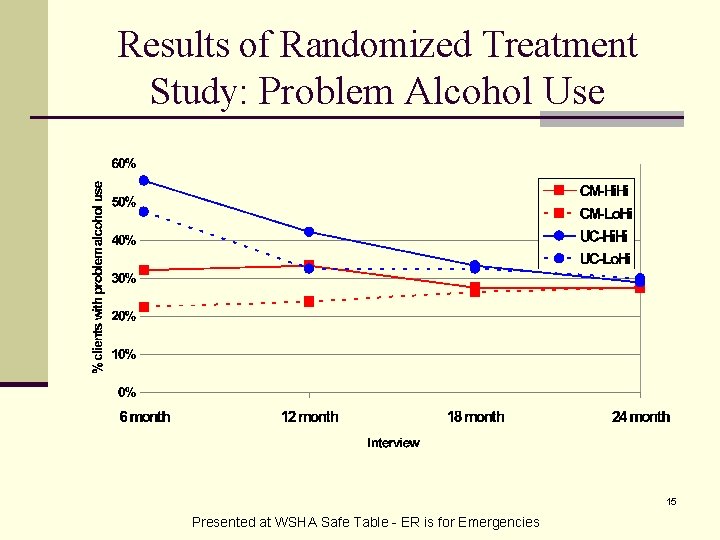
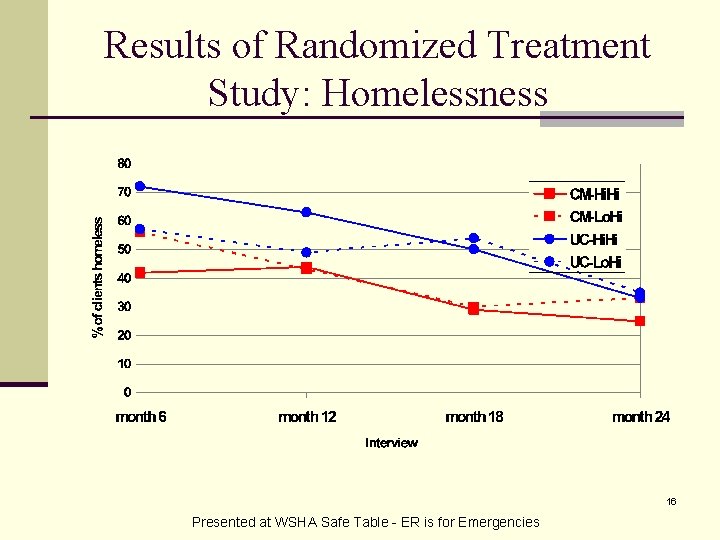
Research Design Randomized Trial 252 high users of SFGH ED were: v Stratified by ED utilization into Lo. Hi and Hi. Hi users v Randomized to CM (2/3) or UC (1/3) v Followed every 6 months for 24 months 11 Presented at WSHA Safe Table - ER is for Emergencies
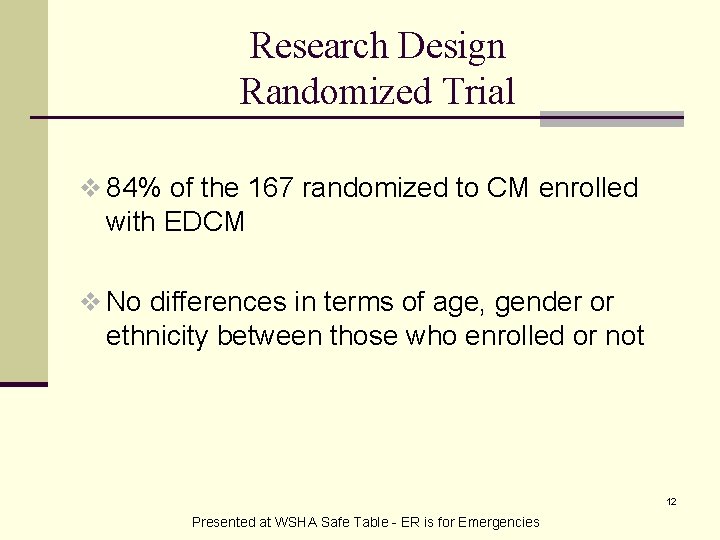
Research Design Randomized Trial v 84% of the 167 randomized to CM enrolled with EDCM v No differences in terms of age, gender or ethnicity between those who enrolled or not 12 Presented at WSHA Safe Table - ER is for Emergencies
Results of Randomized Treatment Study: ED Use 13 Presented at WSHA Safe Table - ER is for Emergencies
Results of Randomized Treatment Study: IP Medical Days 14 Presented at WSHA Safe Table - ER is for Emergencies
Results of Randomized Treatment Study: Problem Alcohol Use 15 Presented at WSHA Safe Table - ER is for Emergencies
Results of Randomized Treatment Study: Homelessness 16 Presented at WSHA Safe Table - ER is for Emergencies
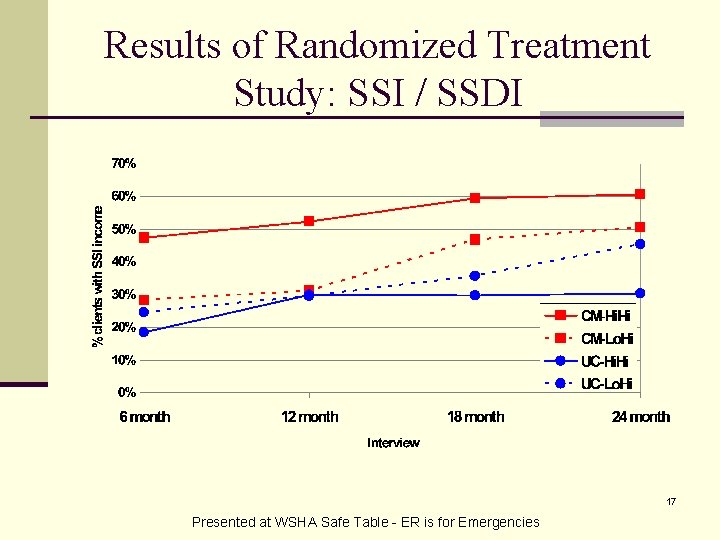
Results of Randomized Treatment Study: SSI / SSDI 17 Presented at WSHA Safe Table - ER is for Emergencies
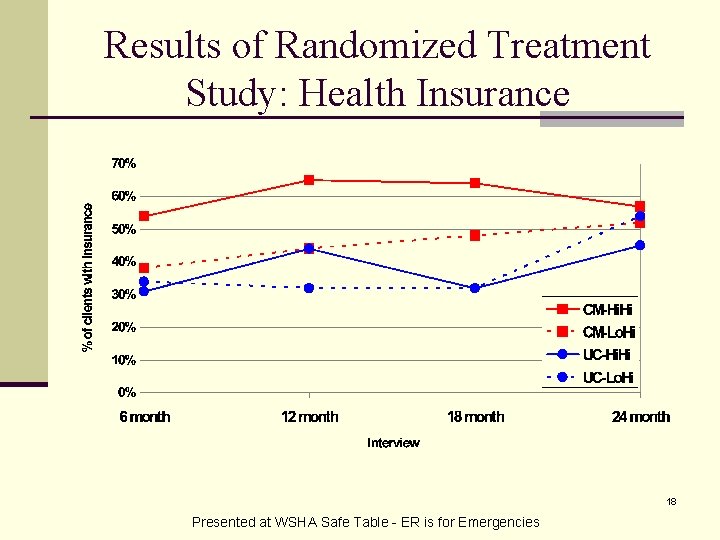
Results of Randomized Treatment Study: Health Insurance 18 Presented at WSHA Safe Table - ER is for Emergencies
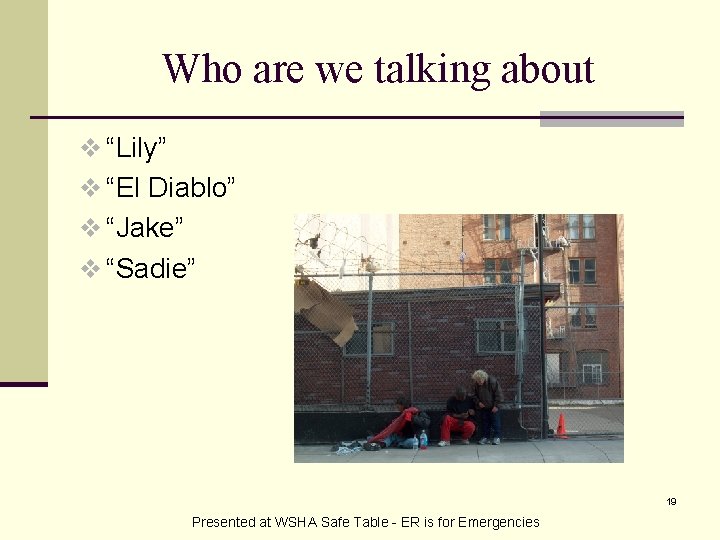
Who are we talking about v “Lily” v “El Diablo” v “Jake” v “Sadie” 19 Presented at WSHA Safe Table - ER is for Emergencies
Nature of Case Management v Outreach and engagement v Clinical nature of the work v Considerations for staff mix v Appreciate the complexity of patient life v Linkage (more than a call and referral slip) v Nature & receptivity of non-MER services v What we’re expecting patients to do Change what may “work” already for them v Navigate complex support systems v 20 Presented at WSHA Safe Table - ER is for Emergencies
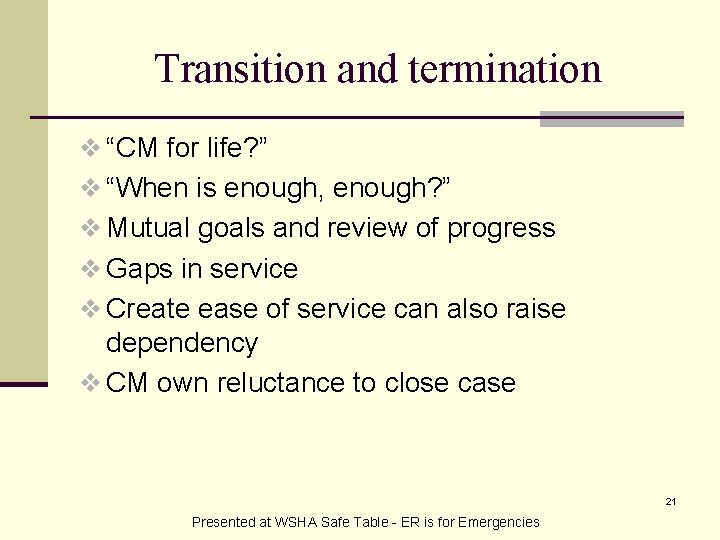
Transition and termination v “CM for life? ” v “When is enough, enough? ” v Mutual goals and review of progress v Gaps in service v Create ease of service can also raise dependency v CM own reluctance to close case 21 Presented at WSHA Safe Table - ER is for Emergencies
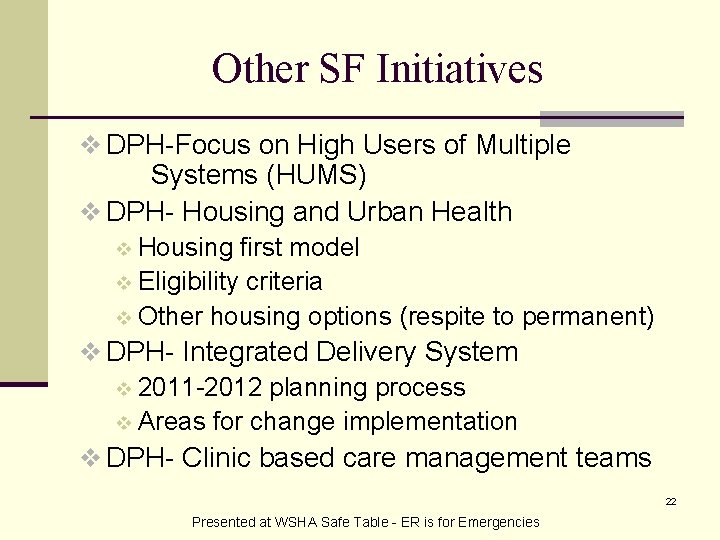
Other SF Initiatives v DPH-Focus on High Users of Multiple Systems (HUMS) v DPH- Housing and Urban Health v Housing first model v Eligibility criteria v Other housing options (respite to permanent) v DPH- Integrated Delivery System v 2011 -2012 planning process v Areas for change implementation v DPH- Clinic based care management teams 22 Presented at WSHA Safe Table - ER is for Emergencies
Questions? 23