TUMORS OF THE RESPIRATORY TRACT AND PLEURA 2






- Slides: 32
TUMORS OF THE RESPIRATORY TRACT AND PLEURA 2 Liisa A. Russell, MD
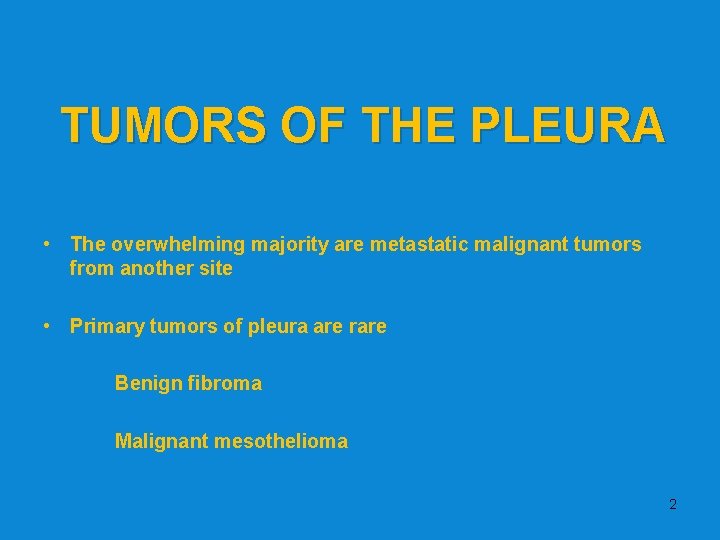
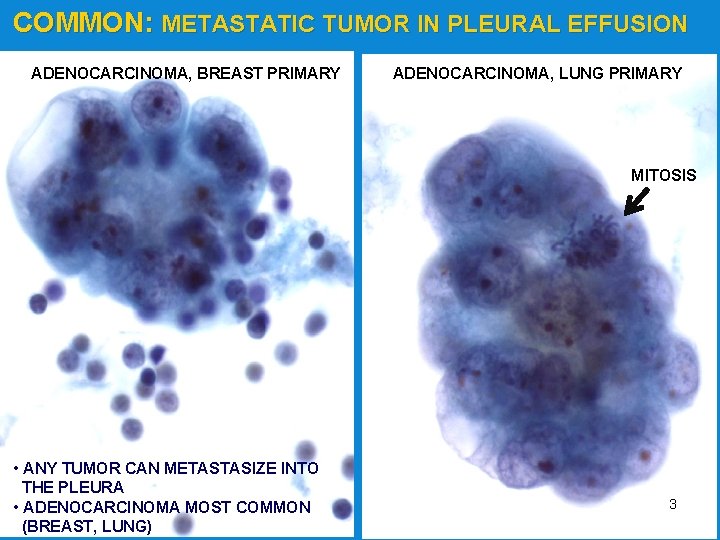
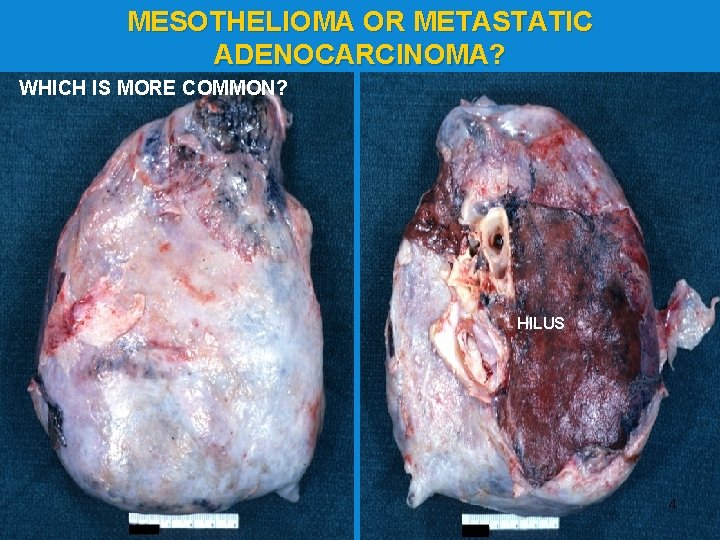
TUMORS OF THE PLEURA • The overwhelming majority are metastatic malignant tumors from another site • Primary tumors of pleura are rare Benign fibroma Malignant mesothelioma 2
COMMON: METASTATIC TUMOR IN PLEURAL EFFUSION ADENOCARCINOMA, BREAST PRIMARY ADENOCARCINOMA, LUNG PRIMARY MITOSIS • ANY TUMOR CAN METASTASIZE INTO THE PLEURA • ADENOCARCINOMA MOST COMMON (BREAST, LUNG) 3
MESOTHELIOMA OR METASTATIC ADENOCARCINOMA? WHICH IS MORE COMMON? HILUS 4
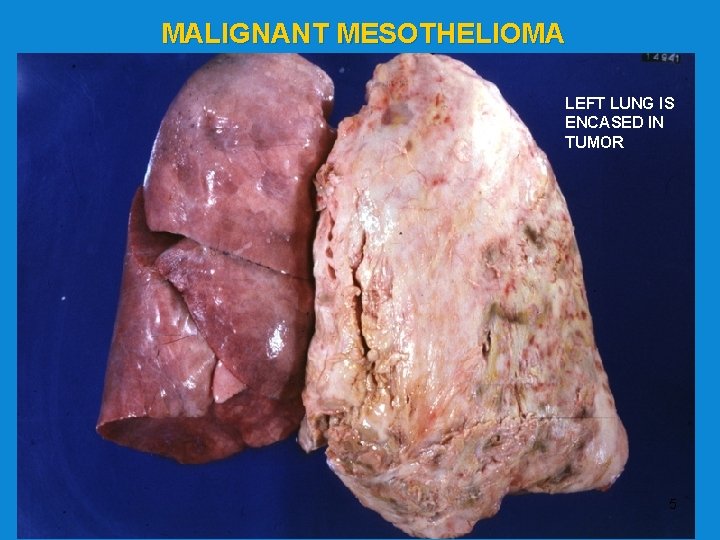
MALIGNANT MESOTHELIOMA LEFT LUNG IS ENCASED IN TUMOR 5
MALIGNANT MESOTHELIOMA TUMOR • Rare, highly malignant cancer of mesothelial cells. • Recurrent pleural effusion, chest pain, dyspnea. • Pleural plaques frequently present. • Arises in the parietal or visceral pleura, less often in the peritoneum and pericardium. • Massively thickened pleura encases and compresses the lung. • Associated with asbestos exposure (about 80%); shipyard workers, miners, insulators are at greatest risk • Asbestos fibers remain in the body; lifetime risk after exposure does not diminish. • Long latency: 25 -40 years. • Poor prognosis; distant metastases rarely. • Combination of cigarette smoking and 6 asbestos exposure increases the risk of
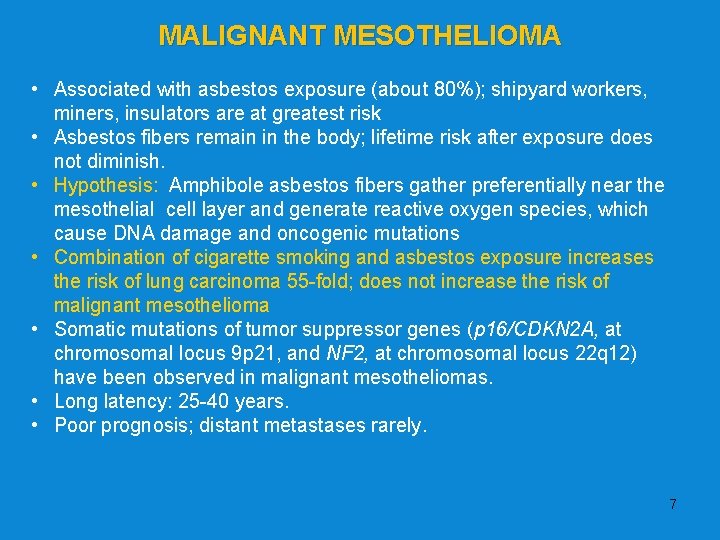
MALIGNANT MESOTHELIOMA • Associated with asbestos exposure (about 80%); shipyard workers, miners, insulators are at greatest risk • Asbestos fibers remain in the body; lifetime risk after exposure does not diminish. • Hypothesis: Amphibole asbestos fibers gather preferentially near the mesothelial cell layer and generate reactive oxygen species, which cause DNA damage and oncogenic mutations • Combination of cigarette smoking and asbestos exposure increases the risk of lung carcinoma 55 -fold; does not increase the risk of malignant mesothelioma • Somatic mutations of tumor suppressor genes (p 16/CDKN 2 A, at chromosomal locus 9 p 21, and NF 2, at chromosomal locus 22 q 12) have been observed in malignant mesotheliomas. • Long latency: 25 -40 years. • Poor prognosis; distant metastases rarely. 7
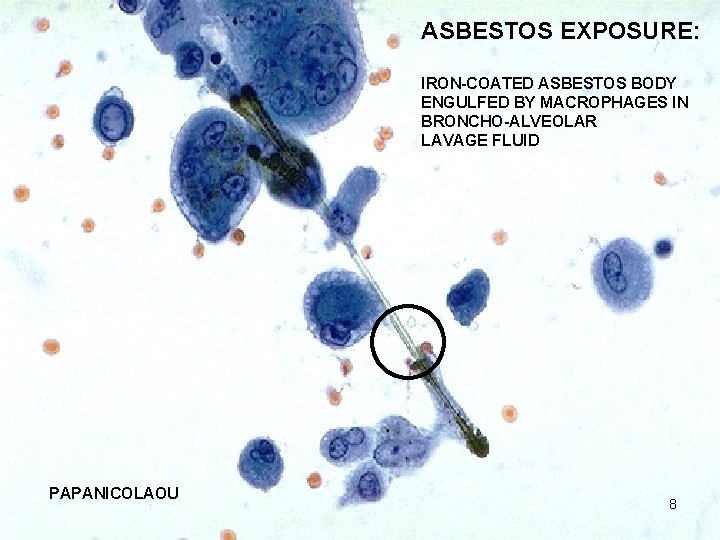
ASBESTOS EXPOSURE: IRON-COATED ASBESTOS BODY ENGULFED BY MACROPHAGES IN BRONCHO-ALVEOLAR LAVAGE FLUID PAPANICOLAOU 8
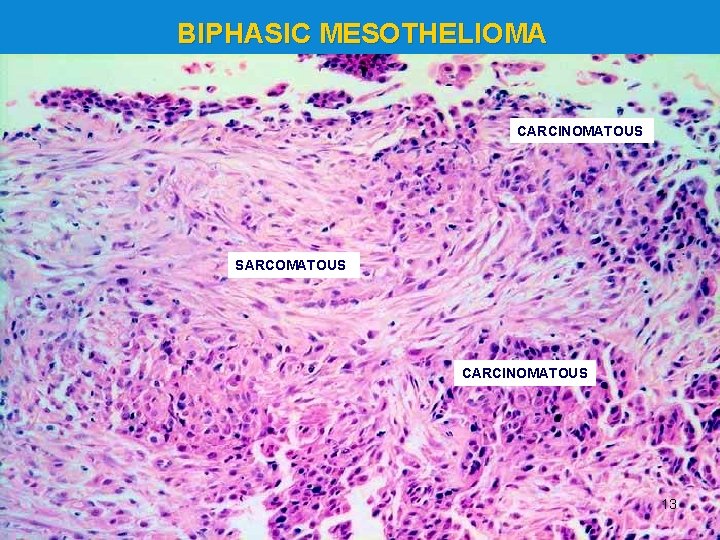
MALIGNANT MESOTHELIOMA HISTOLOGIC TYPES: Epithelioid: • The most common type • Small papillary buds project into tubular and microcystic spaces lined by cuboidal cells. • The type most often confused with a primary lung adenocarcinoma or a metastatic adenocarcinoma to the lung Sarcomatoid: • Spindled and fibroblastic-appearing cells grow in nondistinctive sheets Biphasic: • Both sarcomatous and epithelial areas. 9
MALIGNANT MESOTHELIOMA, EPITHELIOID TYPE PLEURAL FLUID PAPANICOLAOU 10
EPITHELIAL MESOTHELIOMA • May have a biphasic pattern with epithelial-appearing carcinomatous and fibrousappearing sarcomatous elements PSAMMOMA BODIES • Psammoma bodies – Often seen in both benign and malignant papillary lesions • Differential diagnosis with adenocarcinoma often difficult • Immunocytochemistry and EM (long, thin microvilli) are helpful in difficult diagnosis 11
SARCOMATOID MESOTHELIOMA DIAPHRAGM PLEURAL MESOTHELIOMA INFILTRATES INTO THE DIAPHRAGM PERITONEUM 12 SKELETAL MUSCLE CELLS
BIPHASIC MESOTHELIOMA CARCINOMATOUS SARCOMATOUS CARCINOMATOUS 13
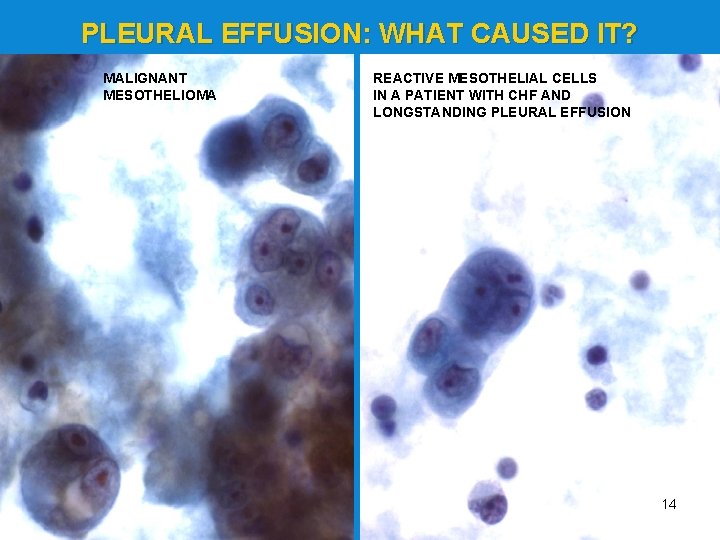
PLEURAL EFFUSION: WHAT CAUSED IT? MALIGNANT MESOTHELIOMA REACTIVE MESOTHELIAL CELLS IN A PATIENT WITH CHF AND LONGSTANDING PLEURAL EFFUSION 14
CARCINOMAS OF THE MOUTH, OROPHARYNCX AND LARYNX • 95% of the head and neck tumors are squamous cell carcinomas • Used to be disease of middle aged men • Incidence of head and neck carcinomas in women is on the rise (tobacco) • Incidence of oral cancer in individuals <40 with no known risk factors is on the rise (etiology? ) 15
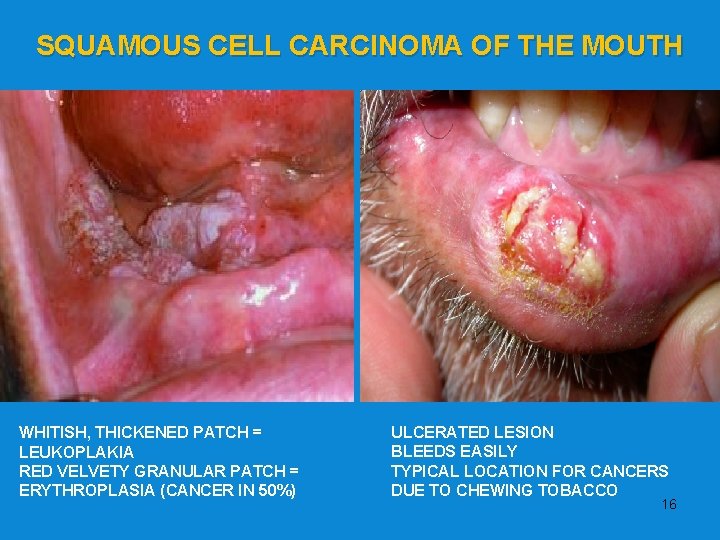
SQUAMOUS CELL CARCINOMA OF THE MOUTH WHITISH, THICKENED PATCH = LEUKOPLAKIA RED VELVETY GRANULAR PATCH = ERYTHROPLASIA (CANCER IN 50%) ULCERATED LESION BLEEDS EASILY TYPICAL LOCATION FOR CANCERS DUE TO CHEWING TOBACCO 16
SQUAMOUS CELL CARCINOMA OF THE MOUTH • The most common (95%) oral malignant tumor • Incidence: 20, 000 new cases per year in US • Male : female = 8: 1 • Arises from foci of dysplastic epithelium • Common locations vermilion border of lateral margins of lower lip, floor of mouth, lateral borders of tongue • Oral cancer is associated with tobacco, alcohol, and HPV; lip cancer with tobacco and UV-light • Chronic mechanical irritation may act as a promoter 17
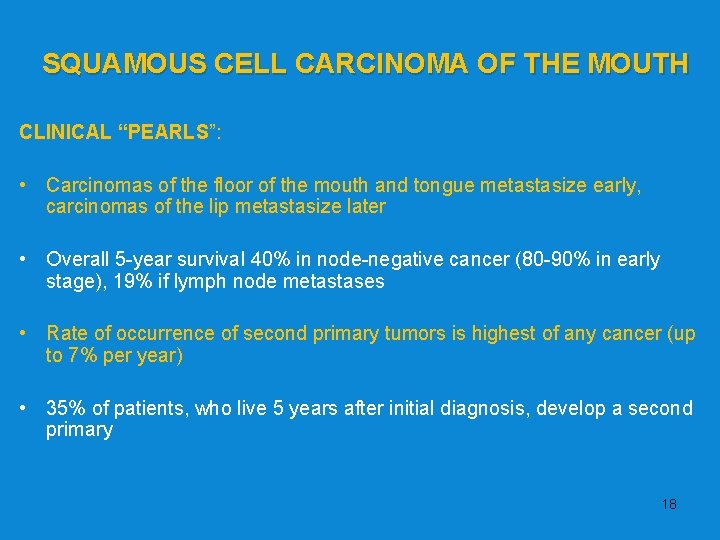
SQUAMOUS CELL CARCINOMA OF THE MOUTH CLINICAL “PEARLS”: • Carcinomas of the floor of the mouth and tongue metastasize early, carcinomas of the lip metastasize later • Overall 5 -year survival 40% in node-negative cancer (80 -90% in early stage), 19% if lymph node metastases • Rate of occurrence of second primary tumors is highest of any cancer (up to 7% per year) • 35% of patients, who live 5 years after initial diagnosis, develop a second primary 18
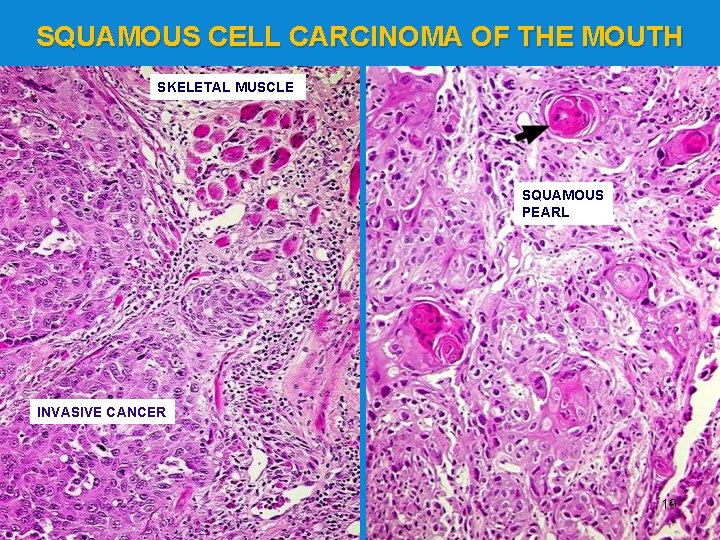
SQUAMOUS CELL CARCINOMA OF THE MOUTH SKELETAL MUSCLE SQUAMOUS PEARL INVASIVE CANCER 19
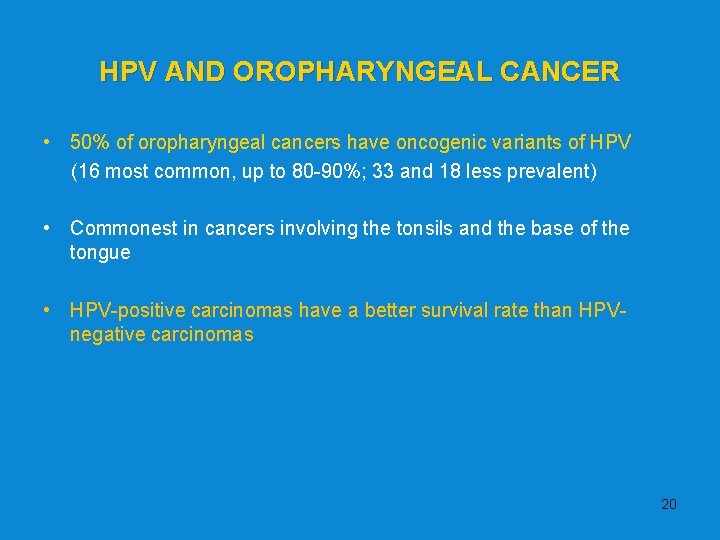
HPV AND OROPHARYNGEAL CANCER • 50% of oropharyngeal cancers have oncogenic variants of HPV (16 most common, up to 80 -90%; 33 and 18 less prevalent) • Commonest in cancers involving the tonsils and the base of the tongue • HPV-positive carcinomas have a better survival rate than HPVnegative carcinomas 20
NASOPHARYNGEAL CARCINOMA • Rare; most common in Chinese people • AKA lymphoepithelioma (bad name), because of heavy infiltration by benign lymphocytes • Strong epidemiologic link to EB-virus infection: - EBV is found in close to 100% of cases - Replication of virus in epithelium occurs first, followed by infection of tonsillar B-lymphocytes, then malignant transformation of epithelial cells • Keratinizing and non-keratinizing squamous cell carcinoma and undifferentiated carcinoma (most common) • Tumors invade locally and metastasize to cervical lymph nodes and beyond • Radiosensitive; the undifferentiated variant responds the best • 80% 5 -year survival in stage I; 20 -50% 5 -year survival in stage IV 21
NASOPHARYNGEAL CARCINOMA Variants: • Keratinizing and non-keratinizing squamous cell carcinoma and undifferentiated carcinoma (most common) • Tumors invade locally and metastasize to cervical lymph nodes and beyond • Radiosensitive; the undifferentiated variant responds the best • 80% 5 -year survival in stage I; 20 -50% 5 -year survival in stage IV 22
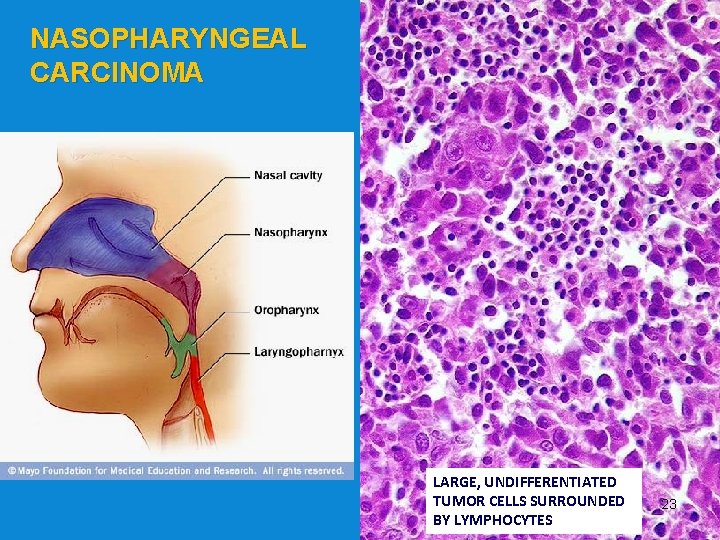
NASOPHARYNGEAL CARCINOMA LARGE, UNDIFFERENTIATED TUMOR CELLS SURROUNDED BY LYMPHOCYTES 23
BENIGN TUMORS OF THE LARYNX • VOCAL CORD NODULES - Not true tumors - Occur in heavy smokers and those, who abuse their voice • SQUAMOUS PAPILLOMA - Benign - Single in adults • JUVENILE LARYNGEAL PAPILLOMATOSIS - Often multiple - Often recurs - Caused by HPV 6 and 11 - Virus may be acquired during vaginal delivery 24
CARCINOMA OF THE LARYNX • 2% of all cancers • Occurs after the age of 40, mean age in the 6 th and 7 th decades • Male : female = 7: 1 • Nearly all cases occur in smokers (alcohol and asbestos exposure may play a role) • 10% of patients may have a synchronous squamous cell carcinoma in the lower or upper aerodigestive tract, most often in the esophagus or lungs. Laryngeal cancer - Cancer of the larynx - Introduction, Etiology and Pathology, Symptoms | health. am http: //www. health. am/cr/laryngealcancer/#ixzz 5 Cexagsrr 25
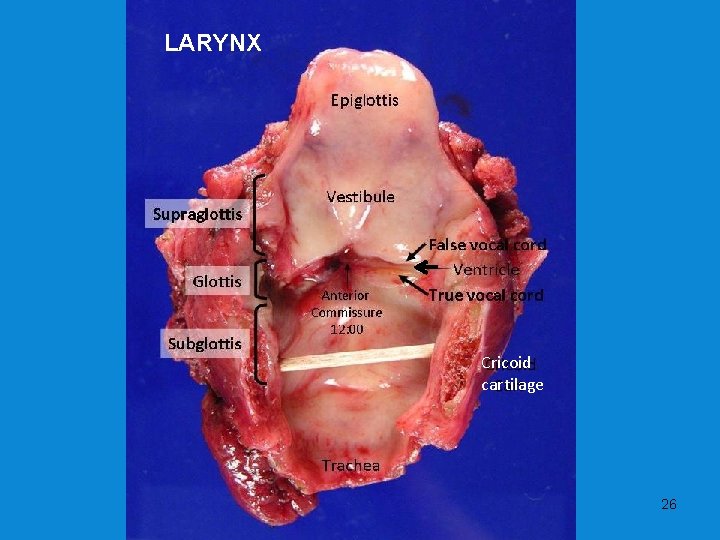
LARYNX Cricoid cartilage 26
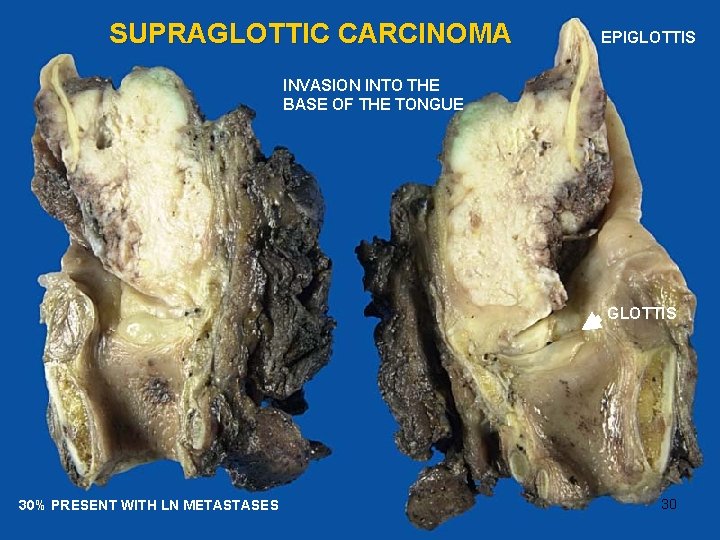
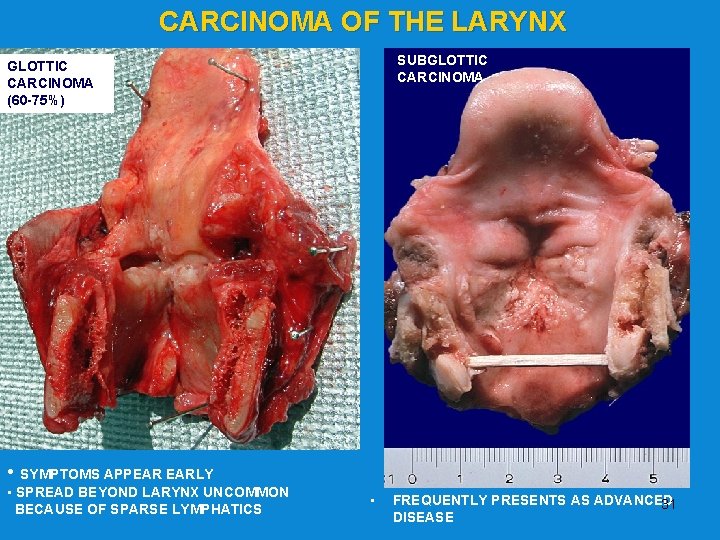
CARCINOMA OF THE LARYNX • 95% are squamous carcinomas • Glottic, 60 -75% • - symptoms early - spread beyond larynx uncommon (sparse lymphatics in glottis) • Supraglottic, 25 -40% - 30% present with cervical lymph node metastases • Subglottic, Less than 5% • - Frequently present as advanced disease 27
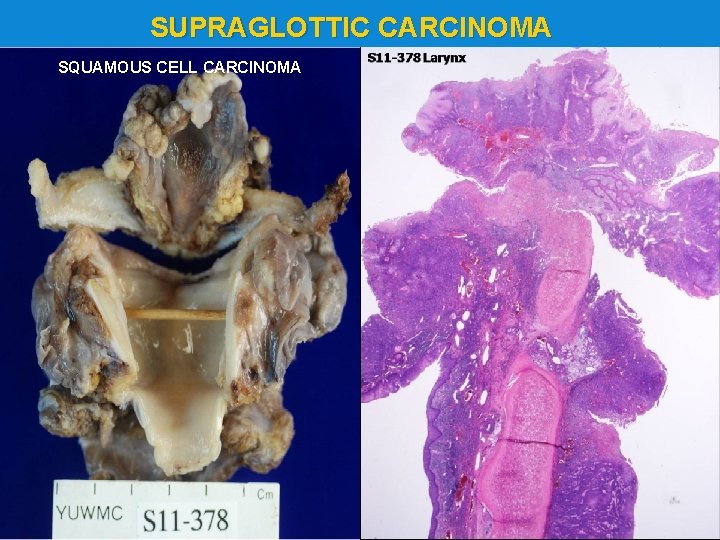
SUPRAGLOTTIC CARCINOMA SQUAMOUS CELL CARCINOMA 28
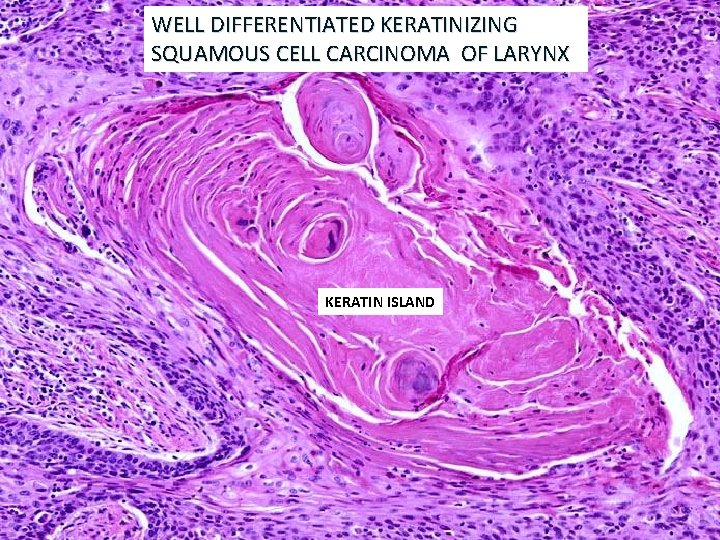
WELL DIFFERENTIATED KERATINIZING SQUAMOUS CELL CARCINOMA OF LARYNX KERATIN ISLAND 29
SUPRAGLOTTIC CARCINOMA EPIGLOTTIS INVASION INTO THE BASE OF THE TONGUE GLOTTIS 30% PRESENT WITH LN METASTASES 30
CARCINOMA OF THE LARYNX SUBGLOTTIC CARCINOMA (60 -75%) • SYMPTOMS APPEAR EARLY • SPREAD BEYOND LARYNX UNCOMMON BECAUSE OF SPARSE LYMPHATICS • FREQUENTLY PRESENTS AS ADVANCED 31 DISEASE
QUESTIONS? 32