Trauma System in Malaysia An experience in University





- Slides: 27
Trauma System in Malaysia: An experience in University Malaya Medical Centre Assoc Prof Dr Mohd Idzwan bin Zakaria Consultant Emergency Physician UMMC President College of Emergency Physicians Academy of Medicine Malaysia
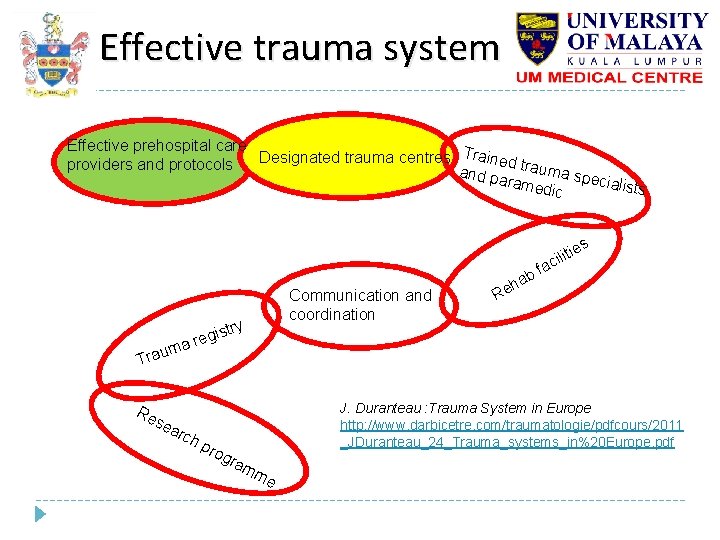
Effective trauma system Effective prehospital care Designated trauma centres Trained tr providers and protocols aum and p arame a specialis ts dic stry Communication and coordination b ha tie i l i c s fa Re gi a re m Trau Re sea rch pro gra J. Duranteau : Trauma System in Europe http: //www. darbicetre. com/traumatologie/pdfcours/2011 _JDuranteau_24_Trauma_systems_in%20 Europe. pdf mm e
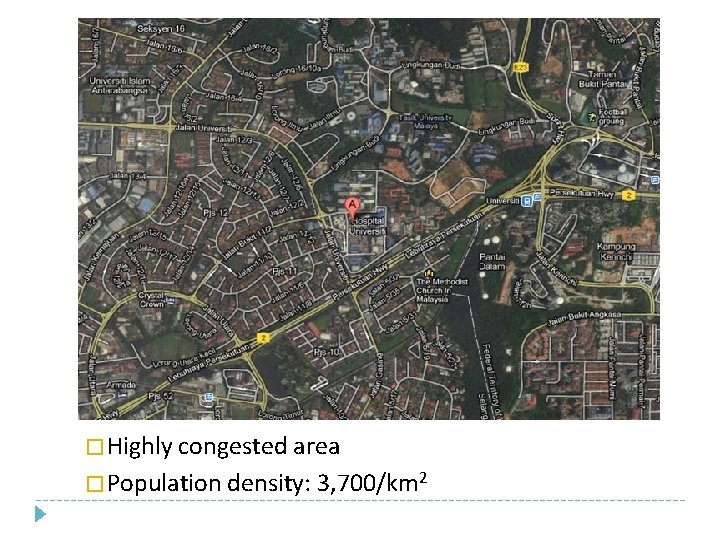
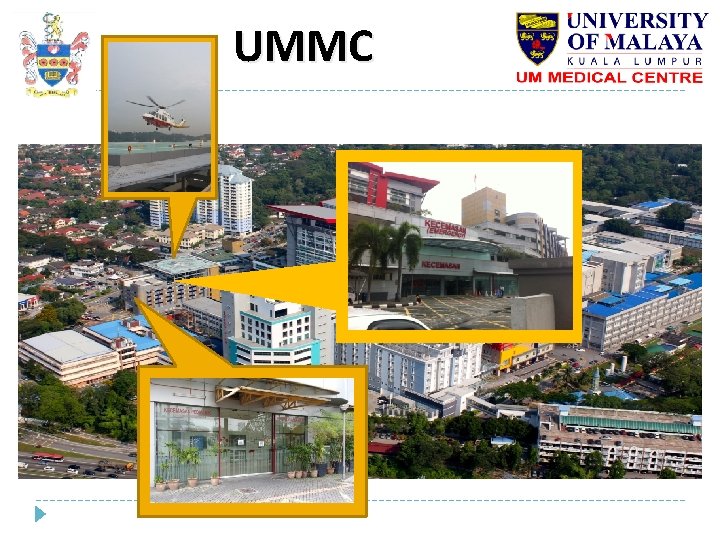
University Malaya Medical Centre (UMMC) Tertiary referral centre Oldest university hospital in Malaysia Government funded public hospital Approximately 1700 nurses and paramedics and 800 doctors Annual patients’ attendance: 100, 000/year Catchment area for pre hospital care: 25 km radius
� Highly congested area � Population density: 3, 700/km 2
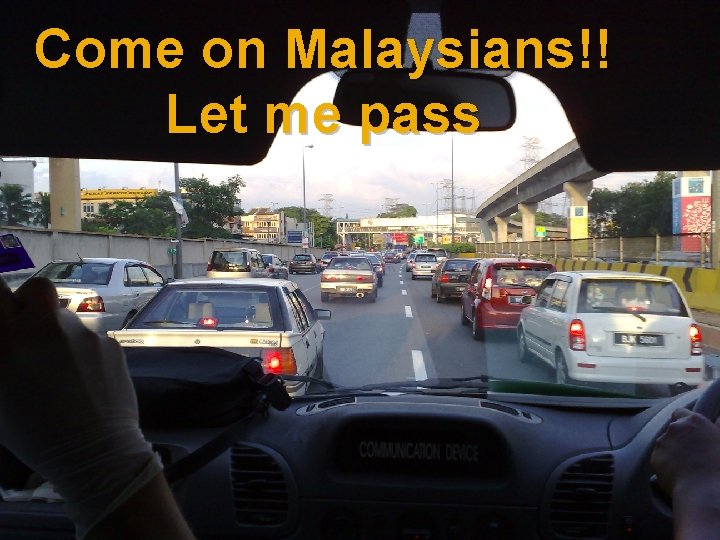
Come on Malaysians!! Let me pass
UMMC
UMMC
Objectives Establishment of a trauma team in UMMC Trauma outcomes after trauma team Current improvement activities Closing the loop
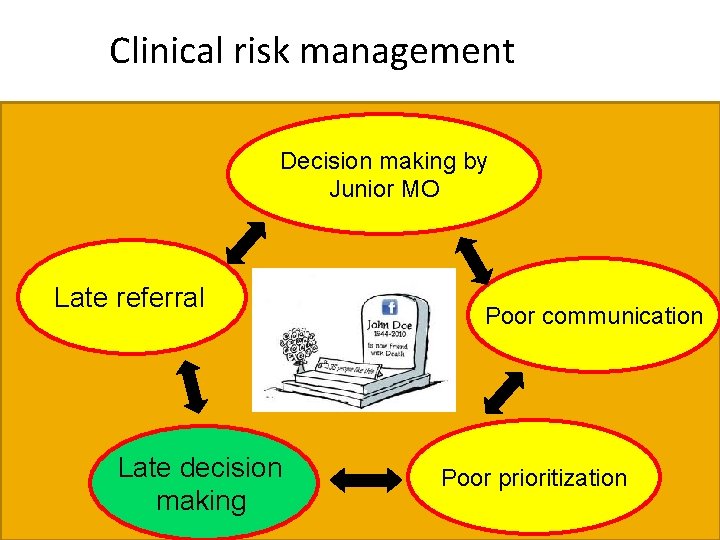
Clinical risk management Decision making by Junior MO Late referral Late decision making Poor communication Poor prioritization
System improvement Blame game Patient safety
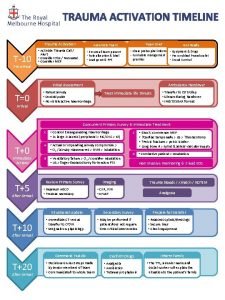
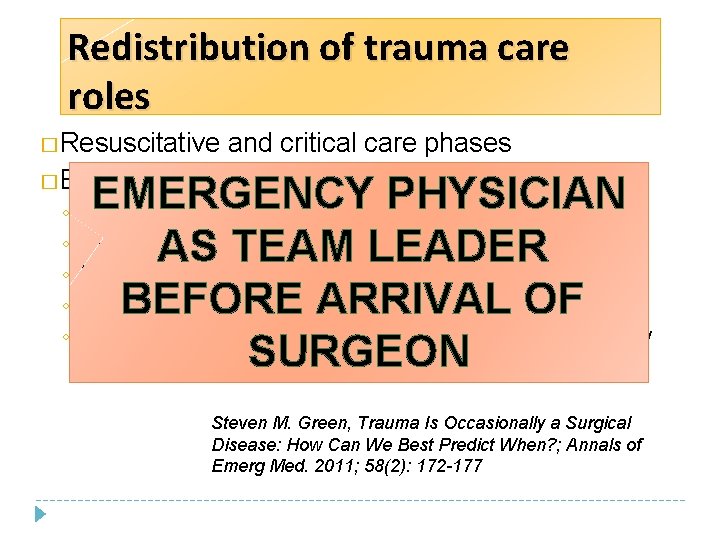
Redistribution of trauma care roles � Resuscitative and critical care phases � Emergency physicians ◦ ◦ ◦ EMERGENCY PHYSICIAN AS TEAM LEADER BEFORE ARRIVAL OF SURGEON ATLS or MTLS trained Expert in trauma resuscitation and core procedures Privileging process and credentialed Currently at least 2 -3 EPs in a hospital with specialists Able to direct trauma team before definitive treatment by surgeons (high-risk patients) Steven M. Green, Trauma Is Occasionally a Surgical Disease: How Can We Best Predict When? ; Annals of Emerg Med. 2011; 58(2): 172 -177
Surgeon then act as team leader once arrived � It is of course critical that skilled surgeons be quickly available because injured patients will occasionally die without rapid operative intervention. Steven M. Green, Trauma Is Occasionally a Surgical Disease: How Can We Best Predict When? ; Annals of Emerg Med. 2011; 58(2): 172 -177 THIS IS OUR ISSUE IN ED INITIALLY
Study on outcome � 1 st January until 31 st July 2011 (trauma team activated group: TTA) � 7 months � Compared with 9 th May 2010 until 19 th December 2010 (trauma team non activated: TTNA) � Samples with ISS > 15 � Main outcome measure: survival to discharge
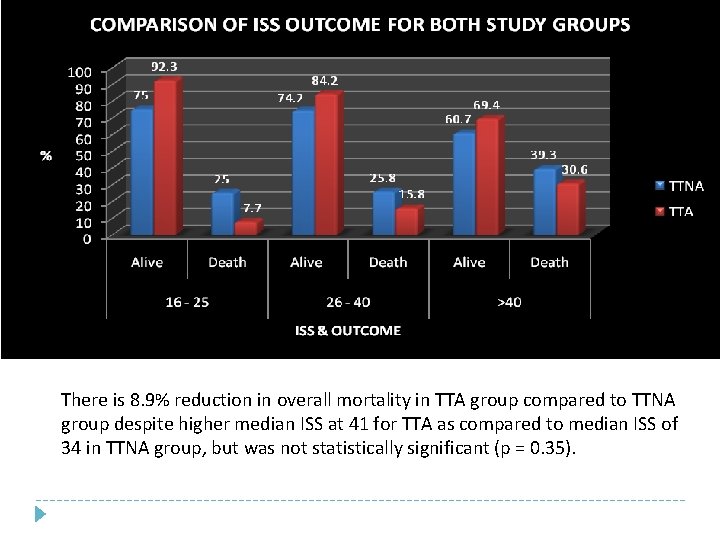
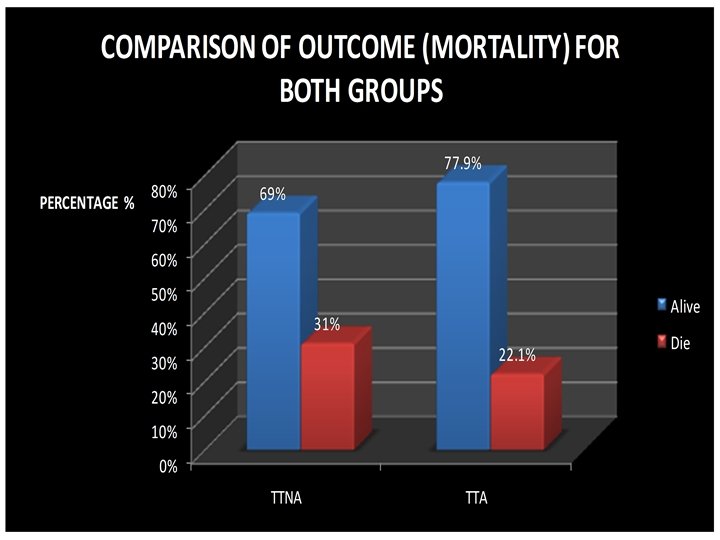
There is 8. 9% reduction in overall mortality in TTA group compared to TTNA group despite higher median ISS at 41 for TTA as compared to median ISS of 34 in TTNA group, but was not statistically significant (p = 0. 35).
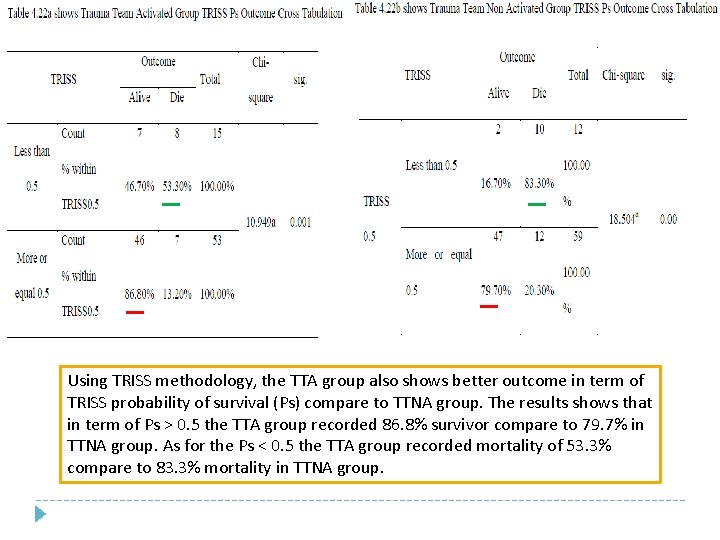
Using TRISS methodology, the TTA group also shows better outcome in term of TRISS probability of survival (Ps) compare to TTNA group. The results shows that in term of Ps > 0. 5 the TTA group recorded 86. 8% survivor compare to 79. 7% in TTNA group. As for the Ps < 0. 5 the TTA group recorded mortality of 53. 3% compare to 83. 3% mortality in TTNA group.
Discussion � Outcome has improved but difference is insignificant � Small sample size � Some confounding factors �Different level of experience and training of the EPs, surgeons, anaesthetists and medical officers (EM Med and others) �Availability of ICU �Pre hospital care issues
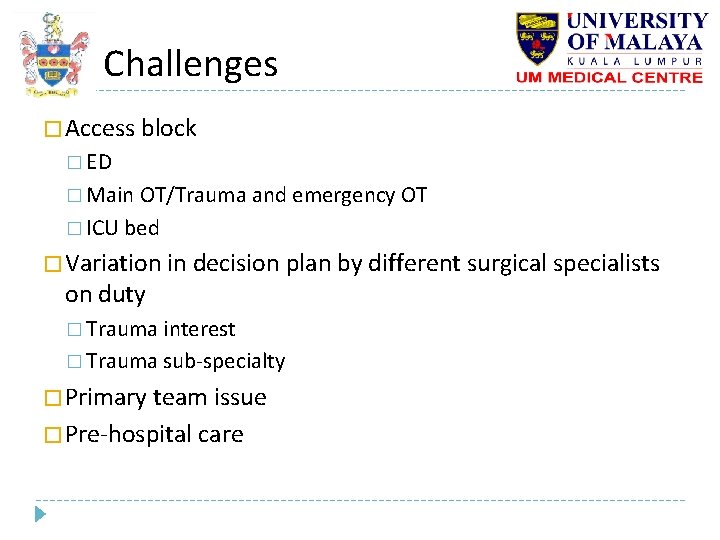
Challenges � Access block � ED � Main OT/Trauma and emergency OT � ICU bed � Variation in decision plan by different surgical specialists on duty � Trauma interest � Trauma sub-specialty � Primary team issue � Pre-hospital care
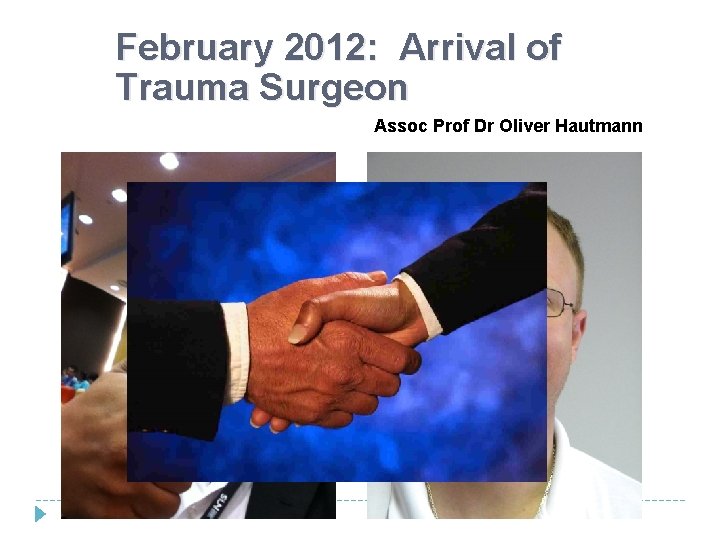
February 2012: Arrival of Trauma Surgeon Assoc Prof Dr Oliver Hautmann
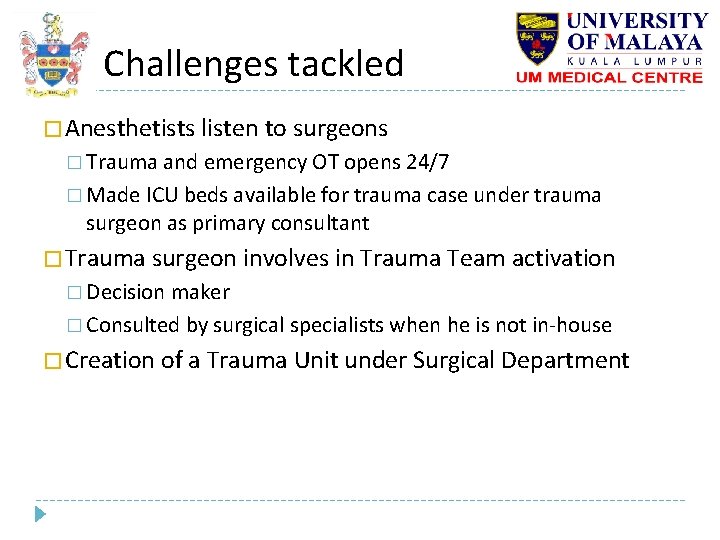
Challenges tackled � Anesthetists listen to surgeons � Trauma and emergency OT opens 24/7 � Made ICU beds available for trauma case under trauma surgeon as primary consultant � Trauma surgeon involves in Trauma Team activation � Decision maker � Consulted by surgical specialists when he is not in-house � Creation of a Trauma Unit under Surgical Department
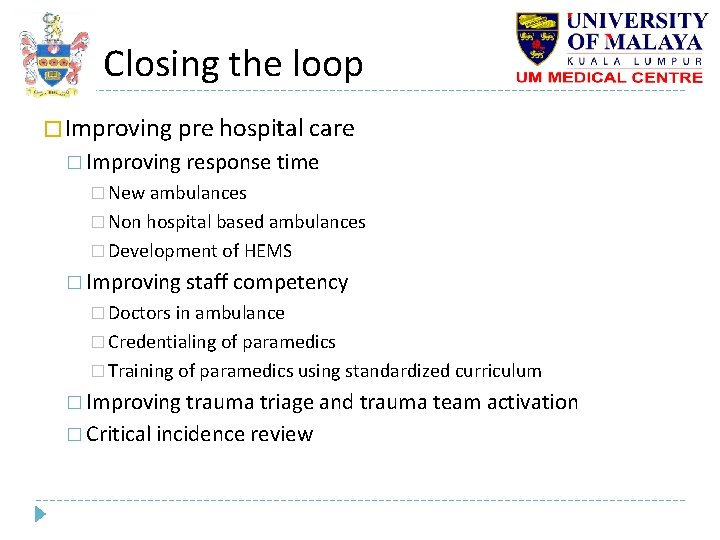
Closing the loop � Improving pre hospital care � Improving response time � New ambulances � Non hospital based ambulances � Development of HEMS � Improving staff competency � Doctors in ambulance � Credentialing of paramedics � Training of paramedics using standardized curriculum � Improving trauma triage and trauma team activation � Critical incidence review
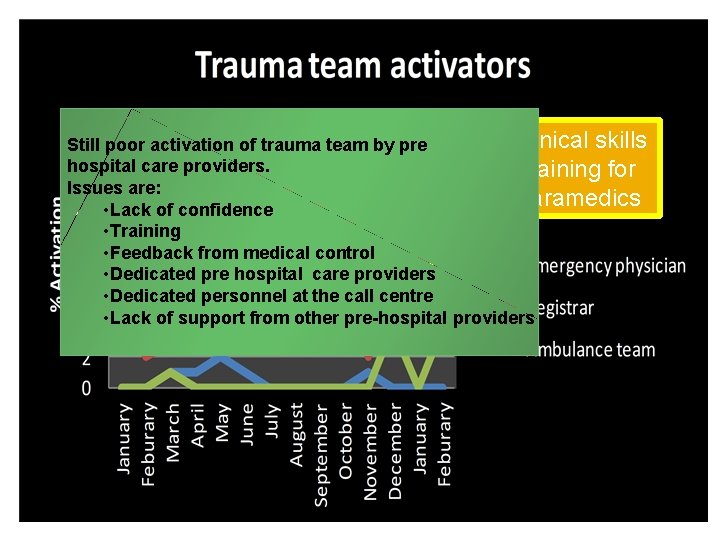
Clinical skills Still poor activation of trauma team by pre hospital care providers. training for Issues are: paramedics • Lack of confidence • Training • Feedback from medical control • Dedicated pre hospital care providers • Dedicated personnel at the call centre • Lack of support from other pre-hospital providers
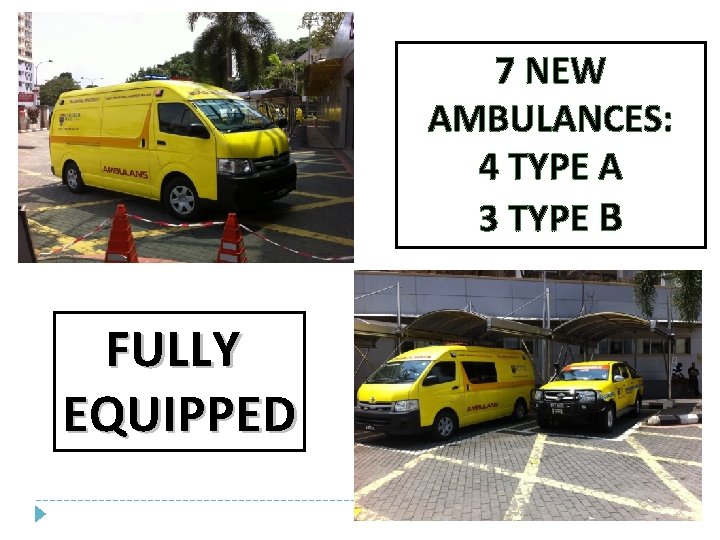
7 NEW AMBULANCES: 4 TYPE A 3 TYPE B FULLY EQUIPPED
Helicopter emergency medical service (HEMS) � Involve G to G
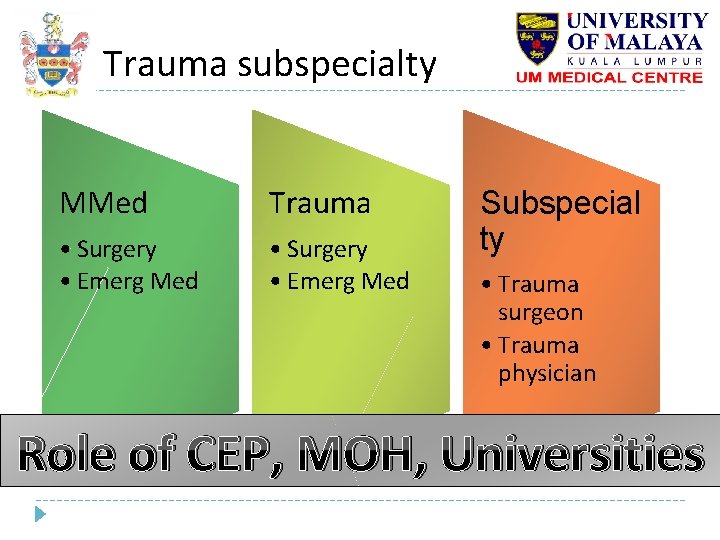
Trauma subspecialty MMed Trauma • Surgery • Emerg Med Subspecial ty • Trauma surgeon • Trauma physician Role of CEP, MOH, Universities
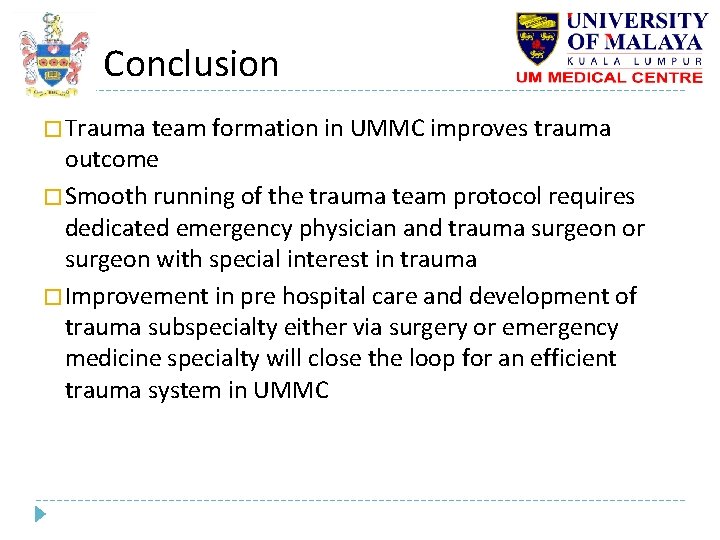
Conclusion � Trauma team formation in UMMC improves trauma outcome � Smooth running of the trauma team protocol requires dedicated emergency physician and trauma surgeon or surgeon with special interest in trauma � Improvement in pre hospital care and development of trauma subspecialty either via surgery or emergency medicine specialty will close the loop for an efficient trauma system in UMMC
Thank you idzwan@ummc. edu. my