transferring a phosphate group to another molecule phosphorylation
- Slides: 24
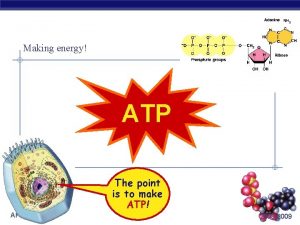
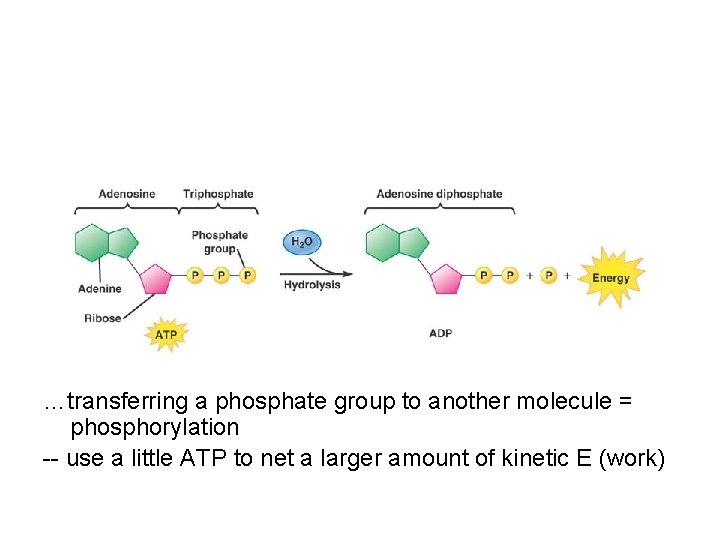
…transferring a phosphate group to another molecule = phosphorylation -- use a little ATP to net a larger amount of kinetic E (work)
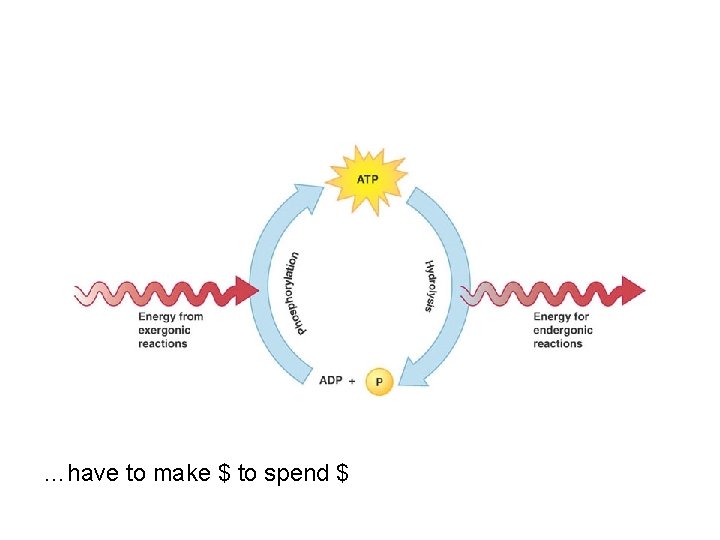
…have to make $ to spend $
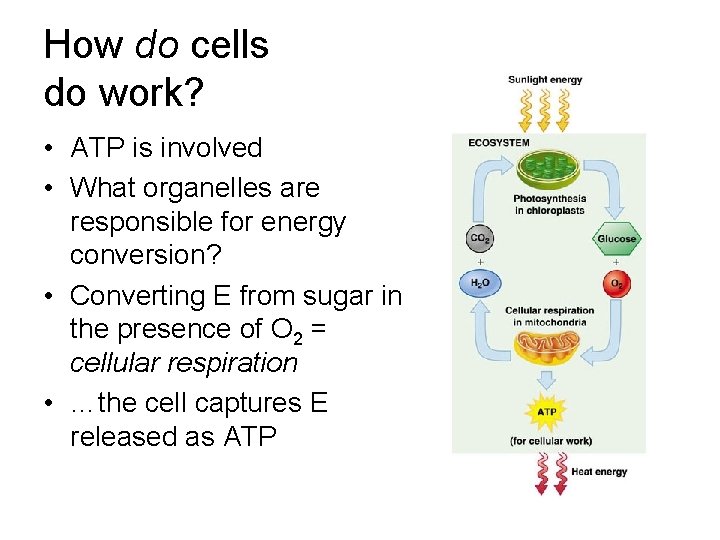
How do cells do work? • ATP is involved • What organelles are responsible for energy conversion? • Converting E from sugar in the presence of O 2 = cellular respiration • …the cell captures E released as ATP
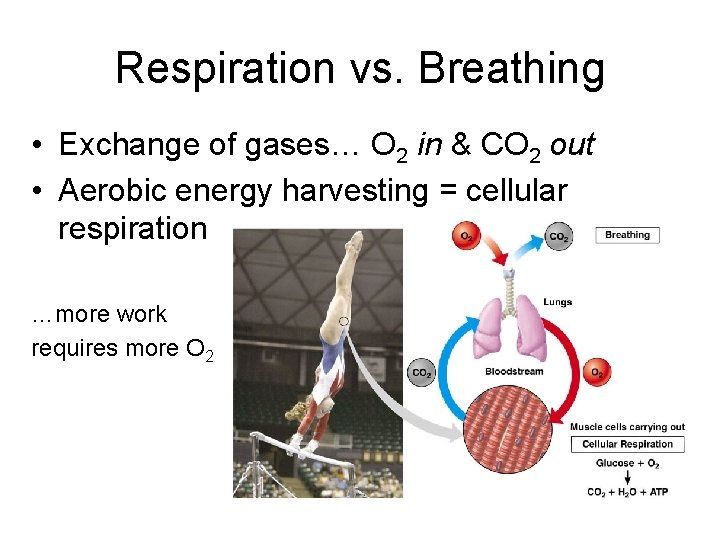
Respiration vs. Breathing • Exchange of gases… O 2 in & CO 2 out • Aerobic energy harvesting = cellular respiration …more work requires more O 2
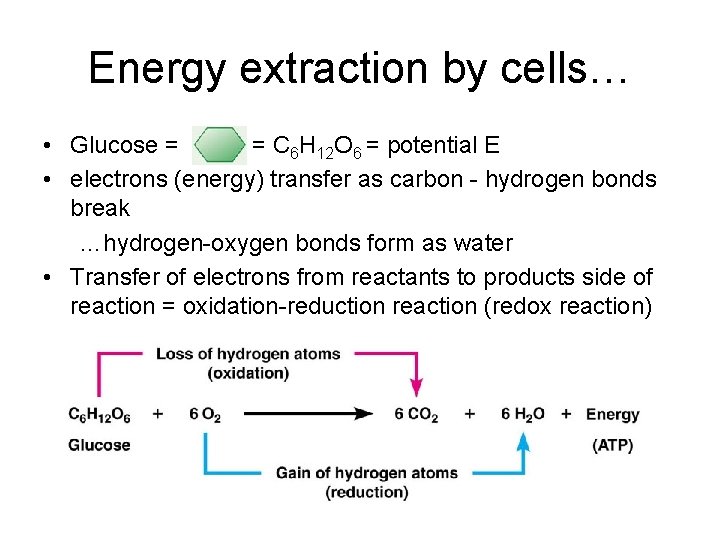
Energy extraction by cells… • Glucose = = C 6 H 12 O 6 = potential E • electrons (energy) transfer as carbon - hydrogen bonds break …hydrogen-oxygen bonds form as water • Transfer of electrons from reactants to products side of reaction = oxidation-reduction reaction (redox reaction)
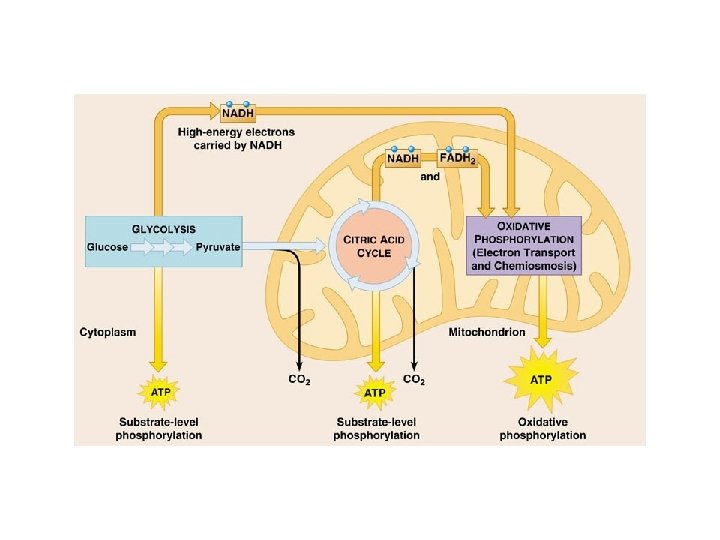
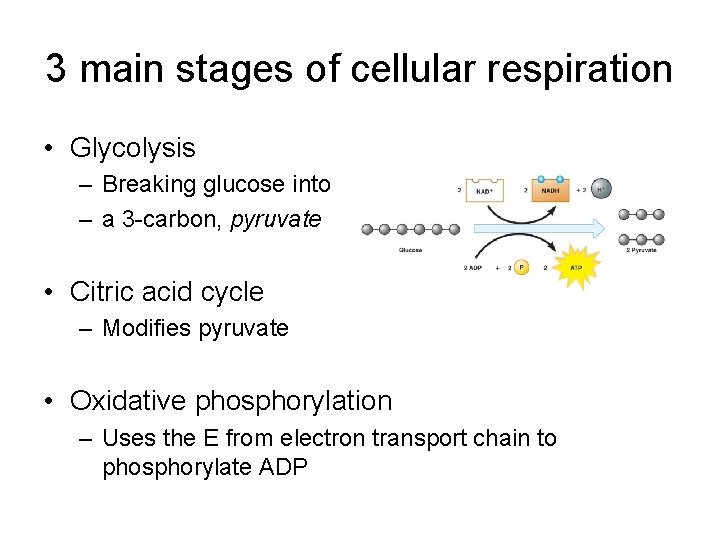
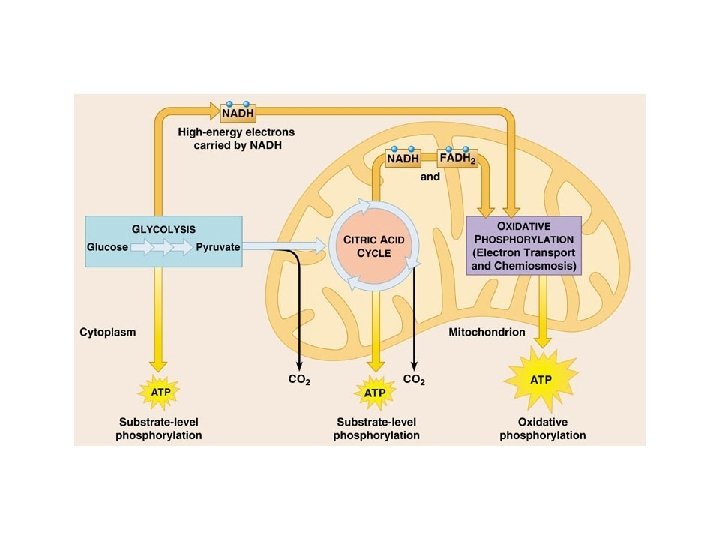
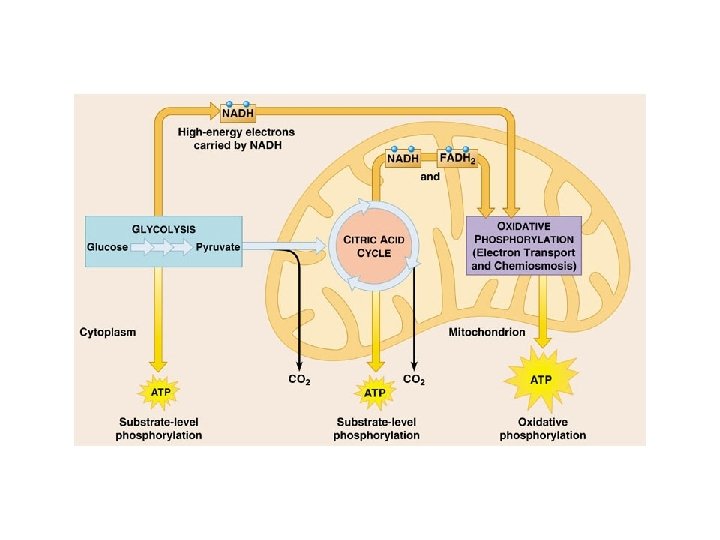
3 main stages of cellular respiration • Glycolysis – Breaking glucose into – a 3 -carbon, pyruvate • Citric acid cycle – Modifies pyruvate • Oxidative phosphorylation – Uses the E from electron transport chain to phosphorylate ADP
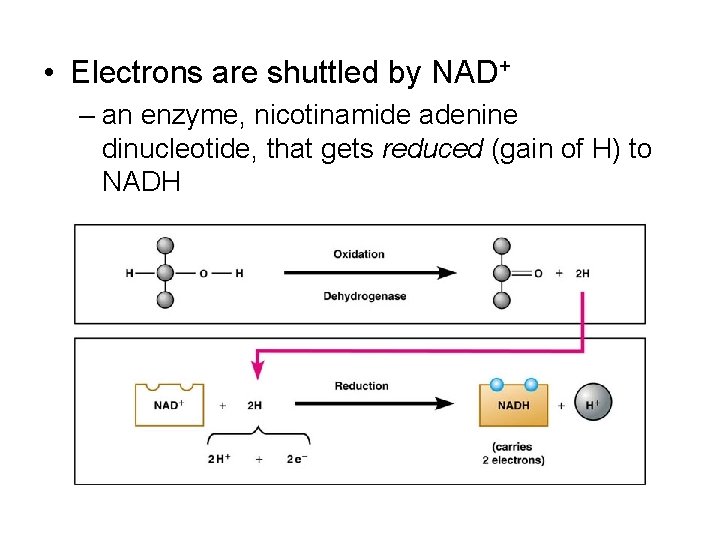
• Electrons are shuttled by NAD+ – an enzyme, nicotinamide adenine dinucleotide, that gets reduced (gain of H) to NADH
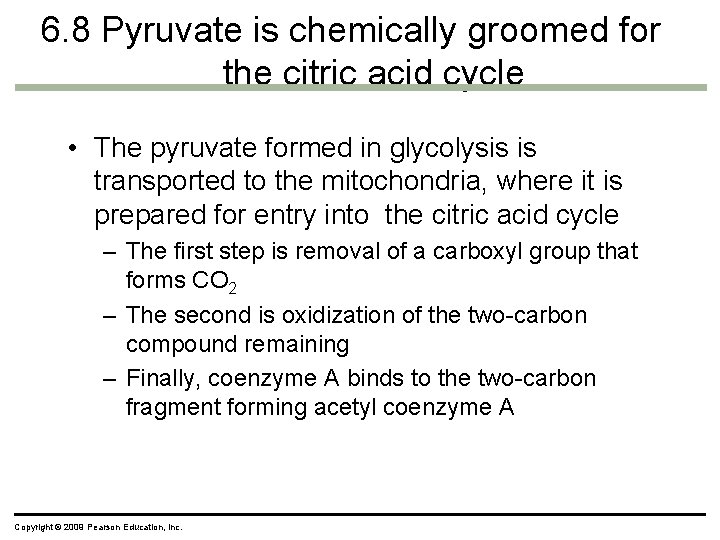
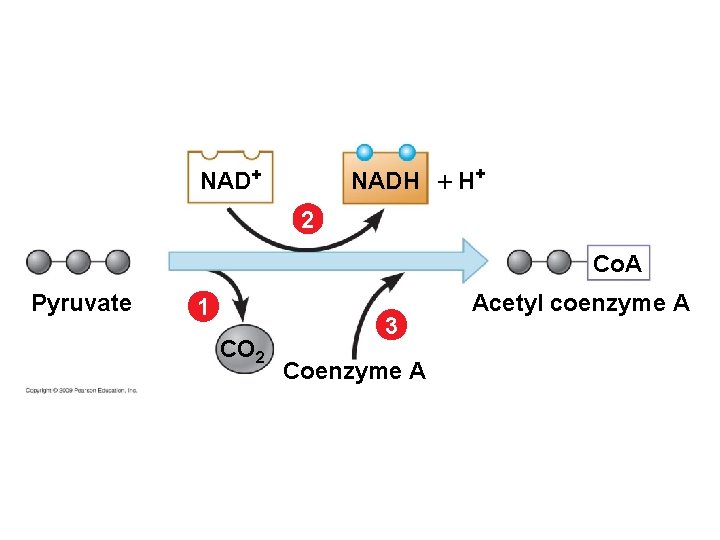
6. 8 Pyruvate is chemically groomed for the citric acid cycle • The pyruvate formed in glycolysis is transported to the mitochondria, where it is prepared for entry into the citric acid cycle – The first step is removal of a carboxyl group that forms CO 2 – The second is oxidization of the two-carbon compound remaining – Finally, coenzyme A binds to the two-carbon fragment forming acetyl coenzyme A Copyright © 2009 Pearson Education, Inc.
NADH H+ NAD+ 2 Co. A Pyruvate 1 CO 2 3 Coenzyme A Acetyl coenzyme A
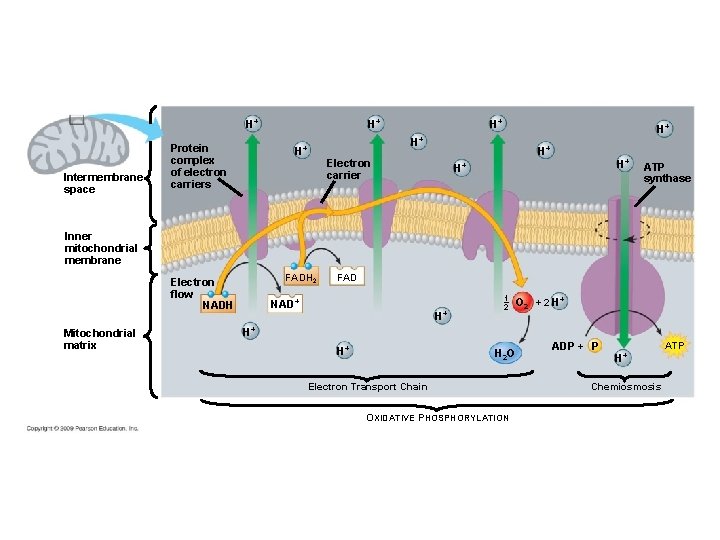
6. 10 Most ATP production occurs by oxidative phosphorylation • Oxidative phosphorylation involves electron transport and chemiosmosis and requires an adequate supply of oxygen – NADH and FADH 2 and the inner membrane of the mitochondria are also involved – A H+ ion gradient formed from all of the redox reactions of glycolysis and the citric acid cycle provide energy for the synthesis of ATP Copyright © 2009 Pearson Education, Inc.
Intermembrane space Protein complex of electron carriers H+ H+ Electron carrier H+ H+ ATP synthase Inner mitochondrial membrane FADH 2 Electron flow NADH Mitochondrial matrix FAD NAD+ H+ 1 2 O 2 + 2 H+ H+ H+ H 2 O Electron Transport Chain OXIDATIVE PHOSPHORYLATION ADP + P H+ Chemiosmosis ATP
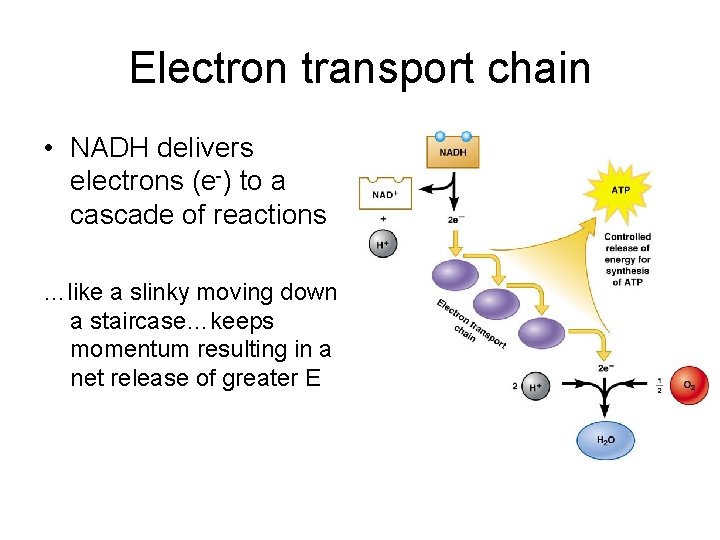
Electron transport chain • NADH delivers electrons (e-) to a cascade of reactions …like a slinky moving down a staircase…keeps momentum resulting in a net release of greater E
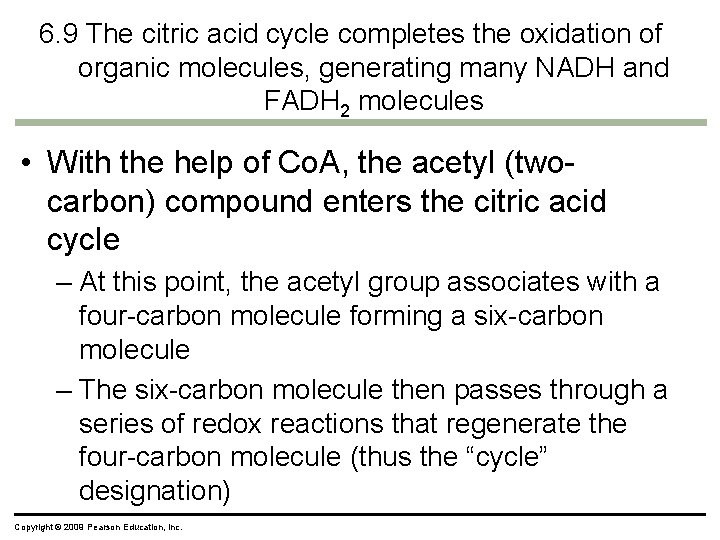
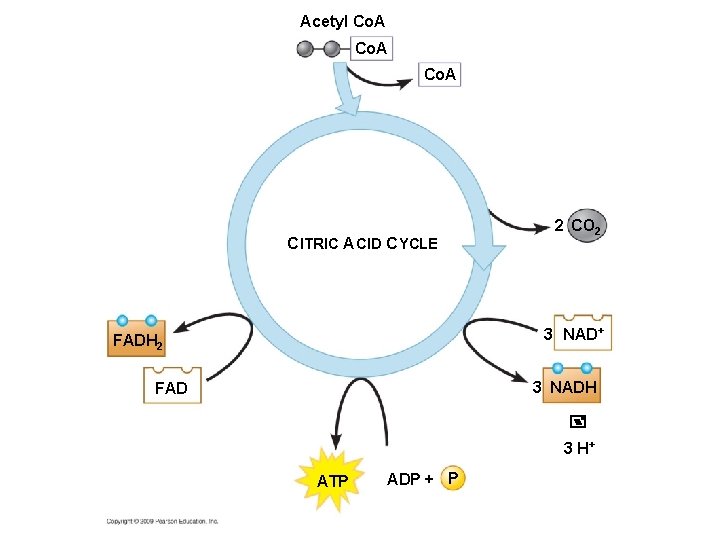
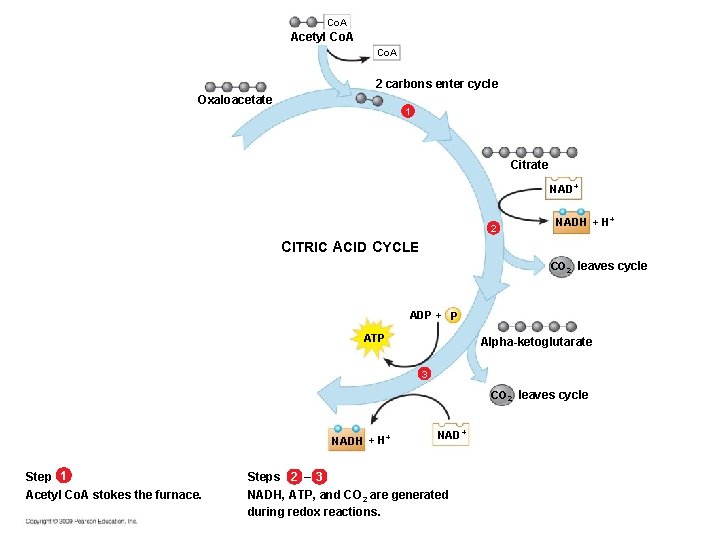
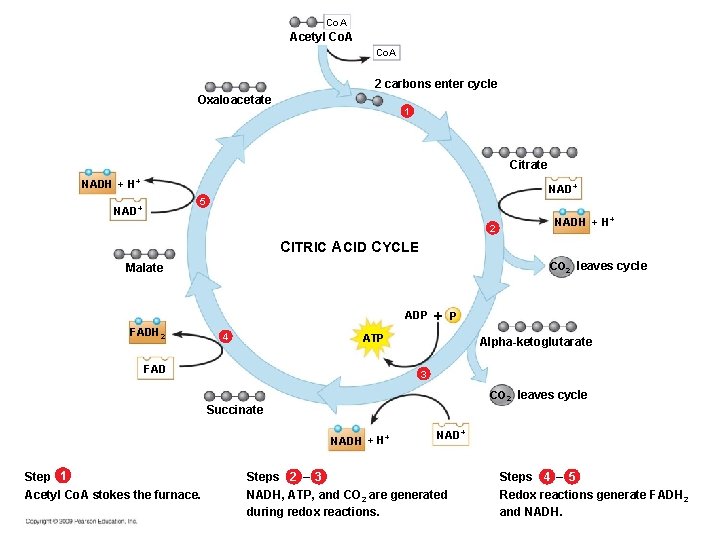
6. 9 The citric acid cycle completes the oxidation of organic molecules, generating many NADH and FADH 2 molecules • With the help of Co. A, the acetyl (twocarbon) compound enters the citric acid cycle – At this point, the acetyl group associates with a four-carbon molecule forming a six-carbon molecule – The six-carbon molecule then passes through a series of redox reactions that regenerate the four-carbon molecule (thus the “cycle” designation) Copyright © 2009 Pearson Education, Inc.
Acetyl Co. A CITRIC ACID CYCLE 2 CO 2 3 NAD+ FADH 2 3 NADH FAD 3 H+ ATP ADP + P
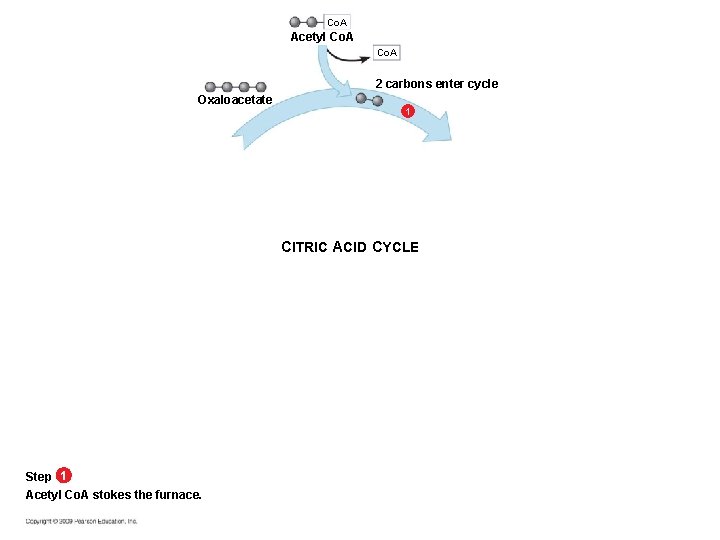
Co. A Acetyl Co. A 2 carbons enter cycle Oxaloacetate 1 CITRIC ACID CYCLE Step 1 Acetyl Co. A stokes the furnace.
Co. A Acetyl Co. A 2 carbons enter cycle Oxaloacetate 1 Citrate NAD+ 2 NADH + H+ CITRIC ACID CYCLE CO 2 leaves cycle ADP + P ATP Alpha-ketoglutarate 3 CO 2 leaves cycle NADH + H+ Step 1 Acetyl Co. A stokes the furnace. NAD+ Steps 2 – 3 NADH, ATP, and CO 2 are generated during redox reactions.
Co. A Acetyl Co. A 2 carbons enter cycle Oxaloacetate 1 Citrate NADH + H+ NAD+ 5 NAD+ 2 NADH + H+ CITRIC ACID CYCLE CO 2 leaves cycle Malate ADP P FADH 2 4 ATP FAD Alpha-ketoglutarate 3 CO 2 leaves cycle Succinate NADH + H+ Step 1 Acetyl Co. A stokes the furnace. NAD+ Steps 2 – 3 NADH, ATP, and CO 2 are generated during redox reactions. Steps 4 – 5 Redox reactions generate FADH 2 and NADH.
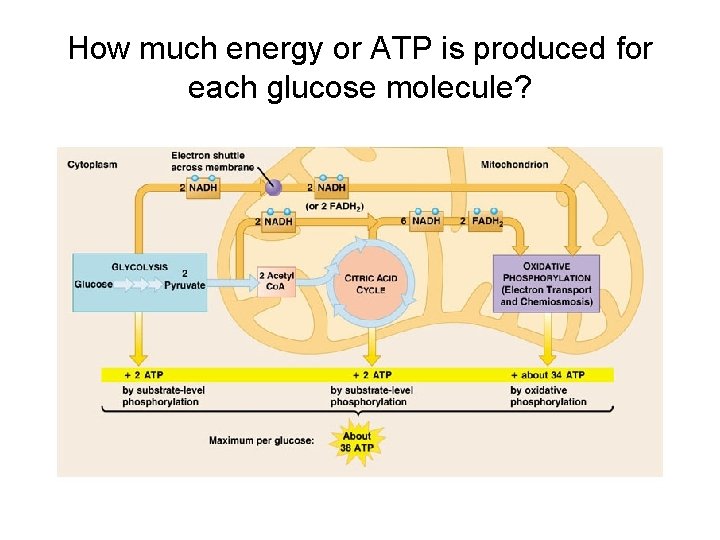
How much energy or ATP is produced for each glucose molecule?
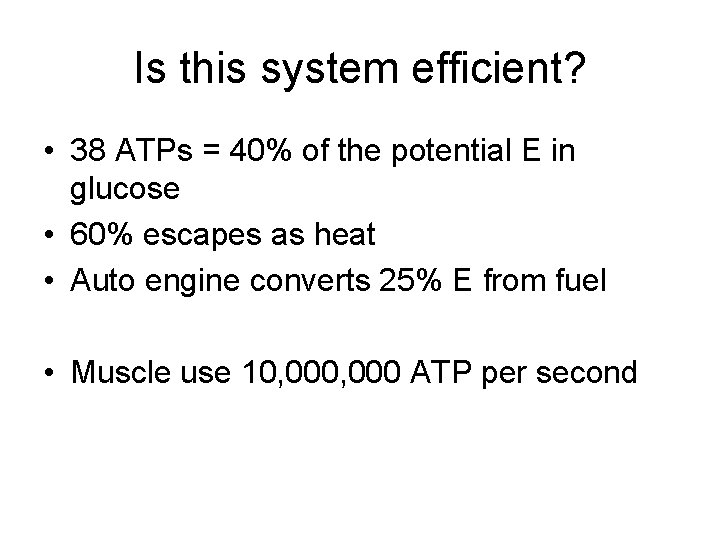
Is this system efficient? • 38 ATPs = 40% of the potential E in glucose • 60% escapes as heat • Auto engine converts 25% E from fuel • Muscle use 10, 000 ATP per second
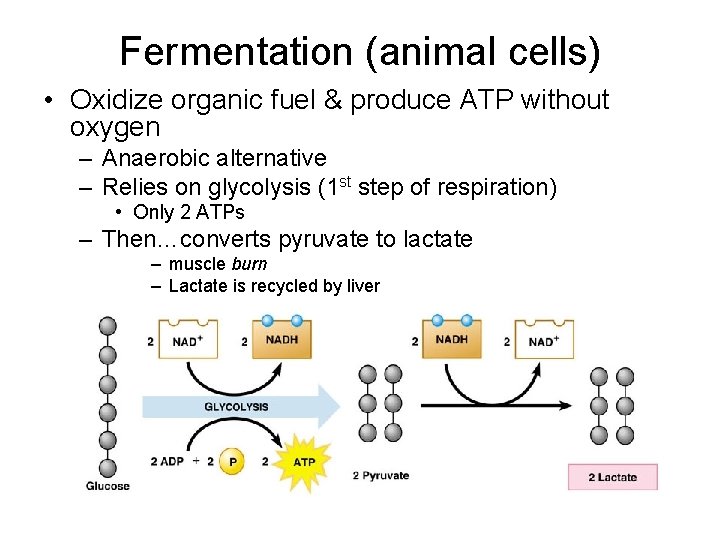
Fermentation (animal cells) • Oxidize organic fuel & produce ATP without oxygen – Anaerobic alternative – Relies on glycolysis (1 st step of respiration) • Only 2 ATPs – Then…converts pyruvate to lactate – muscle burn – Lactate is recycled by liver
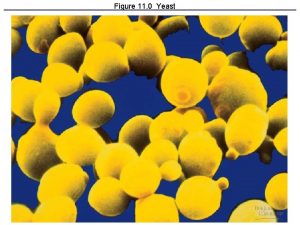
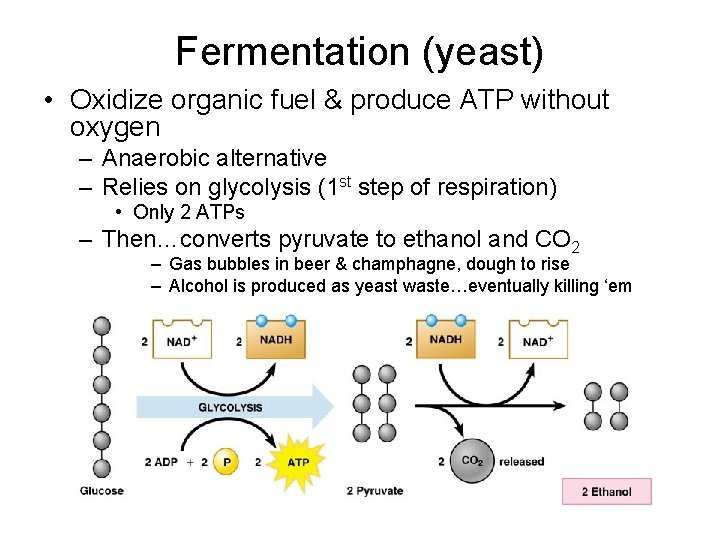
Fermentation (yeast) • Oxidize organic fuel & produce ATP without oxygen – Anaerobic alternative – Relies on glycolysis (1 st step of respiration) • Only 2 ATPs – Then…converts pyruvate to ethanol and CO 2 – Gas bubbles in beer & champhagne, dough to rise – Alcohol is produced as yeast waste…eventually killing ‘em