Traction In EDF Casting For EOS How Much

- Slides: 12
Traction In EDF Casting For EOS - How Much And What Happens? Shyam Kishan, M. D. Cody Shafer, MS 1 Indiana University – Riley Hospital for Children Indianapolis, Indiana USA
Disclosures • Shyam Kishan, M. D. : A; K 2 M. B; Globus, Medtronic • Cody Shafer: None
Introduction • While EDF Casting for Early Onset Scoliosis (EOS) has gained popularity and acceptance, little is known about the amount of traction needed for the technique. • Mehta described this as a very subjective feel of the traction straps. • No concrete values of the traction required in this technique were found in a Pub. Med search in English. • This study reports on the traction used in a consecutive series of EOS patients undergoing EDF casts, describing how much traction was used and the changes in traction during the procedure.
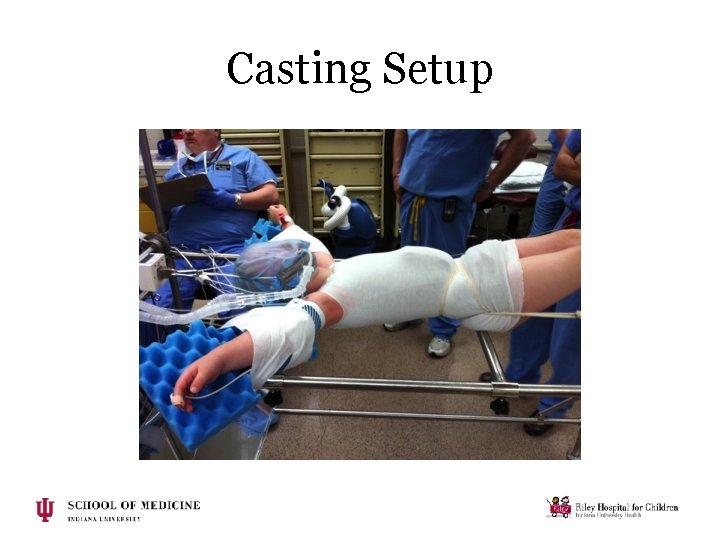
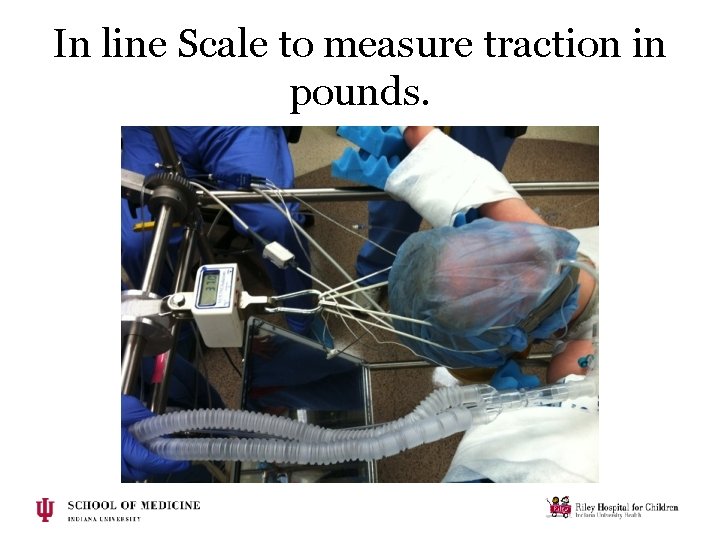
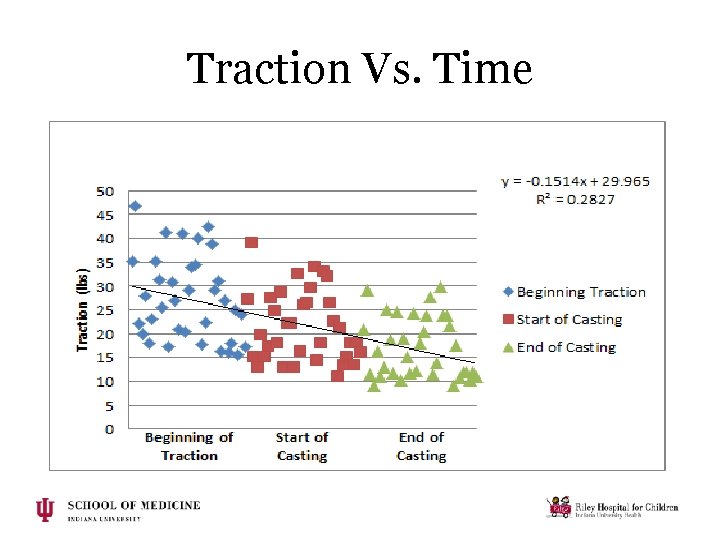
Methods • 24 children (10 mo to 9 years) with EOS were brought to the OR for 35 EDF Cast applications under general endotracheal anesthesia using a standard protocol. • Measurements of traction were made using a simple "fish scale" connected in series to the halter used. • Traction was measured at 3 points - initially, next at the beginning of cast application and lastly just before the patient was taken off traction. • A scatter plot was used to describe the changes in traction during the procedure. • Average patient weight was 34 lbs, age 3. 4 years and curve magnitude 36. 4 degrees.
Casting Setup
In line Scale to measure traction in pounds.
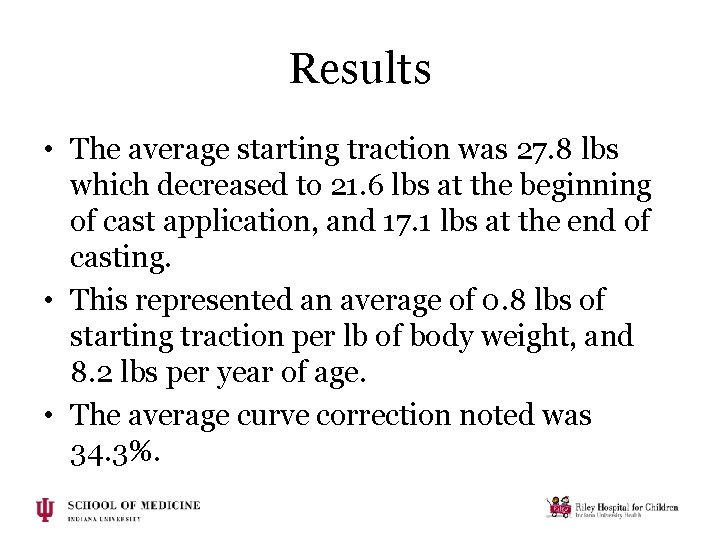
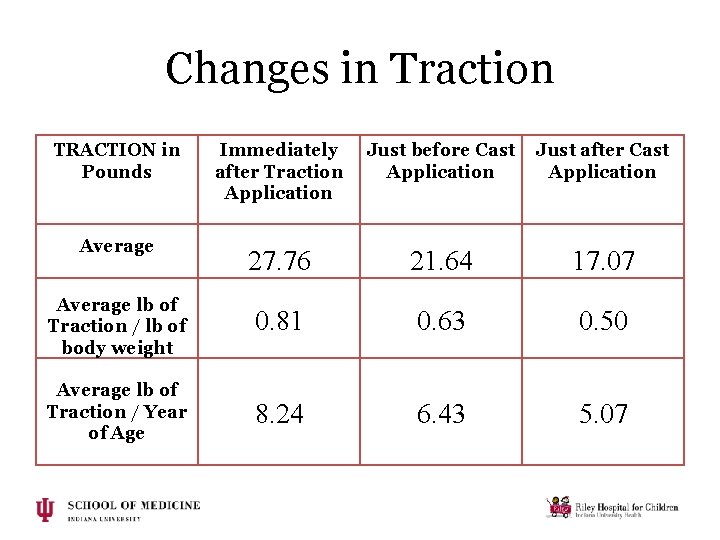
Results • The average starting traction was 27. 8 lbs which decreased to 21. 6 lbs at the beginning of cast application, and 17. 1 lbs at the end of casting. • This represented an average of 0. 8 lbs of starting traction per lb of body weight, and 8. 2 lbs per year of age. • The average curve correction noted was 34. 3%.
Changes in Traction TRACTION in Pounds Immediately after Traction Application Just before Cast Application Just after Cast Application 27. 76 21. 64 17. 07 Average lb of Traction / lb of body weight 0. 81 0. 63 0. 50 Average lb of Traction / Year of Age 8. 24 6. 43 5. 07 Average
Traction Vs. Time
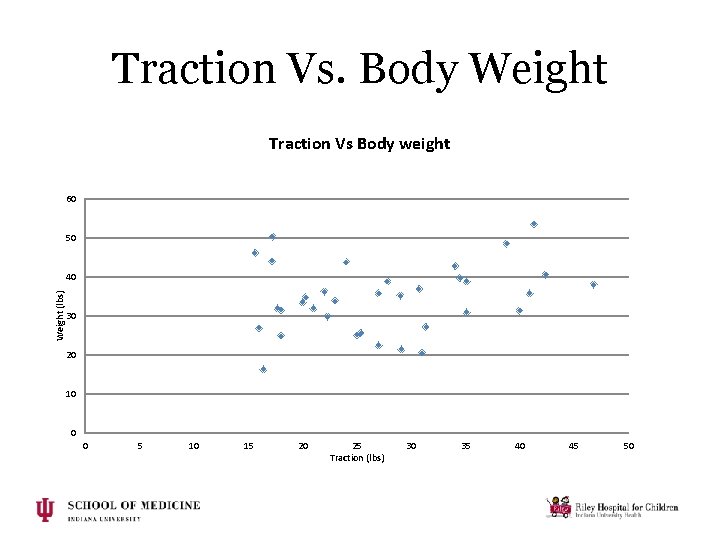
Traction Vs. Body Weight Traction Vs Body weight 60 50 Weight (lbs) 40 30 20 10 0 0 5 10 15 20 25 Traction (lbs) 30 35 40 45 50
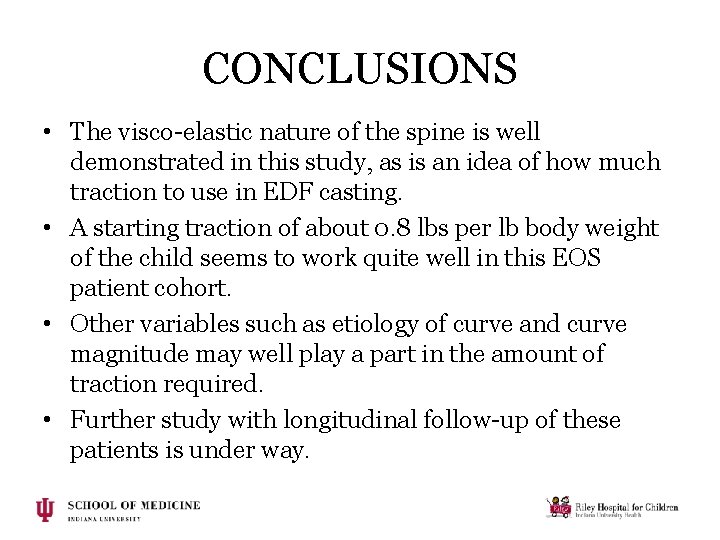
CONCLUSIONS • The visco-elastic nature of the spine is well demonstrated in this study, as is an idea of how much traction to use in EDF casting. • A starting traction of about 0. 8 lbs per lb body weight of the child seems to work quite well in this EOS patient cohort. • Other variables such as etiology of curve and curve magnitude may well play a part in the amount of traction required. • Further study with longitudinal follow-up of these patients is under way.
Thank you!