Innovations in Mehta EDF Casting Nigel Price MD

- Slides: 12
Innovations in Mehta (EDF) Casting Nigel Price MD Spine Section Chief Children’s Mercy Hospitals and Clinics Assistant Professor University of Missouri Kansas City Clinical Assistant Professor Kansas University Medical Center
Disclosures • Initially several prototype samples of Knit. Rite X-Static garments and the first box of Raptor staples were complimentary • There are otherwise no disclosures
Innovations in Mehta (EDF) casting for Early Onset Scoliosis (EOS) Purpose: To describe some innovations in casting technique for Early Onset Scoliosis Methods: We have refined the technique of Mehta (EDF) casting. We describe the techniques.
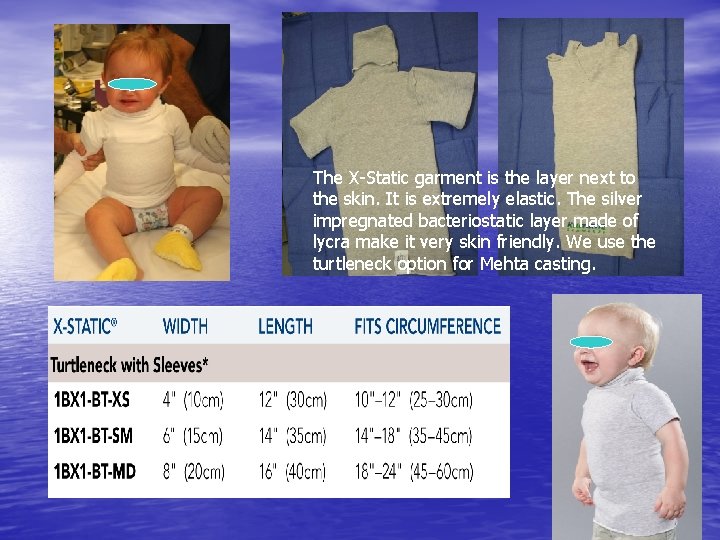
The X-Static garment is the layer next to the skin. It is extremely elastic. The silver impregnated bacteriostatic layer made of lycra make it very skin friendly. We use the turtleneck option for Mehta casting.
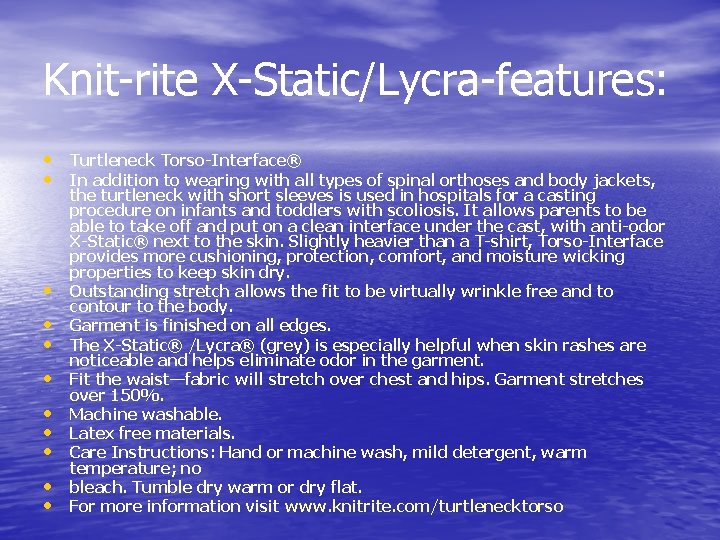
Knit-rite X-Static/Lycra-features: • Turtleneck Torso-Interface® • In addition to wearing with all types of spinal orthoses and body jackets, • • • the turtleneck with short sleeves is used in hospitals for a casting procedure on infants and toddlers with scoliosis. It allows parents to be able to take off and put on a clean interface under the cast, with anti-odor X-Static® next to the skin. Slightly heavier than a T-shirt, Torso-Interface provides more cushioning, protection, comfort, and moisture wicking properties to keep skin dry. Outstanding stretch allows the fit to be virtually wrinkle free and to contour to the body. Garment is finished on all edges. The X-Static® /Lycra® (grey) is especially helpful when skin rashes are noticeable and helps eliminate odor in the garment. Fit the waist—fabric will stretch over chest and hips. Garment stretches over 150%. Machine washable. Latex free materials. Care Instructions: Hand or machine wash, mild detergent, warm temperature; no bleach. Tumble dry warm or dry flat. For more information visit www. knitrite. com/turtlenecktorso
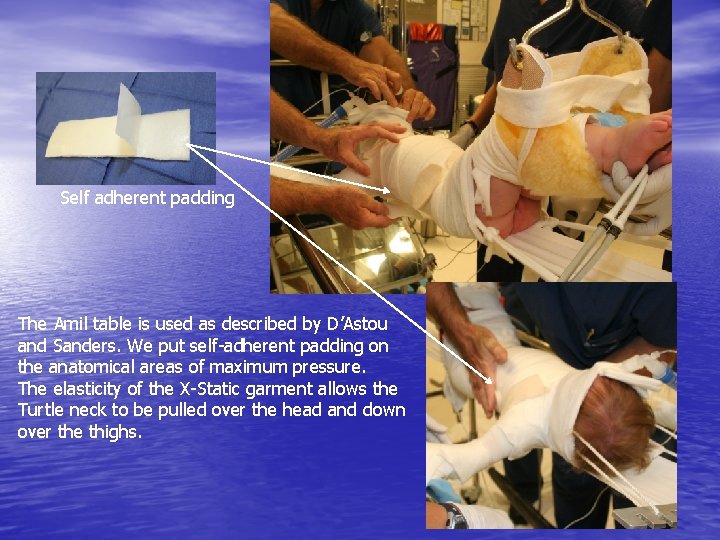
Self adherent padding The Amil table is used as described by D’Astou and Sanders. We put self-adherent padding on the anatomical areas of maximum pressure. The elasticity of the X-Static garment allows the Turtle neck to be pulled over the head and down over the thighs.
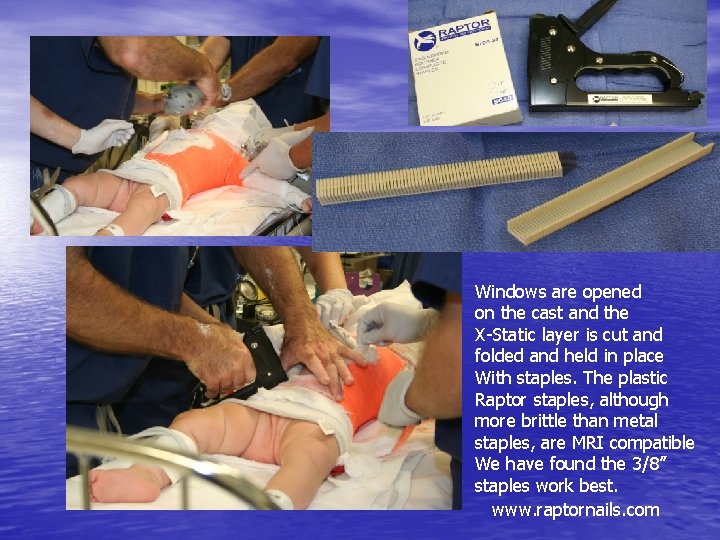
Windows are opened on the cast and the X-Static layer is cut and folded and held in place With staples. The plastic Raptor staples, although more brittle than metal staples, are MRI compatible We have found the 3/8” staples work best. www. raptornails. com
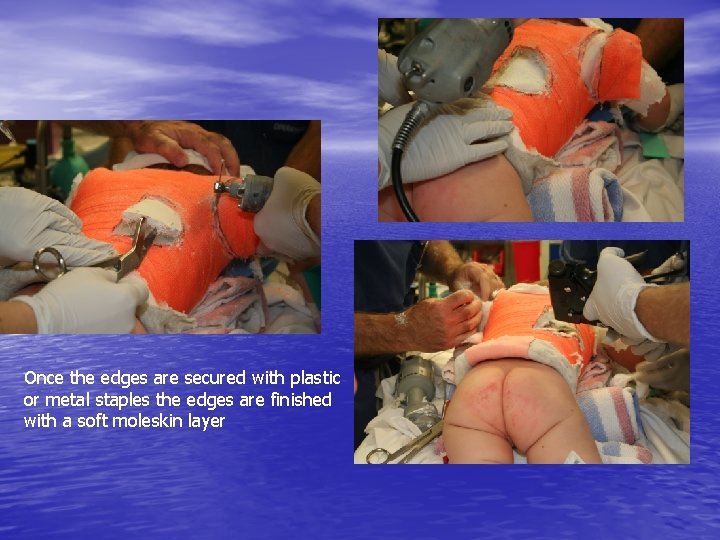
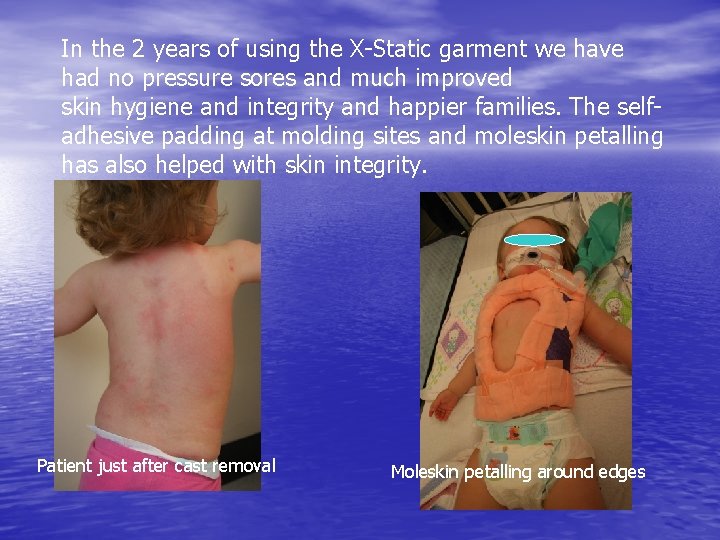
Once the edges are secured with plastic or metal staples the edges are finished with a soft moleskin layer
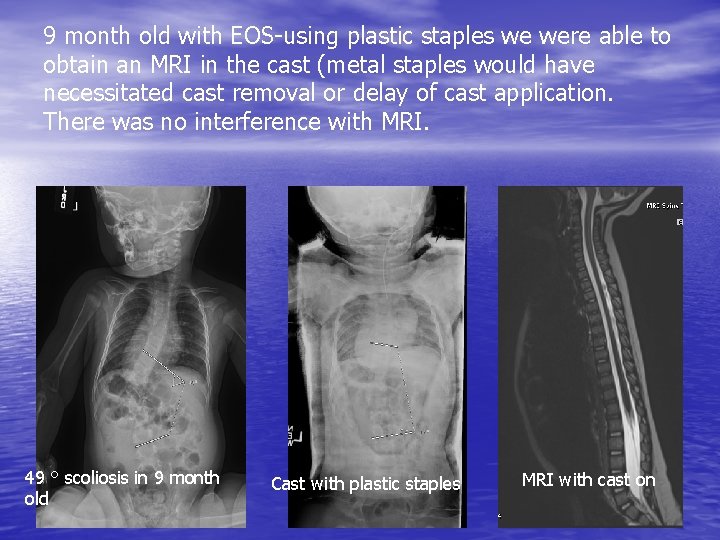
9 month old with EOS-using plastic staples we were able to obtain an MRI in the cast (metal staples would have necessitated cast removal or delay of cast application. There was no interference with MRI. 49 ° scoliosis in 9 month old Cast with plastic staples MRI with cast on
In the 2 years of using the X-Static garment we have had no pressure sores and much improved skin hygiene and integrity and happier families. The selfadhesive padding at molding sites and moleskin petalling has also helped with skin integrity. Patient just after cast removal Moleskin petalling around edges
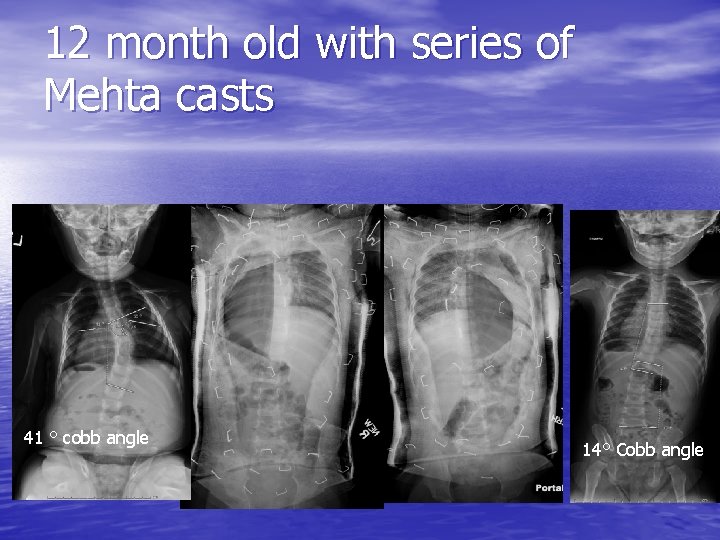
12 month old with series of Mehta casts 41 ° cobb angle 14° Cobb angle
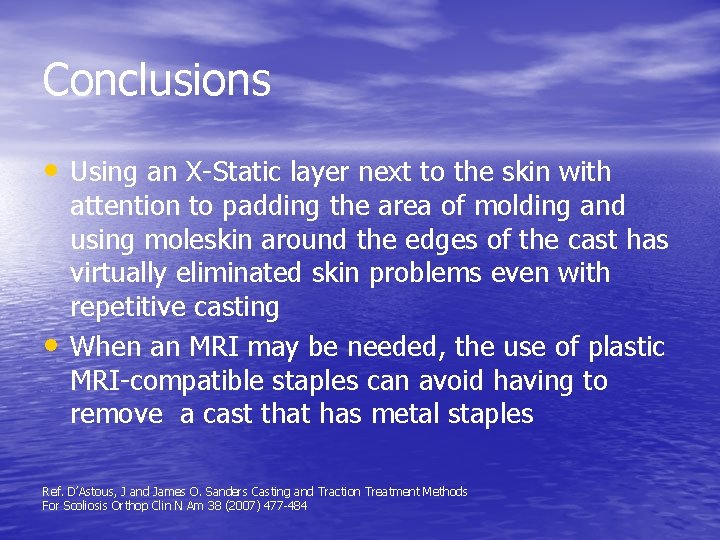
Conclusions • Using an X-Static layer next to the skin with • attention to padding the area of molding and using moleskin around the edges of the cast has virtually eliminated skin problems even with repetitive casting When an MRI may be needed, the use of plastic MRI-compatible staples can avoid having to remove a cast that has metal staples Ref. D’Astous, J and James O. Sanders Casting and Traction Treatment Methods For Scoliosis Orthop Clin N Am 38 (2007) 477 -484