Toxic Metals Soil Contamination Health JILL JOHNSTON PHD

- Slides: 20
Toxic Metals, Soil Contamination & Health JILL JOHNSTON, PHD UNIVERSITY OF SOUTHERN CALIFORNIA
So. Cal Environmental Health Sciences Center • Based at USC Division of Environmental Health • Focus on the impact of pollution (traffic) effect health and disease in populations • Work to reduce the burden of diseases and disability from environmental impacts now and into the future • Community Engagement & Outreach Core • Make science and research relevant to community needs • Support use of science and research in communities
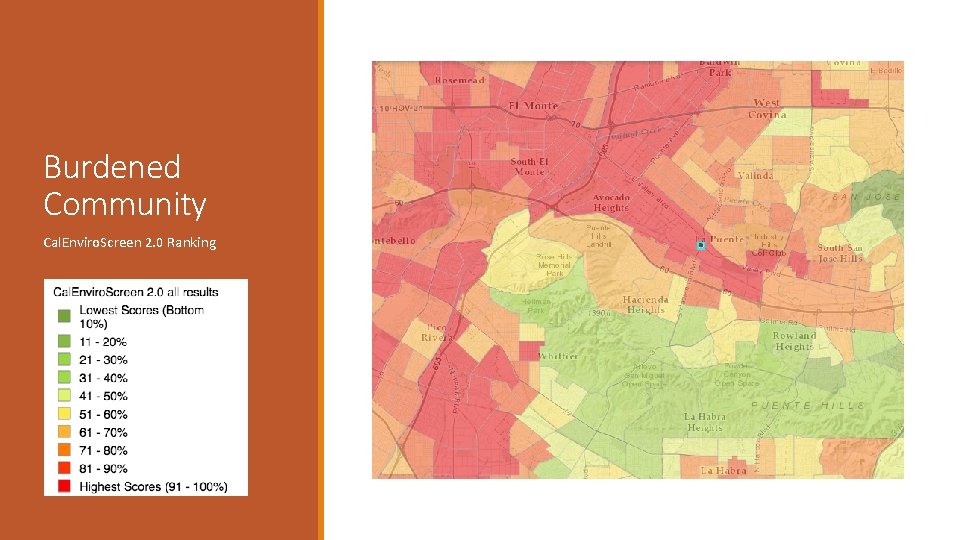
Burdened Community Cal. Enviro. Screen 2. 0 Ranking
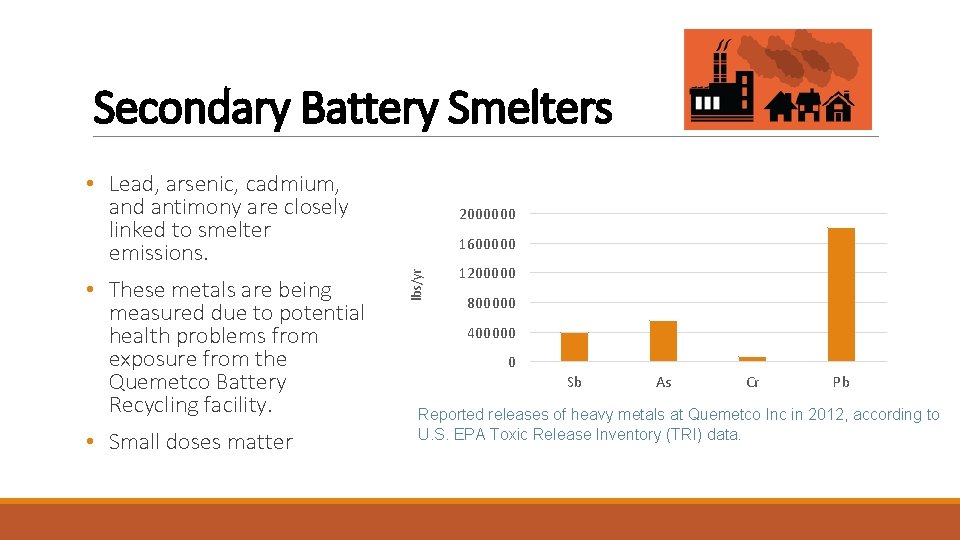
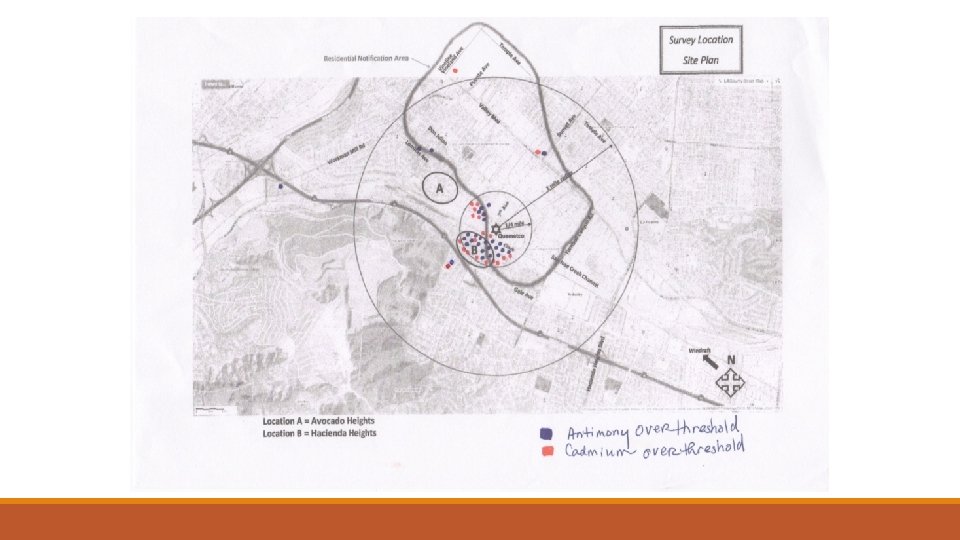
Secondary Battery Smelters • Lead, arsenic, cadmium, and antimony are closely linked to smelter emissions. • Small doses matter 1600000 lbs/yr • These metals are being measured due to potential health problems from exposure from the Quemetco Battery Recycling facility. 2000000 1200000 800000 400000 0 Sb As Cr Pb Reported releases of heavy metals at Quemetco Inc in 2012, according to U. S. EPA Toxic Release Inventory (TRI) data.
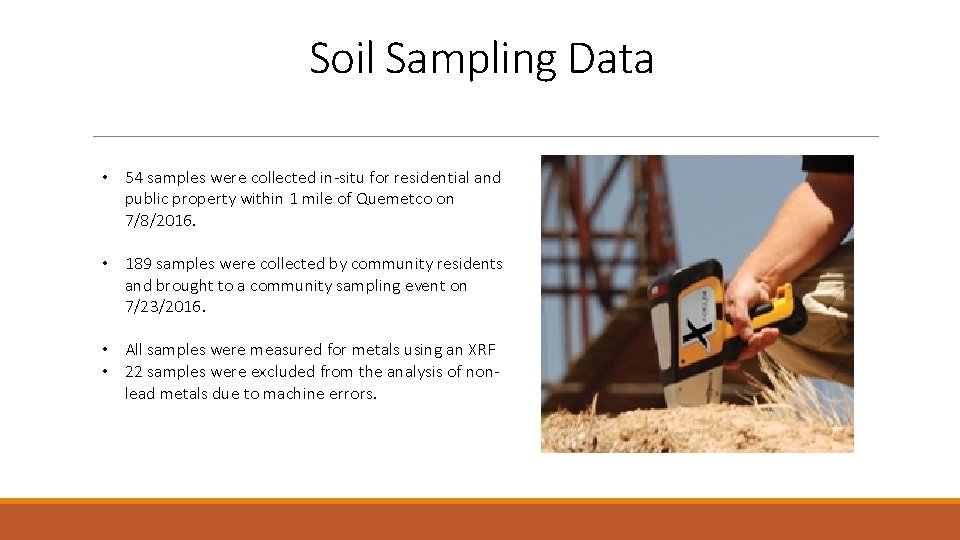
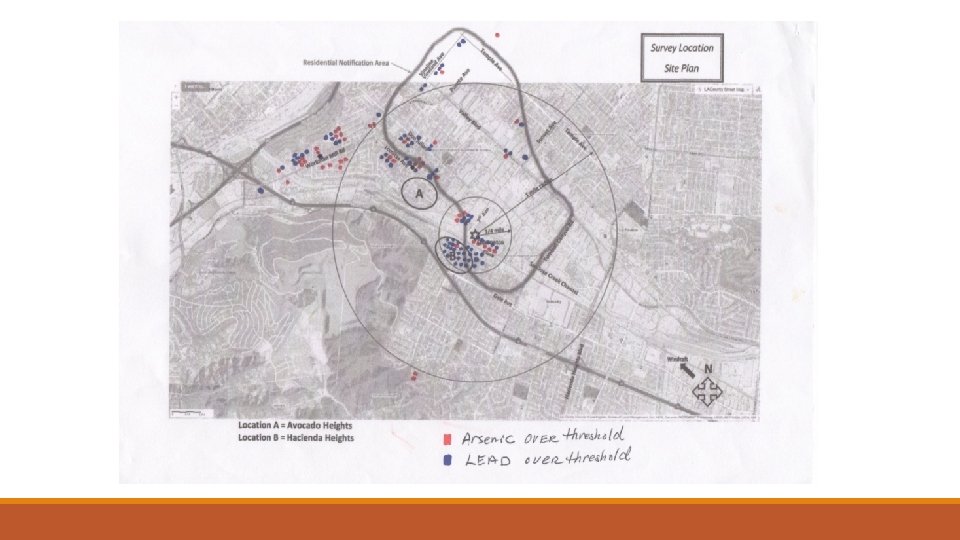
Soil Sampling Data • 54 samples were collected in-situ for residential and public property within 1 mile of Quemetco on 7/8/2016. • 189 samples were collected by community residents and brought to a community sampling event on 7/23/2016. • All samples were measured for metals using an XRF • 22 samples were excluded from the analysis of nonlead metals due to machine errors.
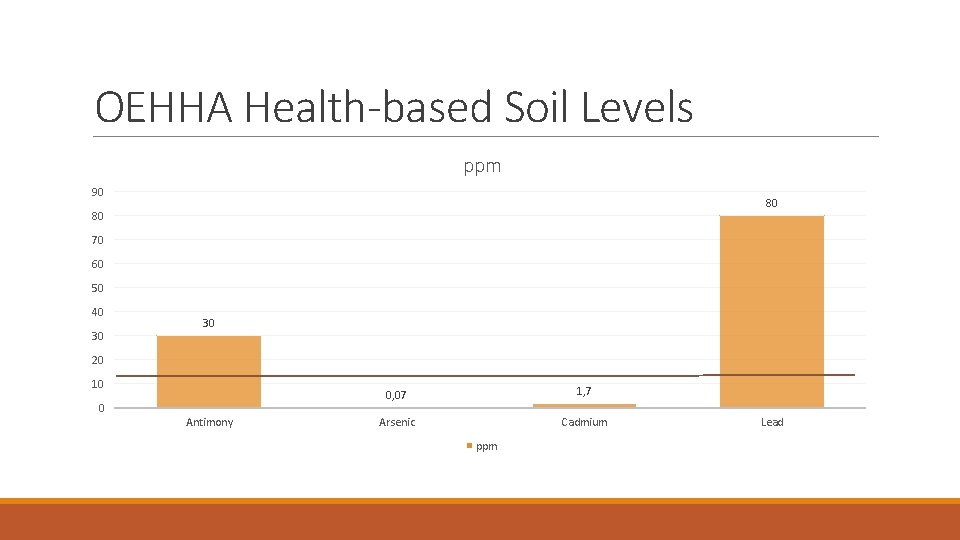
OEHHA Health-based Soil Levels ppm 90 80 80 70 60 50 40 30 30 20 10 0 Antimony 0, 07 1, 7 Arsenic Cadmium ppm Lead
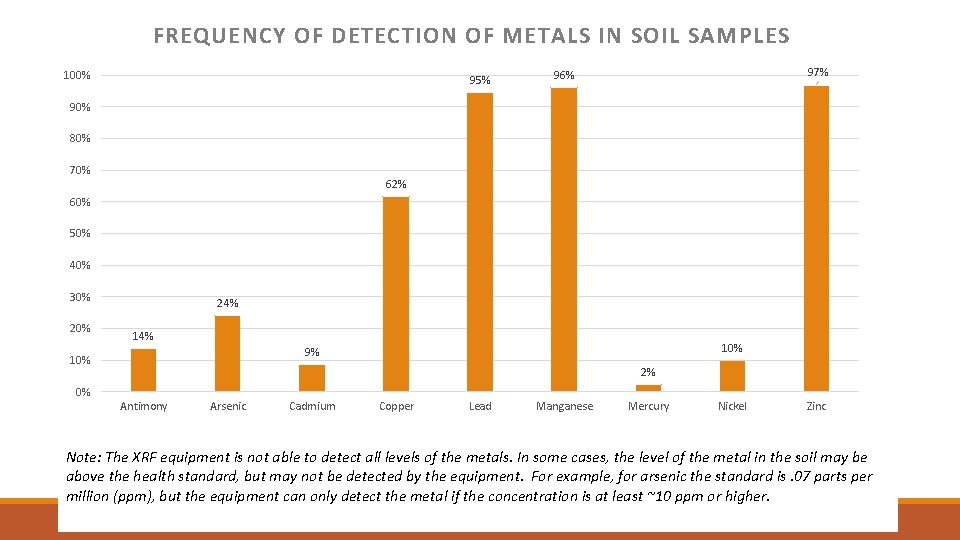
FREQUENCY OF DETECTION OF METALS IN SOIL SAMPLES 100% 95% 97% 96% 90% 80% 70% 62% 60% 50% 40% 30% 24% 10% 9% 10% 2% 0% Antimony Arsenic Cadmium Copper Lead Manganese Mercury Nickel Zinc Note: The XRF equipment is not able to detect all levels of the metals. In some cases, the level of the metal in the soil may be above the health standard, but may not be detected by the equipment. For example, for arsenic the standard is. 07 parts per million (ppm), but the equipment can only detect the metal if the concentration is at least ~10 ppm or higher.
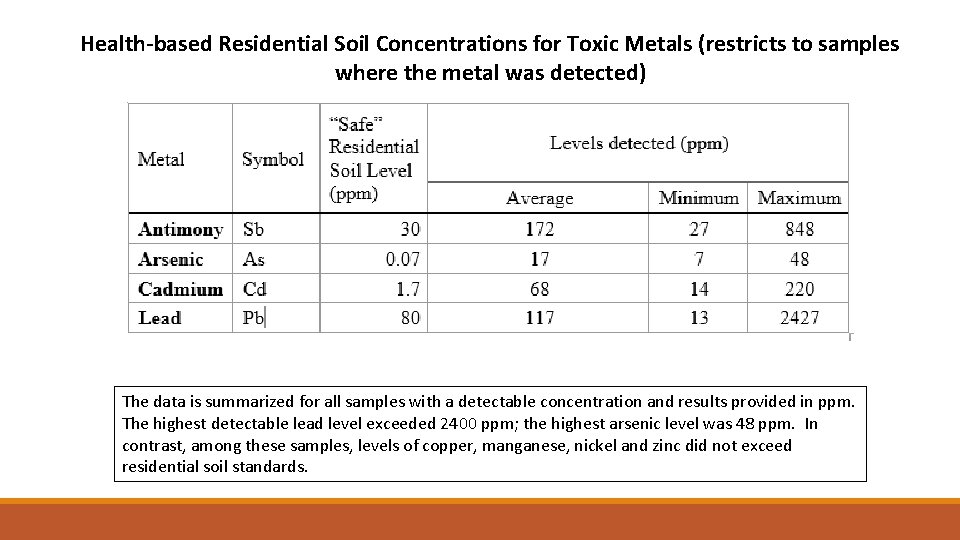
Health-based Residential Soil Concentrations for Toxic Metals (restricts to samples where the metal was detected) The data is summarized for all samples with a detectable concentration and results provided in ppm. The highest detectable lead level exceeded 2400 ppm; the highest arsenic level was 48 ppm. In contrast, among these samples, levels of copper, manganese, nickel and zinc did not exceed residential soil standards.
Arsenic
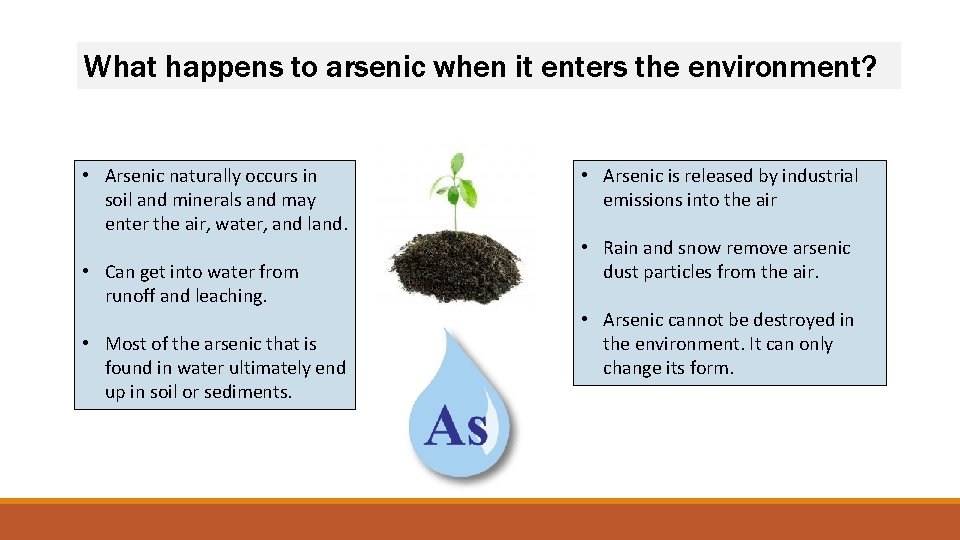
What happens to arsenic when it enters the environment? • Arsenic naturally occurs in soil and minerals and may enter the air, water, and land. • Can get into water from runoff and leaching. • Most of the arsenic that is found in water ultimately end up in soil or sediments. • Arsenic is released by industrial emissions into the air • Rain and snow remove arsenic dust particles from the air. • Arsenic cannot be destroyed in the environment. It can only change its form.
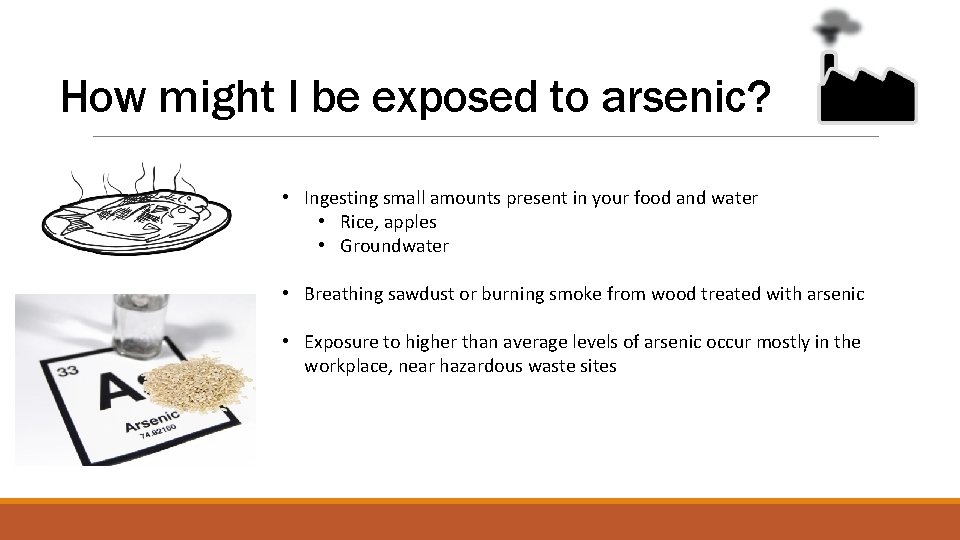
How might I be exposed to arsenic? • Ingesting small amounts present in your food and water • Rice, apples • Groundwater • Breathing sawdust or burning smoke from wood treated with arsenic • Exposure to higher than average levels of arsenic occur mostly in the workplace, near hazardous waste sites
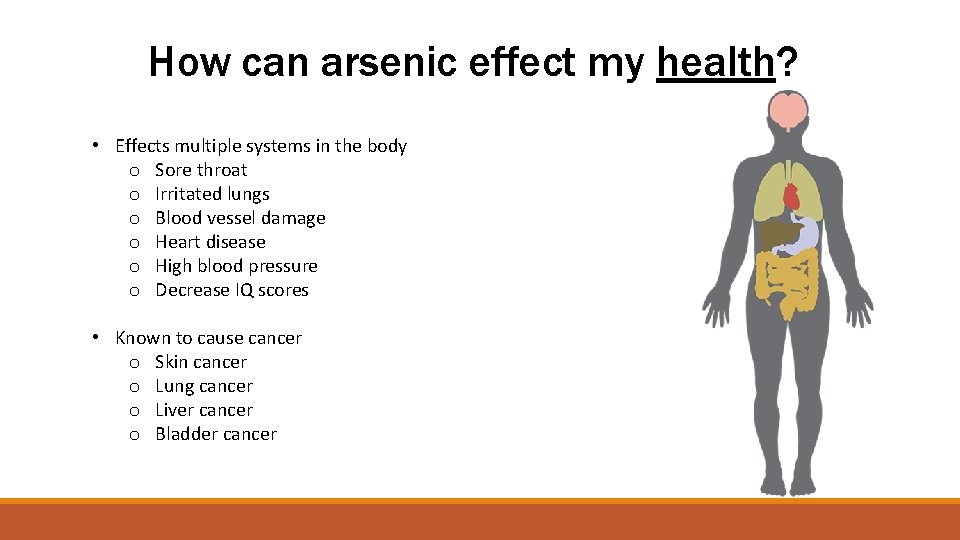
How can arsenic effect my health? • Effects multiple systems in the body o Sore throat o Irritated lungs o Blood vessel damage o Heart disease o High blood pressure o Decrease IQ scores • Known to cause cancer o Skin cancer o Lung cancer o Liver cancer o Bladder cancer
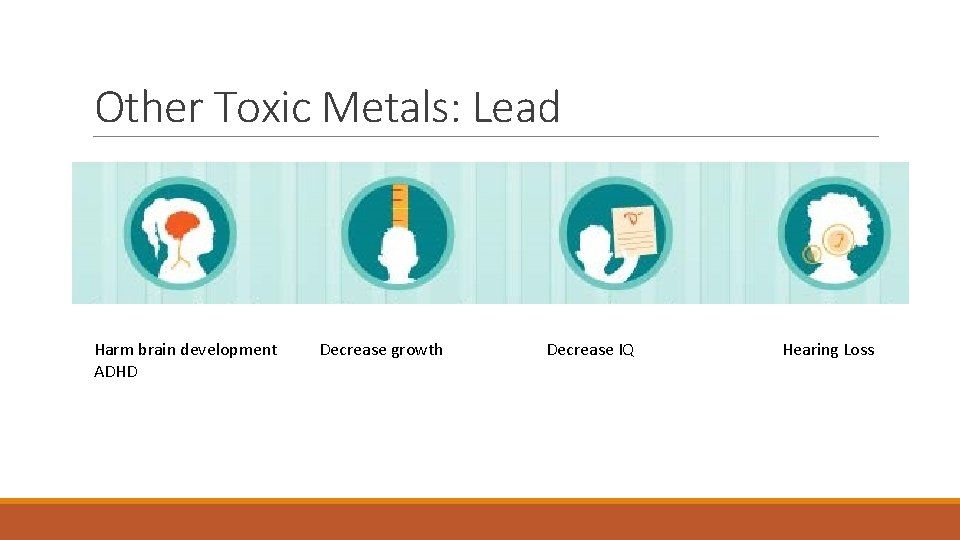
Other Toxic Metals: Lead Harm brain development ADHD Decrease growth Decrease IQ Hearing Loss
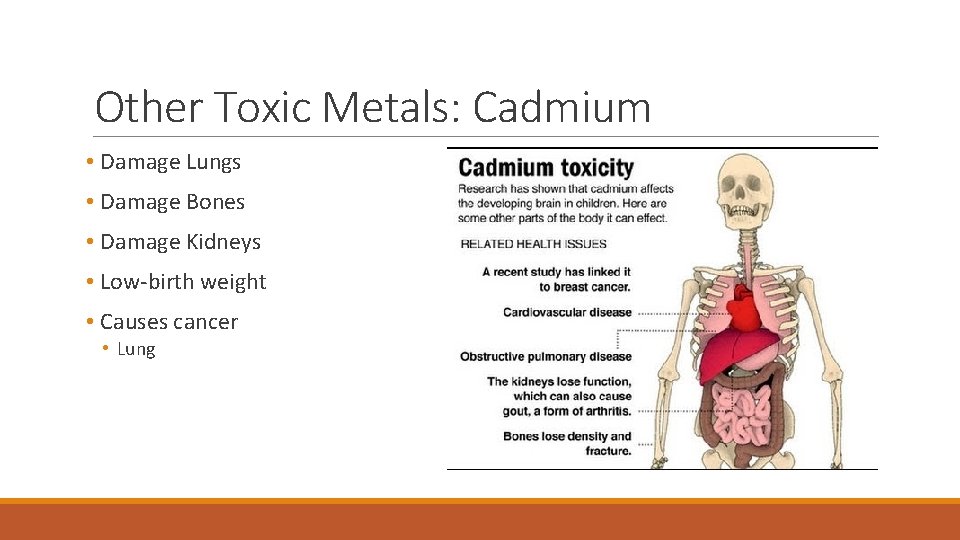
Other Toxic Metals: Cadmium • Damage Lungs • Damage Bones • Damage Kidneys • Low-birth weight • Causes cancer • Lung
Other Toxic Metals: Antimony • Eye irritation • Lung irritation • Bronchitis • Lung inflammation • Increase blood pressure • Some evidence of cancer in rats
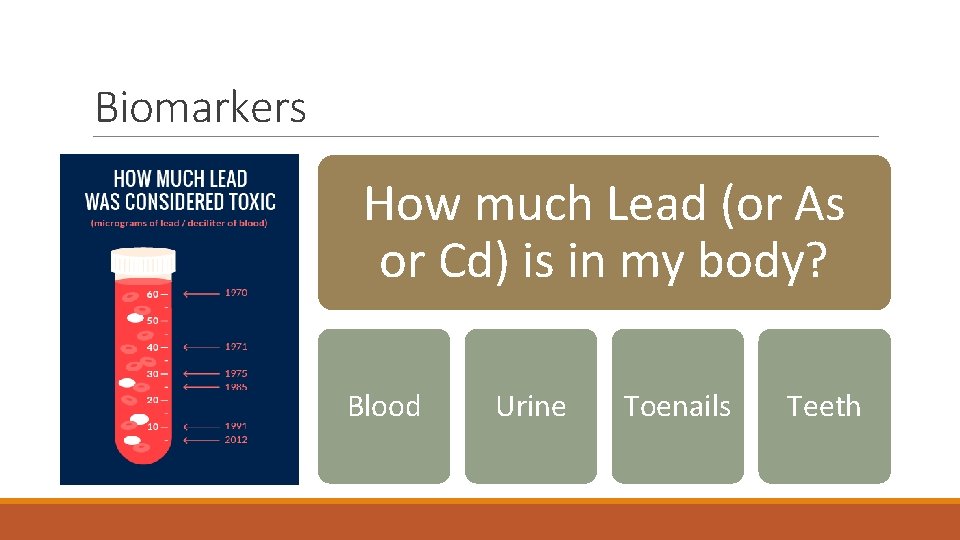
Biomarkers How much Lead (or As or Cd) is in my body? Blood Urine Toenails Teeth
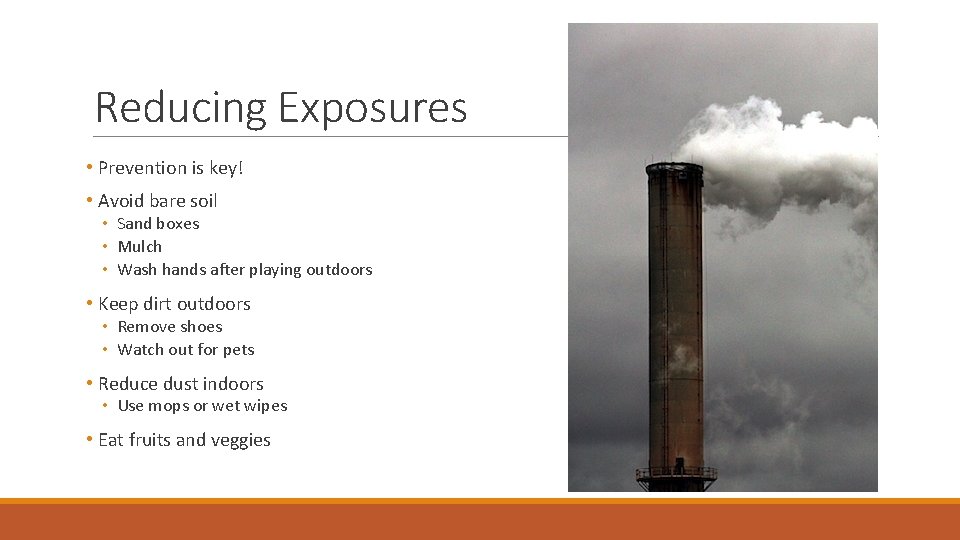
Reducing Exposures • Prevention is key! • Avoid bare soil • Sand boxes • Mulch • Wash hands after playing outdoors • Keep dirt outdoors • Remove shoes • Watch out for pets • Reduce dust indoors • Use mops or wet wipes • Eat fruits and veggies
Questions? § Jill Johnston, Ph. D Assistant Professor of Preventive Medicine Division of Environmental Health Keck School of Medicine University of Southern California jillj@usc. edu 323 -442 -1099