TOPIC 1 TECTONIC PROCESSES AND HAZARDS Lesson 3

- Slides: 26
TOPIC 1: TECTONIC PROCESSES AND HAZARDS • (Lesson 3)
ENQUIRY QUESTION 1: • 1. Why are some locations more at risk from tectonic hazards?
SPECIFICATION REQUIREMENT • 1. 2 • a) The theory of plate tectonics and its key elements : • ( the earth’s internal structure, mantle convection, palaeomagnetism and sea floor spreading, subduction and slab pull. )
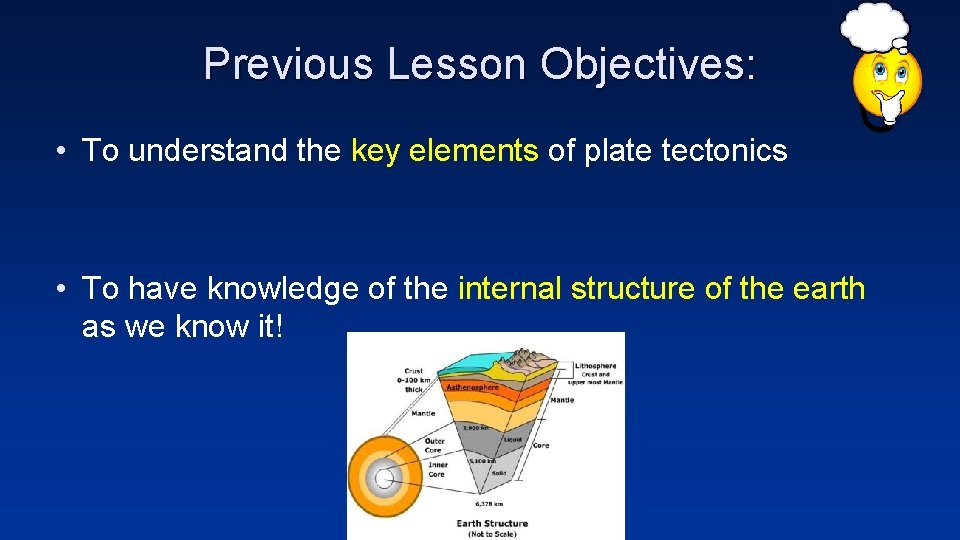
Previous Lesson Objectives: • To understand the key elements of plate tectonics • To have knowledge of the internal structure of the earth as we know it!
RECAP STARTER TRY WORD SORT ACTIVITY TEST EACH OTHER • 5 MINS- GO! http: //webgeology. alfaweb. no/webgeology_file s/english/earthsinterior. html
Today’s Lesson Objective: • To begin to understand the evidence for plate tectonics: 1. Theory of Continental Drift (Alfred Wegener) • https: //www. youtube. com/watch? v=nb. U 809 Cyrao
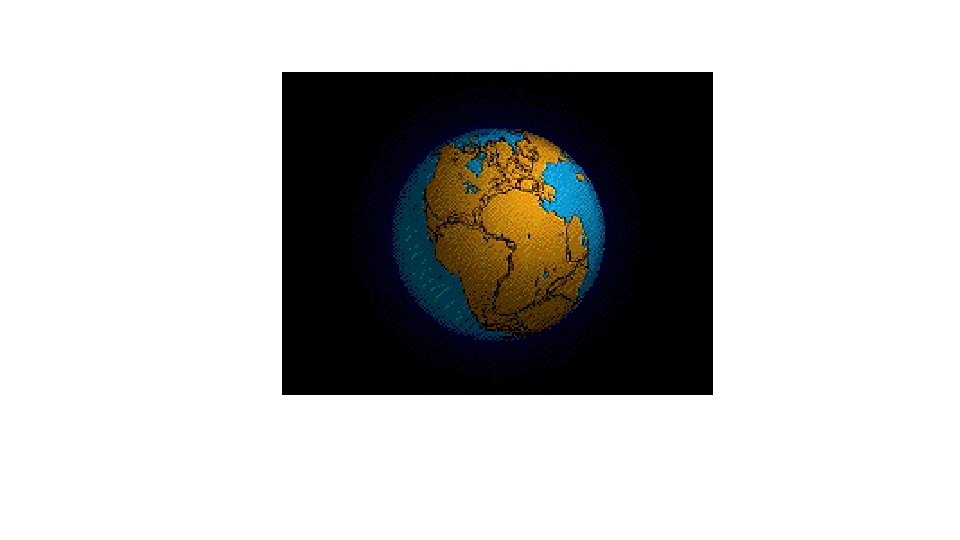
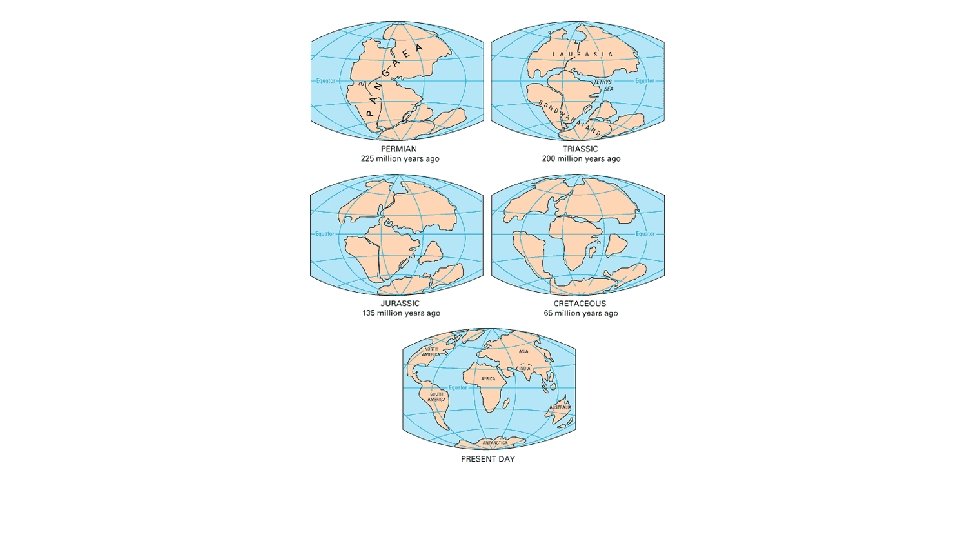
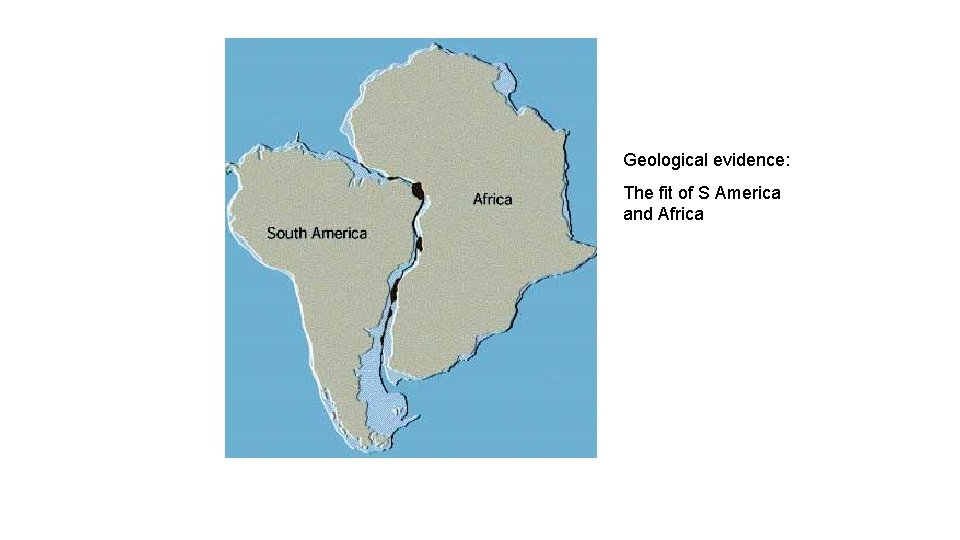
Alfred Wegener As early as 1620 Francis Bacon noted the jigsaw like fit of the E coast of S America and the W coast of Africa His observation went largely unnoticed as no one believed the continents could move about In 1912 German meteorologist Wegener published his theory that a single continent existed about 300 million years ago He named this supercontinent ‘Pangaea’ and maintained that it had somehow later split into two giant continents, ‘Laurasia’ in the North and ‘Gondwanaland’ in the South. These two land masses split further and drifted apart… Ideas were rejected in his day, however, as he could not offer an explanation as to how continental movement had occurred…. .
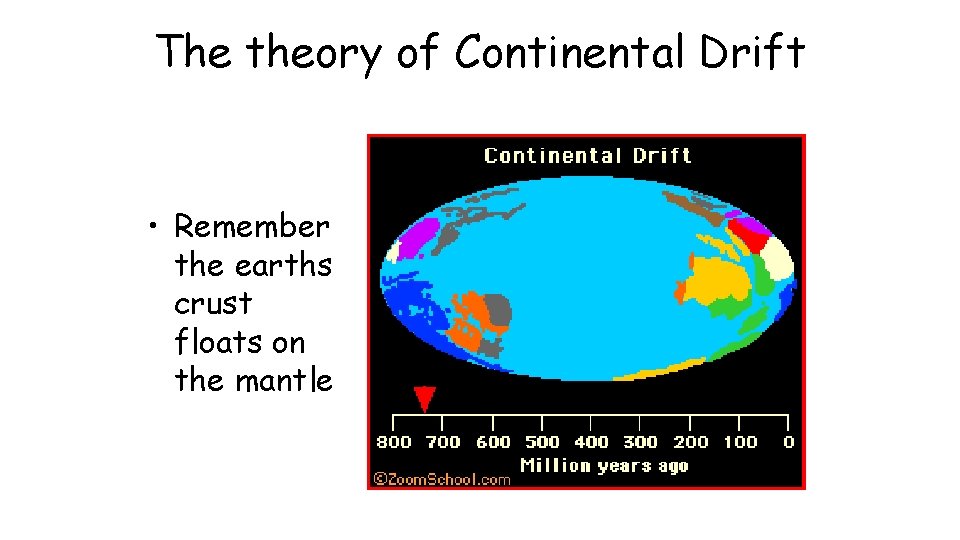
The theory of Continental Drift • Remember the earths crust floats on the mantle
Evidence for his theory
Geological evidence: The fit of S America and Africa
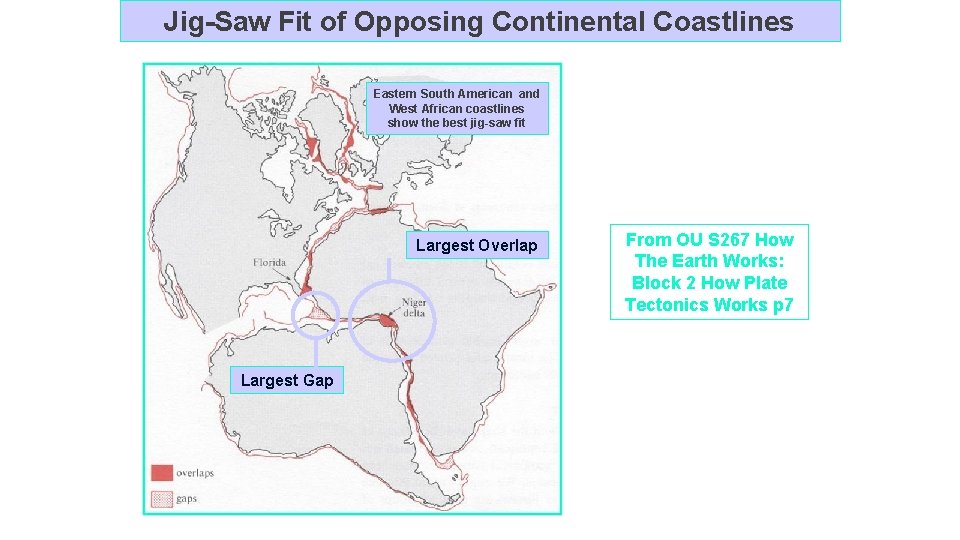
Jig-Saw Fit of Opposing Continental Coastlines Eastern South American and West African coastlines show the best jig-saw fit Largest Overlap Largest Gap From OU S 267 How The Earth Works: Block 2 How Plate Tectonics Works p 7
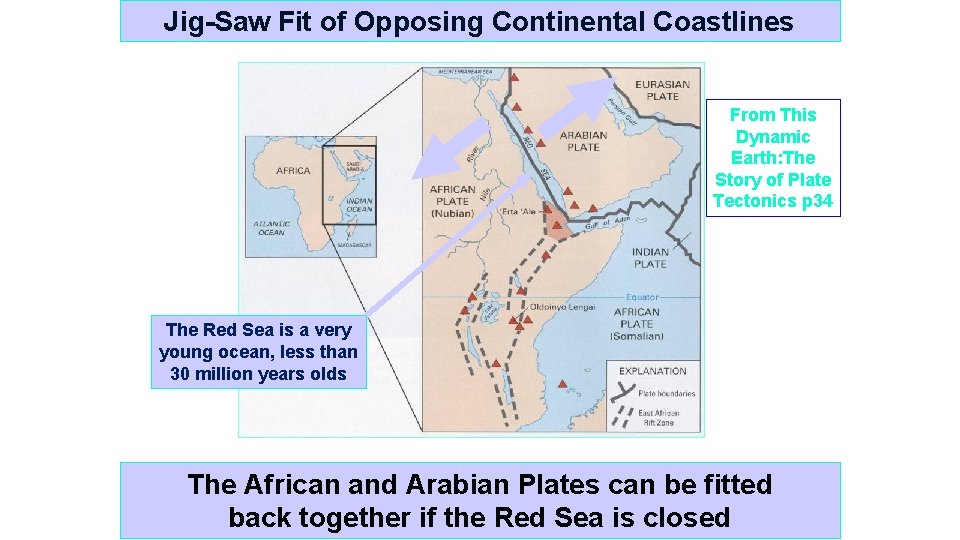
Jig-Saw Fit of Opposing Continental Coastlines From This Dynamic Earth: The Story of Plate Tectonics p 34 The Red Sea is a very young ocean, less than 30 million years olds The African and Arabian Plates can be fitted back together if the Red Sea is closed
GEOLOGICAL EVIDENCE: JIGSAW FIT (p. 13) i)This is especially true if the continental shelves are taken as the ‘true edges’ of the land mass e. g. S. USA and Africa ii) Rock sequences in N. Scotland closely agree with those found in E. Canada, indicating that they were laid down under the same conditions in one location
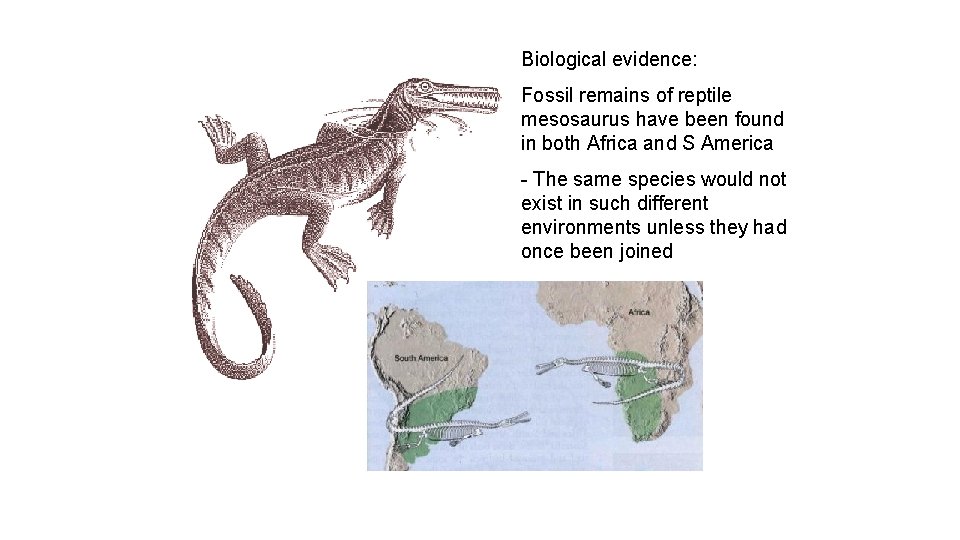
Biological evidence: Fossil remains of reptile mesosaurus have been found in both Africa and S America - The same species would not exist in such different environments unless they had once been joined
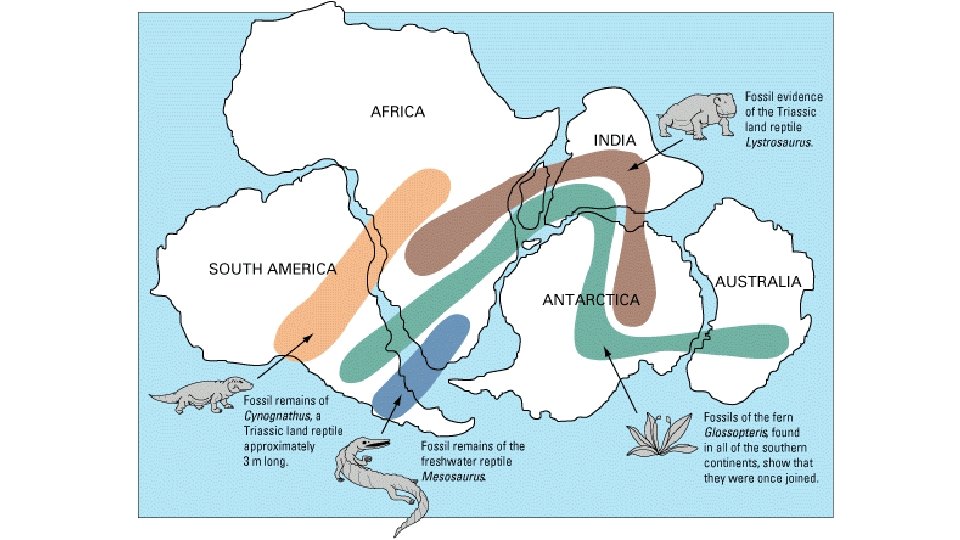
BIOLOGICAL EVIDENCE i) Fossil brachiopods found in Indian limestones are comparable with similar fossils in Australia. ii) Fossil remains of the reptile ‘Mesosauras’ are found in both S. USA and S. Africa. It’s unlikely that the same reptile could have developed in both areas or that it could have migrated across the Atlantic. iii) Fossilised remains of a plant which existed when coal was being formed have been located only in India and Antarctica.
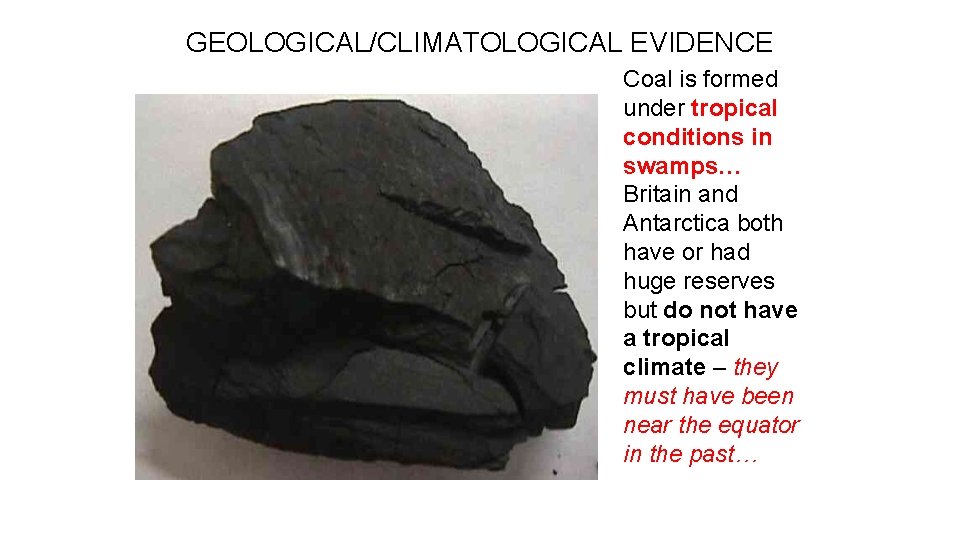
GEOLOGICAL/CLIMATOLOGICAL EVIDENCE Coal is formed under tropical conditions in swamps… Britain and Antarctica both have or had huge reserves but do not have a tropical climate – they must have been near the equator in the past…
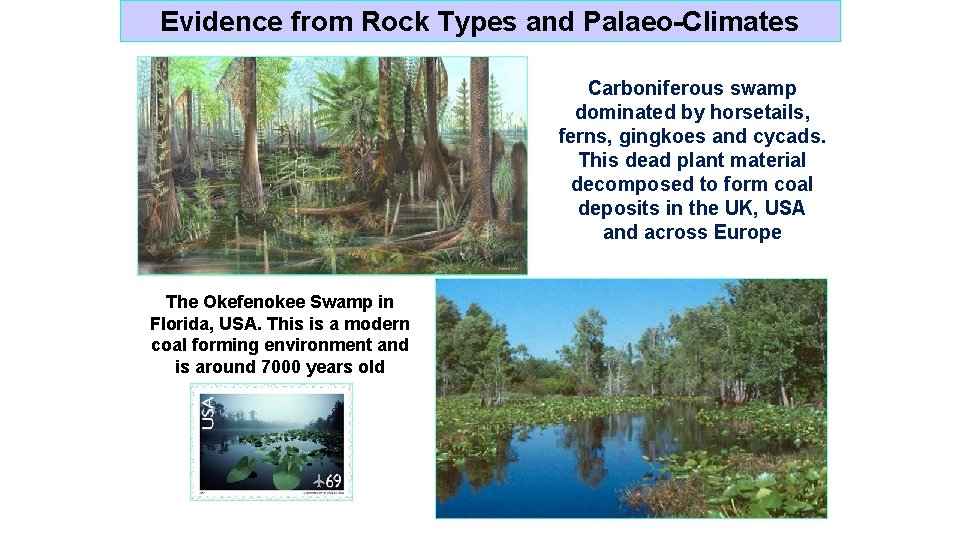
Evidence from Rock Types and Palaeo-Climates Carboniferous swamp dominated by horsetails, ferns, gingkoes and cycads. This dead plant material decomposed to form coal deposits in the UK, USA and across Europe The Okefenokee Swamp in Florida, USA. This is a modern coal forming environment and is around 7000 years old
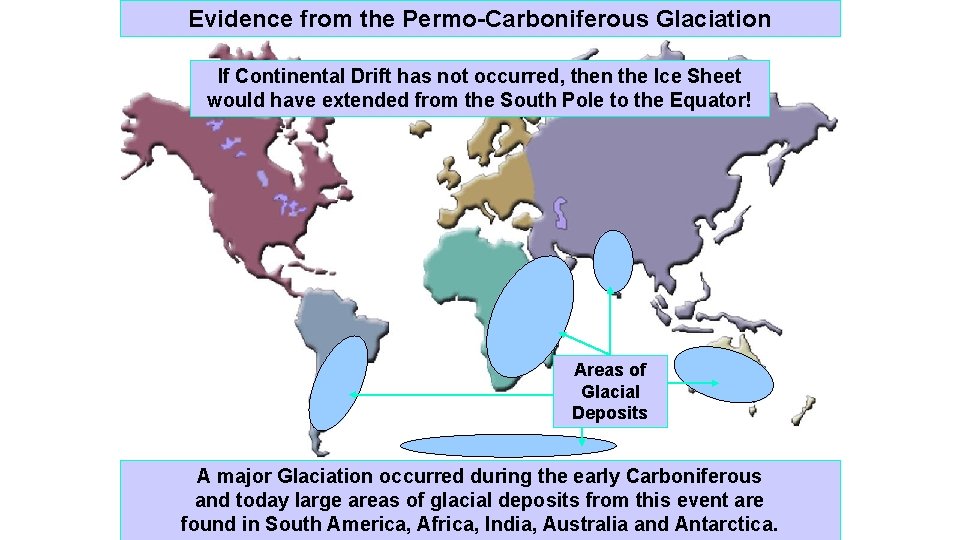
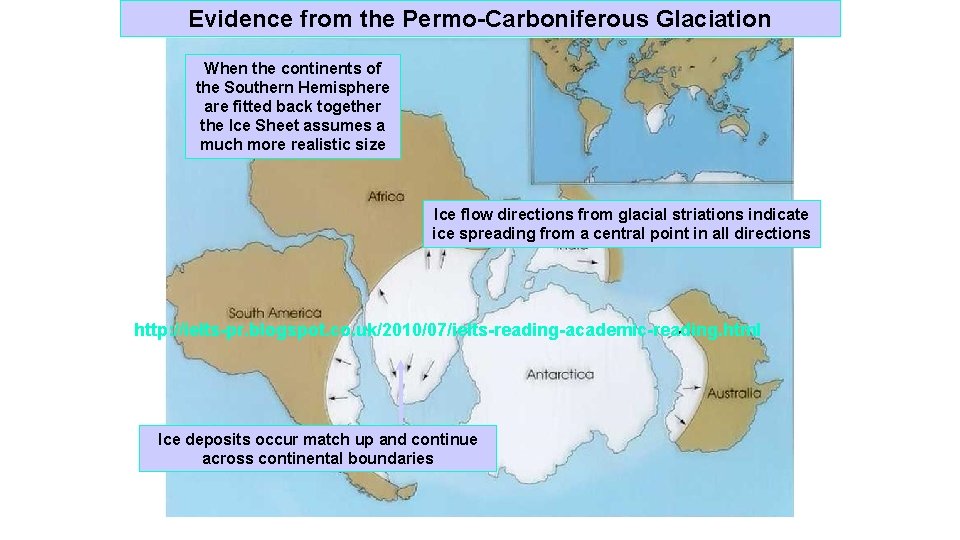
Evidence from the Permo-Carboniferous Glaciation If Continental Drift has not occurred, then the Ice Sheet would have extended from the South Pole to the Equator! Areas of Glacial Deposits A major Glaciation occurred during the early Carboniferous and today large areas of glacial deposits from this event are found in South America, Africa, India, Australia and Antarctica.
Evidence from the Permo-Carboniferous Glaciation When the continents of the Southern Hemisphere are fitted back together the Ice Sheet assumes a much more realistic size Ice flow directions from glacial striations indicate ice spreading from a central point in all directions http: //ielts-pr. blogspot. co. uk/2010/07/ielts-reading-academic-reading. html Ice deposits occur match up and continue across continental boundaries
OTHER GEOLOGICAL EVIDENCE: GLACIAL AND ROCK FORMATIONS A major glacial period occurred during the early Carboniferous period (290 mill yrs ago). Today, large areas of glacial deposits from this event are found in S. USA, Africa, India, Australia and Antarctica. The formation of these deposits cannot be explained by their present position - they MUST have been formed together and then moved. . There also striations( rock scratches due to abrasion from ice)on rocks in Brazil and W. Africa which is other similar evidence…
Web geology Wegener animations • http: //ansatte. uit. no/webgeology_files/english /plate%20 tectonics. html • http: //webgeology. alfaweb. no/webgeology_files/english/pl ate%20 tectonics. html • http: //www. geolsoc. org. uk/Plate-Tectonics/Chap 1 Pioneers-of-Plate-Tectonics/Alfred-Wegener/Fossil. Evidence-from-the-Southern-Hemisphere • ( Geological Society of London)
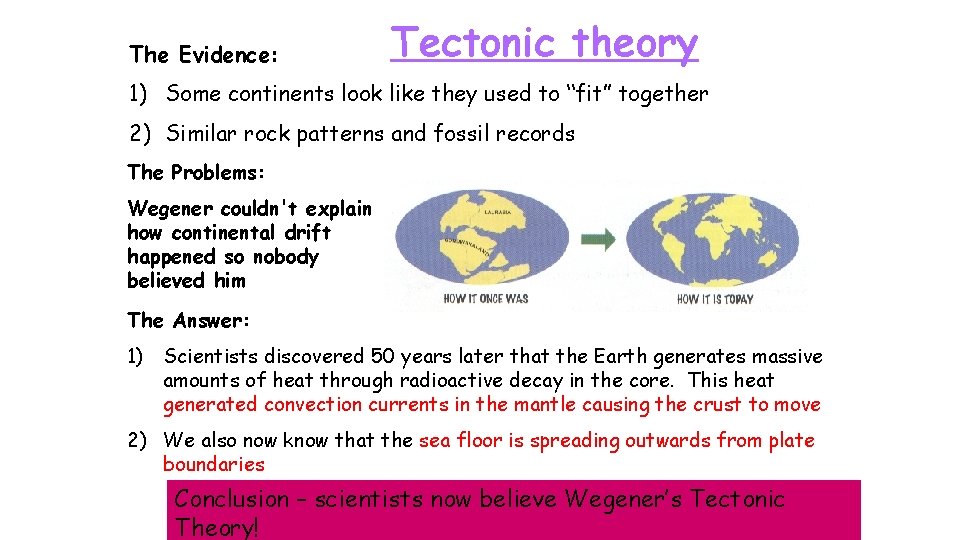
The Evidence: Tectonic theory 1) Some continents look like they used to “fit” together 2) Similar rock patterns and fossil records The Problems: Wegener couldn't explain how continental drift happened so nobody believed him The Answer: 1) Scientists discovered 50 years later that the Earth generates massive amounts of heat through radioactive decay in the core. This heat generated convection currents in the mantle causing the crust to move 2) We also now know that the sea floor is spreading outwards from plate boundaries Conclusion – scientists now believe Wegener’s Tectonic Theory!
Plenary: Alfred Wegener song by the Amoeba people! https: //www. youtube. com/watch? v=T 1 -c. ES 1 Ekto