
Learning Objective Describe and explain theory of plate
Learning Objective Describe and explain theory of plate tectonics and the three types of plate boundaries by reading a science text and conducting a webquest. Think-Pair- Share: What is theory of plate tectonics?
Learning Objective Describe and explain theory of plate tectonics and the three types of plate boundaries by reading a science text and conducting a webquest. Think-Pair- Share: What is the difference between theory of plate tectonics and theory of continental drift?
Learning Objective Describe and explain theory of plate tectonics and the three types of plate boundaries by reading a science text and conducting a webquest. Think-Pair- Share: What plate boundaries are associated with volcanoes?
Learning Objective Describe and explain theory of plate tectonics and the three types of plate boundaries by reading a science text and conducting a webquest. Think-Pair- Share: What plate boundary created the Himalayas (mountain)?
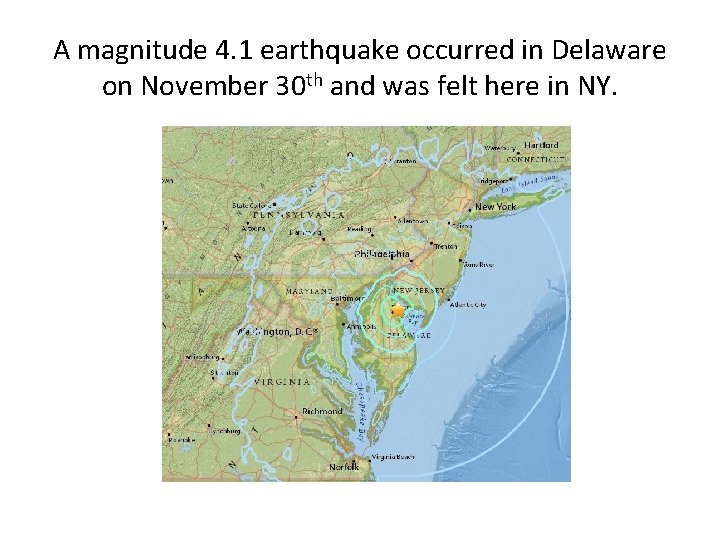
A magnitude 4. 1 earthquake occurred in Delaware on November 30 th and was felt here in NY.
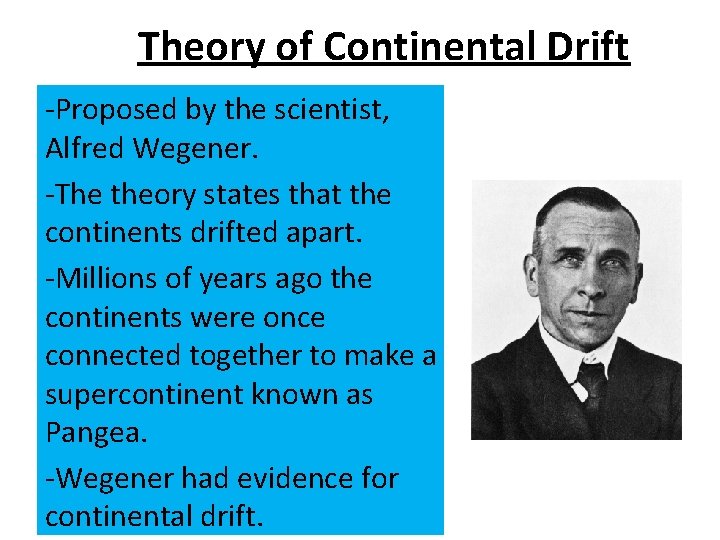
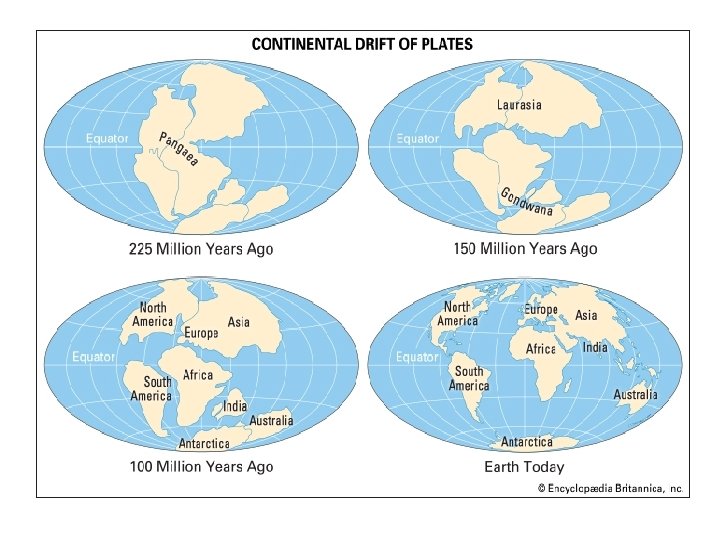
Theory of Continental Drift -Proposed by the scientist, Alfred Wegener. -The theory states that the continents drifted apart. -Millions of years ago the continents were once connected together to make a supercontinent known as Pangea. -Wegener had evidence for continental drift.
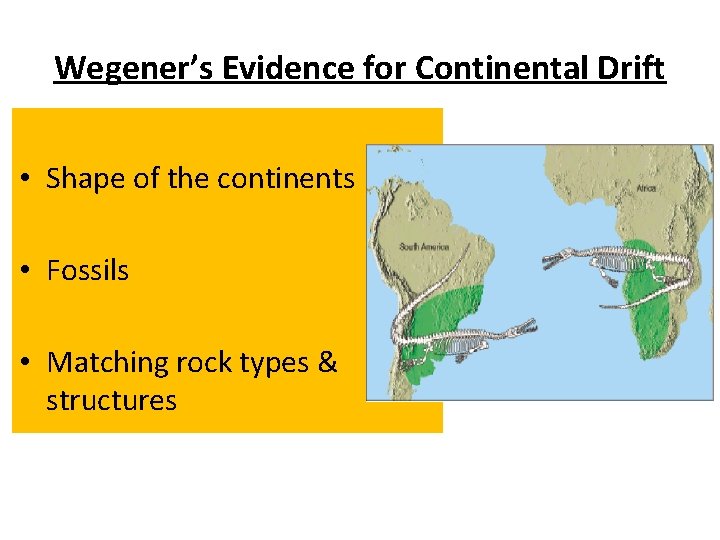
Wegener’s Evidence for Continental Drift • Shape of the continents • Fossils • Matching rock types & structures
Theory of Plate Tectonics • Modern day theory of continental drift. • Explains how the continents moved. • The Lithosphere is made up of 15 plates. • Convection currents in the mantle (molten rock) are responsible for the movement of the plates.
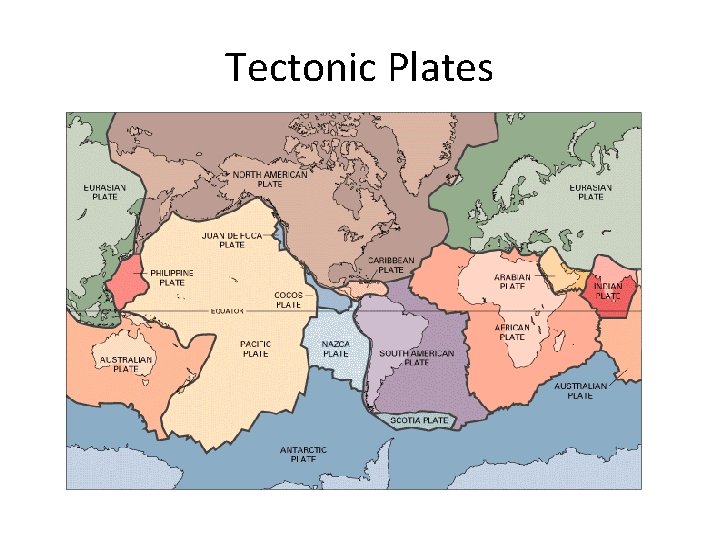
Tectonic Plates
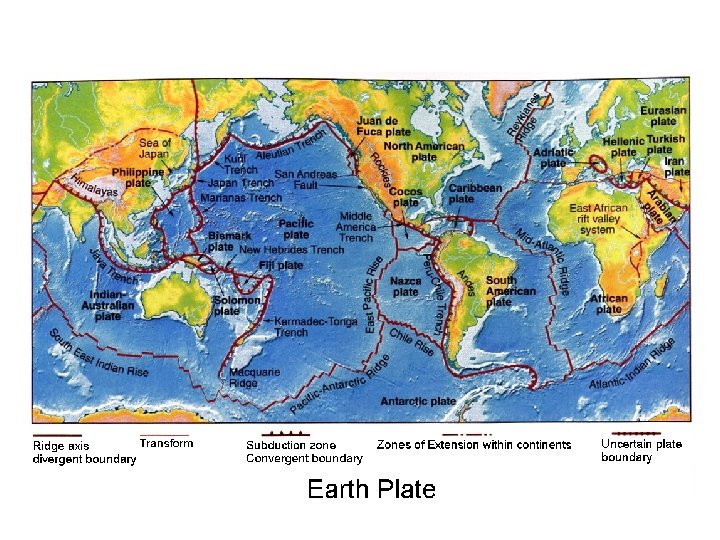
Plate Boundaries • The border between two tectonic plates is called a boundary. All the tectonic plates are constantly moving — very slowly — around the planet, but in many different directions. • Some may be in the middle of the ocean, around the edges of continents, or within continents. • Earthquakes and volcanoes occur along plate boundaries.

Plate Movement • “Plates” of lithosphere are moved around by the underlying hot mantle convection cells. • Because temperature increases with depth, the inside of the earth is very hot. Rock near the core is heated and becomes less dense. It slowly rises while cooler rock nearer the surface is more dense and sinks. This forms convection currents. This is the reason plates move.
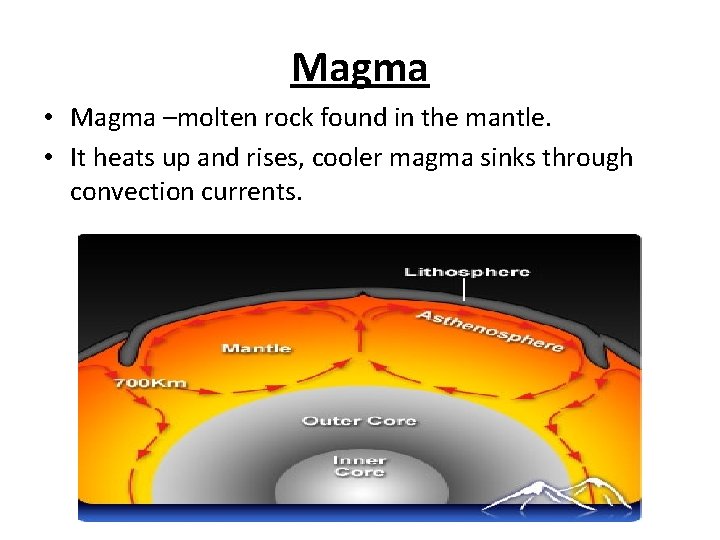
Magma • Magma –molten rock found in the mantle. • It heats up and rises, cooler magma sinks through convection currents.
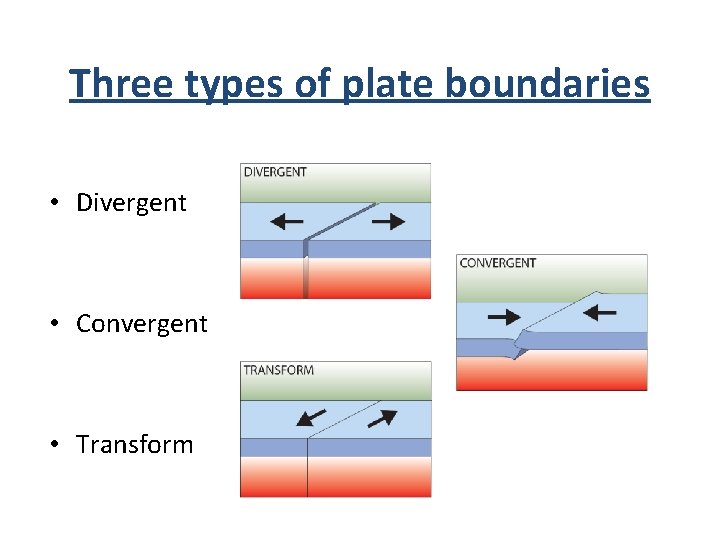
Three types of plate boundaries • Divergent • Convergent • Transform
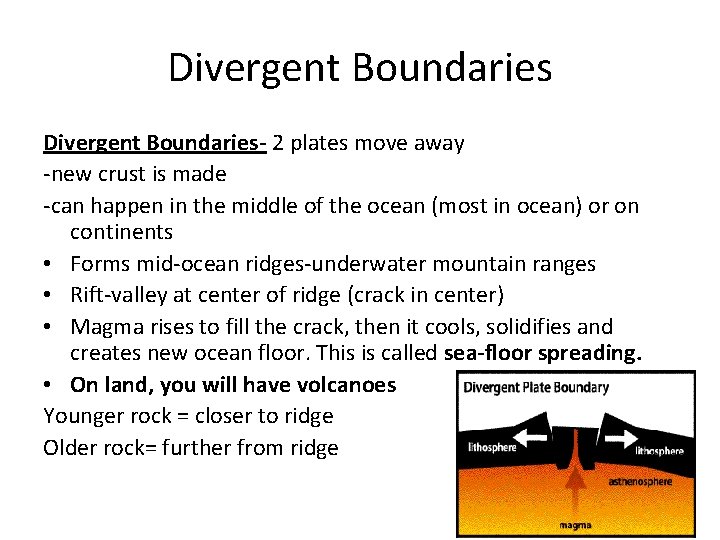
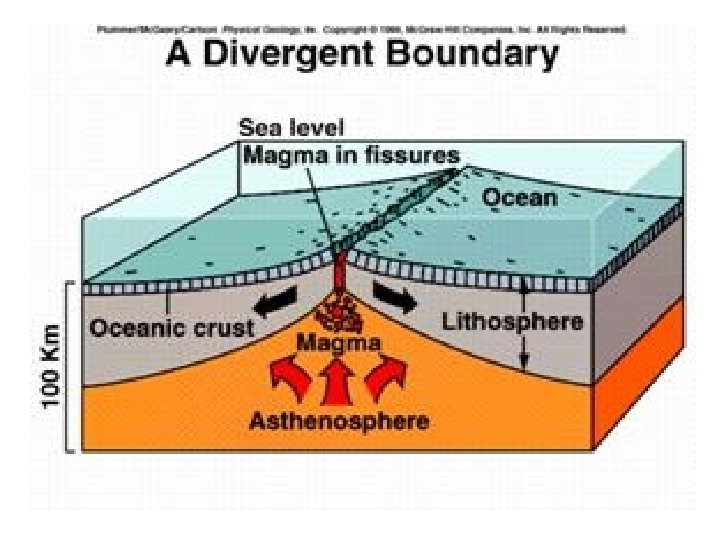
Divergent Boundaries- 2 plates move away -new crust is made -can happen in the middle of the ocean (most in ocean) or on continents • Forms mid-ocean ridges-underwater mountain ranges • Rift-valley at center of ridge (crack in center) • Magma rises to fill the crack, then it cools, solidifies and creates new ocean floor. This is called sea-floor spreading. • On land, you will have volcanoes Younger rock = closer to ridge Older rock= further from ridge
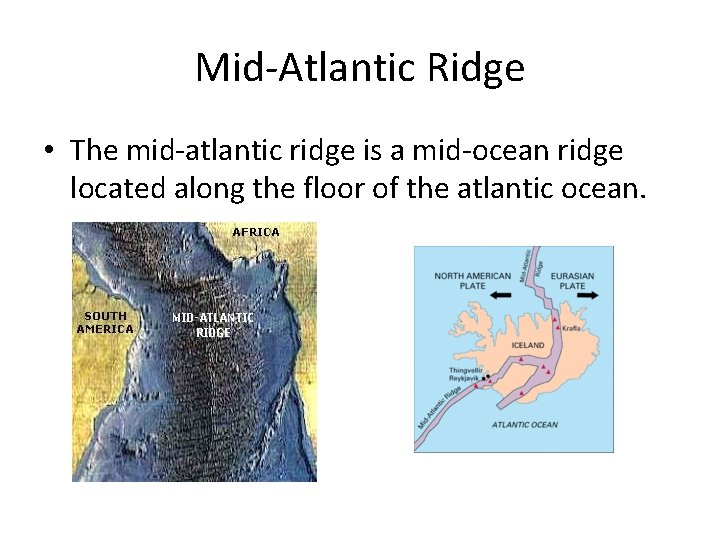
Mid-Atlantic Ridge • The mid-atlantic ridge is a mid-ocean ridge located along the floor of the atlantic ocean.
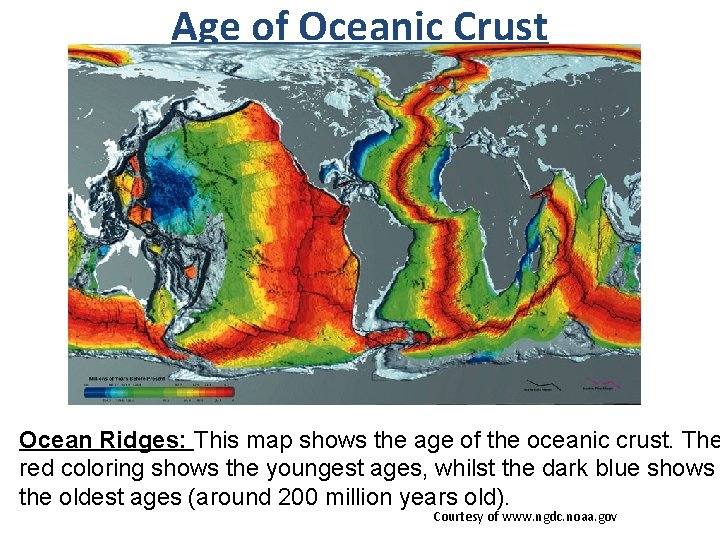
Age of Oceanic Crust Ocean Ridges: This map shows the age of the oceanic crust. The red coloring shows the youngest ages, whilst the dark blue shows the oldest ages (around 200 million years old). Courtesy of www. ngdc. noaa. gov
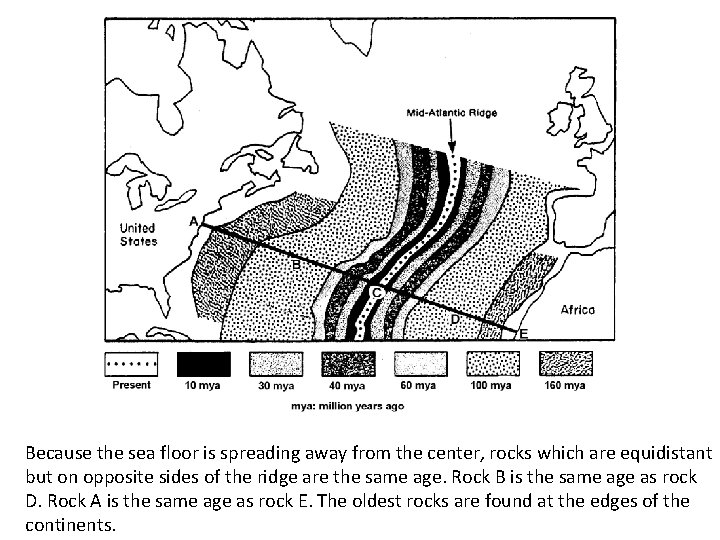
Because the sea floor is spreading away from the center, rocks which are equidistant but on opposite sides of the ridge are the same age. Rock B is the same age as rock D. Rock A is the same age as rock E. The oldest rocks are found at the edges of the continents.
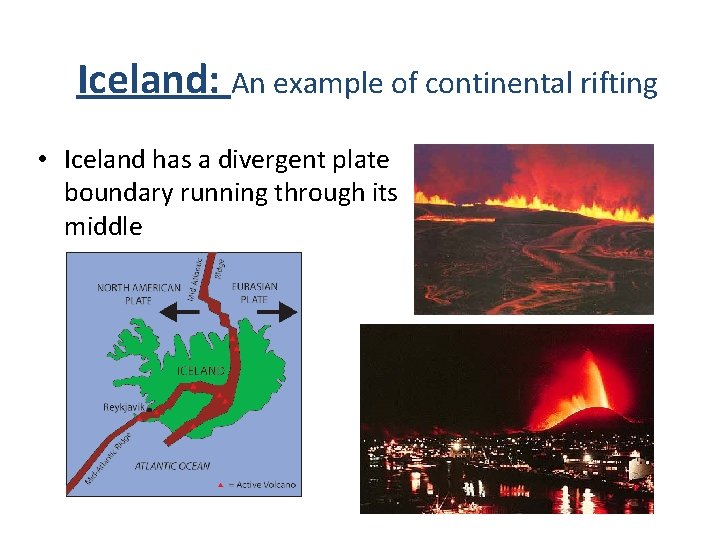
Iceland: An example of continental rifting • Iceland has a divergent plate boundary running through its middle
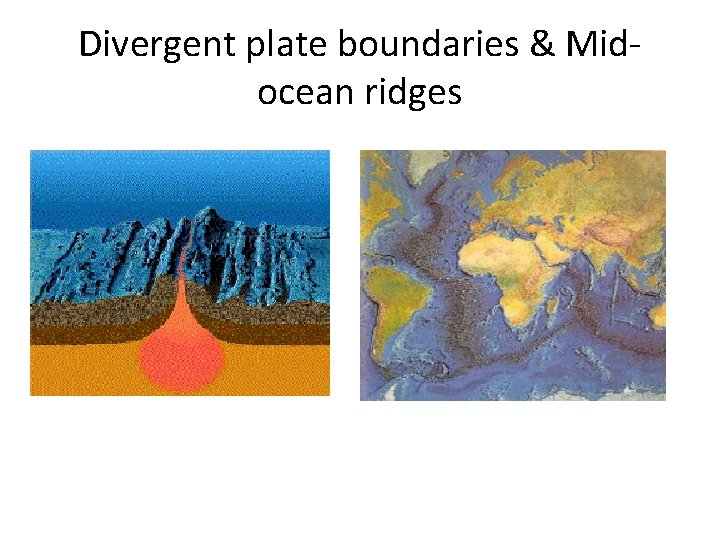
Divergent plate boundaries & Midocean ridges
Convergent Boundaries Convergent- 2 plates move toward each other -crust is destroyed as one plate dives under the other. There are 3 types: 1. Oceanic-Oceanic Collision- subduction zone, trench, undersea volcanoes (volcanic islands) 2. Oceanic-Continental Collision- subduction zone, trench, volcanic mountains 3. Continental-Continental collision- no subduction, edge crumples and thicken, uplift to form mountains
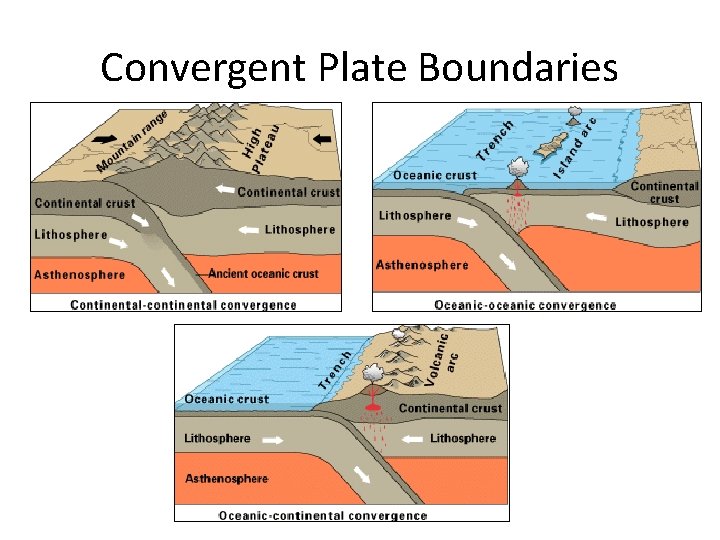
Convergent Plate Boundaries
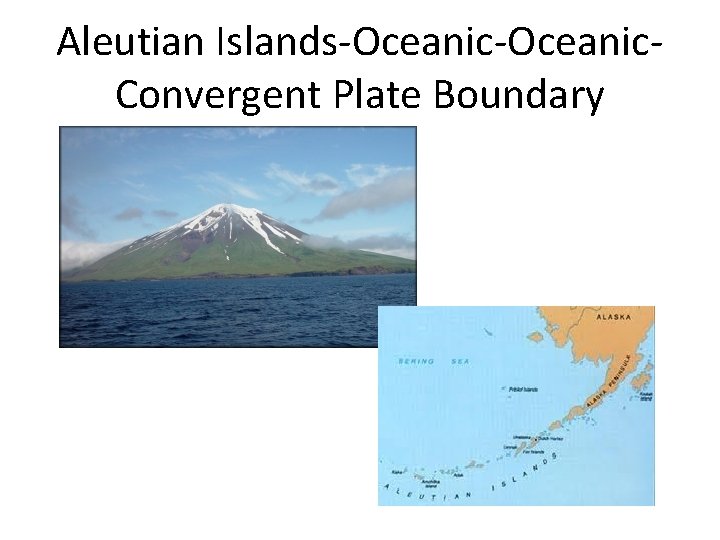
Aleutian Islands-Oceanic. Convergent Plate Boundary
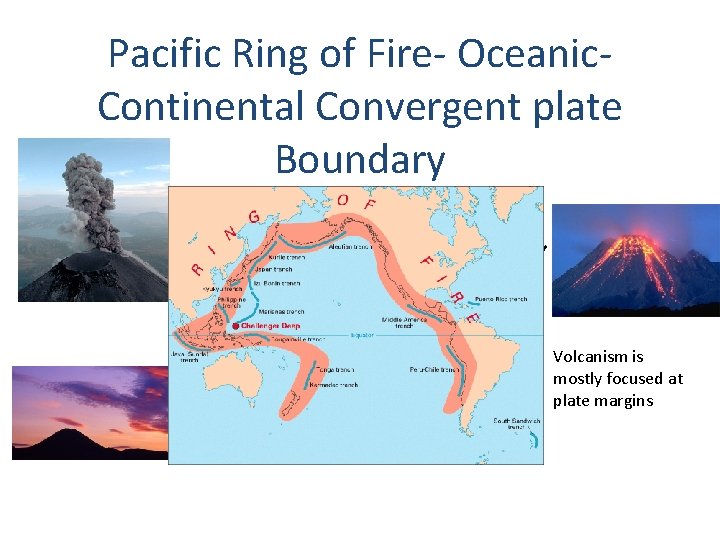
Pacific Ring of Fire- Oceanic. Continental Convergent plate Boundary Volcanism is mostly focused at plate margins
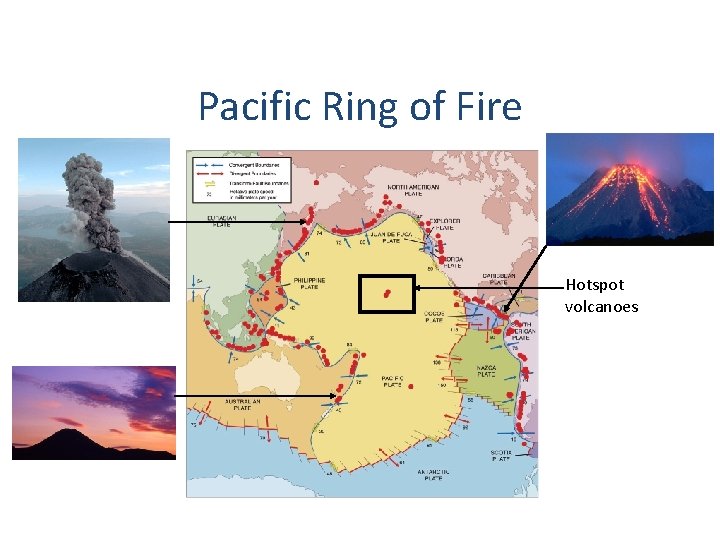
Pacific Ring of Fire Hotspot volcanoes
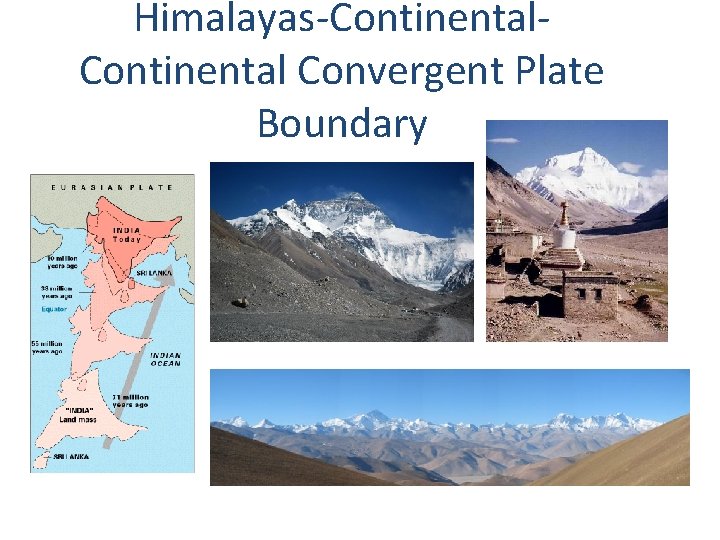
Himalayas-Continental Convergent Plate Boundary
Subduction- is the process that takes place at convergent boundaries by which one tectonic plate moves under another tectonic plate, sinking into the Earth's mantle, as the plates converge. Trench- a deep, narrow depression that forms along the ocean floor as a result of subduction. Ex-Mariana Trench-Pacific Ocean-deepest part of the Earth’s oceans.
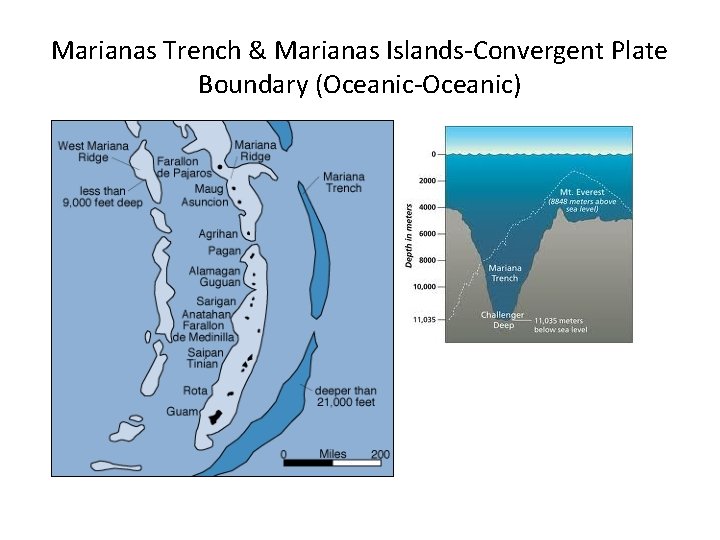
Marianas Trench & Marianas Islands-Convergent Plate Boundary (Oceanic-Oceanic)
Transform Boundaries (faults) Transform Boundaries- 2 plates slide past each other. -crust is neither created nor destroyed. -most in the oceans -Do not produce magma, no volcanism • San Andreas Fault in California is a widely studied transform boundary • The most devastating Earthquakes occur at these boundaries
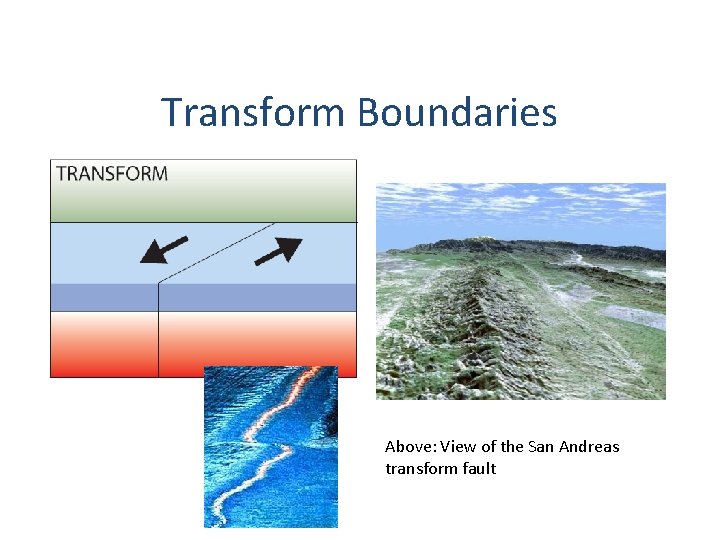
Transform Boundaries Above: View of the San Andreas transform fault
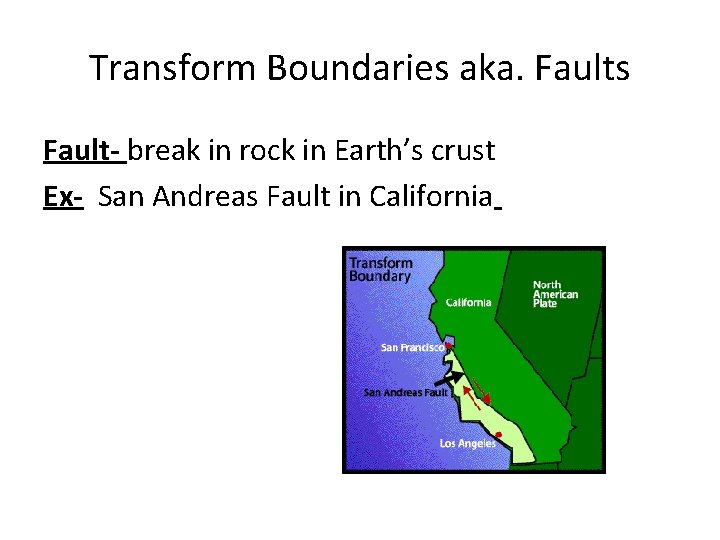
Transform Boundaries aka. Faults Fault- break in rock in Earth’s crust Ex- San Andreas Fault in California
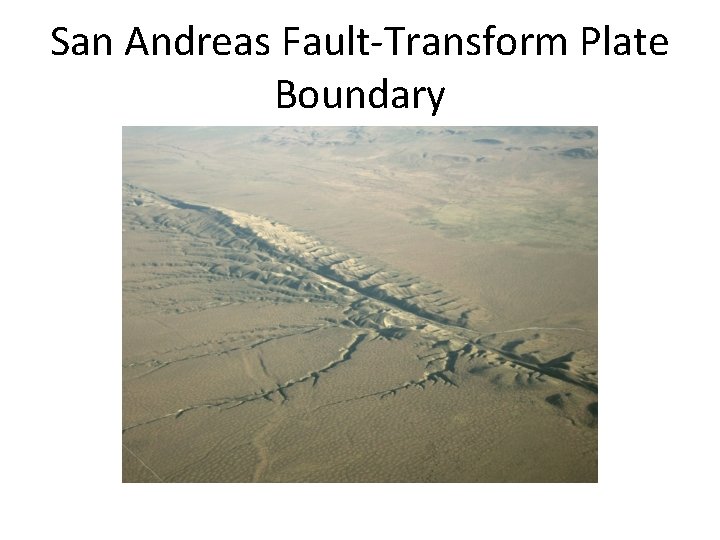
San Andreas Fault-Transform Plate Boundary
Learning Objective Scholars’ will be able to distinguish between the three types of plate boundaries by explaining the characteristics of each.
Think-Pair-Share • With your group, discuss the following question: • What are the main characteristics of each type of plate boundary?
Earthquakes & Plate Tectonics Convergent Plate Boundaries: -As the overriding plate scrapes across the top of the subducting plate, Earthquakes occur. -Can occur between two oceanic plates or between one oceanic plate and one continental plate. Divergent Plate Boundaries: -At the divergent plate boundaries that make up the mid-ocean ridges, two oceanic plates are moving away from each other. -Earthquakes occur at mid-ocean ridges because oceanic lithosphere is pulling away from both sides of the ridge. -This spreading motion causes earthquakes to occur along the ridges.
Earthquakes & Plate Tectonics continued. . • Earthquakes also occur at locations where two continental plates converge, diverge or move horizontally (transform) in opposite directions.
Volcanoes & Tectonic Plates • The cause of many volcanic eruptions is the movement of tectonic plates. Volcano- a vent or fissure in Earth’s surface through which magma and gases are expelled. Lava- magma flows onto Earth’s surface Magma- liquid rock produced in the mantle (made of solid mantle and crust)
Group Work • In groups of three, complete the data table. • Groups will be selected at share out at random. Extension- What causes earthquakes to suddenly happen? Volcanoes to suddenly erupt?
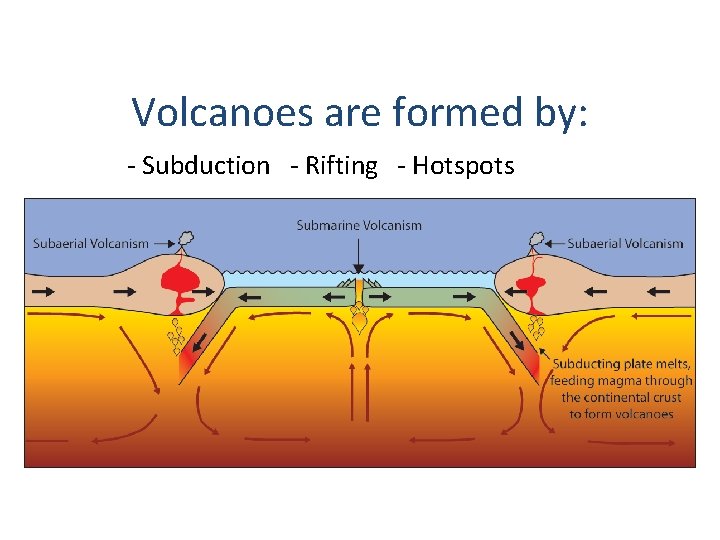
Volcanoes are formed by: - Subduction - Rifting - Hotspots
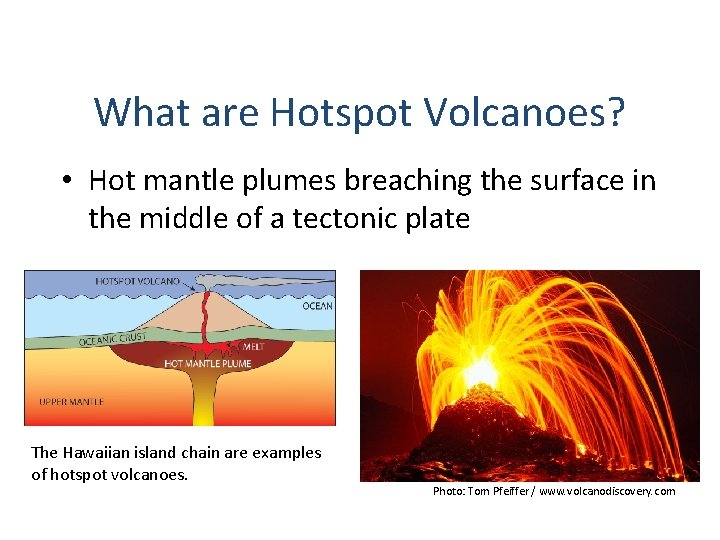
What are Hotspot Volcanoes? • Hot mantle plumes breaching the surface in the middle of a tectonic plate The Hawaiian island chain are examples of hotspot volcanoes. Photo: Tom Pfeiffer / www. volcanodiscovery. com
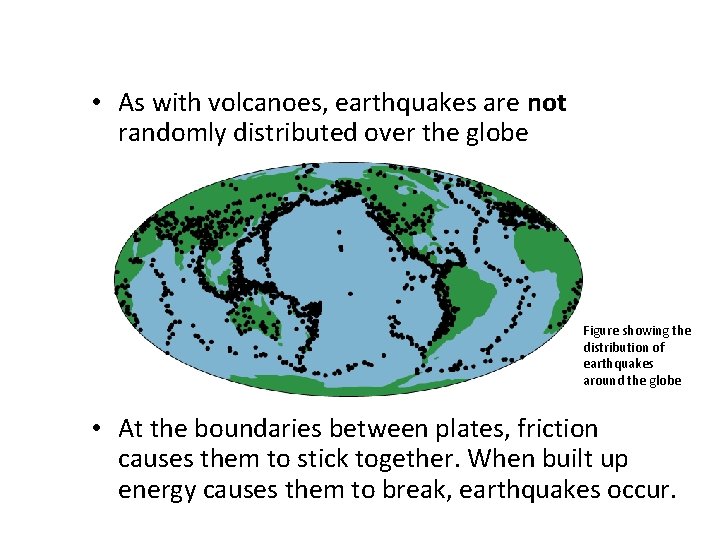
• As with volcanoes, earthquakes are not randomly distributed over the globe Figure showing the distribution of earthquakes around the globe • At the boundaries between plates, friction causes them to stick together. When built up energy causes them to break, earthquakes occur.
Plate Tectonics Summary • The Earth is made up of 3 main layers (core, mantle, crust) • On the surface of the Earth are tectonic plates that slowly move around the globe • Plates are made of crust and upper mantle (lithosphere) • There are 2 types of plates • There are 3 types of plate boundaries • Volcanoes and Earthquakes are closely linked to the margins of the tectonic plates
- Slides: 45