Thursday Science Question of the Day 0607 10
- Slides: 25
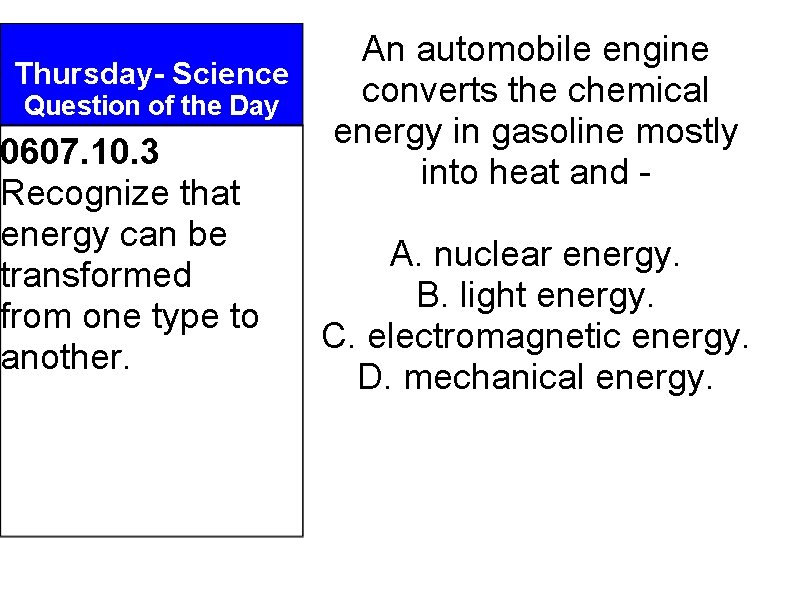
Thursday- Science Question of the Day 0607. 10. 3 Recognize that energy can be transformed from one type to another. An automobile engine converts the chemical energy in gasoline mostly into heat and A. nuclear energy. B. light energy. C. electromagnetic energy. D. mechanical energy.
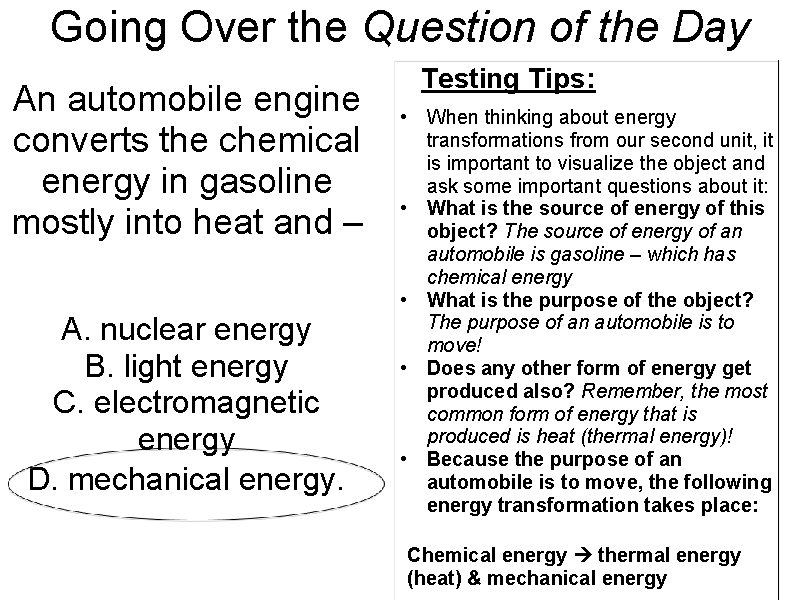
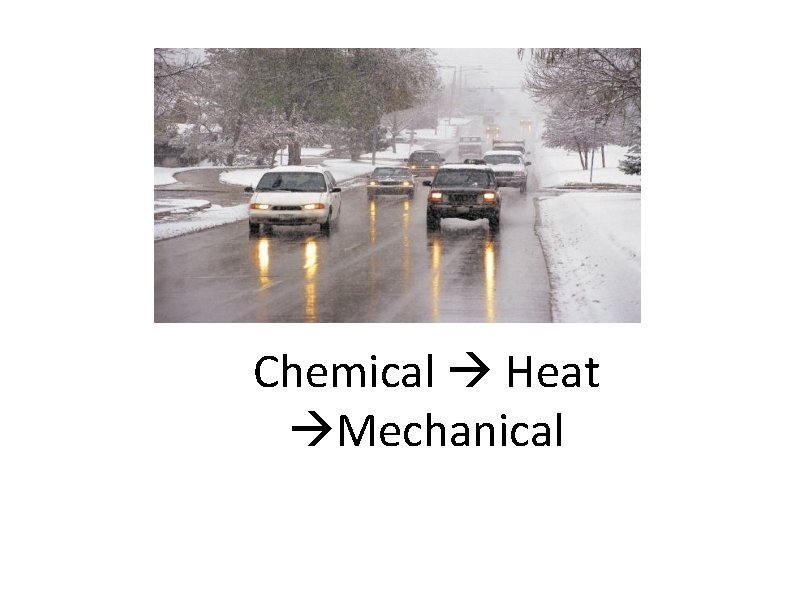
Going Over the Question of the Day An automobile engine converts the chemical energy in gasoline mostly into heat and – A. nuclear energy B. light energy C. electromagnetic energy D. mechanical energy. Testing Tips: • When thinking about energy transformations from our second unit, it is important to visualize the object and ask some important questions about it: • What is the source of energy of this object? The source of energy of an automobile is gasoline – which has chemical energy • What is the purpose of the object? The purpose of an automobile is to move! • Does any other form of energy get produced also? Remember, the most common form of energy that is produced is heat (thermal energy)! • Because the purpose of an automobile is to move, the following energy transformation takes place: Chemical energy thermal energy (heat) & mechanical energy
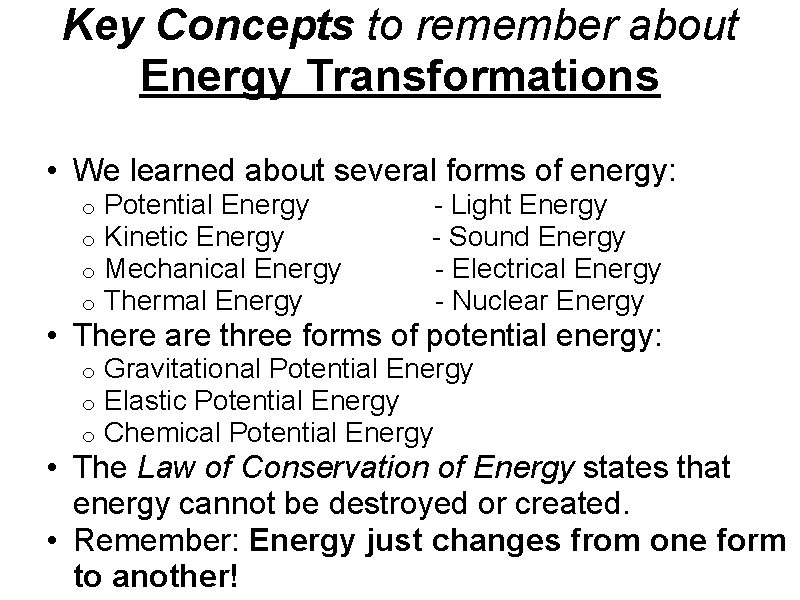
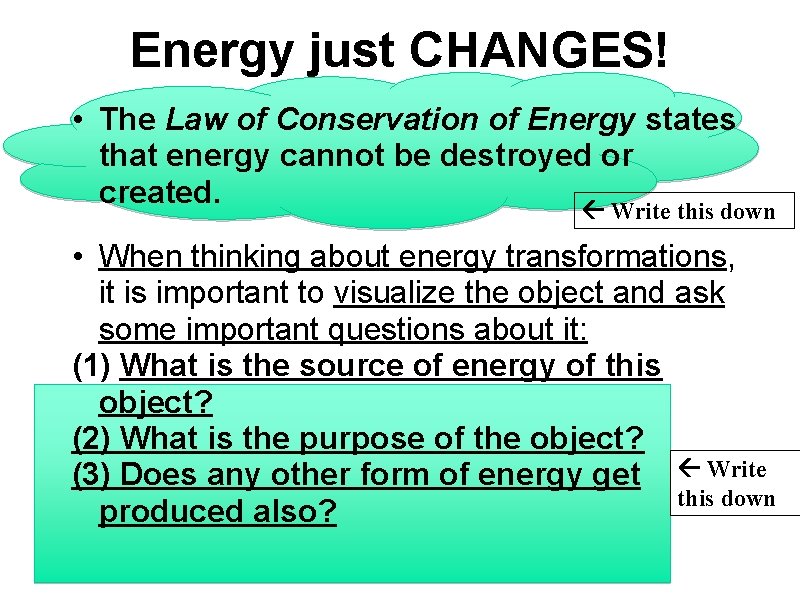
Key Concepts to remember about Energy Transformations • We learned about several forms of energy: o o Potential Energy Kinetic Energy Mechanical Energy Thermal Energy - Light Energy - Sound Energy - Electrical Energy - Nuclear Energy o o o Gravitational Potential Energy Elastic Potential Energy Chemical Potential Energy • There are three forms of potential energy: • The Law of Conservation of Energy states that energy cannot be destroyed or created. • Remember: Energy just changes from one form to another!
Part I: Reviewing Forms of Energy
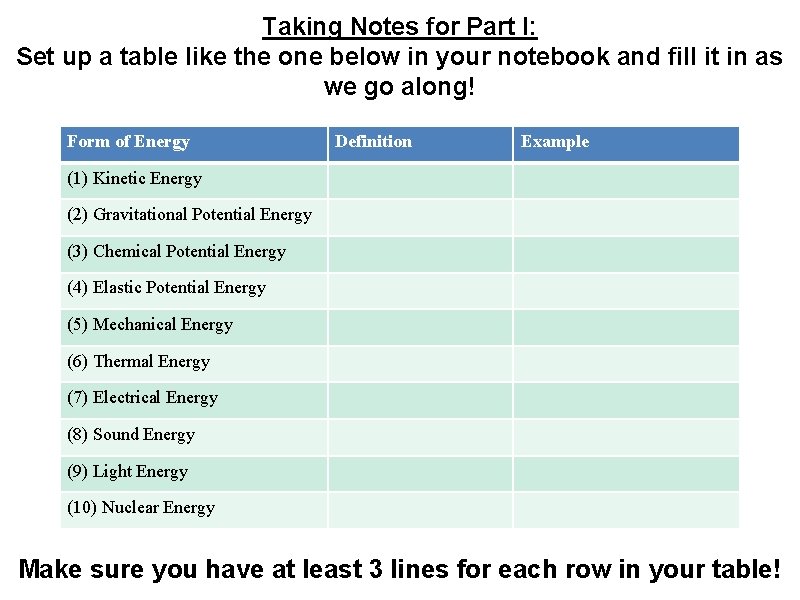
Taking Notes for Part I: Set up a table like the one below in your notebook and fill it in as we go along! Form of Energy Definition Example (1) Kinetic Energy (2) Gravitational Potential Energy (3) Chemical Potential Energy (4) Elastic Potential Energy (5) Mechanical Energy (6) Thermal Energy (7) Electrical Energy (8) Sound Energy (9) Light Energy (10) Nuclear Energy Make sure you have at least 3 lines for each row in your table!
Bellringer 1. Give an example of an abiotic factor in a Tropical Rain Forest. 2. What does a anemometer measure? 3. What causes the tides to rise and fall on Earth? 4. What form of energy would a stretched rubber band have? 5. What measures humidity?
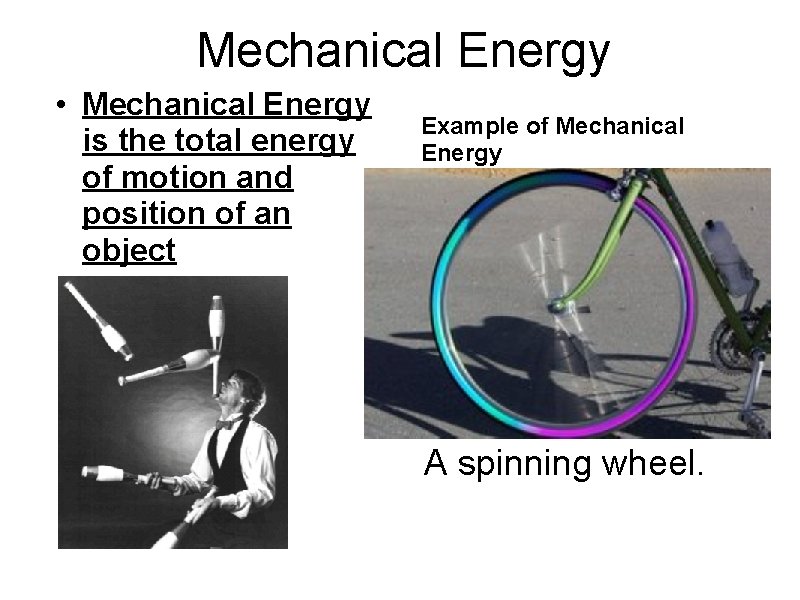
Mechanical Energy • Mechanical Energy is the total energy of motion and position of an object Example of Mechanical Energy A spinning wheel.
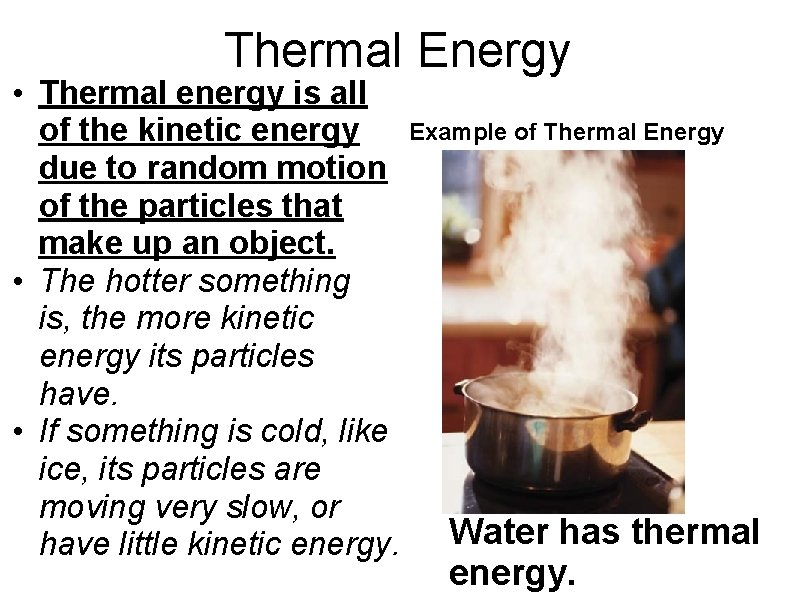
Thermal Energy • Thermal energy is all of the kinetic energy Example of Thermal Energy due to random motion of the particles that make up an object. • The hotter something is, the more kinetic energy its particles have. • If something is cold, like ice, its particles are moving very slow, or have little kinetic energy. Water has thermal energy.
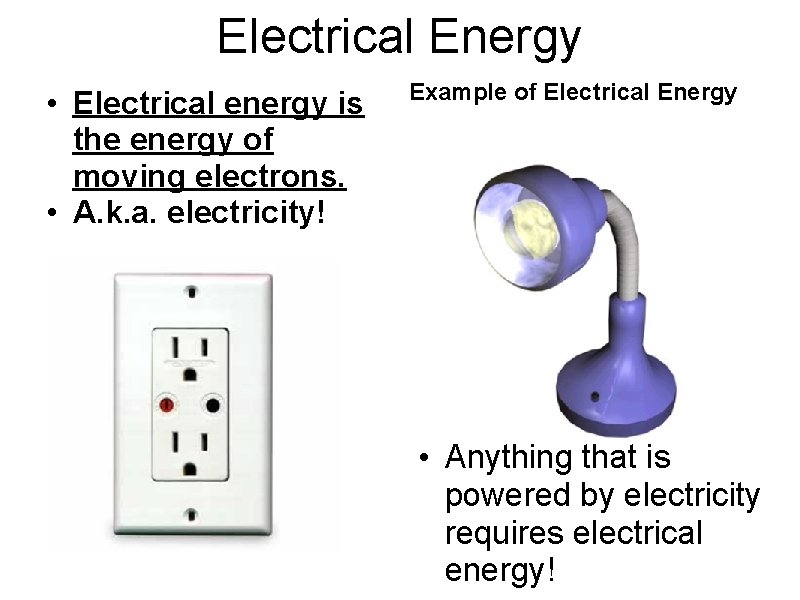
Electrical Energy • Electrical energy is the energy of moving electrons. • A. k. a. electricity! Example of Electrical Energy • Anything that is powered by electricity requires electrical energy!
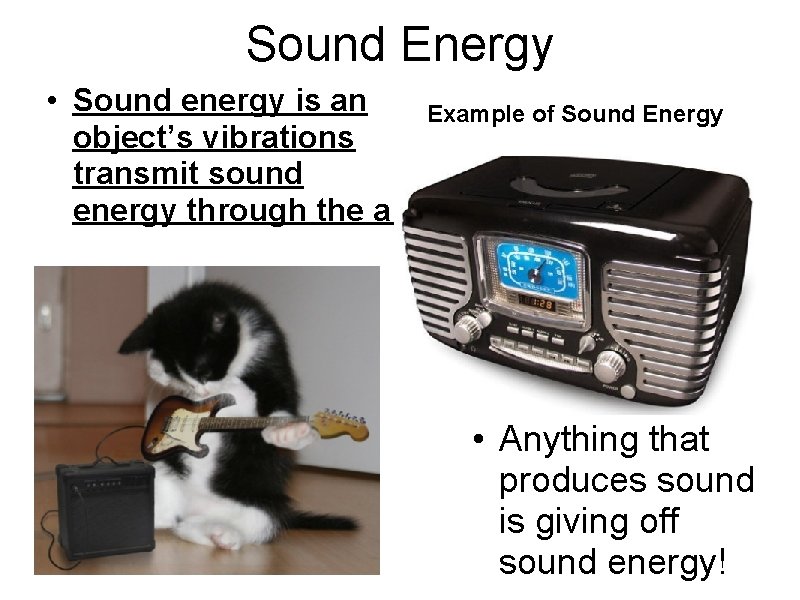
Sound Energy • Sound energy is an Example of Sound Energy object’s vibrations transmit sound energy through the air. • Anything that produces sound is giving off sound energy!
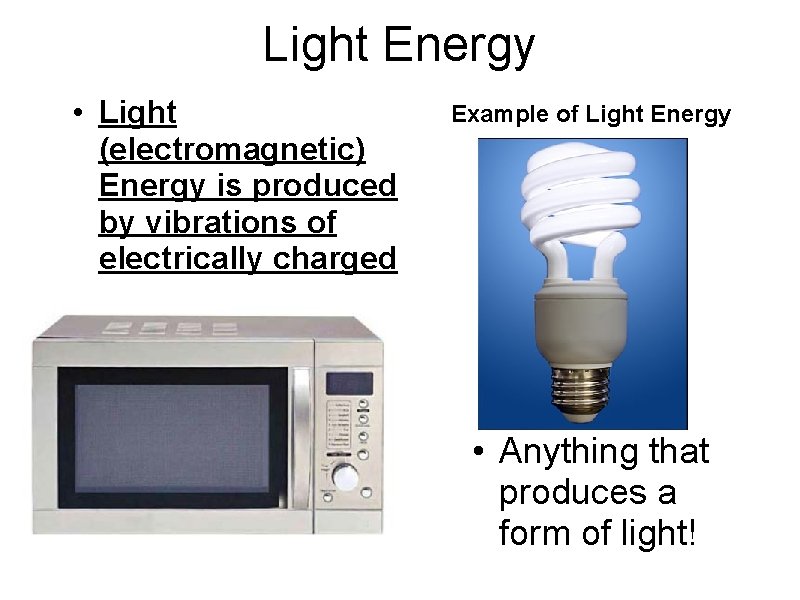
Light Energy • Light (electromagnetic) Energy is produced by vibrations of electrically charged particles. Example of Light Energy • Anything that produces a form of light!
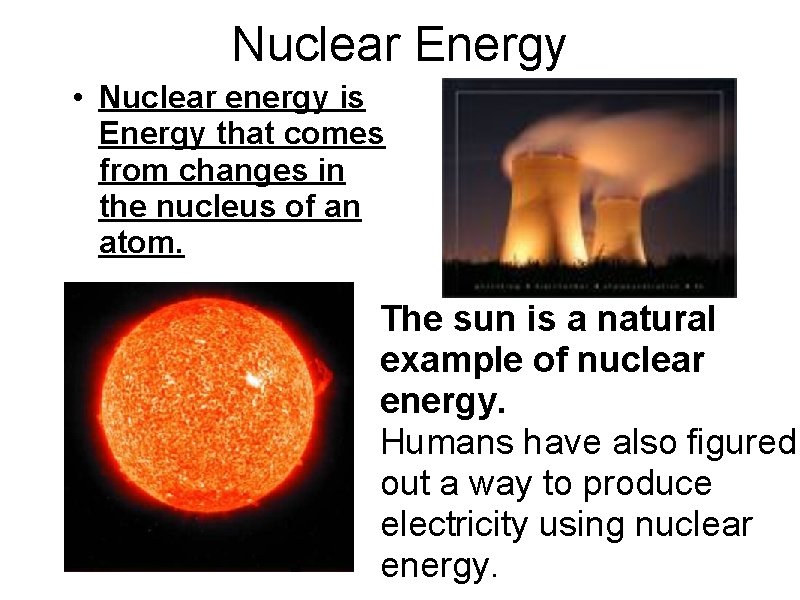
Nuclear Energy • Nuclear energy is Energy that comes from changes in the nucleus of an atom. The sun is a natural example of nuclear energy. Humans have also figured out a way to produce electricity using nuclear energy.
Part II: Energy Transformations
Energy Conversion • Energy can be changed from one form to another. Changes in the form of energy are called energy conversions.
States of Energy • The most common energy conversion is the conversion between potential and kinetic energy. • All forms of energy can be in either of two states: – Potential – Kinetic
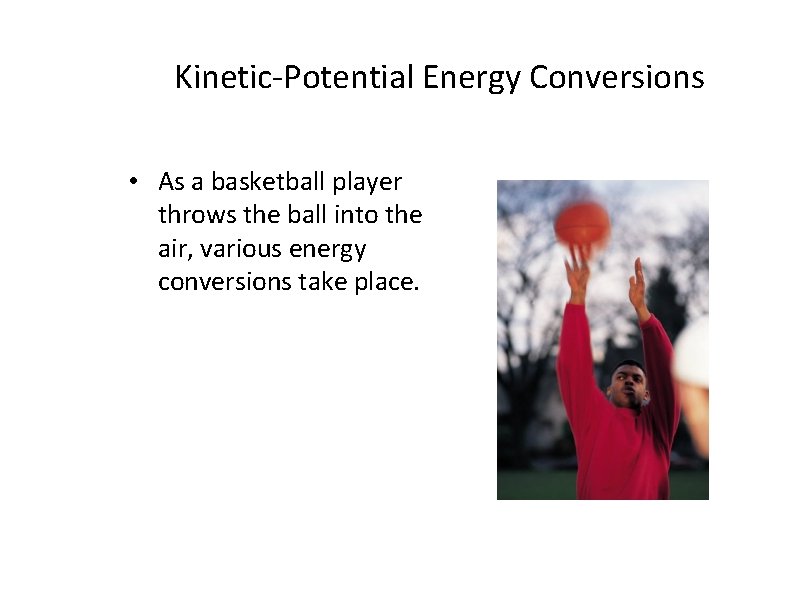
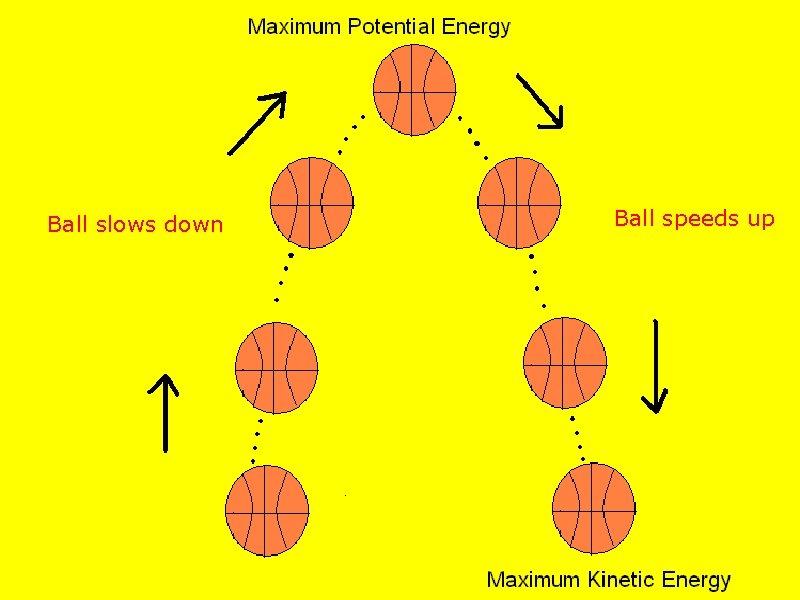
Kinetic-Potential Energy Conversions • As a basketball player throws the ball into the air, various energy conversions take place.
Ball slows down Ball speeds up
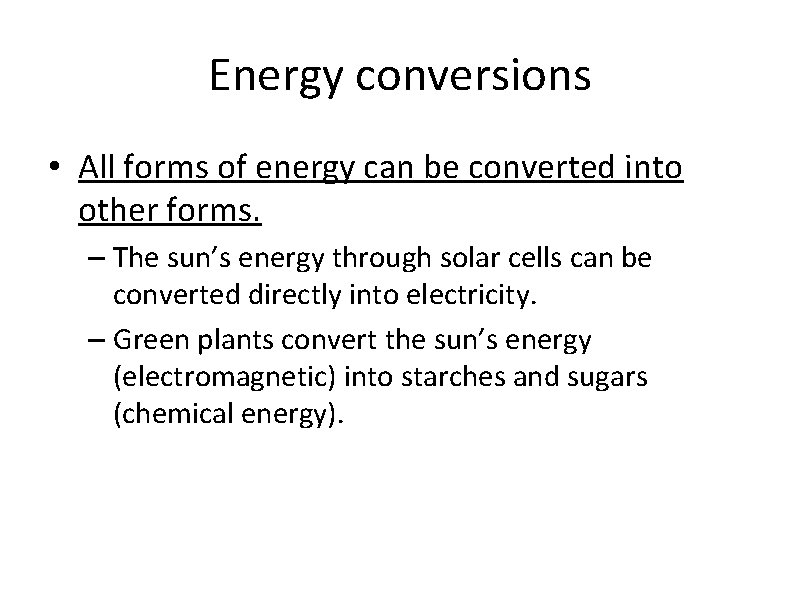
Energy conversions • All forms of energy can be converted into other forms. – The sun’s energy through solar cells can be converted directly into electricity. – Green plants convert the sun’s energy (electromagnetic) into starches and sugars (chemical energy).
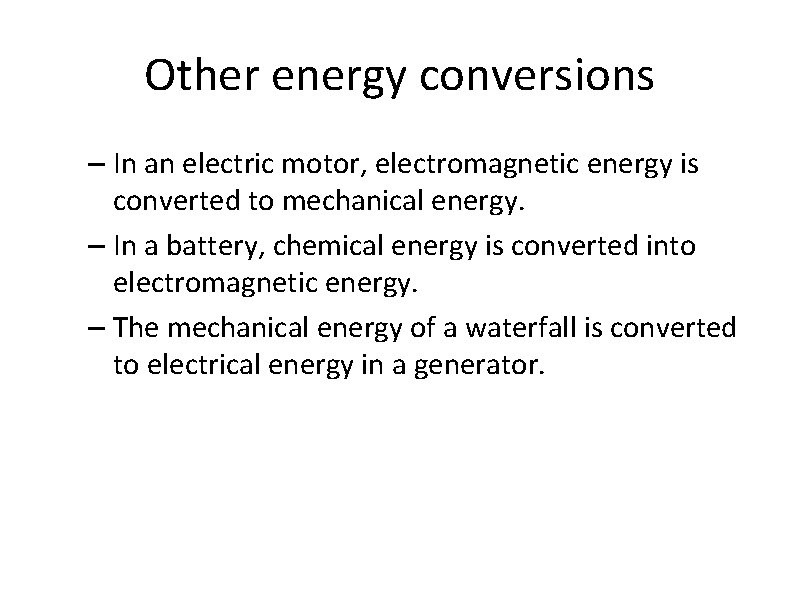
Other energy conversions – In an electric motor, electromagnetic energy is converted to mechanical energy. – In a battery, chemical energy is converted into electromagnetic energy. – The mechanical energy of a waterfall is converted to electrical energy in a generator.
Chemical Heat Mechanical
Energy just CHANGES! • The Law of Conservation of Energy states that energy cannot be destroyed or created. Write this down • When thinking about energy transformations, it is important to visualize the object and ask some important questions about it: (1) What is the source of energy of this object? (2) What is the purpose of the object? (3) Does any other form of energy get Write this down produced also?
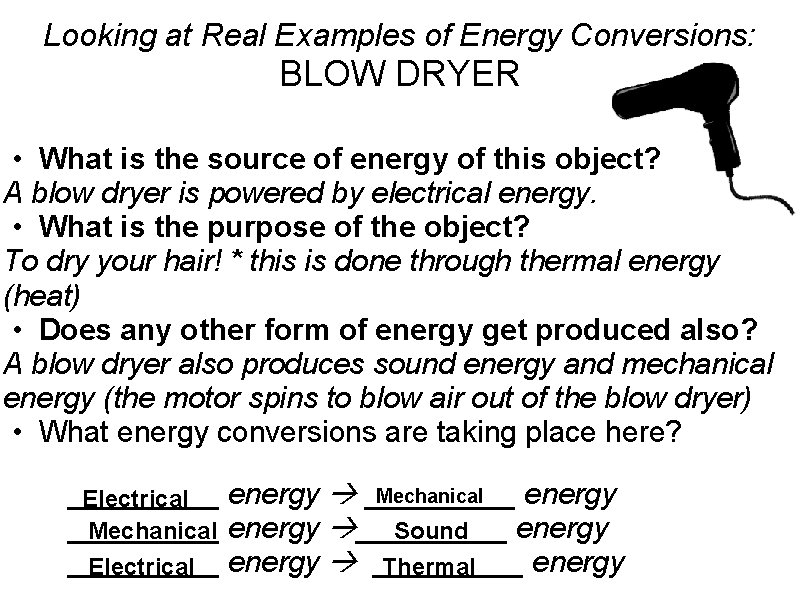
Looking at Real Examples of Energy Conversions: BLOW DRYER • What is the source of energy of this object? A blow dryer is powered by electrical energy. • What is the purpose of the object? To dry your hair! * this is done through thermal energy (heat) • Does any other form of energy get produced also? A blow dryer also produces sound energy and mechanical energy (the motor spins to blow air out of the blow dryer) • What energy conversions are taking place here? Mechanical _________ energy Electrical _____ energy Mechanical energy _____ Sound _____ energy Electrical energy _____ Thermal
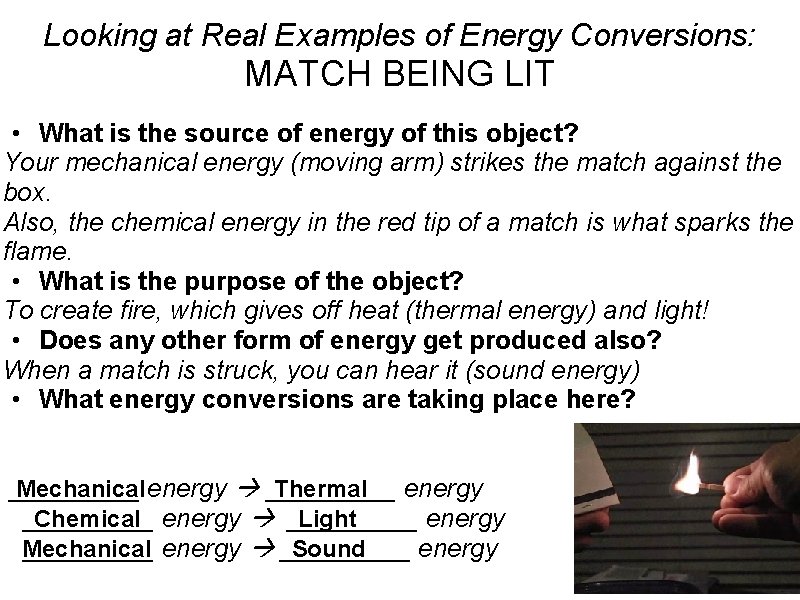
Looking at Real Examples of Energy Conversions: MATCH BEING LIT • What is the source of energy of this object? Your mechanical energy (moving arm) strikes the match against the box. Also, the chemical energy in the red tip of a match is what sparks the flame. • What is the purpose of the object? To create fire, which gives off heat (thermal energy) and light! • Does any other form of energy get produced also? When a match is struck, you can hear it (sound energy) • What energy conversions are taking place here? Mechanical energy _____ Thermal _________ energy Chemical energy _____ Light _________ energy Mechanical Sound
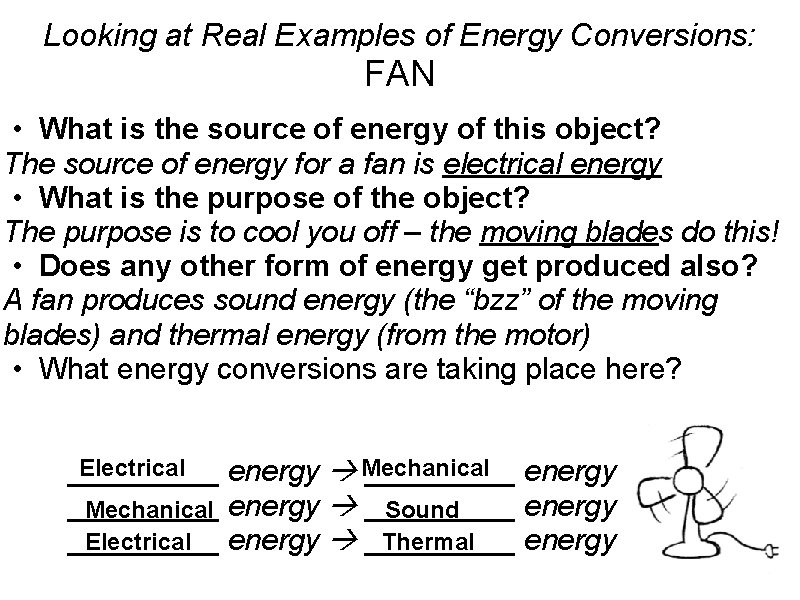
Looking at Real Examples of Energy Conversions: FAN • What is the source of energy of this object? The source of energy for a fan is electrical energy • What is the purpose of the object? The purpose is to cool you off – the moving blades do this! • Does any other form of energy get produced also? A fan produces sound energy (the “bzz” of the moving blades) and thermal energy (from the motor) • What energy conversions are taking place here? Electrical _____ energy Mechanical _________ energy Mechanical energy _____ Sound _________ energy Electrical Thermal
Looking at Real Examples of Energy Conversions: Create Your Own! • At the bottom of your notes today underneath your steps for identifying Energy Transformations, describe your own example of an energy conversion that we have not yet discussed. • Then, take a few minutes to share your energy conversion. • Fellow scholars: if you think that a scholar has missed or incorrectly identified an energy conversion, raise your hand to respectfully correct them and make you sure you explain!