Threat Analysis Lunar Security Services Overview Definitions Representation

- Slides: 17
Threat Analysis Lunar Security Services
Overview • • • Definitions Representation Challenges “The Unthinkable” Strategies & Recommendations 2
Background • What is threat analysis? – Potential Attacks/Threats/Risks – Analysis – Countermeasures – Future Preparations • NIST’s “Introduction to Threat Analysis Workshop”, October 2005 3
Stakes • People – – – – Voters Candidates Poll Workers Political Groups Developers Board of Elections Attackers More. . . • Voting: A System of. . . – – – – IT American Politics Duty Trust Inclusion Safety Process Precedence. . . if it works 4
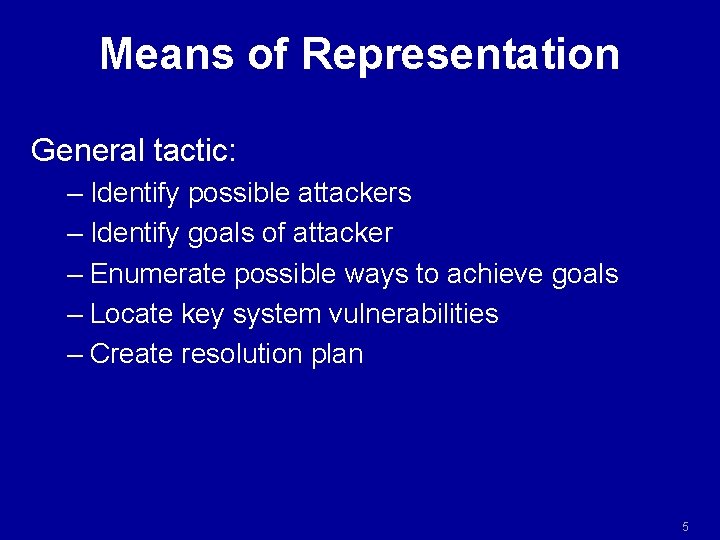
Means of Representation General tactic: – Identify possible attackers – Identify goals of attacker – Enumerate possible ways to achieve goals – Locate key system vulnerabilities – Create resolution plan 5
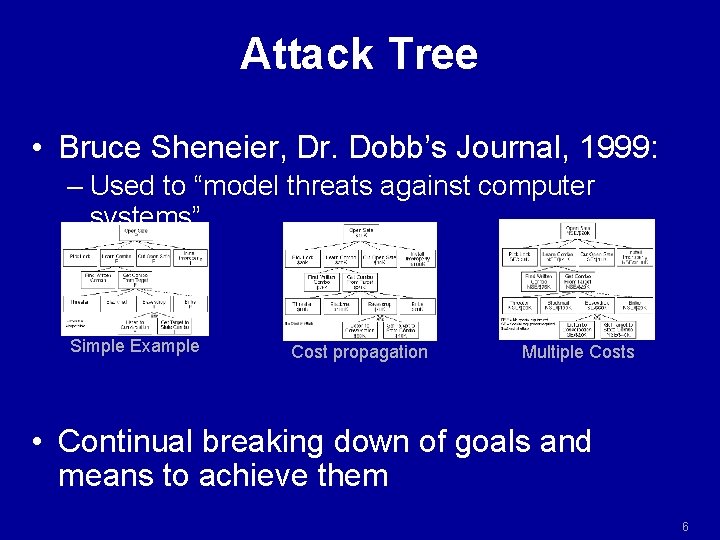
Attack Tree • Bruce Sheneier, Dr. Dobb’s Journal, 1999: – Used to “model threats against computer systems” Simple Example Cost propagation Multiple Costs • Continual breaking down of goals and means to achieve them 6
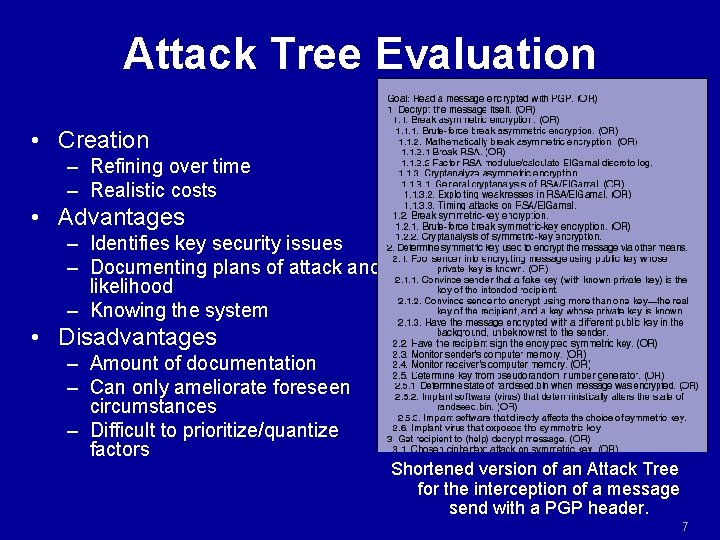
Attack Tree Evaluation • Creation – Refining over time – Realistic costs • Advantages – Identifies key security issues – Documenting plans of attack and likelihood – Knowing the system • Disadvantages – Amount of documentation – Can only ameliorate foreseen circumstances – Difficult to prioritize/quantize factors Shortened version of an Attack Tree for the interception of a message send with a PGP header. 7
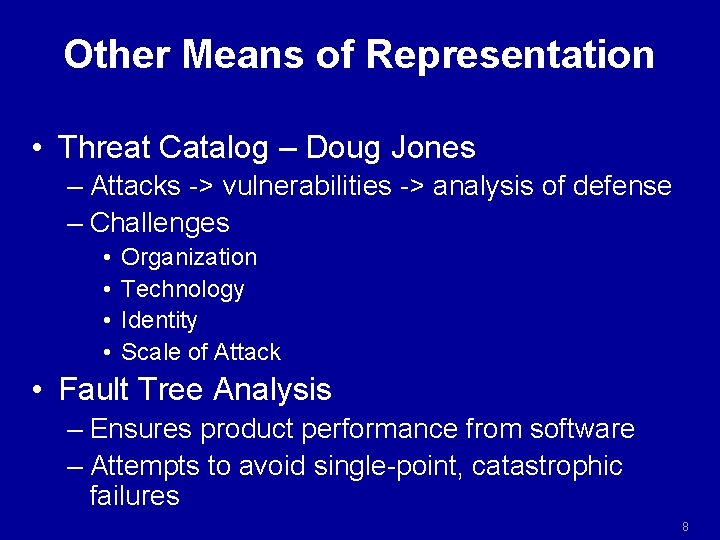
Other Means of Representation • Threat Catalog – Doug Jones – Attacks -> vulnerabilities -> analysis of defense – Challenges • • Organization Technology Identity Scale of Attack • Fault Tree Analysis – Ensures product performance from software – Attempts to avoid single-point, catastrophic failures 8
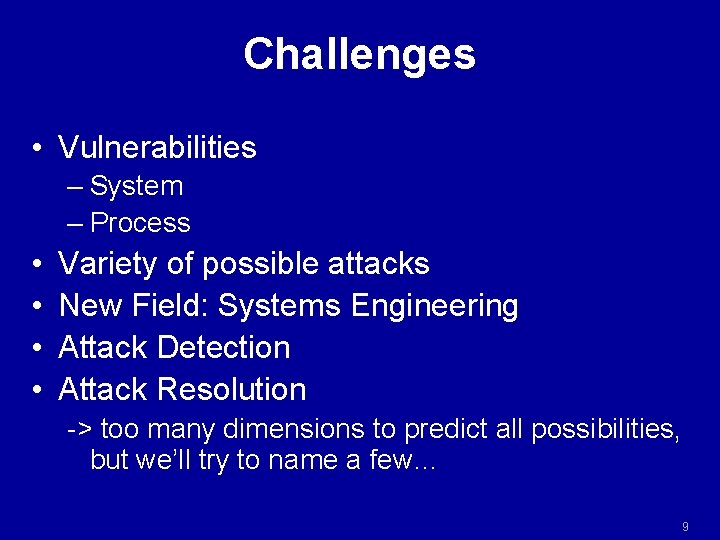
Challenges • Vulnerabilities – System – Process • • Variety of possible attacks New Field: Systems Engineering Attack Detection Attack Resolution -> too many dimensions to predict all possibilities, but we’ll try to name a few… 9
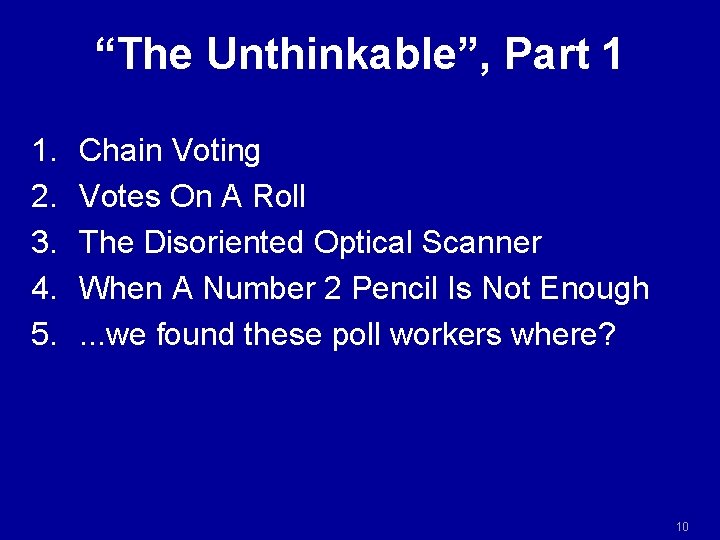
“The Unthinkable”, Part 1 1. 2. 3. 4. 5. Chain Voting Votes On A Roll The Disoriented Optical Scanner When A Number 2 Pencil Is Not Enough. . . we found these poll workers where? 10
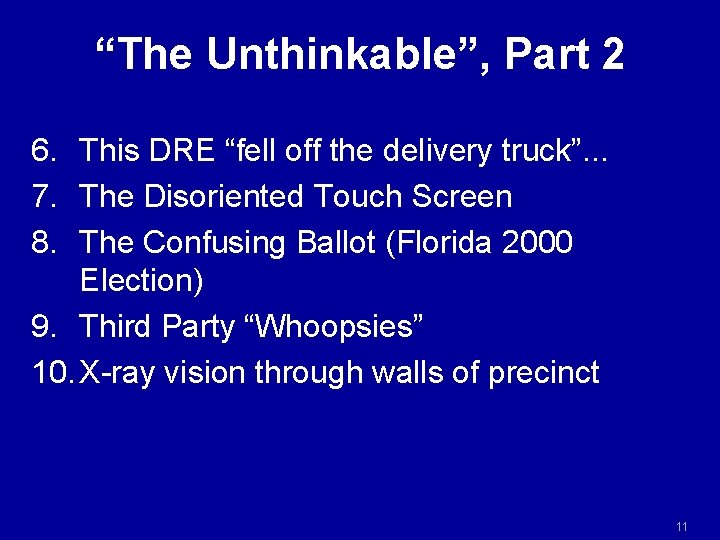
“The Unthinkable”, Part 2 6. This DRE “fell off the delivery truck”. . . 7. The Disoriented Touch Screen 8. The Confusing Ballot (Florida 2000 Election) 9. Third Party “Whoopsies” 10. X-ray vision through walls of precinct 11
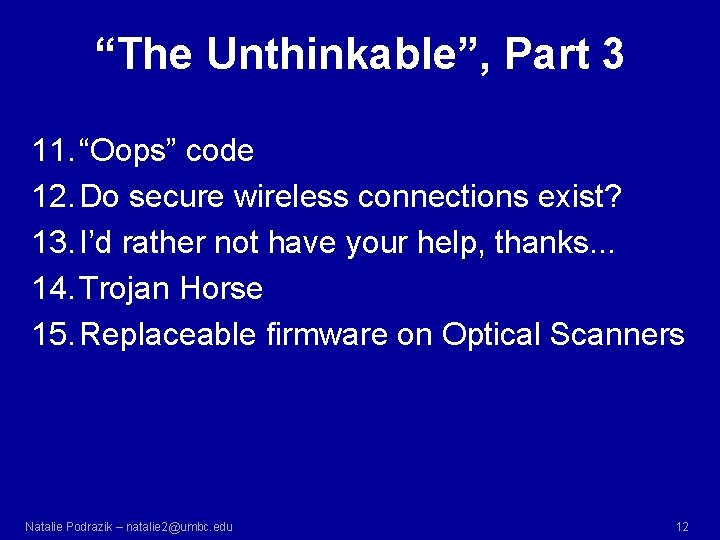
“The Unthinkable”, Part 3 11. “Oops” code 12. Do secure wireless connections exist? 13. I’d rather not have your help, thanks. . . 14. Trojan Horse 15. Replaceable firmware on Optical Scanners Natalie Podrazik – natalie 2@umbc. edu 12
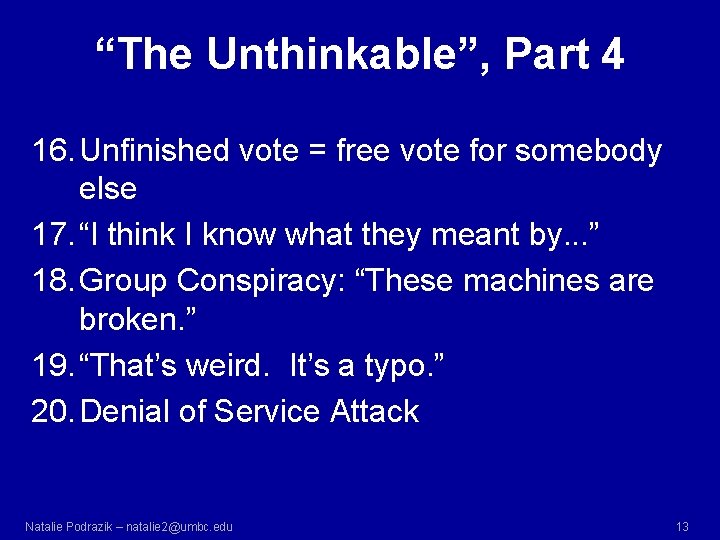
“The Unthinkable”, Part 4 16. Unfinished vote = free vote for somebody else 17. “I think I know what they meant by. . . ” 18. Group Conspiracy: “These machines are broken. ” 19. “That’s weird. It’s a typo. ” 20. Denial of Service Attack Natalie Podrazik – natalie 2@umbc. edu 13
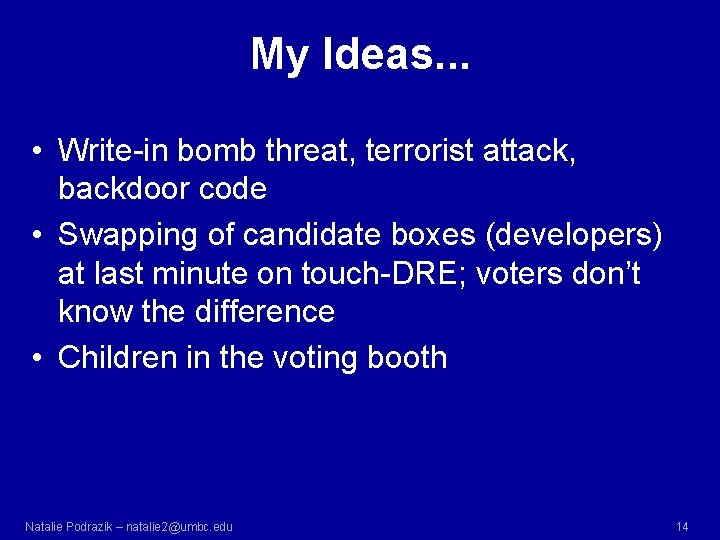
My Ideas. . . • Write-in bomb threat, terrorist attack, backdoor code • Swapping of candidate boxes (developers) at last minute on touch-DRE; voters don’t know the difference • Children in the voting booth Natalie Podrazik – natalie 2@umbc. edu 14
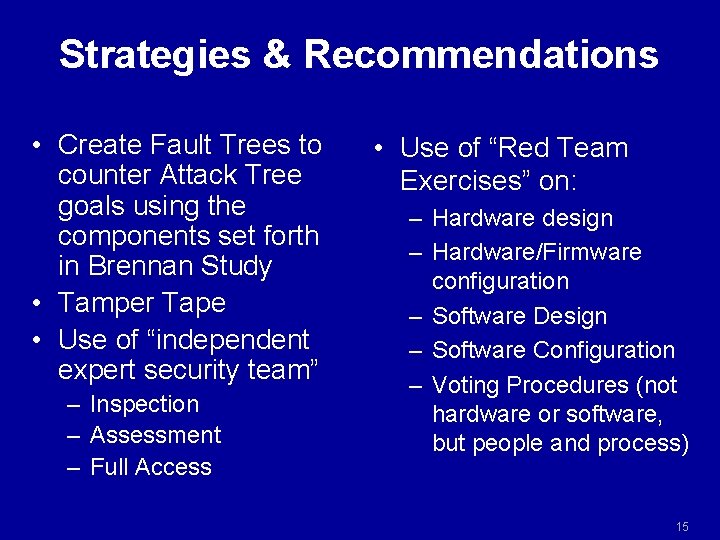
Strategies & Recommendations • Create Fault Trees to counter Attack Tree goals using the components set forth in Brennan Study • Tamper Tape • Use of “independent expert security team” – Inspection – Assessment – Full Access • Use of “Red Team Exercises” on: – Hardware design – Hardware/Firmware configuration – Software Design – Software Configuration – Voting Procedures (not hardware or software, but people and process) 15
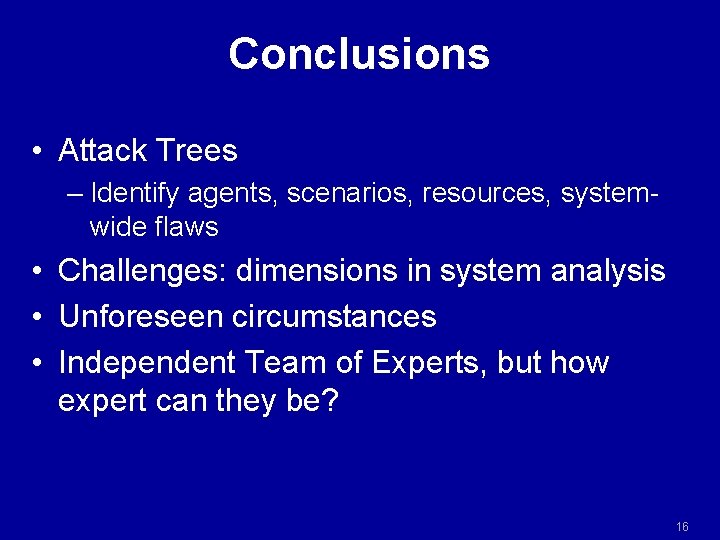
Conclusions • Attack Trees – Identify agents, scenarios, resources, systemwide flaws • Challenges: dimensions in system analysis • Unforeseen circumstances • Independent Team of Experts, but how expert can they be? 16
Works Cited 1. 2. 3. 4. 5. 6. 7. All 20 “The Unthinkable” scenarios available at: http: //www. vote. nist. gov/threats/papers. htm Goldbrick Gallery’s 25 Best Editorial Cartoons of 2004. Online: http: //www. goldbrickgallery. com/bestof 2004_2. html Jones, Doug. “Threat Taxonomy Overview” slides, from the NIST Threats to Voting Workshop, 7 October 2005. Online: http: //www. vote. nist. gov/threats/Jonesthreattalk. pdf Mell, Peter. “Handling IT System Threat Information” slides, from the NIST Threats to Voting Workshop, 7 October 2005. Online: http: //www. vote. nist. gov/threats/mellthreat. pdf “Recommendations of the Brennan Center for Justice and the Leadership Conference on Civil Rights for Improving Reliability of Direct Recording Electronic Voting Systems”: http: //www. brennancenter. org/programs/downloads/voting_systems_final_rec ommendations. pdf: Wack, John, and Skall, Mark. “Introduction to Threat Analysis Workshop” slides, from the NIST Threats to Voting Workshop, 7 October 2005. Online: http: //www. vote. nist. gov/threats/wackthreat. pdf Wikipedia Entry for fault tree: http: //en. wikipedia. org/wiki/Fault_tree 17