The social psychology of prejudice Matt Jarvis Presentation
- Slides: 8
The social psychology of prejudice Matt Jarvis
Presentation title Prejudice Stereotypes • Stereotypes are social schemas that help us make sense of a group of people. • They can be positive or negative. • Negative stereotypes of particular groups of people can make us prejudice against them. For example: Fundamentalist Muslims Benefit claimants
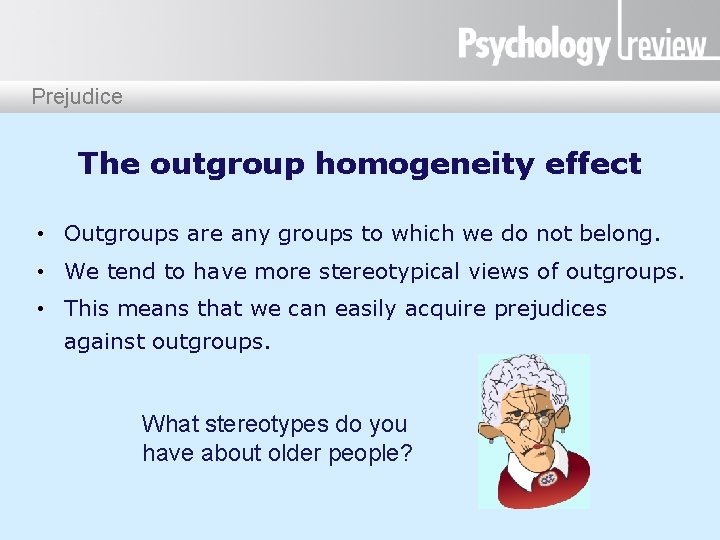
Presentation title Prejudice The outgroup homogeneity effect • Outgroups are any groups to which we do not belong. • We tend to have more stereotypical views of outgroups. • This means that we can easily acquire prejudices against outgroups. What stereotypes do you have about older people?
Presentation title Prejudice Social identity • Tajfel & Turner (1979) proposed that we see ourselves in terms of our membership of groups, such as gender and age. • Our self-esteem is tied up with our group membership, so in order to maintain good self-esteem we tend to see our own groups positively and outgroups more negatively.
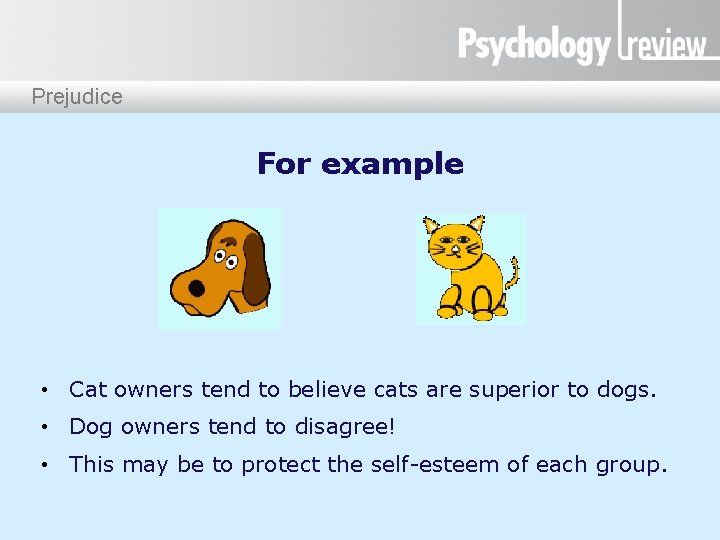
Presentation title Prejudice For example • Cat owners tend to believe cats are superior to dogs. • Dog owners tend to disagree! • This may be to protect the self-esteem of each group.
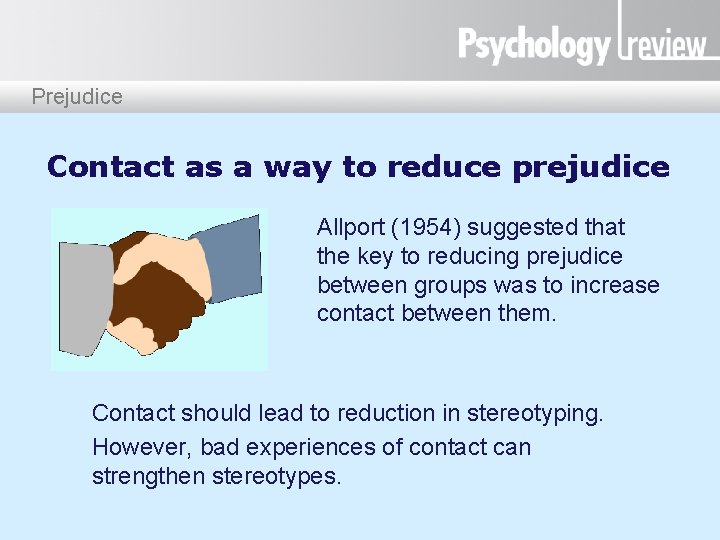
Presentation title Prejudice Contact as a way to reduce prejudice Allport (1954) suggested that the key to reducing prejudice between groups was to increase contact between them. Contact should lead to reduction in stereotyping. However, bad experiences of contact can strengthen stereotypes.
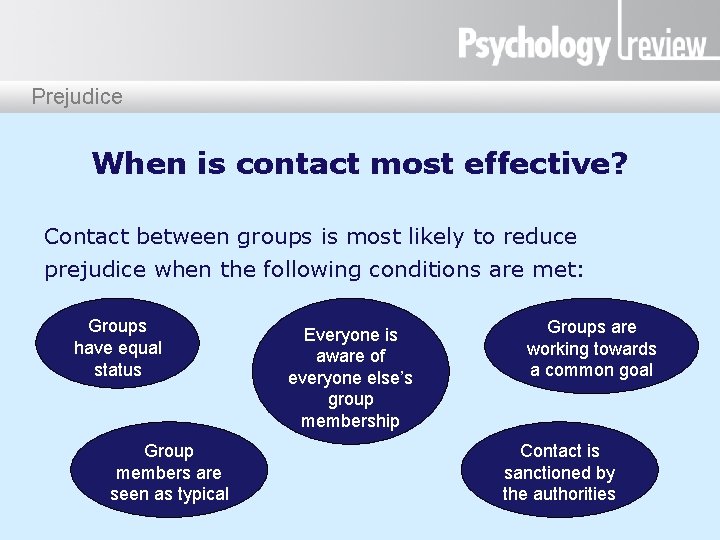
Presentation title Prejudice When is contact most effective? Contact between groups is most likely to reduce prejudice when the following conditions are met: Groups have equal status Group members are seen as typical Everyone is aware of everyone else’s group membership Groups are working towards a common goal Contact is sanctioned by the authorities
Presentation title Prejudice Two interesting findings about contact Sometimes indirect contact can be effective. Having a friend of a friend in an outgroup can reduce prejudice. Reducing one prejudice through contact has a positive knock-on effect on other prejudices.