The Sixties A Decade of Protest and Change

- Slides: 18
The Sixties A Decade of Protest and Change STAAR Review 11
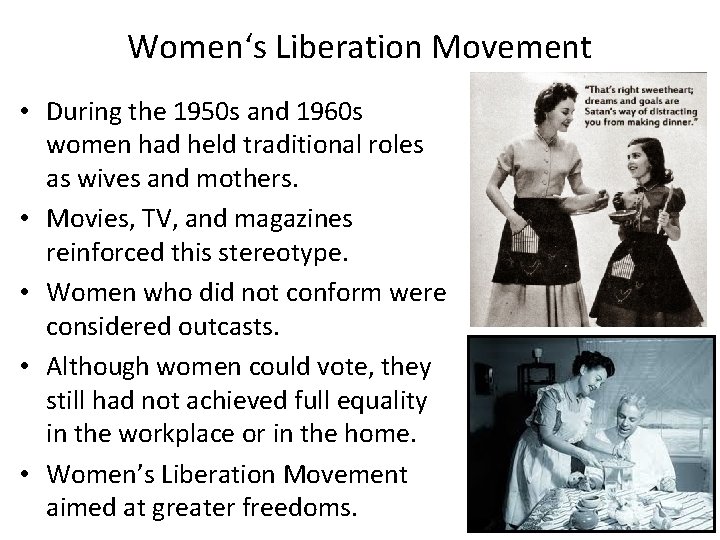
Women‘s Liberation Movement • During the 1950 s and 1960 s women had held traditional roles as wives and mothers. • Movies, TV, and magazines reinforced this stereotype. • Women who did not conform were considered outcasts. • Although women could vote, they still had not achieved full equality in the workplace or in the home. • Women’s Liberation Movement aimed at greater freedoms.
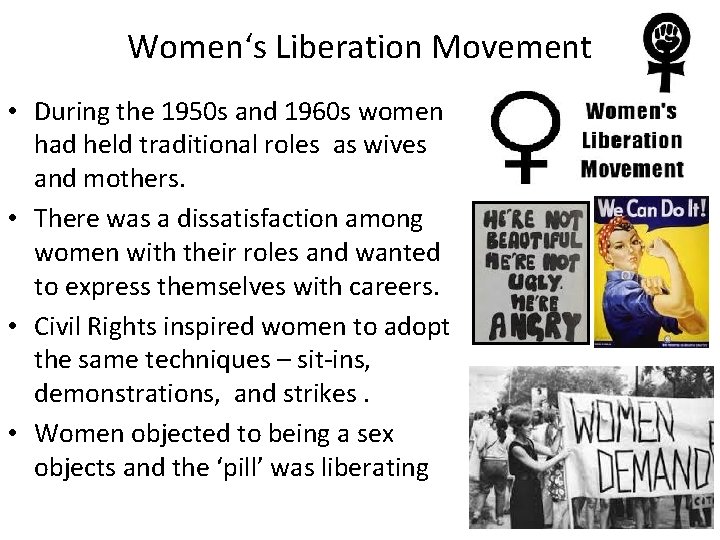
Women‘s Liberation Movement • During the 1950 s and 1960 s women had held traditional roles as wives and mothers. • There was a dissatisfaction among women with their roles and wanted to express themselves with careers. • Civil Rights inspired women to adopt the same techniques – sit-ins, demonstrations, and strikes. • Women objected to being a sex objects and the ‘pill’ was liberating
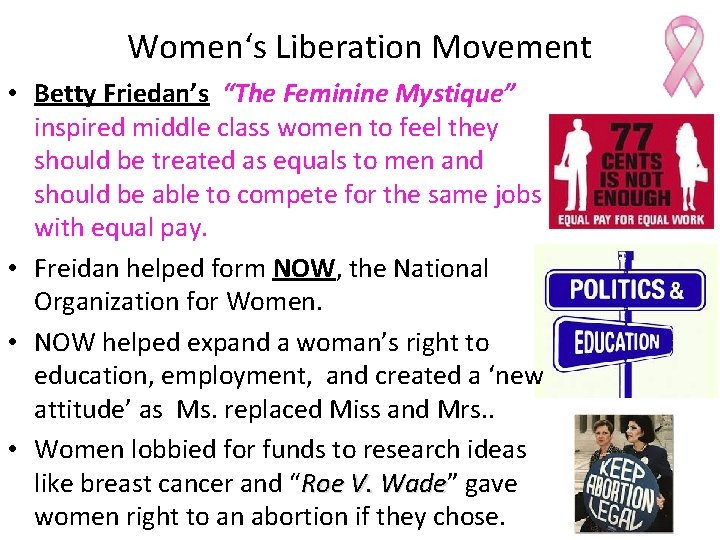
Women‘s Liberation Movement • Betty Friedan’s “The Feminine Mystique” inspired middle class women to feel they should be treated as equals to men and should be able to compete for the same jobs with equal pay. • Freidan helped form NOW, the National Organization for Women. • NOW helped expand a woman’s right to education, employment, and created a ‘new attitude’ as Ms. replaced Miss and Mrs. . • Women lobbied for funds to research ideas like breast cancer and “Roe V. Wade” Wade gave women right to an abortion if they chose.
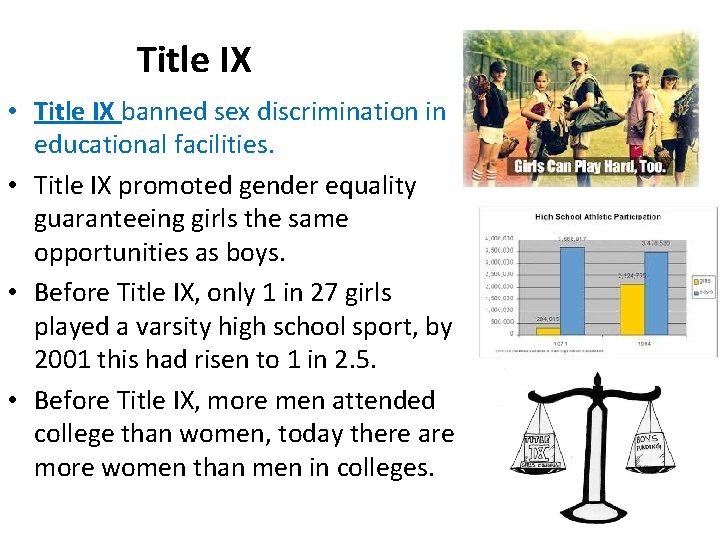
Title IX • Title IX banned sex discrimination in educational facilities. • Title IX promoted gender equality guaranteeing girls the same opportunities as boys. • Before Title IX, only 1 in 27 girls played a varsity high school sport, by 2001 this had risen to 1 in 2. 5. • Before Title IX, more men attended college than women, today there are more women than men in colleges.
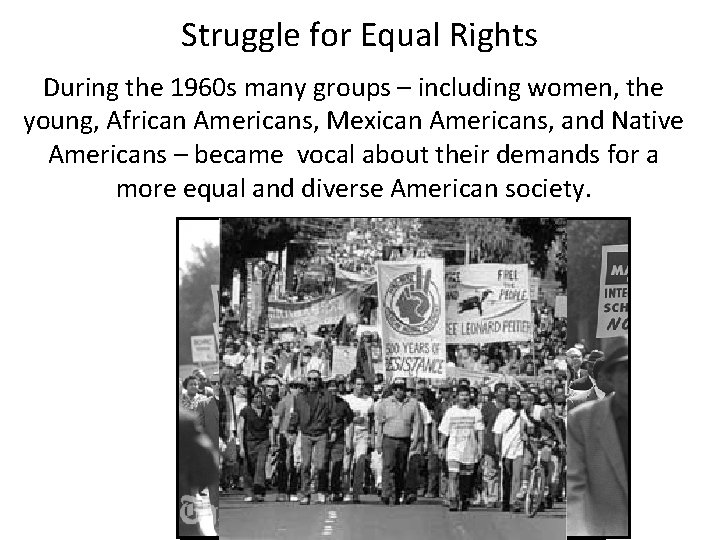
Struggle for Equal Rights During the 1960 s many groups – including women, the young, African Americans, Mexican Americans, and Native Americans – became vocal about their demands for a more equal and diverse American society.
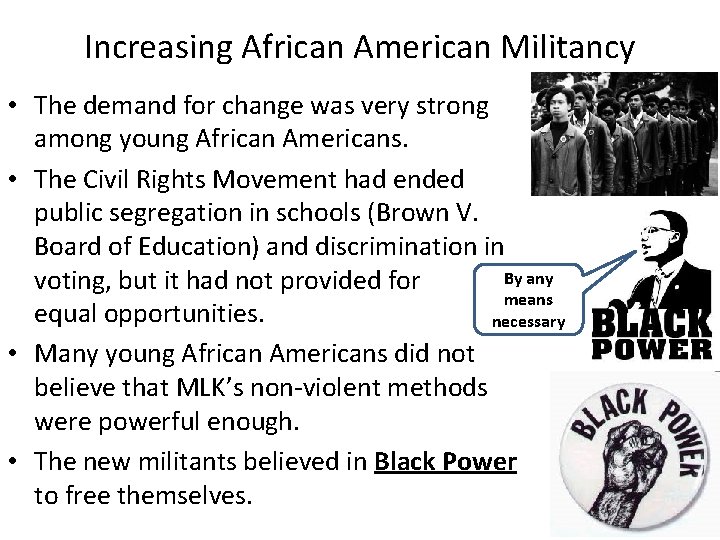
Increasing African American Militancy • The demand for change was very strong among young African Americans. • The Civil Rights Movement had ended public segregation in schools (Brown V. Board of Education) and discrimination in By any voting, but it had not provided for means equal opportunities. necessary • Many young African Americans did not believe that MLK’s non-violent methods were powerful enough. • The new militants believed in Black Power to free themselves.
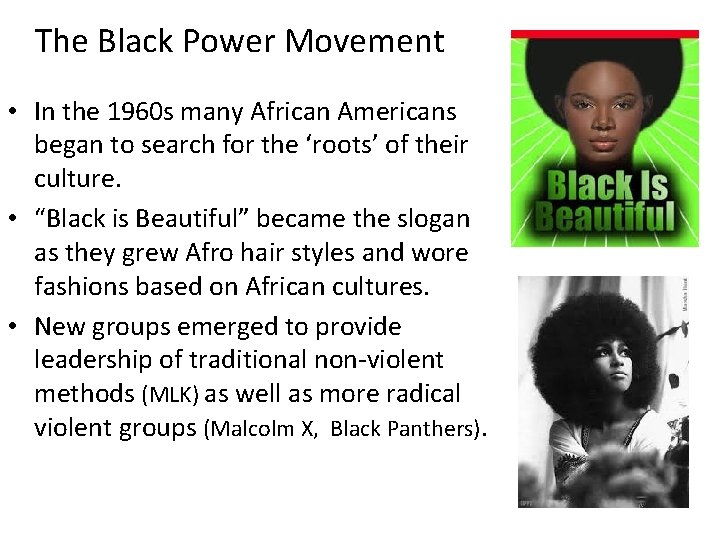
The Black Power Movement • In the 1960 s many African Americans began to search for the ‘roots’ of their culture. • “Black is Beautiful” became the slogan as they grew Afro hair styles and wore fashions based on African cultures. • New groups emerged to provide leadership of traditional non-violent methods (MLK) as well as more radical violent groups (Malcolm X, Black Panthers).
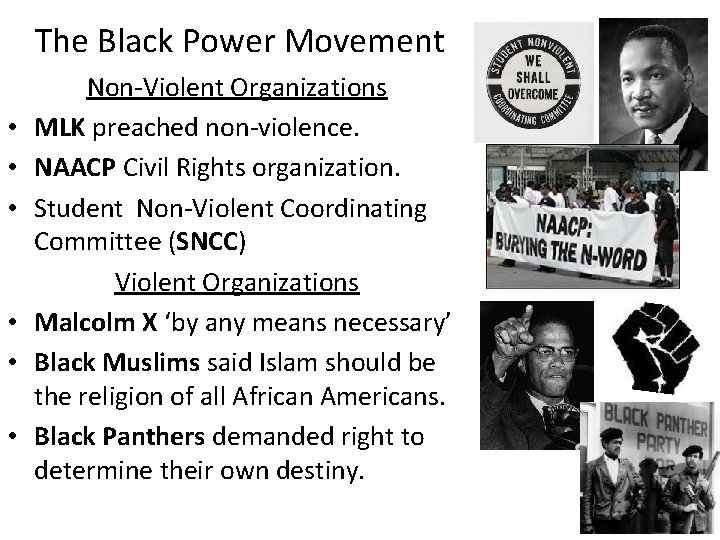
The Black Power Movement • • • Non-Violent Organizations MLK preached non-violence. NAACP Civil Rights organization. Student Non-Violent Coordinating Committee (SNCC) Violent Organizations Malcolm X ‘by any means necessary’ Black Muslims said Islam should be the religion of all African Americans. Black Panthers demanded right to determine their own destiny.
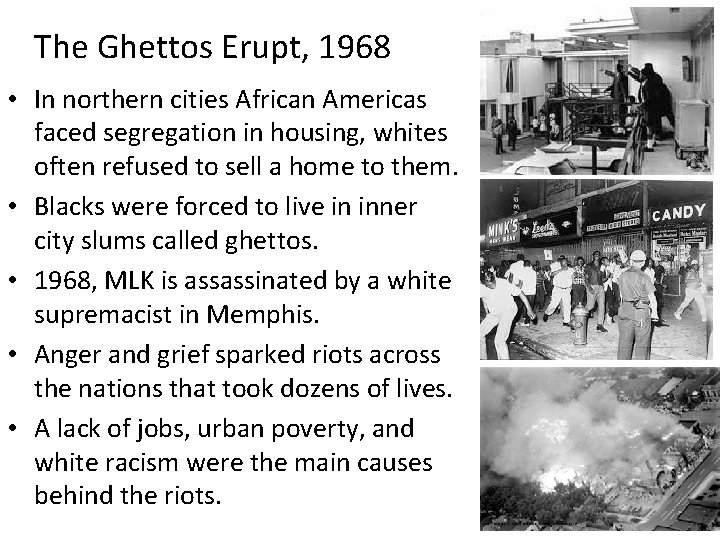
The Ghettos Erupt, 1968 • In northern cities African Americas faced segregation in housing, whites often refused to sell a home to them. • Blacks were forced to live in inner city slums called ghettos. • 1968, MLK is assassinated by a white supremacist in Memphis. • Anger and grief sparked riots across the nations that took dozens of lives. • A lack of jobs, urban poverty, and white racism were the main causes behind the riots.
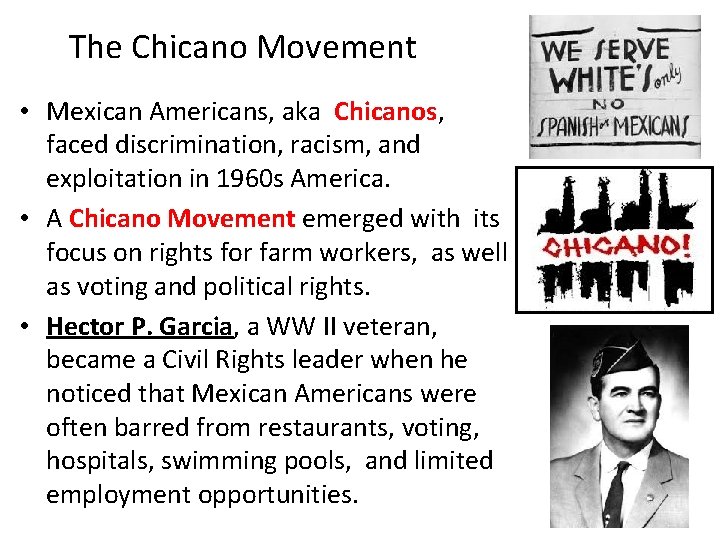
The Chicano Movement • Mexican Americans, aka Chicanos, faced discrimination, racism, and exploitation in 1960 s America. • A Chicano Movement emerged with its focus on rights for farm workers, as well as voting and political rights. • Hector P. Garcia, a WW II veteran, became a Civil Rights leader when he noticed that Mexican Americans were often barred from restaurants, voting, hospitals, swimming pools, and limited employment opportunities.
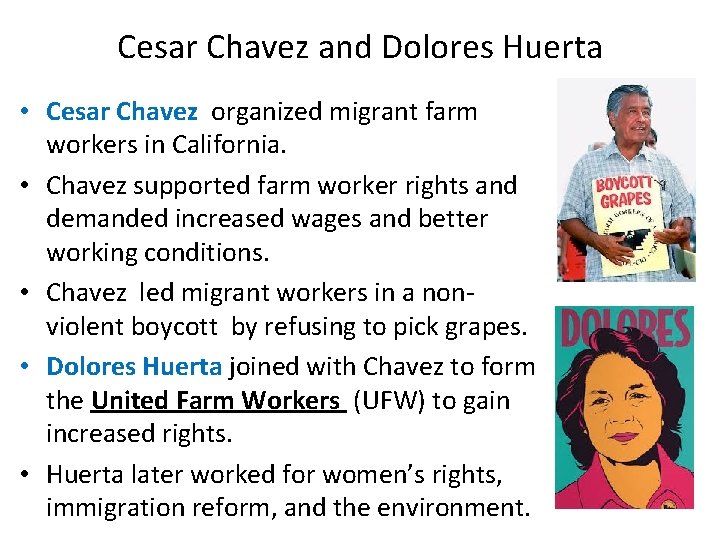
Cesar Chavez and Dolores Huerta • Cesar Chavez organized migrant farm workers in California. • Chavez supported farm worker rights and demanded increased wages and better working conditions. • Chavez led migrant workers in a nonviolent boycott by refusing to pick grapes. • Dolores Huerta joined with Chavez to form the United Farm Workers (UFW) to gain increased rights. • Huerta later worked for women’s rights, immigration reform, and the environment.
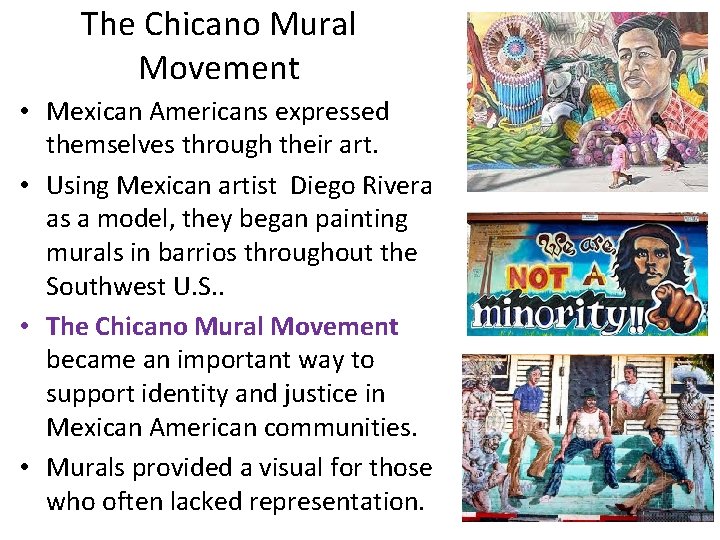
The Chicano Mural Movement • Mexican Americans expressed themselves through their art. • Using Mexican artist Diego Rivera as a model, they began painting murals in barrios throughout the Southwest U. S. . • The Chicano Mural Movement became an important way to support identity and justice in Mexican American communities. • Murals provided a visual for those who often lacked representation.
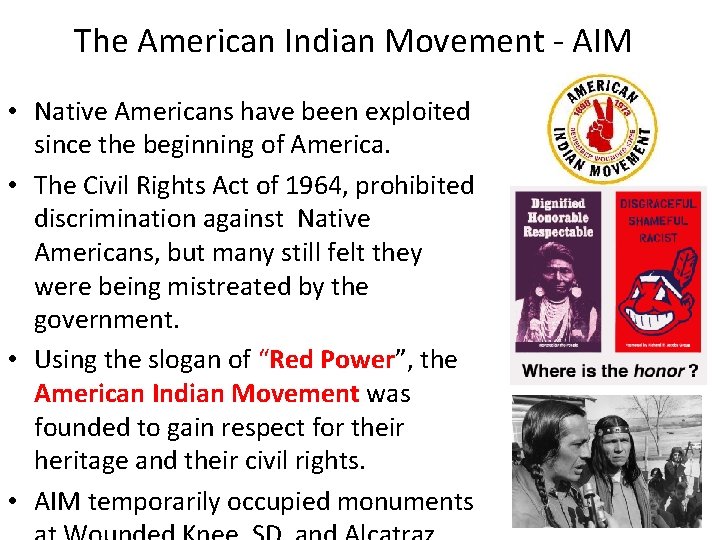
The American Indian Movement - AIM • Native Americans have been exploited since the beginning of America. • The Civil Rights Act of 1964, prohibited discrimination against Native Americans, but many still felt they were being mistreated by the government. • Using the slogan of “Red Power”, the American Indian Movement was founded to gain respect for their heritage and their civil rights. • AIM temporarily occupied monuments
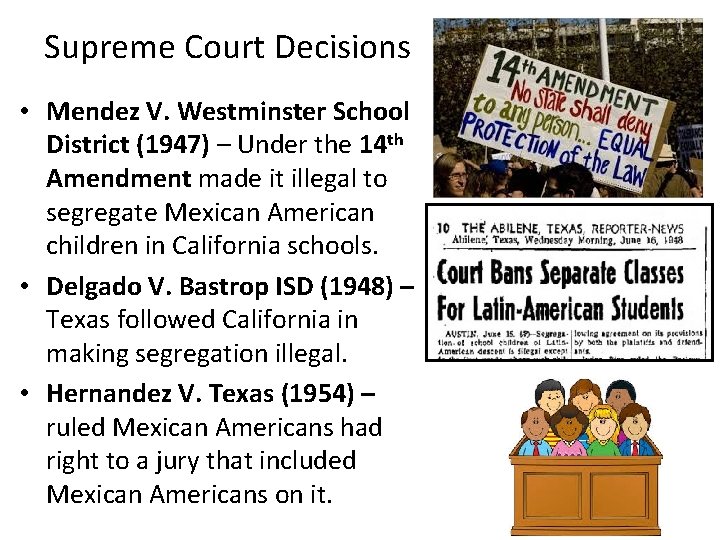
Supreme Court Decisions • Mendez V. Westminster School District (1947) – Under the 14 th Amendment made it illegal to segregate Mexican American children in California schools. • Delgado V. Bastrop ISD (1948) – Texas followed California in making segregation illegal. • Hernandez V. Texas (1954) – ruled Mexican Americans had right to a jury that included Mexican Americans on it.
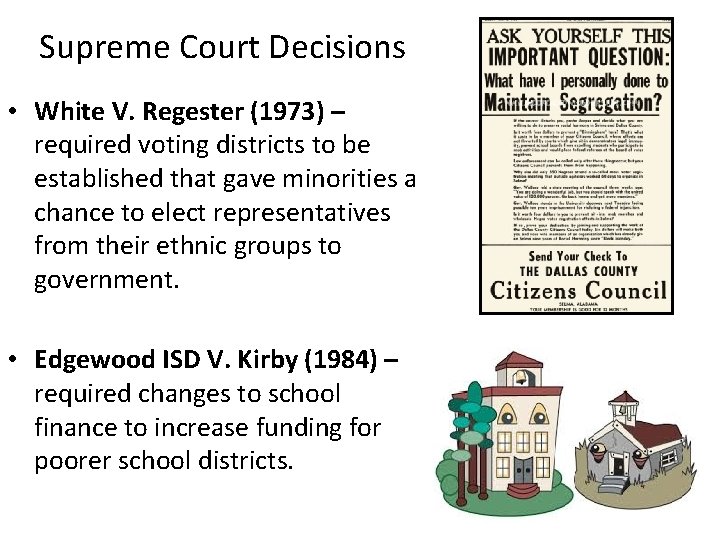
Supreme Court Decisions • White V. Regester (1973) – required voting districts to be established that gave minorities a chance to elect representatives from their ethnic groups to government. • Edgewood ISD V. Kirby (1984) – required changes to school finance to increase funding for poorer school districts.
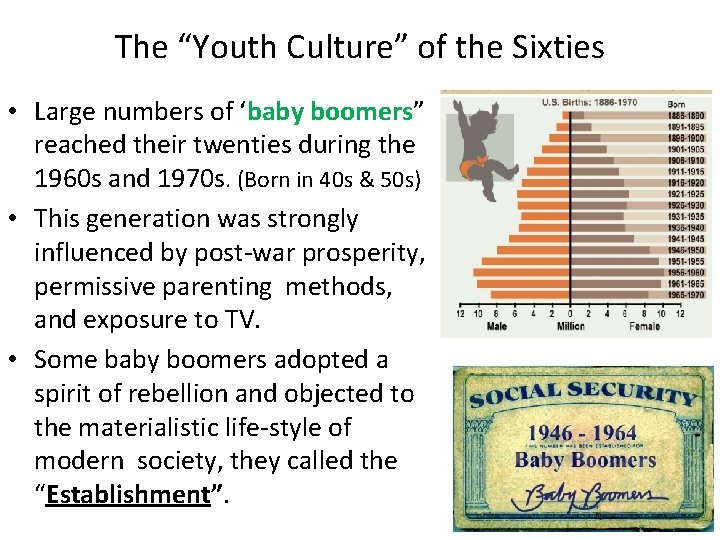
The “Youth Culture” of the Sixties • Large numbers of ‘baby boomers” reached their twenties during the 1960 s and 1970 s. (Born in 40 s & 50 s) • This generation was strongly influenced by post-war prosperity, permissive parenting methods, and exposure to TV. • Some baby boomers adopted a spirit of rebellion and objected to the materialistic life-style of modern society, they called the “Establishment”.
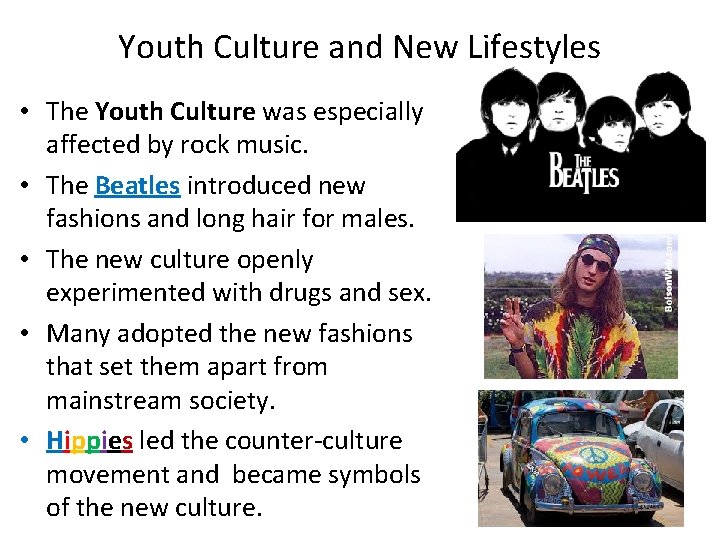
Youth Culture and New Lifestyles • The Youth Culture was especially affected by rock music. • The Beatles introduced new fashions and long hair for males. • The new culture openly experimented with drugs and sex. • Many adopted the new fashions that set them apart from mainstream society. • Hippies led the counter-culture movement and became symbols of the new culture.