
Chapter 10 Section 2 Protest Resistance and Violence



- Slides: 24
Chapter 10 Section 2 Protest, Resistance, and Violence
Main Idea • Proslavery and antislavery factions disagreed over the treatment of fugitive slaves and the spread of slavery to the territories.
Why It Matters Now • The antislavery leaders became role models for leaders of civil rights movements in the 20 th century.
Terms & Names • Fugitive Slave Act: law enacted as part of the Compromise of 1850, designed to ensure that escaped slaves would be returned to bondage. • Personal liberty laws: statutes, passed in 9 Northern states in the 1850’s, that forbade the imprisonment of runaway slaves and guaranteed jury trials for fugitive slaves. • Underground Railroad: system of routes along which runaway slaves were helped to escape to Canada or to safe areas in the free states. • Harriet Tubman: conductor on the Underground Railroad. Made a total of 19 trips and helped over 300 slaves flee to freedom. • Harriet Beecher Stowe: author of “Uncle Tom’s Cabin”. “So this is the little lady who made the big war. ” Abraham Lincoln • Uncle Tom’s Cabin: best selling novel by Harriet Beecher Stowe, published in 1852, that portrayed slavery as a great moral evil. • Kansas-Nebraska Act: a law, enacted in 1854, that established the territories of Kansas and Nebraska and gave their residents the right to decide whether to allow slavery. • John Brown: abolitionist, who believed that God called on him to fight slavery. Killed 5 proslavery settlers in Kansas. Was captured and would be hanged for treason for attempting to raid Harper’s Ferry (federal arsenal). • Bleeding Kansas: a name applied to the Kansas Territory in the years before the Civil War, when the territory was a battleground between proslavery and anti-slavery forces.
Fugitive Slaves and the Underground Railroad • Fugitive slaves • not entitled to a trial by jury • could not testify on their own behalf. • Anyone convicted of helping an alleged fugitive was subject to a fine of $1000, imprisonment for six months, or both. • https: //www. youtube. com/watch? v=w. Za. FJM-CMbs
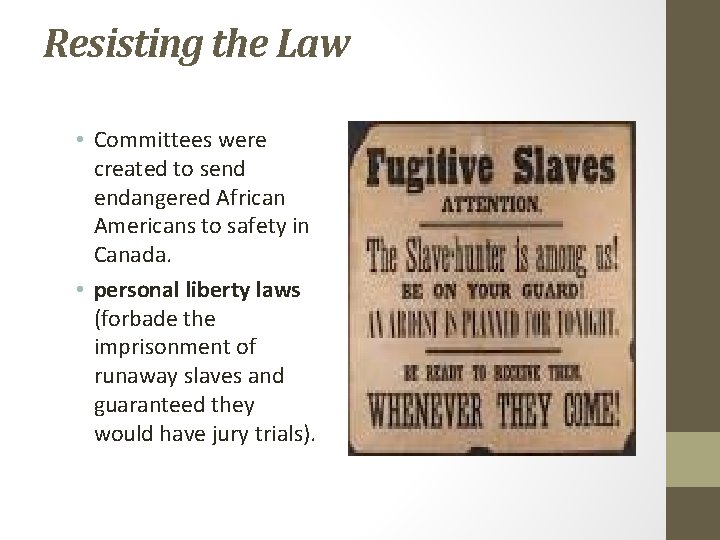
Resisting the Law • Committees were created to send endangered African Americans to safety in Canada. • personal liberty laws (forbade the imprisonment of runaway slaves and guaranteed they would have jury trials).
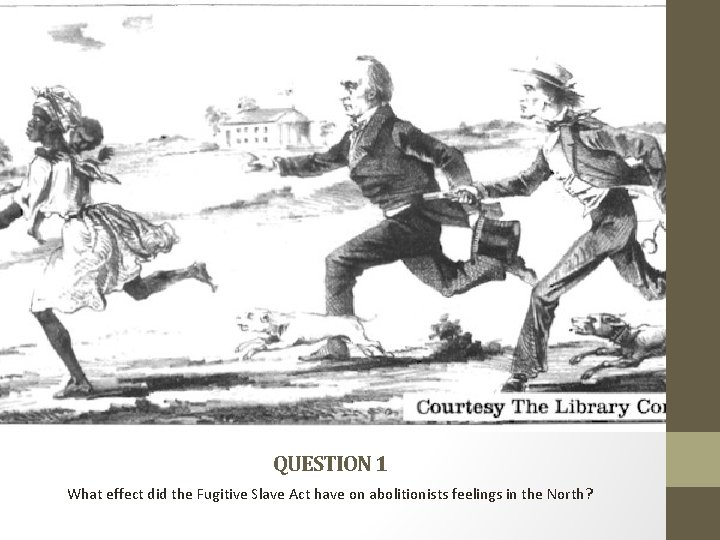
QUESTION 1 What effect did the Fugitive Slave Act have on abolitionists feelings in the North?
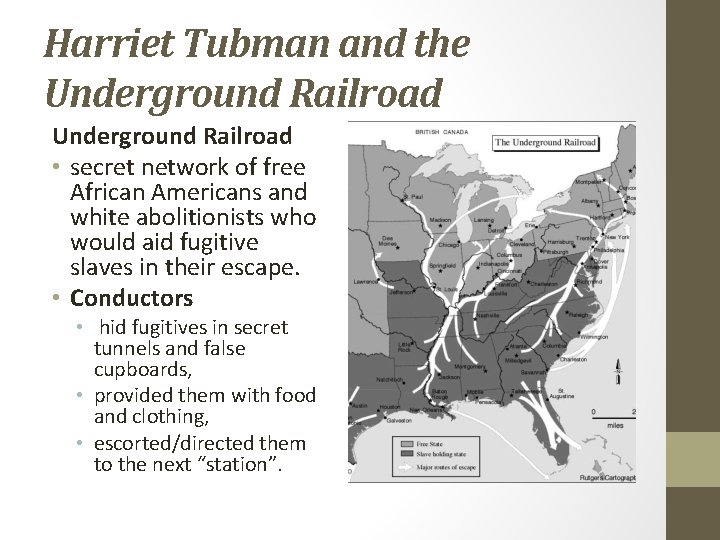
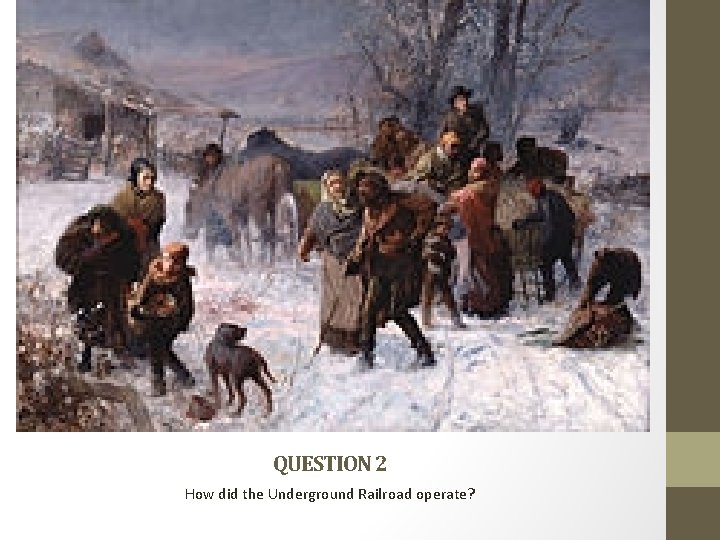
Harriet Tubman and the Underground Railroad • secret network of free African Americans and white abolitionists who would aid fugitive slaves in their escape. • Conductors • hid fugitives in secret tunnels and false cupboards, • provided them with food and clothing, • escorted/directed them to the next “station”.
Harriet Tubman • 1849, her owner died and Tubman escaped to Philadelphia. • After passage of Fugitive Slave Act, she became a conductor on the Underground Railroad. (19 trips, helped approximately 300 slaves to freedom)
Harriet Tubman and the Underground Railroad • Escaping slavery was a dangerous process. • Traveling on foot at night using the North Star as their only sense of direction. • Avoiding patrols of armed men on horseback • Struggling through forests and across rivers • Going without food for days at a time. • https: //www. youtube. com/watch? v=Bdno 2 YLm 4 Ms
QUESTION 2 How did the Underground Railroad operate?
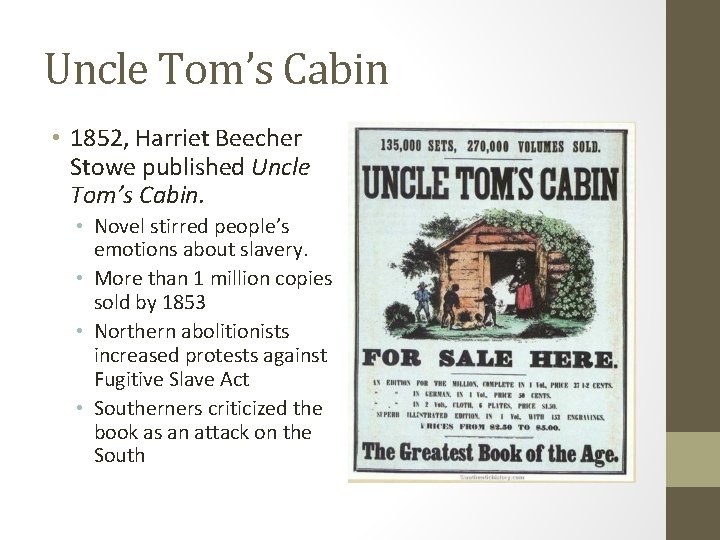
Uncle Tom’s Cabin • 1852, Harriet Beecher Stowe published Uncle Tom’s Cabin. • Novel stirred people’s emotions about slavery. • More than 1 million copies sold by 1853 • Northern abolitionists increased protests against Fugitive Slave Act • Southerners criticized the book as an attack on the South
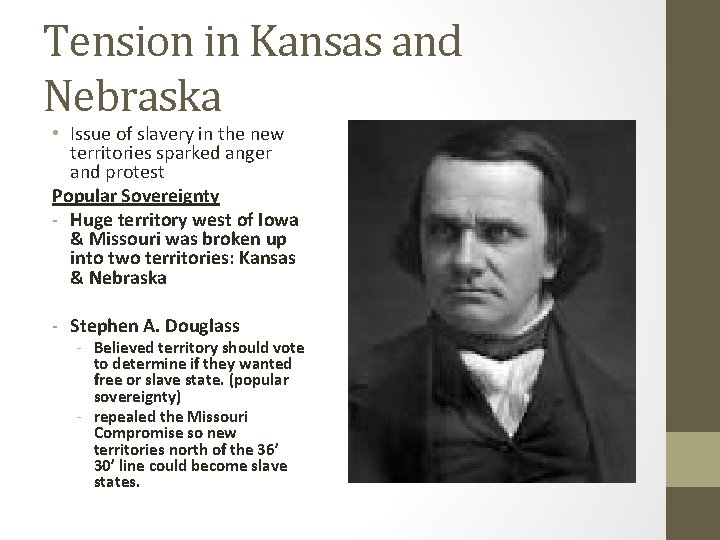
Tension in Kansas and Nebraska • Issue of slavery in the new territories sparked anger and protest Popular Sovereignty - Huge territory west of Iowa & Missouri was broken up into two territories: Kansas & Nebraska - Stephen A. Douglass - Believed territory should vote to determine if they wanted free or slave state. (popular sovereignty) - repealed the Missouri Compromise so new territories north of the 36’ 30’ line could become slave states.
QUESTION 3 • Why did Douglass believe that popular sovereignty would solve the problem of slavery in the Nebraska Territory?
Kansas-Nebraska Act • Act would divide land in west in two territories: Kansas & Nebraska. • Act would also repeal the Missouri Compromise and implement “popular sovereignty” in the territories. • Act became law in 1854 • Northerners were outraged and believed that the new territories would become slave states. • https: //www. youtube. com/w atch? v=YIXmvr 4 k. TEM
QUESTION 4 • How did the Kansas-Nebraska Act propose to deal with the issue of slavery?
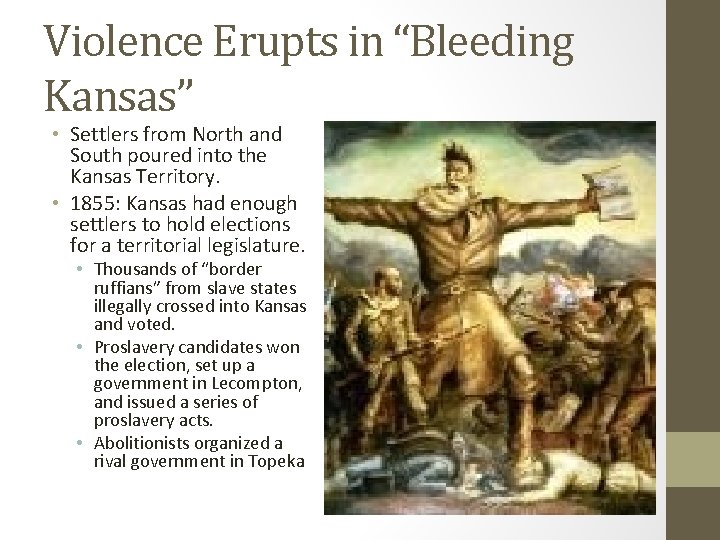
Violence Erupts in “Bleeding Kansas” • Settlers from North and South poured into the Kansas Territory. • 1855: Kansas had enough settlers to hold elections for a territorial legislature. • Thousands of “border ruffians” from slave states illegally crossed into Kansas and voted. • Proslavery candidates won the election, set up a government in Lecompton, and issued a series of proslavery acts. • Abolitionists organized a rival government in Topeka
QUESTION 5 • Why did Kansas become a center of controversy over the issue of slavery?
Sack of Lawrence • Pro-slavery grand jury condemned inhabitants of anti-slavery settlement of Lawrence, Kansas as traitors • called on the local sheriff to arrest them. • May 21, 1856: proslavery posse of 800 armed men swept into Lawrence • Burned and looted town. • Abolitionist newspaper called the event: “the sack of Lawrence”. • “Hell on Wheels” – Bleeding Kansas • https: //www. youtube. com/watch? v=SN 6 eh. R 5 j. V 4 s
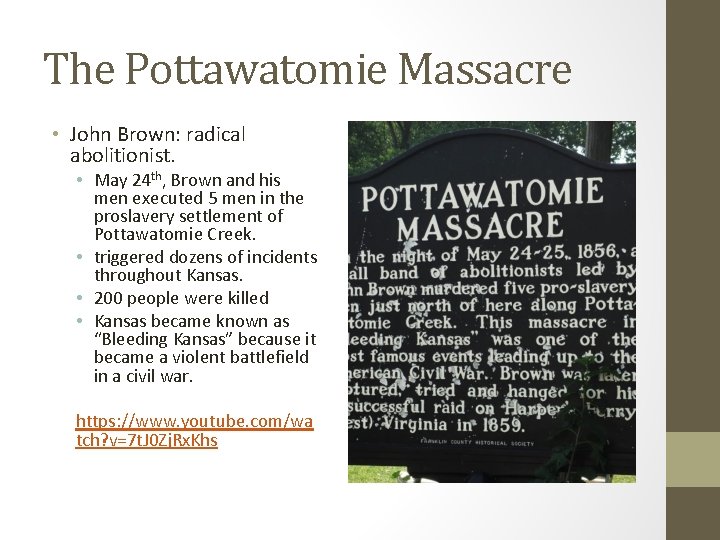
The Pottawatomie Massacre • John Brown: radical abolitionist. • May 24 th, Brown and his men executed 5 men in the proslavery settlement of Pottawatomie Creek. • triggered dozens of incidents throughout Kansas. • 200 people were killed • Kansas became known as “Bleeding Kansas” because it became a violent battlefield in a civil war. https: //www. youtube. com/wa tch? v=7 t. J 0 Zj. Rx. Khs
QUESTION 6 • Why did popular sovereignty, in fact, lead to “Bleeding Kansas, ” instead of settling the issue of slavery?
Violence in the Senate • Charles Sumner, MA senator, delivered a speech called, “The Crime Against Kansas” • Congressman Preston Brooks attacked Sumner with a cane striking him repeatedly on his head. • Sumner suffered shock and apparent brain damage. • Southerners applauded Brooks and showered him with new canes. • Northerners condemned the incident as an example of southern brutality
Violence in the Senate • Due to the tensions over the Wilmot Proviso and Kansas. Nebraska Act • new party alliances emerged • Violence between congressmen continued • new political parties emerged. • https: //www. youtube. com/watch? v=Qu. T 3 k. Bw 17 o 0
QUESTION 7 • Describe Northern and Southern reactions to the incident between Brooks and Sumner.