The Role of the Chronic Pain Physician in


- Slides: 37
The Role of the Chronic Pain Physician in Palliative care
Dr Etienne Prinsloo Anesthesia and Chronic pain management, Cape Breton Regional Hospital I have no disclosures and do not receive any sponsorships from any of the companies that might be mentioned
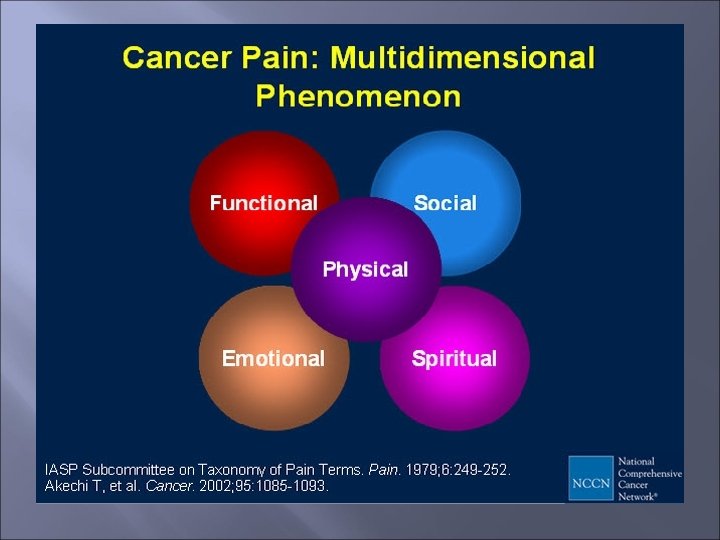
Cancer pain Background – evolution in cancer care – earlier diagnosis, more effective treatment with increased survival. WHO ladder approachlimitations in certain circumstances. Multidisciplinary/multimo dal approach – decision making. The role of the ‘interventional procedure’.
The Correct Way to do it ? ? ? Assessment is the key ? Tumor related ? Therapy side effects ? Chronic pain in cancer patients Psychosocial assessment Physical exam Directed studies
Intervention: Success or failure? 1. 2. 3. 4. Realistic expectations Rarely eliminate “all pain” Spectrum of ‘success’: Improve QOL Reduce medication including side effects Avoid complications Obtain thoughtful, realistic informed consent (including family)
Bone Metastasis: Directed therapies usually under Oncologist’ direction Radiation: Conventional/Stereotactic Biphosphonates: MOA-supresses osteoclast mediated bone resorption, eg IV zoledronic acid Radiopharmaceuticals: samarium, strontium Danosumab: (RANKL-Ab) – osteoclast maturation inhibitor Hormonal therapies: prostate/breast Orthopedic treatments: Bracing/Surgery/PMMA injection
Cancer pain control 1. 2. 3. 4. 60 -80% well addressed by oncologists Poorly controlled group – who to call? Depends on the problem Depends on local expertise/availability Depends on patient preferences But call someone!!
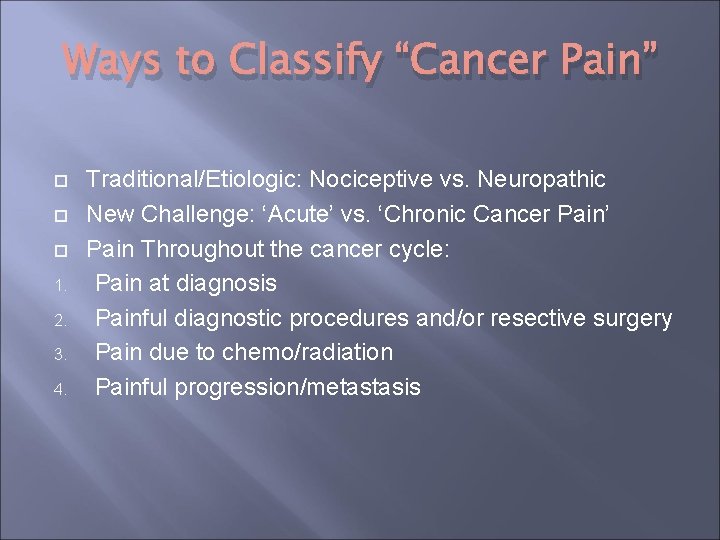
Ways to Classify “Cancer Pain” 1. 2. 3. 4. Traditional/Etiologic: Nociceptive vs. Neuropathic New Challenge: ‘Acute’ vs. ‘Chronic Cancer Pain’ Pain Throughout the cancer cycle: Pain at diagnosis Painful diagnostic procedures and/or resective surgery Pain due to chemo/radiation Painful progression/metastasis
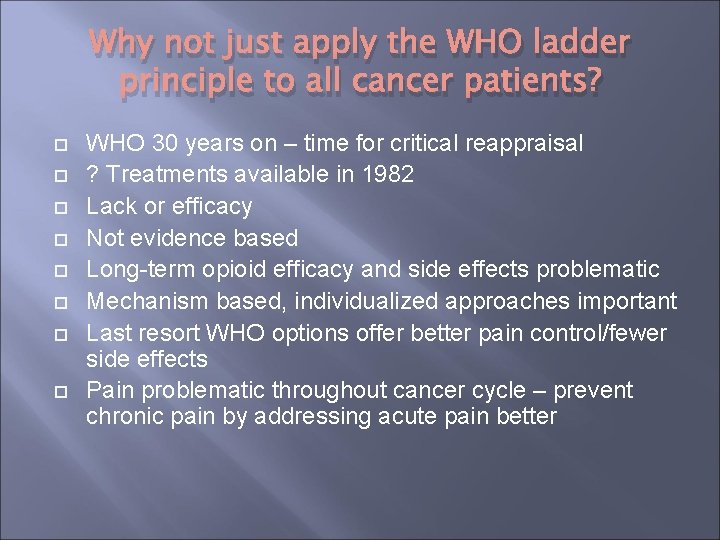
Why not just apply the WHO ladder principle to all cancer patients? WHO 30 years on – time for critical reappraisal ? Treatments available in 1982 Lack or efficacy Not evidence based Long-term opioid efficacy and side effects problematic Mechanism based, individualized approaches important Last resort WHO options offer better pain control/fewer side effects Pain problematic throughout cancer cycle – prevent chronic pain by addressing acute pain better
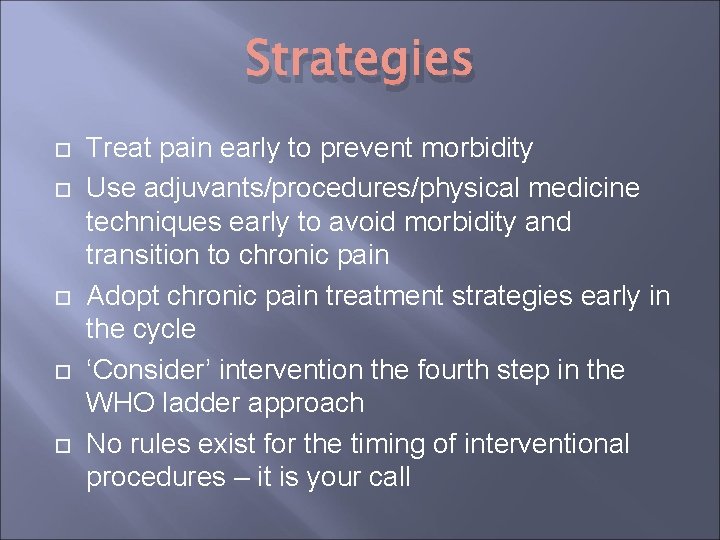
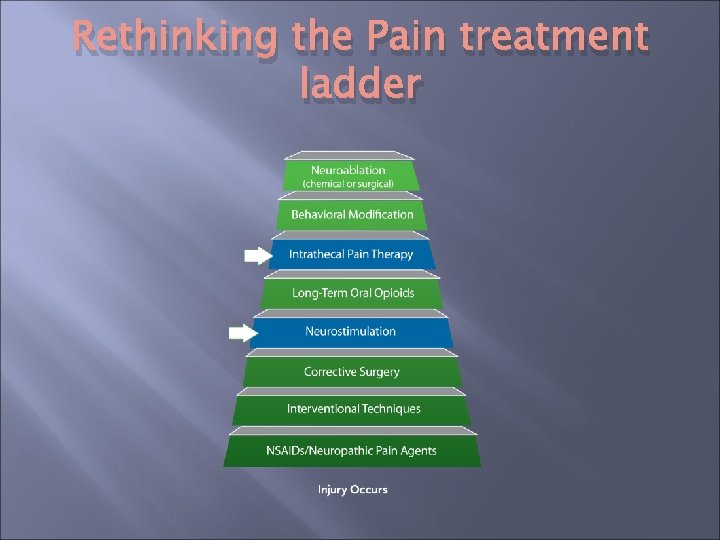
Strategies Treat pain early to prevent morbidity Use adjuvants/procedures/physical medicine techniques early to avoid morbidity and transition to chronic pain Adopt chronic pain treatment strategies early in the cycle ‘Consider’ intervention the fourth step in the WHO ladder approach No rules exist for the timing of interventional procedures – it is your call
Rethinking the Pain treatment ladder
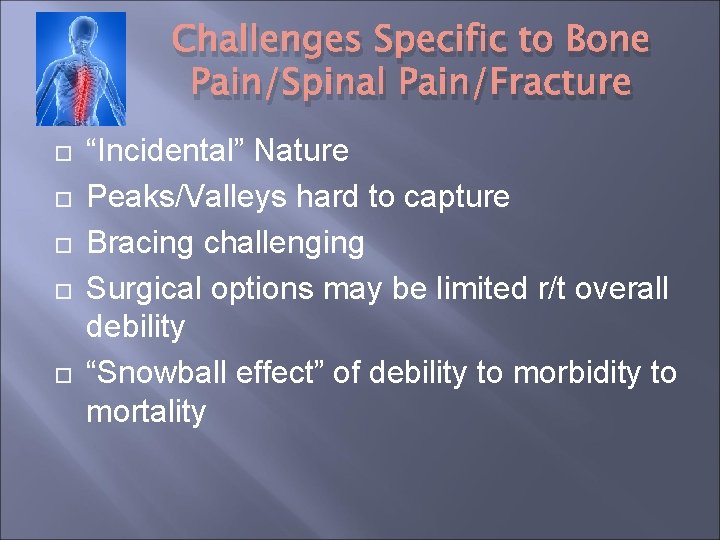
Challenges Specific to Bone Pain/Spinal Pain/Fracture “Incidental” Nature Peaks/Valleys hard to capture Bracing challenging Surgical options may be limited r/t overall debility “Snowball effect” of debility to morbidity to mortality
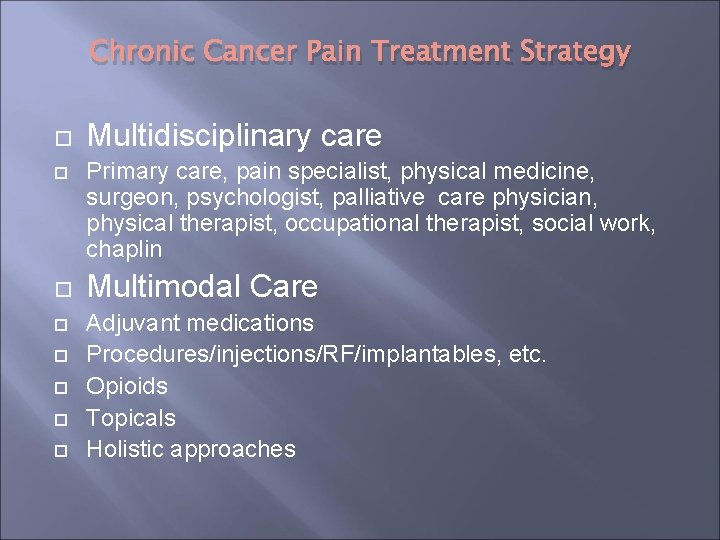
Chronic Cancer Pain Treatment Strategy Multidisciplinary care Primary care, pain specialist, physical medicine, surgeon, psychologist, palliative care physician, physical therapist, occupational therapist, social work, chaplin Multimodal Care Adjuvant medications Procedures/injections/RF/implantables, etc. Opioids Topicals Holistic approaches
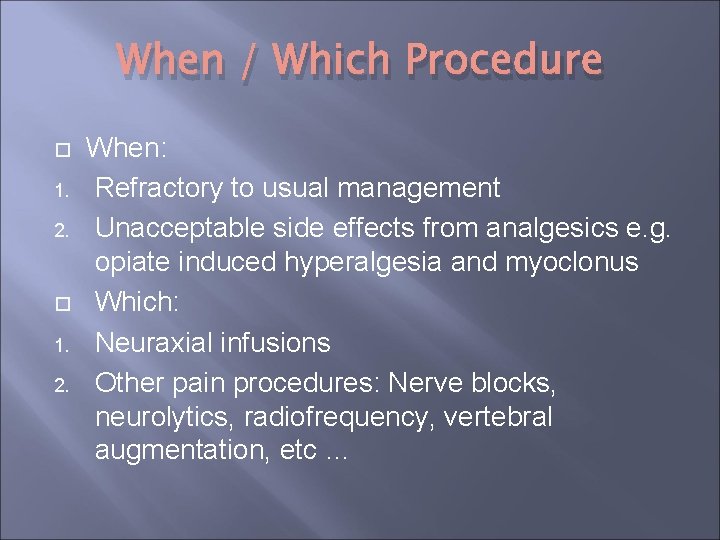
When / Which Procedure 1. 2. When: Refractory to usual management Unacceptable side effects from analgesics e. g. opiate induced hyperalgesia and myoclonus Which: Neuraxial infusions Other pain procedures: Nerve blocks, neurolytics, radiofrequency, vertebral augmentation, etc …
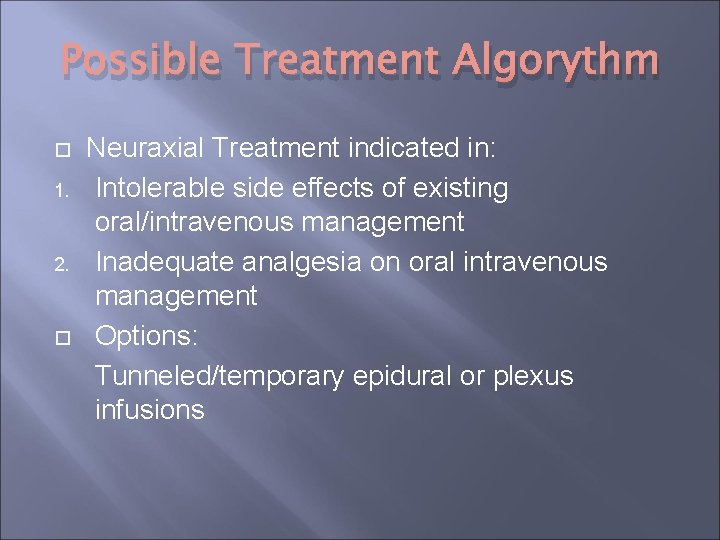
Possible Treatment Algorythm 1. 2. Neuraxial Treatment indicated in: Intolerable side effects of existing oral/intravenous management Inadequate analgesia on oral intravenous management Options: Tunneled/temporary epidural or plexus infusions
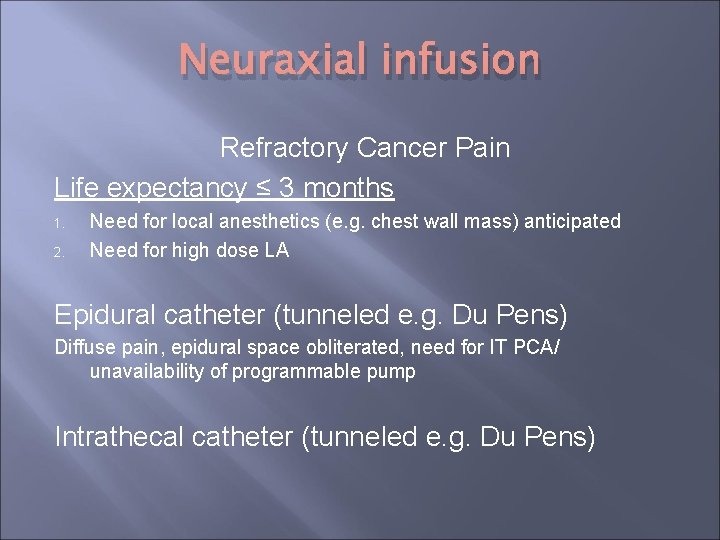
Neuraxial infusion Refractory Cancer Pain Life expectancy ≤ 3 months 1. 2. Need for local anesthetics (e. g. chest wall mass) anticipated Need for high dose LA Epidural catheter (tunneled e. g. Du Pens) Diffuse pain, epidural space obliterated, need for IT PCA/ unavailability of programmable pump Intrathecal catheter (tunneled e. g. Du Pens)
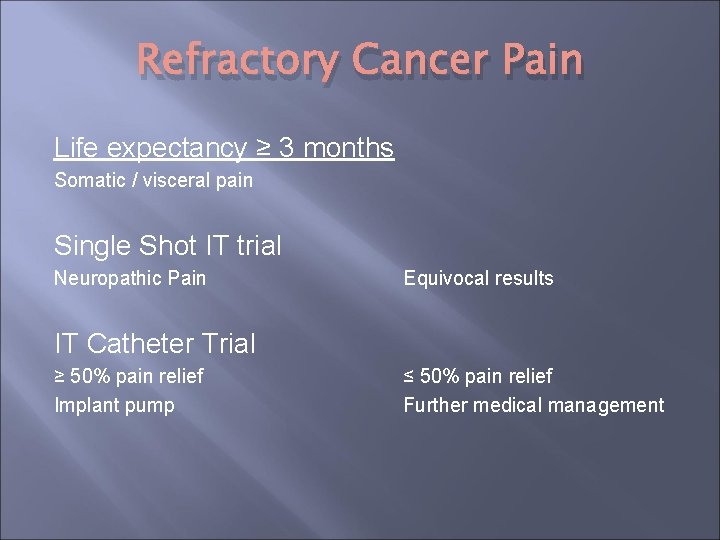
Refractory Cancer Pain Life expectancy ≥ 3 months Somatic / visceral pain Single Shot IT trial Neuropathic Pain Equivocal results IT Catheter Trial ≥ 50% pain relief Implant pump ≤ 50% pain relief Further medical management
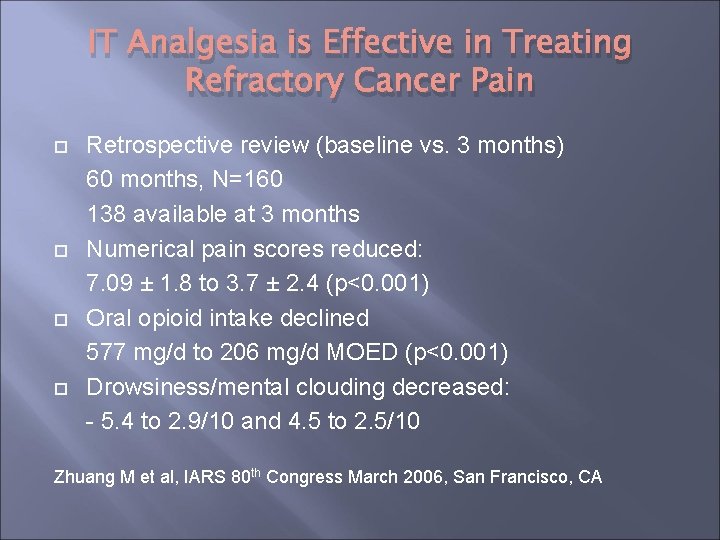
IT Analgesia is Effective in Treating Refractory Cancer Pain Retrospective review (baseline vs. 3 months) 60 months, N=160 138 available at 3 months Numerical pain scores reduced: 7. 09 ± 1. 8 to 3. 7 ± 2. 4 (p<0. 001) Oral opioid intake declined 577 mg/d to 206 mg/d MOED (p<0. 001) Drowsiness/mental clouding decreased: - 5. 4 to 2. 9/10 and 4. 5 to 2. 5/10 Zhuang M et al, IARS 80 th Congress March 2006, San Francisco, CA
MDACC experience IT/Epid: Complications N = 300 Serious infections approx 10; 5 pump explants (< 2%) Paralysis 1 (<< 1%) Revision rate/catheter, etc: 5 – 10%
Percutaneous Spinal Catheters: Low Rate of Complications Meta-Analysis Superficial infection 2. 3% Deep infection 1. 4% Every 71 st patient will have an infection after 54 days of therapy Bleeding 0. 9% Neurological injury 0. 4% Aprili D et al, Anesthesiology 2009
Other procedures: Recall decision making 1. 2. 3. Likely to help Focal pain No contraindications Neurolytic blocks (alcohol, phenol or glycerol) where motor/sensory separation exists. Consider local block first RF ablation (nerves/tumor)? Role of pulsed RF Vertebral augmentation Plexus blocks Simple injections
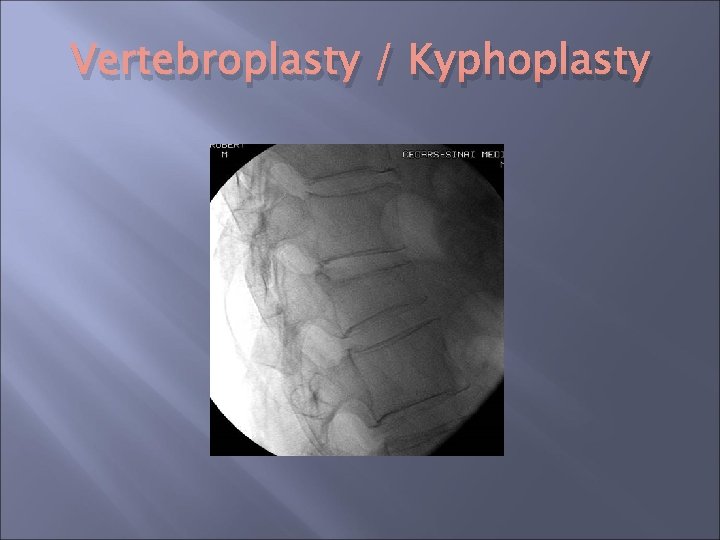
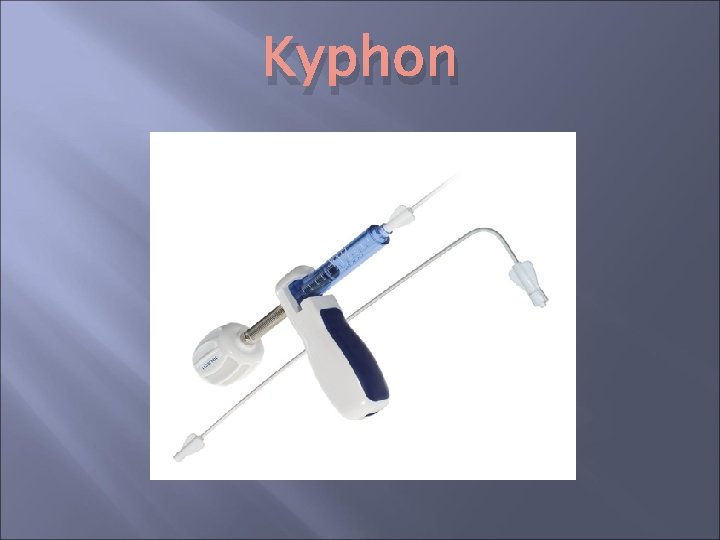
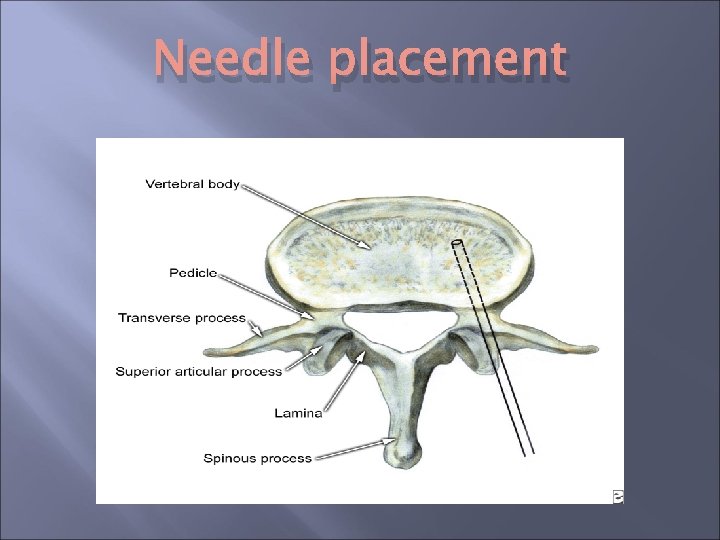
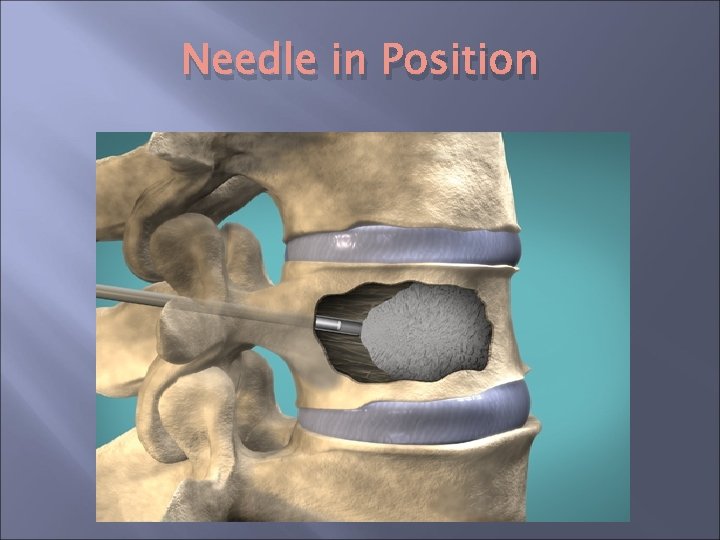
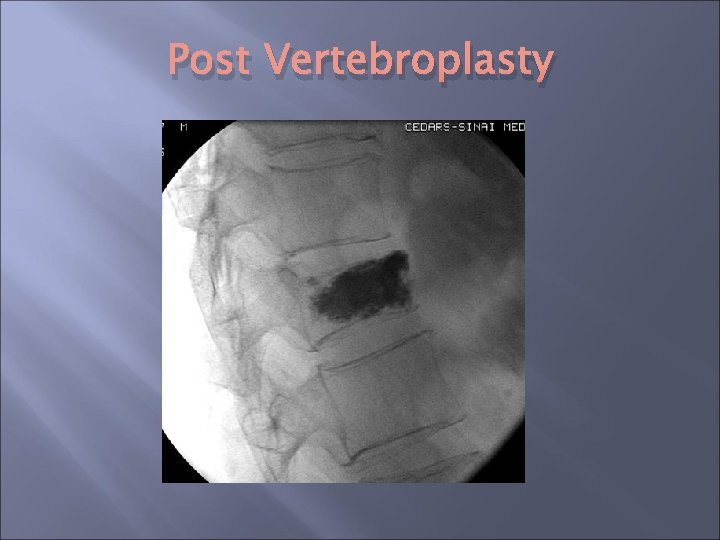
Vertebroplasty / Kyphoplasty
Kyphon
Needle placement
Needle in Position
Post Vertebroplasty
Vertebroplasty Comments Cancer patients can have coexisting VCF’s Trend is towards ignoring these fractures This is possibly benign neglect Quick and relatively affordable procedure with excellent results and pain relief NEJM article condemning vertebroplasty had poor design and statistics. It compared vertebroplasty to poorly (non-ISIS standard) performed medial branch blocks Role of vertebroplasty vs. kyphoplasty vs. the significant discrepancy in procedural cost vs. benefit
Intra Spinal Neurolysis Indicated for intractable pain after failure of less invasive procedures in patients with a short life expectancy May provide profound pain relief for pelvic malignancies at the cost of bladder and bowel control Never the first treatment of choice Experience very limited in the current environment A valuable tool however, should not be discounted
Criteria for Neurolysis Severe intractable pain Intolerable side effects of analgesic therapy Intrathecal catheter not an option Advanced/terminal malignancy Pain well localized – unilateral, localized trunk or involving only a few dermatomes Primary somatic pain mechanism Absence of intraspinal tumor spread Pain relieved with prognostic local block Realistic expectations by patient and family Patient clearly understands possible side effects
Limitations of Neurolytic Block Quality of analgesia might be less than after local anesthetic Duration of effect not permanent Requires downward titration of opiates Lack of procedural skill in physician pool Potential for long term complications Neuropathic pain and dysesthesias Analgesic failure – incomplete block, wrong neural target New pain at distal site
Types of Neurolytic Block Celiac plexus block – relieves pain from intra abdominal viscera excluding left colon and pelvic content Superior hypogastric plexus block – manages visceral component of pelvic pain Ganglion Impar block – manages persistant burning associated with pelvic pain Intercostal blocks – manages chest wall malignancy Gasserian block – manages trigeminal tumor infiltration pain
Comments on Neurolysis Meticulous selection significantly increases success Inferior to intrathecal pumps, cost of the latter often prohibitive – visible versus invisible cost Both alcohol and phenol are cheap Possible future resurgence of these techniques due to increasingly hostile financial environment Do not allow perfect to be the enemy of good
Questions ?