
BECOMING A JUNIOR DOCTOR IN SINGAPORE UMMSS International
BECOMING A JUNIOR DOCTOR IN SINGAPORE UMMSS International Internship Information Night 13 Sep 2016 Sean Ezekiel Seow (RMH, MD 4 2016) sseow@student. unimelb. edu. au Adapted from slides by Dr Richard Lu (MD 4 2015)
Disclaimer • The author of this presentation has made every effort to ensure the accuracy of the information, however is not responsible for any inadvertent errors. • In any doubt, check with official sources first-hand. • Any opinions expressed are the author’s own and do not represent the views of any agencies or organisations.
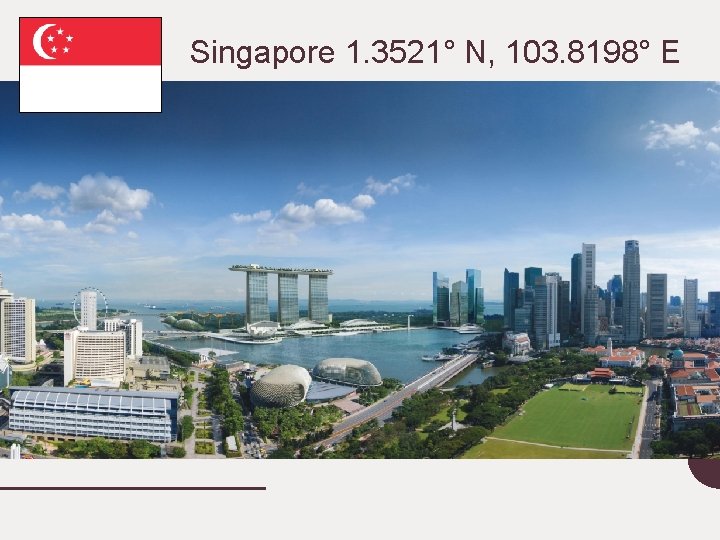
Singapore 1. 3521° N, 103. 8198° E
Registration • • • The Melbourne MD and MBBS are both recognised by the Singapore Medical Council (SMC) – No additional exams to work as a medical practitioner in Singapore – http: //www. smc. gov. sg/ PGY 1 = House Officer (HO) aka Intern – Work as a House Officer (HO) under Provisional Registration – Satisfactory completion of PGY 1 required to gain Conditional Registration PGY 2 = Medical Officer (MO) aka HMO 2 – • Completion of internship in Australia is recognised for Conditional Registration requires supervised practice, 2 years for Singaporeans and 4 years for SPRs/foreigners) prior to Full Registration (this is for non-specialists)
Application and Employment • Employment by a single body: MOH Holdings (MOHH Pte Ltd) – Holding company of Singapore’s public healthcare assets • Common employer of all junior doctors in Singapore – Coordinates the posting of house officers and medical officers – Coordinates the residency application process
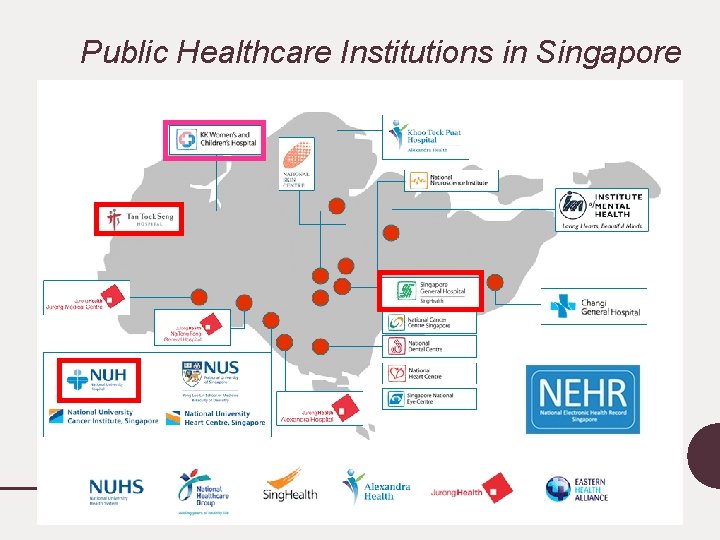
Public Healthcare Institutions in Singapore
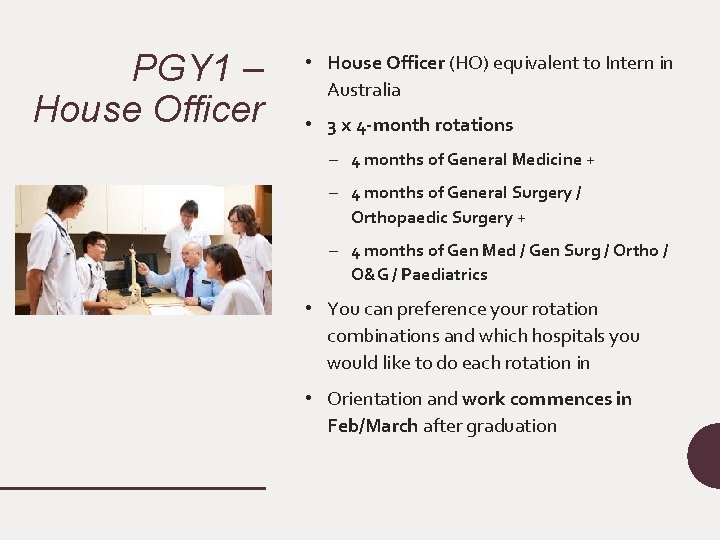
PGY 1 – House Officer • House Officer (HO) equivalent to Intern in Australia • 3 x 4 -month rotations – 4 months of General Medicine + – 4 months of General Surgery / Orthopaedic Surgery + – 4 months of Gen Med / Gen Surg / Ortho / O&G / Paediatrics • You can preference your rotation combinations and which hospitals you would like to do each rotation in • Orientation and work commences in Feb/March after graduation
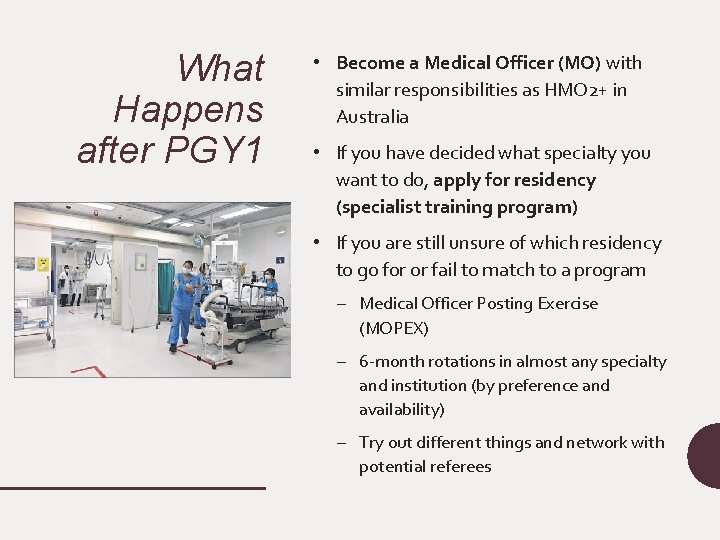
What Happens after PGY 1 • Become a Medical Officer (MO) with similar responsibilities as HMO 2+ in Australia • If you have decided what specialty you want to do, apply for residency (specialist training program) • If you are still unsure of which residency to go for or fail to match to a program – Medical Officer Posting Exercise (MOPEX) – 6 -month rotations in almost any specialty and institution (by preference and availability) – Try out different things and network with potential referees
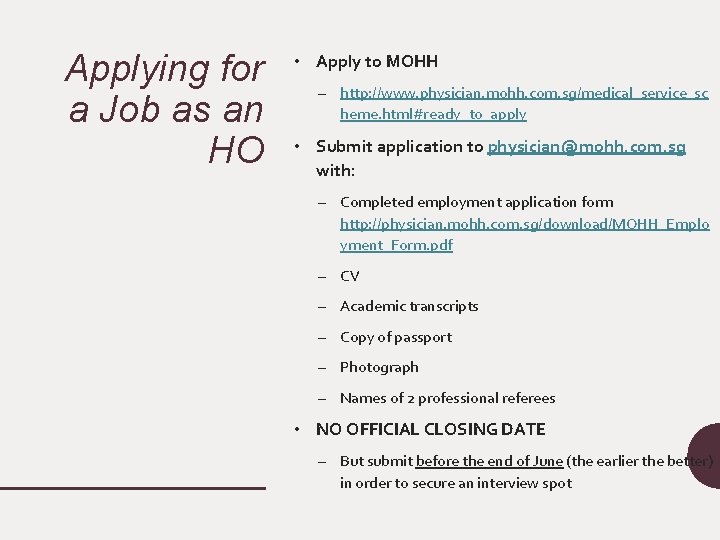
Applying for a Job as an HO • Apply to MOHH – http: //www. physician. mohh. com. sg/medical_service_sc heme. html#ready_to_apply • Submit application to physician@mohh. com. sg with: – Completed employment application form http: //physician. mohh. com. sg/download/MOHH_Emplo yment_Form. pdf – CV – Academic transcripts – Copy of passport – Photograph – Names of 2 professional referees • NO OFFICIAL CLOSING DATE – But submit before the end of June (the earlier the better) in order to secure an interview spot
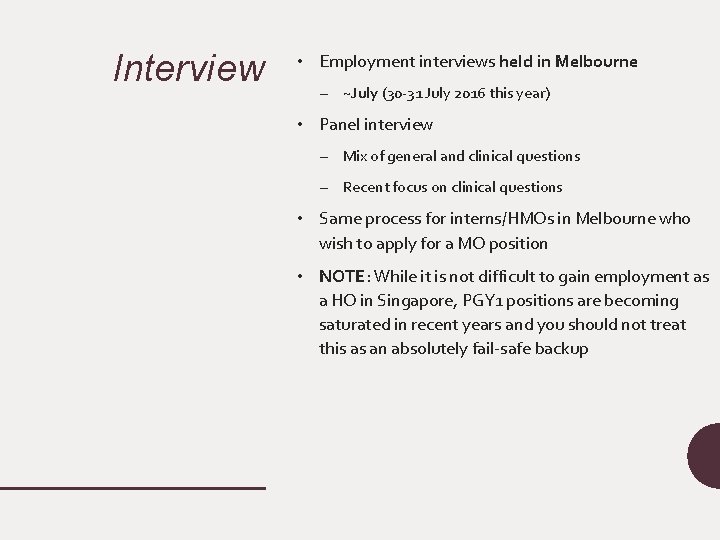
Interview • Employment interviews held in Melbourne – ~July (30 -31 July 2016 this year) • Panel interview – Mix of general and clinical questions – Recent focus on clinical questions • Same process for interns/HMOs in Melbourne who wish to apply for a MO position • NOTE: While it is not difficult to gain employment as a HO in Singapore, PGY 1 positions are becoming saturated in recent years and you should not treat this as an absolutely fail-safe backup
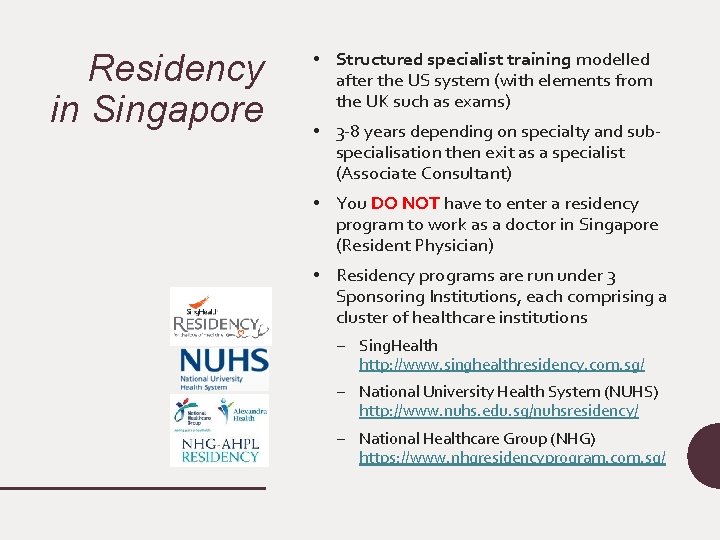
Residency in Singapore • Structured specialist training modelled after the US system (with elements from the UK such as exams) • 3 -8 years depending on specialty and subspecialisation then exit as a specialist (Associate Consultant) • You DO NOT have to enter a residency program to work as a doctor in Singapore (Resident Physician) • Residency programs are run under 3 Sponsoring Institutions, each comprising a cluster of healthcare institutions – Sing. Health http: //www. singhealthresidency. com. sg/ – National University Health System (NUHS) http: //www. nuhs. edu. sg/nuhsresidency/ – National Healthcare Group (NHG) https: //www. nhgresidencyprogram. com. sg/
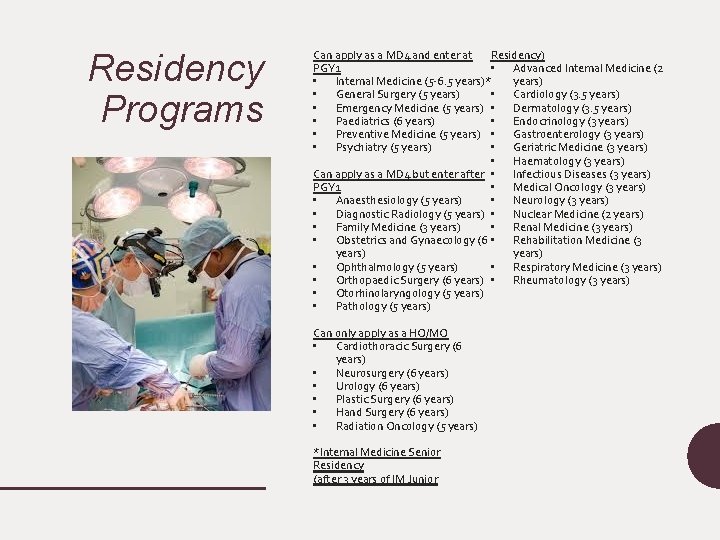
Residency Programs Residency) Can apply as a MD 4 and enter at • Advanced Internal Medicine (2 PGY 1 years) • Internal Medicine (5 -6. 5 years)* • Cardiology (3. 5 years) • General Surgery (5 years) • Emergency Medicine (5 years) • Dermatology (3. 5 years) • Endocrinology (3 years) • Paediatrics (6 years) • Preventive Medicine (5 years) • Gastroenterology (3 years) • Geriatric Medicine (3 years) • Psychiatry (5 years) • Haematology (3 years) Can apply as a MD 4 but enter after • Infectious Diseases (3 years) • Medical Oncology (3 years) PGY 1 • Neurology (3 years) • Anaesthesiology (5 years) • Diagnostic Radiology (5 years) • Nuclear Medicine (2 years) • Renal Medicine (3 years) • Family Medicine (3 years) • Obstetrics and Gynaecology (6 • Rehabilitation Medicine (3 years) • Respiratory Medicine (3 years) • Ophthalmology (5 years) • Orthopaedic Surgery (6 years) • Rheumatology (3 years) • Otorhinolaryngology (5 years) • Pathology (5 years) Can only apply as a HO/MO • Cardiothoracic Surgery (6 years) • Neurosurgery (6 years) • Urology (6 years) • Plastic Surgery (6 years) • Hand Surgery (6 years) • Radiation Oncology (5 years) *Internal Medicine Senior Residency (after 3 years of IM Junior
Applying for Residency • You need to secure employment with MOHH first (i. e. submit job application and attend the employment interview in Melbourne) • 4 -station Multi-Mini Interview (non-clinical scenarios, 10 minutes each) IN SINGAPORE in November • Those who pass the MMI → ranking and matching process • If matched, enter program in July the following year for direct entry programs • Difficult but not impossible for IMGs to successfully match as a medical student. It becomes easier after you have worked in the system for a while and people know who you are • Only apply if you know which specialty you want and only apply for the specialties you want – if you back out you will be barred from applying for one year • Have a good read through the residency website at http: //physician. mohh. com. sg/residency/index. html
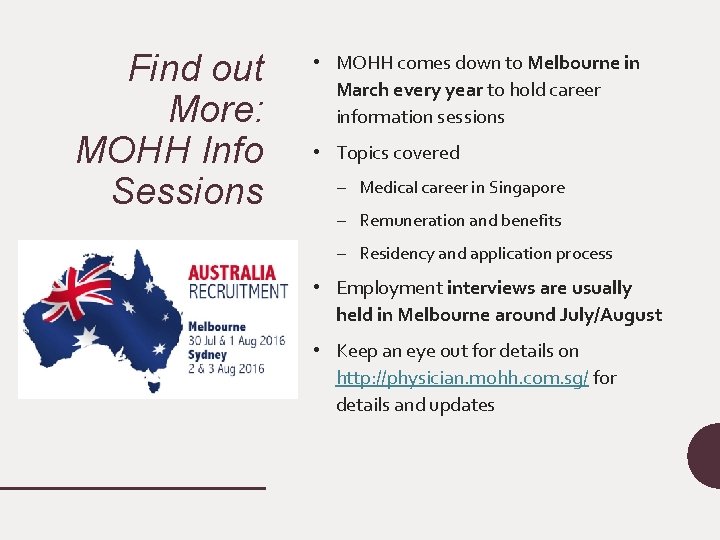
Find out More: MOHH Info Sessions • MOHH comes down to Melbourne in March every year to hold career information sessions • Topics covered – Medical career in Singapore – Remuneration and benefits – Residency and application process • Employment interviews are usually held in Melbourne around July/August • Keep an eye out for details on http: //physician. mohh. com. sg/ for details and updates
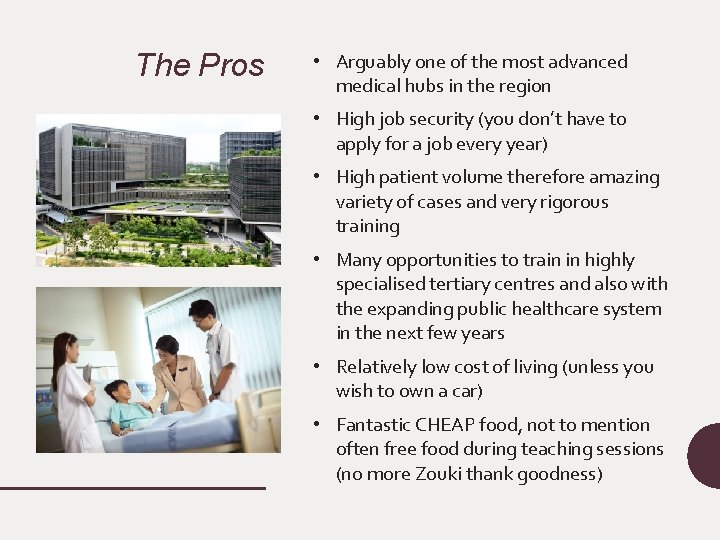
The Pros • Arguably one of the most advanced medical hubs in the region • High job security (you don’t have to apply for a job every year) • High patient volume therefore amazing variety of cases and very rigorous training • Many opportunities to train in highly specialised tertiary centres and also with the expanding public healthcare system in the next few years • Relatively low cost of living (unless you wish to own a car) • Fantastic CHEAP food, not to mention often free food during teaching sessions (no more Zouki thank goodness)
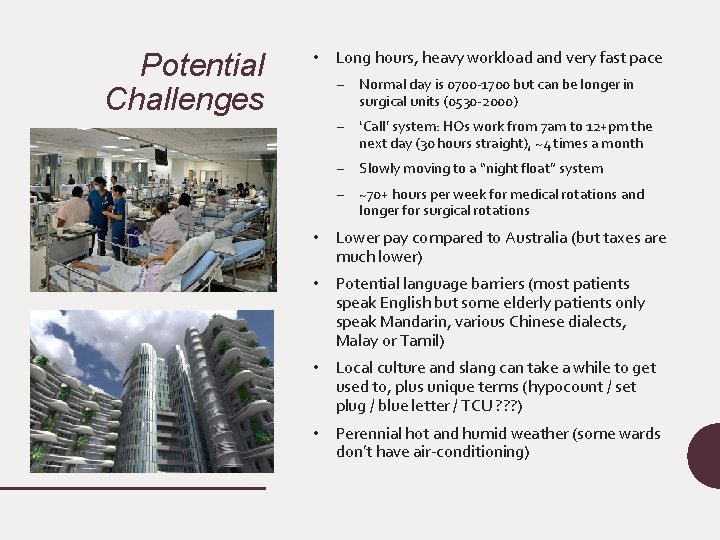
Potential Challenges • Long hours, heavy workload and very fast pace – Normal day is 0700 -1700 but can be longer in surgical units (0530 -2000) – ‘Call’ system: HOs work from 7 am to 12+pm the next day (30 hours straight), ~4 times a month – Slowly moving to a “night float” system – ~70+ hours per week for medical rotations and longer for surgical rotations • Lower pay compared to Australia (but taxes are much lower) • Potential language barriers (most patients speak English but some elderly patients only speak Mandarin, various Chinese dialects, Malay or Tamil) • Local culture and slang can take a while to get used to, plus unique terms (hypocount / set plug / blue letter / TCU ? ? ? ) • Perennial hot and humid weather (some wards don’t have air-conditioning)
To find out what it is really like • Do an elective in Singapore – Guaranteed to be an unique experience – Also helps with networking and finding referees for residency application if you are really keen • Ask your Singaporean classmates – Hopefully you know who we are by now – Many of us have done electives in Singapore and have some experience with the system
Clinical Electives in Singapore • The following hospitals accept direct applications – Singapore General Hospital (SGH) http: //www. sgh. com. sg/Education/Undergraduate. Medical-Education/Pages/application. aspx – National University Hospital (NUH) http: //www. nuhs. edu. sg/education/medical-students/electives. html – Tan Tock Seng Hospital (TTSH) http: //www. ttshppeo. com. sg/home/medical/electiv es-for-overseas-medical-students – KK Women’s and Children’s Hospital (KKH) http: //www. kkh. com. sg/educationandtraining/over seaselective/Pages/Paediatrics. aspx • Yong Loo Lin School of Medicine, National University of Singapore (YLLSo. M, NUS) coordinates electives for other hospitals as well as the above https: //itumed. nus. edu. sg/scep/default. aspx
Thank You • For all information regarding a medical career in Singapore, visit http: //physician. mohh. com. sg/ or contact physician@mohh. com. sg • Singapore Medical Council (medical registration) http: //www. smc. gov. sg/ • Residency Information and Application http: //physician. mohh. com. sg/residency/index. html • Residency Sponsoring Institutions – Sing. Health http: //www. singhealthresidency. com. sg/ – National University Health System (NUHS) http: //www. nuhs. edu. sg/nuhsresidency/ – National Healthcare Group (NHG) https: //www. nhgresidencyprogram. com. sg/
- Slides: 19